

This is the tough environment that marketing agencies face: clients expect consistent performance, competition gets tougher every day and it probably never ends, delivering immediate return on investment becomes a relentless demand. Project-based arrangement has always brought unpredictable cash inflows and kept us in a state of constant client acquisition.
This pressure forces agencies to operate reactively, prioritizing short-term wins over long-term strategy. Teams are often stretched thin, moving quickly from one project to the next with little time to optimize, learn, or innovate. Revenue uncertainty makes it difficult to plan ahead, invest in talent, or adopt better tools and systems. As a result, agencies may struggle to scale sustainably while maintaining quality and consistency. In such an environment, even successful agencies can find themselves trapped in cycles of burnout, high churn, and stalled growth, despite delivering strong results for their clients.
Inbound Retainers: The Strategic Shift
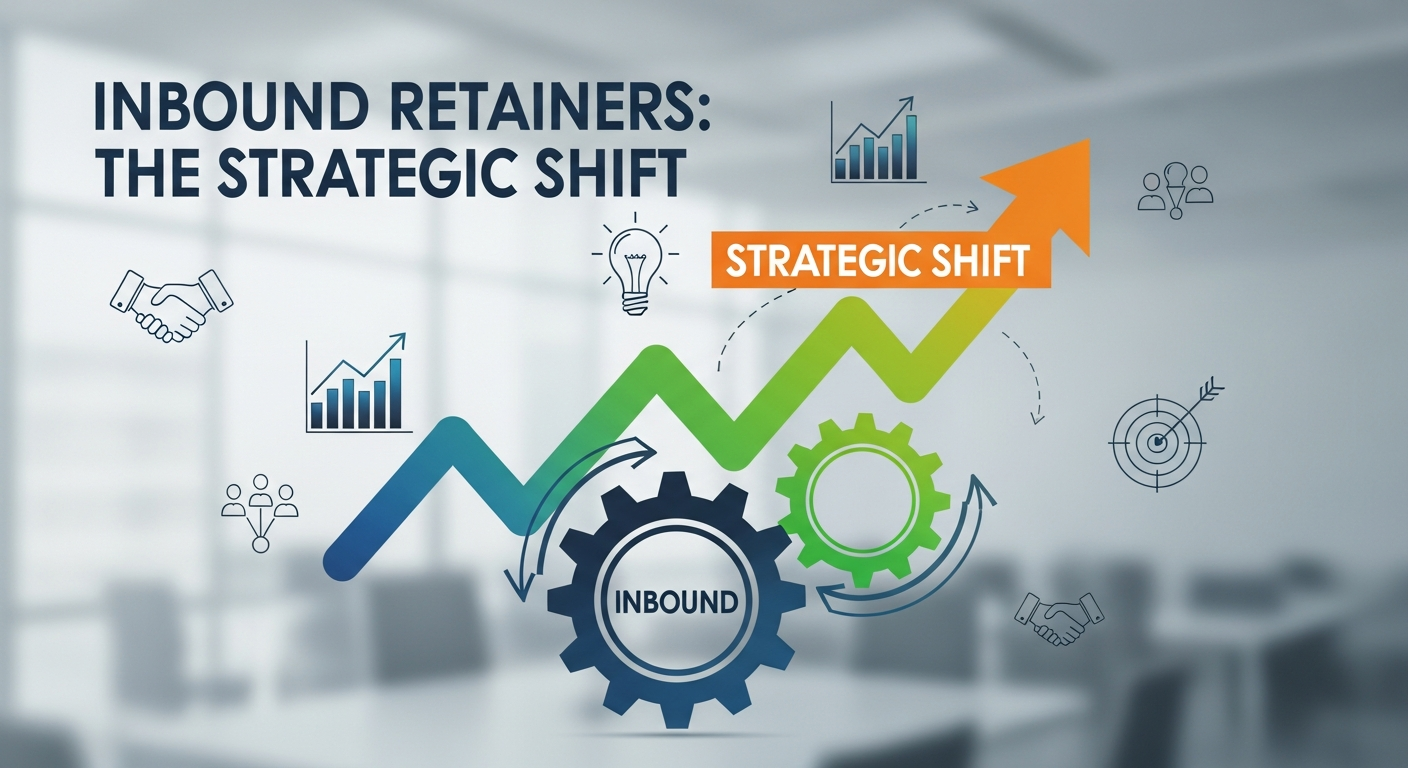
Inbound marketing retainers have emerged as a win-win solution for both side. Such comprehensive plans provide predictable income to agencies while giving lasting growth businesses 一 just like our model promises to yield lifetime customers themselves. The goal is nothing less than replacing old P&L-driven agency models altogether, to root them out for good.
What is an Inbound Marketing Retainer?
An inbound marketing retainer is a long-term contract in which clients pay a fixed monthly fee for ongoing marketing services. Where project-based work simply produces an output, retainers dwell on the process and results are sustainable across all your marketing channels.
The retainer model may include content creation, SEO optimization, social media management, e-mail marketing and lead nurturing. To ensure consistent strategy execution and relationship building, specific team members are assigned to every client account.
This approach underpins the principle of inbound marketing 一 that is, to attract customers with valuable content and experiences rather than interruptive ads. As with traditional publishing, content marketing requires time, consistency and constant tuning 一 which is precisely what retainers offer.
The model generates regular revenues for agencies and gives clients access to dedicated expertise without the overhead of hiring full-time staff. This spirit of partnership leads to better results and closer relationships with customers.
Advantages of Retainers for Marketing Agencies
Guaranteed
Although start-up costs are high, the payment of a retainer means cash flow is steadied.
Easier Cash Flow Management
Monthly recurring revenue can make cash flow management significantly easier. When you have reasonably stable money coming in every month, it’s a lot easier to budget for bills!
Invest in team development, tools, and infrastructure without worrying about gaps between projects. This sort of stability is what attracts good talent and reduces turnover.
Better Client Relationships
Through long-term partnerships, agencies are able to truly understand the business of their clients. With this knowledge at their disposal, they can make strategic recommendations that are more likely to lead to success than those based on guesswork.
Quality of Services Provided
Retainers allow agencies to assign consistent resources to each customer. Team members specialize in particular industries and the needs of the customer. This specialization leads to more effective strategies and better execution.
Client Advantages
Consistent Marketing Procedures
Retainers make sure content creation, Optimization work–whether that be carrying backlinks or titling posts for keyword enrichment and so forth even without the development of any new articles or photographs–continues uninterrupted.
Strategic Partnering
Clients benefit from long-term, results-driven strategic thinking. Agencies help identify new growth opportunities and guide businesses through market expansion.
Specialized Expertise
Retainers maintain access to broader industry knowledge and specialized marketing skillsets without hiring full-time staff.
Key Components of Successful Inbound Marketing Retainers
Content Strategy and Creation
Retainers should ensure regular blog posts, premium content offers, social media updates, and emails.
Search Engine Optimization

Include keyword research, on-page optimization, link-building, and technical SEO audits.
Marketing Automation Setup and Management
Support for nurturing leads from first contact to conversion through automation setup and workflows.
Analytics and Reporting
Provide monthly performance data with clear ROI attribution and strategic recommendations.
Setting Up Your Retainer Structure
Define Service Packages
Offer Basic (Content + SEO), Standard (Add Social Media), and Premium (Full inbound + Automation + Analytics).
Establish Clear Pricing Models
Use value-based pricing and consider industry, competition, and expected outcomes. Recommend minimum commitments (6–12 months).
Create Detailed Service Agreements
Include deliverables, timelines, reporting intervals, and terms to prevent confusion and scope creep.
Best Practices for Managing Retainer Work
Keep Communication Regular
Maintain transparency, build trust, and demonstrate ongoing value through proactive updates and meetings.
Setting Reasonable Expectations
Educate clients about inbound’s long-term nature. Use milestones to show progress toward outcomes.
Always Optimize and Change
Adapt strategies based on data and trends to ensure campaigns remain effective and aligned with business needs.
Typical Snags and Their Solutions
Solving the Problem of Scope Creep
Use detailed service definitions and change-order processes to control extra work without losing profitability.
Providing Continual Value
Supplement slow periods with strategy sessions, insights, or unique deliverables to maintain perceived value.
Balancing Multiple Clients
Standardize where possible, specialize where valuable. Use tools for tracking and resource management.
How to Measure the Success of a Retainer
- Client Metrics: Traffic, lead volume, conversions, and revenue impact
- Client Satisfaction: Retention rates, feedback loops, and renewal frequency
- Agency Growth: MRR, CLV, team utilization, and profitability
Common Challenges in Inbound Marketing Retainers and How to Overcome Them
Inbound marketing retainers offer many advantages, but agencies must also navigate certain challenges to ensure success. One common issue is scope creep, where the client demands more than what was initially agreed upon, leading to workload imbalances. To avoid this, clear service definitions and change-order processes should be in place. Another challenge is maintaining consistent value, especially during slow periods. Agencies can address this by offering additional strategy sessions, insights, or unique deliverables to reinforce value. Additionally, managing multiple clients can become tricky as agencies scale. Standardizing processes, using project management tools, and assigning specialized teams can help efficiently balance workload and meet the needs of different clients. With proactive communication and a focus on continuous optimization, these challenges can be effectively managed.
Why Predictability Matters More Than Ever for Agencies
In today’s competitive marketing landscape, predictability is no longer a luxury—it is a necessity. Agencies operating on project-based models often struggle with fluctuating revenue, making long-term planning difficult. Inbound marketing retainers solve this by introducing stable, recurring income that allows agencies to forecast revenue with confidence. Predictable cash flow enables better hiring decisions, smarter investments in tools and technology, and improved service quality. It also reduces the constant pressure of client acquisition, freeing leadership to focus on strategy and innovation. When agencies are financially stable, they can operate proactively rather than reactively, resulting in healthier internal operations and stronger client outcomes over time.
Retainers as a Foundation for Long-Term Strategy
Inbound marketing does not deliver meaningful results overnight. It requires time, testing, optimization, and consistent execution across multiple channels. Retainers provide the ideal structure for this long-term strategic work. Instead of rushing to deliver one-off outputs, agencies can focus on building sustainable systems that compound results month after month. Long-term engagement allows for deeper audience research, refined messaging, and iterative improvements based on real data. This strategic continuity is impossible in short-term projects. With retainers, agencies can align marketing efforts with business goals, adjust strategies as markets evolve, and deliver measurable growth that strengthens trust and long-term partnerships.
The Role of Retainers in Building Brand Authority
Brand authority is built through consistency, credibility, and ongoing value delivery. Inbound marketing retainers enable agencies to maintain a steady publishing cadence, optimize content performance, and reinforce brand messaging across channels. Over time, this consistent presence positions clients as trusted voices in their industries. Retainers allow agencies to plan editorial calendars, develop thought leadership content, and continuously refine SEO strategies that improve visibility and trust. This sustained effort builds momentum that short-term campaigns cannot replicate. As authority grows, brands attract higher-quality leads, shorten sales cycles, and reduce dependency on paid advertising. Retainers make authority-building a structured, measurable, and repeatable process.
How Retainers Improve Collaboration and Alignment
Strong collaboration between agencies and clients is critical for marketing success. Retainer models encourage regular communication, shared planning, and ongoing feedback loops. With long-term agreements in place, both sides are more invested in outcomes rather than deliverables alone. Agencies gain deeper insight into client goals, internal challenges, and decision-making processes. This alignment leads to faster approvals, clearer priorities, and better execution. Clients, in turn, view the agency as an extension of their internal team rather than an external vendor. Over time, this collaborative dynamic reduces friction, improves efficiency, and ensures marketing efforts remain aligned with evolving business objectives.
Retainers and the Shift from Cost to Investment
One of the biggest mindset shifts retainers encourage is moving marketing from a “cost” to an “investment.” Project-based work often focuses on price and immediate output, while retainers emphasize long-term value and return. With ongoing measurement and optimization, clients can clearly see how inbound efforts contribute to traffic growth, lead generation, and revenue impact. This transparency builds confidence and justifies sustained investment. Retainers also allow agencies to test, learn, and refine strategies without restarting from zero each time. As results compound, marketing becomes a predictable growth engine rather than an expense, benefiting both clients and agencies alike.
Retainers as a Scalable Growth Model for Agencies
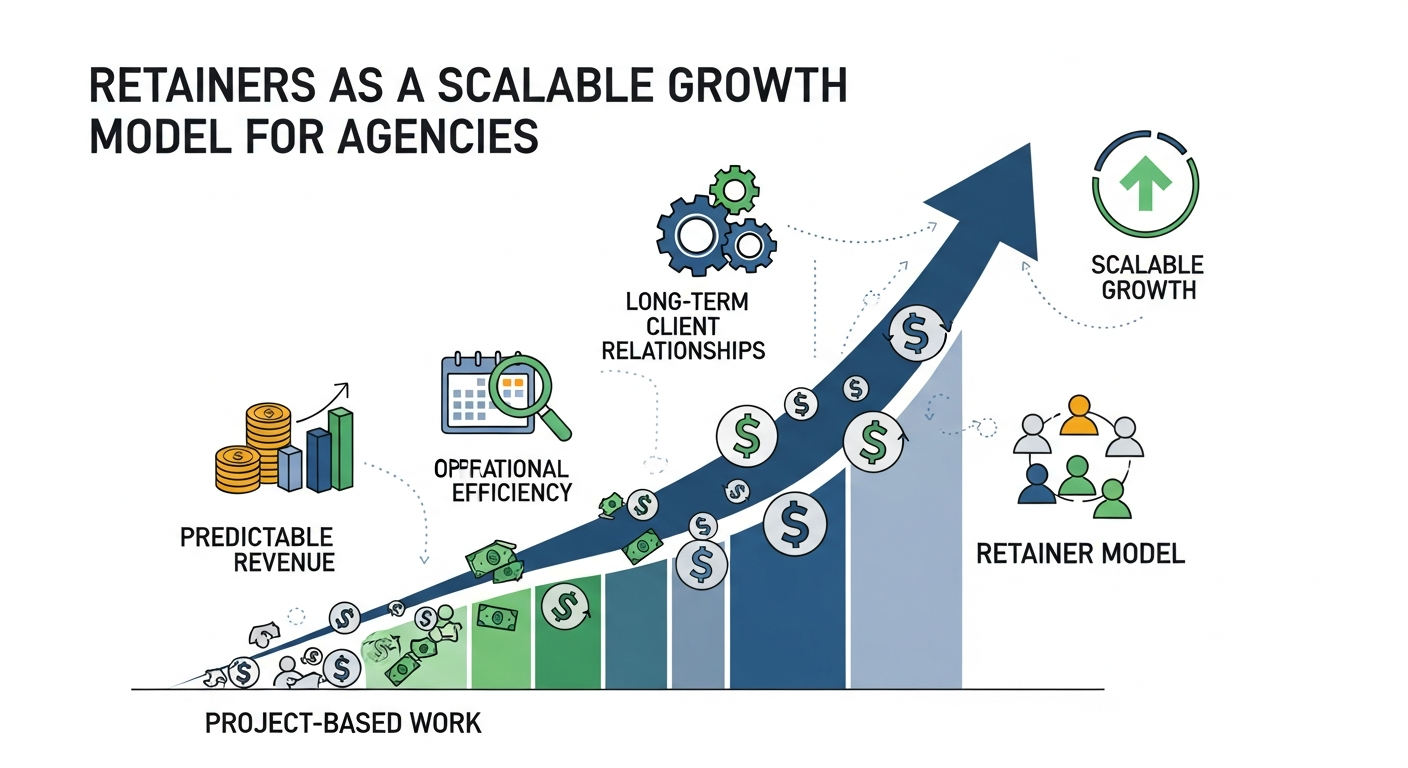
Inbound marketing retainers are not only stable—they are scalable. With standardized processes, documented workflows, and defined service packages, agencies can grow without sacrificing quality. Retainers make workload forecasting easier, enabling better resource allocation and team utilization. As agencies scale, they can introduce specialization, invest in automation, and improve margins. This scalability supports sustainable growth rather than burnout-driven expansion. Additionally, long-term client relationships increase lifetime value and reduce churn, making growth more efficient. Agencies that build their operations around retainers are better positioned to adapt, expand into new markets, and remain resilient in an increasingly competitive industry.
The Future of Agency-Client Relationships
The inbound retainer model turns agency-client relationships into long-term partnerships. This aligns agency success with client success, creates recurring revenue, and drives sustainable growth.
Marketing agencies that invest in this model are positioned to lead the next era of the subscription economy — with greater efficiency, stronger client bonds, and superior ROI delivery.
Conclusion
The inbound marketing retainer model offers a sustainable, long-term solution for both marketing agencies and clients. By focusing on consistent content creation, SEO, and lead nurturing, agencies can secure predictable revenue, enhance client relationships, and provide value that drives growth. This model strengthens partnerships, leading to mutual success and positioning agencies for future growth in the subscription economy.
FAQ
1. What is an inbound marketing retainer?
An inbound marketing retainer is a long-term contract where clients pay a fixed monthly fee for ongoing marketing services, such as SEO, content creation, social media management, and email marketing. This ensures consistent strategy execution and sustainable growth over time.
2. What are the benefits for marketing agencies with retainers?
Retainers provide predictable cash flow, help with long-term team and client relationships, and create consistent marketing strategies. This leads to more efficient operations, better talent retention, and stronger results for clients.
3. How does a retainer model differ from project-based work?
Unlike project-based work, which focuses on single, one-off tasks, a retainer model is about long-term relationships and ongoing results. Clients get continuous marketing efforts and agencies benefit from stable income and deeper client understanding.
4. How can agencies set up a successful inbound marketing retainer?
Agencies can set up a successful retainer by defining clear service packages, establishing value-based pricing, creating detailed agreements, and maintaining regular communication to manage expectations and avoid scope creep.
5. How do agencies measure the success of an inbound marketing retainer?
Agencies measure success by tracking client metrics (traffic, leads, conversions), client satisfaction (retention rates, feedback), and internal growth metrics (monthly recurring revenue, team utilization, and profitability).