
AI-driven personalization uses machine learning and real-time data to deliver tailored content and offers across inbound marketing channels. It boosts engagement, conversions, and customer loyalty by creating highly relevant, dynamic experiences based on individual behavior and preferences.
In today’s crowded digital landscape, generic messages no longer cut through the noise. Your audience expects relevant, timely, and personalized experiences at every touchpoint. Enter AI-driven personalization: a game-changing approach that leverages machine learning, predictive analytics, and real-time data to deliver bespoke content and offers.
Understanding AI-Driven Personalization

AI-driven personalization uses algorithms to analyze individual behaviours, preferences, and demographic data. By processing large datasets in real time, AI systems can predict what each visitor is most likely to engage with next—whether it’s a tailored blog post, a product recommendation, or a special offer. Unlike rules-based personalization that depends on manual segmentation, AI models continuously learn and refine their predictions, making them more accurate over time.
This continuous learning capability allows AI systems to adapt instantly to changes in user behavior, seasonal trends, and shifting market demands. As users interact with websites, emails, or mobile apps, AI analyzes every click, scroll, and interaction to fine-tune future content delivery. This ensures that personalization remains relevant, timely, and highly effective.
Another key advantage of AI-driven personalization is its ability to operate at scale. While traditional personalization methods struggle to manage thousands of audience segments manually, AI can handle millions of users simultaneously—delivering individualized experiences without additional human effort. This scalability makes AI especially powerful for fast-growing businesses and large digital platforms.
AI-driven personalization also supports predictive engagement rather than reactive marketing. Instead of waiting for users to take action, AI anticipates needs before they arise—for example, recommending products based on browsing patterns, triggering offers when purchase intent is detected, or surfacing educational content at the exact stage of the buyer’s journey.
As data accuracy improves over time, AI personalization becomes even more precise. With fewer irrelevant messages and fewer missed opportunities, businesses benefit from stronger engagement, improved conversion rates, and deeper long-term customer relationships. This makes AI-driven personalization a cornerstone of modern digital marketing strategies. Learn more about AI-Powered Chatbots in Inbound Marketing.
Why Personalization Matters in Inbound Marketing
Inbound marketing is all about attracting, engaging, and delighting prospects by providing valuable content on their terms. Personalization amplifies this approach by ensuring every piece of content aligns with an individual’s needs, context, and stage in the buyer journey. The benefits include:
Higher Engagement: Personalized headlines and calls-to-action see significantly higher click-through rates.
Better Conversion Rates: Visitors are more likely to convert when offers resonate with their interests.
Improved Customer Loyalty: Tailoring post-purchase content and recommendations drives repeat business.
Enhanced Customer Experience: An individualized journey makes prospects feel understood and valued.
Personalization allows brands to move away from generic broadcast marketing and toward meaningful one-to-one communication. When users receive content that directly reflects their interests, behaviour, and intent, they are far more likely to stay engaged and continue interacting with the brand across multiple touchpoints.
In inbound marketing, timing plays a critical role, and personalization ensures messages are delivered at the most impactful moments. Whether it’s sending a targeted email after a website visit, displaying relevant content based on browsing history, or triggering product recommendations during checkout, personalized experiences strengthen the entire customer journey.
Another major advantage of personalization is its ability to nurture leads more effectively. By aligning content with each stage of the funnel—awareness, consideration, and decision—brands can guide prospects naturally toward conversion rather than pushing aggressive sales messages. This creates trust and positions the brand as a helpful authority.
As competition increases in the digital space, personalization becomes a powerful differentiator. Brands that invest in tailored inbound experiences stand out, build stronger emotional connections, and foster long-term relationships that drive sustainable business growth.
Key Components of AI-Driven Personalization
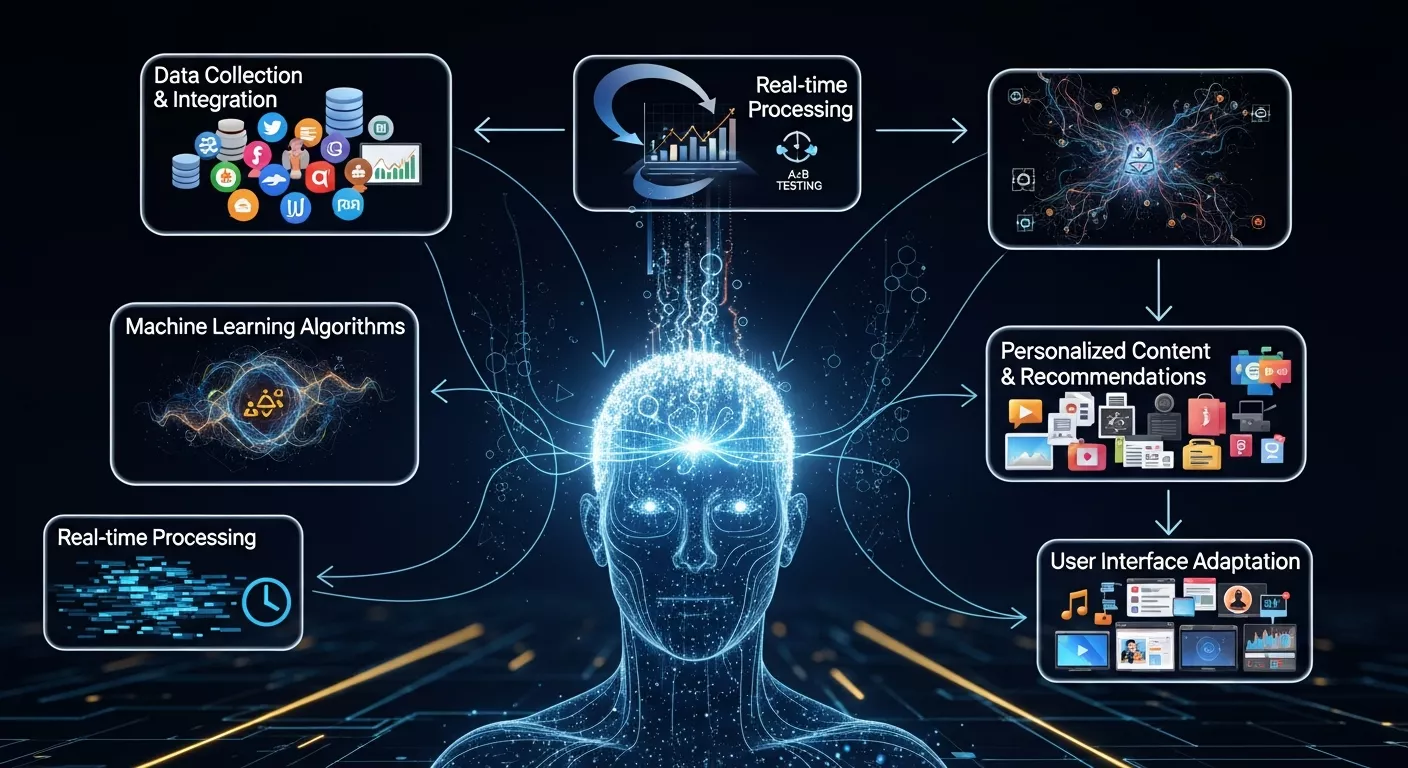
To leverage AI effectively, you need to understand its core components:
Data Collection — Unifying first-party data from web analytics, CRM, email platforms, and social media to build a complete customer profile.
Behavioral Analysis — Tracking page views, click paths, session duration, and content interactions to infer interests and intent.
Machine Learning Models — Training algorithms on historical data to predict future actions such as content preference or purchase likelihood.
Real-Time Decision Engine — Serving personalized content, product recommendations, and pop-ups based on live user signals.
Continuous Optimization — A/B testing and reinforcement learning loops to refine personalization rules and improve accuracy.
Data collection acts as the foundation of AI-driven personalization. The more accurate, diverse, and up-to-date the data, the more precise the personalized experiences become. Bringing multiple data sources together eliminates information silos and creates a unified view of each customer across channels.
Behavioral analysis allows AI systems to move beyond basic demographics and focus on real user intent. By analyzing how users navigate a website, which content they consume, and where they spend time, AI can identify patterns that reveal deeper interests and purchasing motivations.
Machine learning models continuously evolve as new data is introduced. Unlike static rules, these models adapt automatically to changing user behavior, seasonal trends, and shifting market conditions. This enables brands to stay relevant without constant manual adjustments.
The real-time decision engine is where personalization becomes visible to users. It ensures that the right content, offers, or recommendations appear at the exact moment they are most likely to influence action, creating seamless and highly relevant experiences.
Continuous optimization ensures that personalization strategies never become outdated. Through ongoing testing and feedback loops, AI learns what works best for different audience segments, steadily improving conversion rates, engagement, and overall campaign performance.
Steps to Implement AI Personalization in Your Inbound Strategy
Ready to get started? Follow these steps to build an AI-driven personalization workflow:
Audit Your Data Sources — Ensure your website, CRM, marketing automation, and customer support systems are integrated. Cleanse and unify your datasets to eliminate duplicates and inaccuracies.
Define Personalization Goals — Are you aiming to increase email open rates, boost on-site conversions, or improve product cross-sells? Prioritize objectives to select the right metrics and tactics.
Select the Right AI Tools — Evaluate platforms that specialize in predictive analytics, real-time content delivery, and dynamic recommendations. Look for pre-built integrations with your tech stack.
Build User Segments — Use clustering algorithms to group similar visitors based on behaviour, demographics, and purchase history. These micro-segments enable hyper-targeted messaging.
Create Dynamic Content — Develop modular content blocks—headlines, images, CTAs—that can be assembled on the fly by the AI engine.
Test & Iterate — Launch personalization tests on a subset of traffic. Monitor performance against control groups, then scale successful variants sitewide.
Monitor & Optimize — Set up dashboards for key metrics like click-through rate, time on page, and conversion rate. Adjust machine learning thresholds and creative assets for continuous improvement.
Auditing your data sources is essential because AI systems rely entirely on the quality of input data. Poor integration or outdated records can weaken algorithm accuracy and lead to irrelevant personalization. A clean, centralized dataset ensures consistent experiences across channels.
Defining clear personalization goals keeps your strategy focused and measurable. Without specific objectives, it becomes difficult to determine whether AI personalization is generating real business value or just surface-level engagement.
Selecting the right AI tools directly impacts scalability and performance. The ideal platform should integrate smoothly with your existing marketing ecosystem while offering automation, analytics, and real-time personalization capabilities.
Building user segments with AI creates smarter targeting than traditional static segmentation. These micro-segments continuously adapt as user behavior evolves, helping brands stay relevant at every stage of the buyer journey.
Creating dynamic content allows AI to personalize experiences instantly. Instead of building separate campaigns for every audience type, modular content lets algorithms assemble the most relevant version in real time.
Testing and iteration ensure that your personalization strategy continues to improve. A/B testing validates what works best, while performance data guides smarter decision-making as campaigns scale.
Ongoing monitoring and optimization keep AI models aligned with business goals. As customer behavior changes, continuous refinements ensure that personalization remains effective, accurate, and conversion-focused.
Top Tools & Technologies for AI Personalization
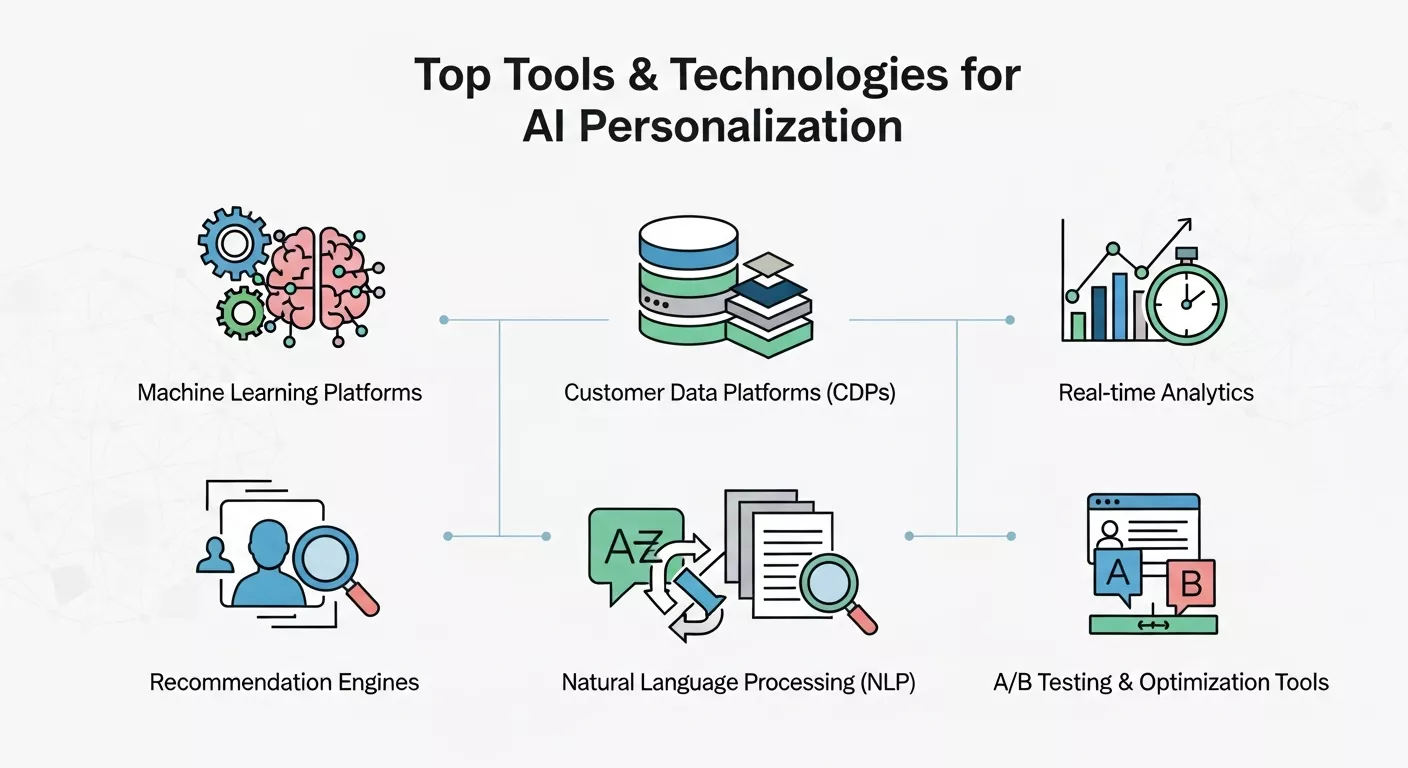
There’s no shortage of AI solutions on the market. Consider these leading platforms:
| Tool / Platform | Description |
|---|---|
| HubSpot CMS Hub | Built-in smart content modules and behavioral targeting powered by HubSpot CRM data. |
| Dynamic Yield | Real-time personalization, testing, and optimization for web, mobile apps, and email. |
| Segment & Twilio Engage | Data routing and activation for personalized cross-channel campaigns. |
| Optimizely (formerly Episerver) | AI-powered recommendations, journey orchestration, and A/B testing. |
| Adobe Target | Automated personalization with AI models integrated into the Adobe Experience Cloud. |
Best Practices for Success
To maximize results, adhere to these best practices:
- Privacy & Compliance — Obtain explicit consent for data collection. Stay GDPR and CCPA compliant to build trust.
- Transparency — Inform users that content is personalized. A small badge or note helps manage expectations.
- Human Oversight — Review AI recommendations to ensure they align with brand voice and legal guidelines.
- Balanced Automation — Automate repetitive tasks but maintain strategic control over creative direction.
- Cross-Functional Collaboration — Involve marketing, sales, IT, and data science teams for seamless execution.
Measuring Impact & Key Metrics
Track these KPIs to quantify the effectiveness of your AI personalization efforts:
- Personalized Click-Through Rate (PCTR)
- Conversion Rate Uplift
- Average Order Value (AOV) Increase
- Customer Lifetime Value (CLV) Growth
- Churn Rate Reduction
Common Challenges & How to Overcome Them
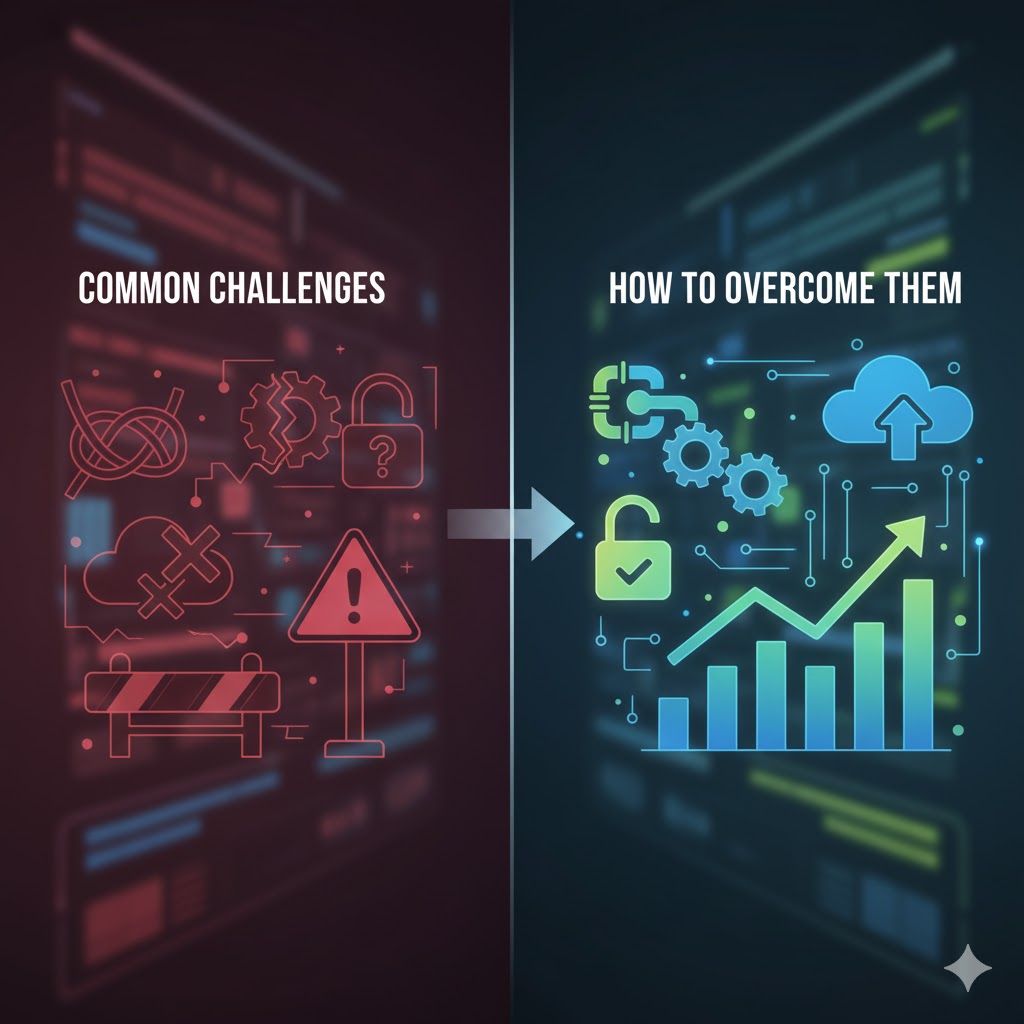
Implementing AI-driven personalization is not without hurdles. Here’s how to tackle the most common issues:
Data Silos — Break down departmental barriers and invest in a centralized customer data platform.
When data is scattered across different departments such as marketing, sales, and customer support, it becomes difficult to build a unified customer profile. A centralized customer data platform ensures that all relevant information flows into one system, enabling accurate personalization and seamless user experiences across all touchpoints.
Insufficient Data Quality — Regularly audit and clean your databases. Use data enrichment services to fill gaps.
Poor-quality data leads to inaccurate predictions and ineffective personalization. Routine data audits help identify duplicates, outdated records, and missing fields. Data enrichment services can further enhance customer profiles by adding verified demographic, behavioral, and firmographic information.
Algorithmic Bias — Monitor model outputs for skewed results. Retrain your algorithms with diverse datasets.
AI systems can unintentionally reinforce bias if they are trained on limited or unbalanced data. Regular monitoring ensures that predictions remain fair and inclusive. Retraining models with diverse datasets helps improve accuracy and prevents exclusion of certain audience segments.
Over-Personalization — Avoid making users uncomfortable. Limit the number of dynamic elements per page and test for user acceptance.
Excessive personalization can feel intrusive and reduce user trust. Maintaining a balance between relevance and privacy is essential. Controlled testing helps determine how much personalization users respond to positively without feeling overwhelmed.
Scalability Concerns — Choose cloud-based AI solutions that auto-scale during traffic spikes.
As your business grows, personalization systems must handle increasing amounts of data and user activity. Cloud-based AI platforms automatically adjust computing resources during high-traffic periods, ensuring consistent performance without system slowdowns.
Conclusion
AI-driven personalization is no longer a futuristic concept—it’s a fundamental component of any high-performing inbound marketing strategy. By leveraging real-time data, machine learning, and dynamic content delivery, you can craft individualized journeys that delight prospects and drive measurable growth. Start small with one use case, measure the results, then expand your AI initiatives across channels. With the right tools, governance, and best practices in place, your inbound marketing will become more relevant, efficient, and profitable than ever before.
FAQ
1. What is AI-driven personalization?
It uses machine learning and real-time data to deliver customized content, product recommendations, and offers based on user behavior, preferences, and demographics.
2. Why is AI personalization important for inbound marketing?
It increases engagement, improves conversion rates, strengthens customer loyalty, and enhances the overall user experience.
3. What data is used for AI personalization?
First-party data from websites, CRM systems, emails, social media, and behavioral tracking tools.
4. Is AI personalization safe and compliant with privacy laws?
Yes, when implemented with user consent and in compliance with GDPR and CCPA regulations.
5. How quickly can businesses see results from AI personalization?
Initial performance improvements can appear within weeks, with consistent growth over 1–3 months.