
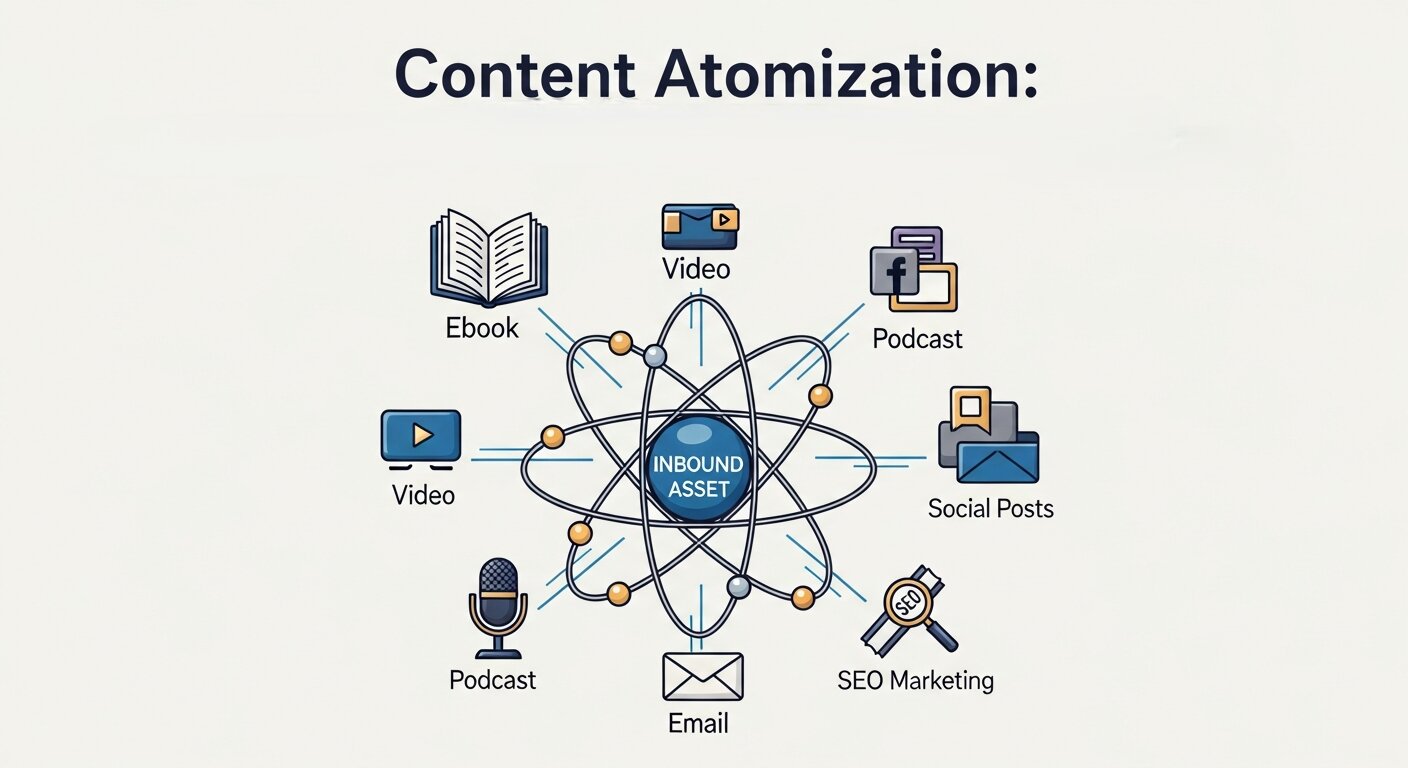
Content atomization transforms your best assets into multiple high-impact pieces. By strategically breaking down, adapting, and distributing content, you increase engagement, reach, and SEO performance. The approach builds sustainable marketing momentum without constantly creating new content.
Content atomization is a powerful approach to maximize the value of your existing content, but it can seem complex to implement at first. Many marketers wonder how to start, which pieces to prioritize, and how to adapt content effectively across multiple platforms. The goal of this FAQ is to clarify these common questions, helping you understand how to turn your comprehensive assets into smaller, high-impact pieces that engage audiences everywhere. By applying these strategies thoughtfully, you can increase reach, improve engagement, and make your content work harder without always creating from scratch.
Beyond Basic Repurposing

Content atomization goes far beyond traditional repurposing. It’s not merely about taking existing content and reformatting it for a different channel. A well-executed Content Atomization Strategy involves identifying the core value units within your best-performing content and transforming them into smaller, standalone assets that can be strategically deployed across multiple platforms. Think of it as deconstructing a gourmet meal into its essential ingredients, then using those ingredients to craft new dishes tailored to different tastes. This approach ensures that the original content’s depth and value are preserved while offering variety and accessibility that resonates with diverse audience preferences.
Why Most Content Remains Underutilized

Many marketing teams operate on a perpetual content creation hamster wheel. They produce a piece, promote it briefly, and then immediately rush to create the next item on their calendar. This cycle leaves high-value content underexploited, as much of it never reaches its full potential. This “create and abandon” mindset is often fueled by the false belief that audiences constantly need fresh content. In reality, most of your audience only ever encounters a small fraction of what you publish, and many of your best insights go unnoticed.
At InboundMarketo, we’ve observed that implementing a robust Content Atomization Strategy consistently delivers stronger results than continuously producing new pieces from scratch. By extracting and deploying high-value content atoms, teams can maximize audience engagement and reach without overextending resources.
The Strategic Atomization Process
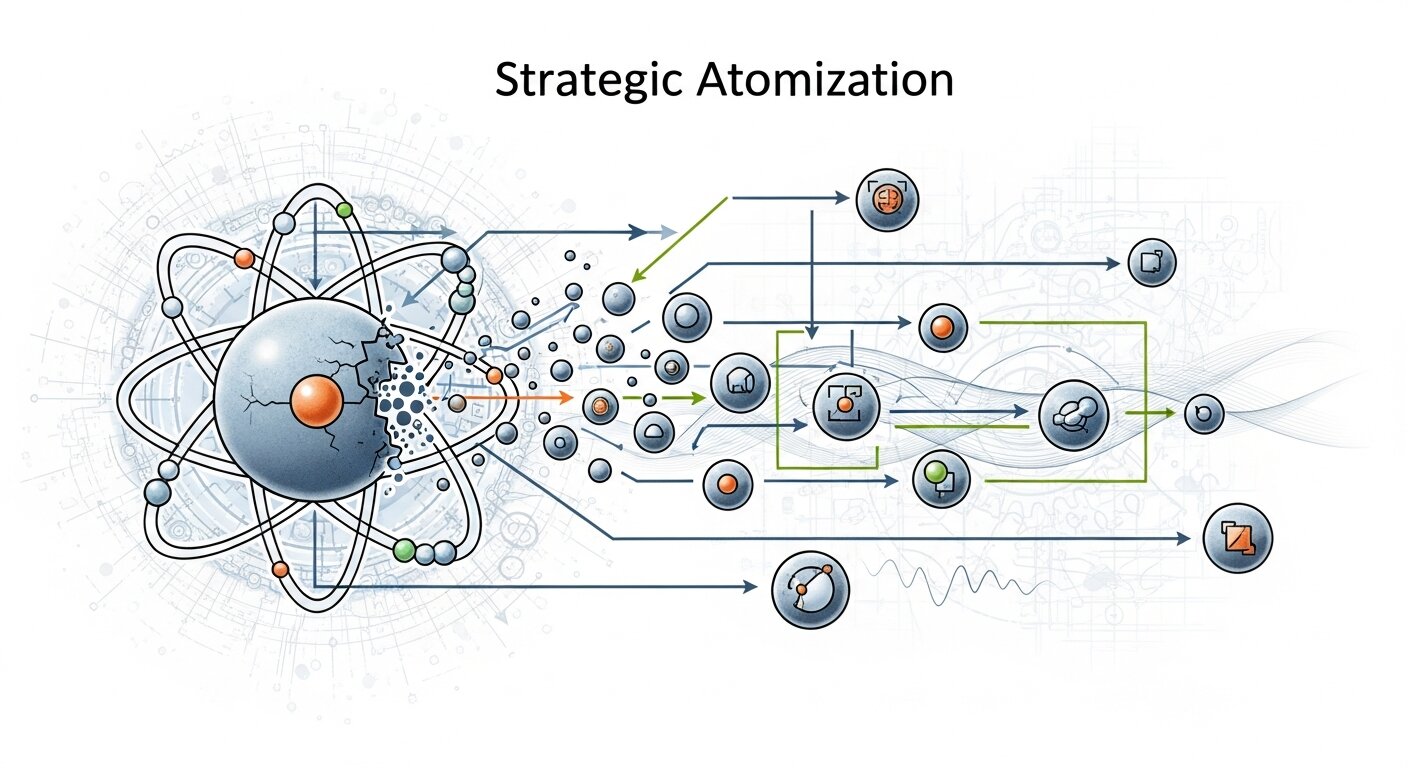
A successful Content Atomization Strategy begins with selecting the right parent content to deconstruct. Not every piece is suitable for atomization, so prioritize comprehensive, high-performing, and evergreen content. Look for assets that contain multiple distinct insights, actionable takeaways, or unique perspectives. Choosing pieces that reflect your core expertise or differentiation ensures that each atom reinforces your brand authority across channels.
Once the parent content is identified, the next step is extracting the valuable atoms. This is the heart of any Content Atomization Strategy—transforming your full-length content into smaller, actionable units that still deliver meaningful value on their own.
Identifying Your Content Atoms
The most effective content atoms are self-contained, memorable, and actionable. They should provide immediate value while enticing readers to explore the parent content for additional insights. Start by identifying key industry trends or statistical findings. Look for powerful quotes that encapsulate your core arguments or expert perspectives. Extract step-by-step processes or actionable frameworks that solve specific problems for your audience. Compelling examples, case studies, or real-world success stories can also serve as strong atoms.
A well-planned Content Atomization Strategy ensures that each atom delivers both insight and intrigue. By carefully choosing the pieces that resonate most with your audience, each atom can act as a standalone resource while naturally encouraging deeper engagement with the full content. Over time, this approach amplifies the reach of your most valuable content and establishes a consistent, recognizable presence across multiple platforms.
Platform-Specific Transformation
Once you’ve identified your content atoms, the next step in a successful Content Atomization Strategy is adapting them for different platform contexts and aligning them with audience expectations. Each platform has its own unique style, engagement patterns, and consumption habits, so a one-size-fits-all approach won’t maximize the potential of your atoms. For instance, Twitter (or X) prioritizes brevity and immediacy. Transform your insights into punchy statistics, compelling charts, or attention-grabbing visuals that communicate the core idea in seconds.
LinkedIn, on the other hand, rewards professional depth and thought leadership. When applying a Content Atomization Strategy here, develop well-structured posts that explore your insights, provide actionable advice, or contextualize your data for industry professionals. These posts should reflect expertise and stimulate meaningful discussion while linking back to the original, more comprehensive content.
Instagram thrives on visual storytelling. A robust Content Atomization Strategy leverages this by turning content atoms into visually engaging carousels and infographics that guide followers through complex ideas in a simplified and aesthetically appealing way. Similarly, TikTok and Reels favor authentic, quick-paced demonstrations. Show, don’t just tell, your insights through concise videos that emphasize practicality, creativity, and relatability.
According to Content Marketing Institute, content that is strategically atomized through a well-planned Content Atomization Strategy can generate 3–5x more engagement than entirely new content created with the same resource investment. This is because each atom reaches audiences in ways tailored to the platform, making it more likely that the content resonates and is shared.
Maintaining Coherent Messaging
Even while tailoring atoms for multiple platforms, maintaining consistent narrative continuity is essential. A strong Content Atomization Strategy ensures that your brand messaging remains intact across all content pieces. Establish a recognizable content signature through consistent visual styles, terminology, or frameworks that audiences can quickly identify, no matter where they encounter the atom.
Employ a hub-and-spoke approach within your Content Atomization Strategy by linking each atom back to the original comprehensive resource. This not only reinforces your overarching message but also encourages deeper engagement with the parent content. Each atom, regardless of platform, should clearly communicate your primary insight or unique perspective, creating a cohesive content ecosystem rather than a series of disconnected fragments.
The SEO Advantages of Atomization
Beyond engagement and reach, a Content Atomization Strategy delivers powerful SEO benefits. Every atom creates additional entry points into your content ecosystem, enabling diverse keyword targeting and strengthening your site’s search authority. Internal linking between atoms and parent content enhances relevance signals, while increased engagement metrics across platforms send positive quality signals to search engines.
Search Engine Journal reports that websites implementing a comprehensive Content Atomization Strategy often see 2–3x higher organic traffic growth compared to those relying solely on newly created content. The key is ensuring that each atom provides standalone value while naturally guiding users toward additional resources. When executed correctly, a Content Atomization Strategy not only amplifies reach and engagement but also reinforces your website’s authority and long-term search visibility.
Leveraging Atomization for Testing
Content atoms serve as ideal testing grounds for refining messaging before investing heavily in large-scale content initiatives. A well-executed Content Atomization Strategy allows marketers to experiment on a smaller scale, gathering insights without committing extensive resources. Before developing a comprehensive whitepaper or an in-depth report, you can test key concepts through social posts, short videos, or micro-blogs to gauge audience resonance. By trialing different framings of the same insight, you can identify which approach generates the highest engagement. Experimenting with various visual treatments or presentation styles further helps determine what captures attention most effectively. These small-scale experiments, guided by a systematic Content Atomization Strategy, provide valuable data that can inform and optimize larger content investments, reducing risk while improving overall impact.
To make atomization sustainable, it must be integrated into your content creation workflow rather than treated as a sporadic activity. A successful Content Atomization Strategy begins during the planning phase by structuring parent content with modular sections that are easier to extract as atoms later. Developing templates for common atomization formats streamlines the process, while platform-specific style guides maintain brand consistency and ensure each atom aligns with channel expectations. Scheduling dedicated atomization sessions allows teams to focus on transforming existing assets into multiple high-value pieces rather than relying solely on creating new content from scratch.
Adopting a Content Atomization Strategy also transforms the way content planning is approached. Instead of relying on a linear content calendar, marketers can build an interconnected content ecosystem. Mapping relationships between related content atoms and visualizing user journeys across platforms creates a more strategic approach that identifies gaps where key insights lack sufficient atomic representation. This ecosystem approach not only maximizes efficiency but also ensures that each piece contributes to a cohesive audience experience, something a simple calendar-driven model cannot achieve.
Measuring the success of a Content Atomization Strategy requires looking beyond basic volume metrics. Engagement should be tracked across the full content ecosystem rather than focusing on individual platforms alone. It is important to monitor audience progression from initial atom exposure to the consumption of parent content and to analyze how cross-platform exposure drives audience growth. By documenting efficiency gains—comparing the resources invested against the total engagement generated—you can demonstrate the tangible ROI of atomization.
Despite its potential, content atomization can fall short without careful planning. Avoid over-atomizing weak content, as not every piece merits expanded distribution. Resist the temptation to simply shrink content without meaningful adaptation for the target platform. Regularly update atoms when parent content evolves to prevent conflicting messaging, and be mindful of spacing atomic content appropriately to prevent audience fatigue. Following these best practices ensures that your Content Atomization Strategy is both effective and sustainable.
Looking ahead, content atomization is becoming increasingly essential in a saturated digital landscape. Brands that thrive will not necessarily be those producing the most content but those leveraging a Content Atomization Strategy to extract maximum value from their highest-performing assets. This approach aligns marketing efficiency with audience needs, delivering insights in formats and channels that audiences prefer. By embracing atomization, marketing teams can break the exhausting create-and-abandon cycle, creating a continuous flow of high-value content that builds long-term engagement.
Getting started with a Content Atomization Strategy begins with auditing your existing content to identify your most comprehensive and high-value pieces. Select one top-performing asset and map out at least ten potential atoms it contains. Transform these atoms into platform-specific content while maintaining consistent messaging, and ensure clear pathways back to the original content through calls-to-action or resource links. Track engagement across both atoms and parent content to assess overall impact. The elegance of a Content Atomization Strategy lies in its balance of efficiency and effectiveness: it allows marketers to leverage existing content to create sustainable momentum, building cumulative impact over time. When implemented thoughtfully, content atomization doesn’t just stretch your resources—it fundamentally transforms how audiences discover, engage with, and benefit from your most valuable insights.
Frequently Asked Questions
What is content atomization?
Content atomization is the process of breaking down your comprehensive content into smaller, self-contained pieces—called “atoms”—that can be repurposed across multiple platforms to maximize reach and engagement. It complements strategies like What is Inbound Content Marketing? A Beginner’s Guide to Winning Customers by extending the life and visibility of your top-performing content.
Why is content atomization important?
It allows you to extract more value from your best content, reach different audience segments, improve engagement metrics, and strengthen SEO signals by creating multiple entry points for your content ecosystem. When combined with Creating Content Clusters: Organizing Inbound Content for SEO Impact, atomization ensures that each piece contributes to overall topic authority.
How do I choose content for atomization?
Prioritize comprehensive, high-performing, or evergreen content that contains multiple insights, quotes, statistics, or actionable advice. These are the pieces that will deliver the most value when broken down.
What are content atoms?
Content atoms are the individual, self-contained insights, examples, quotes, or step-by-step processes extracted from a larger piece of content. Each atom should provide standalone value while hinting at the broader context.
How do I adapt content atoms for different platforms?
Tailor your atoms based on platform norms: use short, visual content for Instagram or TikTok, data-driven insights for LinkedIn, and bite-sized facts or statistics for Twitter/X. Keep the messaging consistent but format-appropriate.
Can atomized content improve SEO?
Yes. Each atom creates additional entry points for keyword targeting, strengthens internal linking, and increases engagement metrics—signals that search engines reward with higher rankings.
How often should I atomize content?
Atomization should be planned as part of your regular content workflow. Prioritize high-value parent content first, then integrate atomization sessions systematically instead of treating it as an afterthought.
What mistakes should I avoid in content atomization?
Avoid over-atomizing weak content, failing to adapt atoms to platform needs, neglecting updates when parent content changes, and overwhelming your audience with too much atomic content at once.
How do I measure the success of atomized content?
Track engagement across all platforms, analyze audience journeys from atoms to parent content, and compare total reach and interactions relative to the resources invested in atomization.
How do I get started with content atomization?
Begin with an audit of your top-performing content. Identify the insights, quotes, or processes that can become atoms. Adapt these atoms for multiple platforms, maintain consistent messaging, and measure engagement to refine the process.