
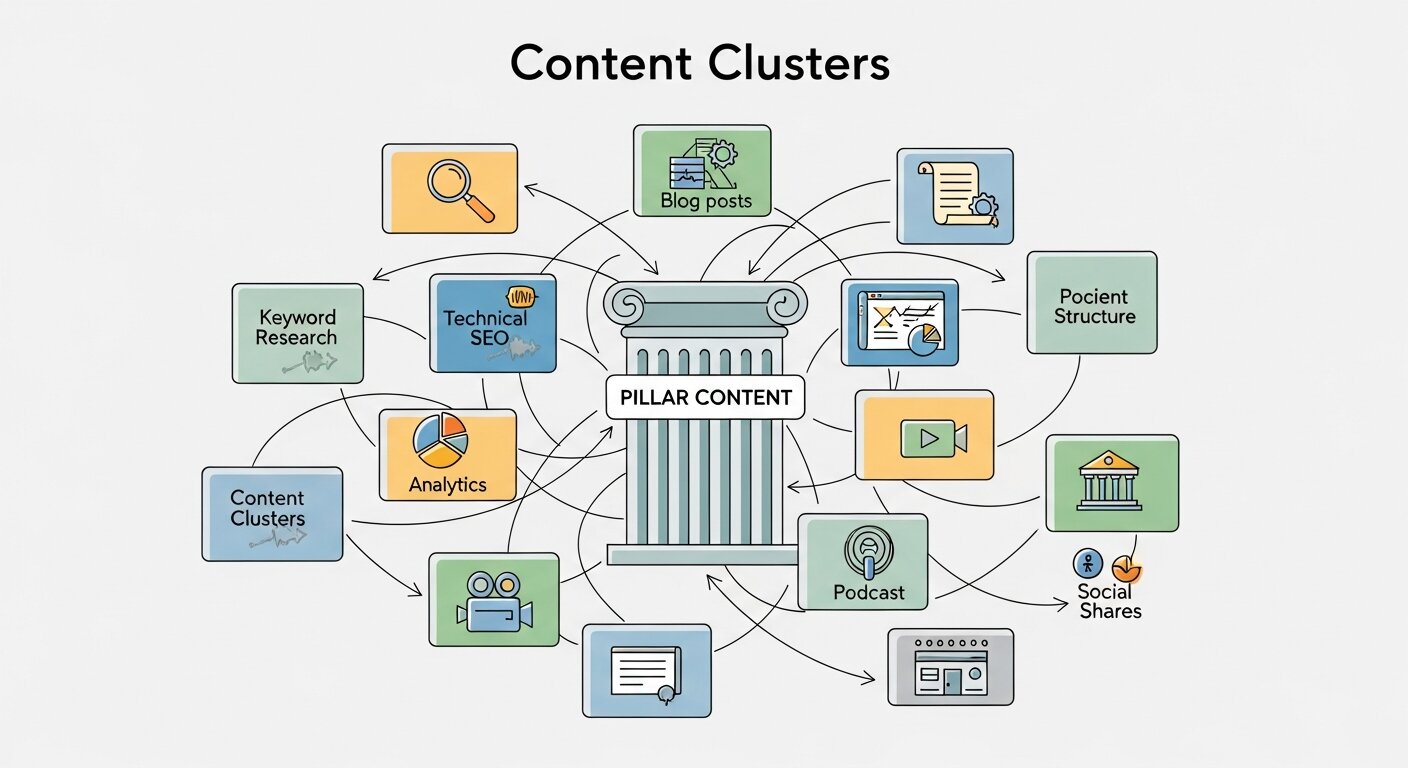
Content Cluster SEO transforms scattered content into a structured, interconnected ecosystem. Pillar pages act as the central hub, while cluster content dives deeper into subtopics, improving authority, search visibility, and user navigation. By implementing clusters thoughtfully, businesses can build long-term SEO success and create a cohesive online presence.
In today’s SEO landscape, creating scattered blog posts or isolated content pieces is no longer enough. Modern search engines prioritize websites that demonstrate topical authority and well-structured content hierarchies. Content Cluster SEO offers a strategic solution by organizing your content into interconnected clusters that reinforce each other, improve user navigation, and signal authority to search engines. By understanding and implementing content clusters, businesses can enhance search visibility, user engagement, and long-term authority, turning their website into a cohesive knowledge hub rather than a collection of disconnected pages.
Why Traditional Content Organization Falls Short
For years, many businesses approached content creation as a checklist exercise. Identify keywords with decent search volume. Create content targeting those terms. Move on to the next keyword.
This approach often left websites with scattered content landscapes, lacking clear connections or hierarchy. Search engines struggled to determine what topics these websites truly specialized in or had authority on. At the same time, users faced frustrating experiences, often landing on pages that only partially answered their questions, with no clear path to related content.
The content cluster model solves these challenges by creating intentional structure and relationships between content pieces, providing a framework that enhances both user experience and search visibility. This methodology is at the heart of Content Cluster SEO, a strategy designed to help websites demonstrate authority and topical relevance in a way search engines can easily understand.
Understanding the Content Cluster Framework
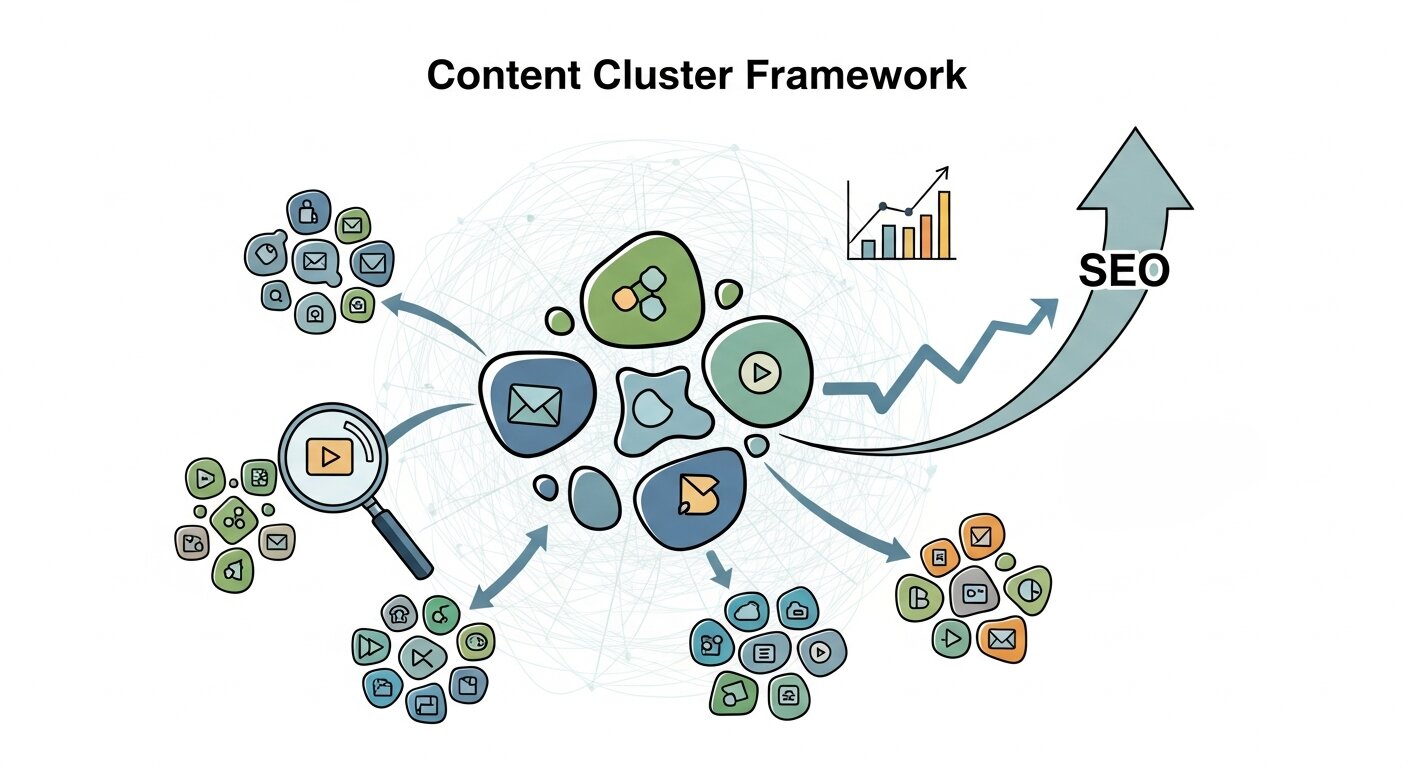
At its core, a content cluster consists of two primary elements: pillar content and cluster content. Pillar content, sometimes called pillar pages, provides comprehensive coverage of a broad topic that is critical to your business and audience. Cluster content explores specific aspects of that broad topic in greater depth, with each piece linking back to the pillar.
This hub-and-spoke structure creates a clear topical hierarchy that both search engines and users can navigate efficiently. By using Content Cluster SEO, businesses can structure their content so that each page contributes to an overarching theme, signaling authority to search engines while guiding users to related information.
A helpful analogy is to imagine your pillar content as the central chapter of a book, with cluster content forming the subchapters that provide deeper dives into specific aspects of that chapter. This approach ensures that all your content works together cohesively, reinforcing your site’s authority.
Identifying Your Pillar Topics
Effective pillar topics share several key characteristics. They represent core subjects directly relevant to your business offerings and expertise. They have sufficient search volume to warrant comprehensive coverage. They are broad enough to support multiple related cluster topics. And they align with your audience’s information needs across their buyer’s journey.
Many businesses struggle with this initial pillar topic selection. The key is balancing specificity with breadth. Too broad, and your pillar content becomes impossible to cover comprehensively. Too narrow, and you may not have enough cluster content to build a strong content ecosystem. Using a Content Cluster SEO approach helps businesses identify and organize topics that are both highly relevant and strategically structured for search visibility. You can read more about content planning frameworks for inspiration.
Crafting Effective Pillar Content
Pillar content serves as the foundation for your entire cluster, making its quality and structure critical to the success of your content strategy. Unlike standard blog posts, effective pillar pages typically offer more comprehensive coverage, often running 2,000–5,000 words. They provide high-level explanations of all major subtopics within your chosen subject area.
Effective pillar pages also include clear navigation elements, helping users quickly find sections most relevant to their needs. They introduce concepts comprehensively enough to deliver value, while leaving space for cluster content to provide deeper insights. According to Back linko’s research, top-performing pillar pages provide full topic coverage while maintaining readability and user experience.
Incorporating Content Cluster SEO principles ensures that your pillar content is optimized not only for search engines but also for user engagement. Each internal link from cluster pages to the pillar strengthens topical authority, improving overall visibility and relevance in search results.
Developing Strategic Cluster Content
Once your pillar foundation is in place, cluster content development becomes more focused and strategic. Each cluster piece should target a specific aspect of your pillar topic, addressing long-tail keywords and the precise questions your audience has. For example, a cluster article like User-Generated Content: How to Inspire Customers to Become Your Best Inbound Marketers can dive deep into leveraging customer contributions, complementing your pillar content while providing practical, actionable insights for your audience.
Cluster content should provide deeper insights than your pillar page while including contextual links back to the pillar page using anchor text that reinforces topical relevance. They should also link to other relevant cluster content, creating a network of interconnected resources. This network reinforces authority across the topic, a key aspect of Content Cluster SEO.
The cumulative effect of this strategy is powerful. Each new cluster piece reinforces your authority on the broader pillar topic, enhances discoverability, and improves user experience. Websites using Content Cluster SEO consistently see higher rankings for both broad and long-tail search queries, because search engines recognize the clear hierarchy and interconnection of content.
Incorporating Content Cluster SEO into your content strategy transforms your website from a collection of isolated pages into a well-organized, authoritative hub. Users can navigate seamlessly through related topics, while search engines understand your site as a reliable source of expertise. The result is a stronger online presence, better engagement, and improved search performance.
By embracing the content cluster framework and implementing Content Cluster SEO, businesses can move beyond the scattershot approach of traditional content creation, creating a sustainable, scalable, and strategically organized content ecosystem that delivers measurable results.
Internal Linking Strategies That Strengthen Clusters
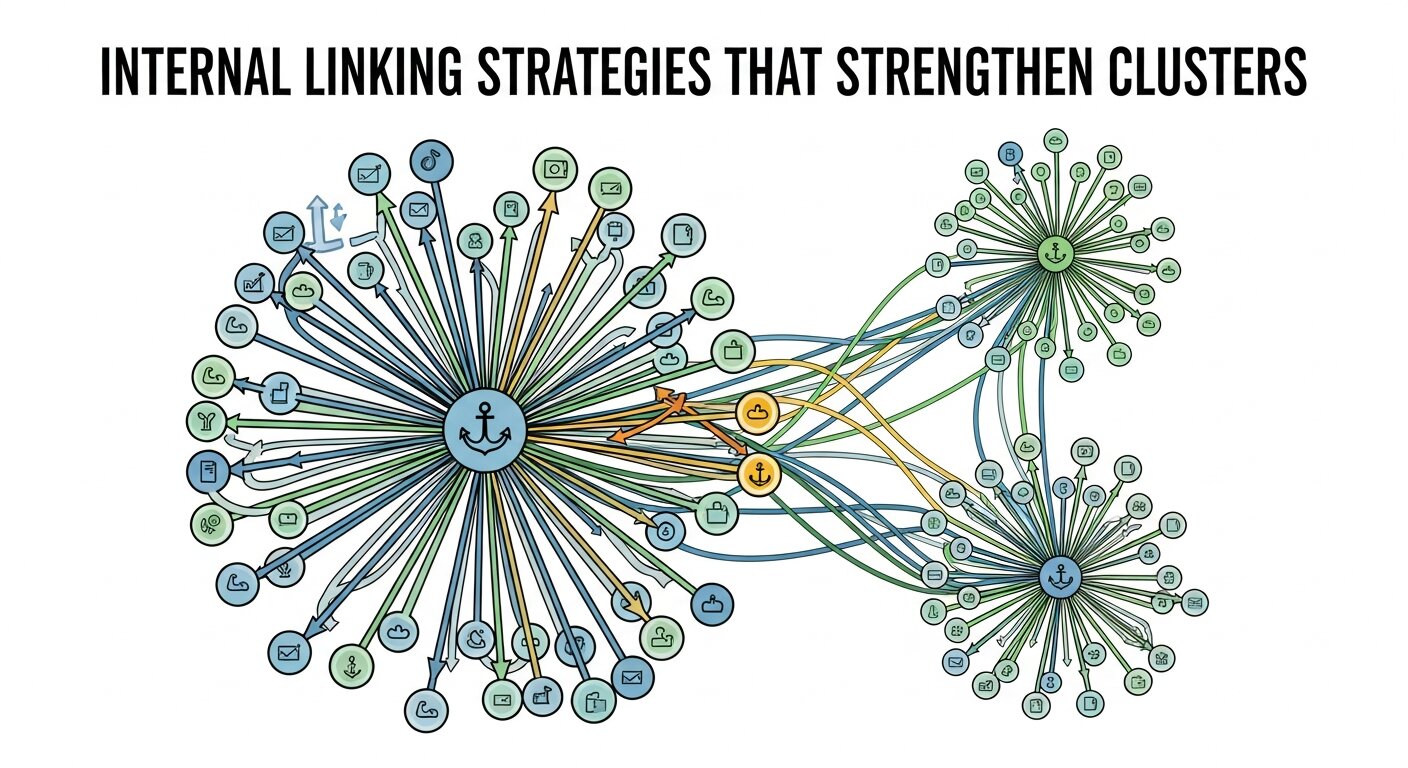
Internal linking forms the backbone of effective content clusters, yet many websites implement these links haphazardly, missing the full potential of a structured strategy. Thoughtful internal linking is a cornerstone of Content Cluster SEO, ensuring that search engines understand page relationships between your pillar and cluster content while guiding users seamlessly through your site.
To implement this effectively, always ensure your pillar page links to every piece of cluster content related to that topic. This not only establishes the pillar page as the central authority for the topic but also distributes link equity effectively throughout the cluster, reinforcing the overall topical relevance.
Each cluster piece should link back to the pillar page using varied but topically relevant anchor text. Avoid using generic anchors like “click here” or “read more.” Instead, choose anchor phrases that describe content accurately, strengthening semantic connections within your cluster. Strategic cross-links between cluster content pieces should also be created when they cover related subtopics. This web of interconnections enhances user navigation patterns , encourages longer site sessions, and solidifies your Content Cluster SEO strategy by signaling topic authority to search engines.
Updating older content regularly to incorporate links to newer cluster pieces is equally important. As your cluster grows, these updates maintain cohesion across your content ecosystem. Each new internal link not only improves discoverability for users but also strengthens the topical relevance signals thatsearch engines use to assess authority. Implementing these practices systematically is what separates successful Content Cluster SEO from fragmented content strategies that fail to maximize visibility.
Measuring Content Cluster Performance
Traditional keyword ranking approaches often fall short when evaluating the effectiveness of content clusters. Focusing solely on individual page rankings ignores the cumulative power of a structured cluster. Instead, measure topical visibility across your entire cluster, assessing how well your content collectively demonstrates authority on a subject.
Monitor aggregate organic traffic to all pages within each cluster to evaluate overall performance. Track how users navigate between your pillar and cluster content, noting patterns that indicate engagement and satisfaction. Analyze improvements in domain authority and topic-specific authority metrics over time. According to research by Search Engine Journal, websites that implement content clusters often experience domain authority growth 2–4 times faster than those with disconnected content strategies. Incorporating Content Cluster SEO principles into these evaluations ensures that your metrics reflect the true impact of a strategically organized content ecosystem.
Expanding Clusters Over Time
One of the most powerful aspects of content clusters is their ability to grow organically as you uncover new subtopics and audience questions. Keep a running document of potential cluster content ideas as you research and develop your initial pieces. By systematically planning cluster expansion, you continuously reinforce your topical authority, a key goal of Content Cluster SEO.
Monitor comments, questions, and user feedback to identify information gaps that can be filled with new cluster content. Regularly review Google Search Console data to find related queries that might merit dedicated pages within the cluster. Update your pillar content as your cluster expands to ensure it accurately reflects your current coverage depth and connections.
This evolutionary approach allows you to steadily build topical dominance without needing massive content production all at once. Each addition strengthens the overall cluster, improves search visibility, and signals to search engines that your website is a reliable source of expertise. By consistently applying these principles, your Content Cluster SEO strategy matures into a self-reinforcing system, driving both engagement and authority over time.
Content Cluster SEO is not just a framework; it is a long-term strategy that ensures every new piece of content amplifies the value of existing assets, creating a cohesive, authoritative, and highly discoverable content ecosystem.
Integrating Content Clusters With Your Sales Funnel
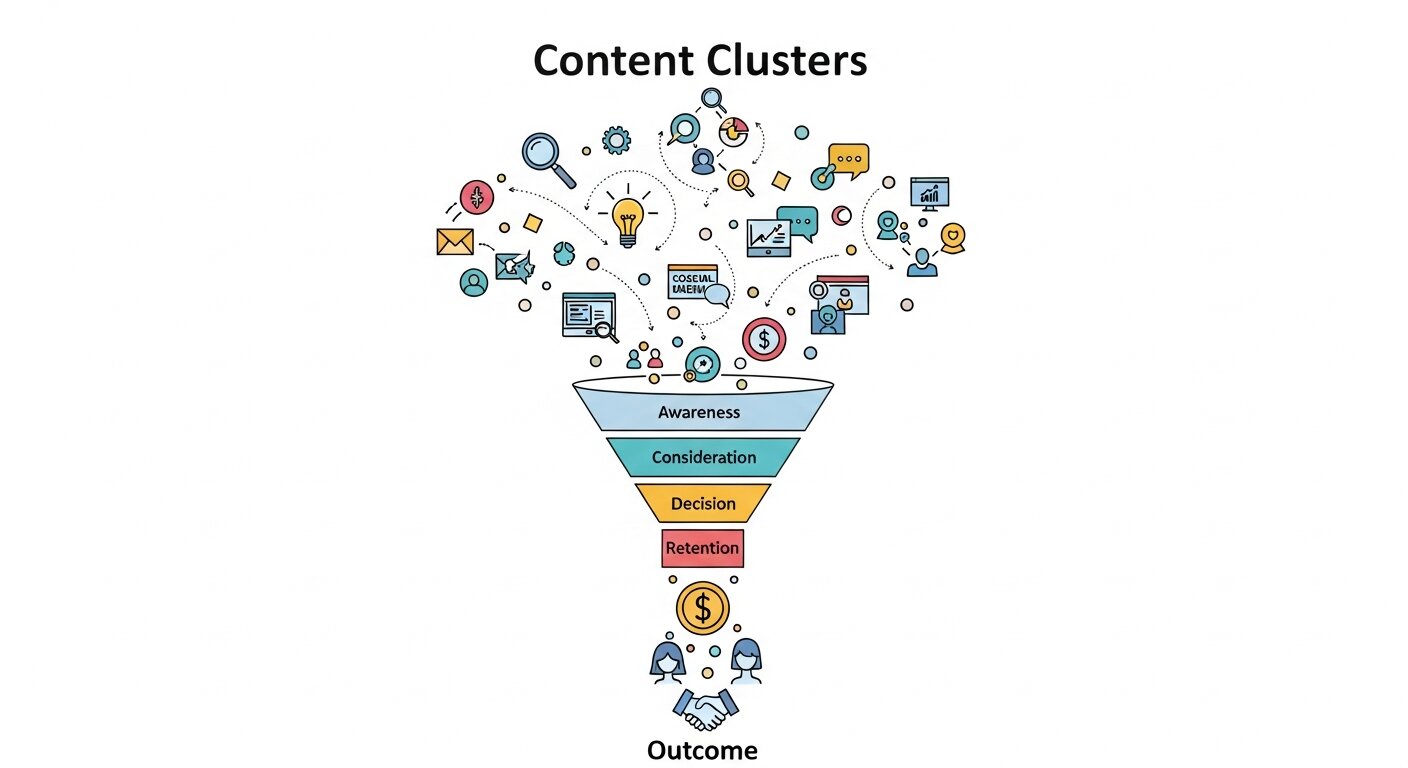
The most effective content clusters don’t just improve SEO—they align seamlessly with your audience’s buying journey. By mapping your content to the stages of the buyer’s journey, you ensure that each piece not only attracts visitors but also guides them toward meaningful conversions. This alignment is a core principle of Content Cluster SEO, which emphasizes structuring content around both user needs and search engine comprehension.
Start by creating cluster content tailored to awareness-stage questions, addressing the problems your audience is first beginning to recognize. Next, develop pieces that target consideration-stage queries, helping potential customers evaluate different solutions. Finally, design decision-stage content that answers specific questions prospects have before making final choices. Integrating these stages into your content clusters ensures that improved search visibility translates directly into measurable business results. Content Cluster SEO thrives when each cluster piece complements the others, creating a cohesive ecosystem that satisfies user intent at every stage.
The beauty of this approach lies in its dual benefits: users find the exact information they need at their current stage, while search engines receive clearer signals about the relevance and hierarchy of your content. This structured approach not only boosts rankings but also reinforces trust and authority, hallmarks of a strong Content Cluster SEO strategy.
Common Content Cluster Mistakes
Despite its effectiveness, many organizations stumble when implementing content clusters. Some create pillar pages that simply list links to cluster content without providing substantive value. Others develop cluster pieces that inadvertently compete with their pillar pages for the same primary keywords, diluting authority. Many fail to update their pillar content as their topic expertise grows, leading to outdated or incomplete information.
Another frequent mistake is insufficient differentiation between cluster topics. When topics overlap excessively, users are confused, and search engines struggle to identify the primary pillar page for ranking purposes. Avoiding these pitfalls is critical to maximizing the benefits of Content Cluster SEO. Every cluster should serve a distinct purpose while reinforcing the overarching pillar, creating clarity for both visitors and search engines.
Adapting Content Clusters for Different Industries
Content clusters are versatile, though their implementation varies depending on your business model. E-commerce companies often organize clusters around product categories, with individual product pages serving as cluster content. Service-oriented businesses build clusters around service categories and common client challenges. B2B organizations frequently focus clusters on industry-specific pain points. Educational institutions structure clusters around academic programs, career pathways, and student outcomes.
Regardless of the industry, the key principle of Content Cluster SEO remains the same: create a clear hierarchy of content that establishes authority, supports discoverability, and helps users navigate related topics efficiently.
Technical Considerations for Content Clusters
Effective content clusters require more than well-written pages; technical optimization also plays a critical role. Implement schema markup on both pillar and cluster content to help search engines understand relationships between pages. Ensure your site architecture mirrors the content hierarchy, making it easy for visitors and crawlers to follow logical paths. Integrate site search functionality that recognizes topic relationships to enhance user experience.
Develop URL structures that reflect the content cluster organization whenever possible, reinforcing the logical connections between pillar and cluster content. These technical signals complement your editorial strategy, amplifying the effectiveness of Content Cluster SEO by providing clear, machine-readable context about your site’s topic authority.
Getting Started With Your First Content Cluster
Launching your first content cluster doesn’t require overhauling your entire website. Begin with a content audit to identify existing resources that could serve as pillar topics. Expand these pages into comprehensive pillar content that covers the topic broadly while leaving room for in-depth cluster articles.
Identify gaps in your current coverage and plan a publication schedule for new cluster content. Implement strategic internal linking between existing and new pages based on cluster principles. Over time, this approach transforms your content from a collection of isolated pages into a cohesive, authoritative ecosystem.
By viewing your content as an interconnected network rather than standalone articles, you align your strategy with modern search engine algorithms and user needs. Implementing Content Cluster SEO not only improves your search rankings but also enhances user engagement, trust, and conversion potential.
Embracing the content cluster model represents a shift from traditional content planning to a holistic, scalable approach. With consistent execution, Content Cluster SEO allows your website to build long-term authority, maintain relevancy, and adapt organically as new topics and audience questions emerge, creating a sustainable foundation for ongoing organic growth.
Frequently asked questions
What is a content cluster?
A content cluster is an organized group of related content pieces centered around a core topic. It consists of a pillar page, covering the main subject comprehensively, and cluster content, which explores subtopics in depth. Internal links connect all pieces, creating a clear hierarchy that both users and search engines can navigate.
Why is Content Cluster SEO important?
It helps websites demonstrate topical authority, improves user experience by providing structured navigation, and enhances search engine visibility. Instead of competing with isolated pages, your content works together to rank higher for both broad and long-tail queries.
How do I choose pillar topics?
Pillar topics should be broad, highly relevant to your business, and able to support multiple cluster pieces. They should also align with your audience’s information needs and have sufficient search volume to justify comprehensive coverage.
What makes an effective pillar page?
A pillar page is comprehensive, often 2,000–5,000 words, covers all major subtopics, includes clear navigation, and leaves room for cluster content to explore specific areas in detail.
How do I create cluster content?
Cluster content should target specific subtopics of the pillar, address long-tail keywords, answer precise audience questions, and link back to the pillar page. Cross-linking with other cluster content strengthens authority across the topic.
How do internal links impact clusters?
Internal linking signals relationships between content to search engines and guides users seamlessly through related information. Use descriptive, topic-relevant anchor text rather than generic phrases like “click here.”
How do I measure the success of content clusters?
Focus on aggregate performance across the cluster rather than individual page rankings. Track overall organic traffic, user navigation patterns, and improvements in domain and topic-specific authority over time.
Can content clusters be used for any industry?
Yes. E-commerce clusters can center on product categories, service-based businesses on client challenges, B2B on industry pain points, and educational institutions on programs or career pathways. The key is structuring content hierarchically to show authority.
How often should I update my content clusters?
Regularly update pillar and cluster content to reflect new insights, audience questions, or additional subtopics. Adding internal links to new cluster content ensures cohesion and strengthens topical relevance.
What are common mistakes to avoid in content clustering?
Avoid clusters that compete for the same keywords, pillar pages that lack value, overlapping cluster topics, and failure to update content. Clear hierarchy, distinct subtopics, and continuous updates are critical for success.