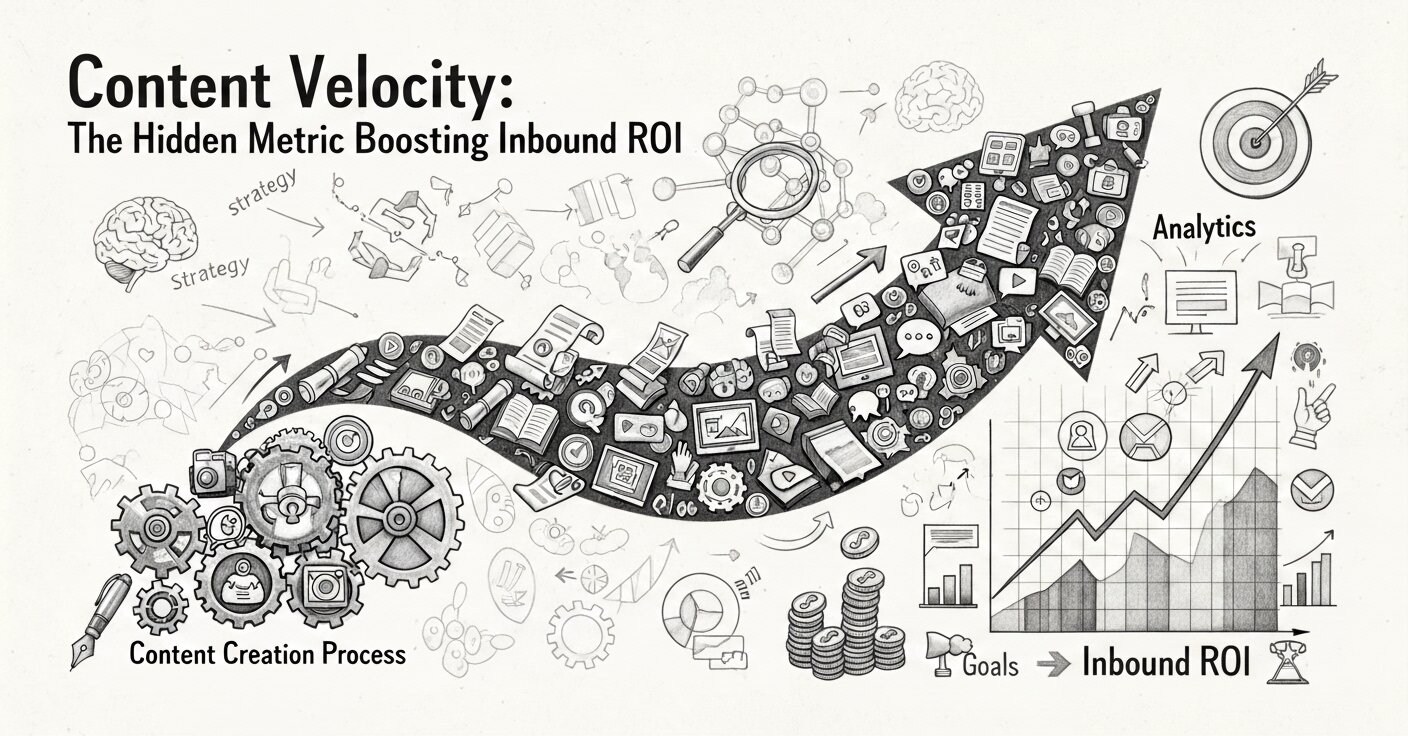
Content marketing velocity is a critical metric for modern marketing, focusing on speed and momentum rather than just totals. It allows businesses to optimize content, improve team performance, and maximize inbound marketing ROI. By prioritizing high-velocity content, marketers generate faster, measurable results and gain a competitive advantage.
In today’s fast-paced digital marketing landscape, simply measuring cumulative content results is no longer enough. Content marketing velocity focuses on the speed and momentum of your content—how quickly it engages audiences, generates leads, and drives measurable business outcomes. Understanding this metric helps marketers optimize resources, prioritize high-impact content, and align teams for maximum efficiency. By tracking acceleration across traffic, engagement, conversion, and amplification, businesses can identify which content strategies yield immediate returns and which require adjustment. Here, we answer the most frequently asked questions about content marketing velocity to help marketers leverage it effectively for improved inbound marketing ROI.
What Exactly Is Content Marketing Velocity?
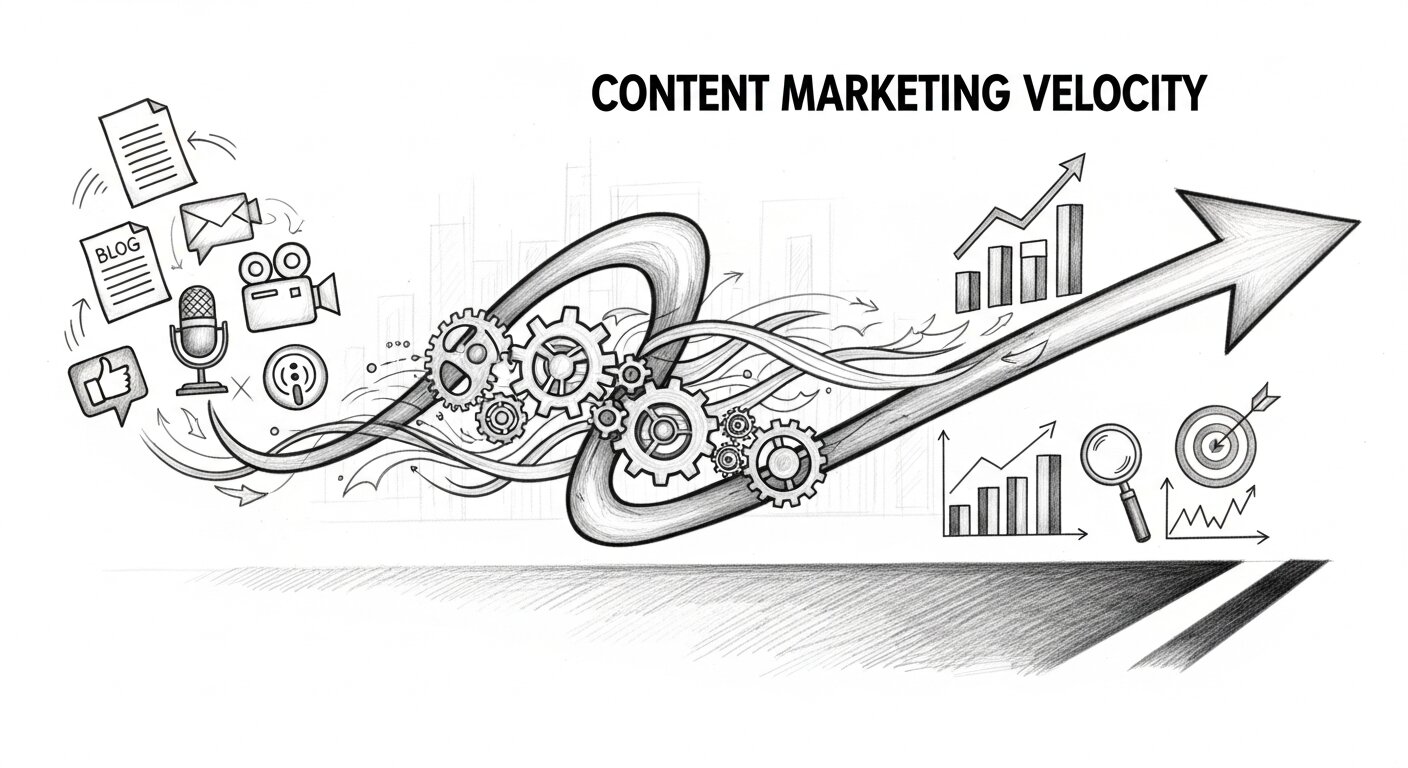
Content marketing velocity measures the speed at which your content delivers measurable value after publication. Unlike static metrics that capture performance at a single point in time, content marketing velocity tracks the acceleration of content performance across multiple dimensions over its lifecycle. It answers a critical question: how quickly is your content driving tangible business results?
This dynamic metric goes beyond mere totals to evaluate momentum. It considers the rate at which a piece accumulates qualified traffic, how rapidly it generates leads, the speed of social amplification, and ultimately, the pace at which it contributes to revenue. By focusing on velocity rather than just volume, marketers can identify which content investments generate the fastest returns and maximize overall marketing efficiency.
Why Traditional ROI Metrics Fall Short
Traditional ROI metrics often fall short because they focus narrowly on immediate financial returns, ignoring the broader impact of marketing activities. While they measure direct sales or profits, they fail to capture brand awareness, customer engagement, long-term loyalty, and intangible benefits like reputation or market influence. In today’s complex, multi-channel marketing landscape, relying solely on traditional ROI can undervalue strategies that build sustainable growth and customer relationships over time.
Understanding Content Marketing Velocity
Traditional inbound marketing metrics often provide an incomplete or misleading picture of content performance. For example, a blog post may accumulate thousands of pageviews over several months, but without context, it’s unclear whether those views translated into meaningful business outcomes within a relevant timeframe. For more insights, you can link to industry studies on content performance.
Similarly, content that produces a steady trickle of high-quality leads over weeks or months may be undervalued compared to a post that generates a short-lived spike in traffic but fails to sustain engagement. Without measuring content marketing velocity, these nuanced patterns remain invisible, leading organizations to make suboptimal decisions about resource allocation strategies.
At Inbound Marketo, we’ve observed that an exclusive focus on cumulative metrics often drives companies to invest in content that appears successful superficially but delivers results too slowly to justify the cost. Incorporating velocity as a key metric ensures faster, more strategic content marketing decisions.
The Components of Content Marketing Velocity
To fully leverage content marketing velocity, organizations must evaluate several key components:
- Traffic acceleration measures how quickly content attracts relevant visitors post-publication. High-velocity content typically exhibits a steep initial growth curve, outperforming pieces that grow steadily over time. Learn more about effective traffic measurement tools.
- Engagement acceleration captures the speed at which content generates meaningful interactions, including comments, shares, and click-throughs to related content. Fast engagement indicates content that resonates immediately with your target audience.
- Conversion acceleration tracks the time it takes for readers to take action, such as signing up for a newsletter, downloading a resource, or making a purchase. Content with high conversion acceleration delivers value quickly and creates immediate business opportunities.
- Amplification rate reflects how effectively content spreads beyond your owned channels. High-velocity content achieves rapid uptake across social media, partnerships, and influencer networks, often without requiring additional paid promotion. Explore strategies for social amplification.
By analyzing these components, marketers can quantify the true impact of their content and identify opportunities to optimize both reach and return.
How Content Marketing Velocity Transforms ROI Calculations
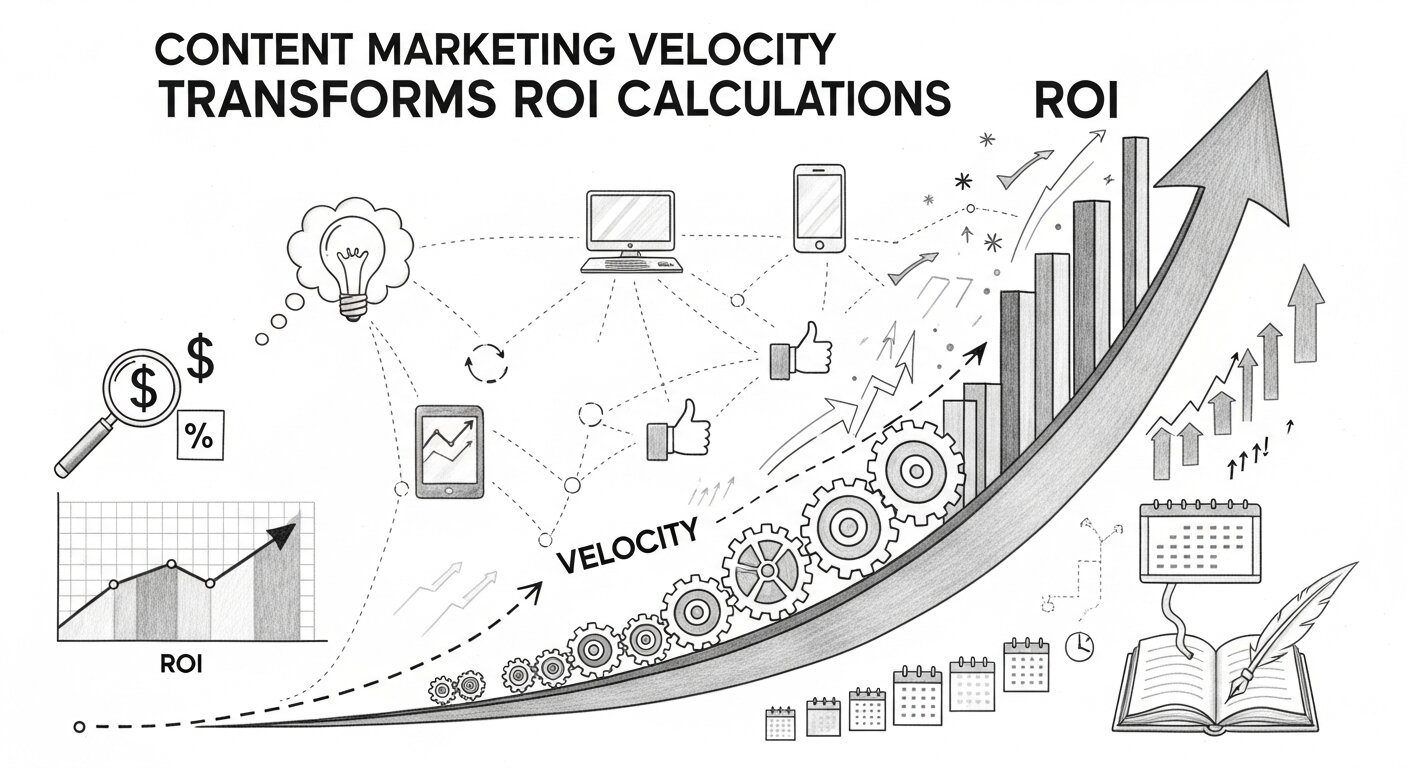
Traditional ROI calculations often undervalue content that produces quick wins while overvaluing content that accumulates modest results over long periods. Content marketing velocity corrects this imbalance by providing a more dynamic and actionable view of performance.
For instance, consider two blog posts: Post A generates 100 leads over three months, while Post B produces 80 leads in three weeks. Conventional metrics might favor Post A due to the higher cumulative total. However, by measuring content marketing velocity, it becomes clear that Post B delivers faster returns, creating immediate opportunities for sales teams and influencing shorter-term business outcomes.
Incorporating content marketing velocity into decision-making transforms how organizations allocate resources. Marketing teams can prioritize content types that generate momentum quickly, ensuring higher efficiency, greater impact, and improved ROI without necessarily increasing budgets. Over time, this approach helps build a high-performing content strategy where speed, relevance, and business impact are all optimized.
By focusing on content marketing velocity, businesses can move beyond traditional vanity metrics and adopt a performance-driven approach that directly supports growth objectives, strengthens brand presence, and maximizes the value of every content investment.
Industries Seeing the Biggest Impact from Content Marketing Velocity
Several industries are experiencing profound benefits from applying content marketing velocity to their strategies. Technology companies, in particular, are at the forefront. With short sales cycles and rapidly evolving products, these companies need content that delivers immediate engagement. Traditional slow-burn content strategies often fail to keep up, making velocity-driven approaches essential. By prioritizing content marketing velocity, tech firms can ensure their updates, feature announcements, and thought leadership pieces reach the audience when it matters most.
Professional services firms, including consultancies and agencies, have also embraced content marketing velocity. In these industries, establishing credibility quickly is critical. Content that accelerates thought leadership—such as concise case studies, expert guides, and insightful reports—helps firms build trust and deepen client relationships faster than gradual, cumulative approaches. By measuring and optimizing content marketing velocity, professional service firms can identify which pieces drive rapid recognition and authority in their markets.
E-commerce brands are another sector seeing substantial gains from velocity-focused strategies. By analyzing content marketing velocity, these companies can pinpoint product pages, promotional posts, or email campaigns that create the fastest path to purchase. Understanding which assets accelerate engagement and conversions allows e-commerce teams to prioritize high-velocity content during peak sales periods, such as product launches, seasonal promotions, or flash sales. This strategic focus on content marketing velocity enhances overall campaign efficiency and ROI.
Implementing Content Marketing Velocity Measurement
To harness the power of content marketing velocity, organizations need to rethink their analytics frameworks. Begin by defining clear measurement windows—common benchmarks include 24 hours, 7 days, and 30 days post-publication. Tracking content performance across these intervals highlights acceleration patterns rather than just cumulative results.
Next, establish velocity benchmarks for each content type. A short video or infographic might naturally generate faster engagement than a long-form whitepaper, so comparisons should be made within content categories to accurately measure content marketing velocity.
Segmenting velocity patterns by topic, audience, and persona is also crucial. Certain subjects or formats may resonate with specific audience segments, creating rapid engagement and a higher velocity profile. Tracking these patterns enables marketers to fine-tune targeting strategies and prioritize content that delivers measurable business impact quickly.
Integrate content marketing velocity insights into your content calendar. Consider seasonal trends, industry events, and news cycles, as these factors often influence how fast content gains traction. By aligning publication schedules with periods of naturally higher velocity, teams can amplify results without additional spend.
Optimizing Content for Higher Content Marketing Velocity
Once content marketing velocity is tracked and analyzed, numerous optimization opportunities emerge. Headlines and opening paragraphs are particularly influential, as they largely determine how quickly content captures attention. Testing variations that encourage immediate engagement can significantly improve early acceleration metrics.
Distribution timing is another critical factor. Review historical data to identify when previous content achieved the highest velocity and schedule future publications accordingly. Understanding the optimal windows for posting and promotion allows marketers to capitalize on audience behavior patterns, boosting content marketing velocity further.
Format adaptation can unlock hidden potential as well. Slower-moving but valuable content can be repurposed into bite-sized assets, such as infographics, short videos, or social snippets. This approach maximizes content marketing velocity without requiring entirely new production resources.
Incorporating velocity-boosting elements like timely statistics, trending topics, or industry news can also enhance acceleration. Content that connects to what audiences are already interested in naturally moves faster across channels, increasing overall content marketing velocity.
By continuously measuring, analyzing, and optimizing for content marketing velocity, businesses can ensure their marketing strategies prioritize speed, relevance, and impact. This approach not only improves engagement and conversions but also allows organizations to allocate resources more effectively, emphasizing content that delivers the fastest and most significant results.
Content Marketing Velocity and Team Performance
Forward-thinking marketing leaders are increasingly incorporating content marketing velocity into team performance models. Traditional evaluation methods often focus on total output—such as the number of blog posts, social media updates, or videos produced—without accounting for the speed or effectiveness with which these assets generate business results. By measuring content marketing velocity, organizations shift from volume-based assessment to performance-driven evaluation, emphasizing how consistently team members create high-velocity, impactful content.
This approach fosters healthier incentives within content teams. Instead of encouraging creators to simply meet quotas, velocity-focused metrics reward work that drives measurable audience engagement and business outcomes quickly. For example, a content specialist who consistently produces articles that generate qualified leads within days of publication may be recognized over a team member who generates larger total traffic over months but with slower impact.
Many organizations now structure content teams to align with different velocity strengths. Some specialists focus on rapid-impact content, such as timely blog posts, social snippets, or product announcements, while others work on longer-term, foundational pieces like whitepapers, eBooks, or cornerstone guides. This specialization allows marketing teams to optimize across diverse velocity profiles while maintaining strategic balance, ensuring both immediate returns and long-term value creation. By integrating content marketing velocity into performance reviews, organizations create a culture where speed, relevance, and quality are equally valued.
The Future of Velocity-Based Content Strategy
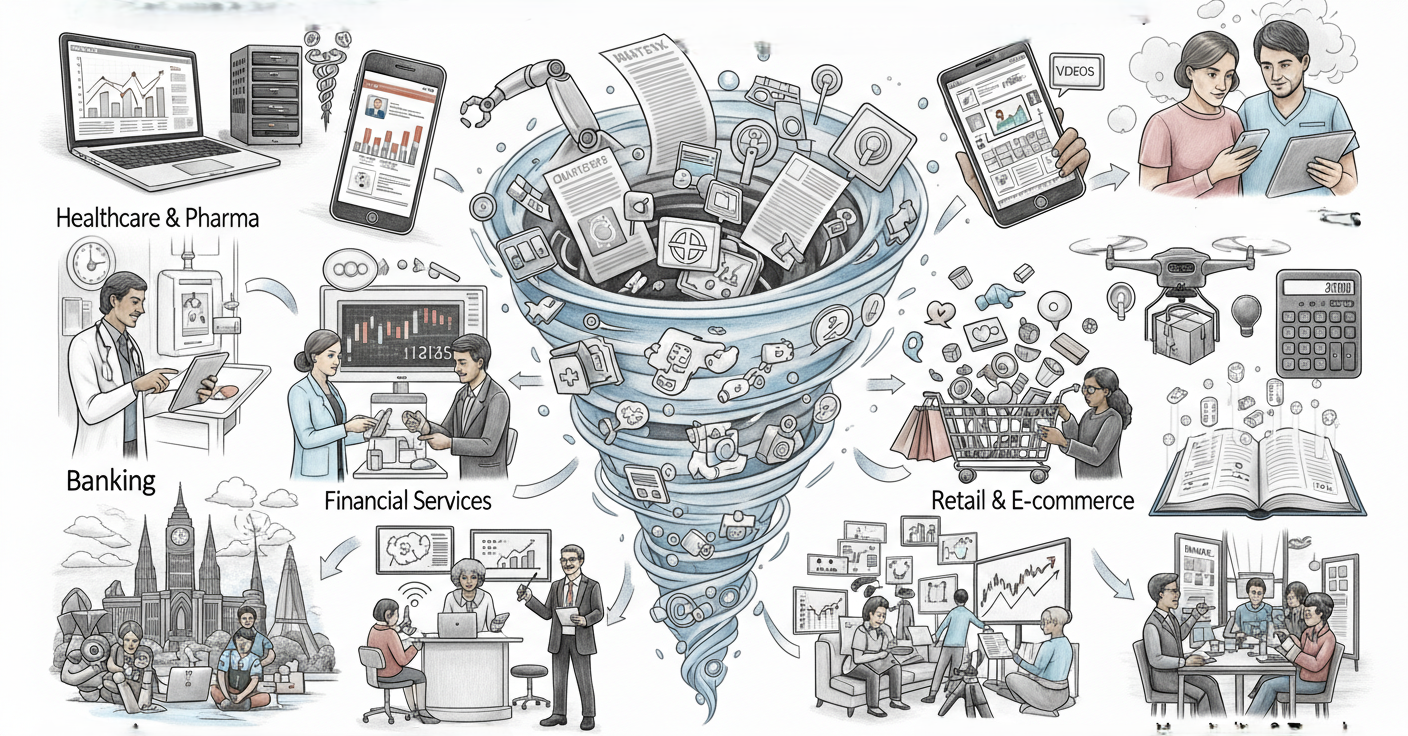
As analytics and marketing tools evolve, content marketing velocity is expected to become even more sophisticated and actionable. One emerging area is emotional velocity—the speed at which content generates specific audience sentiments, such as trust, excitement, or urgency. Tracking emotional velocity could allow brands to optimize content for engagement that goes beyond clicks and conversions, focusing on building rapid audience affinity.
Integration between marketing automation platforms and CRM systems will enable precise tracking of revenue velocity, connecting individual content interactions to closed business within defined timeframes. For example, a blog post viewed by a prospect that quickly leads to a signed deal can be measured for its velocity contribution, providing clear insight into the business impact of each asset.
AI-powered content tools are another area where content marketing velocity will play a major role. Predictive analytics can suggest content formats, headlines, and topics that are likely to achieve faster engagement, allowing marketers to optimize material for acceleration before publication rather than simply measuring it afterward. Similarly, machine learning models can identify underperforming content with low velocity and suggest targeted improvements, enhancing overall content efficiency.
Cross-channel velocity analysis is also set to redefine multi-platform strategies. By studying how momentum on one platform—say, a trending LinkedIn post—translates to accelerated engagement on other channels like email or YouTube, marketers can create holistic strategies that maximize total velocity. This approach ensures that high-performing content isn’t siloed but leveraged across the entire marketing ecosystem to amplify results.
Conclusion
Content marketing velocity represents a fundamental evolution in how organizations measure, manage, and maximize inbound marketing ROI. Unlike traditional metrics that emphasize cumulative results, velocity metrics focus on the speed at which content generates tangible business outcomes. This focus reveals hidden opportunities, helping marketers identify which assets deliver the fastest returns and should be prioritized for maximum impact.
Organizations that embrace content marketing velocity gain a significant competitive advantage. By emphasizing acceleration over volume, teams can allocate resources more efficiently, prioritize content with immediate impact, and respond faster to market trends or audience needs. In a business environment where timing increasingly determines success, content marketing velocity is not just another performance metric—it is a strategic lever that enables organizations to achieve faster, more measurable results from their inbound marketing efforts.
For marketing leaders seeking to demonstrate greater impact, content marketing velocity provides a direct link between content investments and business outcomes. It offers actionable insights into which strategies generate the fastest growth, allowing teams to continuously refine, optimize, and accelerate their marketing performance. In the rapidly evolving landscape of digital marketing, mastering content marketing velocity is no longer optional—it’s essential for turning content into a true growth engine.
Frequently Asked Questions
What is content marketing velocity?
Content marketing velocity measures the speed at which your content delivers value after publication, including traffic growth, engagement, lead generation, and revenue contribution.
How is content marketing velocity different from traditional metrics?
Traditional metrics focus on cumulative results like total pageviews or overall leads. Content marketing velocity emphasizes acceleration—how quickly these results occur—highlighting which content produces immediate business impact.
Why is content marketing velocity important for ROI?
It helps marketers identify high-impact content that drives faster results, ensuring resources are allocated efficiently and campaigns generate measurable returns more quickly.
What types of content benefit most from high velocity?
Short-form content like blog posts, videos, infographics, and social media updates often show higher content marketing velocity, but foundational assets can also be optimized for faster results through repurposing and strategic promotion.
How do you measure content marketing velocity?
Velocity can be measured using benchmarks such as 24 hours, 7 days, and 30 days post-publication across traffic, engagement, conversions, and amplification. Comparing performance within content types helps ensure accurate insights.
Can content marketing velocity improve team performance?
Yes. By evaluating content creators based on the speed and impact of their work, organizations encourage teams to produce high-velocity content aligned with business objectives rather than just meeting volume quotas.
How does content marketing velocity affect content strategy?
It informs which topics, formats, and distribution strategies generate immediate returns, allowing marketers to prioritize high-velocity content and optimize campaigns for faster business impact.
Does content marketing velocity vary by industry?
Absolutely. Technology, e-commerce, and professional services sectors often see the biggest gains from velocity-focused strategies due to shorter sales cycles and the need for rapid audience engagement.
Can AI help improve content marketing velocity?
Yes. AI-powered tools can predict content acceleration potential, optimize headlines, suggest formats, and identify opportunities to improve velocity before publication.
What is the future of content marketing velocity?
The future includes advanced metrics like emotional velocity, cross-channel acceleration, and precise revenue tracking. These insights will allow marketers to predict, optimize, and maximize content performance in real time.