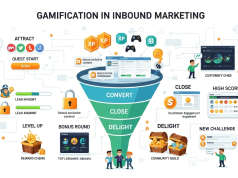

Inbound marketing attracts customers through valuable content, SEO, social media, and email. By addressing audience needs and nurturing leads over time, businesses build trust, drive organic traffic, and achieve sustainable growth. A strategic, data-driven approach turns inbound marketing into a powerful long-term growth engine.
Inbound marketing is a methodology that focuses on attracting customers by creating valuable content and experiences tailored to them. Unlike traditional outbound marketing, which interrupts your audience with messages they didn’t necessarily ask for, inbound marketing forms connections they’re looking for and solves problems they already have. By aligning your content with the interests of your target audience, you naturally attract inbound traffic that you can then nurture to conversions and delightful customer experiences.
What is Inbound Marketing?

At its core, inbound marketing is about creating and sharing relevant, helpful content that addresses the needs and pain points of your ideal customers. This approach includes a range of tactics—content creation, search engine optimization, social media engagement, and email nurturing—that work together to build trust and credibility. Rather than pushing messages onto prospects, you pull them in by offering valuable insights, actionable advice, and personalized experiences that guide them through their buyer’s journey.
The Four Pillars of Inbound Marketing
Content Marketing
Content marketing is the backbone of inbound strategy. It involves creating blog posts, whitepapers, ebooks, videos, infographics, and other formats that educate and inform. High-quality content establishes your brand as an authority, drives organic traffic, and encourages social shares. The goal is to produce content that addresses your audience’s questions and challenges at each stage of the buying process.
To be effective, content marketing must be audience-centric and data-informed. This means understanding your buyer personas deeply and aligning content topics, formats, and tone with their preferences and intent. Content should be mapped to the awareness, consideration, and decision stages, ensuring prospects receive the right information at the right time.
Consistency plays a critical role in content success. Publishing on a regular schedule helps build trust with your audience and signals reliability to search engines. Repurposing long-form content into shorter pieces—such as social posts, email snippets, or videos—also maximizes reach while maintaining efficiency.
Finally, successful content marketing evolves through measurement and refinement. Tracking performance metrics such as engagement, traffic, and conversions helps identify what resonates most. By continually optimizing content based on insights and feedback, brands can strengthen their inbound strategy and drive sustainable growth.
Search Engine Optimization (SEO)
SEO ensures that your content is discoverable by search engines and appears in front of the right people. On-page optimization, keyword research, link building, and technical SEO combine to improve rankings and drive organic traffic. By optimizing your content for user intent rather than just keywords, you provide relevant answers that search engines reward with higher visibility.
A strong SEO strategy begins with understanding how your audience searches for information. This involves analyzing search intent—whether users are looking to learn, compare options, or make a purchase—and tailoring content to match those needs. Well-structured pages with clear headings, concise meta descriptions, and relevant internal links improve both usability and crawlability.
Technical SEO is equally important for long-term success. Fast page load times, mobile responsiveness, secure HTTPS protocols, and clean site architecture all contribute to better user experiences and higher rankings. Search engines prioritize websites that perform well technically and deliver seamless navigation across devices.
SEO is not a one-time effort but an ongoing process. Regular content updates, performance monitoring, and algorithm awareness help maintain visibility in competitive search results. By consistently refining your SEO approach, you can attract high-quality organic traffic that supports sustainable inbound marketing growth.
Social Media Marketing
Social platforms amplify your content and foster one-on-one conversations with your audience. Whether it’s LinkedIn articles, Instagram stories, or Twitter threads, social media helps you distribute content, engage with followers, and build community. Each channel has its own best practices, so tailor your messaging and format to match your audience’s preferences.
Beyond distribution, social media plays a vital role in humanizing your brand. By responding to comments, participating in discussions, and sharing behind-the-scenes content, you create a more authentic presence that strengthens trust and relatability. This two-way interaction encourages ongoing dialogue rather than one-time engagement.
Social media also provides valuable insights into audience behavior and sentiment. Engagement metrics, comments, and shares can reveal what topics resonate most and where content may need refinement. These insights can then inform your broader content and inbound marketing strategy.
When used strategically, social media becomes more than a promotional tool—it acts as a listening channel, a relationship builder, and a catalyst for driving traffic back to your owned platforms, where deeper engagement and conversions can occur.
Email Marketing
Email remains one of the most effective inbound channels for lead nurturing and customer retention. Segmented email lists, automated workflows, and personalized messaging ensure that subscribers receive the right content at the right time. From welcome sequences to product updates and re-engagement campaigns, email marketing drives conversions and long-term loyalty.
Step-by-Step Inbound Marketing Strategy
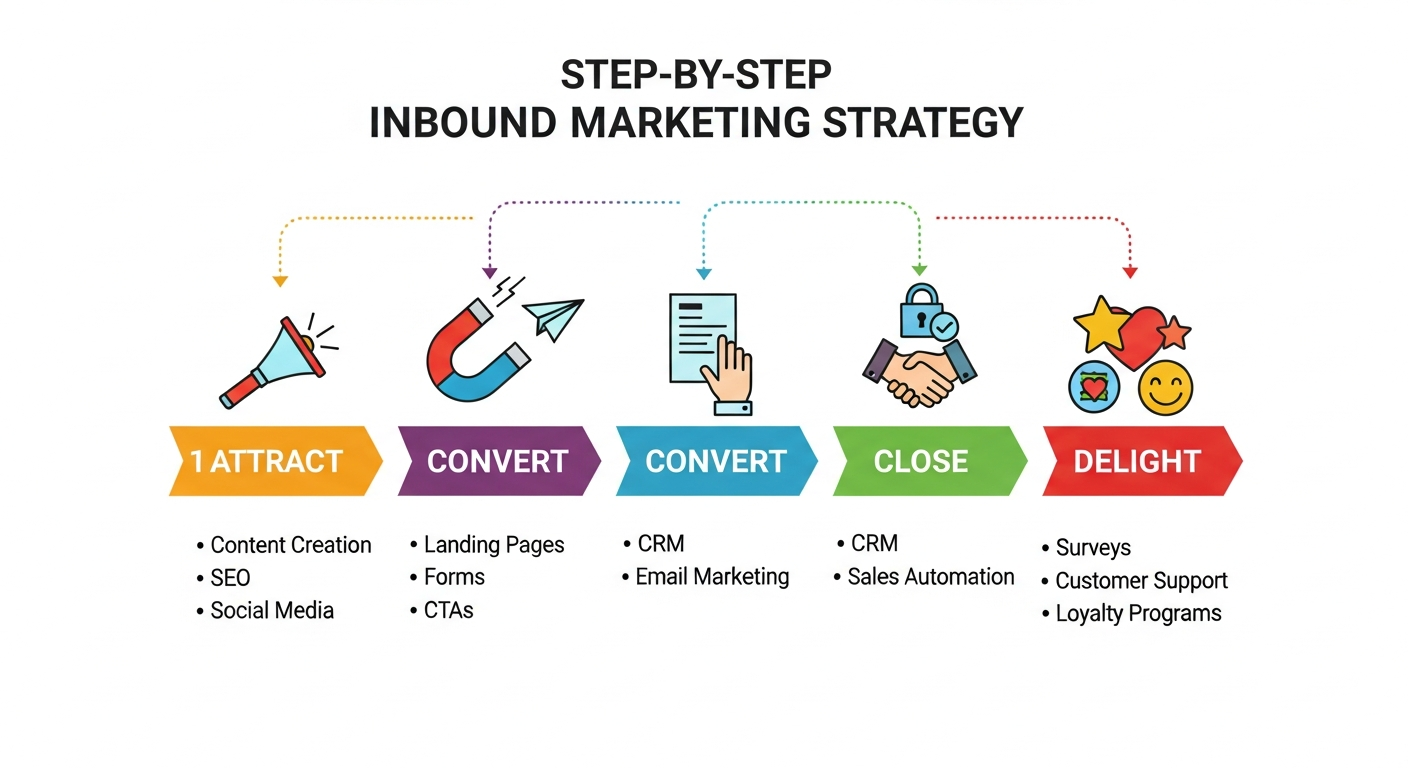
- Define Your Buyer Personas
Develop detailed profiles of your ideal customers, including demographics, goals, pain points, and preferred channels. Buyer personas guide your content decisions and ensure that every piece of content resonates with a real person’s needs. - Conduct Keyword Research
Identify the search terms your audience uses to find solutions. Use tools like Google Keyword Planner, Ahrefs, or SEMrush to uncover high-volume, low-competition keywords that align with your content themes. - Create High-Quality Content
Produce in-depth articles, guides, and visual assets that answer common questions and solve problems. Aim for originality, depth, and actionable takeaways to stand out from competitors and provide genuine value. - Optimize for Search Engines
Incorporate target keywords naturally in titles, headings, and body copy. Optimize meta descriptions, alt text for images, and internal linking structures. Ensure fast page load times, mobile responsiveness, and secure HTTPS encryption. - Promote and Distribute Content
Leverage social media channels, guest blogging opportunities, and influencer partnerships to expand your reach. Create a consistent promotion schedule and repurpose content across formats to maximize exposure. - Nurture Leads with Marketing Automation
Set up automated workflows that deliver personalized content based on user behavior. Use lead scoring to identify hot prospects and tailor follow-up emails or offers to move them further down the funnel.
Measuring Your Success: Key Metrics
To evaluate the effectiveness of your inbound marketing efforts, track metrics such as organic traffic, time on page, bounce rate, social shares, email open rates, and conversion rates. Use marketing analytics platforms to visualize data and uncover insights. Regularly review performance and iterate on your strategy to continually improve results.
In addition to these core metrics, it’s important to align your measurements with specific business goals. For example, if your objective is lead generation, focus on metrics like form submissions, cost per lead, and lead-to-customer conversion rates. For brand awareness, impressions, reach, and engagement trends provide clearer insight into visibility and audience interest.
Segmenting your data can reveal deeper patterns in performance. Analyze results by content type, channel, buyer persona, or stage of the funnel to identify what resonates most with different audience groups. This level of detail helps you refine messaging, optimize distribution, and invest more confidently in high-performing tactics.
Finally, treat measurement as an ongoing process rather than a one-time task. Establish regular reporting cycles and use insights to test new ideas, adjust campaigns, and improve efficiency. Consistent analysis ensures your inbound marketing strategy remains data-driven, adaptable, and focused on long-term growth.
Common Challenges and How to Overcome Them

Many marketers struggle with creating consistent, high-quality content. Address this by developing a content calendar, assembling a diverse content team, or outsourcing to specialists. Ensuring alignment between marketing and sales can also be challenging; foster cross-department communication and agree on shared goals and definitions for MQLs and SQLs. Finally, don’t rely solely on one channel—maintain a balanced mix of SEO, social media, and email efforts to mitigate risk.
Another common challenge is measuring the true impact of inbound marketing efforts. With multiple touchpoints involved, it can be difficult to attribute conversions to specific activities. Overcome this by setting up clear tracking systems, defining key performance indicators early, and using analytics tools to monitor performance across channels. Regular reporting and review sessions help teams understand what’s working and where adjustments are needed.
Limited resources and time constraints can also slow progress, especially for small teams. Prioritize high-impact activities first, such as evergreen content and high-intent keywords, and gradually expand your efforts as results and capacity grow. Repurposing existing content into multiple formats—blogs, social posts, emails, or videos—can further maximize output without overextending resources.
Lastly, staying consistent amid changing algorithms and audience behavior can feel overwhelming. Combat this by focusing on fundamentals: audience value, clarity, and relevance. While platforms and tactics evolve, a customer-centric mindset ensures your inbound strategy remains resilient and effective over the long term.
Case Study: How Company X Grew Organic Traffic by 200%
Company X, a SaaS provider, revamped its inbound strategy by focusing on long-form educational content and targeted keyword clusters. They published 40 new pillar pages, each optimized for specific buyer personas. By combining link-building outreach with strategic social media promotion, they saw a 200% increase in organic traffic within six months and a 50% boost in qualified leads. Their email nurture campaigns maintained engagement and pushed conversions, resulting in a 30% increase in MRR.
Conclusion and Next Steps
Inbound marketing offers a sustainable path for businesses to attract, engage, and delight customers. By focusing on valuable content, optimizing for search, leveraging social media, and automating email workflows, you can build a scalable marketing engine. Start by defining clear buyer personas and mapping out your content strategy. Implement one tactic at a time, measure results, and refine your approach based on performance data. With patience and persistence, inbound marketing can transform your business growth.
As a next step, audit your current marketing efforts to identify gaps and opportunities across the inbound funnel—from awareness to conversion and retention. Align your teams around shared goals and ensure your tools, processes, and messaging work together seamlessly. Over time, consistent optimization and learning from audience behavior will help you strengthen trust, increase efficiency, and achieve long-term, compounding results through inbound marketing.
Frequently Asked Questions (FAQ)
1. What is inbound marketing?
Inbound marketing is a strategy that attracts customers through valuable content, SEO, social media, and email instead of interruptive advertising.
2. How is inbound marketing different from outbound marketing?
Inbound marketing pulls customers in by solving their problems, while outbound marketing pushes messages through ads, cold calls, or mass emails.
3. What are the main pillars of inbound marketing?
The four pillars are content marketing, search engine optimization (SEO), social media marketing, and email marketing.
4. How long does inbound marketing take to show results?
Inbound marketing is a long-term strategy. Initial results may appear in a few months, with significant growth typically seen over 6–12 months.
5. Is inbound marketing suitable for small businesses?
Yes. Inbound marketing is cost-effective, scalable, and ideal for small businesses looking to build trust and grow organically.