
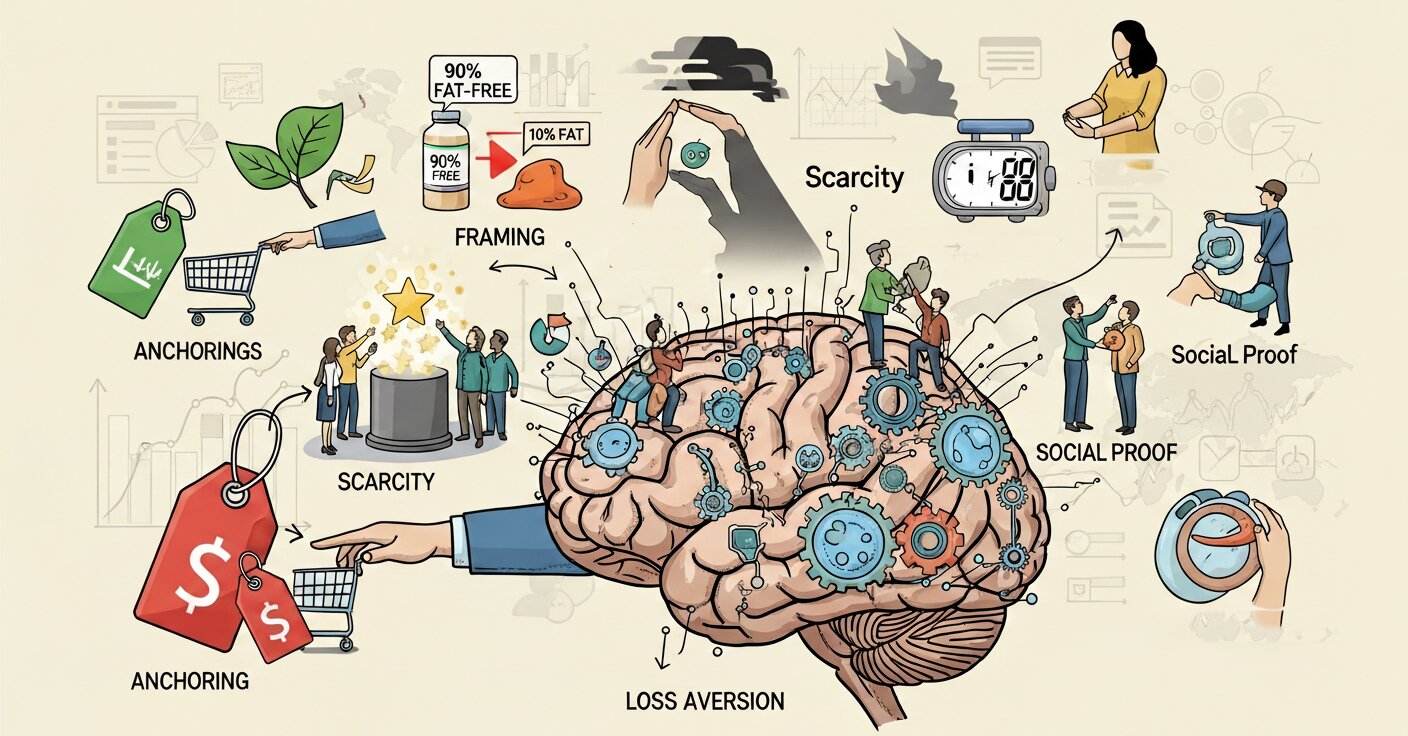
Behavioral Marketing Conversions leverage human psychology to improve engagement and drive actions without sacrificing trust. By applying cognitive biases ethically across content, landing pages, and emails, marketers can create intuitive, persuasive experiences. The result is higher conversions, stronger relationships, and sustainable growth.
Behavioral Marketing Conversions combine insights from psychology and marketing to help businesses optimize how prospects interact with content, offers, and campaigns. By understanding cognitive biases and predictable human decision-making patterns, marketers can create experiences that encourage desired actions—whether signing up for a newsletter, completing a purchase, or engaging with content. Unlike manipulative tactics, this approach emphasizes aligning marketing strategies with customer interests, building trust, and delivering genuine value. Below are the most common questions marketers ask when implementing behavioral principles to improve conversions.
The Science Behind Decision-Making
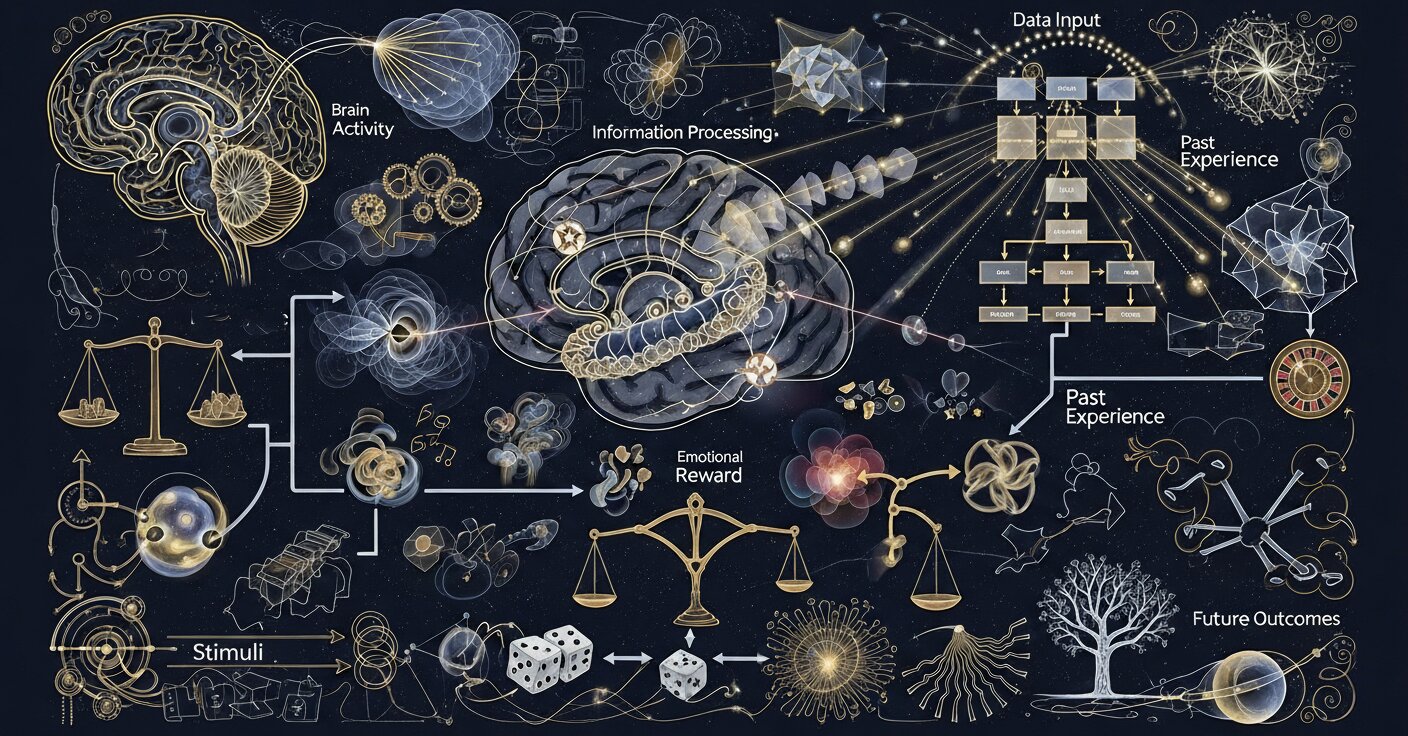
Traditional economic theory long assumed that people make rational decisions based solely on objective assessments of value. Behavioral economics, however, revealed a very different reality: humans are predictably irrational. Our brains rely on mental shortcuts—cognitive biases—to make decisions quickly without overloading our mental resources. Understanding these shortcuts is critical for marketers who aim to optimize results ethically, and it’s at the heart of effective Behavioral Marketing Conversions.
These biases operate automatically, often beneath conscious awareness, yet they influence almost every interaction—from which email subject lines we open to whether we complete a purchase or sign up for a webinar. For inbound marketers focused on creating meaningful, value-driven conversion opportunities, leveraging these insights can significantly enhance performance. Behavioral Marketing Conversions are not about manipulating visitors; they are about designing experiences that align with the natural ways people make decisions, making actions easier, faster, and more intuitive.
When you structure your inbound marketing strategy around how people think and decide, you create conditions where Behavioral Marketing Conversions naturally improve. Rather than relying solely on discounts or gimmicks, your strategy becomes a reflection of human psychology, which builds trust while increasing results.
Powerful Biases That Drive Behavioral Marketing Conversions
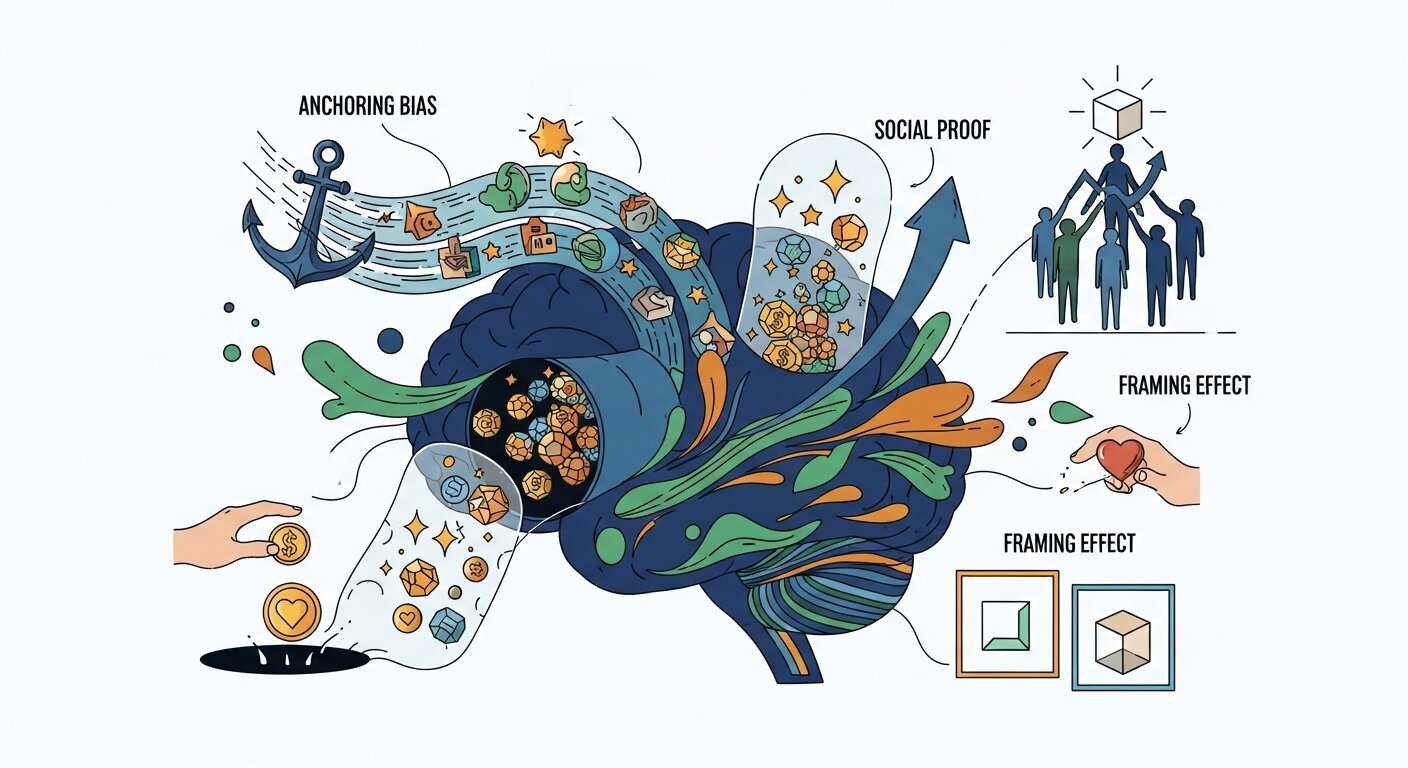
Several cognitive biases have proven particularly valuable for inbound marketers seeking to increase conversion rates while maintaining credibility and audience trust.
Loss Aversion
Research shows that people feel the pain of losing something approximately twice as intensely as they feel the pleasure of gaining an equivalent benefit. This asymmetry profoundly influences decision-making.
Savvy marketers use this principle to boost Behavioral Marketing Conversions by framing offers around potential losses rather than just potential gains. Instead of the generic “Download our guide to increase conversions,” try “Don’t miss the conversion opportunities your competitors are already using.”
This approach works especially well for time-sensitive offers, trial periods ending soon, or limited-availability resources. The key is authenticity—Behavioral Marketing Conversions driven by genuine scarcity perform far better than those created with false urgency.
Social Proof
Humans are social creatures, and when uncertain, we instinctively look to others for guidance. This makes social validation one of the most powerful drivers of Behavioral Marketing Conversions.
Incorporating authentic testimonials, user statistics, and relatable case studies throughout your inbound content builds credibility and reduces perceived risk. When prospects see people like them achieving measurable results, they are far more likely to take action. For example, placing social proof near key conversion points on landing pages or signup forms can increase click-through rates by as much as 35% in some sectors, according to insights from InboundMarketo.com.
Behavioral Marketing Conversions are also enhanced when marketers consistently show casereal-world examples of how their solutions are already benefiting others. Whether through reviews, community engagement, or detailed case studies, leveraging social proof is a cornerstone of effective inbound strategy.
In conclusion, understanding and applying cognitive biases through the lens of Behavioral Marketing Conversions allows marketers to craft strategies that are not only persuasive but ethical. By aligning offers and calls-to-action with natural human decision-making patterns, marketers can make the conversion process smoother, more intuitive, and ultimately more successful. Every aspect—from loss aversion to social proof—becomes a tool to enhance Behavioral Marketing Conversions, creating measurable results without undermining trust.
The Anchoring Effect
The first piece of information people encounter often becomes the reference point against which they evaluate all subsequent information. This initial “anchor” has a disproportionate influence on perception of value, shaping decisions in ways that are predictable yet frequently overlooked. For inbound marketers, understanding this principle is essential for driving effective Behavioral Marketing Conversions.
When presenting pricing options, service packages, or product tiers, the order and framing of information matter tremendously. Starting with premium offerings can establish a strong value anchor, making mid-tier options appear more reasonable. Similarly, displaying the original price before showing a discounted rate creates a reference point that enhances the perceived value of the current offer. Beyond pricing, the first statistic, benefit, or concept you present sets the benchmark for how visitors evaluate everything that follows. Mastering this can significantly enhance Behavioral Marketing Conversions by subtly guiding decision-making without overtly manipulating visitors.
Practical Applications in Your Inbound Strategy
Understanding cognitive biases opens multiple avenues to optimize your marketing funnel and drive higher Behavioral Marketing Conversions. By integrating insights from behavioral economics into every stage of your inbound strategy, marketers can create experiences that align with how people naturally think and decide, rather than relying on generic messaging or aggressive sales tactics.
Content Creation With Cognitive Biases
Every content asset—from blog posts and whitepapers to ebooks and newsletters—can leverage behavioral principles to increase engagement, sharing, and ultimately, conversions. The curiosity gap, our innate discomfort with incomplete information, encourages visitors to click through when you hint at valuable insights without revealing everything upfront. Thoughtful use of this technique in headlines, summaries, and calls-to-action can meaningfully boost Behavioral Marketing Conversions by keeping audiences engaged and encouraging further interaction.
Recency bias, the tendency to give disproportionate weight to the most recently encountered information, also provides a significant advantage for marketers. Publishing timely, relevant content that addresses emerging industry trends, breaking news, or fresh insights positions your brand as current, authoritative, and trustworthy. When visitors perceive content as both relevant and up-to-date, Behavioral Marketing Conversions naturally increase because users are more likely to act on information they find credible and useful.
Confirmation bias—the inclination to favor information that aligns with existing beliefs—further highlights the need for audience understanding and research. By validating some of your audience’s current perspectives while introducing new ideas in a subtle and thoughtful way, your content becomes more persuasive and credible. This strategic alignment with human cognition enhances user receptivity and drives consistent improvement in Behavioral Marketing Conversions over time.
Landing Page Optimization
Even small changes informed by behavioral science can yield substantial increases in conversion rates. The paradox of choice teaches that offering too many options can overwhelm visitors and inhibit decision-making. Simplifying landing pagesto emphasize a single, clear action can dramatically improve Behavioral Marketing Conversions by reducing friction and making decisions easier for visitors.
The endowment effect—where individuals place greater value on things once they feel ownership—can be leveraged through interactive elements. Tools such as calculators, quizzes, assessments, and configurators that provide personalized recommendations create psychological ownership before the actual conversion point. Visitors who feel invested are more likely to follow through, significantly boosting Behavioral Marketing Conversions in measurable ways.
Framing also has a profound effect on perception and decision-making. Presenting the same offer in different ways—for instance, “saves you 5 hours weekly” versus “saves you 260 hours annually”—can dramatically alter perceived value. Carefully crafting marketing language and messaging to align with the visitor’s perspective enhances clarity, relevance, and perceived gain, all of which drive higher Behavioral Marketing Conversions.
Incorporating these behavioral insights across your content strategy and landing pages builds a marketing ecosystem that mirrors natural human decision-making patterns. When principles like anchoring, recency bias, confirmation bias, the endowment effect, and strategic framing are systematically applied, Behavioral Marketing Conversions improve because your strategy works with the brain, not against it. This approach results in a more intuitive, persuasive, and effective inbound marketing system, producing measurable results while maintaining audience trust and credibility.
Email Marketing Enhancement
Behavioral economics in email marketing can dramatically transform campaign performance, creating emails that engage audiences more deeply and drive measurable results. One key principle is the Zeigarnik effect—our tendency to remember uncompleted tasks. Email sequences that create open narrative loops, where each message builds on the last and resolves the storyline over time, leverage this effect to keep recipients engaged. When applied thoughtfully, this approach significantly enhances Behavioral Marketing Conversions by encouraging users to follow through on the actions outlined in each email.
Loss aversion further strengthens email impact. People feel the pain of losing something more intensely than the pleasure of gaining an equivalent benefit. Limited-time offers, exclusive access, or expiring discounts are especially effective when recipients have already interacted with related content. By highlighting what users stand to miss, marketers can increase click-through rates and drive higher Behavioral Marketing Conversions.
Reciprocity is another powerful tool. Humans have a natural tendency to return favors, so providing unexpected value—such as actionable insights, free tools, or helpful resources—before requesting a conversion increases engagement and trust. This principle works across sequences, guiding readers toward completing primary actions while subtly boosting Behavioral Marketing Conversions throughout the funnel.
Measuring Behavioral Impact
As with any inbound marketing tactic, applying behavioral economics principles requires systematic testing and measurement. Controlled experiments comparing different bias-driven approaches reveal which strategies resonate most strongly with your specific audience. Even experienced marketers are often surprised by the results, as tactics that work well for one segment or industry may underperform in another.
To fully understand impact, examine both primary and micro conversions. Metrics like scroll depth, time on page, secondary clicks, and email engagement indicators reveal how cognitive biases influence audience behavior prior to conversion. Observing these patterns helps optimize sequences, refine messaging, and maximize Behavioral Marketing Conversions by ensuring that each interaction nudges prospects effectively toward your desired outcome.
The Ethical Consideration
Applying behavioral economics in marketing carries a responsibility to act ethically. The line between manipulation and effective guidance lies in alignment with customer interests. Behavioral Marketing Conversions should never come at the expense of trust; they should arise from helping prospects make decisions that genuinely benefit them.
The transparency principle is a useful guide: would you feel comfortable explaining your approach to your customers? If a tactic would undermine trust if revealed, it likely crosses ethical boundaries. Maintaining integrity ensures long-term engagement and sustainable Behavioral Marketing Conversions built on credibility and genuine value.
The Future of Behavioral Marketing
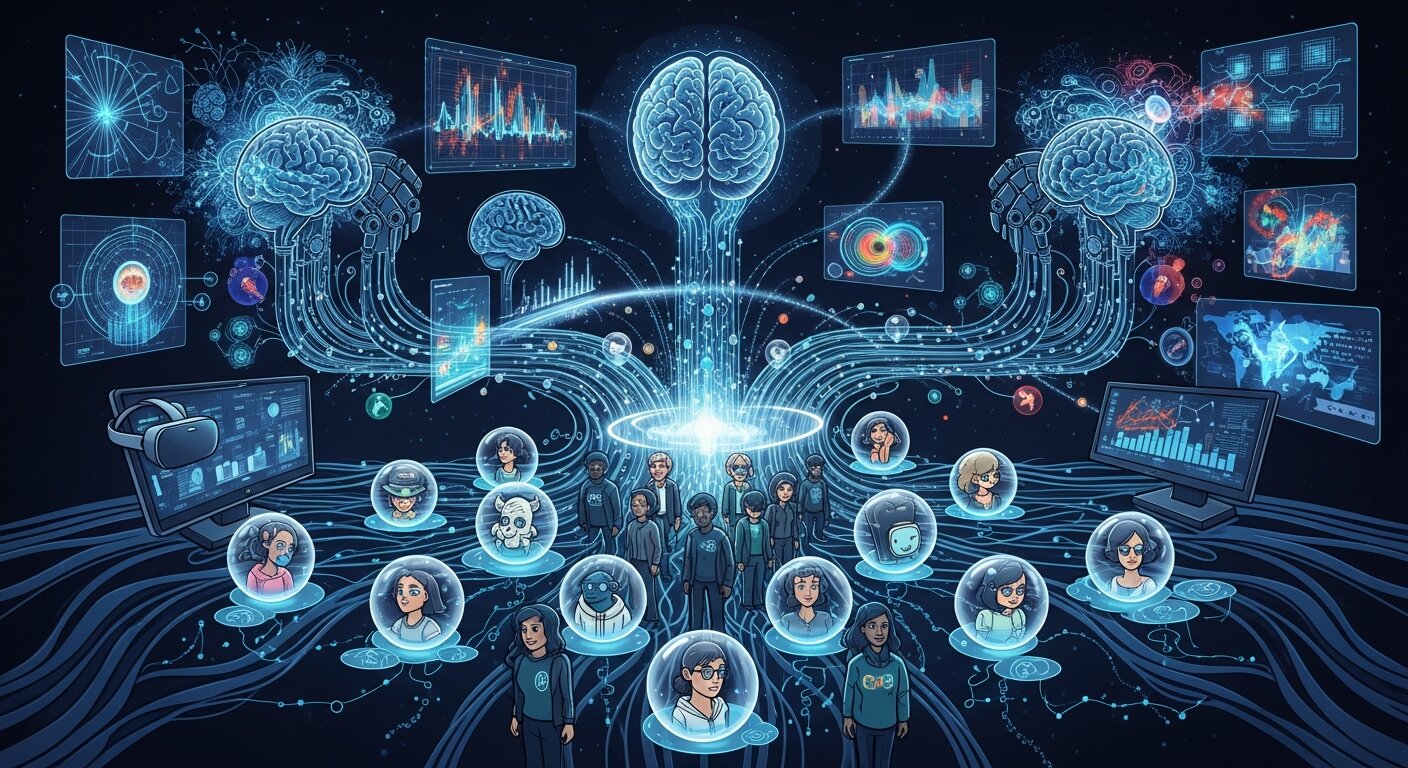 As marketing technology continues to advance, so does the ability to apply behavioral economics principles with greater precision. Machine learning and AI increasingly allow marketers to identify which psychological triggers resonate with individual audience segments, enabling highly personalized campaigns that maximize Behavioral Marketing Conversions.
Forward-thinking inbound marketers stay ahead by integrating emerging research, experimenting with innovative applications, and continually observing audience behavior. While the fundamentals of human psychology remain remarkably consistent, nuanced insights and real-world testing allow marketers to optimize Behavioral Marketing Conversions at every touchpoint.
By thoughtfully incorporating behavioral economics principles into your email strategy and broader inbound marketing initiatives, marketers create campaigns that work with human nature rather than against it. The outcome is clear: higher Behavioral Marketing Conversions, stronger customer relationships, and sustainable growth driven by alignment between your offerings and the genuine needs of your audience.
Frequently Asked Questions
What are Behavioral Marketing Conversions?
Behavioral Marketing Conversions refer to conversion outcomes that are intentionally optimized using behavioral economics principles, such as cognitive biases, framing, and psychological triggers, to align marketing strategies with how people naturally make decisions.
How do cognitive biases improve conversions?
Cognitive biases like loss aversion, social proof, and the Zeigarnik effect guide user behavior subconsciously. By structuring messaging and offers around these biases, marketers can make actions easier and more intuitive, resulting in higher Behavioral Marketing Conversions.
Can these strategies be applied across all marketing channels?
Yes. Behavioral Marketing Conversions strategies work across websites, landing pages, email campaigns, content marketing, and social media. Each channel can leverage specific biases—for example, scarcity in emails or social proof on landing pages.
How does loss aversion influence Behavioral Marketing Conversions?
Loss aversion means people fear missing out more than they value equivalent gains. Framing offers around potential losses—like expiring deals or limited availability—encourages quicker action and higher conversions.
What role does social proof play?
Social proof reduces perceived risk by showing that others have benefited from your product or service. Authentic testimonials, case studies, or user statistics significantly increase Behavioral Marketing Conversions by building trust.
How can landing page design leverage behavioral principles?
Simplifying choices (avoiding the paradox of choice), using interactive elements (to trigger the endowment effect), and carefully framing benefits all contribute to higher Behavioral Marketing Conversions by reducing friction and enhancing perceived value.
How do you measure the effectiveness of these strategies?
Behavioral Marketing Conversions can be tracked using both primary metrics (sales, sign-ups) and microconversions (scroll depth, time on page, secondary clicks). A/B testing different bias-based approaches reveals what resonates most with your audience.
Is using behavioral economics ethical?
Yes, when applied responsibly. Ethical Behavioral Marketing Conversions focus on helping prospects make decisions aligned with their interests, rather than manipulating them. Transparency and trust are key considerations.
How can email marketing benefit from behavioral principles?
Email sequences can use the Zeigarnik effect (open narrative loops), reciprocity (providing value first), and loss aversion (limited-time offers) to guide readers toward desired actions, boosting Behavioral Marketing Conversions.
What does the future of Behavioral Marketing look like?
Advances in AI and machine learning enable marketers to personalize campaigns based on individual audience behavior, optimizing psychological triggers for maximum impact and higher Behavioral Marketing Conversions across every touchpoint.