
The inbound flywheel replaces linear funnels with a customer-centric growth model focused on attraction, engagement, and delight. By reducing friction, aligning teams, and turning customers into advocates, businesses create sustainable momentum. This approach drives higher retention, lower acquisition costs, and long-term growth powered by customer experience.
For decades, marketers have relied on the funnel model to visualize the customer journey. Prospects enter at the top, move through various stages, and either convert or drop off. But what happens after conversion? This is where the traditional funnel falls short.
Enter the inbound flywheel – a revolutionary approach pioneered by HubSpot that reimagines how businesses attract, engage, and delight customers. Unlike the linear funnel that ends with a sale, the flywheel is circular, continuous, and gains momentum over time.
Why the Funnel Is Becoming Obsolete

The traditional marketing funnel treats customers as an outcome rather than a driving force. Once prospects convert to customers, they essentially exit the funnel, and the process begins anew with fresh prospects.
This approach ignores one crucial reality of modern business: your existing customers are your greatest asset for growth.
In today’s digital landscape, word-of-mouth travels faster than ever. Research from Nielsen shows that 92% of consumers trust recommendations from friends and family over all forms of advertising.
When the customer journey ends at purchase, you miss countless opportunities to harness the power of customer advocacy. Learn more about Inbound Marketing Mastery.
Understanding the Flywheel Model
The flywheel, by contrast, places customers at the center of your growth strategy. It recognizes that delighted customers become promoters who feed new prospects into your business, creating a self-perpetuating cycle of growth.
This model consists of three primary stages that continuously flow into each other:
Attract: Drawing in the right visitors with valuable content and conversations.
Engage: Building lasting relationships by providing insights and solutions that align with their challenges and goals.
Delight: Helping, supporting, and empowering customers to succeed with your product or service.
The magic happens when these stages work in harmony. Happy customers become advocates who attract new prospects, creating momentum that accelerates your flywheel’s spin.
Building Your Inbound Flywheel
Transitioning from a funnel to a flywheel mentality requires rethinking how your teams operate and collaborate. At InboundMarketo, we’ve seen firsthand how this shift transforms businesses from growth-limited to growth-enabled.
Start by identifying the forces that add speed to your flywheel:
Force 1: Aligned Teams
When marketing, sales, and service teams work in silos, they create friction. Align these teams around a unified customer experience strategy.
Your marketing shouldn’t promise what sales can’t deliver, and your service team should understand what prospects were promised during the sales process.
Reducing Friction in Your Flywheel
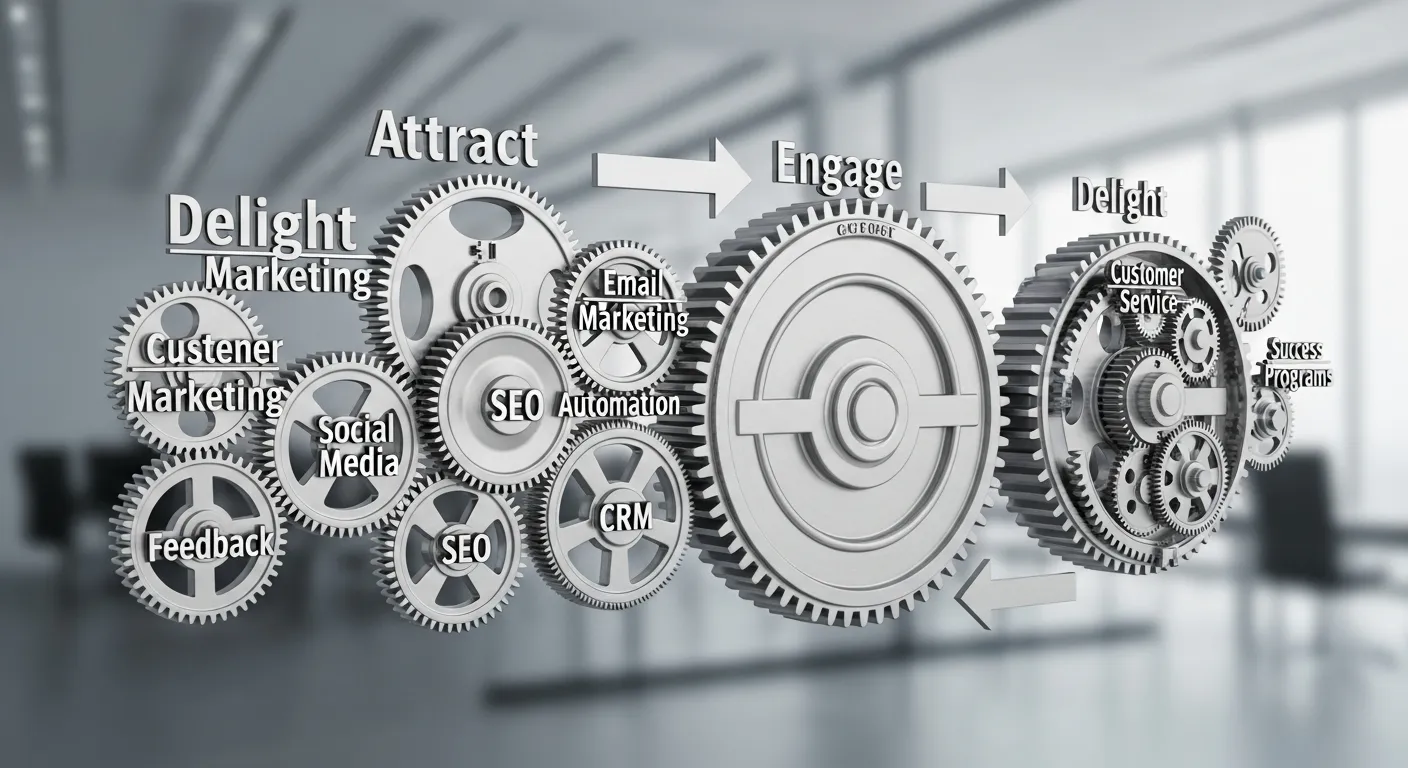
Friction slows your flywheel and diminishes customer delight. Common sources of friction include:
Poor handoffs between departments.
Inconsistent messaging across channels.
Complicated purchase or onboarding processes.
Inadequate self-service resources.
Examine your customer journey for points of friction. Each friction point resolved accelerates your flywheel’s momentum.
Measuring Flywheel Performance
To determine if your flywheel is gaining momentum, track metrics beyond traditional conversion rates:
Customer satisfaction scores and Net Promoter Score (NPS).
Referral rates and referred customer acquisition costs.
Customer lifetime value and retention rates.
Time to resolution for service inquiries.
The most telling sign of a healthy flywheel is when customer acquisition costs decrease while customer lifetime value increases.
The Flywheel in Action
Consider Spotify’s remarkably successful business model. Their flywheel begins with attracting users to their vast music library. As users engage by creating playlists and following artists, Spotify collects valuable data.
This data powers personalized recommendations that delight users, who then share playlists and recommend the platform to friends. Each new user adds content through their listening habits, further enriching the experience for everyone.
According to Spotify’s Business Intelligence, this self-reinforcing cycle has helped them grow to over 456 million active users without proportional increases in marketing spend.
Embracing the Flywheel Mindset
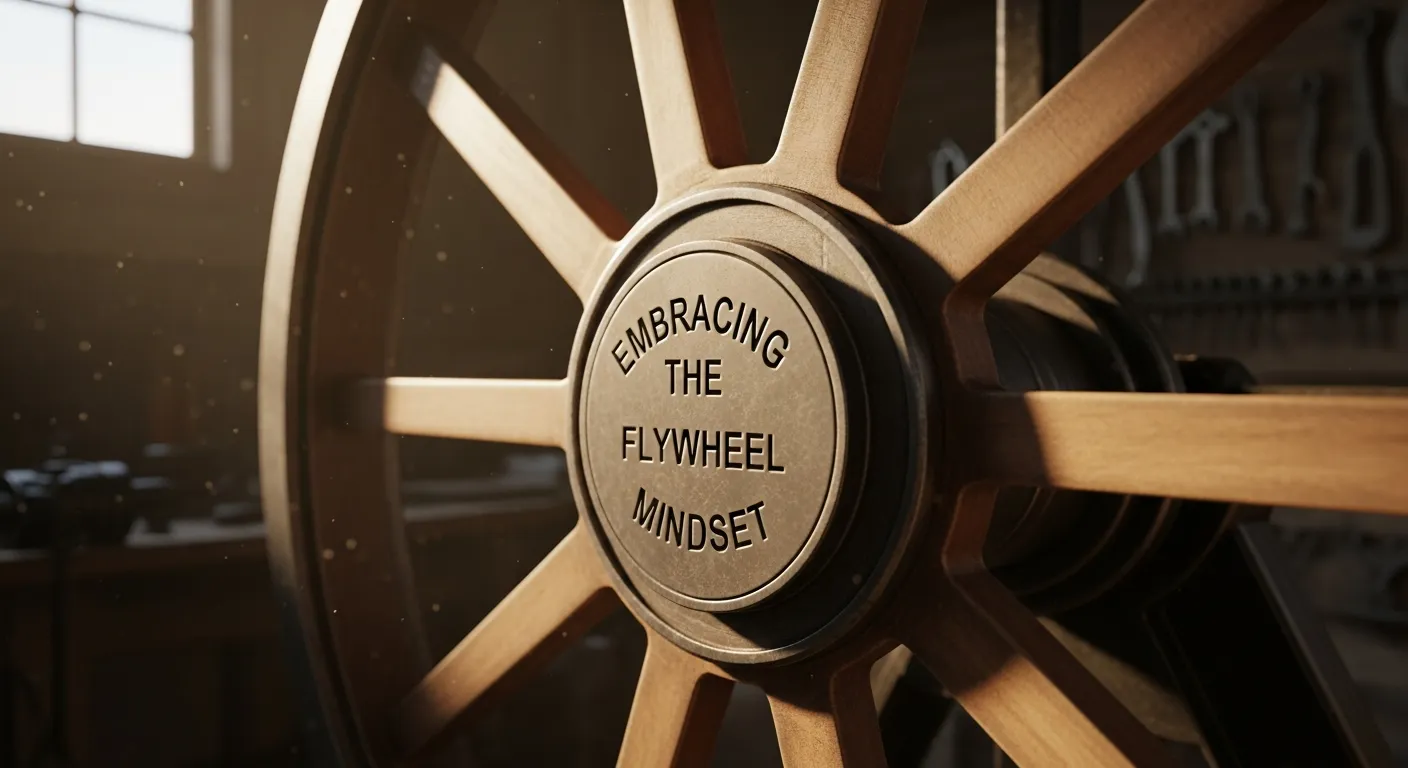
The flywheel isn’t just a new diagram to replace your funnel charts—it’s a fundamental shift in thinking about business growth.
When your entire organization recognizes that customer success drives business success, decision-making changes. Every policy, process, and interaction is evaluated based on how it impacts flywheel momentum.
This customer-centric approach creates compounding returns that traditional funnel-based businesses struggle to match.
Getting Started
Begin your transition to the flywheel model by:
Mapping your current customer journey, identifying where the post-purchase experience could feed back into attraction.
Breaking down silos between teams with shared metrics and collaborative workflows.
Investing in systems that capture and act on customer feedback.
Developing advocacy programs that make it easy and rewarding for customers to promote your business.
The inbound flywheel represents the evolution of inbound marketing—from attracting strangers to building a community of promoters who fuel sustainable growth.
By harnessing the momentum of delighted customers, you create a growth engine that becomes increasingly powerful over time.
Customer Experience as the Flywheel Engine
Customer experience is the core force that powers the inbound flywheel. Every interaction—marketing touchpoints, sales conversations, onboarding, and support—either accelerates or slows momentum. Unlike funnels that prioritize conversion alone, flywheels measure how smoothly customers move across experiences. Consistency, responsiveness, and personalization matter more than aggressive selling. When customers feel understood and supported, they remain engaged longer and willingly advocate for your brand. A strong customer experience reduces churn, increases referrals, and strengthens trust. Businesses that continuously optimize experience across all stages create flywheels that self-sustain growth without constantly increasing acquisition spend.
Content’s Role in Sustaining Flywheel Momentum
Content fuels every phase of the inbound flywheel. Educational blogs attract, solution-focused resources engage, and success-driven content delights customers post-purchase. The goal is not just lead generation but ongoing value delivery. Post-sale content like tutorials, best practices, and product updates keeps customers invested. When content aligns with real customer challenges, it becomes a growth multiplier. Consistent, high-quality content also reinforces authority and encourages sharing, feeding new prospects back into the attract stage organically.
Sales Enablement Within the Flywheel
In a flywheel model, sales teams are not closers—they are advisors. Sales enablement ensures representatives have insights into customer behavior, content interactions, and pain points. This context allows personalized conversations that build trust rather than pressure. Sales teams should focus on removing friction, simplifying decisions, and setting realistic expectations. When sales interactions feel consultative and transparent, customers are more likely to succeed and advocate later, reinforcing flywheel momentum.
Customer Support as a Growth Channel
Support is no longer a cost center—it’s a growth driver. Fast response times, proactive outreach, and helpful resources increase satisfaction and retention. Inbound flywheels treat support interactions as opportunities to delight customers. A resolved issue can strengthen loyalty when handled well. Self-service knowledge bases, chatbots, and community forums reduce friction and empower users. Exceptional support transforms customers into promoters who actively recommend your brand.
Onboarding That Accelerates Adoption
Effective onboarding ensures customers experience value quickly. A smooth onboarding process eliminates confusion, reduces churn, and builds confidence. Guided tutorials, milestone emails, and success check-ins help customers achieve early wins. The faster customers realize value, the faster your flywheel gains speed. Poor onboarding, on the other hand, creates friction that stalls momentum before it starts.
Advocacy Programs That Multiply Growth
Customer advocacy is the most powerful force in the flywheel. Referral programs, testimonials, reviews, and case studies amplify reach without increasing ad spend. Make advocacy easy by offering incentives, recognition, and simple sharing tools. When customers feel appreciated, they naturally promote your brand. Advocacy-driven growth compounds over time and delivers higher-quality leads than paid acquisition channels.
Data and Feedback Loops
Flywheels thrive on feedback. Surveys, NPS scores, reviews, and usage analytics reveal friction points and improvement opportunities. Continuous feedback allows businesses to optimize experiences in real time. Data-driven decisions ensure the flywheel evolves with customer expectations rather than becoming outdated. Listening is as important as acting.
Automation Without Losing Human Touch
Automation enhances scalability, but balance is critical. Email workflows, chatbots, and CRM triggers improve efficiency, yet personalization maintains trust. Automated systems should support—not replace—human interactions. Smart automation accelerates engagement while preserving authenticity.
SEO as a Long-Term Flywheel Accelerator
SEO ensures your flywheel attracts prospects continuously. Optimized content brings qualified traffic that feeds engagement and advocacy cycles. Unlike paid ads, SEO compounds over time, aligning perfectly with the flywheel’s momentum-based growth model.
Aligning KPIs Across Teams
Flywheel success depends on shared goals. Marketing, sales, and service teams must align around metrics like retention, satisfaction, and lifetime value. Shared accountability eliminates silos and reduces friction across customer touchpoints.
Scaling the Flywheel Across Channels
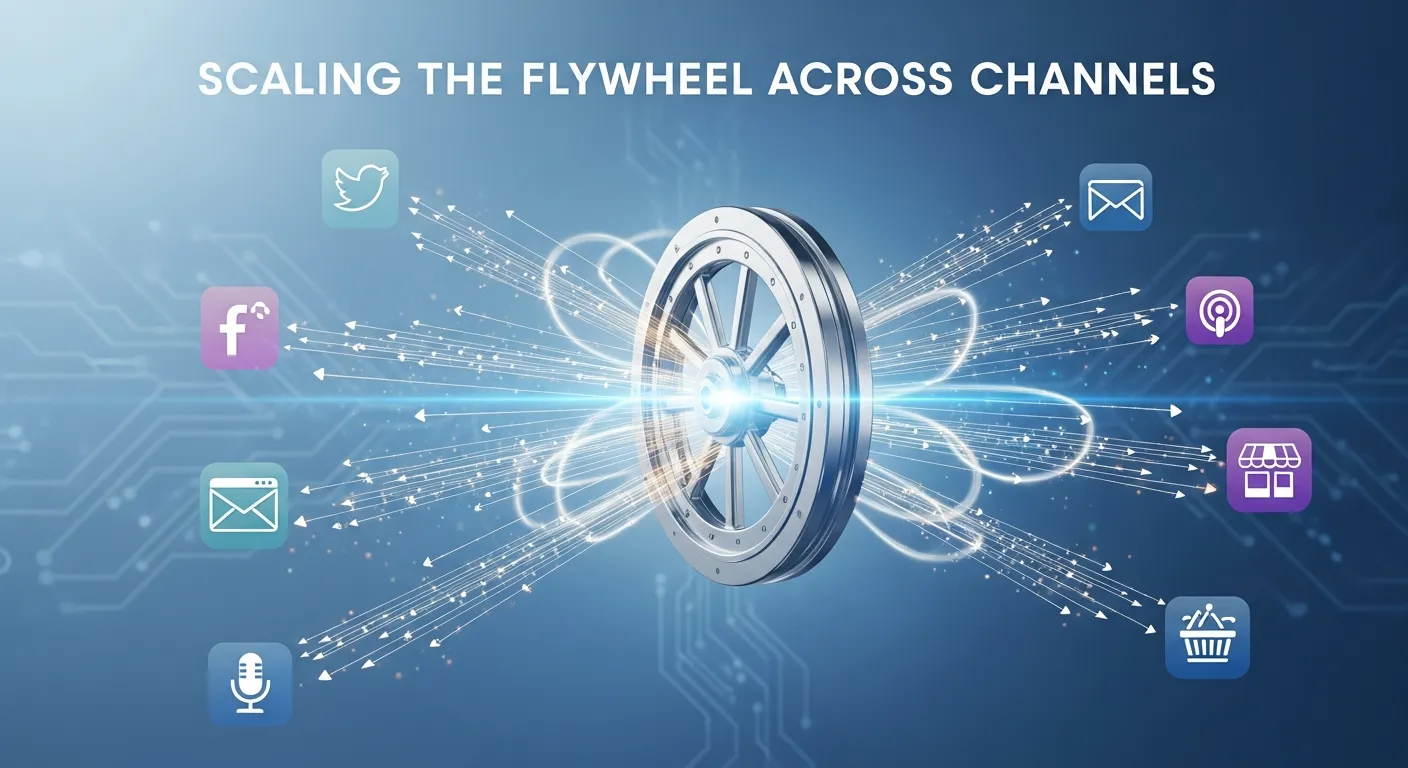
As your flywheel grows, expand across platforms—email, social, communities, and events. Consistent experiences across channels strengthen brand trust and reinforce momentum.
Conclusion
The inbound flywheel represents a fundamental evolution in growth strategy. By placing customers at the center, businesses unlock compounding momentum driven by trust, satisfaction, and advocacy. Unlike funnels that stop at conversion, flywheels thrive on relationships and continuous value delivery. This approach aligns closely with principles of Inbound Marketing, where attracting, engaging, and delighting audiences creates long-term success. Organizations that embrace this mindset build scalable, sustainable growth engines that outperform traditional models over time, turning customers into advocates who further strengthen the flywheel’s motion.
Frequently Asked Questions (FAQs)
What is an inbound flywheel?
An inbound flywheel is a customer-centric growth model that focuses on attraction, engagement, and delight to create continuous business momentum. Instead of ending at conversion, it treats customers as an ongoing growth force, using positive experiences to drive referrals, retention, and long-term value.
How is a flywheel different from a funnel?
Funnels end once a prospect converts into a customer, while flywheels continue beyond conversion through retention, advocacy, and repeat engagement. The flywheel emphasizes momentum and relationships rather than linear progression, making growth more sustainable.
Why did HubSpot introduce the flywheel?
HubSpot introduced the flywheel to reflect modern, customer-driven growth behavior where buyers rely heavily on reviews, referrals, and experiences. The model aligns better with digital word-of-mouth and long-term customer value than traditional funnel thinking.
Does the flywheel replace the funnel entirely?
The flywheel doesn’t eliminate the funnel but enhances and extends it beyond conversion. It builds on funnel stages while emphasizing post-purchase experience, loyalty, and advocacy to fuel ongoing growth.
Which teams impact the flywheel most?
Marketing, sales, and customer service impact the flywheel equally. Marketing attracts, sales engages, and service delights. Alignment across these teams reduces friction and ensures a consistent, high-quality customer experience.
What slows a flywheel down?
Poor handoffs between teams, inconsistent messaging, complicated onboarding, and weak customer support slow flywheel momentum. Any friction in the customer journey reduces satisfaction and limits advocacy-driven growth.
How do referrals fit into the flywheel?
Referrals feed new prospects directly into the attract stage of the flywheel. Satisfied customers become promoters, lowering acquisition costs and bringing in higher-quality leads who already trust your brand.
What metrics matter most?
Key flywheel metrics include retention rate, Net Promoter Score (NPS), customer lifetime value (CLV), referral volume, and resolution time. These indicators measure momentum rather than just conversions.
Is the flywheel suitable for B2B?
Yes, especially for SaaS companies and businesses with long sales cycles. B2B success depends heavily on trust, retention, renewals, and referrals—all strengths of the flywheel model.
Can small businesses use flywheels?
Absolutely. Flywheels scale naturally over time and don’t require large budgets. Small businesses benefit greatly by turning satisfied customers into advocates who drive organic growth.
How long does it take to see results?
Flywheel momentum typically builds within 3–6 months with consistent execution. While early engagement appears quickly, compounding growth strengthens as retention and referrals increase.