
Measuring inbound marketing ROI demands sophisticated tracking, multi-touch attribution, and connection between marketing activities and revenue outcomes beyond basic engagement metrics.
Measuring inbound marketing ROI goes far beyond counting page views, clicks, or social media engagement. While surface-level metrics provide a sense of activity, they rarely reveal whether marketing efforts actually generate revenue or drive business growth. True inbound marketing ROI connects campaigns, content, and channels to tangible outcomes—tracking how prospects move through the funnel, which interactions influence purchase decisions, and the long-term value of acquired customers.
In a landscape where marketing budgets are scrutinized and competition is fierce, understanding the real impact of your strategies is critical. This guide explores the frameworks, attribution models, and advanced metrics necessary to measure inbound marketing ROI with precision, helping businesses identify what drives profitability and make data-driven decisions that optimize marketing performance.
Measuring Inbound Marketing ROI
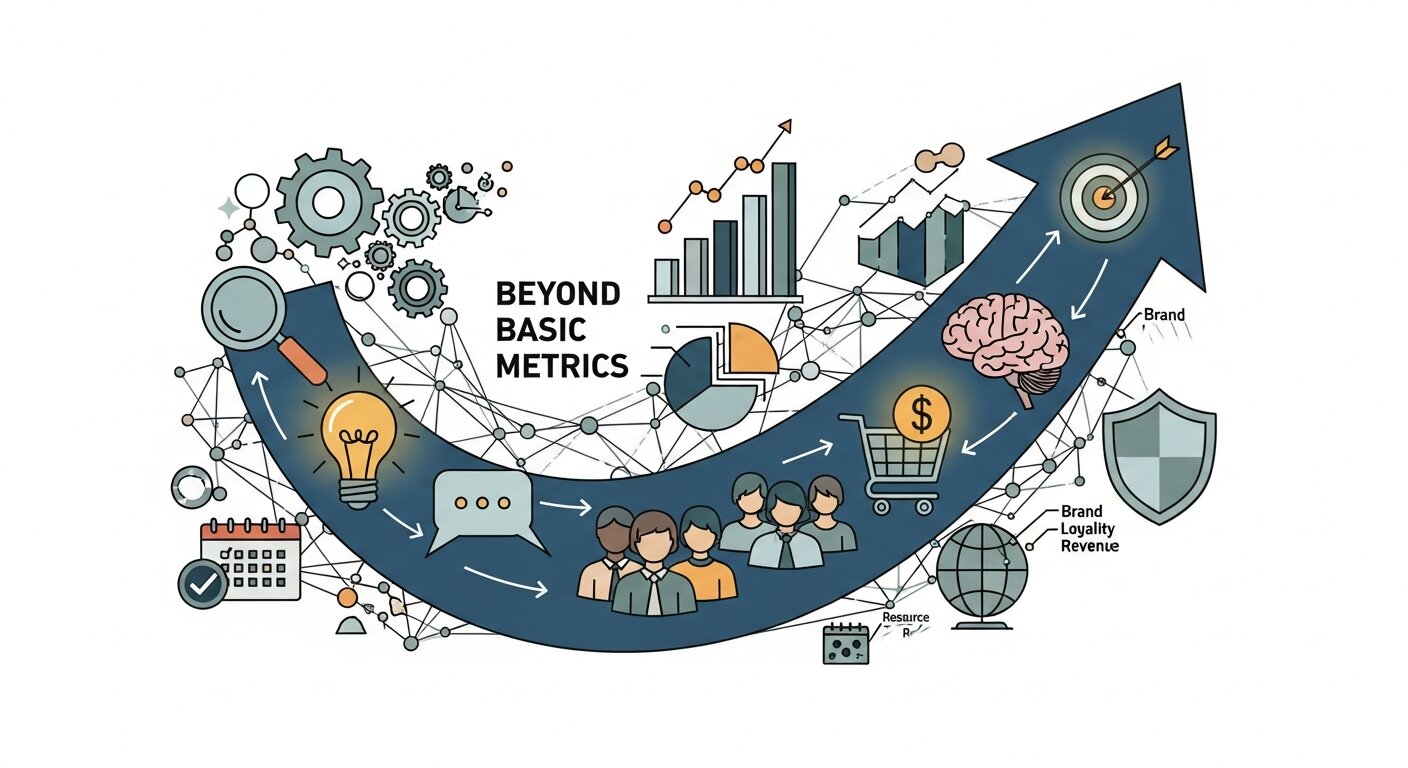
Most marketing teams celebrate surface-level wins—page views, click-through rates, social shares. These numbers feel good in weekly reports, but they rarely tell you whether your inbound marketing strategy is genuinely profitable. Applying inbound marketing psychology helps reveal the deeper behaviors behind these metrics. The real question isn’t “How many people visited our site?” It’s “Did those visitors generate measurable revenue?”
Understanding inbound marketing ROI requires looking past vanity metrics and examining the data that connects marketing activities to business outcomes. This means tracking how prospects move through your funnel, which content influences purchasing decisions, and how much revenue each campaign generates relative to its cost. Using inbound marketing psychology, you can better interpret how different touchpoints influence decision-making.
Too many organizations measure marketing success using incomplete frameworks. They track traffic without analyzing behavior. They count leads without assessing quality. They celebrate engagement without connecting it to conversion. Inbound marketing psychology teaches that focusing only on activity can create a dangerous disconnect between marketing and actual business value.
Measuring inbound marketing ROI effectively demands a shift in perspective. Instead of asking “What happened?” you need to ask “What did this cost, what did it produce, and was it worth it?” Incorporating inbound marketing psychology into this evaluation helps marketers prioritize the metrics that truly reflect influence on purchasing decisions. This article explores the advanced metrics, attribution models, and analytical frameworks that answer those questions with precision.
Why Traditional Metrics Fall Short

Page views and bounce rates provide context, but they don’t reveal profitability. A blog post might attract 50,000 visitors while generating zero sales, while a product comparison page with 500 visitors could drive $100,000 in revenue. Traffic volume matters far less than traffic quality and conversion potential. Inbound marketing psychology explains why some content drives high engagement but little revenue.
Social media engagement creates similar blind spots. Thousands of likes and shares might boost brand awareness, but if those interactions don’t convert to leads or customers, the business impact remains unclear. Engagement metrics become meaningful only when connected to downstream revenue events. Understanding inbound marketing psychology allows marketers to see which engagements indicate real purchase intent.
Email open rates suffer from the same limitation. High open rates suggest your subject lines work, but they don’t confirm that recipients took valuable actions after reading. Someone might open every email you send without ever clicking through to your website or considering a purchase. Applying inbound marketing psychology helps identify which messages actually influence behavior.
The fundamental problem with basic metrics is that they measure activities rather than outcomes. Effective inbound marketing ROI analysis tracks the entire customer journey, from initial awareness through final purchase and beyond. It connects marketing touchpoints to revenue generation, revealing which efforts drive profit and which consume resources without adequate return. Inbound marketing psychology reinforces the importance of tracking actual decision-making rather than surface engagement.
The Foundation of Accurate ROI Measurement
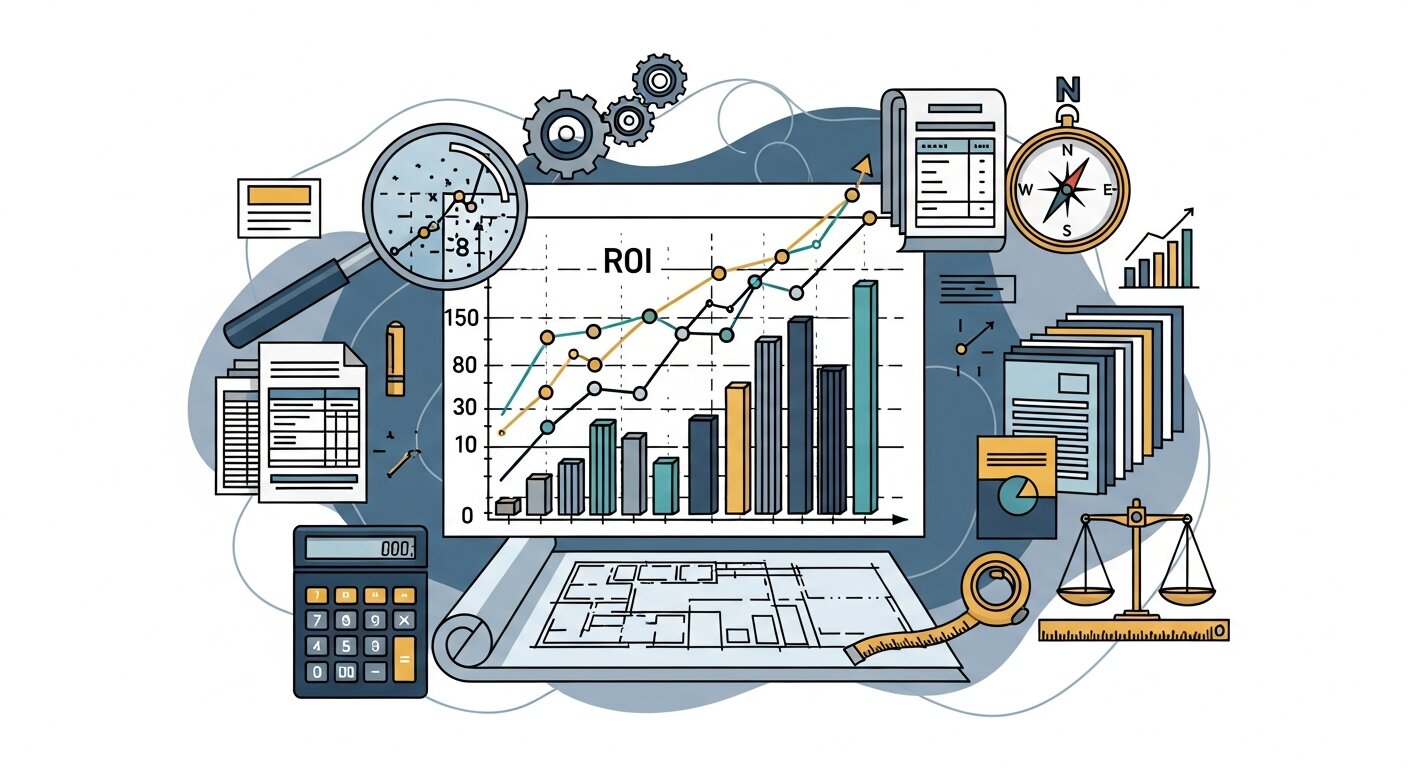
Calculating inbound marketing ROI starts with a simple formula: (Revenue Generated – Marketing Investment) / Marketing Investment × 100. If you spend $10,000 on a campaign that generates $40,000 in revenue, your ROI is 300%. However, applying this formula correctly requires careful attention to what you include in both revenue and investment figures. Using inbound marketing psychology helps interpret these numbers in the context of long-term customer behavior.
Marketing investment should capture all relevant costs: content creation, software subscriptions, paid advertising, personnel time, agency fees, and technology infrastructure. Many teams underestimate their true investment by excluding internal salaries or overlooking platform costs, which artificially inflates ROI calculations.
Revenue attribution presents even greater complexity. When prospects interact with multiple marketing touchpoints before purchasing, which ones deserve credit? A customer might discover your brand through organic search, return via social media, download a lead magnet, attend a webinar, and then convert after reading a nurture email. Each touchpoint contributed to the sale, but assigning appropriate credit requires sophisticated attribution modeling.
First-touch attribution gives all credit to the initial interaction, while last-touch attribution credits the final touchpoint before conversion. Both approaches oversimplify reality. Multi-touch attribution models distribute credit across the customer journey more accurately, though they require robust tracking infrastructure and analytical capabilities. Inbound marketing psychology helps assign meaningful weight to touchpoints that truly influence decision-making.
Time-lag considerations further complicate ROI measurement. B2B sales cycles often extend for months, meaning the marketing activities that generate revenue in Q4 might have occurred in Q2. Accurate ROI analysis must account for these delays, matching marketing investments to the revenue they eventually produce rather than what happens immediately.
Customer Lifetime Value and Long-Term ROI
Single-transaction ROI calculations miss a critical component: ongoing customer value. A campaign that generates 50 customers with an average initial purchase of $200 might appear less successful than one producing 40 customers with $300 initial purchases. However, if the first group demonstrates significantly higher retention and repurchase rates, their lifetime value could make that campaign far more profitable.
Customer lifetime value (CLV) measures the total revenue a customer generates throughout their relationship with your business. This metric transforms ROI analysis from a short-term calculation into a strategic assessment of sustainable growth. Marketing investments that attract high-CLV customers deliver compounding returns as those customers make repeat purchases, upgrade to premium offerings, and refer new business.
Calculating CLV requires understanding average purchase value, purchase frequency, and customer lifespan. Multiply these factors together to estimate total customer value: (Average Purchase Value × Purchase Frequency) × Customer Lifespan. If your average customer spends $100 per purchase, buys four times per year, and remains active for five years, their CLV is $2,000.
This perspective changes how you evaluate marketing performance. Acquiring a customer for $400 might seem expensive relative to their $200 initial purchase, but it represents an excellent investment if their lifetime value reaches $2,000. Conversely, a $50 acquisition cost looks efficient until you realize those customers rarely return for second purchases.
Incorporating CLV into inbound marketing ROI analysis also reveals which content and channels attract the most valuable customers. Your blog might generate lower-quality leads than your webinars, but if blog-sourced customers demonstrate 30% higher retention rates, the blog delivers superior long-term ROI despite weaker initial conversion metrics.
Attribution Models That Reveal True Impact

Linear attribution distributes credit equally across all touchpoints in the customer journey. If someone interacts with five pieces of content before converting, each receives 20% of the credit. This approach acknowledges that multiple interactions contribute to conversion, though it may undervalue particularly influential touchpoints. Applying inbound marketing psychology can help you understand which interactions are most meaningful to customers beyond mere numbers.
Time-decay attribution gives more credit to recent interactions, reflecting the reality that touchpoints closer to conversion often carry greater influence. Someone who downloaded an ebook three months ago and then attended last week’s webinar before purchasing might have been more directly influenced by the webinar. Time-decay models weight recent touchpoints more heavily while still acknowledging earlier contributions. Insights from inbound marketing psychology guide marketers in interpreting these behaviors accurately.
Position-based attribution (U-shaped) assigns the most credit to the first and last touchpoints, with remaining credit distributed among middle interactions. This model recognizes that initial awareness and final conversion moments often carry special significance while maintaining visibility into the nurturing process that occurred between them. Using inbound marketing psychology, you can better determine why certain touchpoints resonate more with your audience.
Custom attribution models allow you to define credit distribution based on your specific business dynamics. If your data suggests that case study downloads strongly predict conversion, you might create a model that assigns extra weight to that touchpoint. Custom models require sophisticated analytics capabilities but can provide the most accurate picture of marketing impact for your unique situation. Incorporating inbound marketing psychology into your model design ensures credit aligns with how prospects make decisions.
When choosing an attribution model, consider how inbound marketing psychology affects customer behavior at each stage of the journey. Understanding the psychological triggers behind content engagement helps assign more meaningful weight to touchpoints. Additionally, inbound marketing psychology can reveal why some channels appear less impactful than they truly are. Finally, combining traditional data analysis with inbound marketing psychology ensures a more holistic view of ROI and decision-making patterns.
Effective attribution requires robust tracking infrastructure. You need to identify prospects across devices and sessions, connecting their interactions with your content regardless of whether they access it via desktop, mobile, or tablet. Marketing automation platforms and customer data platforms (CDPs) make this possible by creating unified customer profiles that track the complete journey.
Advanced Metrics for Strategic Decisions
Marketing qualified lead (MQL) to sales qualified lead (SQL) conversion rates reveal how effectively your marketing attracts prospects with genuine purchase intent. High MQL volumes mean little if few progress to sales conversations. Strong MQL-to-SQL conversion suggests your content attracts and nurtures the right audiences, while weak conversion indicates misalignment between marketing messaging and actual customer needs.
Sales cycle velocity measures how quickly prospects move through your pipeline. Inbound marketing should accelerate this process by educating prospects before they engage with sales teams. If prospects who consume your content close 30% faster than those who don’t, your content generates value beyond the direct revenue attribution—it improves sales efficiency and reduces customer acquisition costs.
Content influence scoring assigns value to specific assets based on their presence in successful customer journeys. You might discover that prospects who download your industry report are 40% more likely to convert than average, while those who read particular blog posts show elevated engagement but similar conversion rates. This intelligence helps you prioritize content creation and promotion investments toward high-impact assets.
Channel efficiency analysis compares the cost and performance of different marketing channels. Organic search might deliver lower-cost leads than paid advertising, but if paid leads convert at twice the rate, the higher cost per lead might represent better overall efficiency. Comprehensive channel analysis accounts for volume, cost, quality, and conversion performance across your entire marketing mix.
Conversational marketing tools have emerged as powerful drivers of inbound marketing ROI by capturing prospect interest at peak engagement moments. When someone explores your pricing page or product features, live chat or chatbot interactions can answer questions, address concerns, and accelerate purchase decisions. Measuring the conversion lift from these tools helps quantify their ROI contribution.
The Psychology Behind Measurement Frameworks
Emotional intelligence in marketing extends to how you structure measurement systems. Teams naturally focus on metrics that make them look successful, which can create blind spots around performance issues. Effective measurement frameworks balance accountability with psychological safety, encouraging honest assessment rather than metric manipulation.
Loss aversion influences how teams interpret data. Marketers often emphasize wins while minimizing or explaining away losses. Building measurement discipline requires acknowledging this bias and creating reporting structures that give equal visibility to underperforming initiatives. Identifying what’s not working is just as valuable as confirming what succeeds. Understanding inbound marketing psychology helps teams anticipate these biases and interpret data more objectively.
Confirmation bias makes teams more likely to trust data that supports existing beliefs and question information that challenges them. If you’re convinced video content drives results, you might interpret ambiguous data favorably while subjecting contradictory evidence to extra scrutiny. Counter this tendency by establishing clear measurement standards before campaigns launch, so you can’t move goalposts after seeing results. Integrating inbound marketing psychology into your analytics strategy ensures decisions are grounded in real behavior rather than assumptions.
The recency effect makes recent performance disproportionately influential. A campaign that started slowly but finished strong might be remembered as highly successful, while one with opposite performance patterns gets labeled as disappointing despite similar overall results. Structured measurement processes that evaluate complete campaign lifecycles produce more accurate assessments than memory-driven evaluations. Applying principles of inbound marketing psychology helps prioritize insights that truly reflect customer behavior.
Building Your ROI Measurement System
Start by defining clear conversion events that represent business value. These might include form submissions, demo requests, trial signups, first purchases, or subscription renewals. Each event should have an assigned value reflecting its contribution to revenue, even for actions that don’t immediately generate sales. A foundation in inbound marketing psychology guides which metrics truly indicate customer intent.
Implement comprehensive tracking across all marketing touchpoints. This includes UTM parameters on all external links, conversion tracking pixels on key pages, form analytics that capture submission sources, and call tracking numbers that attribute phone inquiries to specific campaigns. Without complete tracking, your attribution models operate on incomplete information. Understanding inbound marketing psychology ensures that tracking aligns with actual customer decision-making patterns.
Integrate your marketing automation platform with your CRM system so lead progression data flows seamlessly between marketing and sales teams. This integration enables closed-loop reporting that tracks prospects from initial awareness through final purchase, revealing which marketing activities contribute to revenue generation. Insights drawn through inbound marketing psychology help interpret these touchpoints effectively.
Establish reporting cadences that match your sales cycle length. If customers typically convert within 30 days, monthly reporting makes sense. For longer sales cycles, quarterly analysis prevents premature judgments about campaign performance before prospects have had adequate time to convert. Applying inbound marketing psychology when analyzing these timelines highlights the behavioral factors affecting conversion speed.
Create cohort analyses that track groups of leads acquired during specific periods. Compare performance across cohorts to identify trends and test hypotheses. If Q2 leads demonstrate higher conversion rates than Q1 leads, what changed in your marketing approach? Did you target different audiences, create different content, or adjust your messaging? Cohort insights combined with inbound marketing psychology provide a deeper understanding of customer behavior over time.
Frequently Asked Questions
What is inbound marketing ROI?
Inbound marketing ROI measures the revenue generated by inbound marketing activities relative to their cost, expressed as a percentage of the initial investment.
How do you calculate inbound marketing ROI?
Use this formula: (Revenue Generated – Marketing Investment) / Marketing Investment × 100. Include all costs and accurately attribute revenue to specific campaigns.
What ROI should I expect from inbound marketing?
Most B2B companies target 5:1 ROI (500%) as a baseline, though this varies by industry, market maturity, and business model.
How long does it take to see inbound marketing ROI?
Initial results often appear within 3-6 months, but full ROI realization typically requires 12-18 months as content accumulates and compounds.
What’s the difference between marketing ROI and ROAS?
ROI measures overall profitability including all costs. ROAS (return on ad spend) specifically tracks revenue per dollar spent on advertising.
Should I use first-touch or last-touch attribution?
Neither provides complete accuracy. Multi-touch attribution models that credit multiple customer journey touchpoints deliver more reliable insights.
How does customer lifetime value affect ROI calculations?
CLV extends ROI analysis beyond initial purchase to include repeat revenue, significantly improving the business case for customer acquisition investments.
What metrics matter most for inbound marketing ROI?
Prioritize revenue attributed, customer acquisition cost, customer lifetime value, MQL-to-SQL conversion rate, and sales cycle velocity.
How often should I measure inbound marketing ROI?
Monthly reviews track progress, quarterly analyses enable strategic adjustments, and annual assessments evaluate program-level effectiveness.
Can small businesses effectively measure inbound marketing ROI?
Yes, though with simpler tools and models. Start with basic tracking and attribution, then increase sophistication as resources allow.
What tools help measure inbound marketing ROI?
Marketing automation platforms, CRM systems, analytics tools, and attribution software combine to provide comprehensive ROI measurement capabilities.
How do I improve poor inbound marketing ROI?
Audit your customer journey, identify conversion bottlenecks, test content variations, improve targeting precision, and reallocate budget toward proven high-performers.