
B2B Inbound Marketing helps businesses attract, engage, and convert clients by offering value rather than interruptive promotions. It builds trust, improves lead quality, and supports long-term growth. By combining content, SEO, and automation, companies can create a measurable, scalable strategy that delivers lasting results.
B2B Inbound Marketing has emerged as a critical driver of growth in today’s highly competitive business landscape. By focusing on attracting, engaging, and converting high-value prospects, it allows companies to generate meaningful leads and build long-term relationships without relying solely on interruptive outbound tactics. Despite its growing importance, many businesses are still unsure how B2B Inbound Marketing works, why it delivers better ROI than traditional approaches, and what steps are needed to implement it effectively. This FAQ section aims to answer the most common questions, providing clear insights and actionable guidance for organizations seeking to harness the full potential of B2B Inbound Marketing to increase brand authority, nurture prospects, and achieve sustainable growth.
What is B2B Inbound Marketing?
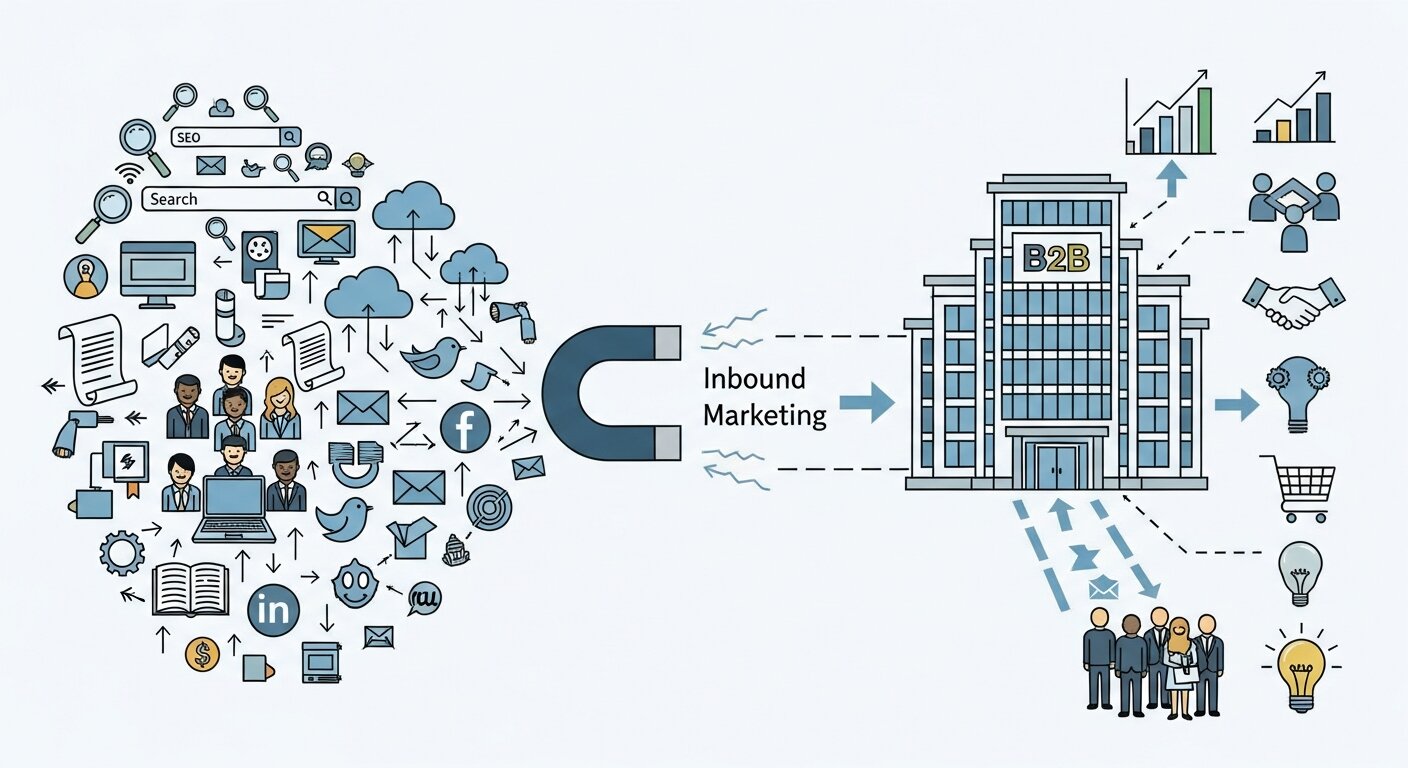
An approach to B2B Inbound Marketing is a customer-centered strategy designed to attract potential business clients by offering valuable content and meaningful experiences. Every piece of content or communication is customized to address the specific needs and challenges of your target business audience, ensuring it resonates deeply and effectively. Unlike traditional push-style outbound marketing, which interrupts prospects with ads, cold calls, or sales pitches, B2B Inbound Marketing relies on drawing clients in naturally. Through owned media such as blogs, social media channels, email campaigns, and search engines, businesses guide prospects toward their brand in a way that feels voluntary and engaging.
The ultimate goal of B2B Inbound Marketing is to provide informative resources and practical tools that help solve your audience’s challenges, build trust, and position your company as a reliable industry expert. By delivering consistent value, businesses can move prospects through the buyer’s journey—from initial awareness to careful consideration and finally toward informed decision-making—without aggressive selling tactics.
Key Elements of B2B Inbound Marketing
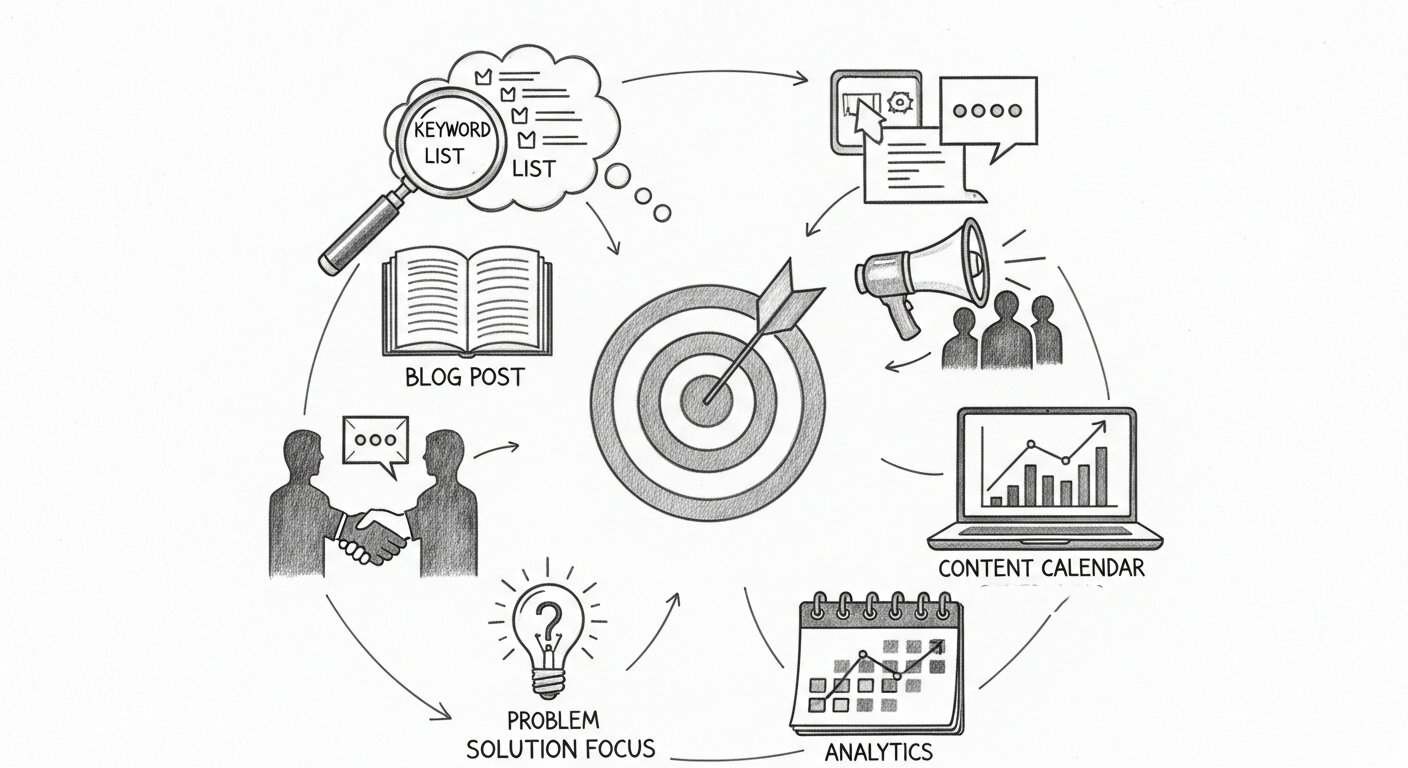
To fully understand B2B Inbound Marketing, it’s essential to examine its core components, which together create a cohesive and effective strategy.
Content Creation
At the heart of B2B Inbound Marketing is content creation. Whitepapers, blog posts, eBooks, case studies, and video guides all serve as valuable resources that address your audience’s specific pain points. This type of content positions your brand as a thought leader and helps prospects perceive your company as a trusted advisor rather than just a vendor.
SEO (Search Engine Optimization)
Creating great content is only effective if your audience can find it. SEO ensures that your blogs, landing pages, and other materials rank high on search engines like Google. Optimized content attracts qualified traffic from businesses actively searching for solutions, which is a critical part of B2B Inbound Marketing’s strategy to generate high-quality leads organically.
Lead Generation and Nurturing
A successful B2B Inbound Marketing plan captures leads through gated content, downloadable resources, and subscription forms. However, attracting leads is just the beginning. Follow-up workflows, personalized emails, and targeted content nurture prospects over time, moving them closer to conversion while building relationships and trust.
Marketing Automation
Automation tools such as HubSpot, Marketo, or Mailchimp help streamline B2B Inbound Marketing efforts. From automated email sequences to scheduling social media posts and analyzing performance metrics, marketing automation ensures campaigns are efficient, personalized, and scalable across multiple channels.
Analytics and Continuous Optimization
Continuous measurement and optimization are cornerstones of B2B Inbound Marketing. Tools like Google Analytics, CRM software, and marketing dashboards provide insights into traffic patterns, engagement, lead quality, and conversions. These insights allow businesses to refine strategies, identify high-performing content, and maximize ROI over time.
Why is B2B Inbound Marketing Important?
Modern business buyers have dramatically shifted their behaviors over the last decade, and B2B Inbound Marketing addresses these changes effectively. Here’s why it matters:
Trust is the New Currency
B2B buyers are more informed and selective than ever before. Studies indicate that 75% of B2B buyers conduct substantial research online before engaging with a brand. Providing accurate, useful, and reliable content through B2B Inbound Marketing builds trust, which is critical for nurturing leads and driving conversions.
Cost-Efficiency
Outbound strategies such as paid ads, direct mail, or cold calling can become expensive quickly. In contrast, B2B Inbound Marketing leverages organic channels, content, and targeted engagement strategies to deliver long-term results at a lower cost. The compounding effect of SEO, content authority, and lead nurturing often produces higher ROI over time compared to traditional advertising.
Nurtures Long-Term Relationships
B2B sales cycles are often longer, averaging 6–9 months or more. B2B Inbound Marketing focuses on nurturing prospects through educational content, regular touchpoints, and personalized communication. This approach ensures that prospects stay engaged throughout the decision-making process and develop loyalty toward your brand.
Adapts to Digital Buyers’ Preferences
Modern B2B buyers prefer consuming information on their own terms. They use search engines, webinars, social media, and professional networks to research solutions before ever speaking to a salesperson. B2B Inbound Marketing aligns with this behavior by providing self-directed, on-demand resources that meet buyers where they are digitally.
Supports Thought Leadership and Brand Authority
By consistently producing educational and insightful content, businesses establish themselves as thought leaders. B2B Inbound Marketing helps your company become a go-to resource in your industry, increasing visibility and credibility in the eyes of potential clients.
Enhances Lead Quality and Conversion Rates
Rather than casting a wide net with outbound ads, B2B Inbound Marketing attracts prospects who are already interested in your solutions. This naturally improves lead quality and increases the likelihood of successful conversions.
Scalable and Measurable
One of the greatest advantages of B2B Inbound Marketing is its scalability. As your content library and audience grow, your marketing efforts continue to generate traffic and leads over time. Combined with analytics, businesses can measure performance, refine strategies, and scale their approach effectively without exponentially increasing costs.
6 Essential Steps to Build a B2B Inbound Marketing Strategy
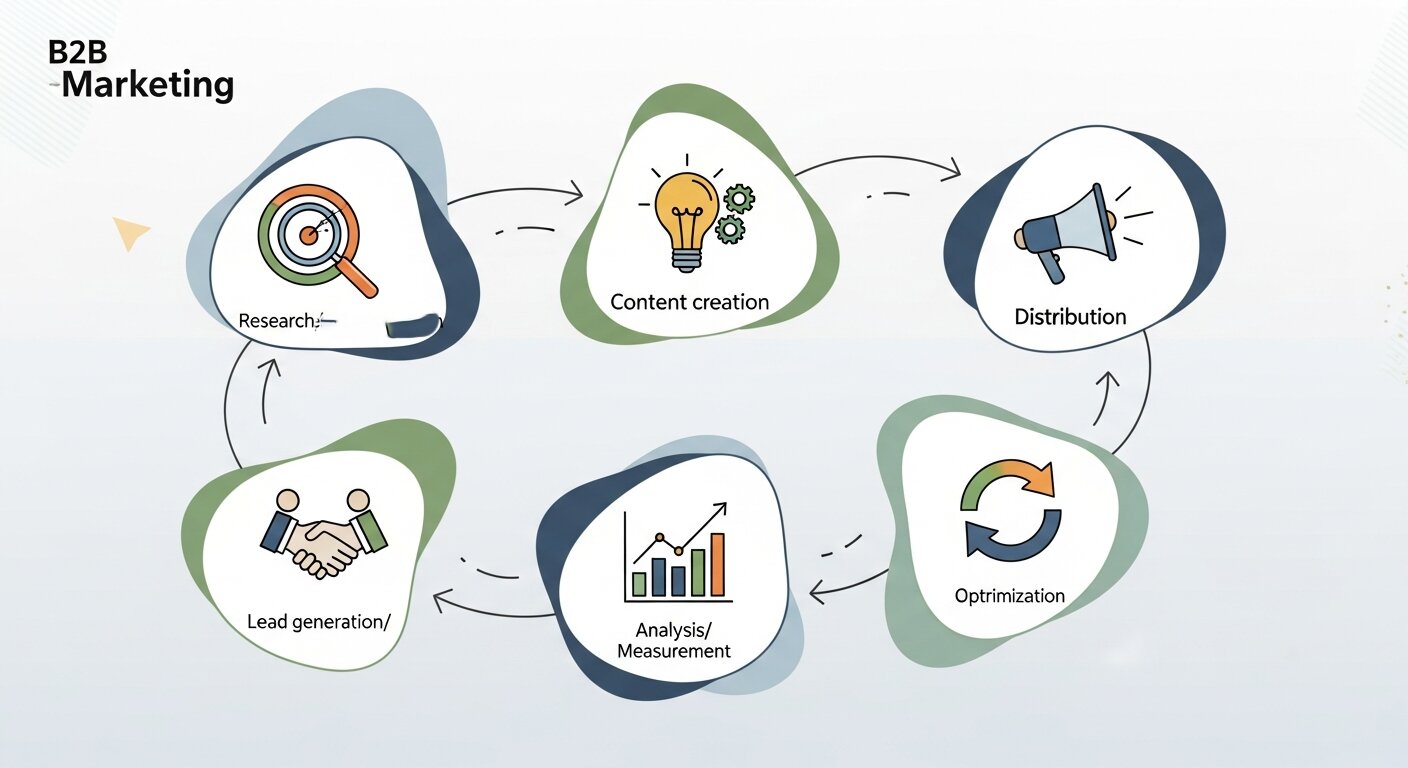
Now that you understand the concept, here’s how to effectively implement a B2B Inbound Marketing strategy to grow your business and generate meaningful leads.
Define Your Buyer Personas
Understanding your audience is the foundation of any successful marketing effort. Develop detailed buyer personas for your ideal B2B clients by analyzing key information such as their challenges, goals, decision-making processes, and preferred communication channels. You can gather insights through surveys, interviews, CRM data, LinkedIn research, or other market intelligence tools. Accurate personas ensure that your B2B Inbound Marketing efforts target the right people with the right messages, increasing the likelihood of engagement and conversions.
Map Out the Buyer’s Journey
A core principle of B2B Inbound Marketing is guiding prospects through the buyer’s journey, which typically consists of three stages:
- Awareness: The prospect identifies a problem or need. Content at this stage should educate and inform, such as blog posts, infographics, and explainer videos.
- Consideration: The prospect evaluates potential solutions. Case studies, webinars, and comparison guides are effective for demonstrating your expertise.
- Decision: The prospect makes a purchasing decision. Product demos, detailed pricing guides, and testimonials can help finalize the conversion.
Creating stage-specific content ensures that your B2B Inbound Marketing strategy addresses the prospect’s needs at every step, building trust and guiding them naturally toward a purchase.
Invest in High-Quality, SEO-Optimized Content
Content is the backbone of any B2B Inbound Marketing approach. High-quality, SEO-optimized content ensures your brand is discoverable and positions your company as an authority. Key content formats include:
- Informational blog posts: Answer the questions your prospects are searching for online.
- Case studies: Showcase results achieved for past clients to build credibility.
- Whitepapers and eBooks: Provide in-depth insights that demonstrate expertise and offer valuable takeaways.
- Videos and webinars: Engage audiences through interactive learning and live demonstrations.
Consistently creating relevant content not only attracts traffic but also strengthens your B2B Inbound Marketing funnel by nurturing prospects with valuable resources.
Engage Across the Right Channels
Identify where your audience spends their time and engage them there. LinkedIn is particularly effective for B2B companies, while email campaigns maintain ongoing relationships with leads. Don’t overlook other platforms such as blogs, podcasts, YouTube, and niche online communities. Channel diversification amplifies your reach and ensures your B2B Inbound Marketing efforts are visible where potential clients are most active.
Use Marketing Automation to Personalize Communication
Marketing automation tools are essential for scaling B2B Inbound Marketing while maintaining personalized communication. After capturing leads through forms, gated content, or webinars, automation can segment your audience and send targeted follow-ups, keeping messages relevant and timely. Automation also allows you to track engagement, adjust content delivery, and maintain consistent communication throughout the buyer’s journey.
Measure Results and Refine
Successful B2B Inbound Marketing requires continuous analysis and refinement. Track key metrics such as website traffic, lead quality, conversion rates, email engagement, and social media interactions. Use these insights to optimize content, improve workflows, and test new tactics. A data-driven approach ensures that your B2B Inbound Marketing strategy evolves with changing buyer behavior and delivers measurable ROI over time.
Real-Life Example of B2B Inbound Success
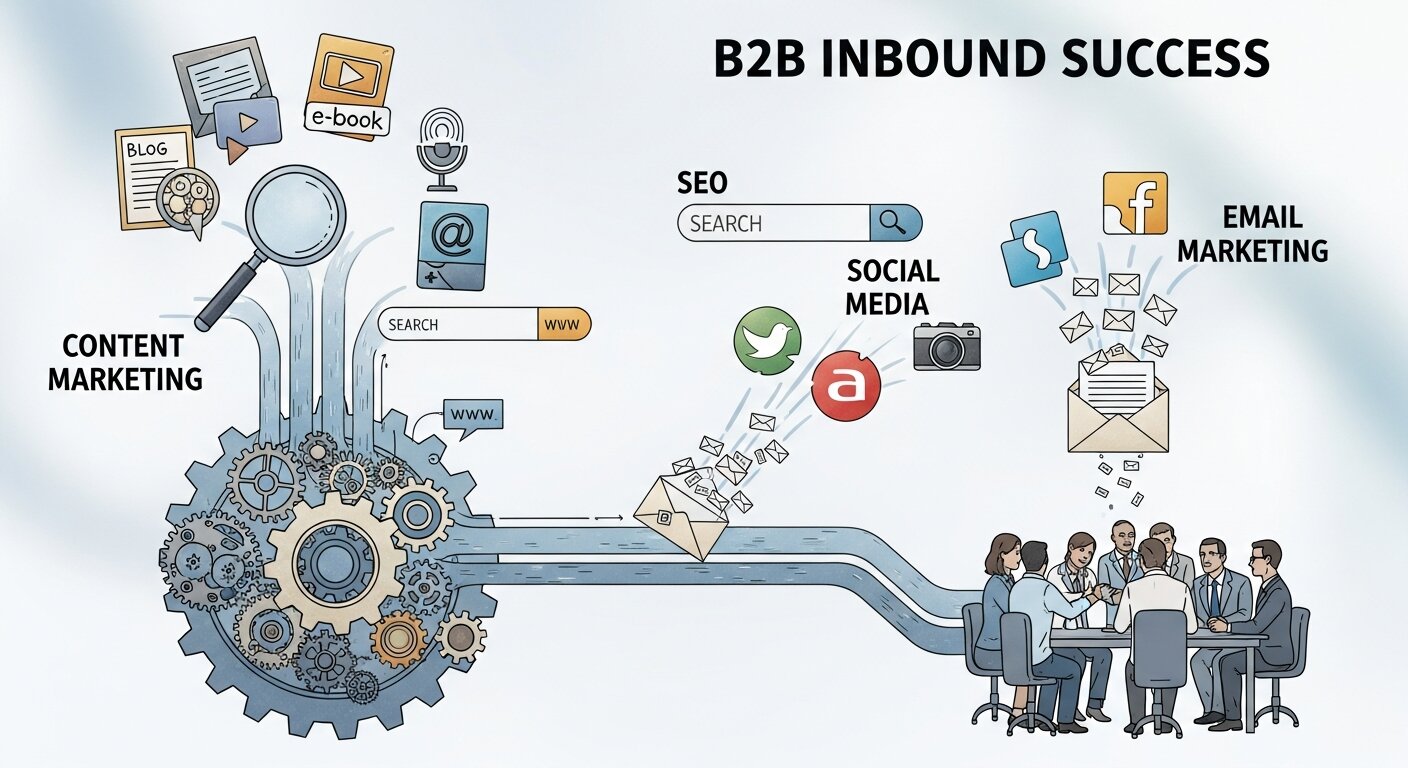
A prime example of effective B2B Inbound Marketing is Salesforce. Through blogs, comprehensive whitepapers, webinars, and case studies, Salesforce provides business clients with actionable insights while subtly showcasing their products. This approach builds trust, positions Salesforce as a thought leader, and demonstrates the power of inbound methods to generate qualified leads without intrusive advertising.
How to Get Started Today
Implementing a B2B Inbound Marketing strategy is not just a theoretical exercise—it is a practical and sustainable method for businesses seeking growth in competitive markets. By consistently delivering value and nurturing relationships authentically, you attract clients who trust your brand and see it as a long-term partner.
If you’re ready to unlock the full potential of B2B Inbound Marketing but aren’t sure where to start, focus on two key areas:
- Prioritize what matters most for your business objectives.
- Build trust and credibility with the audience segments you most want to reach.
Take action today by starting small but with a measurable approach. Consider scheduling a free content strategy consultation to see how B2B Inbound Marketing can transform your company into a growth engine that is both scalable and sustainable. Every effort you invest in inbound content, automation, and lead nurturing compounds over time, creating long-term business value.
Frequently Asked Questions
What is B2B Inbound Marketing?
B2B Inbound Marketing is a strategy that focuses on attracting potential business clients through valuable content, SEO, social media, email campaigns, and other organic channels. Unlike outbound marketing, it draws clients in naturally rather than pushing sales messages. This approach is especially effective when paired with Inclusive Inbound Marketing: Designing Content Strategies for Diverse Audiences, ensuring your messaging resonates across a wide variety of business clients.
How does B2B Inbound Marketing differ from traditional outbound marketing?
Outbound marketing interrupts prospects with ads, cold calls, or direct mail, whereas B2B Inbound Marketing provides useful, relevant information that engages potential clients and nurtures trust over time. By implementing How to Improve Your Inbound Marketing Strategy for Better Results, businesses can refine their inbound tactics to maximize engagement and lead conversion.
Why is B2B Inbound Marketing important for modern businesses?
It aligns with how modern buyers research and make decisions online, helps build credibility, improves lead quality, and provides measurable, long-term results that are more cost-effective than traditional marketing methods. Focusing on Green Your Inbound Marketing: Sustainable Strategies for Eco-Conscious Brands can further enhance brand value and appeal to modern, environmentally-conscious B2B buyers.
How does B2B Inbound Marketing generate leads?
By providing informative content like blogs, whitepapers, webinars, and eBooks, businesses attract prospects who are actively seeking solutions. Lead capture tools like forms, gated content, and subscriptions then convert these visitors into qualified leads.
Can small businesses benefit from B2B Inbound Marketing?
Yes. Small businesses can leverage cost-effective content creation, SEO, social media, and email nurturing to generate leads and build authority, gradually scaling their efforts without excessive expenditure.
How long does it take to see results from B2B Inbound Marketing?
Results are gradual, often taking a few months to gain traction. SEO, content marketing, and lead nurturing build momentum over time, creating sustainable growth that compounds with continued effort.
Is B2B Inbound Marketing suitable for all industries?
While it works best for industries with complex sales cycles or educated buyers, nearly any B2B company can benefit by customizing content and engagement strategies to their target audience.
What metrics should I track to measure success?
Important metrics include website traffic, lead quality, conversion rates, email engagement, social media interactions, and ROI. Regular analysis ensures optimization and continuous improvement of your B2B Inbound Marketing strategy.
How can marketing automation enhance B2B Inbound Marketing?
Automation tools segment audiences, send personalized follow-ups, and track engagement, making it easier to nurture leads at scale while maintaining relevant, timely communication throughout the buyer’s journey.
Is B2B Inbound Marketing worth the investment?
Absolutely. B2B Inbound Marketing Explained: How to Attract, Convert & Delight Customers demonstrates that businesses investing in this approach see stronger relationships, higher-quality leads, and long-term growth that traditional marketing alone cannot provide.