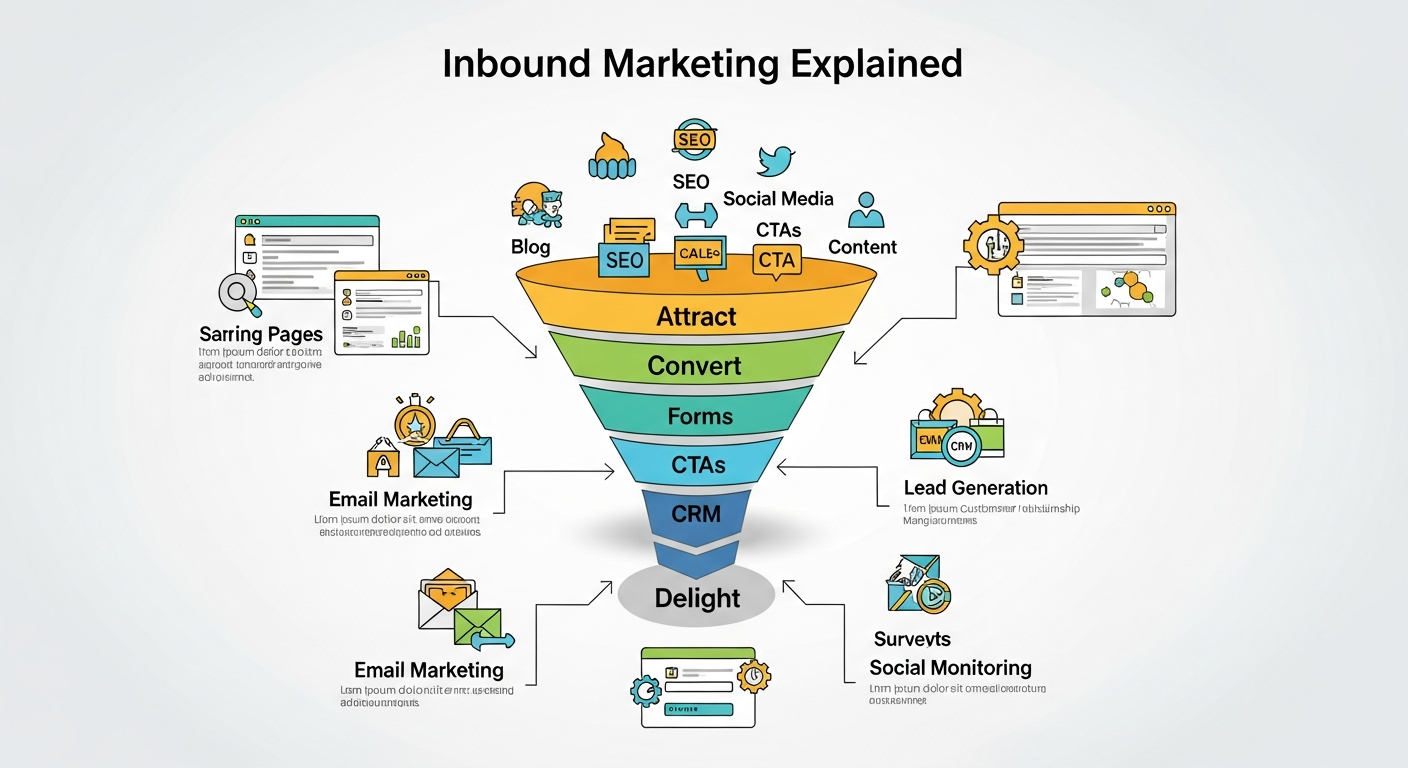
Inbound marketing attracts customers by delivering valuable, relevant content instead of interruptive ads. Using the Attract, Engage, and Delight flywheel, businesses build trust, generate qualified leads, and turn customers into brand advocates. By focusing on SEO, content, nurturing, and customer experience, inbound marketing creates sustainable, long-term growth.
Marketing often feels like a balancing act. On one hand, you need to reach new audiences and grow your business. On the other, nobody likes being interrupted by aggressive ads or pushy sales calls. So, how do you get your message in front of the right people without alienating them? The answer is inbound marketing.
This approach flips the traditional marketing model on its head. Instead of broadcasting your message to a wide, often uninterested audience, inbound marketing focuses on drawing potential customers to you. It’s about creating valuable content and experiences that align with their interests and needs, building trust and establishing your brand as a helpful authority.
By understanding the principles of inbound marketing, you can create a sustainable strategy that not only attracts visitors but also converts them into loyal customers and advocates for your brand. This guide will walk you through the entire inbound marketing methodology, explaining each stage and providing actionable strategies you can implement to start seeing results.
What Is Inbound Marketing?
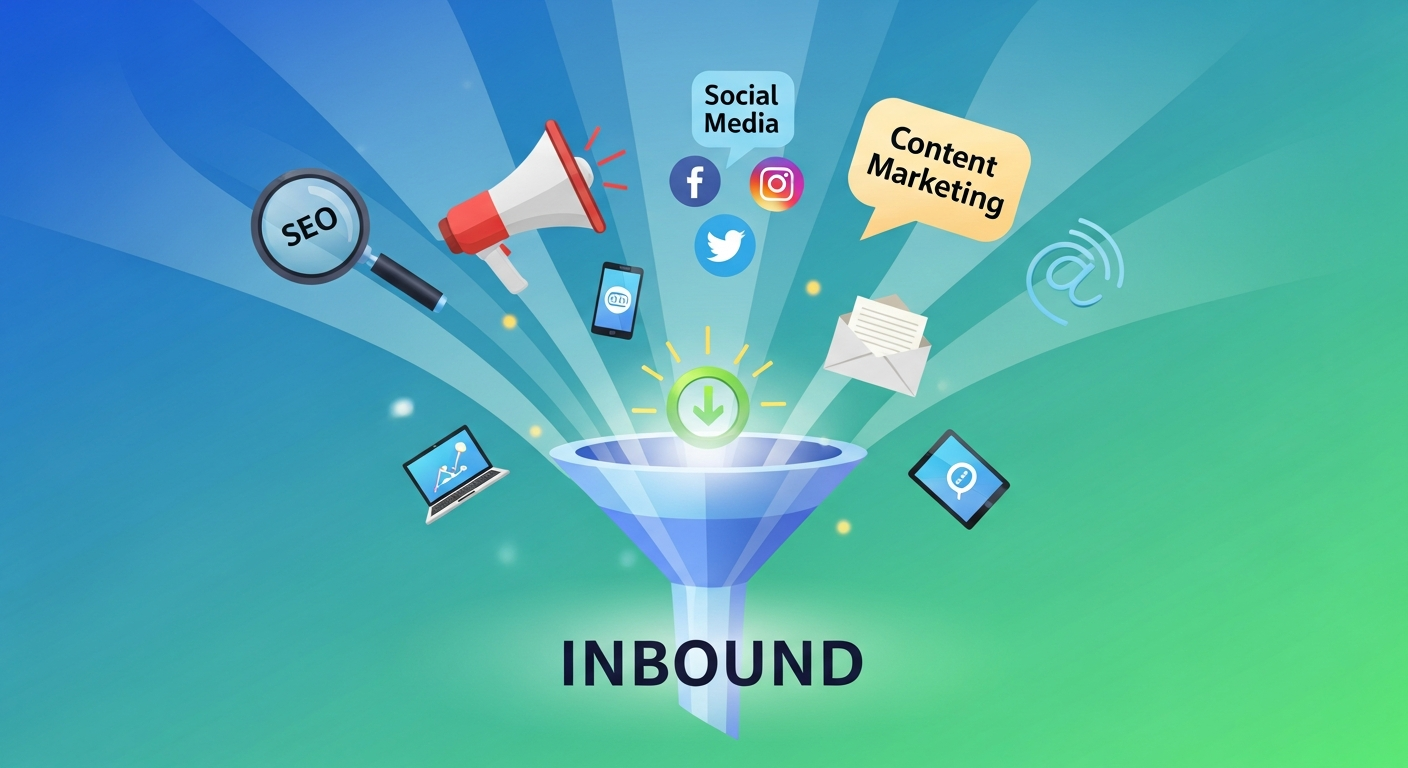
Inbound marketing is a business methodology that attracts customers by creating valuable content and experiences tailored to them. While traditional (or outbound) marketing involves interrupting your audience with content they don’t always want, inbound marketing forms connections they are looking for and solves problems they already have.
At its core, inbound marketing is about empathy and relevance. It focuses on understanding your audience’s challenges, goals, and behaviors, then delivering the right message at the right time. Instead of competing for attention with disruptive ads, inbound marketing earns attention by being genuinely helpful. This approach builds trust over time, positioning your brand as a reliable source of information rather than just a seller of products or services.
Inbound marketing also aligns closely with how modern consumers make decisions. Today’s buyers research extensively before making a purchase. They search on Google, read blog posts, watch videos, compare options, and seek recommendations. Inbound marketing supports this journey by providing educational and informative content at every stage, from awareness to consideration to decision-making.
Another key aspect of inbound marketing is its focus on long-term value. Rather than short-lived campaigns, inbound strategies are designed to compound over time. A well-written blog post, an optimized landing page, or a helpful video can continue attracting and converting prospects months or even years after it is published. This makes inbound marketing both sustainable and cost-effective.
Ultimately, inbound marketing creates a win-win relationship. Prospects get useful answers and solutions without pressure, while businesses gain qualified leads, stronger relationships, and loyal customers. By prioritizing value, trust, and customer experience, inbound marketing transforms marketing from a one-way message into a meaningful, ongoing conversation.
Think of it this way:
- Outbound Marketing: TV commercials, billboard ads, cold calling, print ads, and email blasts. These are “push” methods where a company pushes its message onto an audience.
- Inbound Marketing: Blog posts, SEO, social media content, e-books, and webinars. These are “pull” methods that pull people in by providing value.
The core idea is to meet your audience where they are. By providing helpful content that addresses their pain points and questions, you naturally draw them to your brand. This creates a more positive and organic interaction, fostering goodwill and long-term loyalty.
The Inbound Marketing Methodology: The Flywheel Model
The inbound methodology is often visualized as a flywheel, which represents the continuous and self-sustaining momentum you build with your customers. The model was updated from the traditional funnel because it better illustrates how delighting customers can fuel your growth. When you deliver an excellent experience, your customers become advocates who help attract new prospects.
The flywheel is divided into three stages: Attract, Engage, and Delight.
![Image of the Inbound Marketing Flywheel with Attract, Engage, and Delight stages]
Let’s look at each stage and the strategies that power them.
Stage 1: Attract
The first stage is all about drawing the right people to your brand. These are your ideal customers—the ones who are actively searching for solutions to problems your business can solve. The goal here is not just to get any traffic, but to get qualified traffic.
To do this, you need to create and share content that provides value and answers their questions.
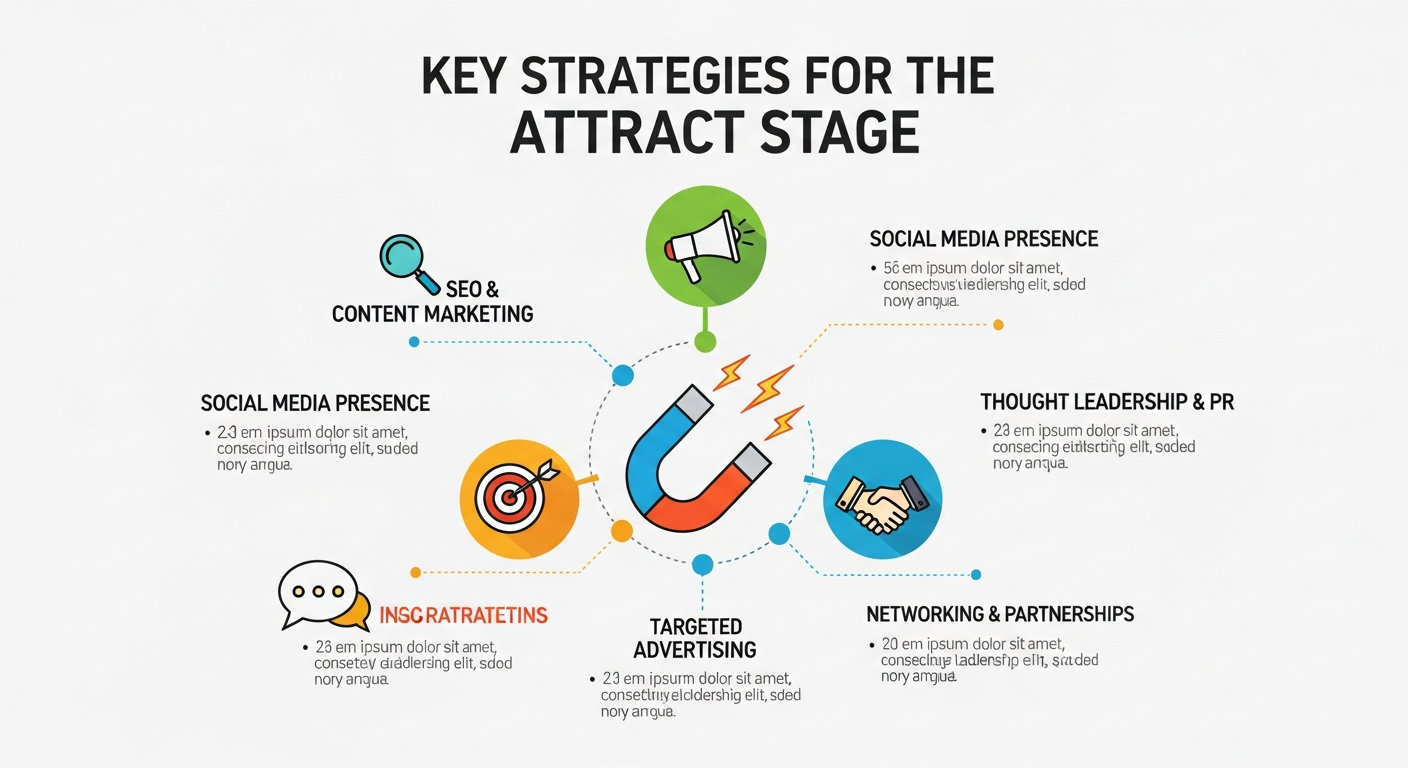
Key Strategies for the Attract Stage
Search Engine Optimization (SEO)
SEO is the foundation of the Attract stage. It’s the process of optimizing your website and content to rank higher in search engine results for specific keywords related to your business. When a potential customer searches for “how to fix a leaky faucet,” and you’re a plumbing company, you want your article on that exact topic to appear first.
- Keyword Research: Identify the terms and phrases your target audience uses to find solutions like yours. Use tools like Ahrefs, SEMrush, or even Google Keyword Planner.
- On-Page SEO: Optimize individual web pages by including your target keywords in titles, headings, meta descriptions, and throughout the content.
- Technical SEO: Ensure your website is fast, mobile-friendly, and easy for search engines to crawl.
Content Marketing
Content is the fuel for your inbound marketing engine. By creating high-quality, relevant content, you establish your brand as a trusted resource.
- Blogging: A blog is one of the most effective ways to attract new visitors. Write articles that address your audience’s pain points, answer their questions, and offer practical advice.
- Pillar Pages and Topic Clusters: Organize your content around core topics. A “pillar page” is a comprehensive guide on a broad subject, which links to more specific “cluster” blog posts. This structure signals your expertise to search engines and helps readers find information easily.
- Video Content: Create tutorials, product demos, or educational videos to engage a wider audience on platforms like YouTube.
Social Media Marketing
Share your valuable content on the social media platforms where your target audience spends their time. Use social media not just to promote, but to engage in conversations and build a community around your brand. Each platform has its own strengths, so tailor your content accordingly. For example, LinkedIn is great for B2B content, while Instagram is better for visual storytelling.
Stage 2: Engage
Once you’ve attracted visitors, the next step is to engage them. The goal of this stage is to convert visitors into leads by building a relationship and gathering their contact information. This is about starting a conversation and offering solutions that align with their needs.
You want to make it as easy as possible for them to learn more and interact with your business.
Key Strategies for the Engage Stage
Calls-to-Action (CTAs)
A CTA is a button or link that prompts a visitor to take a specific action, like “Download Our Free Guide” or “Sign Up for a Webinar.” CTAs should be clear, compelling, and strategically placed on your website and in your content.
Landing Pages
When a visitor clicks a CTA, they should be taken to a landing page. This page is designed for one purpose: to capture lead information in exchange for an offer. A good landing page is free of distractions and clearly communicates the value of what you’re offering.
Forms
Forms are what you use on your landing pages to collect information. Keep your forms as simple as possible. Only ask for the information you truly need. A long, complicated form can deter people from converting. You can always gather more information later.
Lead Nurturing and Email Marketing
Not every lead is ready to buy immediately. Lead nurturing is the process of building relationships with leads through targeted email campaigns. Send them relevant content, helpful tips, and personalized offers to guide them through their decision-making process.
Live Chat and Chatbots
Engage website visitors in real-time with live chat or automated chatbots. These tools can answer common questions, qualify leads, and connect them with the right person on your team, providing instant support.
Stage 3: Delight
Inbound marketing doesn’t stop once you’ve made a sale. The Delight stage is about continuing to provide value to your customers, turning them into happy promoters of your brand. Remember the flywheel? Delighted customers create the momentum that attracts new business.
Excellent customer service is essential here, but you can go even further.
Key Strategies for the Delight Stage
Customer Support
Provide timely and helpful support to your customers whenever they need it. This includes having a robust knowledge base, multiple support channels (email, phone, chat), and a customer-centric attitude across your entire company.
Surveys and Feedback
Actively listen to your customers. Use surveys, like the Net Promoter Score (NPS), to gather feedback on their experience. Use this information to improve your products, services, and overall customer journey. Showing that you value their opinion helps build loyalty.
Loyalty Programs and Exclusive Content
Reward your loyal customers with special offers, early access to new products, or exclusive content. This makes them feel valued and encourages them to continue doing business with you.
Customer rewards go beyond discounts—they strengthen emotional connections with your brand. When customers receive personalized incentives or insider benefits, they feel recognized rather than taken for granted. This sense of appreciation increases satisfaction, boosts retention, and motivates repeat purchases. Over time, loyal customers are more likely to recommend your brand to others, becoming powerful advocates who help drive sustainable growth.
Community Building
Create a space for your customers to connect with each other and your brand. This could be a private Facebook group, a dedicated forum, or exclusive online events. A strong community fosters a sense of belonging and turns customers into brand advocates.
Getting Started with Inbound Marketing
Implementing a full-scale inbound marketing strategy can feel overwhelming, but you don’t have to do it all at once. Start small and build momentum over time.
- Define Your Ideal Customer: Create detailed buyer personas to understand who you’re trying to reach.
- Start a Blog: Begin by answering the most common questions your customers ask.
- Create One Offer: Develop a simple e-book or checklist and create a landing page to capture leads.
- Promote Your Content: Share your blog posts and offer on one or two social media channels.
- Measure Your Results: Track your website traffic, conversion rates, and leads to see what’s working.
By consistently applying the principles of Attract, Engage, and Delight, you’ll create a powerful marketing engine that fuels sustainable growth for your business.
Conclusion
Inbound marketing is a customer-centric approach that builds trust, credibility, and long-term growth. By attracting the right audience, engaging them with meaningful interactions, and delighting them through exceptional experiences, businesses can create lasting relationships instead of one-time transactions. When done consistently, inbound marketing becomes a self-sustaining engine that fuels awareness, leads, and loyalty—without relying on intrusive tactics.
Frequently Asked Questions (FAQ)
1. Is inbound marketing suitable for small businesses?
Yes. Inbound marketing is highly cost-effective and scalable, making it ideal for small businesses with limited budgets. By focusing on helpful content and organic traffic, small brands can compete with larger companies over time.
2. How long does it take to see results from inbound marketing?
Inbound marketing is a long-term strategy. While some results like increased traffic may appear within a few months, consistent lead generation and conversions typically take 6–12 months.
3. What types of content work best for inbound marketing?
Blogs, videos, e-books, webinars, case studies, and social media posts perform well. The best content is educational, problem-solving, and tailored to your audience’s needs at each stage of the buyer’s journey.
4. How is inbound marketing different from content marketing?
Content marketing is a key part of inbound marketing, but inbound also includes SEO, lead nurturing, email marketing, CRM, and customer experience strategies that guide prospects from attraction to loyalty.
5. Do I need special tools to run inbound marketing?
While inbound can be started with basic tools, platforms like HubSpot, Google Analytics, email marketing software, and SEO tools help automate, track, and optimize your efforts more effectively.