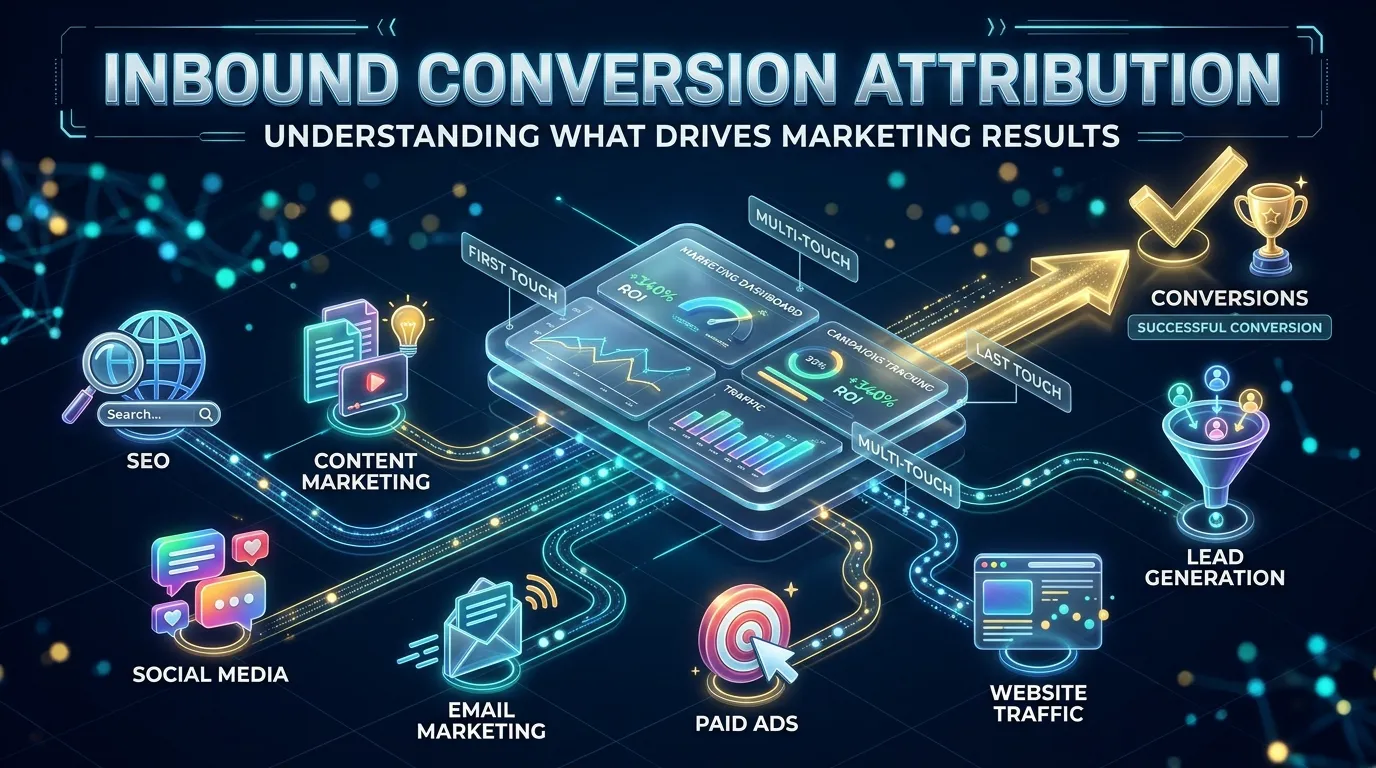
Inbound Conversion Attribution helps businesses understand which marketing interactions contribute to conversions throughout the customer journey. By using suitable attribution models, reliable tracking methods, lead source analysis, and performance measurement, marketers can evaluate channel effectiveness and improve their strategies. A well-organized attribution approach connects inbound marketing activities with meaningful business results.
A customer rarely decides to purchase a product or service after seeing a single advertisement, reading one article, or visiting a website once. Their decision usually develops through several interactions. They might discover a business through an organic search result, explore its website, subscribe to an email newsletter, read a case study, and eventually submit an inquiry after returning through a social media link. Each interaction contributes something to the final decision.
For marketers, understanding this process is essential. Knowing that a conversion happened is useful, but knowing what influenced that conversion provides much greater insight. This is where Inbound Conversion Attribution becomes important. It helps businesses understand how different marketing activities contribute to leads, sales, and other valuable customer actions.
Without a reliable attribution approach, companies may give too much credit to the final interaction while overlooking the earlier activities that introduced customers to the brand. They may also continue investing in channels that appear successful simply because their contribution is easier to measure.
A well-developed attribution strategy provides a more complete view of marketing performance. It connects customer interactions with business outcomes, helps teams evaluate their investments, and supports better decisions about future campaigns.
What Is Inbound Conversion Attribution?
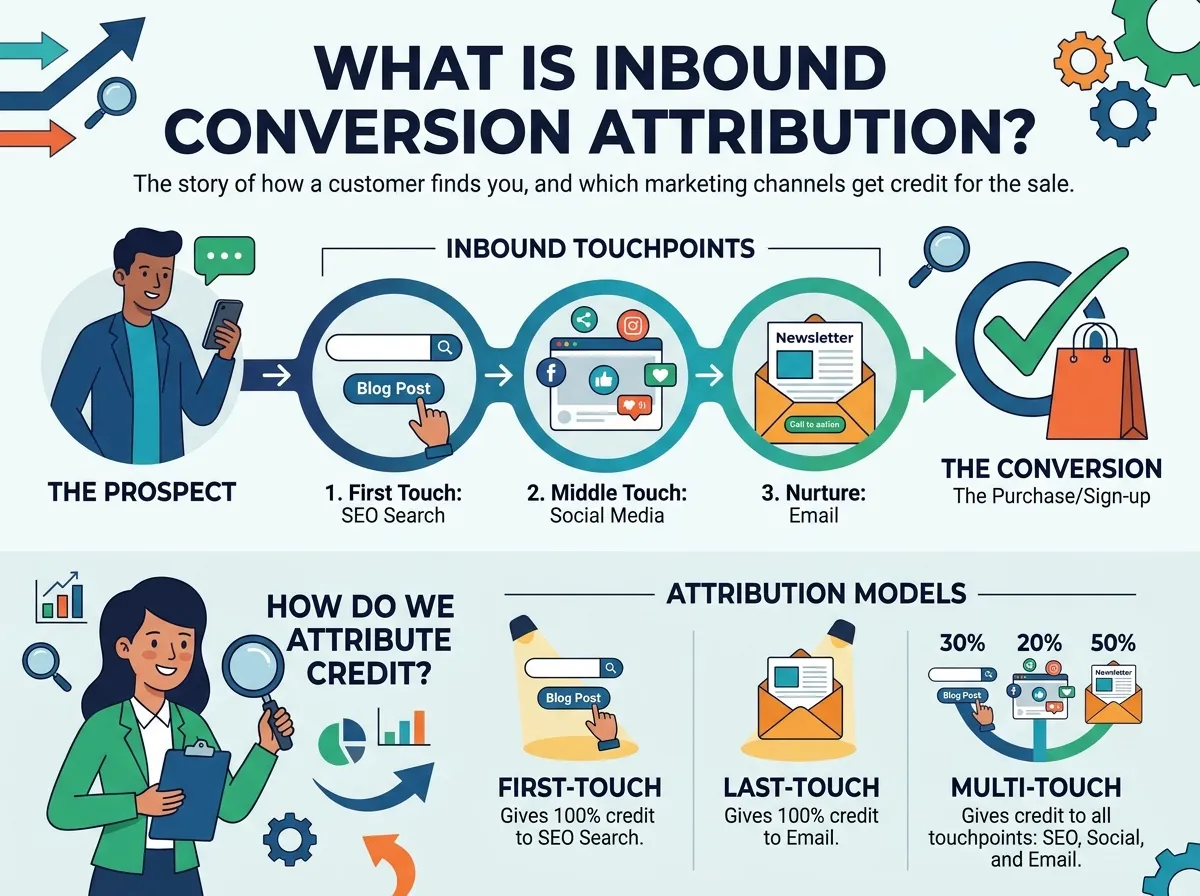
Inbound Conversion Attribution is the process of identifying and evaluating the marketing interactions that contribute to a conversion. A conversion may involve completing a purchase, submitting a contact form, requesting a demonstration, downloading a resource, registering for an event, or subscribing to a newsletter.
Inbound marketing attracts potential customers through valuable content, search visibility, social engagement, educational resources, and other relevant experiences. Attribution examines how these activities influence a person’s progress toward taking action.
For example, imagine someone searching online for a solution to a business problem. They discover a company’s blog post and read it without making an immediate inquiry. Several days later, they return through an organic search result and download a guide. After receiving a follow-up email, they visit the pricing page and eventually request a consultation.
Looking only at the final conversion would provide an incomplete explanation. The original blog post and downloadable guide may have played important roles in building awareness and trust.
Attribution helps businesses recognize these contributions rather than evaluating every marketing activity independently.
Why Conversion Attribution Matters in Inbound Marketing
Inbound marketing often involves longer customer journeys than marketers initially expect. People may need time to research their options, compare providers, understand product features, and build confidence before making a decision.
During this period, they interact with different marketing channels. Search engines introduce them to educational content, social platforms help maintain awareness, and email communication provides additional information. These interactions work together, even when they are managed by separate teams.
Without attribution, businesses may misunderstand which activities are creating meaningful opportunities. A blog article might generate few immediate inquiries but consistently introduce qualified visitors who convert later. Meanwhile, a paid campaign may receive credit for conversions that were already influenced by earlier organic interactions.
Accurate attribution makes performance analysis more balanced. It helps marketers understand the relationship between awareness, engagement, lead generation, and sales. It also improves budget decisions because teams can evaluate the wider contribution of their marketing activities.
Companies already measuring Inbound Engagement Metrics can use attribution to connect audience interactions with actual outcomes. Engagement data shows how people respond to marketing content, while conversion attribution helps explain how those responses contribute to meaningful business actions.
Understanding the Different Inbound Marketing Attribution Models
Inbound Marketing Attribution Models provide different ways to distribute conversion credit across customer interactions. Each model offers a particular perspective, and the most appropriate choice depends on the business, its sales cycle, and the available data.
The first-touch model gives full credit to the first recorded marketing interaction. This approach is useful when businesses want to understand what introduces new audiences to their brand. For example, if a customer initially discovers a company through an organic search result, that interaction receives the conversion credit.
However, first-touch attribution does not explain what happens afterward. It may overlook the content, email communication, and other interactions that help a potential customer make a final decision.
Last-touch attribution takes the opposite approach by assigning full credit to the final recorded interaction before conversion. It is relatively straightforward to understand and can help identify the immediate sources of inquiries or purchases. However, it may undervalue earlier activities that helped build interest.
Linear attribution distributes credit equally across the recorded interactions. If a customer interacts with five marketing touchpoints before converting, each receives an equal share. This model recognizes that several activities contribute to the journey, although it assumes that every interaction has the same influence.
Time-decay attribution gives greater weight to interactions closer to the conversion. This can be useful for businesses with longer decision-making periods because it recognizes that recent activities may have a stronger influence on immediate action.
Position-based attribution assigns greater importance to selected interactions, commonly the first and last touchpoints, while distributing the remaining credit among interactions in between. It provides a balance between recognizing how customers discover a brand and understanding what encourages them to convert.
Data-driven attribution uses available conversion and interaction data to estimate the contribution of different touchpoints. Its usefulness depends on data quality, sufficient conversion information, and the capabilities of the analytics platform.
No single model explains every customer journey perfectly. Businesses should select a model that answers their actual marketing questions rather than choosing one simply because it is commonly used.
How Conversion Tracking Methods Reveal Customer Behavior
Attribution depends on reliable information about customer interactions. Conversion Tracking Methods help businesses collect the data needed to understand when visitors take important actions and how those actions relate to marketing activities.
Website analytics platforms can record events such as page views, form submissions, button clicks, file downloads, and purchases. These events help marketers identify which activities occur before a conversion.
Tracking parameters in campaign links can also identify where website visitors originate. For example, a tagged link in an email newsletter can distinguish email traffic from visitors arriving through organic search or social media.
Form tracking provides another useful source of information. When someone submits an inquiry form, businesses can record relevant details such as the original traffic source, landing page, campaign information, and conversion date. This creates a stronger connection between website activity and lead records.
CRM integration extends the process beyond the website. It can connect marketing interactions with lead qualification, sales conversations, opportunity creation, and closed revenue. As a result, marketers can examine whether a channel generates not only inquiries but also valuable customers.
However, tracking must be implemented carefully. Duplicate events, missing campaign parameters, inconsistent naming conventions, and disconnected platforms can create inaccurate reports. Businesses should establish clear tracking definitions and regularly check whether collected information is complete and reliable.
The Value of Multi-Touch Conversion Attribution
Modern inbound marketing rarely depends on one interaction. This makes Multi-Touch Conversion Attribution particularly useful for organizations that publish content across several channels or operate complex customer journeys.
Consider a software company that attracts a visitor through a search-optimized article. The visitor later watches a product demonstration, subscribes to a newsletter, attends a webinar, and eventually requests a sales consultation.
Each interaction serves a different purpose. The article introduces the problem and provides useful information. The demonstration explains the product. The newsletter maintains communication, while the webinar provides a deeper understanding of the solution.
If the company only measures the last interaction, it may conclude that the webinar or consultation page generated the entire conversion. Multi-touch analysis offers a broader perspective by recognizing the contribution of earlier activities.
This approach can help marketing teams identify which combinations of channels are effective. It can also reveal whether certain types of content consistently appear in successful customer journeys.
However, multi-touch attribution should not be interpreted as a perfect measurement of influence. A customer may interact with several touchpoints without being equally influenced by all of them. Some interactions may be incidental, while others may have a significant impact on the final decision.
The objective is to develop a more useful understanding of customer behavior, not to create a false sense of mathematical precision.
Marketing Channel Attribution and the Role of Organic Search
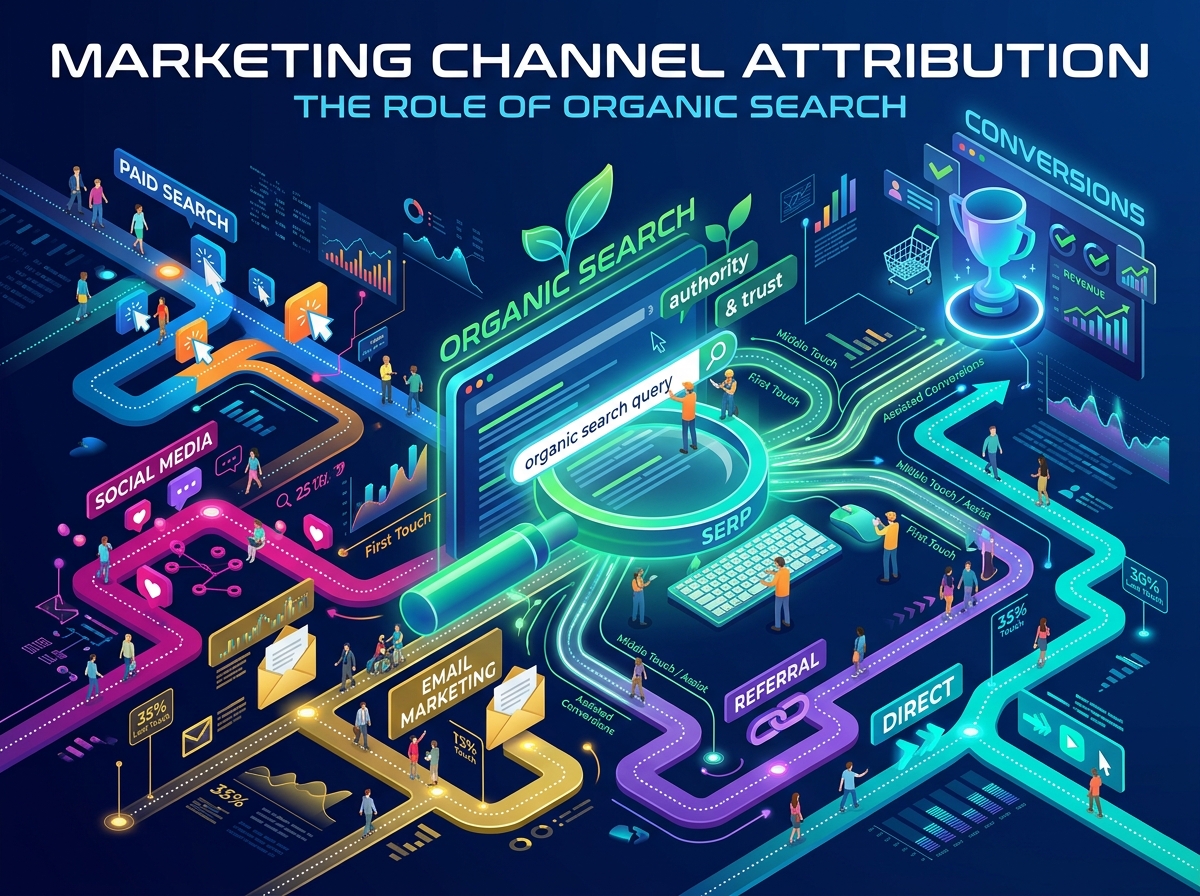
Marketing Channel Attribution examines how different channels contribute to conversions. Common channels include organic search, paid search, social media, email marketing, referral traffic, direct visits, and content marketing.
Each channel may contribute at a different stage of the customer journey. Organic search often introduces people who are actively researching a topic. Social media can increase awareness and encourage repeat engagement. Email helps maintain communication with people who have already shown interest.
Organic search deserves particular attention in inbound marketing because its influence can extend beyond the first website visit. A helpful article may attract visitors for months or years, creating opportunities for future engagement and conversions.
A company’s Inbound Marketing SEO strategy can therefore play an important role in its attribution results. Search visibility brings relevant visitors into the customer journey, while useful content gives those visitors reasons to explore further.
However, organic traffic should not be judged only by the number of visitors it generates. Marketers should also examine engagement quality, lead progression, conversion rates, and revenue contribution. A smaller group of highly relevant visitors may create more business value than a much larger audience with limited purchasing interest.
Channel attribution becomes more meaningful when it considers both immediate conversions and the wider role each channel plays in attracting and developing potential customers.
Connecting Customer Journey Attribution With Lead Generation
Customer Journey Attribution examines how marketing interactions influence a person as they move from initial awareness toward conversion. It considers the sequence of activities rather than treating each interaction as an isolated event.
A typical inbound journey may begin when someone searches for information about a particular challenge. After discovering a relevant article, they explore related resources, subscribe to receive updates, and return when they are ready to compare solutions.
The journey can become more complicated when customers use different devices or channels. Someone might read an article on a mobile phone, open an email on a laptop, and complete a purchase through another device. If tracking systems cannot connect these interactions appropriately, the customer journey may appear fragmented.
Lead management also matters. A visitor who downloads an educational resource is not necessarily ready to speak with a salesperson. Another visitor who requests a product demonstration may have stronger purchase intent.
Businesses should distinguish between different conversion types and their importance. Newsletter subscriptions, content downloads, qualified inquiries, sales opportunities, and completed purchases represent different levels of customer commitment.
This distinction helps prevent marketing reports from treating every conversion as equally valuable. It also gives sales and marketing teams a clearer understanding of how leads develop over time.
Inbound Conversion Tracking Beyond the First Website Visit
Inbound Conversion Tracking becomes more valuable when it continues after a visitor leaves the website. A conversion may happen days or weeks after the original interaction, particularly when customers need time to evaluate a product or service.
Email marketing is one example. A visitor may subscribe to a newsletter after reading an article and later return through an email link. Tracking this sequence helps businesses understand how email communication supports the original inbound interaction.
Marketing automation can make these journeys easier to monitor. Automated workflows can respond to customer actions, organize leads into relevant segments, and deliver information based on previous engagement.
For example, a business may send different follow-up content to someone who downloaded a beginner’s guide and someone who visited a pricing page. These interactions provide useful signals about customer interests and readiness.
A well-designed Inbound Marketing Automation system can connect these activities and help marketers understand how automated communication contributes to lead progression. It can also reduce manual work involved in tracking engagement and managing follow-up processes.
Nevertheless, automation should not replace thoughtful measurement. Businesses still need to define which actions count as conversions, determine how long attribution information should remain relevant, and ensure that tracking respects applicable privacy requirements.
Lead Source Analysis and the Quality of Conversions
Lead Source Analysis helps marketers understand where inquiries originate and whether those sources produce valuable business opportunities.
A channel that generates hundreds of leads may initially appear more successful than one that generates only a few dozen. However, the difference becomes less impressive if the larger group contains many unqualified inquiries while the smaller group consistently produces sales opportunities.
For this reason, lead quantity should be evaluated alongside lead quality.
Marketing teams can compare lead sources based on qualification rates, sales acceptance, opportunity creation, conversion to customers, and revenue contribution. These measures provide a more complete picture of marketing effectiveness.
For example, an educational blog may attract visitors who are still researching their options. A product comparison page may attract fewer people but generate inquiries from customers who are closer to making a purchase. Both activities can be valuable, but they serve different purposes.
Lead source analysis also helps identify gaps in the customer journey. If a particular channel generates strong engagement but very few qualified inquiries, marketers may need to examine the relevance of the content, audience targeting, or next steps offered to visitors.
The goal is not simply to identify the channel with the highest conversion count. It is to understand which sources consistently contribute to meaningful business outcomes.
Measuring Conversion Performance Without Losing Context
Conversion Performance Measurement should combine quantitative data with an understanding of customer behavior. Numbers are important, but they need context before they can support reliable decisions.
Conversion rate is one useful measure because it shows the proportion of visitors who complete a defined action. Cost per conversion helps explain the financial investment required to generate that action. Customer acquisition cost provides a broader view by considering the expenses involved in acquiring customers.
Return on marketing investment can help businesses compare marketing expenditure with the value generated. However, calculating this accurately requires reliable revenue data and a reasonable approach to assigning credit across channels.
Marketers should also distinguish between micro-conversions and macro-conversions. A micro-conversion might involve watching a product video, downloading a guide, or subscribing to a newsletter. A macro-conversion may involve purchasing a product or becoming a qualified sales opportunity.
Micro-conversions are useful because they reveal progress before a final purchase occurs. However, they should not be confused with revenue-generating outcomes.
A balanced measurement system considers both. It helps businesses understand whether marketing activities are attracting relevant audiences, encouraging engagement, and ultimately supporting commercial results.
Marketing Touchpoint Analysis and Emerging Trends
Marketing Touchpoint Analysis examines individual interactions that occur between a customer and a business. These touchpoints may include search results, blog articles, landing pages, social posts, emails, webinars, product demonstrations, and sales conversations.
Analyzing these interactions can reveal where customers become more engaged and where they lose interest. For example, a business may discover that visitors frequently read educational content but rarely continue to its product pages. This could indicate a gap between the information provided and the next action being offered.
Changes in technology and customer behavior are also influencing attribution. Privacy restrictions, consent requirements, reduced availability of third-party tracking information, and cross-device activity can make individual-level tracking more difficult.
As a result, businesses are placing greater importance on first-party data, clear consent practices, aggregated reporting, and well-organized analytics systems.
Emerging trends can also influence which channels deserve attention. Marketers who monitor changes in customer expectations and platform behavior may identify new opportunities before they become widely adopted. Resources such as Proactive Trend Marketing can provide additional perspective on recognizing market changes and responding with timely marketing activities.
Attribution should adapt as the marketing environment changes. A measurement model that worked well several years ago may not provide the same level of insight when customer journeys, privacy expectations, and available tracking technologies evolve.
Building a More Reliable Inbound Attribution Approach

An effective attribution approach begins with clear definitions. Marketing and sales teams should agree on what counts as a conversion, which actions represent qualified leads, and how revenue-related outcomes will be recorded.
Consistent tracking is equally important. Campaign names, source labels, conversion events, and CRM fields should follow a common structure. This reduces confusion and makes it easier to compare results across channels.
Businesses should also choose attribution models based on their needs. A company with a short purchasing cycle may find simpler models sufficient, while an organization with a complex B2B sales process may benefit from multi-touch analysis.
Reporting should connect marketing activity with business performance. Instead of presenting only website visits and form submissions, reports should show how leads progress, which channels contribute to opportunities, and where conversions are being lost.
Finally, attribution results should lead to practical decisions. If a channel consistently attracts qualified customers, it may deserve additional investment. If a content format supports early-stage discovery, the business may need to improve the next steps that guide readers toward conversion.
Attribution is most valuable when it helps teams improve their strategy rather than simply produce more reports.
Conclusion
Inbound Conversion Attribution gives businesses a clearer understanding of how marketing interactions contribute to leads, sales, and customer growth. By examining attribution models, tracking methods, channel performance, and customer journeys, marketers can move beyond simple conversion counts and understand the wider value of their inbound activities.
No attribution model can capture every influence behind a customer’s decision perfectly. However, consistent tracking, meaningful performance measures, and a balanced view of marketing touchpoints can significantly improve decision-making.
When businesses connect customer interactions with real outcomes, they can identify valuable channels, improve lead quality, make smarter investments, and create more effective inbound marketing experiences.
Frequently Asked Questions
1. What is Inbound Conversion Attribution?
Inbound Conversion Attribution is the process of identifying and evaluating marketing interactions that contribute to a conversion, such as a purchase, lead submission, consultation request, or newsletter subscription.
2. Why is conversion attribution important for inbound marketing?
It helps businesses understand which marketing activities influence customer decisions, identify valuable channels, improve campaign performance, and distribute marketing investments more effectively.
3. What are the main inbound marketing attribution models?
Common models include first-touch, last-touch, linear, time-decay, position-based, and data-driven attribution. Each model distributes conversion credit differently across customer interactions.
4. What is multi-touch conversion attribution?
Multi-touch conversion attribution evaluates several marketing interactions throughout the customer journey instead of assigning all conversion credit to only the first or final interaction.
5. How does marketing channel attribution work?
Marketing channel attribution examines how channels such as organic search, email, social media, paid advertising, and referral traffic contribute to customer conversions.
6. Which tools help with inbound conversion tracking?
Website analytics platforms, CRM systems, marketing automation software, campaign tracking parameters, and conversion tracking tools can help businesses collect and analyze attribution information.
7. What is the difference between lead source analysis and conversion attribution?
Lead source analysis focuses on identifying where leads originate, while conversion attribution examines how different marketing interactions contribute to a conversion throughout the customer journey.
8. How can businesses improve their conversion attribution accuracy?
Businesses can improve accuracy through consistent tracking, clear conversion definitions, CRM integration, standardized campaign naming, reliable data collection, and regular reporting reviews.
9. What challenges affect inbound conversion attribution?
Common challenges include cross-device tracking gaps, privacy restrictions, incomplete data, duplicate conversion events, disconnected platforms, and complex customer journeys involving multiple channels.
10. How often should businesses review attribution performance?
Businesses should review attribution reports regularly, often monthly or quarterly. More frequent reviews may be useful during major campaigns, product launches, or significant changes in marketing performance.