Inbound marketing SEO combines search engine optimization with valuable, relevant content to attract the right audience through organic search. It helps businesses increase organic traffic, build trust with potential customers, and create more opportunities for lead generation. By focusing on useful content and effective SEO strategies, businesses can connect with users at different stages of their buying journey.
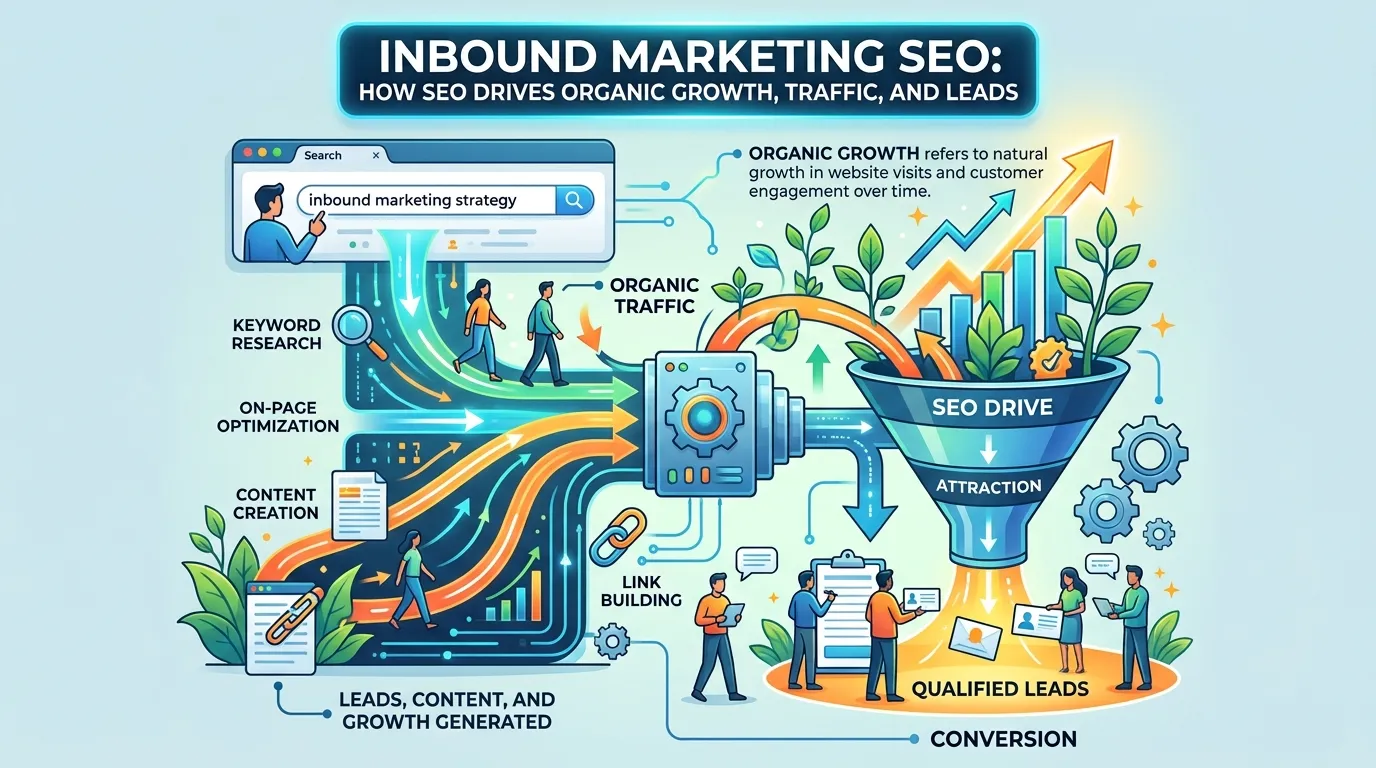
Inbound marketing SEO brings together two powerful approaches to digital growth: inbound marketing and search engine optimization. Inbound marketing focuses on attracting people through useful, relevant content, while SEO helps that content become easier for search engines and potential customers to discover. When these two strategies work together, businesses can attract qualified visitors, build trust, generate leads, and create sustainable organic growth.
Instead of depending entirely on paid advertising or direct promotional messages, businesses can use valuable content to answer questions that their target audience is already searching for. This creates a more natural connection between the customer and the brand. A strong inbound marketing SEO strategy makes content more discoverable while ensuring that visitors receive useful information throughout their buying journey.
Search engines have also changed the way people discover businesses. Customers often begin with a question, problem, comparison, or product-related search before they ever interact with a company. This makes organic visibility an important part of modern marketing. Businesses that consistently publish useful content and optimize it for relevant searches can build visibility that continues to deliver value over time.
Understanding Inbound Marketing SEO
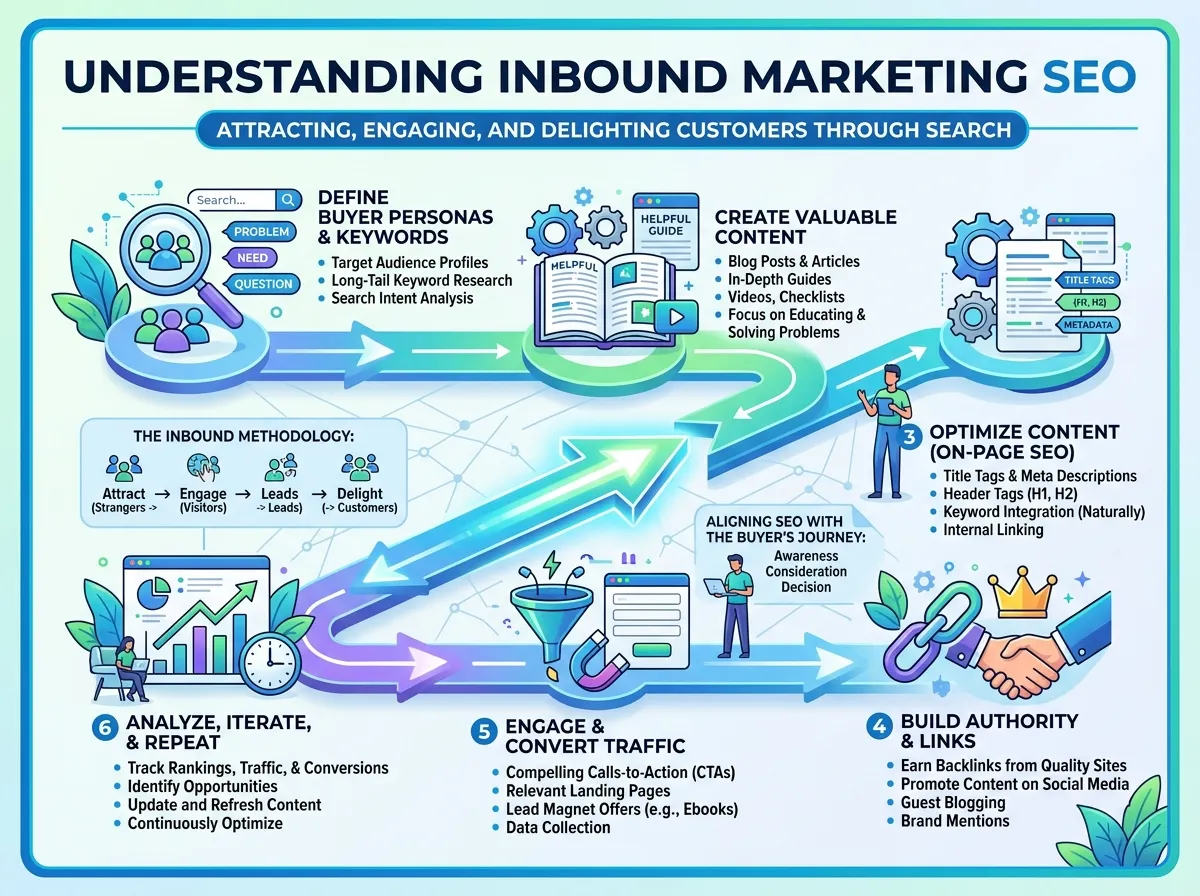
Inbound marketing SEO is the process of using search engine optimization as part of an inbound marketing strategy to attract relevant visitors through organic search. It connects keyword research, content creation, technical optimization, user experience, and lead generation into one connected marketing approach.
Traditional advertising attempts to place a message in front of an audience, while inbound marketing aims to attract people when they are already looking for information or solutions. SEO strengthens this process by helping content appear when potential customers search for related topics.
For example, someone searching for information about email automation may not be ready to purchase software immediately. They may first want to understand how automation works, what benefits it provides, and which solutions are appropriate for their business. A company that creates useful content around those questions can attract that person early in the buying journey. With relevant internal links, calls to action, and additional resources, that visitor can gradually become a qualified lead.
This is why SEO for inbound marketing is more than simply adding keywords to blog posts. It requires an understanding of search intent, audience needs, content quality, website structure, and the relationship between different stages of the customer journey.
The Connection Between SEO and Inbound Marketing
SEO and inbound marketing naturally complement each other because both focus on relevance and value. An inbound marketing strategy creates content designed to educate, inform, and engage an audience, while SEO helps that content reach people through search engines.
A business may produce an excellent article, but if the content does not target relevant search queries or provide a clear structure, it may struggle to attract organic traffic. On the other hand, content that is heavily optimized for keywords but provides little value may fail to engage readers.
An effective inbound SEO strategy balances both sides. Content should be written primarily for people while being structured in a way that search engines can understand. This means using meaningful headings, relevant keywords, descriptive titles, useful information, natural internal links, and clear explanations.
The relationship becomes even stronger when businesses understand the entire customer journey. Informational content can attract users who are researching a problem. Comparison and solution-focused content can help visitors evaluate options. More commercially focused pages can then encourage interested users to contact the business, request information, subscribe, or make a purchase.
Why Content Matters in Inbound Marketing SEO
Content is at the center of most successful inbound marketing campaigns. Without useful content, there is little reason for search users to discover, visit, or return to a website.
SEO content marketing focuses on creating content that satisfies audience needs while also supporting organic search visibility. Blog posts, landing pages, service pages, case studies, research articles, FAQs, and other content formats can all contribute to an inbound SEO strategy.
The strongest content usually begins with a genuine audience problem. Instead of creating an article simply because a keyword has search volume, marketers can investigate what users actually want to know. This makes the resulting content more useful and improves its ability to attract relevant visitors.
Content should also provide a logical journey from one topic to another. For example, an article explaining inbound marketing could naturally connect to resources about inbound marketing tools and techniques. A reader interested in the broader concept may want to understand the tools that support implementation, making the internal link useful rather than forced.
This type of content relationship can improve user experience while helping search engines understand the topical connections within a website.
Organic Traffic Generation Through Relevant Content
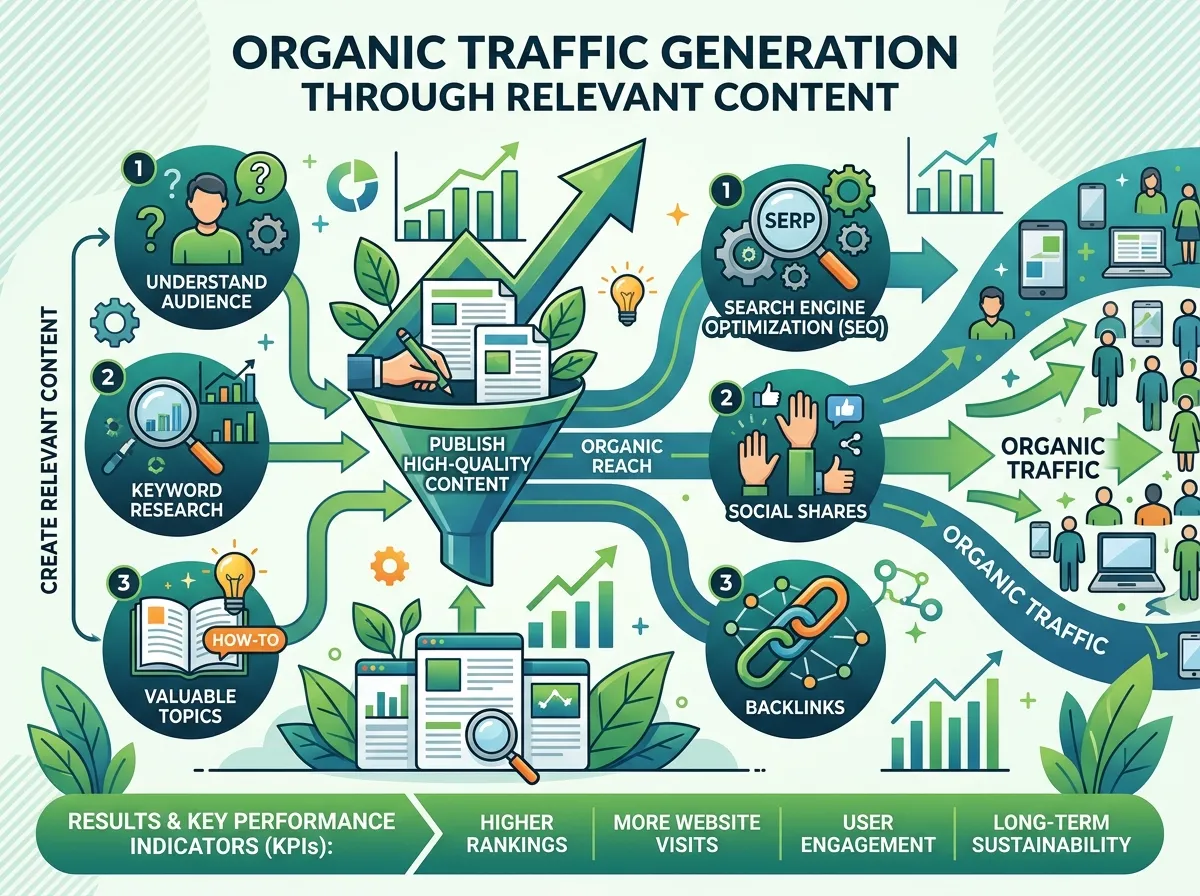
One of the biggest advantages of inbound marketing SEO is its ability to support organic traffic generation. Unlike paid advertising, organic search traffic does not require a business to pay for every individual visit. However, achieving consistent organic visibility requires time, quality content, optimization, and ongoing improvement.
Organic traffic becomes particularly valuable when the visitors are closely aligned with the business’s target audience. Someone searching for a specific solution is often more valuable than a random website visitor because their search demonstrates an existing interest or need.
This is where keyword research becomes important. Keyword research for inbound marketing helps identify the phrases, questions, and topics that potential customers use when looking for information. These keywords can then influence content topics, headings, page titles, supporting sections, and internal linking.
The objective is not to repeat a keyword excessively. Modern SEO works better when content covers a topic comprehensively and uses related concepts naturally. Search engines can understand relationships between words and topics, so a well-written article can rank for several relevant searches without awkward keyword repetition.
Building a Strong Search Engine Optimization Strategy
A successful search engine optimization strategy considers much more than individual keywords. It includes technical website health, content quality, search intent, internal linking, page experience, website architecture, and authority.
Technical SEO provides the foundation. Search engines need to be able to crawl and understand website pages efficiently. Clear site architecture, appropriate indexing, mobile-friendly pages, descriptive metadata, logical URLs, and properly structured content all contribute to a stronger foundation.
Content optimization then builds on that foundation. Each page should have a clear purpose and should satisfy the search intent behind the target query. A page targeting an informational search should provide useful explanations rather than immediately pushing a product or service.
Internal linking also plays an important role. When related pages are connected using descriptive anchor text, visitors can discover additional information without having to return to search results. Search engines can also use these connections to understand relationships between pages.
For example, a website discussing customer acquisition can naturally direct readers toward a resource about inbound marketing and customer acquisition. The connection makes sense because customer acquisition is a central objective of inbound marketing.
Content-Driven SEO and Topical Relevance
Content-driven SEO focuses on building organic visibility through useful, relevant, and interconnected content rather than relying on isolated keyword targeting.
A website becomes more useful to its audience when it covers a subject from multiple relevant perspectives. Instead of publishing one article about inbound marketing and moving to an unrelated topic, a business can create a collection of connected content covering inbound strategies, SEO, content marketing, lead generation, customer acquisition, marketing automation, and related subjects.
This creates topical depth.
Topical depth can also improve the user experience because visitors have more opportunities to explore related questions. A person who arrives through one search query may discover several additional resources that answer the next questions in their research process.
The result is a more connected content ecosystem. Individual pages can attract search traffic, while internal links distribute attention and encourage visitors to spend more time exploring relevant content.
Lead Generation Through SEO
The ultimate value of organic visibility is not simply increasing website traffic. Businesses need that traffic to contribute to meaningful outcomes. This is where lead generation through SEO becomes important.
A website can attract thousands of visitors without generating significant business results if the traffic is poorly targeted or the content does not provide a clear next step. Inbound marketing SEO therefore needs to connect visibility with conversion opportunities.
A visitor might download a resource, subscribe to an email list, request a consultation, contact the company, register for an event, or explore a relevant service page. The appropriate conversion depends on the audience and the stage of the customer journey.
Trust also has a major influence on lead generation. Visitors are more likely to engage with a company when its content demonstrates knowledge and answers their questions honestly. Consistent, helpful content can establish credibility before a sales conversation ever begins.
Businesses can strengthen this relationship by combining educational content with relevant conversion opportunities rather than placing aggressive sales messages throughout every page.
Keyword Research and Search Intent
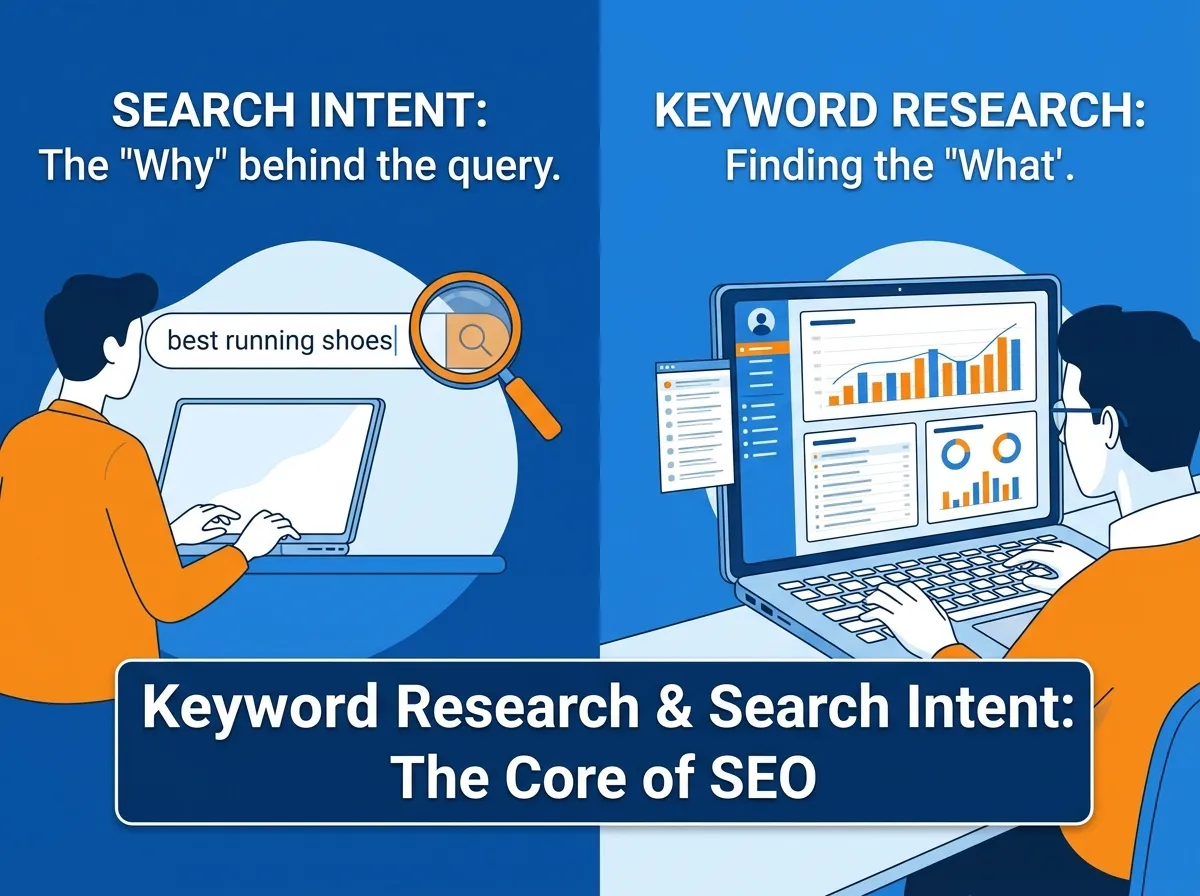
Keyword research is one of the most important connections between SEO and inbound marketing. It helps marketers understand what their audience wants to find and how different searches may reflect different levels of interest.
A broad keyword may indicate early-stage research, while a specific search can indicate a stronger commercial intention. Understanding this difference helps businesses create content that matches the user’s expectations.
For instance, a person searching for “what is inbound marketing” needs educational information. Someone searching for “inbound marketing agency” may be much closer to selecting a service provider. Treating both searches exactly the same would make the content less relevant.
A successful organic lead generation strategy therefore considers search intent as well as keyword volume. The goal is to attract the right people with the right content at the right stage of their journey.
Using Data to Improve Inbound SEO
Inbound marketing SEO should not remain static. Search behavior changes, competitors publish new content, and existing pages can gain or lose visibility over time. Regular analysis helps marketers understand what is working and where improvements are needed.
Organic impressions, clicks, rankings, engagement, conversions, and landing-page performance can provide valuable insights. If a page receives strong impressions but relatively few clicks, its title and description may need improvement. If a page receives traffic but produces few conversions, the content or conversion path may need attention.
Content performance can also reveal new opportunities. A page that begins ranking for several related queries may indicate that the website has developed authority around that topic. Additional supporting content can then strengthen the overall topic cluster.
This creates a continuous cycle in which research informs content, content attracts visitors, visitor behavior provides data, and the data informs future optimization.
Trust, Transparency, and the Future of Inbound Marketing
Trust is becoming increasingly important in digital marketing. People have more choices, more information, and more ways to compare businesses before making decisions. Inbound marketing SEO can support trust when content is accurate, transparent, useful, and focused on genuine audience needs.
Emerging technologies are also influencing how businesses communicate with audiences. For example, blockchain transparency in inbound marketing represents one way technology can influence trust, verification, and transparency within digital marketing environments.
At the same time, marketers should avoid producing content simply to satisfy algorithms. Search visibility is valuable, but long-term success depends on providing real value to the people who discover that content.
The strongest SEO strategy is therefore closely connected to the strongest content strategy. When businesses understand their audience and consistently answer meaningful questions, organic visibility becomes a natural outcome of useful communication.
The Role of Email and Other Inbound Channels
SEO may attract people to a website, but inbound marketing does not end when someone arrives. Other channels can help continue the relationship after the initial search visit.
Email marketing is particularly useful because it gives businesses a way to communicate with people who have already shown interest. A visitor who discovers an article through Google may subscribe to receive additional resources, updates, or educational content.
This creates a connection between organic search and lifecycle marketing. SEO attracts the audience, content builds interest, and email can support continued engagement.
Event-focused businesses can also connect SEO with email campaigns. For example, content about promoting events can naturally lead readers toward information about event email marketing, where email becomes part of a broader inbound communication strategy.
This multi-channel approach makes inbound marketing more effective because different channels support different stages of the customer relationship.
Measuring the Success of Inbound Marketing SEO
The success of inbound marketing SEO should be evaluated through meaningful business outcomes rather than rankings alone. Search rankings can provide useful information, but they are only one part of the overall picture.
Organic traffic shows whether content is attracting visitors, while engagement metrics can indicate whether those visitors find the content useful. Conversion data provides a deeper understanding of whether organic visitors are becoming leads or customers.
It is also useful to examine which pages generate the most valuable traffic. A page with fewer visitors but a high conversion rate may be more valuable than a page that attracts a large audience with little commercial relevance.
Over time, a strong inbound SEO program can create a library of evergreen content that continues attracting visitors. This compounding effect is one of the main reasons businesses invest in organic search and content marketing.
Conclusion
Inbound marketing SEO creates a powerful connection between search visibility, useful content, audience engagement, and lead generation. Instead of treating SEO as a separate technical activity, businesses can integrate it into their broader inbound marketing strategy.
By understanding search intent, conducting meaningful keyword research, creating valuable content, developing strong internal links, and connecting organic traffic with conversion opportunities, businesses can build a sustainable digital presence.
The most effective approach is not simply to rank for more keywords. It is to become a useful resource for the people who matter most to the business. When content answers real questions and SEO makes that content discoverable, organic traffic can become the beginning of a long-term customer relationship.
Frequently Asked Questions
1. What is inbound marketing SEO?
Inbound marketing SEO is the combination of inbound marketing principles and search engine optimization. It focuses on creating valuable content that attracts potential customers through organic search while helping search engines understand and rank that content. The approach can support traffic, engagement, brand visibility, and lead generation.
2. Why is SEO important for inbound marketing?
SEO helps inbound marketing content reach people who are actively searching for information, products, or solutions. Without SEO, valuable content may receive limited organic visibility. SEO improves discoverability while inbound marketing ensures that visitors receive useful information after reaching the website.
3. How does an inbound SEO strategy generate organic traffic?
An inbound SEO strategy generates organic traffic by targeting relevant search queries and creating content that satisfies user intent. Keyword research helps identify valuable topics, while content optimization and internal linking make those resources easier to discover and navigate.
4. What is the difference between inbound marketing and SEO?
Inbound marketing is a broader marketing approach focused on attracting, engaging, and converting audiences through valuable experiences and content. SEO is one of the major channels used within inbound marketing. SEO improves organic visibility, while inbound marketing connects that visibility with content, engagement, and conversion.
5. How does keyword research support inbound marketing?
Keyword research helps marketers understand the language and questions used by potential customers. It allows businesses to identify relevant topics and create content that matches search intent. This makes content more useful to the audience and increases its potential to attract qualified organic traffic.
6. Can SEO generate qualified leads?
Yes. SEO can generate qualified leads when content targets relevant audiences and matches their search intent. Informational content can attract people during the research stage, while solution-focused and commercial content can reach users who are closer to making a purchasing decision.
7. What is content-driven SEO?
Content-driven SEO focuses on improving organic visibility through high-quality, relevant, and comprehensive content. Rather than relying on keyword repetition, it builds topical relevance by answering audience questions and connecting related pages through a logical website structure.
8. How important is internal linking for inbound SEO?
Internal linking helps visitors discover related content and creates a clearer navigation path through a website. It can also help search engines understand the relationship between pages. Relevant anchor text and naturally placed links are generally more useful than adding large groups of unrelated links.
9. How long does inbound marketing SEO take to produce results?
SEO results vary depending on competition, website authority, content quality, technical factors, and the search terms being targeted. Some pages may begin receiving visibility relatively quickly, while building substantial organic traffic and authority can take considerably longer. Consistency and ongoing optimization are important for sustainable results.
10. How can businesses measure inbound marketing SEO performance?
Businesses can measure performance using organic impressions, clicks, rankings, organic traffic, engagement, conversions, leads, and revenue influenced by organic search. Looking beyond rankings helps businesses understand whether their SEO efforts are producing meaningful business outcomes rather than simply increasing website visits.