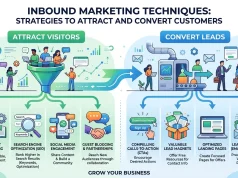

Inbound Marketing Tools and Techniques work best when they are built around the customer journey, not around pressure. Instead of pushing messages at people, you create value that answers questions, builds trust, and helps them move forward with confidence. Inbound Marketing Tools and Techniques support that process by combining content, SEO, email, automation, analytics, and conversion assets into one connected system.
When businesses use Inbound Marketing Tools and Techniques well, they reduce waste, improve lead quality, and create a smoother path from awareness to action. The goal is not only traffic. The goal is to attract the right audience, engage them with useful experiences, and convert them without friction. Inbound Marketing Tools and Techniques make that possible for both growing brands and established companies.
Why inbound works
Modern buyers prefer to research before they respond. They compare options, read reviews, search for answers, and often ignore direct sales messages until they are ready. That is why Inbound Marketing Tools and Techniques are so effective. They meet people where they already are.
Inbound Marketing Tools and Techniques help a brand become useful at every stage. A helpful article can answer a question. A landing page can collect an email address. A nurture sequence can guide a prospect toward the next step. A report can reveal which channels create the best outcomes. Inbound Marketing Tools and Techniques connect all of these actions so the experience feels natural rather than forced.
At the center of this approach is value. If your content, search visibility, and follow-up systems consistently help the audience, trust grows. Trust creates attention. Attention creates action. That is the logic behind Inbound Marketing Tools and Techniques, and it is why they remain a reliable long-term growth model.
What are the core building blocks?
When people ask what are inbound marketing tools, the answer is broader than software alone. Tools can include platforms, templates, workflows, channels, and measurement systems. The most important Inbound Marketing Tools and Techniques usually fall into six groups: content creation, search optimization, lead capture, email nurturing, automation, and analytics.
A blog, a keyword planner, a CRM, a form builder, and a reporting dashboard can all play a part. The real value appears when these pieces work together. Inbound Marketing Tools and Techniques are not meant to live in separate silos. They should support a single buyer journey from first click to final conversion.
The customer journey lens

To use Inbound Marketing Tools and Techniques effectively, start with the journey. A visitor may begin by noticing a problem, then search for solutions, then compare options, and finally choose a provider. Each stage needs different support.
At the awareness stage, educational articles, videos, and social posts do the heavy lifting. At the consideration stage, guides, case studies, webinars, and comparison pages help users evaluate choices. At the decision stage, demos, testimonials, offers, and consultation forms remove doubt. Inbound Marketing Tools and Techniques work because they align the right asset with the right moment.
For teams learning how to use inbound marketing, the process should stay simple: answer one real question, guide the reader to one useful next step, and remove one point of friction. That matters psychologically. People do not always buy the best product first. They often buy the clearest one. Clear messaging, low-friction navigation, and trustworthy proof points make Inbound Marketing Tools and Techniques more persuasive than aggressive promotion.
A practical framework
Below is a simple view of how the system fits together.
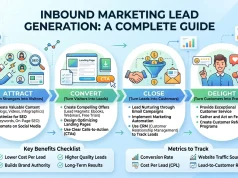
| Stage | Purpose | Example asset | Key metric |
|---|---|---|---|
| Awareness | Attract attention | Blog post, video, checklist | Traffic, impressions |
| Consideration | Build trust | Guide, webinar, case study | Engagement, time on page |
| Decision | Drive action | Demo page, offer, testimonial | Leads, conversions |
| Retention | Increase value | Email series, onboarding | Repeat visits, retention |
This table shows why Inbound Marketing Tools and Techniques are effective: each stage has a job, and each tool supports a clear outcome. When the customer path is visible, the strategy becomes easier to manage and improve.
Content creation that earns attention
Content is the engine of most successful Inbound Marketing Tools and Techniques. It answers real questions, reduces uncertainty, and gives people a reason to keep moving.
Strong content starts with intent. Not every visitor wants the same thing. Some need a beginner explanation. Some need a deeper comparison. Others need proof that your solution works. Inbound Marketing Tools and Techniques help you map these needs to specific assets so each piece of content has a purpose.
A good content system usually includes pillar pages, supporting articles, short-form social content, and downloadable resources. The best content is specific, clear, and practical. It does not try to impress with jargon. It tries to help. That is why Inbound Marketing Tools and Techniques often outperform generic campaigns.
To keep content effective, use examples, data, and simple language. Break long ideas into sections. Address objections early. End every asset with a next step. When content is designed this way, Inbound Marketing Tools and Techniques turn attention into momentum.
Search visibility and discovery
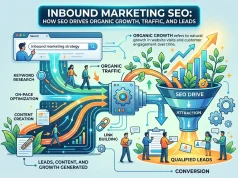
SEO is one of the most reliable channels inside Inbound Marketing Tools and Techniques. Search traffic is powerful because it captures existing intent. People are already looking for answers, so your content can meet demand rather than creating it from scratch.
Keyword research, internal linking, technical optimization, and on-page structure all matter here. Titles should reflect search intent. Headings should organize the page clearly. Meta descriptions should promise a useful outcome. Inbound Marketing Tools and Techniques become much stronger when search engines can understand and trust your content.
For long-term growth, search should not be treated as a one-time task. It should be part of a repeating process: research the topic, publish the content, improve the page, and measure results. Inbound Marketing Tools and Techniques gain compounding value when content continues to earn traffic months after publication.
Lead capture without friction
A great article is only valuable if it creates a path forward. That is where forms, landing pages, pop-ups, lead magnets, and CTAs matter. These assets help Inbound Marketing Tools and Techniques convert interest into contacts.
The key is balance. Ask for enough information to qualify a lead, but not so much that the visitor leaves. Keep forms short. Make the offer specific. Match the page promise to the form action. Inbound Marketing Tools and Techniques work best when the user feels they are receiving value, not giving away time.
Some of the strongest lead magnets are templates, checklists, calculators, and mini-guides. They solve immediate problems and create trust quickly. When paired with a clear follow-up flow, Inbound Marketing Tools and Techniques can turn anonymous visitors into known leads with less resistance.
Email nurturing and relationship building
Email remains one of the most valuable channels in Inbound Marketing Tools and Techniques because it supports ongoing communication. A person may not be ready to buy today, but they may be ready next week or next month. Email keeps the conversation alive.
Useful sequences include welcome emails, educational drips, product education, re-engagement messages, and event follow-ups. Each message should feel relevant to the user’s stage. Inbound Marketing Tools and Techniques are stronger when emails answer likely questions before the prospect asks them.
The tone should be helpful, not pushy. Use one clear idea per email. Link to one useful next step. Personalize the message where possible. The more the communication feels human, the better Inbound Marketing Tools and Techniques perform in the real world.
Automation and workflow design
Automation saves time, but its real purpose is consistency. With Inbound Marketing Tools and Techniques, automation helps you deliver the right message at the right moment without missing key follow-ups.
A good automation workflow can route leads, trigger emails, score behavior, notify sales, and segment audiences. This reduces manual effort and improves response speed. It also makes campaigns easier to scale. Inbound Marketing Tools and Techniques become more reliable when repetitive tasks are handled by systems instead of memory.
Still, automation should never feel robotic. Review your workflows regularly. Check whether the timing feels natural. Make sure the messages still sound like your brand. The smartest Inbound Marketing Tools and Techniques use automation to strengthen human connection, not replace it.
Analytics and optimization
If you cannot measure it, you cannot improve it. Analytics give Inbound Marketing Tools and Techniques their direction. Traffic, engagement, conversion rate, source quality, and customer lifetime value all reveal what is working.
Start with a few core metrics. Look at which pages attract the most qualified traffic. See which channels generate leads. Check where people drop off. Then make small, specific improvements. Inbound Marketing Tools and Techniques improve over time through testing, not guesswork.
A headline change, a better CTA, a faster page load time, or a revised email subject line can make a real difference. The best teams review performance often and act quickly on what they learn. Inbound Marketing Tools and Techniques reward that discipline.
Common methods that drive results
Many teams look for simple inbound marketing methods that can be repeated across campaigns. Some of the most effective include educational blog posts, evergreen landing pages, downloadable resources, webinars, customer stories, and social distribution.
The best inbound marketing techniques for businesses usually combine education and proof. A tutorial helps a beginner. A comparison page helps a researcher. A testimonial helps a buyer. Inbound Marketing Tools and Techniques are strongest when each method has a clear role in the funnel.
The best results usually come from combining methods rather than relying on one channel alone. A blog post can lead to a guide. The guide can lead to a nurture sequence. The sequence can lead to a consultation. Inbound Marketing Tools and Techniques create that kind of connected path.
Best practices that keep the system healthy
Consistency matters more than perfection. Inbound Marketing Tools and Techniques perform best when the brand publishes regularly, updates old content, tracks results, and stays aligned with audience needs.
Another best practice is clarity. Every page should make the next step obvious. Every email should have a purpose. Every offer should solve a real problem. Inbound Marketing Tools and Techniques lose power when they are vague, cluttered, or disconnected.
It also helps to reuse what works. A webinar can become a blog series. A blog series can become a lead magnet. A lead magnet can become a sales follow-up sequence. This is one of the smartest inbound marketing best practices because it saves time while expanding reach. Inbound Marketing Tools and Techniques become more efficient when one strong idea is repurposed across channels.
Inbound for different business sizes
Inbound Marketing Tools and Techniques are not only for large companies with big teams. They can work just as well for startups, agencies, service brands, and local businesses when the system is focused.
For smaller teams, the priority should be simple execution. Pick one audience, one core problem, and one content channel to start. Then build the rest gradually. Inbound Marketing Tools and Techniques are often most effective when they begin with a narrow, realistic plan.
That is why inbound marketing for small businesses is such a practical strategy. It creates visibility without requiring massive ad spend. It also helps small brands compete by being more useful, more personal, and more specific than larger competitors.
Inbound marketing for lead generation
Lead generation improves when the audience receives something useful before being asked for something in return. Inbound Marketing Tools and Techniques support that exchange through trust-building assets and clear calls to action.
The most effective lead generation systems usually connect search traffic, educational content, gated offers, and nurturing flows. Each step lowers friction. Inbound Marketing Tools and Techniques are especially powerful here because they attract people who already have a problem to solve.
Lead quality improves too. Someone who downloads a relevant guide or attends a webinar is often more engaged than someone who clicked a broad ad. That makes follow-up easier and sales conversations more productive. Inbound Marketing Tools and Techniques therefore support both quantity and quality.
Real-world examples of the approach
A software company might publish comparison pages, offer a free template, and send a nurture series that explains how to get started. A consulting firm might publish case studies, host a webinar, and invite prospects to book a strategy call. A retailer might use educational content, email flows, and product guides to reduce hesitation. These inbound marketing examples show that the strategy adapts to many business models.
What all of these examples share is a commitment to helping first. The audience gets answers before they are asked to commit. That is the behavioral advantage of Inbound Marketing Tools and Techniques. They reduce resistance by creating value early.
How to choose the right stack
There is no perfect stack for every brand, but there is a useful rule: choose tools that fit your process, not tools that complicate it. Start with content planning, keyword research, a CMS, a CRM, email software, and analytics. Then add more only when needed.
A lean stack is often enough for strong results. Inbound Marketing Tools and Techniques do not require dozens of disconnected platforms. They require the right ones, used consistently. Simplicity helps teams move faster and measure better.
How to build a repeatable system

The most sustainable inbound marketing strategy guide is one that can be repeated every month. Define a content theme, create one anchor piece, repurpose it into smaller assets, distribute it through relevant channels, and measure the outcome.
This cycle works because it keeps effort focused. Inbound Marketing Tools and Techniques thrive when they are part of a rhythm instead of a one-off campaign. Repetition builds familiarity, and familiarity builds trust. Over time, that trust compounds into a stronger brand and more predictable lead flow.
Final take
If you treat marketing as a helpful conversation, your audience will respond differently. They will spend more time with your content, trust your expertise sooner, and move through the funnel with less resistance. That is the promise of Inbound Marketing Tools and Techniques.
The real advantage is not just traffic, leads, or automation. It is alignment. When content, search, nurturing, and analytics work together, marketing stops feeling random and starts feeling intentional. Inbound Marketing Tools and Techniques give businesses a structured way to attract attention, build relationships, and convert customers without forcing the process.
FAQ
How do I start with inbound?
Begin with one audience, one problem, and one useful asset. Then connect that asset to a simple follow-up system. Inbound Marketing Tools and Techniques work best when the first version is clear and manageable.
Do I need expensive software?
Not necessarily. Many teams start with affordable platforms and still get strong results. The value comes from how you use the system, not how many features it has. Inbound Marketing Tools and Techniques can be scaled over time.
How long does it take to see results?
Some results appear quickly, especially from strong lead capture and email follow-up. Search and content usually take longer, but they often create the most durable gains. Inbound Marketing Tools and Techniques tend to compound over time.
What should I measure first?
Start with traffic quality, conversion rate, lead source, and email engagement. These metrics show whether the system is attracting the right people and moving them forward.
Implementation checklist
Before publishing, make sure each page has one clear audience, one promise, and one next step. Check that the page loads quickly, the headline matches the search intent, and the CTA is easy to spot on mobile. Review the content for clarity, remove filler, and confirm that the form or link works correctly. Then watch the first round of data closely so you can improve the page quickly. Small edits often create the biggest gains when the strategy is consistent.