Inbound marketing techniques help businesses attract potential customers by providing useful content, relevant experiences, and meaningful interactions instead of relying entirely on disruptive advertising. As consumers increasingly research products and services before making purchasing decisions, businesses need marketing approaches that meet people where they are and answer their questions.
Effective inbound marketing can bring together content creation, search engine optimization, social media, email communication, lead nurturing, automation, and customer relationship building. The goal is not simply to generate traffic but to attract the right audience, build trust, encourage engagement, and eventually turn interested visitors into loyal customers.
What Are Inbound Marketing Techniques?
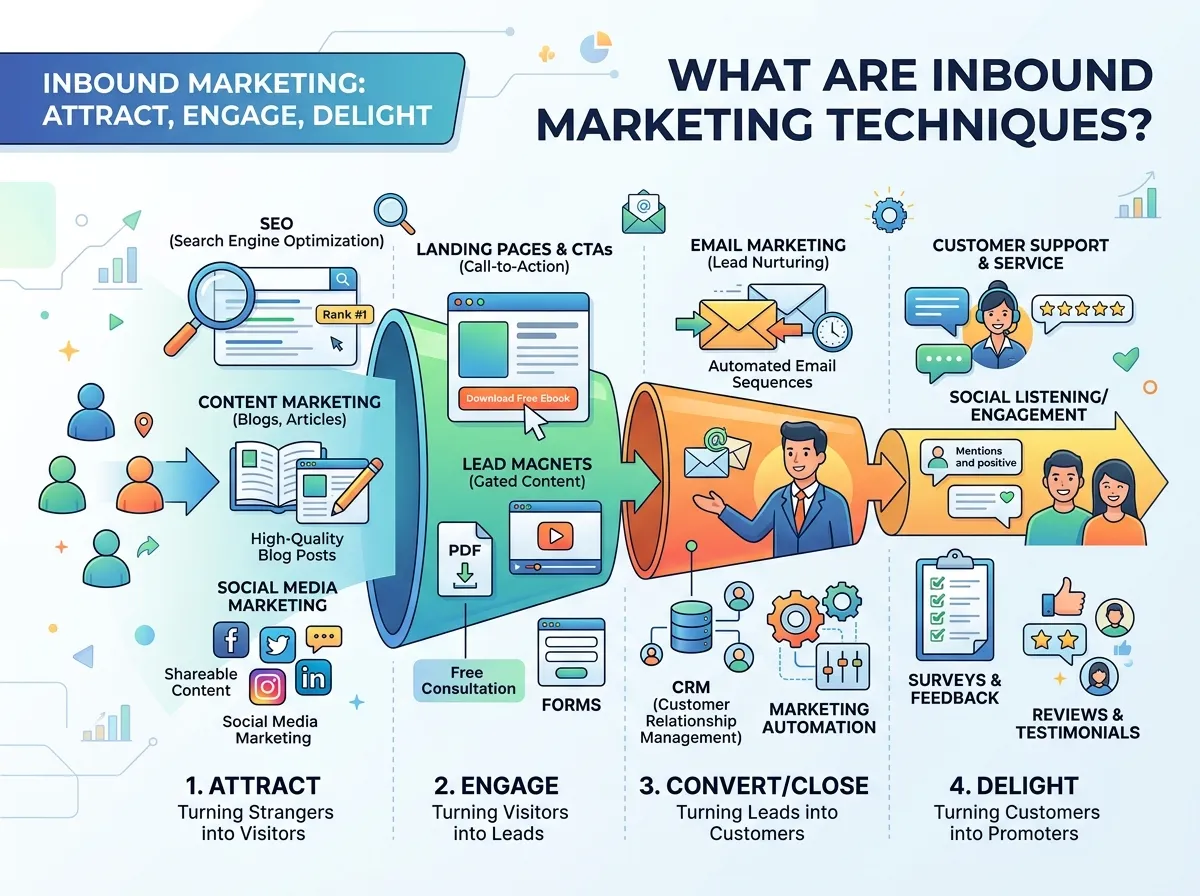
Inbound marketing techniques are methods businesses use to attract customers through valuable and relevant experiences. Instead of pushing promotional messages toward a broad audience, inbound marketing focuses on creating reasons for potential customers to discover and engage with a brand.
Businesses can use educational blog content, search-optimized pages, social media conversations, email campaigns, downloadable resources, webinars, and personalized experiences to attract prospects. These activities become more effective when they are connected to a clear understanding of customer needs and purchasing behavior.
For a broader explanation of the concept, What Is Inbound Marketing and How Does It Work explains how inbound marketing attracts prospects and moves them toward becoming customers.
Inbound Marketing Strategies That Attract the Right Audience
Strong inbound marketing strategies begin with understanding the audience. A business needs to know what its potential customers are searching for, what problems they are trying to solve, what information influences their decisions, and which channels they prefer.
Once these factors are understood, marketers can create content and experiences that match different stages of the customer journey. Someone discovering a problem may respond to educational content, while someone comparing solutions may be more interested in case studies, product comparisons, demonstrations, or customer reviews.
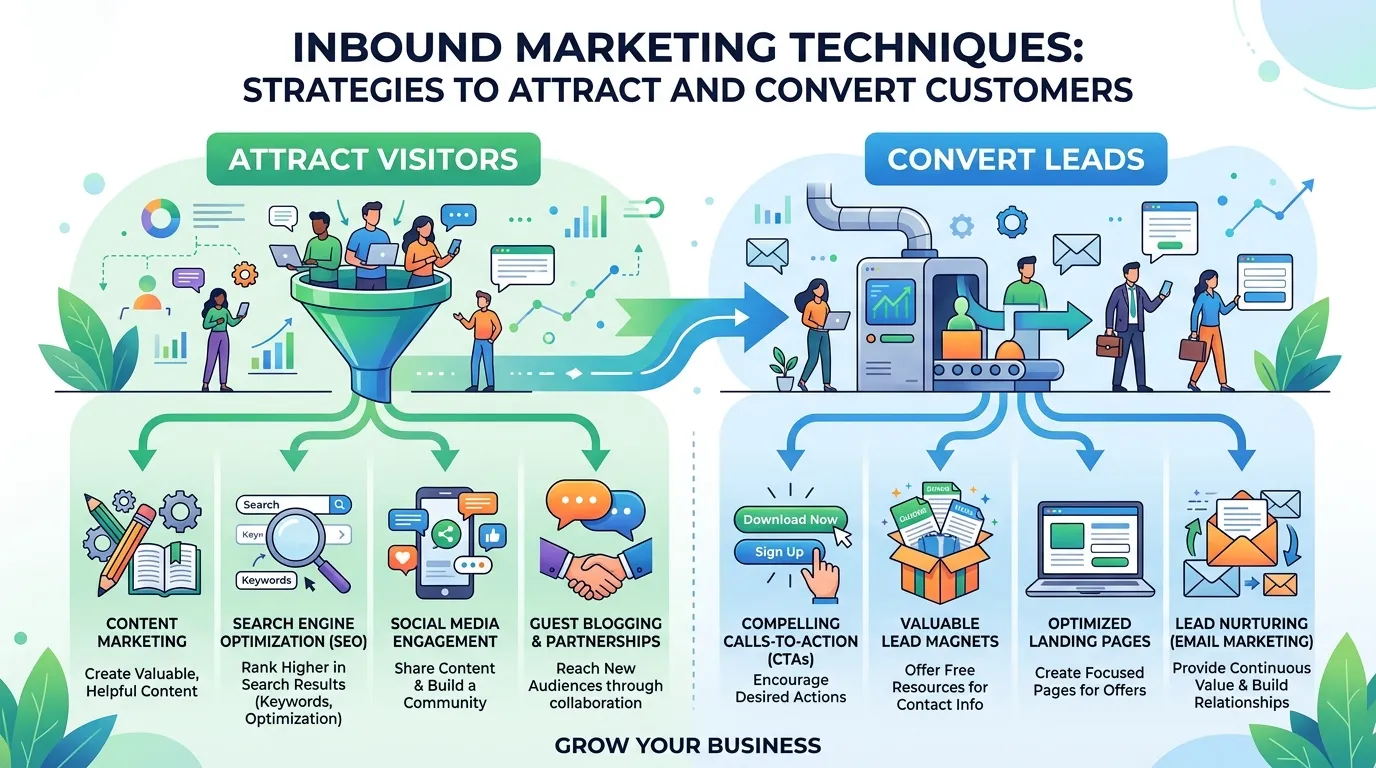
The strongest strategies connect these activities rather than treating each marketing channel separately. Content can attract organic visitors, social media can increase visibility, email can continue the conversation, and marketing automation can help deliver relevant messages based on user behavior.
Inbound Marketing Methods for Building Customer Relationships
Different inbound marketing methods can support different stages of the customer journey. Blogging and SEO can generate awareness, while lead magnets and landing pages can help capture contact information. Email campaigns and personalized content can then nurture prospects until they are ready to take the next step.
Another important part of inbound marketing is relationship building. Customers increasingly expect brands to provide useful information before asking for a purchase. Consistently answering questions and demonstrating expertise can establish credibility long before a sales conversation takes place.
This customer-centered approach is closely connected to relationship marketing. The Inbound Marketing Relationship Marketing Framework explores how businesses can connect inbound marketing with long-term customer relationships and sustainable growth.
Content Marketing Techniques That Generate Interest
Content marketing techniques are at the heart of many successful inbound programs because useful content gives potential customers a reason to discover a business. Blog posts, case studies, research reports, videos, webinars, tutorials, comparison pages, and industry insights can all help attract relevant audiences.
The most effective content addresses genuine customer questions instead of simply promoting products. For example, a software company might publish content explaining common workflow problems before introducing its software as one possible solution.
Content should also connect to business objectives. High-quality educational content may attract search traffic, while product-focused content can support conversion. Case studies can demonstrate results, and detailed FAQs can reduce uncertainty before a purchase.
Inbound Lead Generation Through Valuable Experiences
Inbound lead generation focuses on turning interested visitors into identifiable prospects. A visitor may initially discover a brand through search, social media, or a blog article. The next step is giving that visitor a valuable reason to engage further.
Businesses can use newsletters, downloadable resources, free consultations, product demonstrations, webinars, or other relevant offers to encourage visitors to provide their contact information. The offer should match the visitor’s interests and stage in the buying journey.
Lead generation becomes more effective when landing pages clearly communicate value and minimize unnecessary friction. Visitors should understand what they receive, why it is useful, and what happens after they submit their information.
SEO Inbound Marketing for Organic Visibility
SEO inbound marketing combines search engine optimization with the broader principles of inbound marketing. Rather than creating content solely for search engines, businesses optimize useful resources so that the right people can discover them through search.
Keyword research helps identify topics and questions that matter to the target audience. On-page optimization, internal linking, useful headings, strong page structure, and relevant content can make those resources easier for both users and search engines to understand.
SEO can be especially valuable for inbound marketing because organic content may continue attracting visitors after publication. A well-optimized article answering a common customer question can become a long-term source of qualified traffic.
Social Media Inbound Marketing and Audience Engagement

Social media inbound marketing uses social platforms to distribute useful content, encourage conversations, and build relationships with potential customers. Rather than treating social media only as a promotional channel, brands can use it to educate, answer questions, share insights, and participate in relevant discussions.
Social media can also extend the reach of existing content. A useful blog article can become a series of short posts, videos, discussions, or visual explanations. This allows businesses to reach people who may not discover the original content through search.
Authentic interaction is particularly important. Responding to questions, acknowledging feedback, and participating in conversations can make a brand feel more accessible and customer-focused.
Email Marketing Techniques for Lead Nurturing
Effective email marketing techniques allow businesses to continue communicating with prospects after they leave a website. Email can deliver educational content, product information, event invitations, case studies, offers, and personalized recommendations.
The strongest email campaigns are based on relevance rather than volume. Segmenting audiences according to interests, behavior, or position in the buying journey can help businesses send more useful messages.
Automation can also support inbound marketing by triggering emails based on actions such as downloading a resource, registering for an event, visiting a particular page, or interacting with previous emails. When properly planned, automation allows brands to maintain communication without making every interaction manual.
Lead Nurturing Techniques That Move Prospects Forward
Lead nurturing techniques help businesses maintain relationships with prospects who are interested but not yet ready to buy. A potential customer may need more information, time, budget approval, or internal discussions before making a decision.
Nurturing provides opportunities to address those needs gradually. Educational emails, relevant articles, customer stories, product demonstrations, and personalized recommendations can help prospects become more confident.
The most effective nurturing programs respond to customer behavior. A prospect repeatedly viewing pricing information may need different communication from someone who has only read introductory educational content. This behavioral approach makes the customer journey more relevant.
Marketing automation can strengthen this process by connecting customer interactions with follow-up activities. Businesses interested in measuring automation performance can also explore How to Measure Marketing Automation ROI Properly.
Customer-Focused Marketing Creates Long-Term Value
Customer-focused marketing places customer needs at the center of marketing decisions. Instead of asking only what the business wants to promote, marketers consider what information, experience, or assistance the customer actually needs.
This mindset can improve every stage of inbound marketing. Content becomes more useful, email becomes more relevant, landing pages become clearer, and customer communications become more personalized.
Customer-focused marketing also continues after the purchase. Helpful onboarding, educational resources, support content, feedback opportunities, and personalized communication can encourage customer satisfaction and retention.
Chat and Conversational Inbound Experiences
Modern inbound marketing increasingly includes conversational experiences. Customers may prefer asking questions through chat rather than completing long forms or searching through multiple pages.
Chat-based interactions can help businesses answer questions, recommend relevant information, qualify prospects, and guide visitors toward appropriate resources. Chat Commerce in Inbound Marketing explores how conversations can become part of the customer journey and support conversions.
The key is to make conversational experiences useful rather than intrusive. Customers should be able to access information quickly while still having an easy path to human assistance when needed.
Inbound Marketing Best Practices for Sustainable Results
The most effective inbound marketing best practices focus on relevance, consistency, measurement, and customer experience. Businesses should create content around genuine audience needs, maintain consistent communication, and regularly evaluate which channels and topics generate meaningful results.
It is also important to avoid treating every visitor the same. Different prospects have different interests and levels of buying intent. Audience segmentation and behavioral data can help businesses provide more relevant experiences.
Measurement should go beyond website traffic. Marketers can examine qualified leads, conversion rates, engagement, email performance, customer acquisition costs, sales opportunities, and customer retention. These metrics provide a clearer picture of whether inbound activities are contributing to business growth.
Measuring the Success of Inbound Marketing Techniques
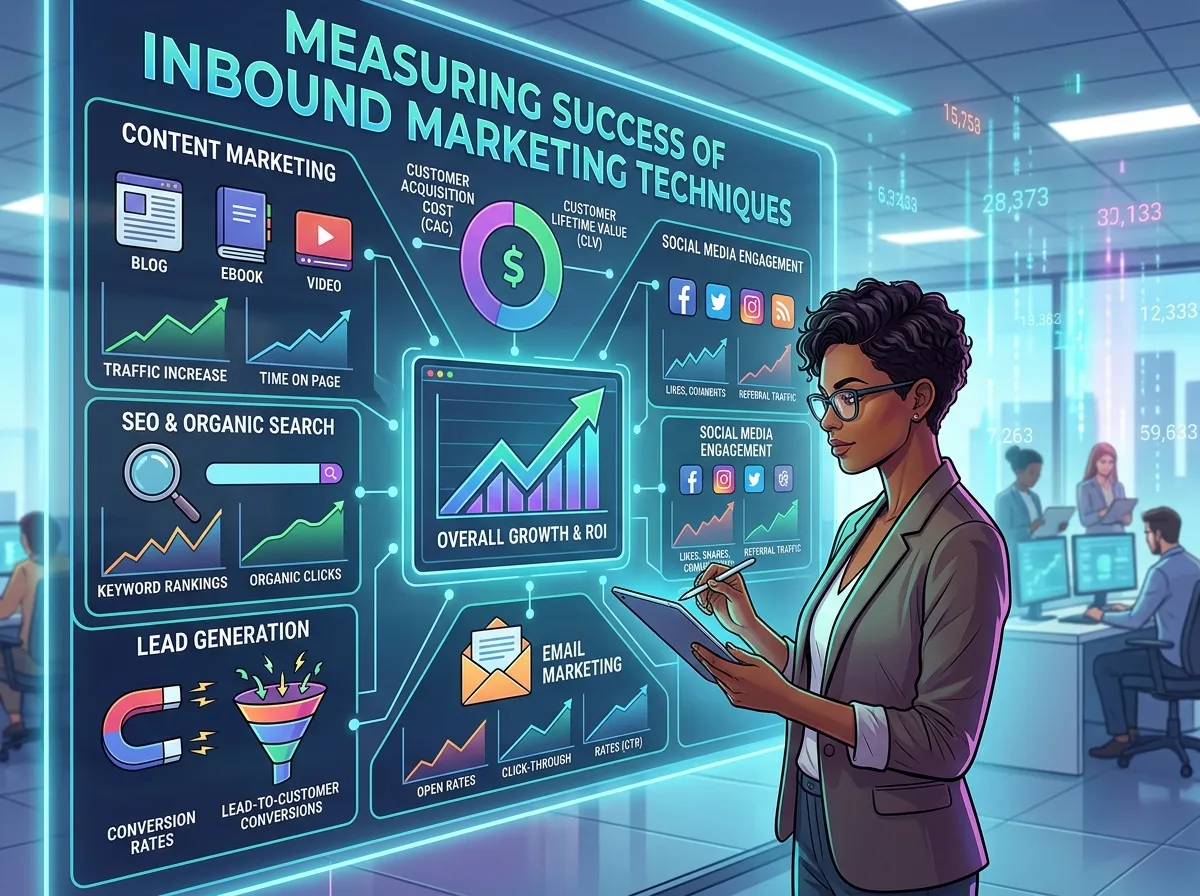
Measuring inbound marketing requires connecting marketing activity with customer and business outcomes. Traffic can indicate whether content is attracting attention, but traffic alone does not show whether the audience is relevant.
Conversion rates can reveal how effectively visitors become leads, while lead quality can show whether marketing is attracting the right prospects. Email engagement, content interactions, sales opportunities, customer acquisition costs, and revenue can provide additional insight.
Marketing automation and analytics platforms can bring these signals together. Over time, marketers can identify which content, channels, and customer experiences consistently contribute to stronger results.
Final Thoughts
Inbound marketing techniques give businesses a way to attract customers through useful content, search visibility, social engagement, email communication, lead nurturing, and meaningful customer experiences. Instead of relying entirely on interruption-based promotion, inbound marketing creates opportunities for prospects to discover a brand and develop trust over time.
The most successful approach combines multiple channels around a common customer journey. Inbound marketing strategies, content, SEO, social media, email, automation, and conversational experiences can work together to attract qualified prospects and support long-term relationships.
When businesses consistently provide relevant information and make each stage of the customer journey more useful, inbound marketing can become a sustainable source of leads, conversions, and customer loyalty.
Small Summary
Inbound marketing techniques help businesses attract and convert customers through valuable content, SEO, social media, email, lead nurturing, automation, and customer-focused experiences. By combining these methods around customer needs and measuring meaningful results, businesses can build stronger relationships, generate qualified leads, and support sustainable growth.
10 Frequently Asked Questions
1. What are inbound marketing techniques?
Inbound marketing techniques are strategies and methods used to attract potential customers through useful content, search visibility, social media, email, educational resources, and personalized experiences. Rather than interrupting customers with broad promotional messages, inbound marketing encourages people to discover and engage with a brand when they are actively looking for information or solutions.
2. What are the most effective inbound marketing techniques?
Some of the most effective techniques include content marketing, SEO, social media engagement, email marketing, lead nurturing, marketing automation, webinars, and personalized customer experiences. Their effectiveness depends on the audience, industry, customer journey, and business objectives. Combining several techniques usually creates a stronger inbound marketing system than relying on one channel.
3. How does content marketing support inbound marketing?
Content marketing attracts potential customers by providing useful information that addresses their questions, challenges, and interests. Blog articles, case studies, videos, reports, and other resources can generate awareness and organic traffic while establishing brand expertise. Content can also support prospects later in the buying journey by helping them compare solutions and make informed decisions.
4. What is inbound lead generation?
Inbound lead generation is the process of attracting potential customers and encouraging them to voluntarily provide information or engage with a business. This can happen through landing pages, newsletters, downloadable resources, webinars, consultations, free trials, and other valuable offers. The goal is to generate interest from people who are already showing some level of intent.
5. How does SEO work with inbound marketing?
SEO helps inbound marketing content become discoverable when people search for relevant information. Keyword research, useful content, technical optimization, internal linking, and strong page structure can improve organic visibility. When SEO and inbound marketing work together, businesses can attract people through search while providing content that genuinely answers their needs.
6. Why is email marketing important for inbound marketing?
Email marketing gives businesses a direct way to continue relationships with people who have already shown interest. Businesses can send educational content, personalized recommendations, event information, product updates, and relevant offers. Segmentation and automation can make email communication more relevant while helping prospects move through the customer journey.
7. What are lead nurturing techniques?
Lead nurturing techniques are communication and engagement methods used to develop relationships with prospects who are not yet ready to purchase. Educational emails, personalized content, case studies, webinars, product information, and timely follow-ups can help prospects become more informed and confident. Effective nurturing is based on relevance and customer behavior rather than sending the same message to every lead.
8. How does social media contribute to inbound marketing?
Social media can help businesses distribute valuable content, communicate with audiences, answer questions, and build brand awareness. It provides opportunities for two-way conversations rather than one-way promotion. Social platforms can also increase the reach of blog posts, videos, webinars, and other inbound resources.
9. What is customer-focused marketing in an inbound strategy?
Customer-focused marketing means designing marketing activities around customer needs, expectations, questions, and experiences. In an inbound strategy, this approach influences everything from content topics and website design to email communication and customer support. By focusing on usefulness and relevance, businesses can build stronger relationships and improve customer trust.
10. How can businesses measure inbound marketing success?
Businesses can measure inbound marketing using metrics such as organic traffic, engagement, conversion rates, qualified leads, lead-to-customer rates, email performance, customer acquisition costs, sales opportunities, and revenue. The most useful measurement approach connects marketing activity with business outcomes instead of focusing only on traffic or social media engagement.