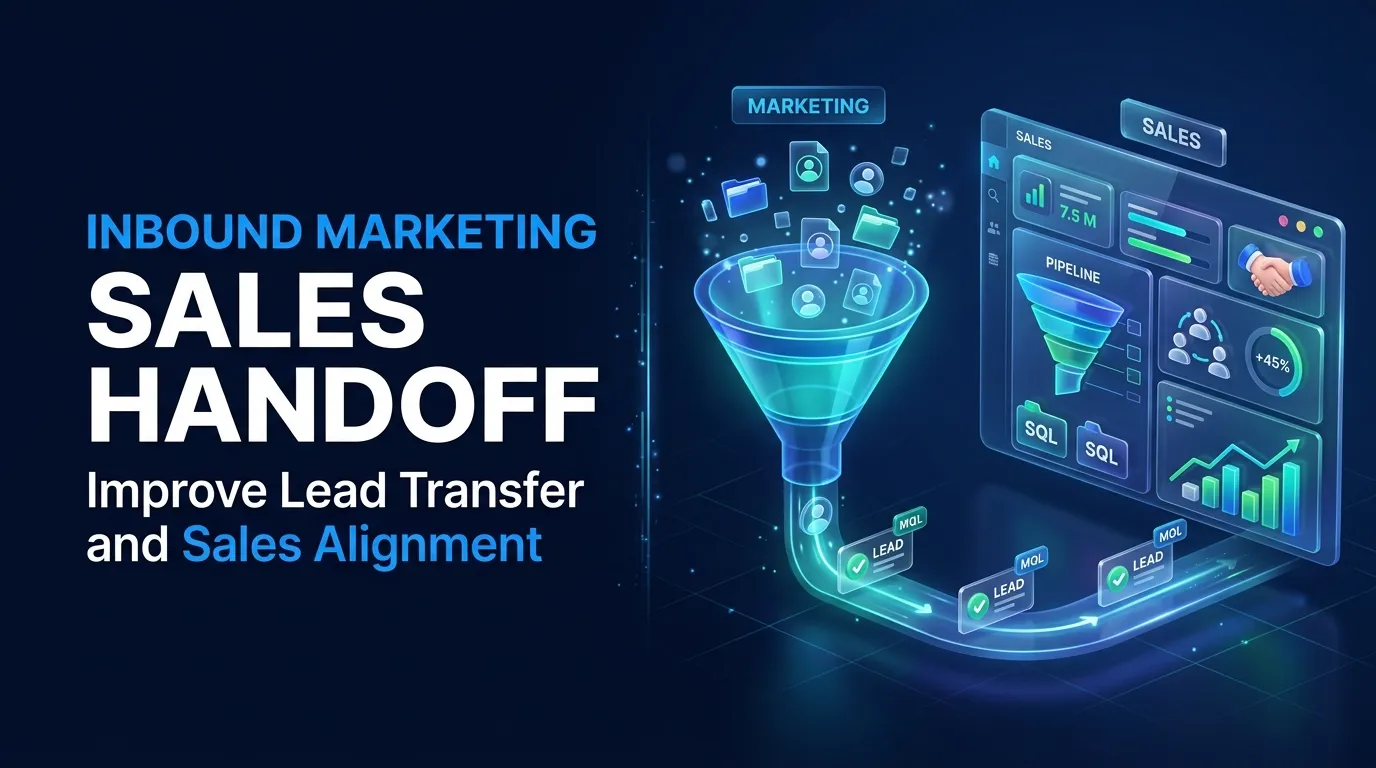
Inbound Marketing Sales Handoff connects marketing and sales teams by transferring qualified leads with the information and context needed for effective follow-up. A clear handoff process improves lead qualification, routing, communication, and sales alignment while reducing delays and missed opportunities. By combining accurate data, coordinated follow-up, useful content, and ongoing performance evaluation, businesses can strengthen conversion rates and create a smoother customer journey from initial interest to purchase.
Inbound marketing helps businesses attract potential customers through valuable content, relevant information, search visibility, and meaningful engagement. However, generating leads is only one part of the customer acquisition process. To turn those leads into opportunities and paying customers, marketing and sales teams must work together effectively. An Inbound Marketing Sales Handoff creates this connection by ensuring that qualified leads move from marketing to sales with the information, context, and timing needed for effective follow-up.
When the handoff process is unclear, promising leads can be delayed, important details may be lost, and potential customers may receive inconsistent communication. Marketing teams might consider a lead ready for sales, while sales representatives may believe the prospect needs further nurturing. These gaps can reduce conversion opportunities and weaken the customer experience.
A well-organized handoff process establishes shared expectations, clear qualification standards, reliable communication, and accountability between departments. It helps marketing teams understand what sales needs and allows sales representatives to respond to prospects with greater relevance. By improving this transition, businesses can strengthen lead management, increase sales efficiency, and create a more consistent path from initial interest to purchase.
Understanding the Importance of Inbound Marketing Sales Handoff
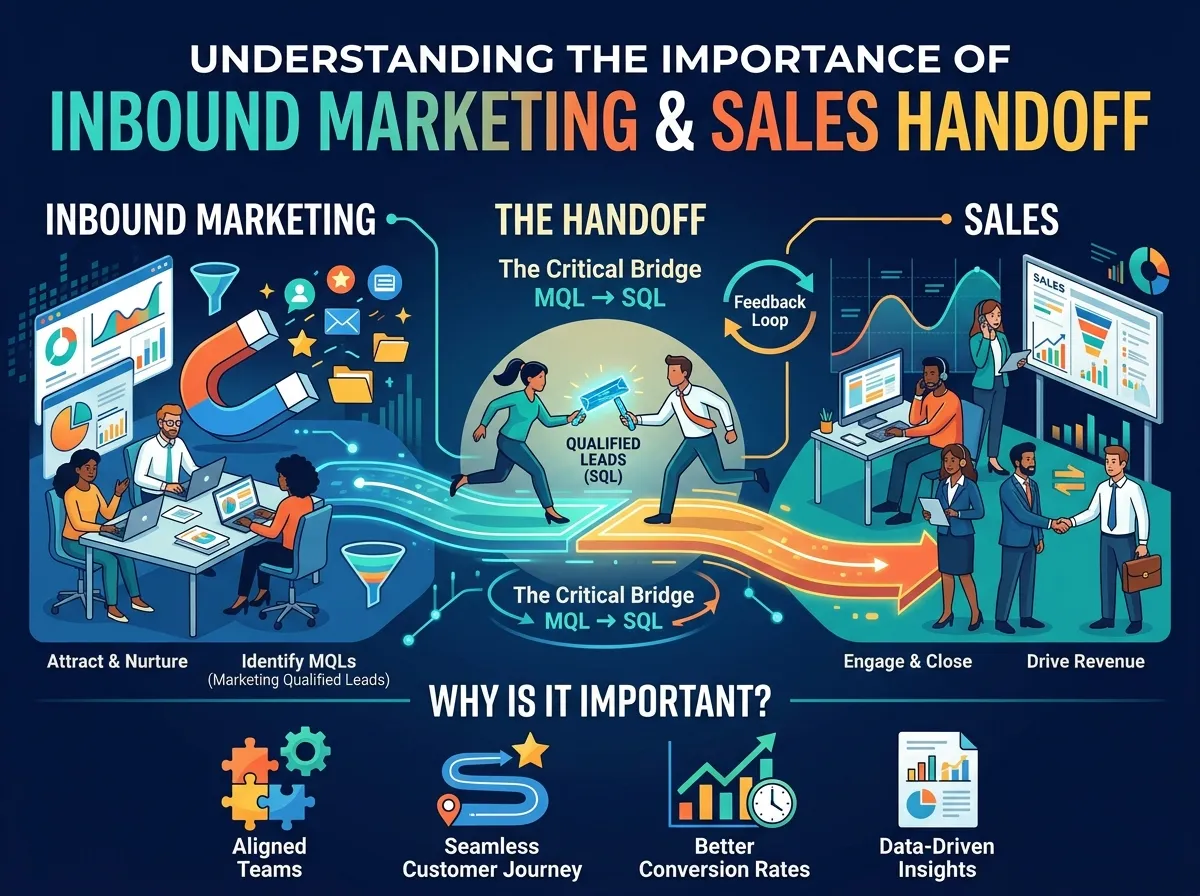
An Inbound Marketing Sales Handoff is the process of transferring a potential customer from marketing management to the sales team when the prospect demonstrates sufficient interest, fit, or readiness for direct sales engagement. The transition may happen after someone requests a consultation, submits a product inquiry, downloads high-intent content, attends a product demonstration, or completes another meaningful action.
The purpose is not simply to pass a contact record from one department to another. A successful handoff gives sales representatives the context required to understand the prospect’s needs and continue the conversation naturally. This may include the content the prospect viewed, the forms they submitted, the products or services they explored, their organization, their stated challenges, and previous interactions with the business.
Without this context, sales representatives may have to repeat questions or begin conversations without understanding what attracted the prospect. That can create friction and make the business appear disconnected. When information transfers smoothly, representatives can personalize their outreach and address the prospect’s actual interests.
A reliable handoff also improves accountability. Marketing can evaluate whether it is delivering leads that meet agreed qualification criteria, while sales can assess how effectively those leads convert into opportunities. Shared visibility helps both teams identify where prospects become disengaged and where the customer acquisition process needs improvement.
Building an Effective Inbound Lead Handoff Process
The Inbound Lead Handoff Process begins with a shared understanding of when a lead should move from marketing to sales. If the criteria are vague, marketing may transfer contacts that are still researching, while sales may overlook prospects who are ready to discuss a purchase.
Clear criteria should reflect the company’s audience, sales cycle, and buying process. For example, a business selling complex software may consider a lead ready for sales after the prospect requests a product demonstration, confirms a relevant business need, and fits the company’s target customer profile. A business with a shorter sales cycle may use a simpler set of indicators.
The process should also define what information must accompany each lead. Sales representatives may need contact details, company information, the source of the lead, relevant engagement history, qualification notes, and the prospect’s stated needs. Accurate information reduces preparation time and helps representatives begin conversations with useful context.
Timing is another important consideration. A prospect requesting a consultation generally expects a more immediate response than someone who has downloaded an introductory resource. Establishing response expectations according to lead intent helps businesses prioritize opportunities without treating every contact identically.
The handoff should be treated as a shared business process rather than a task owned exclusively by marketing or sales. Both departments need to understand their responsibilities, how lead status changes are recorded, and what happens when a transferred lead does not meet the agreed criteria.
Marketing to Sales Handoff and Departmental Alignment
The Marketing to Sales Handoff works best when both teams agree on the definition of a qualified lead and the responsibilities associated with the transition. Marketing often focuses on attracting relevant audiences and developing interest, while sales concentrates on understanding needs, evaluating opportunities, and progressing purchase discussions. These responsibilities differ, but they should support the same commercial objectives.
Marketing and sales alignment requires ongoing communication rather than occasional meetings about performance. Both teams should discuss lead quality, common customer questions, objections, conversion patterns, and changes in the target market. Sales representatives can share information about the concerns prospects raise during conversations, helping marketing create more relevant content and improve qualification criteria.
A broader Inbound Marketing and Customer Acquisition approach connects lead generation with the wider process of attracting, qualifying, and converting potential customers. When both teams understand this connection, the handoff becomes part of a coordinated acquisition strategy instead of an isolated administrative activity.
Shared definitions are particularly valuable. Marketing may use engagement data to identify promising prospects, but engagement alone does not necessarily indicate purchase readiness. Sales may need to consider budget, authority, business needs, timing, or other relevant qualification factors. Agreeing on these indicators reduces confusion and helps both teams evaluate leads more consistently.
Alignment also depends on mutual accountability. Marketing should have visibility into what happens after a lead is transferred, while sales should provide clear feedback about acceptance, follow-up, and outcomes. This information helps the organization improve its process based on actual customer behavior.
Inbound Lead Qualification Before the Transfer
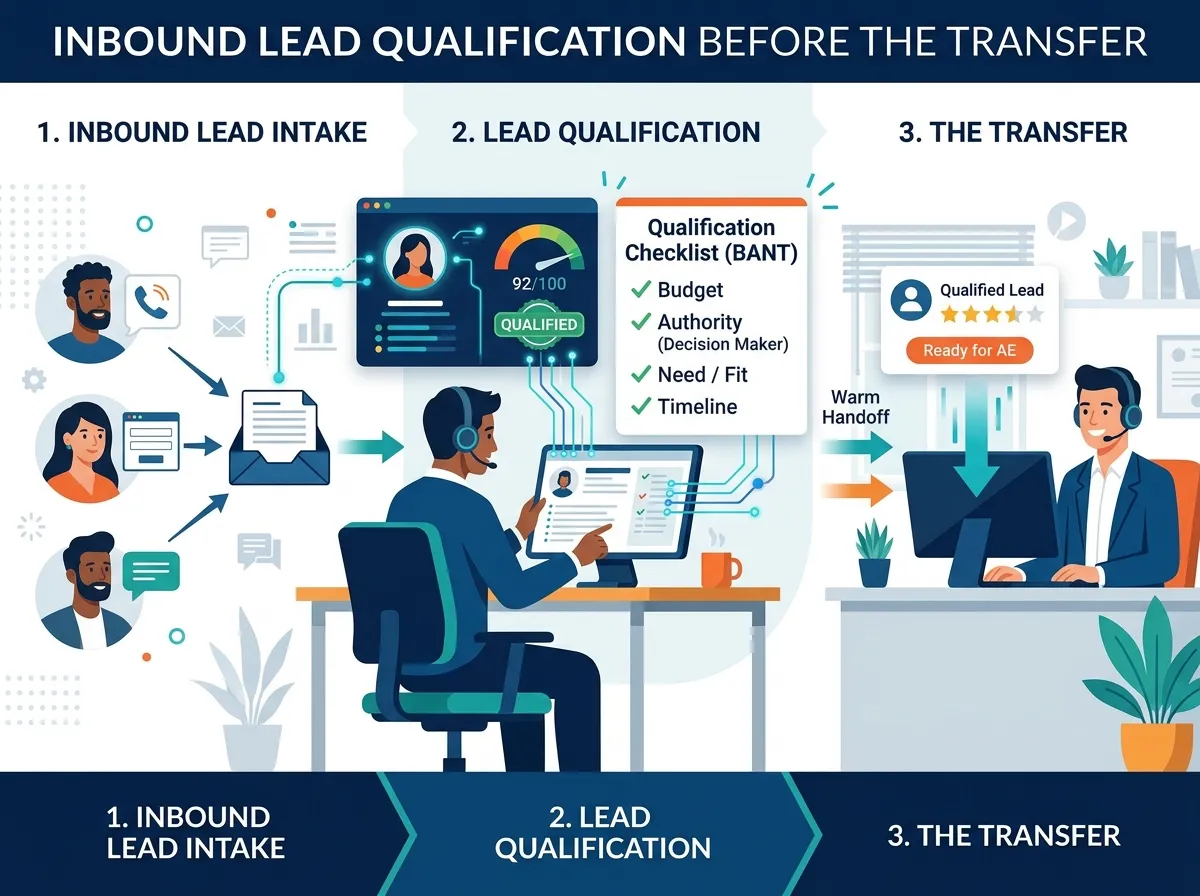
Inbound Lead Qualification determines whether a prospect is sufficiently relevant and ready for the next stage of the buying process. Effective qualification combines information about the prospect’s fit with the business and evidence of their interest in a particular solution.
Fit may include industry, company size, location, role, or the type of problem the organization solves. Interest may be reflected in actions such as requesting pricing, asking for a consultation, exploring product information, or responding to a sales-related offer. The importance of each signal depends on the company’s products, customers, and sales cycle.
Businesses should avoid relying on a single activity as definitive proof of readiness. Someone who downloads a general industry report may be researching a topic without intending to buy. Another prospect may visit a pricing page several times but still require more information before making a decision. Considering multiple relevant signals provides a more reliable picture than treating every interaction equally.
Lead scoring can help organize this evaluation by assigning relative importance to selected attributes and behaviors. However, scoring models should be reviewed against actual sales outcomes. If leads with high scores rarely become opportunities, the model may be rewarding activity that does not reflect genuine buying intent.
Qualification should also respect the prospect’s experience. Marketing teams should collect information that is relevant to the relationship and avoid creating unnecessary barriers through excessive forms or intrusive questions. The objective is to identify useful sales opportunities while making it easy for interested people to continue their journey.
Sales-Ready Lead Transfer and Contextual Information
A Sales-Ready Lead Transfer should provide sales representatives with enough information to respond appropriately. Simply forwarding a name, email address, and phone number may technically complete the transfer, but it leaves representatives without the context needed for a relevant conversation.
Useful handoff information can include the prospect’s company and role, the source of the lead, key pages or resources they interacted with, their stated business challenge, and any requests they made. If a prospect has already explained a particular need in a form or consultation request, sales should be able to reference that information instead of asking them to repeat it.
The transfer should also distinguish between verified details and assumptions. A prospect’s activity may suggest interest in a particular product, but it does not automatically establish their budget, purchasing authority, or readiness to buy. Clear notes help representatives understand what is known and what still needs to be explored.
Contextual information supports better personalization. A representative contacting someone who requested a product demonstration can refer to the request and explain the next steps. A prospect who asked about a specific business problem can receive a response focused on that issue rather than a generic sales pitch.
Privacy and data quality remain important throughout the transfer. Organizations should share only information that is appropriate for the intended business purpose, respect communication preferences, and maintain accurate contact records. Reliable data supports both effective follow-up and a more trustworthy customer experience.
Lead Handoff Communication and Clear Expectations
Lead Handoff Communication keeps both departments informed about the status and context of transferred leads. It should make clear why a lead is being transferred, what action is expected, and how the receiving team should record the outcome.
Automated notifications can alert representatives when high-intent leads enter the sales pipeline. A customer relationship management system may also display qualification details, engagement history, ownership, and follow-up deadlines. These tools reduce the chance that leads will be overlooked, particularly when a business manages a large volume of inquiries.
Automation alone, however, cannot replace clear processes. If lead ownership is unclear, notifications are poorly configured, or records contain incomplete information, technology may simply accelerate an inefficient workflow. Businesses should ensure that their systems reflect agreed responsibilities and make the next action easy to understand.
Communication should continue after the initial transfer. Sales representatives can record whether a lead was accepted, contacted, disqualified, or returned for further nurturing. Marketing can use this feedback to identify gaps in targeting, messaging, or qualification. Regular discussion of these outcomes helps both departments understand how leads progress through the pipeline.
A consistent communication process also supports continuity when staff members are unavailable or responsibilities change. Clear ownership, accessible notes, and recorded status updates help ensure that prospective customers receive appropriate attention without unnecessary delays or duplicate outreach.
Inbound Lead Routing and Sales Follow-Up Coordination
Inbound Lead Routing determines which sales representative or team receives each qualified lead. Routing may depend on geographic territory, product interest, industry, company size, account ownership, language, or the complexity of the prospect’s needs.
Accurate routing helps prospects connect with representatives who understand their circumstances. For example, a business interested in a specialized service may benefit from speaking with someone who has relevant product knowledge. An established account may need to remain with its assigned representative to preserve relationship continuity.
Routing rules should be understandable and regularly reviewed. If several representatives can claim the same lead, ownership conflicts may occur. If leads are assigned to unavailable staff members, follow-up may be delayed. Clear rules, backup ownership, and visible assignment records help prevent these problems.
Sales Follow-Up Coordination is equally important because a successful transfer does not guarantee that a lead will receive timely attention. Businesses should establish response expectations based on the prospect’s request and intent. A direct request for contact typically warrants faster action than a general content interaction.
Follow-up should also reflect previous communication. Sales representatives need to know whether a prospect has already received an email, spoken with another team member, or requested a particular time for contact. Coordinating these interactions prevents repetitive outreach and creates a more professional experience.
When a lead cannot be reached or is not yet ready to purchase, the next action should be recorded. Depending on the circumstances, the prospect may receive a later follow-up, return to marketing nurturing, or be disqualified using a clear reason. These outcomes help the organization manage its pipeline more accurately and avoid losing promising contacts without explanation.
Marketing Qualified Lead Transfer and Lead Acceptance
Marketing Qualified Lead Transfer describes the movement of a lead that meets marketing’s agreed qualification standards into the sales process. A marketing-qualified lead, often called an MQL, has typically demonstrated relevant characteristics or engagement that indicate potential value. However, an MQL is not automatically ready for a direct sales conversation in every organization.
Some businesses use a separate sales-qualified lead stage, while others allow sales representatives to assess readiness immediately after transfer. The precise model matters less than having shared definitions and consistent expectations. Marketing needs to know what qualifies a lead for transfer, and sales needs to understand why that lead was selected.
A formal acceptance process can help identify gaps. Sales may accept the lead, request more information, or return it to marketing with a specific reason. Common reasons might include insufficient fit, unclear business need, incomplete information, or timing that does not support an immediate conversation.
Returned leads should not simply disappear from the process. When appropriate, marketing can continue nurturing them with relevant content until their needs or readiness change. Feedback should also be reviewed in aggregate to determine whether qualification criteria need adjustment.
This closed-loop process improves the relationship between the two departments. Rather than arguing about lead quality, teams can use consistent evidence to identify where expectations differ and make practical improvements.
Improving Conversion Through Better Handoff Processes
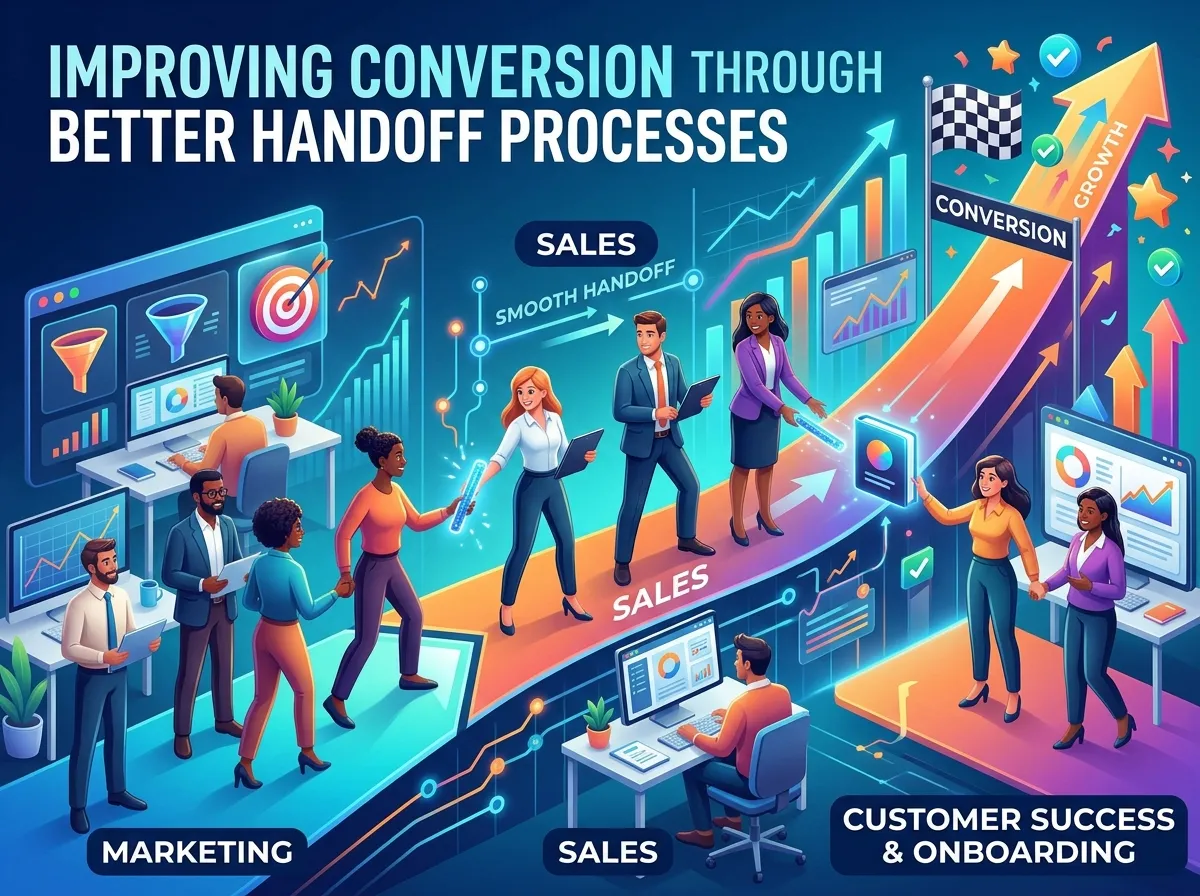
The quality of the handoff can influence how effectively inbound interest turns into business opportunities. A prospect may be highly interested when requesting contact, but delays, irrelevant outreach, or repeated questions can reduce that interest. A smooth transition helps preserve the momentum created by marketing.
Conversion performance should therefore be evaluated across the full journey rather than at the lead generation stage alone. Businesses can review how many leads are accepted by sales, how quickly representatives respond, how many conversations result in qualified opportunities, and how many opportunities eventually become customers.
Inbound Marketing Conversion Rate Improvement is closely connected to this process because better conversion depends on both attracting suitable prospects and helping them move through the buying journey. When handoff problems are identified and corrected, organizations can improve the value of their existing lead generation efforts.
Content also plays an important role before and after the transition. Prospects may need additional information about a product, its benefits, implementation, or suitability for their needs. Relevant Inbound Marketing Content Distribution can help ensure that useful information reaches the right audience at the appropriate stage. Sales representatives can also share relevant resources when prospects need further clarification.
Interactive resources can add another layer of insight when used appropriately. For example, a calculator, assessment, or interactive questionnaire may help prospects clarify their needs while providing useful information for a follow-up conversation. Businesses can explore approaches such as Interactive Content Marketing to make content more engaging and informative. Any information collected through these experiences should be relevant, accurate, and handled responsibly.
Sales Handoff Process Optimization and Long-Term Performance
Sales Handoff Process Optimization involves continuously evaluating how leads move between marketing and sales and improving the areas that create unnecessary delays or lost opportunities. The process should evolve as customer expectations, product offerings, sales structures, and lead generation channels change.
Performance measurement provides a practical starting point. Businesses can examine transfer acceptance rates, response times, conversion rates, reasons for lead rejection, and the time required to progress from initial inquiry to opportunity. These indicators can reveal whether the problem lies in qualification, routing, communication, or follow-up.
Technology can support optimization by consolidating customer information, automating appropriate assignments, and recording interactions. However, tools should serve the process rather than define it. A complex automation system is unlikely to solve a problem caused by unclear qualification criteria or a lack of communication between departments.
Regular reviews are also valuable. Marketing and sales can examine successful conversions, discuss lost opportunities, and compare lead sources to determine which types of prospects are most likely to progress. These discussions help teams refine messaging, improve targeting, and adjust follow-up practices based on evidence.
The strongest improvements often come from addressing small, repeated problems. Correcting missing fields, clarifying ownership, improving notification rules, or providing more useful qualification notes can make the handoff more reliable. Over time, these changes create a more coordinated process that supports both operational efficiency and customer satisfaction.
Conclusion
Inbound Marketing Sales Handoff connects the interest generated by marketing with the relationship-building and conversion work performed by sales. Its effectiveness depends on clear qualification standards, accurate lead information, reliable routing, timely follow-up, and consistent communication between departments.
When marketing and sales share responsibility for the customer journey, they can identify suitable prospects more effectively, respond to their needs with greater relevance, and learn from the outcomes of each transfer. Regular performance reviews and practical process improvements further strengthen this connection.
Ultimately, a successful handoff is more than a transfer of contact details. It is a coordinated transition that preserves context, builds trust, and helps potential customers move toward an informed purchasing decision.
Frequently Asked Questions
1. What is an Inbound Marketing Sales Handoff?
An Inbound Marketing Sales Handoff is the process of transferring a qualified prospect from marketing to sales. It ensures that sales representatives receive relevant lead information, engagement history, and qualification details so they can continue the conversation effectively.
2. Why is the Inbound Lead Handoff Process important?
The process helps prevent delays, missing information, and confusion about lead ownership. It creates clear responsibilities between marketing and sales, allowing qualified prospects to receive timely attention and helping businesses improve their conversion opportunities.
3. What is the difference between an MQL and a sales-ready lead?
A marketing-qualified lead (MQL) meets marketing’s criteria for potential interest or fit. A sales-ready lead demonstrates sufficient intent or readiness for direct sales engagement according to the company’s qualification standards. The exact definitions vary by business.
4. How can businesses improve Marketing to Sales Handoff?
Businesses can improve the handoff by defining shared qualification criteria, documenting lead information, establishing response expectations, assigning clear ownership, and creating a consistent feedback process between marketing and sales.
5. What information should be included in a Sales-Ready Lead Transfer?
A transfer should generally include contact details, company information, the source of the lead, relevant content interactions, stated business needs, qualification notes, and previous communication. Information should be accurate, relevant, and appropriate to share with the sales team.
6. How does Inbound Lead Qualification work?
Inbound Lead Qualification evaluates whether a prospect fits the business’s target customer profile and demonstrates meaningful interest. Businesses may consider company characteristics, professional role, stated needs, engagement history, and actions such as requesting a consultation or product demonstration.
7. What role does Inbound Lead Routing play in the handoff process?
Inbound Lead Routing assigns qualified leads to the appropriate sales representative or team. Effective routing considers factors such as territory, product interest, industry expertise, account ownership, and representative availability to ensure leads reach the right person.
8. How can businesses improve Sales Follow-Up Coordination?
Businesses can establish clear response expectations, record all interactions, use automated notifications where appropriate, and define backup ownership for unavailable representatives. Coordinated follow-up prevents missed inquiries and reduces duplicate or irrelevant outreach.
9. Which metrics help evaluate a sales handoff process?
Useful metrics include lead acceptance rate, response time, sales-qualified lead conversion rate, opportunity creation rate, reasons for lead rejection, and time from inquiry to opportunity. Reviewing these metrics helps teams identify process weaknesses and improve lead quality.
10. How does Sales Handoff Process Optimization improve conversions?
Sales Handoff Process Optimization identifies delays, unclear responsibilities, qualification gaps, and communication problems. By addressing these issues and reviewing performance regularly, businesses can help sales representatives respond more effectively and move suitable prospects toward purchasing decisions.