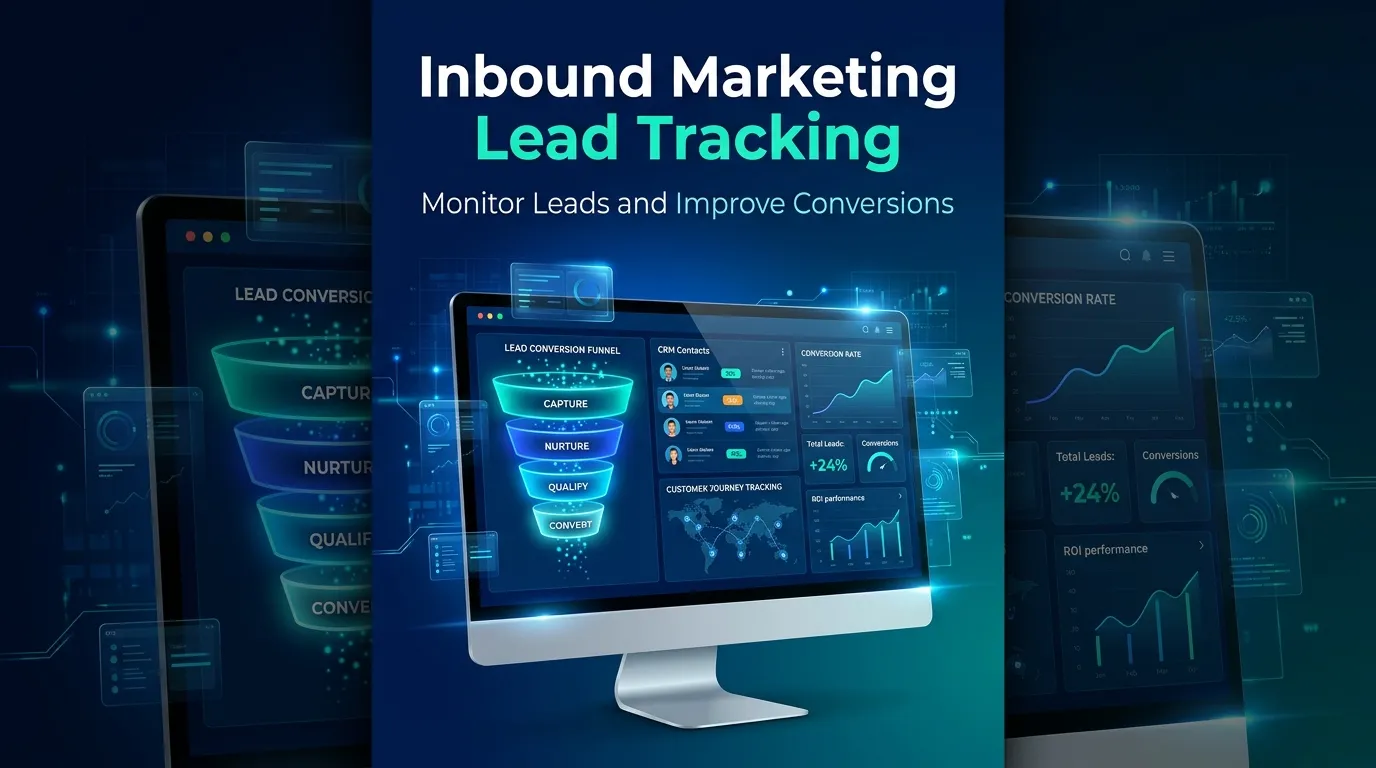
Inbound Marketing Lead Tracking helps businesses monitor lead sources, understand customer journeys, measure conversions, and evaluate marketing performance. By combining reliable tracking systems, attribution, lead monitoring, and reporting, organizations can identify valuable prospects and improve follow-up communication. Consistent analysis supports better marketing decisions, stronger lead quality, and more effective conversion efforts.
Inbound Marketing Lead Tracking helps businesses understand how potential customers discover their brand, interact with marketing content, and move toward making a purchase. By tracking leads across different channels and stages of the customer journey, businesses can identify which activities attract qualified prospects, determine where leads lose interest, and improve their marketing decisions.
Inbound marketing often involves several touchpoints, including blog posts, search engines, landing pages, email newsletters, social media, and downloadable resources. Without a reliable tracking process, it can be difficult to understand which interactions contribute to lead generation and which prospects are most likely to become customers.
A structured tracking approach connects marketing activity with measurable business outcomes. It gives marketing and sales teams a clearer view of lead behavior, supports more relevant follow-up communication, and helps organizations allocate resources effectively. When lead information is accurate and consistently reviewed, businesses can improve their ability to turn interest into meaningful customer relationships.
Understanding the Importance of Inbound Marketing Lead Tracking

Inbound Marketing Lead Tracking is the process of collecting, organizing, and analyzing information about potential customers who interact with a business through inbound marketing channels. It helps companies understand where leads originate, which content they engage with, what actions they take, and how they progress toward conversion.
Unlike marketing approaches that focus primarily on reaching broad audiences, inbound marketing attracts people who are actively researching topics, exploring solutions, or looking for answers to specific problems. Tracking these interactions helps businesses understand the interests and intentions behind each lead.
For example, someone who discovers a company through an educational blog post may later download a resource, subscribe to an email newsletter, and request a consultation. Tracking these interactions provides a more complete picture of the person’s journey than recording only the initial website visit.
Lead tracking also supports better coordination between marketing and sales teams. Marketing professionals can identify which sources generate promising prospects, while sales representatives can review relevant interactions before contacting a lead. This shared information helps reduce disconnected communication and supports more informed conversations.
Another important benefit is accountability. Businesses can compare lead volume, lead quality, conversion rates, and acquisition costs across different channels. These insights help determine whether marketing activities are contributing to business objectives and where improvements may be needed.
Building an Effective Inbound Lead Tracking System
An effective inbound lead tracking system provides a consistent way to collect and manage information about prospects. It brings together relevant data from marketing channels, website interactions, forms, email campaigns, and sales activities so teams can understand lead progress in one place.
The first step is to define what qualifies as a lead. Depending on the business model, this could be someone who submits a contact form, requests a product demonstration, downloads a resource, subscribes to a newsletter, or expresses interest in a service. Clear definitions prevent teams from counting every interaction as an equally valuable opportunity.
Next, businesses should establish the information they need to track. Common fields include contact details, original acquisition source, campaign information, date of first interaction, content engagement, current lead status, and relevant conversion events. The objective is to collect enough information to support decisions without creating unnecessary administrative work.
A centralized customer relationship management system or marketing platform can help maintain consistent records. Integrations with website forms, email systems, and analytics tools can reduce manual data entry and make it easier to connect marketing interactions with later outcomes.
Tracking rules should also be standardized. If different team members use different definitions for qualified leads, conversions, or acquisition sources, reports may become difficult to compare. Consistent naming conventions, clear data-entry procedures, and regular record maintenance help keep the system reliable.
An effective system should be practical for everyday use. Teams need to understand how to update lead records, review activity histories, and identify the next appropriate action. When the process is straightforward, lead tracking becomes part of normal marketing operations rather than an additional task that is frequently overlooked.
Lead Tracking for Inbound Marketing Across the Customer Journey
Lead tracking for inbound marketing becomes more valuable when it follows prospects throughout their journey rather than focusing on a single interaction. Potential customers may discover a business long before they are ready to make a purchasing decision, and their needs can change as they gather information.
At the awareness stage, prospects may arrive through organic search, educational articles, social media posts, or referral links. Tracking these initial interactions helps businesses understand which channels introduce relevant audiences to their brand.
During the consideration stage, prospects may compare solutions, read detailed service pages, attend webinars, or download additional resources. These actions can indicate growing interest, although no single behavior guarantees that a person is ready to purchase. Reviewing patterns across multiple interactions provides a more balanced understanding of engagement.
At the decision stage, leads may request pricing information, book a consultation, or contact the sales team. These actions often provide stronger evidence of purchasing intent and can help businesses determine which prospects need timely follow-up.
Tracking should continue after conversion when appropriate. Information about customer onboarding, repeat purchases, renewals, and satisfaction can reveal whether the marketing process attracts customers who remain valuable over time.
A connected view of the customer journey also helps businesses identify content gaps. If prospects frequently engage with educational material but rarely move toward a consultation, the company may need more comparison resources, clearer service information, or a more relevant next step.
Inbound Lead Monitoring and Lead Quality
Inbound lead monitoring involves regularly reviewing lead activity, status changes, engagement patterns, and progress toward conversion. It helps businesses detect opportunities and problems while there is still time to respond.
Monitoring should focus on meaningful indicators rather than activity volume alone. A business might generate hundreds of leads from a campaign, but many may have little interest in its actual services. Another campaign may generate fewer leads while attracting people who are more likely to become customers.
Lead quality can be assessed through factors such as relevance to the target audience, expressed needs, company fit, engagement history, and readiness to discuss a solution. The most appropriate criteria depend on the business and its sales process.
Monitoring also helps identify inactive leads. A prospect may initially show strong interest but stop responding after receiving an email or visiting a pricing page. Rather than assuming the lead is permanently lost, the team can review the available information and decide whether a helpful follow-up or different resource would be appropriate.
Response timing is another important consideration. When a prospect submits a high-intent inquiry, delayed communication can weaken the opportunity. A tracking system can help teams identify new inquiries, assign responsibility, and ensure that appropriate follow-up takes place.
Regular monitoring allows marketing and sales teams to identify recurring issues. If leads from a particular source rarely progress beyond the initial stage, the company can review audience targeting, content relevance, and lead qualification criteria. These adjustments help improve lead quality without simply increasing the number of inquiries.
Lead Source Tracking and Marketing Channel Performance
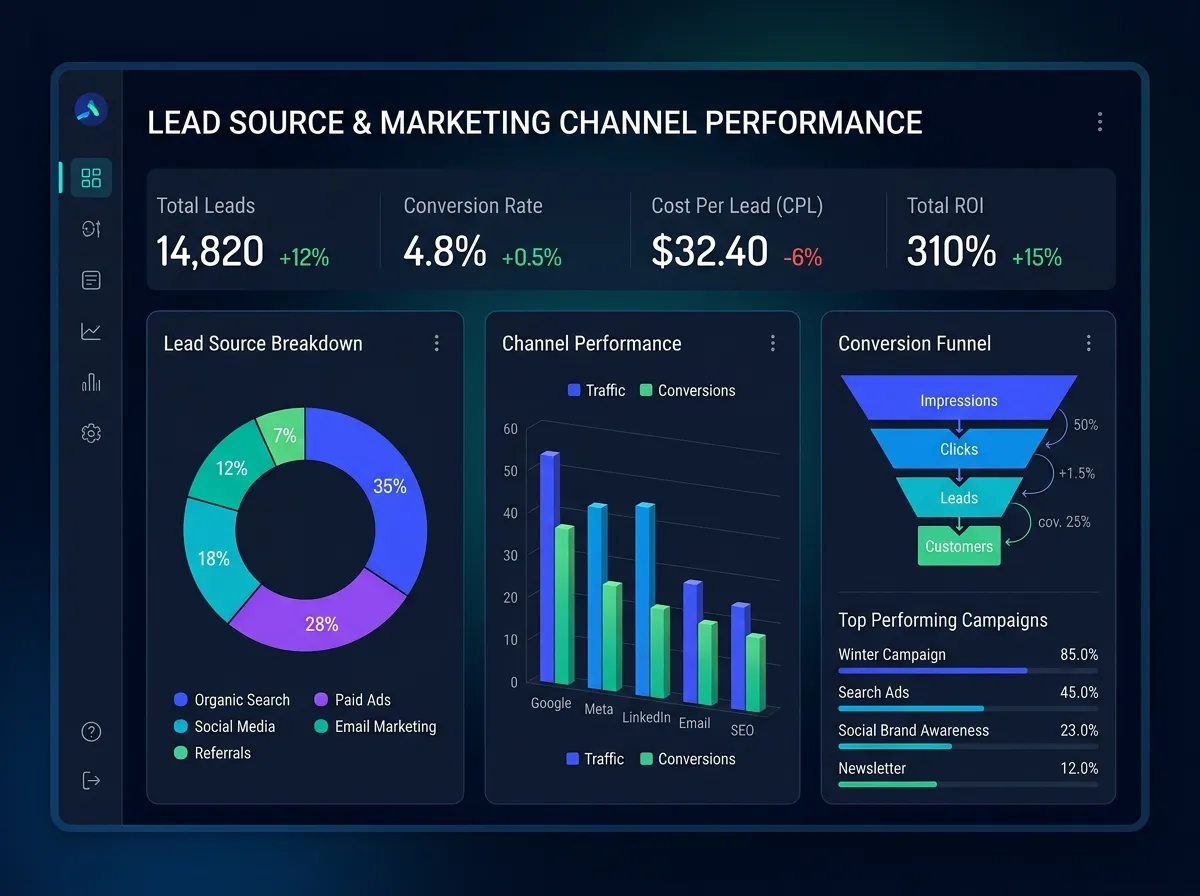
Lead source tracking identifies the channels and campaigns through which prospects discover or engage with a business. It helps organizations understand where their leads originate and which sources contribute to meaningful conversions.
Common sources include organic search, paid advertising, email marketing, social media, referral websites, partner campaigns, and direct website visits. Businesses can also track specific campaigns, landing pages, and promotional links to understand which activities attract the most relevant prospects.
Consistent campaign tagging is essential for reliable reporting. For example, adding standardized tracking parameters to campaign URLs can help analytics platforms distinguish traffic from different advertisements, newsletters, or social media promotions. Without consistent naming, similar campaigns may appear as separate or unclear entries in reports.
Businesses should distinguish between the original lead source and later interactions. A prospect might first discover the company through a blog article and return several weeks later through an email campaign. Recording both interactions provides more context than replacing the original source with the latest touchpoint.
Source performance should be evaluated using lead quality and conversion outcomes as well as volume. A channel that generates many inquiries may not be the most valuable if those leads rarely become customers. By comparing qualified leads, conversion rates, and acquisition costs, businesses can make more informed decisions about marketing investments.
Understanding how educational content attracts prospects can also improve source analysis. A well-organized Content Marketing Topic Clusters approach can connect related articles and help businesses understand how visitors move between informational resources and relevant service pages.
Lead Conversion Tracking and Inbound Lead Attribution
Lead conversion tracking measures the actions prospects take as they move through the marketing and sales process. These actions may include completing a form, subscribing to a newsletter, requesting a consultation, booking a demonstration, or becoming a paying customer.
The first step is to define conversions that reflect actual business goals. A newsletter subscription and a completed purchase are both measurable actions, but they represent different levels of commitment. Tracking them separately helps businesses understand how effectively marketing supports each stage of the journey.
Conversion rates provide a useful way to evaluate performance. Businesses can compare the number of leads completing a desired action with the number of relevant visitors or leads who had the opportunity to complete it. Comparisons become more meaningful when the same definitions and reporting periods are used consistently.
Inbound lead attribution examines how different marketing interactions contribute to lead generation and conversion. A prospect may engage with several articles, receive email communication, and revisit the website before becoming a customer. Attribution helps businesses understand the role these touchpoints may have played in the decision.
There is no single attribution approach that perfectly represents every customer journey. First-touch reporting emphasizes the initial interaction, while last-touch reporting highlights the interaction immediately preceding conversion. Multi-touch approaches attempt to account for several touchpoints, although the results depend on the chosen model and the quality of the available data.
Businesses should interpret attribution reports as useful evidence rather than absolute proof of causation. Comparing attribution data with conversion trends, customer feedback, and controlled experiments where practical can provide a stronger foundation for deciding which activities deserve investment.
Lead Journey Tracking and Personalized Follow-Up
Lead journey tracking records the interactions a prospect has with a business over time. It helps teams understand the sequence of activities that may influence interest, consideration, and conversion.
A journey may begin with a search query, continue through several educational articles, and lead to a service inquiry. Another prospect might discover the business through a referral, subscribe to a newsletter, and return months later when a need becomes more urgent. Tracking these differences helps businesses avoid treating every lead in the same way.
Journey information can support more relevant follow-up communication. Someone researching a general topic may benefit from an introductory resource, while a prospect comparing service options may need a detailed explanation of features, pricing, or implementation. Matching communication to the prospect’s stage can make the experience more useful and less intrusive.
Lead journey tracking also supports lead nurturing. Businesses can create communication sequences that provide relevant information over time instead of sending the same messages to every contact. Effective nurturing should respond to genuine interests and provide clear value rather than relying on excessive promotional messages.
A useful lead nurturing workflow can help connect prospect activity with appropriate follow-up actions. Tracking engagement with these workflows allows businesses to identify which resources support progress and where communication may need improvement.
Journey records should be interpreted with care. Multiple people may use the same device, some interactions may not be identifiable, and privacy settings can limit tracking. Businesses should avoid assuming that incomplete data represents the entire customer experience.
Marketing Lead Tracking Tools and Technology
Marketing lead tracking tools help businesses collect, organize, and interpret information from multiple marketing channels. Depending on the organization’s needs, these tools may include customer relationship management platforms, website analytics systems, marketing automation software, form builders, and reporting dashboards.
A customer relationship management system can store contact records, lead status, communication history, and sales activities. Website analytics tools can provide information about traffic sources, page engagement, and conversion events. Marketing automation platforms may connect lead behavior with email sequences and other follow-up activities.
Integration is an important consideration. When systems operate separately, teams may have difficulty connecting a website interaction with a later sales opportunity. Connecting relevant platforms can reduce duplicated records and improve the continuity of lead information.
Businesses should select tools based on their actual requirements. A small company may need only a simple CRM, website analytics, and consistent campaign tracking. A larger organization with multiple teams and channels may require more advanced integrations, permissions, reporting, and automation.
Technology alone does not guarantee better tracking. Poor data quality, inconsistent definitions, and unclear responsibilities can undermine even sophisticated systems. Teams should establish practical procedures for updating records, checking data accuracy, and reviewing reports.
Privacy and security must also guide tool selection. Organizations should understand how information is collected, stored, accessed, and shared, and should follow applicable data protection requirements. Collecting only necessary information and communicating transparently with prospects helps preserve trust.
Lead Tracking and Reporting for Better Decisions

Lead tracking and reporting turn collected information into insights that marketing and sales teams can use. Effective reports should explain what is happening, why it may be happening, and what actions could improve results.
Useful reporting measures may include total leads, qualified leads, lead source, conversion rates, cost per lead, time to conversion, and the percentage of leads progressing through each stage. Businesses should choose indicators that match their objectives rather than trying to monitor every available metric.
A lead funnel report can reveal where prospects are dropping out of the process. If many visitors submit a form but few leads become qualified opportunities, the business may need to review targeting or qualification criteria. If qualified leads rarely become customers, the issue may involve sales follow-up, pricing, product fit, or the information prospects receive before making a decision.
Reports should also make comparisons possible. Reviewing performance across consistent periods can reveal seasonal trends, changes in lead quality, and the impact of campaign adjustments. Comparing sources using the same definitions helps decision-makers avoid drawing conclusions from inconsistent data.
Marketing and sales teams should review important findings together. Marketing may see that a campaign produces a high volume of leads, while sales may report that those contacts have limited purchasing intent. Sharing these perspectives helps the teams refine targeting, improve qualification, and establish more realistic expectations.
Reporting is most useful when it leads to action. Businesses should document important findings, assign responsibility for improvements, and review whether those changes produce the expected results.
Inbound Lead Performance Measurement and Continuous Improvement
Inbound lead performance measurement evaluates how effectively a business attracts, qualifies, nurtures, and converts prospects through inbound marketing. It connects individual marketing activities with broader outcomes such as customer acquisition, revenue generation, and long-term relationship development.
A useful measurement framework includes both leading and lagging indicators. Leading indicators, such as relevant content engagement, form submissions, and qualified inquiries, can help teams identify emerging trends. Lagging indicators, such as completed sales and customer revenue, show the eventual business outcomes.
Performance should be reviewed in context. A sudden increase in lead volume may appear positive, but it may also reflect a broad campaign that attracts people outside the target audience. Similarly, a temporary decline in leads may be less concerning if the quality of those leads improves substantially.
Continuous improvement requires testing and learning. Businesses can experiment with landing-page messaging, form length, calls to action, content offers, and follow-up timing. Each test should have a clear objective and a suitable measure of success so that teams can understand whether the change made a meaningful difference.
Inbound marketing techniques also influence the quality and consistency of lead generation. Reviewing relevant inbound marketing techniques for business growth can help organizations connect useful content, audience needs, and conversion opportunities with their tracking process.
Ultimately, lead tracking should support better decisions rather than become a reporting exercise. When businesses combine accurate data, clear definitions, practical analysis, and regular review, they can improve the customer journey and build a more effective inbound marketing process.
Conclusion
Inbound Marketing Lead Tracking helps businesses understand where prospects come from, how they interact with content, and what influences their progress toward conversion. By using a reliable tracking system, monitoring lead quality, analyzing sources, and reviewing performance, organizations can make more informed marketing decisions.
The strongest approach connects marketing data with practical action. Clear tracking rules, suitable technology, useful reporting, and collaboration between marketing and sales teams make it easier to identify opportunities and address problems. When lead tracking becomes an ongoing process, businesses can improve conversion performance while developing stronger relationships with potential customers.
Frequently Asked Questions
1. What is Inbound Marketing Lead Tracking?
Inbound Marketing Lead Tracking is the process of recording and analyzing how potential customers discover a business, interact with its content, and progress toward conversion. It helps marketing and sales teams understand lead sources, engagement, qualification, and outcomes.
2. Why is lead tracking important for inbound marketing?
Lead tracking helps businesses identify effective marketing channels, understand prospect behavior, improve follow-up communication, and measure conversion performance. It also helps teams allocate resources toward activities that attract relevant and qualified leads.
3. What is an inbound lead tracking system?
An inbound lead tracking system is a process or technology setup that collects and organizes information about leads. It may connect a CRM, website analytics, forms, email marketing platforms, and reporting tools to provide a consistent view of lead activity.
4. How does lead source tracking work?
Lead source tracking records how a prospect first discovers or interacts with a business, such as through organic search, email, social media, referrals, or paid campaigns. Consistent campaign tags and analytics settings help businesses compare the performance of different sources.
5. What is lead conversion tracking?
Lead conversion tracking measures actions that move prospects toward business goals, such as submitting a form, requesting a consultation, booking a demonstration, or completing a purchase. It helps businesses evaluate how effectively their marketing activities encourage meaningful actions.
6. What is inbound lead attribution?
Inbound lead attribution examines how different marketing touchpoints contribute to lead generation and conversion. It may use first-touch, last-touch, or multi-touch models to help businesses understand the potential contribution of content, campaigns, and channels.
7. Which metrics should businesses monitor for inbound leads?
Useful metrics include total leads, qualified leads, conversion rates, cost per lead, lead source, time to conversion, and progression through the sales funnel. Businesses should select measures that align with their objectives and evaluate lead quality alongside volume.
8. Which tools are useful for marketing lead tracking?
Customer relationship management systems, website analytics tools, marketing automation platforms, form builders, and reporting dashboards can support lead tracking. The best combination depends on the company’s size, marketing channels, budget, and reporting requirements.
9. How can businesses improve inbound lead tracking accuracy?
Businesses can improve accuracy by using consistent tracking definitions, standardizing campaign tags, integrating relevant systems, maintaining clean records, and reviewing data regularly. They should also document processes and train team members to follow the same procedures.
10. How does lead tracking improve marketing performance?
Lead tracking reveals which sources attract valuable prospects, where leads lose interest, and which follow-up activities support conversion. Businesses can use these findings to refine content, improve targeting, strengthen nurturing, and make more informed marketing investments.