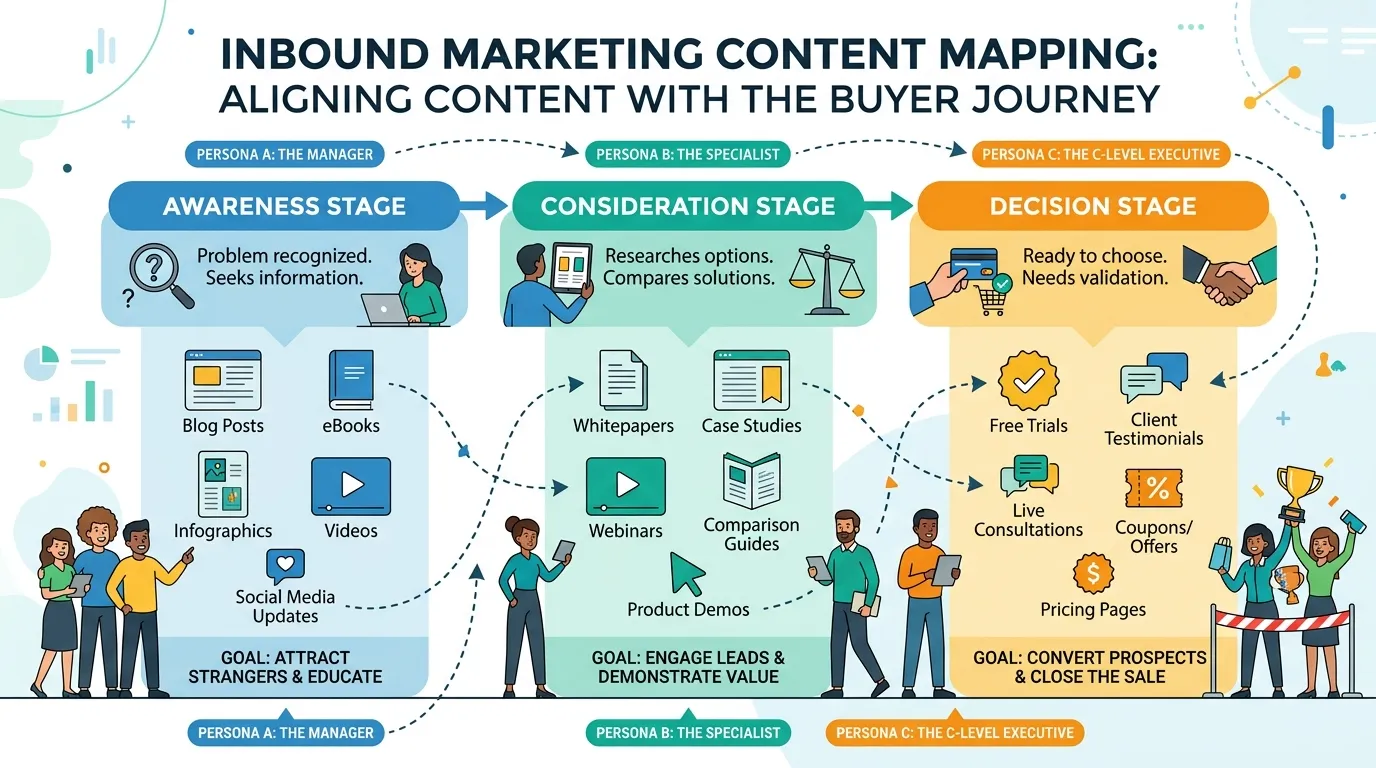
Inbound Marketing Content Mapping helps businesses create and organize content according to the needs, questions, interests, and decision-making stages of their target audience. Instead of publishing content without a clear purpose, content mapping connects topics with buyer personas and the customer journey. When done effectively, it can improve content relevance, strengthen lead generation, support conversions, and create a more consistent inbound marketing experience.
What Is Inbound Marketing Content Mapping?
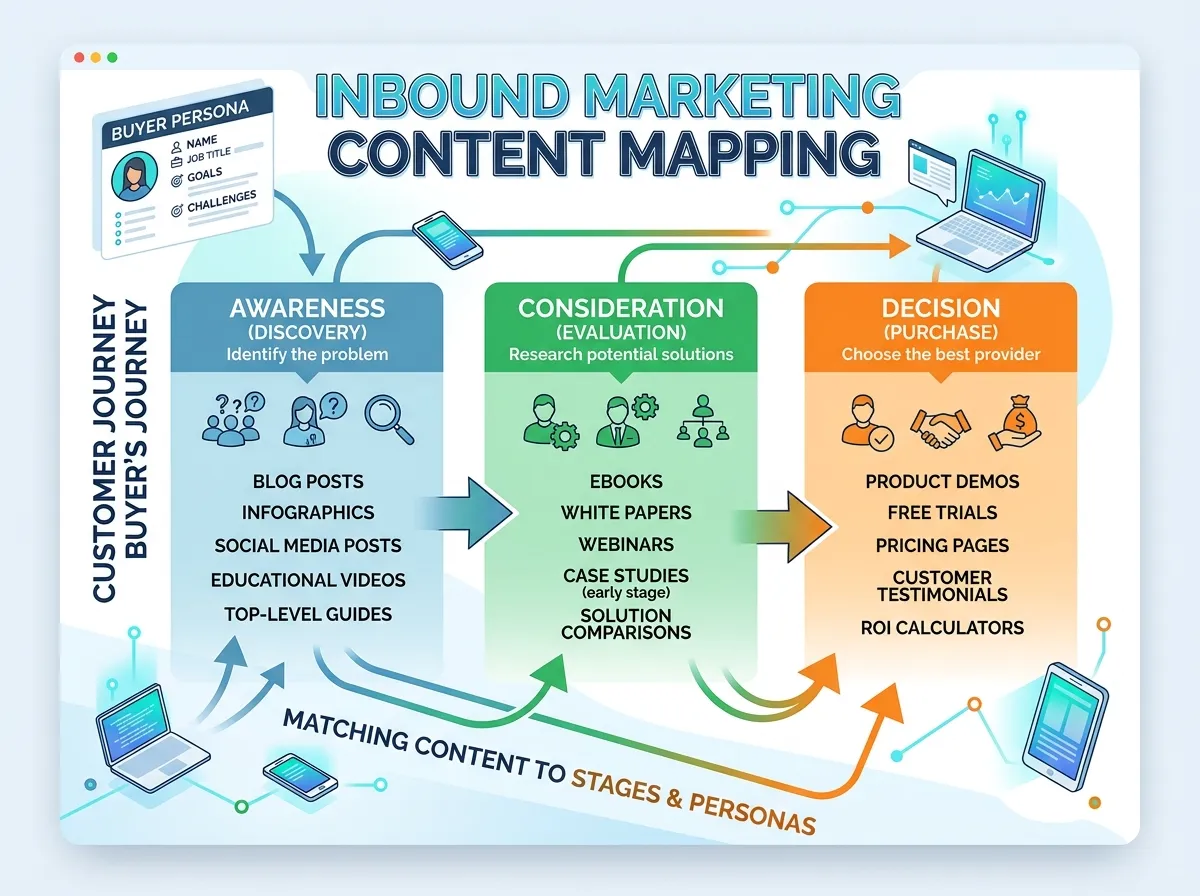
Inbound Marketing Content Mapping is the process of connecting content with specific audiences and stages of the buyer journey. It helps marketers determine what type of content a potential customer needs before, during, and after making a purchasing decision.
A business may have blog posts, landing pages, case studies, videos, email campaigns, webinars, product pages, and other resources. However, having a large amount of content does not necessarily mean the content is serving customers effectively. Some resources may attract visitors but fail to move them toward deeper engagement, while others may be too promotional for people who are still researching a problem.
Content mapping provides a connection between the audience’s needs and the content a business produces. It allows marketers to think about who is consuming a piece of content, what that person wants to know, and what the next useful interaction could be.
This makes content more purposeful without making the customer journey feel forced. Instead of pushing every visitor toward a product or sales message, businesses can provide information that matches the visitor’s current level of awareness.
Why Inbound Content Mapping Matters
An effective Inbound Content Mapping Strategy helps businesses create content around real customer needs rather than simply producing articles based on keywords. Search visibility remains important, but useful inbound content should also answer questions, solve problems, build trust, and support decision-making.
Without content mapping, businesses can end up producing multiple pieces about similar subjects while overlooking important questions that customers have during later stages of the buying process. A company might have plenty of introductory content but very little material explaining product comparisons, implementation, pricing considerations, or expected outcomes.
Content mapping helps reveal these gaps. It provides a broader view of the content ecosystem and shows how individual resources can work together.
It can also improve consistency between marketing and sales. When content is connected to different stages of the customer journey, sales teams can use relevant resources when prospects need additional information.
Content Mapping for Inbound Marketing
Content Mapping for Inbound Marketing focuses on matching content with audience needs across the inbound marketing process. The objective is not simply to create more content but to make existing and future content more useful.
At an early stage, people may be looking for educational information about a problem or opportunity. They may not know which solutions are available or may not even understand the full scope of their challenge.
As their awareness increases, their questions often become more specific. They may begin comparing approaches, evaluating providers, researching features, or looking for evidence that a particular solution can deliver the expected results.
Content should evolve with these changing needs. Educational articles can introduce a topic, while more detailed resources can help prospects evaluate solutions. Case studies, product comparisons, demonstrations, and conversion-focused pages can become more relevant as purchase intent develops.
This creates a more connected content experience in which each resource has a role within the larger inbound strategy.
Buyer Journey Content Mapping
Buyer Journey Content Mapping connects content with the different stages a potential customer experiences while researching and evaluating a solution.
At the awareness stage, the audience is generally focused on understanding a problem, trend, challenge, or opportunity. Informational blog posts, educational videos, research reports, and introductory resources can work well because they provide value without requiring an immediate purchasing decision.
During the consideration stage, prospects are often more interested in possible solutions. They may want to understand different approaches, compare alternatives, evaluate features, and learn how other businesses have addressed similar challenges.
At the decision stage, prospects typically need stronger evidence. Case studies, testimonials, product information, demonstrations, detailed comparisons, implementation information, and pricing-related content can help address practical questions.
After conversion, content can continue supporting the customer. Educational resources, onboarding materials, product updates, customer support content, and advanced resources can contribute to retention and customer satisfaction.
The buyer journey therefore should not be treated as a simple straight line. People can move backward, revisit earlier information, or consume several types of content before making a decision.
Inbound Marketing Content Strategy and Content Mapping
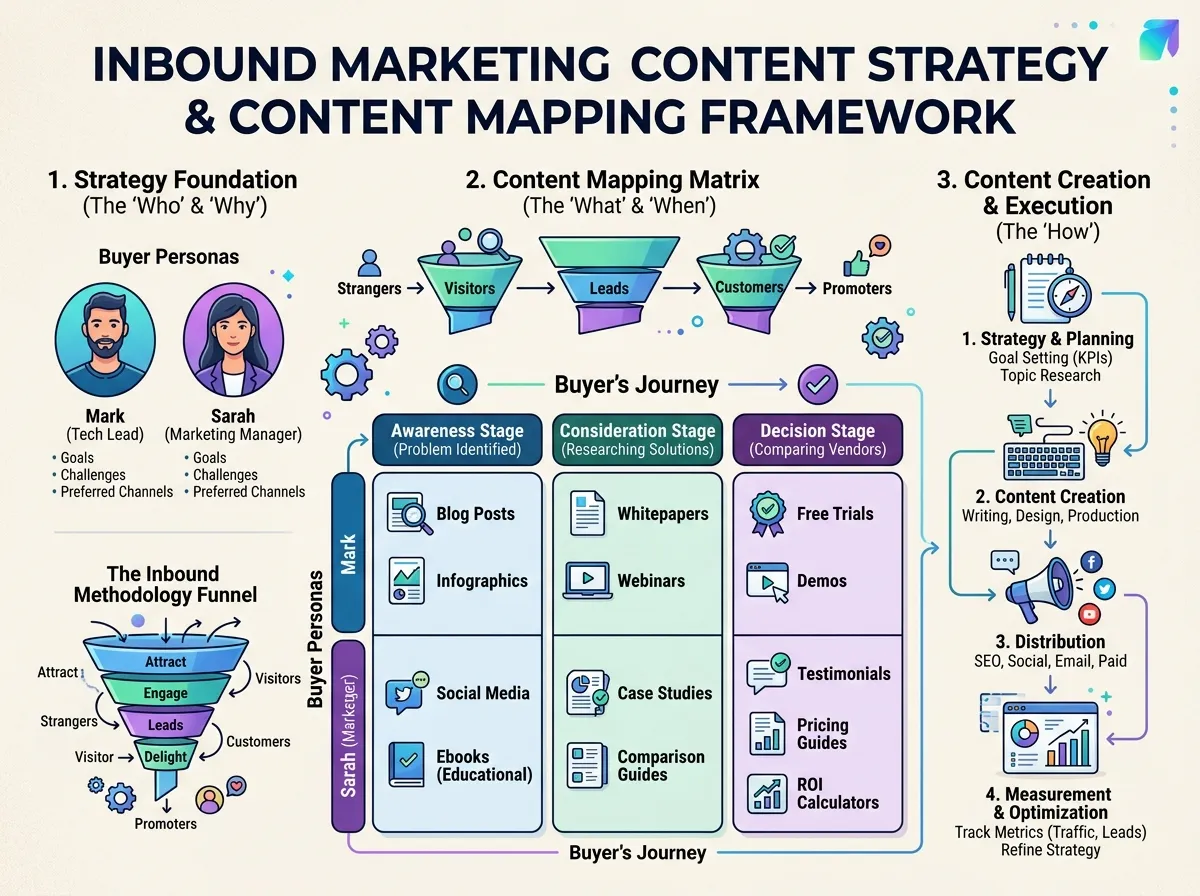
An Inbound Marketing Content Strategy provides the broader direction for content creation, while content mapping helps connect that strategy to specific audience needs and journey stages.
A content strategy may establish the topics a brand wants to own, the audiences it wants to reach, the business objectives it wants to support, and the channels it plans to use. Content mapping adds another layer by considering when and why different resources should reach those audiences.
This relationship is important because content should not exist independently from the overall marketing strategy. A business may publish excellent articles, but if those articles do not connect to relevant offers, supporting resources, or customer needs, their contribution to the marketing funnel may be limited.
A strong content strategy therefore benefits from understanding how individual assets interact. A blog article may attract organic traffic, an in-depth resource may capture a lead, an email sequence may nurture that lead, and a case study may help support a later purchasing decision.
Businesses looking to strengthen their overall content approach can also explore How to Create a Content Strategy, which provides additional context around building a structured content strategy.
Customer Journey Content Planning
Customer Journey Content Planning considers what customers need before, during, and after interacting with a business. This makes content planning more customer-focused because it looks beyond individual keywords or publishing schedules.
For example, someone searching for general information may need an educational article. A visitor returning to the website several times may be ready for more detailed information about available solutions. A prospect comparing providers may need proof, examples, or a clearer explanation of the company’s value.
Understanding these differences can help businesses avoid presenting the same message to every visitor.
Customer journey planning can also reveal opportunities for content personalization. Different industries, customer segments, or buyer personas may require different explanations even when they are interested in the same general product or service.
The more clearly a business understands these needs, the easier it becomes to create content that feels relevant rather than repetitive.
Content Mapping Framework
A Content Mapping Framework provides a structure for organizing content around audiences, journey stages, topics, and marketing objectives. It can be as simple or detailed as the business requires.
A useful framework typically considers the target audience, buyer persona, customer challenge, search intent, journey stage, content format, business objective, and desired next interaction.
The framework should also consider existing content. Before creating new resources, marketers can review what is already available and determine whether each piece still serves its intended purpose.
Some content may need updating, while other resources may need stronger internal connections. In some cases, several overlapping articles can be consolidated into a more useful resource.
This approach helps content teams make better use of existing assets while identifying genuine opportunities for new content.
Buyer Persona Content Mapping
Buyer Persona Content Mapping connects content with the characteristics, challenges, motivations, and information needs of specific customer groups.
Different personas may have different priorities. A business owner might care about cost, growth, and return on investment, while a marketing manager may focus more on performance, implementation, and reporting.
Creating one generic piece of content for every audience can make the messaging too broad. Persona-based mapping allows marketers to develop content that speaks more directly to the concerns of each group.
However, personas should not become stereotypes. They should be based on useful customer information such as research, customer conversations, search behavior, analytics, sales feedback, and actual engagement patterns.
When persona information is combined with journey-stage data, content becomes more precise. Marketers can understand not only who the audience is but also what that audience needs at a particular moment.
Funnel-Based Content Mapping
Funnel-Based Content Mapping organizes content around different levels of customer awareness and purchase intent.
Top-of-funnel content generally focuses on education and discovery. Its role is to attract relevant audiences and answer broad questions. Middle-of-funnel content can provide deeper information about solutions and help prospects evaluate their options.
Bottom-of-funnel content usually addresses more specific purchase-related questions. It can include detailed product information, case studies, comparisons, demonstrations, testimonials, and other evidence that helps prospects make informed decisions.
The funnel should not be treated as a rigid structure. Modern customers can enter through many different channels and may consume content in unexpected sequences. Nevertheless, funnel-based thinking can help businesses identify whether their content portfolio provides sufficient support at different levels of intent.
Inbound Content Planning Strategy
An Inbound Content Planning Strategy brings together audience research, content goals, search intent, customer journey information, publishing priorities, and performance measurement.
Planning should consider both new content and existing content. A website may already have valuable resources that are underperforming because they are outdated, poorly connected, or not aligned with current search intent.
Content planning can therefore include updating existing articles, improving internal links, strengthening calls to action, expanding useful sections, consolidating duplicate resources, and creating supporting content around important topics.
Performance should also influence future planning. If a particular content theme consistently attracts qualified visitors or generates meaningful engagement, marketers can investigate related topics and formats.
This creates a feedback loop in which performance data informs future content decisions rather than relying entirely on assumptions.
Content Mapping for Lead Generation
Content Mapping for Lead Generation connects useful content with opportunities to turn engaged visitors into identifiable prospects.
Not every visitor is ready to submit a form or speak with a sales representative. Asking for too much information too early can create unnecessary friction. Instead, lead-generation content should match the visitor’s level of interest.
An educational article may encourage readers to explore a more detailed resource. A research report or industry study may provide an opportunity for lead capture. A case study or product-focused resource may support a more conversion-oriented action.
The important factor is relevance. A lead-generation offer should naturally connect with the content the visitor has already consumed.
Content mapping can also help businesses identify where leads may be lost. If a large amount of traffic reaches informational content but there are few meaningful next interactions, the business may need stronger connections between related resources.
Connecting Content Mapping With Content Performance
Content mapping should be connected to performance measurement. Businesses need to understand whether their content is attracting the right audiences and contributing to meaningful marketing outcomes.
Metrics can include organic traffic, engagement, returning visitors, lead generation, conversion rates, assisted conversions, content downloads, and revenue-related outcomes. The most useful metrics depend on the objectives of the content.
Content performance should also be evaluated across groups of related resources rather than looking at individual pages in isolation. A blog article might not generate many direct conversions but could introduce users who later interact with other content before becoming customers.
Understanding these relationships provides a more complete picture of content effectiveness. For additional insight into evaluating content performance and financial outcomes, businesses can explore Content Marketing ROI.
The Role of Internal Linking in Content Mapping
Internal linking is an important part of content mapping because it connects related resources and gives visitors opportunities to continue exploring a topic.
A well-planned internal linking structure can connect awareness content with deeper educational resources, comparison content, case studies, and conversion-focused pages. It also helps search engines understand relationships between pages across a website.
The links should feel natural within the content. A reader who has just learned about a particular concept should be able to find a relevant next resource without being distracted by unrelated promotional links.
This approach creates a more connected website experience and can encourage visitors to spend more time exploring relevant information.
Content Mapping and Conversational Inbound Marketing
Inbound marketing is increasingly influenced by conversational experiences. Visitors may interact with websites through chat, messaging, virtual assistants, and other conversational channels while researching products or services.
Content mapping can support these experiences by identifying which information customers are likely to need at different stages. A conversational experience can then direct visitors toward relevant educational resources, product information, or supporting content.
For businesses exploring this area, Chat Commerce in Inbound Marketing provides additional context on how conversations can contribute to inbound marketing and conversions.
The combination of structured content and conversational experiences can make it easier for customers to find relevant information without requiring them to navigate through large amounts of website content.
Maintaining a Connected Content Ecosystem
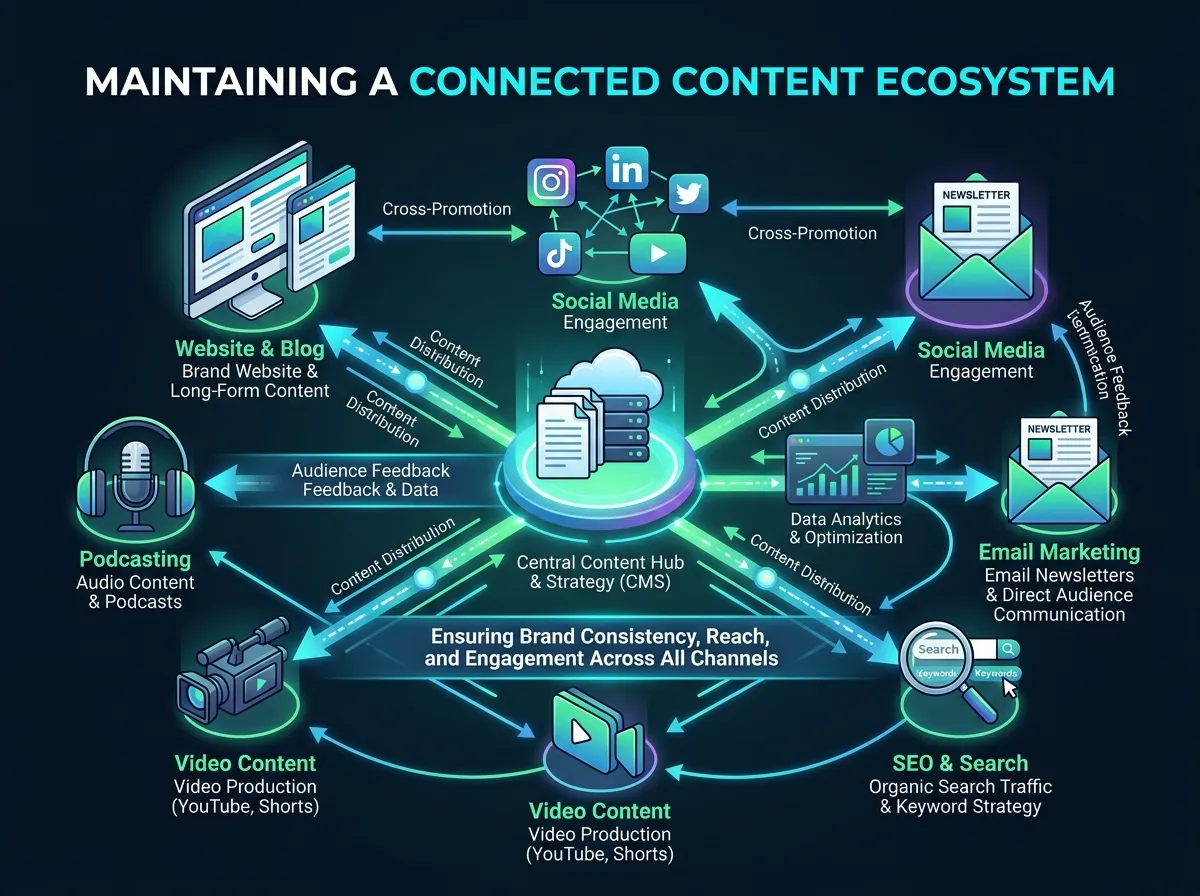
An effective content mapping approach should create connections between individual resources rather than treating every article or asset as an isolated piece.
A visitor might discover a blog post through search, explore a related educational resource, subscribe to receive additional information, return through an email campaign, review a case study, and eventually visit a product page. Each interaction contributes to the broader customer journey.
This is why content mapping should consider the entire content ecosystem. Search optimization, internal linking, email marketing, social distribution, landing pages, downloadable resources, and conversion opportunities can all contribute to the same journey.
Businesses involved in event marketing can also apply similar thinking when connecting event-related content with audience education, promotion, and follow-up. For example, an Event Sponsorship Strategy can become part of a broader content ecosystem when businesses create supporting resources before and after sponsorship activities. Event Sponsorship Strategy
Conclusion
Inbound Marketing Content Mapping helps businesses create a more connected relationship between their content, audiences, and customer journeys. Rather than producing content simply to fill an editorial calendar, marketers can consider what each audience needs and how different resources can support them as their awareness develops.
From Inbound Content Mapping Strategy and Buyer Journey Content Mapping to Buyer Persona Content Mapping, Funnel-Based Content Mapping, and Content Mapping for Lead Generation, each element contributes to a more purposeful content ecosystem.
The strongest approach combines audience understanding, useful content, clear internal connections, strategic planning, and ongoing performance analysis. When these elements work together, content can do more than attract visitors. It can educate audiences, build trust, support lead generation, and contribute to meaningful business growth.
Frequently Asked Questions
1. What is Inbound Marketing Content Mapping?
Inbound Marketing Content Mapping is the process of matching content with specific audiences, buyer personas, customer needs, and stages of the buyer journey. It helps businesses ensure that their content provides relevant information throughout the customer experience.
2. Why is content mapping important for inbound marketing?
Content mapping helps businesses create more relevant content and identify gaps in their existing content. It can also improve customer experiences by connecting visitors with information that matches their interests and level of purchase intent.
3. What is buyer journey content mapping?
Buyer Journey Content Mapping connects content with different stages of the customer journey. Educational content may support early research, while comparison resources, case studies, and product information can support later-stage decision-making.
4. How does content mapping support lead generation?
Content mapping can connect valuable information with relevant lead-generation opportunities. When an offer naturally relates to the content a visitor is reading, the visitor may be more likely to continue engaging with the business.
5. What is buyer persona content mapping?
Buyer Persona Content Mapping organizes content according to the needs, challenges, motivations, and interests of different customer groups. It helps businesses create more relevant messaging for specific audiences.
6. What is a content mapping framework?
A Content Mapping Framework is a structure for organizing content according to factors such as audience, buyer persona, journey stage, search intent, topic, content format, business objective, and desired customer action.
7. How is funnel-based content mapping different from traditional content planning?
Traditional content planning may focus heavily on topics and publishing schedules, while Funnel-Based Content Mapping also considers where a piece of content fits within the customer’s purchasing journey and level of intent.
8. Can existing content be used in content mapping?
Yes. Existing content can be reviewed and connected to different personas and journey stages. Businesses can also update outdated content, improve internal linking, consolidate overlapping pages, and identify gaps that require new resources.
9. How do you measure the success of content mapping?
Success can be evaluated through metrics such as organic traffic, engagement, lead generation, conversions, returning visitors, content downloads, assisted conversions, and revenue-related outcomes. The most relevant metrics depend on the business’s objectives.
10. How does content mapping improve SEO?
Content mapping can improve SEO by creating more comprehensive topic coverage, strengthening relationships between related pages, supporting internal linking, addressing different search intents, and helping businesses create content that better matches what users are looking for.