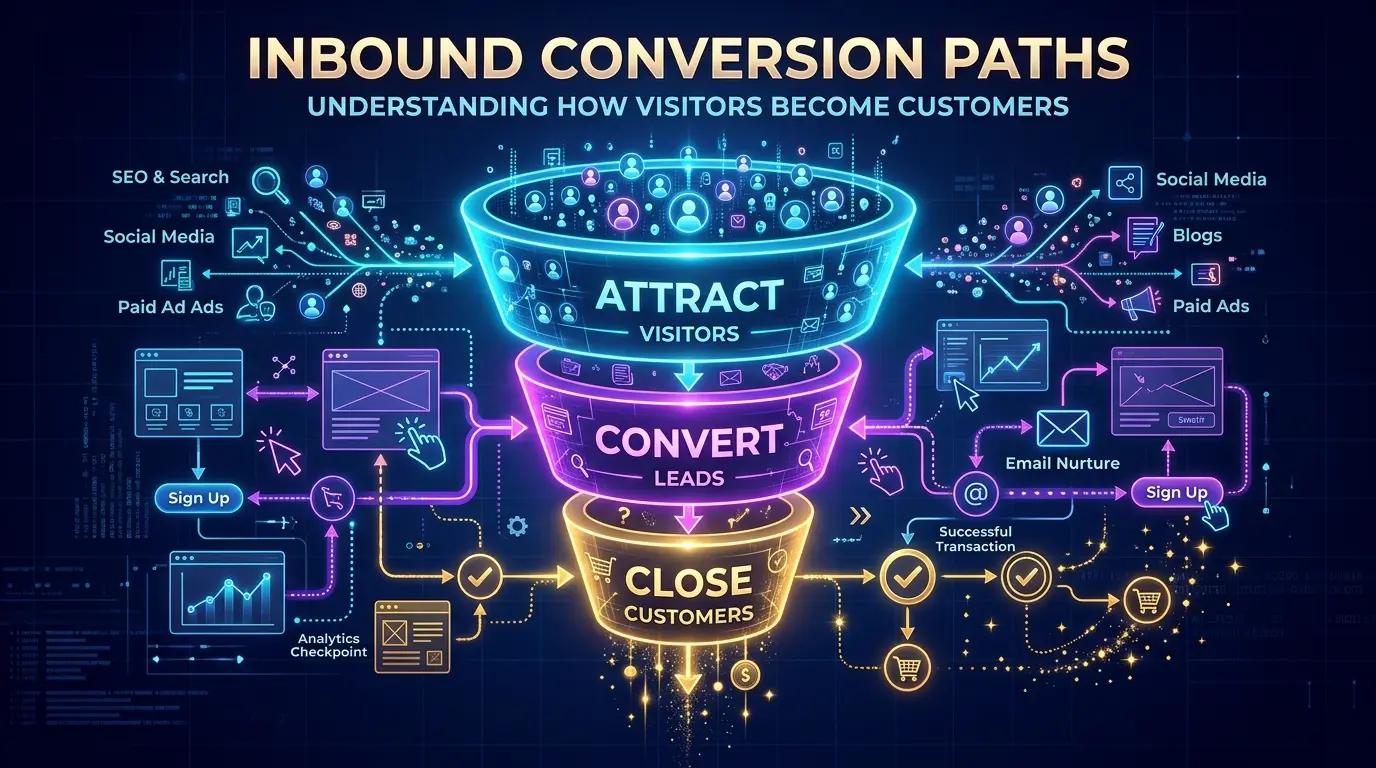
Inbound Conversion Paths describe the routes visitors take as they move from discovering a business to becoming leads and eventually customers. These paths connect valuable content, website experiences, lead capture opportunities, and follow-up communication into a natural customer journey. By understanding how people interact with different marketing touchpoints, businesses can identify conversion opportunities, reduce friction, and create more meaningful experiences. A well-structured inbound conversion approach helps organizations attract relevant visitors, nurture their interest, and guide them toward valuable actions without relying on aggressive promotional tactics.
A visitor rarely arrives at a website and immediately decides to become a customer. Most people need time to understand a business, explore its products or services, compare available options, and develop confidence before taking action. During this process, they may read blog posts, visit service pages, download resources, subscribe to newsletters, or return to the website several times. Each interaction contributes to the journey that eventually leads to a conversion.
This journey is shaped by Inbound Conversion Paths. They represent the connected experiences and interactions that help visitors move from initial awareness toward meaningful business actions. Rather than treating every website visit as an isolated event, inbound marketing considers how different pages, content formats, and communication channels work together to support a visitor’s changing needs.
An effective conversion path does not force people toward an immediate decision. It provides useful information at the right moment, makes the next step clear, and creates opportunities for continued engagement. When businesses understand these journeys, they can improve the relationship between content, lead generation, and customer development while making their websites more effective.
How Inbound Conversion Paths Shape the Customer Experience
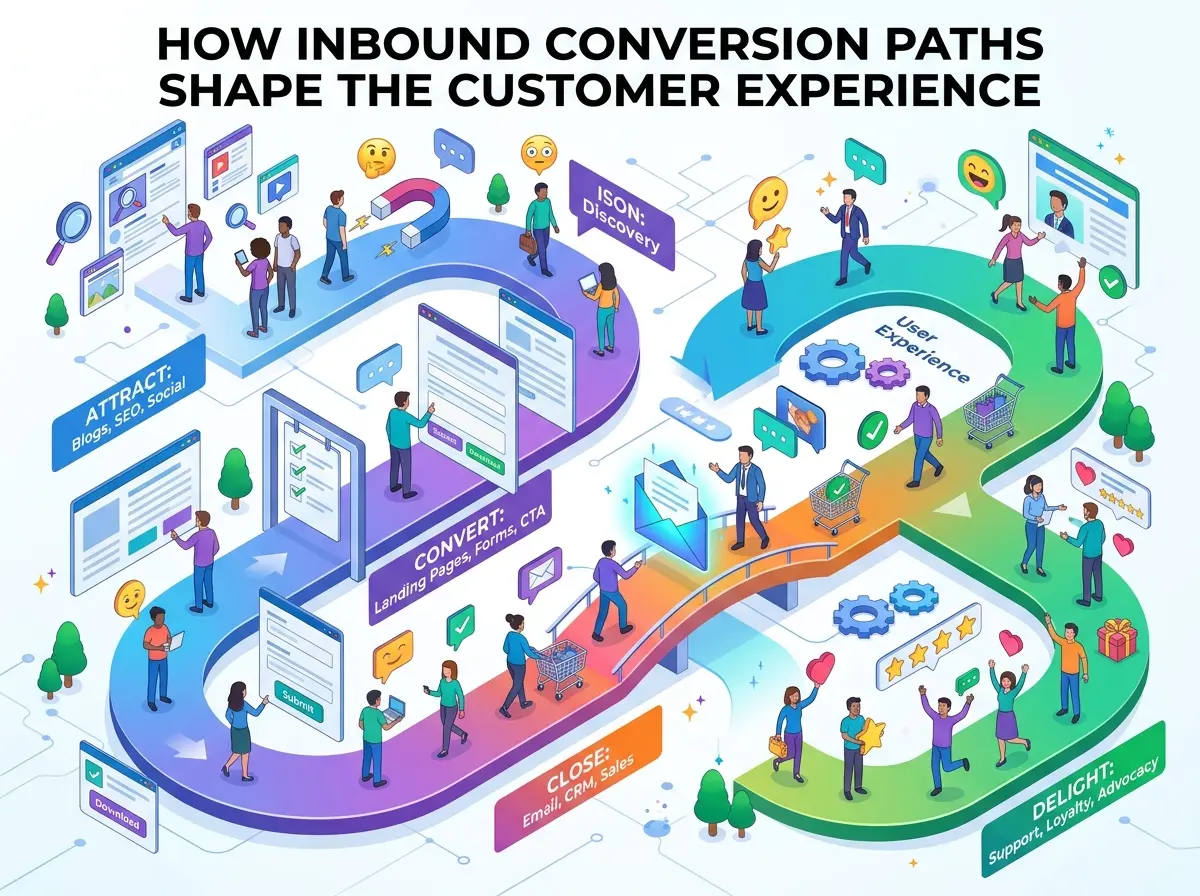
The customer journey is rarely straightforward. Someone searching for information about a business problem may begin with an educational article, explore a related topic, and later visit a service page. Another visitor might discover the same company through social media, subscribe to its email updates, and return after receiving a relevant message. Although both visitors may eventually become customers, their routes can look very different.
Inbound Conversion Paths connect these interactions into a broader experience. They help businesses understand what visitors are trying to accomplish and how the website can support their progress. A useful path begins with relevant information and gradually introduces opportunities for deeper engagement.
For example, a company offering marketing services might attract visitors through an article about improving website visibility. Readers who want more information could explore a related resource about inbound lead generation. Those showing stronger interest might then visit a service page or request a consultation.
The important element is continuity. Each interaction should make sense in relation to the visitor’s previous experience. When content and calls to action feel disconnected, visitors may struggle to understand what they should do next. A connected experience, on the other hand, makes the journey easier to follow and encourages people to continue exploring.
The Relationship Between Content and Conversion Journeys
Content plays a central role in how visitors move through a website. Different people arrive with different questions, levels of awareness, and expectations. Someone researching a problem may need an introductory explanation, while someone comparing providers may be more interested in detailed service information, pricing considerations, or customer experiences.
This is why Website Conversion Journeys should be designed around visitor intent rather than a single promotional message. Educational articles can introduce important subjects, detailed resources can help readers understand possible solutions, and service pages can explain how a business addresses specific needs.
The relationship between content and conversion becomes stronger when each resource has a clear purpose. An introductory article might encourage readers to explore a related topic. A more detailed resource could invite them to download a report or subscribe to receive additional insights. A service page may offer a consultation request for visitors who are ready to discuss their requirements.
Businesses that understand this relationship can create content that supports multiple stages of the customer journey. Instead of publishing articles simply to attract traffic, they can develop resources that help visitors make progress toward informed decisions.
Building Meaningful Lead Conversion Pathways
Attracting website traffic is only one part of inbound marketing. Businesses also need relevant opportunities to turn interested visitors into identifiable leads. This requires a clear relationship between the information a visitor receives and the action they are invited to take.
Lead Conversion Pathways provide this connection. They combine useful content, relevant offers, and accessible conversion opportunities so visitors can express interest when they feel ready. These opportunities might include newsletter subscriptions, resource downloads, contact forms, product demonstrations, or consultation requests.
However, not every visitor should encounter the same conversion opportunity. A person reading an introductory article may not be ready to schedule a sales meeting. Asking for too much information too early can create unnecessary resistance and cause visitors to leave.
A more natural approach is to offer a suitable next step. Someone exploring an educational topic might appreciate a related article or downloadable resource. A visitor comparing solutions could benefit from a detailed service explanation or case study. Someone who has already explored several commercial pages may be more comfortable submitting an inquiry.
This approach helps businesses collect information without making the website feel overly demanding. It also improves the quality of interactions because conversion opportunities are connected to genuine visitor interest.
Why Customer Conversion Routes Are Not Always Linear
Traditional marketing diagrams often present the customer journey as a sequence of clearly defined stages. Although these models are useful for understanding general behavior, real customer experiences are usually more complicated.
Visitors may move between different pages, return to earlier resources, compare several solutions, or pause their research for weeks before taking action. Some people enter through search engines, while others discover a brand through referrals, social platforms, or email communication. Their journeys may overlap, change direction, or begin again when their needs develop.
These changing Customer Conversion Routes make it important to create flexible website experiences. A visitor should be able to find relevant information regardless of where they enter the website. Someone arriving directly at a service page should still have access to educational resources, while a reader exploring blog content should be able to discover related services without feeling pressured.
Businesses should also recognize that conversion does not always happen during a single session. A visitor may need several interactions before developing enough confidence to make a decision. Understanding this behavior helps marketers avoid judging performance only through immediate form submissions or purchases.
The Role of Inbound Lead Nurturing
A conversion path does not end when someone submits a form or downloads a resource. In many cases, this action represents the beginning of a longer relationship. Visitors may have expressed interest, but they still need information that helps them evaluate their options and understand whether a particular solution is suitable.
Inbound Lead Nurturing supports this process through relevant communication and helpful content. Businesses can use email updates, educational resources, personalized recommendations, and follow-up messages to maintain engagement after an initial conversion.
The quality of nurturing depends on relevance. Sending the same messages to every contact can make communication feel repetitive and disconnected from individual interests. A visitor who downloads a resource about content strategy may respond better to related educational material than to an unrelated promotional offer.
Automation can make these interactions more consistent. For example, a business might send a relevant follow-up resource after a visitor subscribes to a newsletter. If the contact later explores service pages or requests additional information, the communication can become more specific.
Businesses using automation should still maintain a natural communication experience. Messages need to reflect the visitor’s interests, respect their preferences, and provide a clear reason for continued engagement. When these elements work together, nurturing helps people move forward without making the process feel forced.
Conversion Journey Mapping and Website Structure
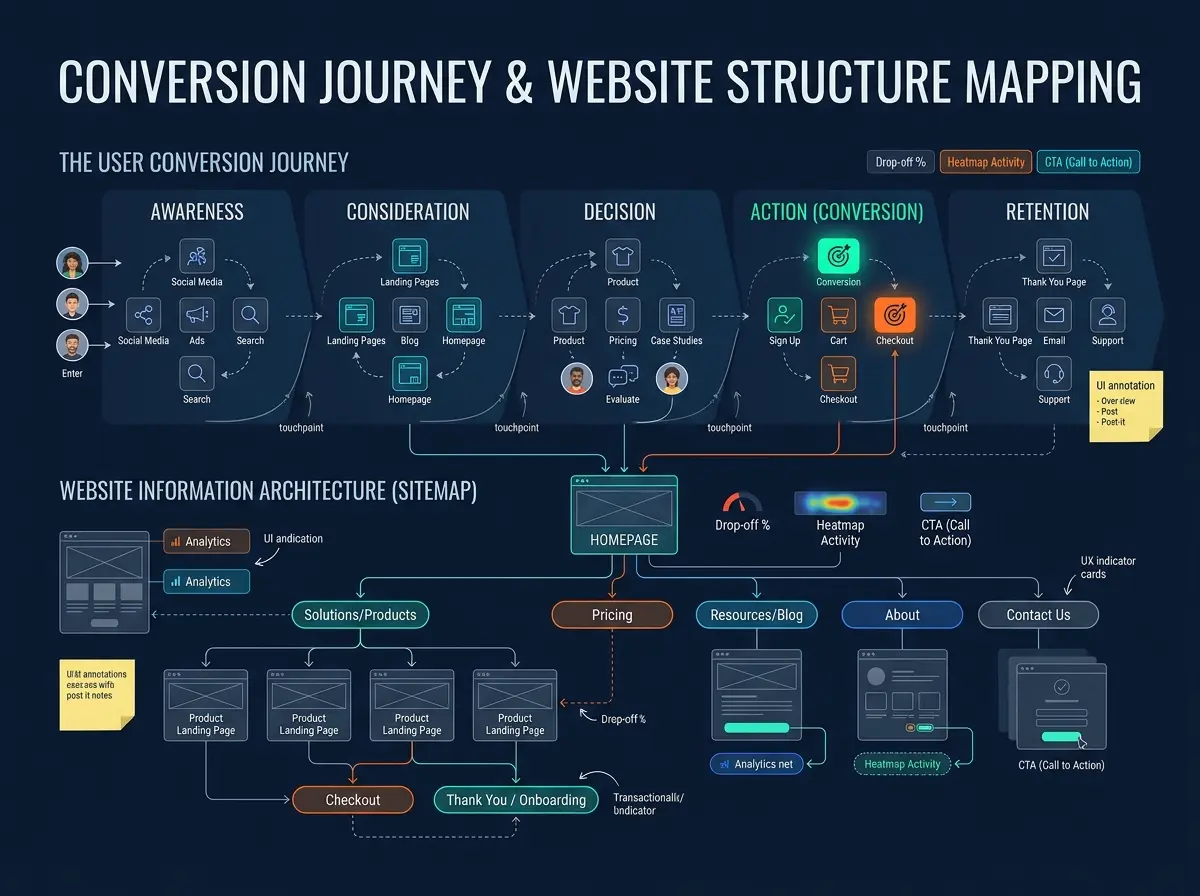
Understanding how people move through a website becomes easier when businesses examine the relationships between pages and interactions. Conversion Journey Mapping helps marketers visualize the different routes visitors may follow, from their first interaction with a brand to a completed conversion.
This process involves more than drawing a simple funnel. It requires examining actual website behavior, identifying important content connections, and understanding where visitors encounter opportunities to take action.
For example, a website may attract organic traffic through several educational articles, but those pages might not provide useful links to related resources or service information. Visitors may receive valuable information without discovering how the business can help them. Mapping the journey can reveal this disconnect.
A useful map should consider different entry points, content relationships, conversion opportunities, and possible exits. It should also recognize that visitors may return to the website through different channels rather than follow one fixed sequence.
Website structure has a significant influence on this experience. Navigation menus, contextual links, related articles, and clear page layouts help visitors discover relevant information. When these elements are organized around user needs, the website becomes easier to explore and more effective at supporting conversions.
Improving Website Lead Generation Paths
A website can attract a large audience and still generate relatively few qualified leads if visitors cannot find suitable opportunities to engage. This often happens when content and conversion elements are not aligned.
Website Lead Generation Paths should make it easy for visitors to move from useful information toward a relevant action. This does not mean placing a form on every page or adding promotional messages to every section. Instead, businesses should consider the purpose of each page and the type of action that makes sense within that context.
An educational article might include a link to a deeper resource, while a service page could provide an inquiry form. A comparison page may encourage visitors to request a consultation or explore a relevant case study.
The design of these opportunities also matters. Forms should request only information that is genuinely necessary at that stage. Complicated layouts, unclear labels, slow loading times, and excessive fields can create friction. Clear calls to action and straightforward page experiences make it easier for visitors to continue.
A strong lead generation path also considers mobile users. If a form is difficult to complete on a smaller screen or important information is hidden below the fold, potential leads may abandon the process. Consistent usability across devices helps ensure that conversion opportunities remain accessible.
Marketing Conversion Touchpoints and Their Influence
Visitors interact with businesses through more than website pages. Search results, email messages, social media posts, downloadable resources, advertisements, and direct communications can all influence their decisions.
These interactions are known as Marketing Conversion Touchpoints. Each one can contribute to awareness, engagement, trust, or purchase consideration. Their influence depends on the visitor’s needs and the context in which the interaction occurs.
For example, a person might discover a brand through a search result, read an article, and later see a related post on social media. After receiving a useful email, the visitor may return to the website and explore a service. Although no single touchpoint necessarily creates the conversion, the combined experience can influence the final decision.
Businesses should pay attention to how these interactions connect. If a social media message promotes a resource, the destination page should deliver what the message promises. If an email encourages visitors to explore a service, the linked page should make the relevant information easy to find.
Trust also influences the effectiveness of these touchpoints. Consistent messaging, accurate information, transparent business practices, and a credible online presence help visitors feel more confident as they evaluate a company. A strong approach to SEO Reputation Management can support this process by helping businesses build a trustworthy presence across search results and other online channels.
Understanding Visitor-to-Lead Conversion
The transition from website visitor to identifiable lead is an important part of inbound marketing. However, a successful conversion is not simply a matter of encouraging as many people as possible to submit forms. The information collected should help businesses understand genuine interest and determine whether they can provide relevant assistance.
Visitor-to-Lead Conversion improves when the offer matches the visitor’s expectations. Someone reading a detailed article may be interested in a related checklist or newsletter, while a visitor exploring a service page may prefer to request a consultation.
The value of the offer should be clear before a visitor takes action. People are more likely to share their contact information when they understand what they will receive and why it is useful. Forms should also communicate how submitted information will be used, helping visitors make informed decisions about sharing their details.
After a conversion, businesses need a reliable process for managing the information. Accurate contact records, appropriate follow-up, and clear communication between marketing and sales teams help ensure that new leads receive relevant attention.
This is where well-defined Inbound Marketing Sales Handoff Criteria become important. When a lead demonstrates sufficient interest and meets agreed qualification requirements, marketing can pass the opportunity to sales with useful context. This reduces confusion and helps sales teams understand what the prospect has already explored.
How Inbound Conversion Optimization Improves Performance
Even a well-designed conversion path can contain obstacles. Visitors may leave pages without exploring related resources, abandon forms, ignore calls to action, or fail to return after an initial interaction. These patterns provide useful information about where the experience may need improvement.
Inbound Conversion Optimization focuses on identifying and reducing these obstacles. Rather than relying on assumptions, businesses can examine analytics, user behavior, form completion rates, traffic sources, and conversion performance across important pages.
For example, a page may receive substantial organic traffic but generate few inquiries. This could indicate that the content attracts visitors with informational intent while the available call to action is too commercial. Adding a more relevant resource or improving links to related pages may create a better connection between visitor interest and the next step.
Testing can also reveal whether changes improve performance. Businesses might compare different calls to action, form layouts, page structures, or content placements. The goal is not to make every page more promotional, but to discover which experiences help visitors find useful information and complete relevant actions.
Performance should also be evaluated beyond the initial conversion. A website that generates many low-quality contacts may be less valuable than one that attracts fewer but more relevant leads. Measuring lead quality, sales progression, and customer outcomes provides a more complete picture of conversion effectiveness.
Connecting Content, Automation, and Lead Management
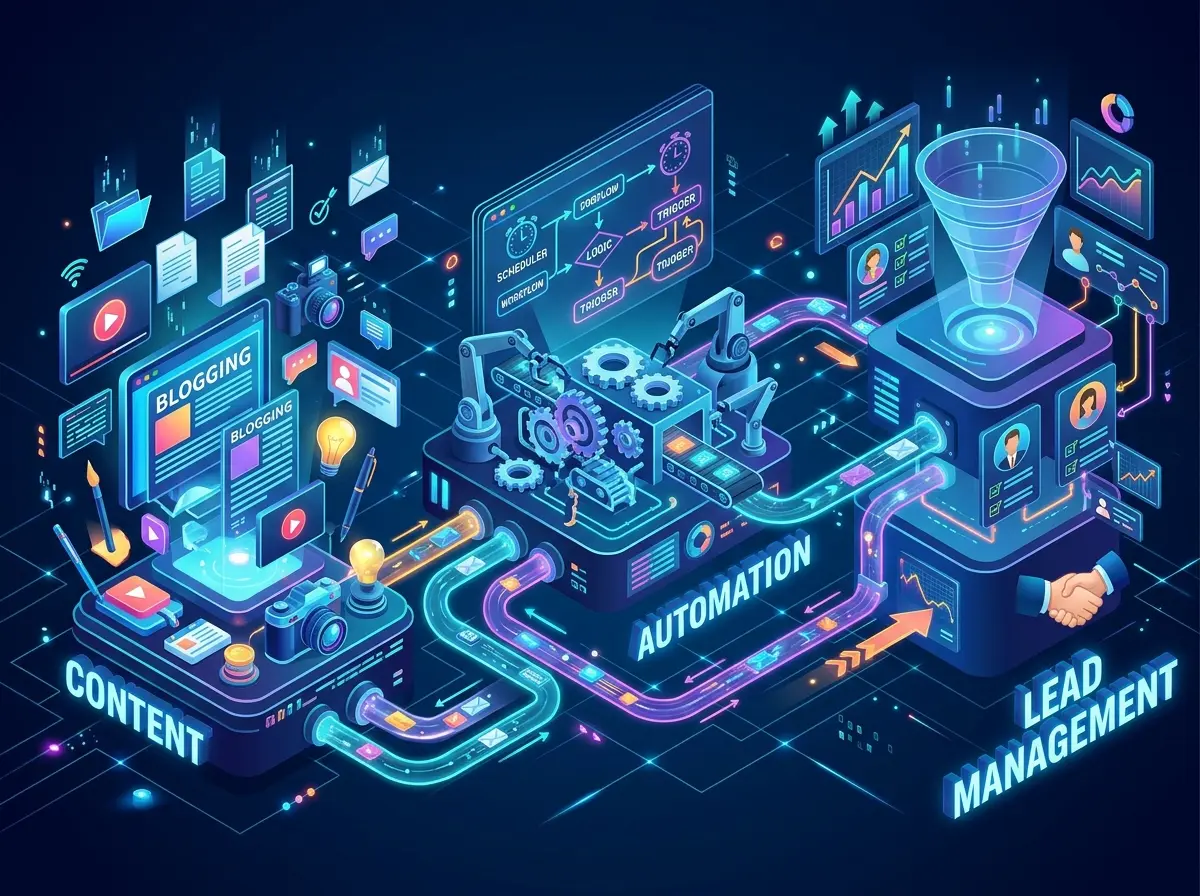
As a business grows, managing different visitor journeys manually becomes increasingly difficult. A single website may contain hundreds of pages, several lead capture opportunities, multiple audience segments, and a variety of communication channels. Without a connected process, visitors can receive inconsistent messages or experience unnecessary delays.
Inbound Marketing Automation helps coordinate important interactions across this journey. Automated workflows can deliver relevant follow-up messages, organize contact information, assign leads, and support communication based on visitor actions.
For instance, someone who downloads a resource about inbound marketing may receive related educational content. If that person later requests a consultation, the system can help notify the appropriate team and make the interaction history available.
Automation becomes more valuable when it is connected to a clear conversion strategy. Simply sending more emails or creating additional workflows does not automatically improve results. Businesses need to understand what visitors are interested in and ensure that automated communication provides genuine value.
Content, automation, and lead management should therefore work as connected parts of the same experience. Content attracts and educates visitors, conversion opportunities help identify interest, and follow-up processes maintain engagement as people evaluate their options.
Conclusion
Inbound Conversion Paths help businesses understand how visitors move from initial discovery toward meaningful engagement and customer relationships. These journeys are shaped by content, website structure, conversion opportunities, communication channels, and the quality of the overall experience.
A successful approach does not depend on forcing visitors through a fixed sequence. Instead, it recognizes that people have different needs and may follow different routes before making a decision. By connecting useful content with relevant next steps, businesses can make their websites easier to navigate and their marketing activities more effective.
When organizations regularly review visitor behavior, improve important touchpoints, and coordinate lead nurturing with sales processes, they can create conversion experiences that support both customer needs and business growth. The result is a more connected inbound marketing system that turns relevant attention into stronger relationships and valuable opportunities.
Frequently Asked Questions
1. What are Inbound Conversion Paths?
Inbound Conversion Paths are the routes visitors follow as they interact with a business’s content, website pages, and communication channels before completing an important action. These actions may include subscribing, submitting an inquiry, requesting a consultation, or becoming a customer.
2. Why are inbound conversion paths important?
They help businesses understand how visitors move through the customer journey and identify opportunities to improve engagement. A well-connected path makes it easier for people to discover relevant information and take suitable next steps.
3. How do inbound conversion funnels work?
Inbound conversion funnels organize the visitor journey into broader stages, such as awareness, consideration, and decision. Businesses use relevant content and conversion opportunities to support visitors as their understanding and interest develop.
4. What is the difference between a conversion path and a conversion funnel?
A conversion funnel provides a broad view of how audiences progress through different stages. A conversion path focuses on the specific interactions, pages, and touchpoints that an individual visitor may experience along the way.
5. How does content marketing support conversion paths?
Content marketing provides useful information that helps visitors understand their problems, explore possible solutions, and evaluate a business. Relevant articles, case studies, guides, and service pages can encourage visitors to continue their journey.
6. What is conversion journey mapping?
Conversion journey mapping is the process of examining and visualizing the interactions visitors have with a business before completing a desired action. It helps marketers understand important touchpoints, identify gaps, and improve the overall website experience.
7. How can businesses improve visitor-to-lead conversion?
Businesses can improve visitor-to-lead conversion by offering relevant resources, using clear calls to action, simplifying forms, improving page usability, and matching conversion opportunities to visitor intent.
8. What role does marketing automation play in inbound conversion?
Marketing automation helps businesses manage follow-up communication, organize contact information, and deliver relevant messages based on visitor behavior. It supports consistent engagement without requiring every interaction to be managed manually.
9. How can businesses measure inbound conversion performance?
Businesses can monitor conversion rates, form submissions, landing-page performance, lead quality, engagement, and progression from marketing-qualified leads to sales opportunities. These measurements help identify which parts of the journey are performing effectively.
10. Can inbound conversion paths improve long-term customer relationships?
Yes. Relevant content, consistent communication, and useful follow-up experiences help businesses build trust throughout the customer journey. When visitors receive information that matches their needs, they are more likely to develop lasting relationships with the brand.