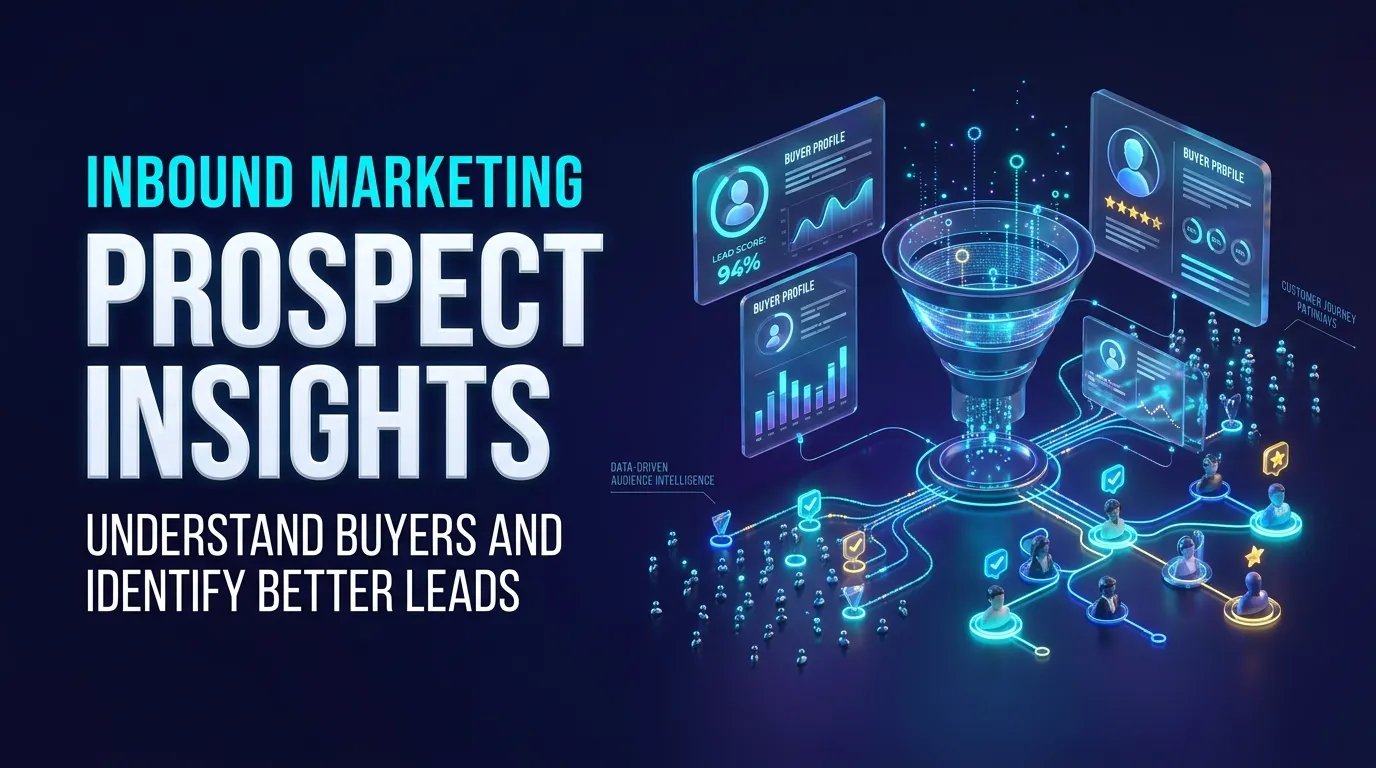
Inbound Marketing Prospect Insights helps businesses understand prospect behavior, buying intent, content interests, and lead quality throughout the inbound journey. By combining audience research, engagement analysis, prospect data, and qualification signals, marketing teams can create more relevant communication and identify stronger sales opportunities. These insights support better decisions, more effective lead nurturing, and improved alignment between marketing and sales.
Every prospect who visits a website, reads an article, downloads a resource, or responds to an email reveals something about their interests. Some are looking for a quick answer, others are comparing possible solutions, and a smaller group may be preparing to make a purchase. Understanding these differences helps businesses create more relevant marketing experiences and recognize which opportunities deserve attention.
Inbound Marketing Prospect Insights focuses on understanding the needs, interests, behavior, and intentions of people who interact with a company’s inbound marketing activities. Rather than treating every visitor or lead in the same way, businesses use prospect information to understand what people are looking for, how their interests develop, and what kind of communication may help them move forward.
These insights can improve lead qualification, content relevance, sales coordination, and marketing efficiency. They also help businesses avoid a common problem: generating a large number of leads without understanding whether those leads are genuinely interested in the products or services being offered.
A prospect who repeatedly visits a pricing page may be evaluating a purchase, while someone reading an introductory article may still be learning about a problem. Both interactions are valuable, but they indicate different needs. When businesses recognize these distinctions, they can respond with information that fits the prospect’s situation instead of relying on generic promotional messages.
Looking Beyond Website Visits to Understand Prospects
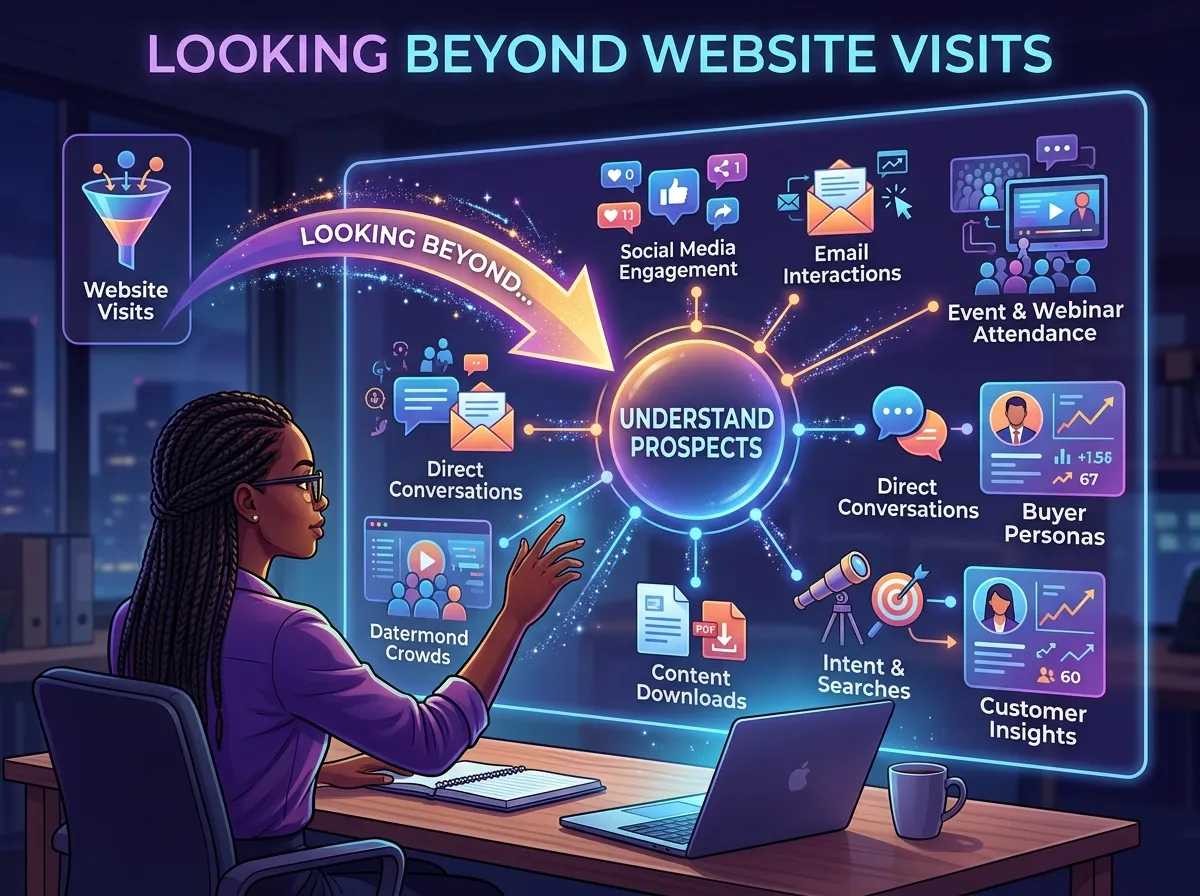
Website traffic provides an initial view of audience interest, but traffic figures alone cannot explain what visitors hope to accomplish. A page may attract many readers because it answers a broad question, while a more specialized page may attract fewer visitors who are closer to making a business decision.
Inbound prospect analysis examines the context behind these interactions. It considers the pages people visit, the resources they consume, the questions they ask, and the actions they take across available marketing channels. When combined with appropriate customer information, these observations help businesses build a more complete understanding of their audiences.
Imagine a company offering accounting software to small businesses. One visitor reads an article about organizing financial records, another compares accounting software features, and a third requests a product demonstration. Although all three visitors belong to the same broad audience, their immediate needs differ.
The first visitor may benefit from educational content. The second may need a comparison of available features and pricing. The third may be ready for a direct conversation with the sales team. Understanding these differences allows the company to respond more effectively.
Prospect analysis should also account for the source of an interaction. A visitor arriving through a detailed product search may have different expectations from someone discovering the company through a general social media post. The source does not establish intent by itself, but it provides useful context for interpreting subsequent behavior.
The objective is not to assign a definitive meaning to every click. It is to identify meaningful patterns and use them to make more informed decisions about communication and customer support.
What Customer Intent Reveals About Buying Readiness
One of the most useful aspects of prospect intelligence is understanding why someone is engaging with a business. A person may be researching a problem, exploring available solutions, comparing providers, or evaluating whether a specific service meets their requirements.
Customer intent insights help distinguish these different motivations. Early-stage prospects often seek explanations, definitions, or practical information. Prospects further along in the buying process may look for product comparisons, case studies, implementation details, pricing, or consultation opportunities.
For example, someone searching for ways to improve team productivity may be exploring several possible approaches. Another person searching for a comparison of specific productivity platforms is likely evaluating available options. A visitor who requests implementation details may have more immediate purchase-related questions.
These signals are useful, but they should not be interpreted in isolation. A pricing-page visit might indicate serious interest, or it might simply be part of general research. Similarly, someone who reads several educational articles may be preparing for a future purchase even if they are not ready to contact sales.
Businesses should therefore evaluate multiple interactions alongside the information a prospect voluntarily provides. A combination of relevant content consumption, repeated product research, and a direct inquiry can offer stronger evidence of readiness than a single website visit.
Understanding intent allows marketing teams to adjust the next interaction. Educational content can help prospects understand their options, while detailed product information can support people who are comparing solutions. Sales conversations become more useful when they address questions the prospect is already trying to answer.
How Prospect Behavior Develops Across the Inbound Journey
Prospect behavior changes as people become more familiar with a company and its offerings. Their initial interactions may be brief and exploratory, while later visits may involve detailed product research, consultation requests, or discussions about specific business requirements.
Inbound lead behavior analysis examines these changes over time. Rather than looking at each action separately, marketers study how engagement develops across the customer journey and whether certain patterns are associated with stronger opportunities.
A prospect might first discover a company through an educational blog post, subscribe to its newsletter, attend an online presentation, and later visit a service page. Each interaction adds context to the relationship. The progression may suggest that the prospect is moving from general awareness toward a more detailed evaluation.
However, not every increase in activity indicates buying readiness. A student, competitor, existing customer, or industry researcher may engage extensively without intending to purchase. The purpose of behavior analysis is to improve understanding, not to assume that every active visitor is a potential customer.
Businesses can strengthen this analysis by distinguishing between different types of engagement. Reading an article, watching a product demonstration, downloading a technical resource, and submitting a consultation request represent different levels of interaction. Their significance also depends on the audience and the business model.
This understanding can help marketing teams decide which content to develop, when to follow up, and which prospects may benefit from additional assistance. It also creates a stronger connection between inbound marketing activity and the quality of opportunities reaching the sales team.
Turning Prospect Information Into Useful Intelligence
Prospect information is often distributed across several platforms. Website analytics may record browsing behavior, email software may show campaign engagement, and customer relationship management systems may store contact details and sales activity. When these sources remain disconnected, businesses can struggle to understand the complete prospect journey.
Prospect data intelligence brings relevant information together so that teams can interpret interactions in context. The aim is not to collect as much data as possible, but to identify the information that helps explain customer needs and supports better decisions.
Useful information may include the prospect’s business type, stated interests, preferred communication channels, content interactions, inquiry history, and questions raised during previous conversations. Depending on the business, it may also include company size, industry, or the role a prospect plays in purchasing decisions.
Consider a business-to-business software provider that receives inquiries from companies of different sizes. A small business may prioritize affordability and ease of use, while a larger organization may need advanced security, integrations, and implementation support. Prospect information can help the marketing and sales teams understand these differences before recommending an appropriate solution.
Data quality matters as much as data availability. Outdated contact information, duplicate records, inconsistent definitions, and incomplete profiles can lead to irrelevant communication. Businesses should establish clear processes for maintaining records and ensuring that teams interpret information consistently.
Privacy is equally important. Prospect information should be collected transparently, used for appropriate purposes, and protected against unauthorized access. Businesses should follow applicable privacy requirements and avoid gathering sensitive or unnecessary information merely because a system makes it possible.
When information is accurate, relevant, and responsibly managed, prospect intelligence becomes a practical resource for improving the inbound experience.
Recognizing Buyer Intent Without Making Assumptions

Buyer intent tracking helps businesses identify behaviors that may indicate an interest in purchasing. These behaviors can include reviewing pricing information, comparing product features, attending a product demonstration, requesting a consultation, or returning to a service page several times.
Intent signals are most useful when considered together. A single pricing-page visit may be inconclusive, but repeated visits combined with a detailed inquiry may indicate that the prospect is actively evaluating the offering. The business can then respond with relevant information instead of sending unrelated introductory material.
Intent tracking can also help organizations identify changes in interest. A prospect who previously engaged with educational content may begin exploring product comparisons. Another may stop interacting after initially showing strong interest. These patterns can inform decisions about follow-up, although inactivity does not necessarily mean that the prospect has lost interest.
Businesses should avoid treating behavioral tracking as a substitute for direct communication. The clearest way to understand a prospect’s needs is often to ask an appropriate question, invite feedback, or provide an opportunity to explain their requirements.
For example, a company could offer a consultation request form that asks what the visitor wants to achieve. This gives the prospect control over the interaction while providing useful information to the sales team.
Intent tracking should support a more relevant experience, not create pressure or make visitors feel that every action is being used to trigger aggressive sales outreach. Clear communication and responsible data practices help preserve trust throughout the process.
Finding the Audience Patterns That Matter Most
Inbound marketing can attract people with very different goals, even when they visit the same website or download the same resource. Some may be potential buyers, while others are researching an industry, looking for professional education, or seeking information for an unrelated project.
Inbound audience insights help businesses understand these differences by examining the characteristics, interests, and needs of the people engaging with their content. Audience patterns can reveal which topics attract relevant prospects, which customer groups respond to particular offers, and which channels generate meaningful interactions.
A company selling cybersecurity services, for instance, may discover that its educational content attracts both small business owners and technical professionals. Although both audiences care about security, their priorities may differ. Business owners may need help understanding risk and compliance, while technical professionals may want detailed information about system integrations and monitoring capabilities.
Recognizing these distinctions can improve content planning and communication. The company can develop resources that address each audience’s concerns without assuming that one message will work equally well for everyone.
Audience research should also consider the people who do not convert. Visitors who leave without submitting a form may still provide useful information about content relevance, navigation, or unmet needs. Their behavior can reveal gaps in the customer experience, although additional research may be necessary to understand the reasons behind it.
Businesses should periodically review audience assumptions as well. Customer priorities, industry conditions, and product requirements can change, making older audience profiles less accurate. Regular research helps keep marketing messages connected to the people the business actually wants to serve.
Measuring Engagement to Understand Real Interest
Engagement is often used as a broad measure of marketing success, but not all engagement has the same meaning. A high number of page views may indicate strong interest in a topic, while a smaller number of detailed product inquiries may be more relevant to sales.
Prospect engagement analysis evaluates how people interact with content, campaigns, and offers. It can include page visits, resource downloads, email responses, webinar attendance, repeat visits, and direct inquiries. The value of each activity depends on the purpose of the content and the stage of the prospect journey.
For example, an introductory article should help visitors understand a problem or explore a topic. Its success may be reflected in relevant readership and further engagement rather than immediate sales inquiries. A product comparison page, however, may be expected to help prospects evaluate an offering and move toward a decision.
Engagement becomes more informative when it is connected to subsequent actions. If visitors who read a particular resource frequently request consultations, the topic may address an important purchasing concern. If an email receives many opens but produces little meaningful engagement, the team may need to review the message, audience, or next step.
Businesses should be careful not to equate activity with intent. Email opens can be affected by privacy features, and repeated page visits may result from simple navigation difficulties. Multiple signals and direct feedback provide a more reliable basis for interpretation.
Teams can use these findings to improve their content strategy, identify unanswered customer questions, and decide where more detailed information may be needed.
Identifying Customer Interests Through Relevant Content
Inbound content gives prospects opportunities to explore their interests before engaging directly with a business. Articles, case studies, comparison pages, webinars, and downloadable resources can all reveal which topics matter to different audience segments.
Customer interest identification involves examining these interactions to understand the problems prospects want to solve and the information they need. When a business recognizes recurring interests, it can develop content that responds to real questions rather than publishing material based only on internal assumptions.
A company providing business consulting might notice that prospects frequently read articles about operational costs, team productivity, and process improvement. This pattern may suggest that these issues are relevant to the audience. Interviews and sales feedback can help determine whether readers are simply interested in the topics or actively looking for consulting support.
Content should match the level of detail the prospect needs. A broad educational article may introduce a concept, while a detailed case study can explain how a solution works in practice. Product documentation and service comparisons can help prospects evaluate specific options before requesting a conversation.
Relevant content also strengthens the connection between marketing and sales. When sales representatives understand which topics a prospect has explored, they may be better prepared to answer questions and avoid repeating information the prospect already knows. This should be done respectfully and with appropriate access to customer information.
By using content engagement as one source of insight, businesses can make their inbound experiences more useful while developing a clearer understanding of audience needs.
Using Lead Qualification Insights to Prioritize Opportunities
Not every inbound lead represents the same level of opportunity. Some contacts match the company’s target market but have little immediate purchase intent. Others may be actively seeking a solution but lack the budget, authority, or requirements needed for a successful engagement.
Lead qualification insights help businesses evaluate these differences. Qualification can consider factors such as the prospect’s stated needs, fit with the company’s offering, business requirements, purchase timeline, and willingness to discuss next steps.
A business selling enterprise software might receive inquiries from individual users, small organizations, and large companies. All may be interested, but their needs and purchasing processes differ. Understanding these distinctions helps the company determine which opportunities require a sales conversation, which need additional education, and which may be better served by another solution.
Qualification should not rely exclusively on a numerical score. Scoring models can help organize information, but they may overlook important context or reinforce outdated assumptions. Teams should periodically review whether their qualification criteria correspond with actual sales outcomes and customer satisfaction.
A consistent process also improves communication between marketing and sales. Marketing can provide context about a lead’s stated interests and relevant interactions, while sales can report which leads become genuine opportunities and what obstacles prevent progress. This feedback can help refine future targeting and qualification.
For a deeper understanding of how inbound leads are monitored as they move toward meaningful business outcomes, companies can explore inbound marketing lead tracking. Connecting prospect insights with lead tracking makes it easier to evaluate not just how many contacts are generated, but how effectively those contacts progress through the sales process.
Making Audience Research Part of Inbound Marketing
Reliable prospect insights depend on understanding the audience beyond its recorded online behavior. Analytics can show what visitors do, but research helps explain why they do it.
Inbound marketing audience research may include customer interviews, surveys, website feedback, sales conversations, support requests, and analysis of publicly available market information. These methods help uncover the questions, concerns, motivations, and expectations that influence prospect decisions.
For example, analytics may reveal that many visitors abandon a service page before submitting an inquiry. Interviews or feedback forms could show that the page does not explain pricing clearly, that visitors are unsure whether the service suits their needs, or that they want to understand the process before making contact.
Each explanation suggests a different response. Clearer pricing information may help one group, while a service comparison or introductory consultation may be more useful for another. Research prevents businesses from treating every performance problem as a design issue or advertising problem.
Research findings should be compared with actual behavior. People may express interest in a feature without using it, or report that price matters most while consistently choosing products for convenience. Combining stated preferences with observed patterns produces a more balanced understanding.
Audience research also supports long-term relationship building. When companies listen to customer questions and respond with relevant information, their marketing becomes more helpful and less dependent on repeated promotional messages.
Turning Prospect Insights Into Better Marketing Decisions

Collecting insights is only useful when businesses apply them. The final value of prospect intelligence comes from the decisions it supports, whether those decisions involve content development, lead prioritization, campaign adjustments, or improvements to the customer journey.
Marketing teams can use prospect insights to identify which topics deserve more attention, which audiences respond to particular messages, and where visitors encounter unnecessary friction. Sales teams can use the same understanding to prepare more relevant conversations, while leadership can evaluate whether marketing activity is attracting the customers the business intends to serve.
A connected approach also supports relationship development over time. Prospects may need several interactions before they feel comfortable making a decision, and the appropriate next step can vary according to their needs. Businesses can strengthen this process by developing a consistent inbound marketing relationship framework that emphasizes relevant communication, customer understanding, and continuity throughout the relationship.
Inbound insights can also clarify how different acquisition methods contribute to business outcomes. Companies comparing organic inbound activity with more direct outreach may benefit from understanding the differences described in this inbound versus outbound lead generation comparison. The objective is to determine which approaches serve different audiences effectively and how they can complement one another.
Ultimately, Inbound Marketing Prospect Insights helps businesses replace broad assumptions with a more informed understanding of the people they want to reach. By examining intent, engagement, interests, and qualification signals together, organizations can deliver more relevant experiences, improve sales coordination, and focus resources on opportunities that support sustainable growth.
Frequently Asked Questions
1. What are Inbound Marketing Prospect Insights?
Inbound Marketing Prospect Insights are findings derived from the behavior, interests, needs, and interactions of people who engage with a company’s inbound marketing activities. They help businesses understand what prospects are looking for, how their interest develops, and which next steps may be most useful.
2. Why are prospect insights important for inbound marketing?
Prospect insights help businesses move beyond general traffic and lead counts to understand the quality and context of customer engagement. They can improve content relevance, lead qualification, follow-up communication, and marketing resource allocation, making it easier to identify meaningful business opportunities.
3. What is inbound prospect analysis?
Inbound prospect analysis examines the interactions and available information associated with potential customers. It may include website behavior, content engagement, inquiry history, and stated needs. The purpose is to understand prospect interests and identify patterns that can improve marketing and sales decisions.
4. How can businesses identify buyer intent?
Businesses can assess buyer intent by examining multiple signals, such as product comparisons, pricing-page visits, consultation requests, and questions about implementation. These behaviors should be interpreted alongside direct feedback and relevant context because no single interaction proves that a prospect is ready to buy.
5. What is prospect engagement analysis?
Prospect engagement analysis evaluates how potential customers interact with marketing content and communication. It can include article visits, downloads, email responses, webinar attendance, repeat visits, and inquiries. Connecting engagement with later actions helps businesses understand which interactions are associated with stronger opportunities.
6. How do prospect insights improve lead qualification?
Prospect insights help teams evaluate whether a lead matches the company’s target audience, has a relevant need, and is likely to benefit from its offering. This allows marketing and sales teams to prioritize suitable opportunities, provide additional education when needed, and improve the consistency of their qualification process.
7. Which tools can help collect prospect insights?
Useful tools include website analytics platforms, customer relationship management systems, marketing automation software, survey tools, and lead tracking systems. Businesses should select tools based on their objectives and ensure that information is accurate, appropriately connected, and managed according to relevant privacy requirements.
8. What is the difference between prospect insights and lead tracking?
Prospect insights focus on understanding a potential customer’s interests, behavior, needs, and intent. Lead tracking records how leads progress through defined stages and interactions. Used together, they help businesses understand both the reasons behind prospect behavior and the outcomes of their marketing activities.
9. How can content help identify customer interests?
Content interactions can indicate which topics prospects want to explore and what questions they are trying to answer. Reviewing article visits, resource downloads, comparison-page activity, and customer feedback can help businesses identify recurring interests and develop content that addresses audience needs more effectively.
10. How often should businesses review inbound prospect insights?
Businesses should monitor important prospect signals regularly and conduct broader reviews based on their sales cycle, campaign activity, and data volume. Frequent reviews can identify changes in engagement, while periodic analysis helps reveal longer-term patterns in customer intent, lead quality, and marketing effectiveness.