Inbound marketing lead generation attracts potential customers through valuable content, SEO, educational resources, and personalized communication. By combining content marketing, lead nurturing, organic traffic, and sales alignment, businesses can attract qualified leads and turn them into customers.
Inbound marketing lead generation is a customer-focused approach to attracting potential buyers through useful content, search visibility, social engagement, educational resources, and personalized communication. Instead of relying entirely on outbound tactics such as cold calls or unsolicited advertising, inbound marketing helps people discover a business while they are actively looking for information or solutions.
The goal is not simply to generate a large number of leads. Effective inbound marketing focuses on attracting people who are genuinely interested in what a business offers and gradually moving them from awareness to consideration and, eventually, conversion.
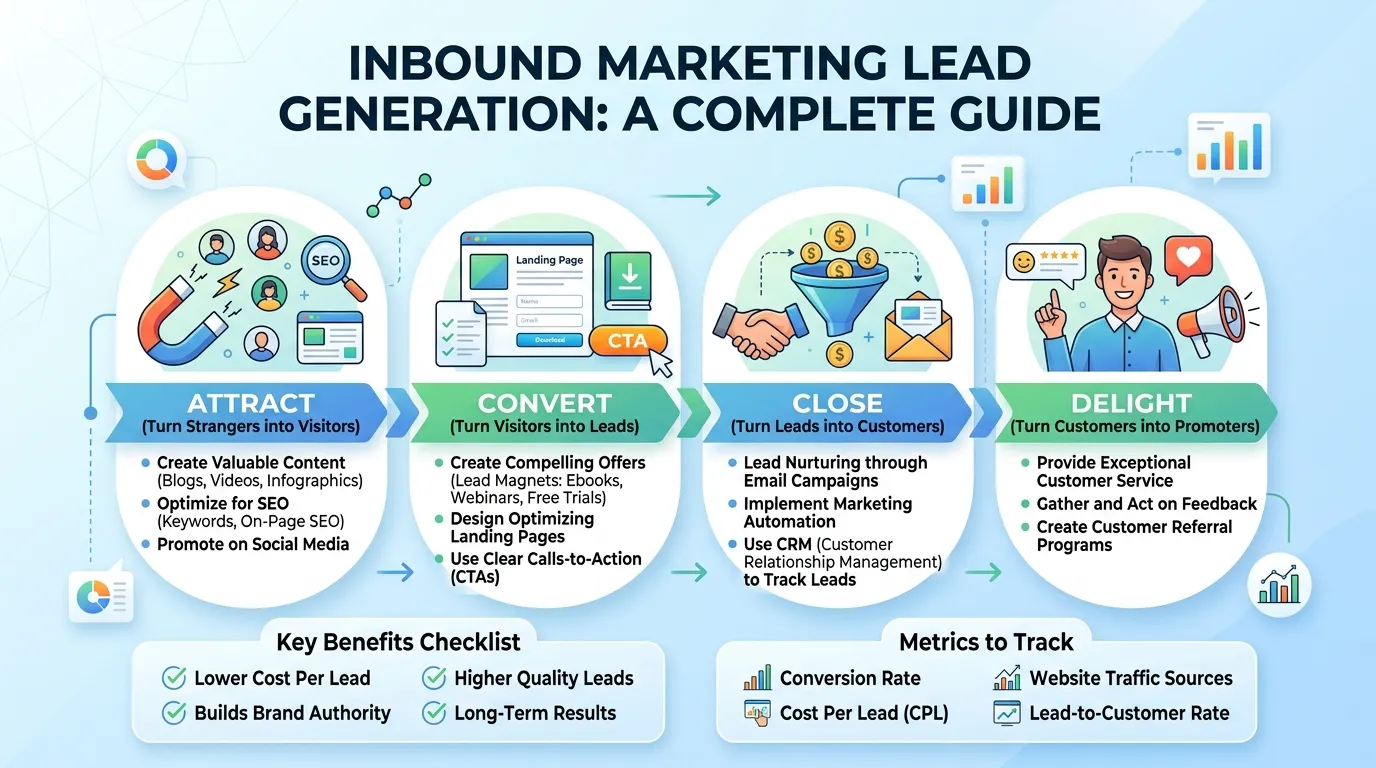
A successful approach combines an inbound lead generation strategy, valuable content, search engine optimization, lead nurturing, and a well-designed sales funnel. When these elements work together, businesses can build a more sustainable source of potential customers.
What Is Inbound Marketing Lead Generation?
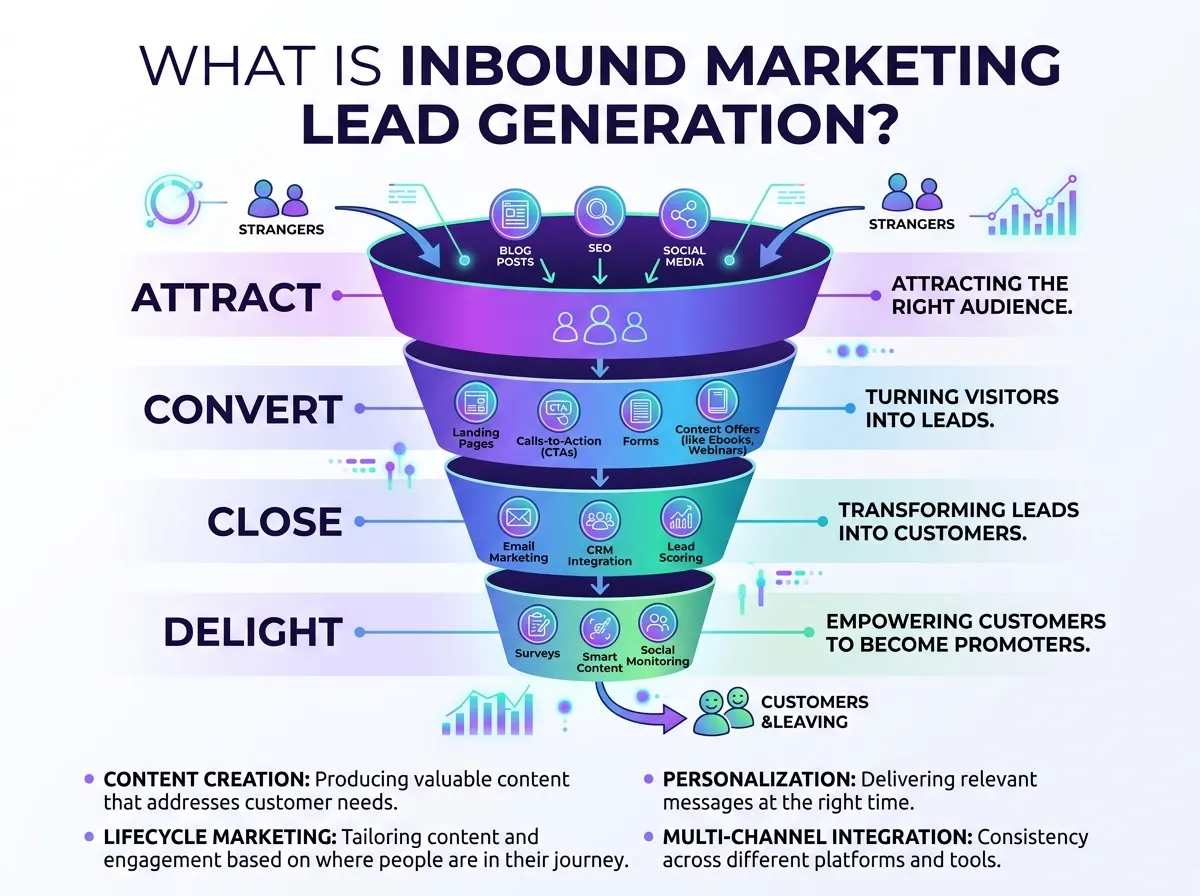
Inbound marketing lead generation is the process of attracting potential customers through relevant and helpful marketing experiences and converting interested visitors into leads.
A typical journey might begin when someone searches Google for a solution to a problem. They discover a blog article, guide, video, or other resource from your company. After finding the content useful, they may download a guide, subscribe to a newsletter, request a consultation, or complete another form.
That visitor has now become a lead.
The next step is to understand their needs and provide relevant communication until they are ready to have a sales conversation or make a purchase.
Why Inbound Marketing Is Important for Lead Generation
Traditional marketing often interrupts people with promotional messages. Inbound marketing takes a different approach by creating resources that people can discover when they already have a question, problem, or need.
This can make the resulting leads more relevant because the prospect has shown some level of interest before entering the sales process.
An effective inbound marketing strategy can also create long-term value. A well-optimized article can continue attracting organic visitors months or years after publication, while downloadable resources can continue generating leads from the same audience. Businesses can also use Virtual Event Production to create engaging online experiences that attract and nurture potential leads.
Inbound marketing therefore combines short-term lead generation with long-term audience development.
Build an Inbound Lead Generation Strategy
A strong inbound lead generation strategy starts with understanding your target audience.
Before creating content, determine who your ideal customers are, what problems they experience, what questions they ask, and what information they need before making a purchasing decision.
This information can help you create content for different stages of the buyer journey.
Someone in the awareness stage may be looking for educational information, while a person in the consideration stage may be comparing solutions. A prospect close to making a decision may want pricing information, product comparisons, case studies, or a consultation. Businesses can also use Lead Generation Services to support their efforts to attract, qualify, and convert potential customers.
Matching content to these stages makes your inbound campaign more relevant.
Use Content Marketing for Lead Generation
Content marketing for lead generation is one of the core components of inbound marketing.
Businesses can create blog posts, guides, research reports, case studies, webinars, videos, checklists, and other resources that address customer needs.
However, publishing content alone does not guarantee leads. The content should have a clear purpose and connect naturally to a next step.
For example, an article explaining how to solve a particular business problem could offer a downloadable checklist related to that topic. A visitor interested in the checklist can exchange basic contact information for access, turning a content visitor into a potential lead.
The quality and relevance of the content are more important than simply publishing a large quantity of articles.
Create a Lead Generation Content Strategy
A lead generation content strategy organizes content around both audience needs and business objectives.
Start by identifying the questions potential customers ask before they purchase. These questions can become topics for educational content.
Keyword research can then help identify the search terms people use to find answers. Content should be written for the audience first while naturally incorporating relevant search terms.
Different content formats can serve different purposes. Blog posts are useful for attracting organic traffic, while detailed guides and case studies can help prospects evaluate solutions. Webinars and demonstrations can be particularly useful for prospects who are further along in the buying process.
The most effective content strategy connects these assets rather than treating each piece of content as an isolated campaign.
Focus on Organic Lead Generation
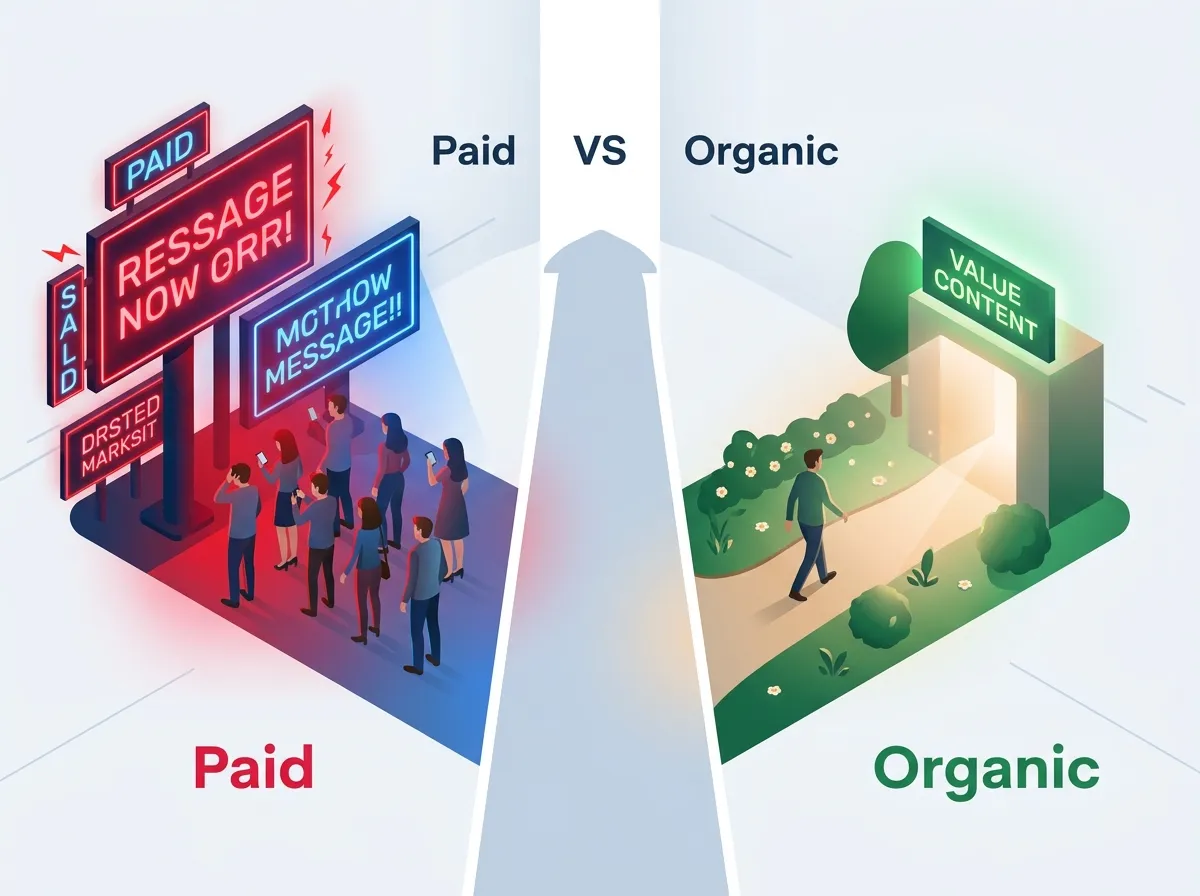
Organic lead generation helps businesses attract prospects without relying entirely on paid advertising.
Search engine optimization plays an important role because people frequently use search engines to find answers, products, services, and solutions.
To improve organic lead generation, businesses should create useful content around relevant topics, maintain strong website structure, optimize important pages, and develop authority within their industry.
Organic traffic can be especially valuable because a strong search presence can continue producing visitors over time. However, SEO is a long-term strategy, so businesses should avoid expecting immediate results from every piece of content.
B2B Inbound Lead Generation
B2B inbound lead generation often requires more detailed and educational content because business purchases can involve multiple decision-makers and longer sales cycles.
A B2B prospect may need information about pricing, implementation, security, integrations, ROI, technical requirements, and business outcomes before contacting sales.
For this reason, B2B companies can benefit from creating content that addresses both strategic and practical concerns.
Case studies, industry reports, comparison guides, webinars, product explainers, and detailed educational articles can help potential customers understand the value of a solution.
B2B inbound marketing should also make it easy for qualified prospects to move from content consumption to a meaningful sales conversation. Businesses can also use Inbound Marketing Tools and Techniques to support content distribution, lead management, automation, and customer engagement.
Develop a Lead Nurturing Strategy
Not every lead is ready to buy immediately. This is where a lead nurturing strategy becomes important.
Lead nurturing involves maintaining communication with prospects and providing relevant information based on their interests and stage in the buying process.
For example, someone who downloads an introductory guide may receive educational content first. Later, they could receive a case study, product information, or an invitation to a webinar.
The objective is to remain useful without overwhelming the prospect with promotional messages.
Personalization can improve the experience. If a lead has shown interest in a particular topic, future communication should ideally relate to that interest rather than sending generic content.
For businesses exploring influencer-led acquisition and audience engagement, resources such as Mastering Influencer Marketing can provide additional marketing context.
Understand the Inbound Sales Funnel
An inbound sales funnel describes how prospects move from initial awareness toward becoming customers.
At the top of the funnel, people are usually researching a problem or learning about potential solutions. Educational content is particularly useful at this stage.
In the middle of the funnel, prospects have a clearer understanding of their needs and are comparing approaches. More detailed resources, case studies, webinars, and solution-focused content can help them evaluate options.
At the bottom of the funnel, prospects are closer to making a decision. Product demonstrations, consultations, pricing information, testimonials, and customer success stories can support the final stage.
The funnel should not be viewed as a rigid path. Modern buyers may move between stages, return to previous content, or interact with multiple channels before converting.
Identify Marketing Qualified Leads
Marketing qualified leads are prospects who meet specific criteria suggesting they may be ready for further sales engagement.
The exact definition depends on the business. A marketing team might consider factors such as company size, industry, job role, content engagement, website activity, or actions such as requesting a product demonstration.
Marketing and sales teams should agree on what qualifies as an MQL. Without a shared definition, marketing may focus on lead volume while sales focuses on lead quality.
A clear qualification process can help both teams understand when a lead should move from marketing to sales.
Improve Inbound Customer Acquisition
Inbound customer acquisition extends beyond generating leads. The ultimate goal is to turn relevant prospects into paying customers and build lasting relationships.
This requires alignment between marketing, sales, and customer experience.
Your content should set realistic expectations about the product or service. Sales teams should understand how prospects entered the funnel and what content they interacted with. Customer teams should then continue delivering value after the purchase.
This creates a connected customer journey instead of treating lead generation and customer acquisition as separate activities. A well-planned Inbound Marketing and Customer Acquisition approach can help businesses connect their marketing activities with long-term customer growth.
Use Webinars and Virtual Events for Lead Generation
Webinars and virtual events can provide another effective inbound channel, particularly for B2B organizations.
A useful virtual event can attract people who are interested in a specific topic and provide an opportunity to demonstrate expertise. Registration information can also help businesses understand who is interested in the subject.
Businesses planning this type of campaign can explore Virtual Event Production for additional guidance on creating virtual event experiences.
Consider Privacy When Building Inbound Campaigns

Lead generation involves collecting information from potential customers, so businesses should consider privacy and responsible data practices.
Forms should request information that is genuinely necessary, and visitors should understand how their information will be used. Marketing teams should also follow applicable privacy regulations and organizational policies.
This becomes particularly important when inbound campaigns use multiple channels, tracking technologies, personalization, or third-party platforms.
For more context around digital marketing data practices, see Data Privacy in Influencer Marketing.
Explore Emerging Digital Marketing Channels
Inbound marketing continues to evolve as new technologies and communication channels become more common.
Virtual influencers, AI tools, conversational experiences, automation, and personalized content can create new opportunities for attracting and engaging audiences. However, new technology should support a clear marketing objective rather than being adopted simply because it is trending.
Businesses interested in emerging digital marketing approaches can also explore The Rise of Virtual Influencers.
How to Measure Inbound Marketing Lead Generation
Measuring inbound marketing requires more than counting leads.
Businesses should evaluate both the quantity and quality of leads generated by their campaigns. Important measurements can include organic traffic, landing-page conversions, content downloads, email engagement, qualified leads, sales opportunities, customer acquisition cost, and revenue generated.
It is also useful to identify which content and channels influence conversions.
For example, one blog post might attract thousands of visitors but generate few leads, while a smaller industry-specific article could attract fewer visitors but produce highly qualified prospects.
The best-performing content is not always the content with the most traffic. The goal is to identify the content that contributes meaningfully to business outcomes.
Final Thoughts
Inbound marketing lead generation provides a structured way to attract potential customers by offering useful information and creating relevant experiences throughout the buyer journey.
A successful approach combines an inbound marketing strategy, content marketing, SEO, organic lead generation, lead nurturing, and sales alignment. Instead of focusing only on generating as many leads as possible, businesses should prioritize attracting the right audience and helping prospects move naturally toward a purchase decision.
When content, marketing automation, qualification, and sales processes work together, inbound marketing can become a sustainable channel for long-term customer acquisition.
Small Summary
Inbound marketing lead generation attracts potential customers through valuable content, search visibility, educational resources, and personalized communication. By combining content marketing, organic traffic, lead nurturing, qualification, and an effective inbound sales funnel, businesses can generate more relevant leads and create a stronger path from first interaction to customer acquisition.
10 Frequently Asked Questions
1. What is inbound marketing lead generation?
Inbound marketing lead generation is the process of attracting potential customers through useful content, search engines, social channels, websites, webinars, and other customer-focused experiences. When visitors show interest by submitting a form, subscribing, downloading a resource, or taking another meaningful action, they can become leads. The business can then nurture those leads until they are ready for a sales conversation.
2. What is the difference between inbound and outbound lead generation?
Inbound lead generation attracts prospects by providing information or experiences they actively seek, while outbound lead generation typically involves proactively reaching audiences through methods such as cold outreach, direct advertising, or unsolicited communication. Inbound marketing often focuses on creating long-term relationships by helping prospects discover a business naturally during their research process.
3. What content is best for inbound lead generation?
The best content depends on the audience and buying stage. Educational blog posts can attract people searching for answers, while detailed guides, case studies, webinars, comparisons, and demonstrations can help prospects further along in the buying process. Content becomes more effective when it solves a real customer problem and provides a logical next step.
4. How does SEO support inbound lead generation?
SEO helps potential customers discover your content when they search for relevant topics, questions, products, or services. By creating useful content around relevant search queries and maintaining a technically accessible website, businesses can attract organic visitors. Those visitors can then be directed toward relevant resources, forms, consultations, or other conversion opportunities.
5. What is an inbound lead generation strategy?
An inbound lead generation strategy is a planned approach for attracting, converting, and nurturing potential customers through inbound channels. It typically includes audience research, keyword research, content creation, SEO, landing pages, lead capture, email nurturing, lead qualification, and performance measurement. The strategy should connect marketing activities with specific business objectives.
6. How does lead nurturing improve inbound marketing?
Lead nurturing helps businesses maintain relationships with prospects who are interested but not yet ready to purchase. Instead of immediately passing every lead to sales, marketing can provide useful information based on the prospect’s interests and buying stage. This can help prospects become more informed and potentially more qualified before they enter a sales conversation.
7. What are marketing qualified leads?
Marketing qualified leads are prospects that meet criteria established by the marketing and sales teams indicating a stronger potential for becoming customers. Qualification may consider factors such as demographic information, company characteristics, website behavior, content engagement, and specific conversion actions. Each business should define its MQL criteria according to its sales process.
8. Is inbound marketing effective for B2B companies?
Inbound marketing can be particularly useful for B2B companies because business buyers often conduct significant research before making purchasing decisions. Detailed articles, case studies, webinars, reports, comparisons, and educational resources can answer important questions and establish expertise. These assets can also support prospects throughout longer B2B sales cycles.
9. How long does inbound marketing take to generate leads?
The timeline varies depending on factors such as industry competition, website authority, content quality, audience demand, and distribution. Paid promotion or existing audiences can produce results relatively quickly, while organic SEO-driven inbound marketing often requires more time to build visibility. Consistent publishing, optimization, and measurement are important for developing sustainable results.
10. How do you measure inbound marketing lead generation success?
Success should be measured using both marketing and business metrics. Traffic, content engagement, conversion rates, leads, and marketing qualified leads can show how the campaign is performing at the marketing level. Further metrics such as sales opportunities, customer acquisition cost, conversion to customers, and revenue help determine whether inbound marketing is contributing to actual business growth.