
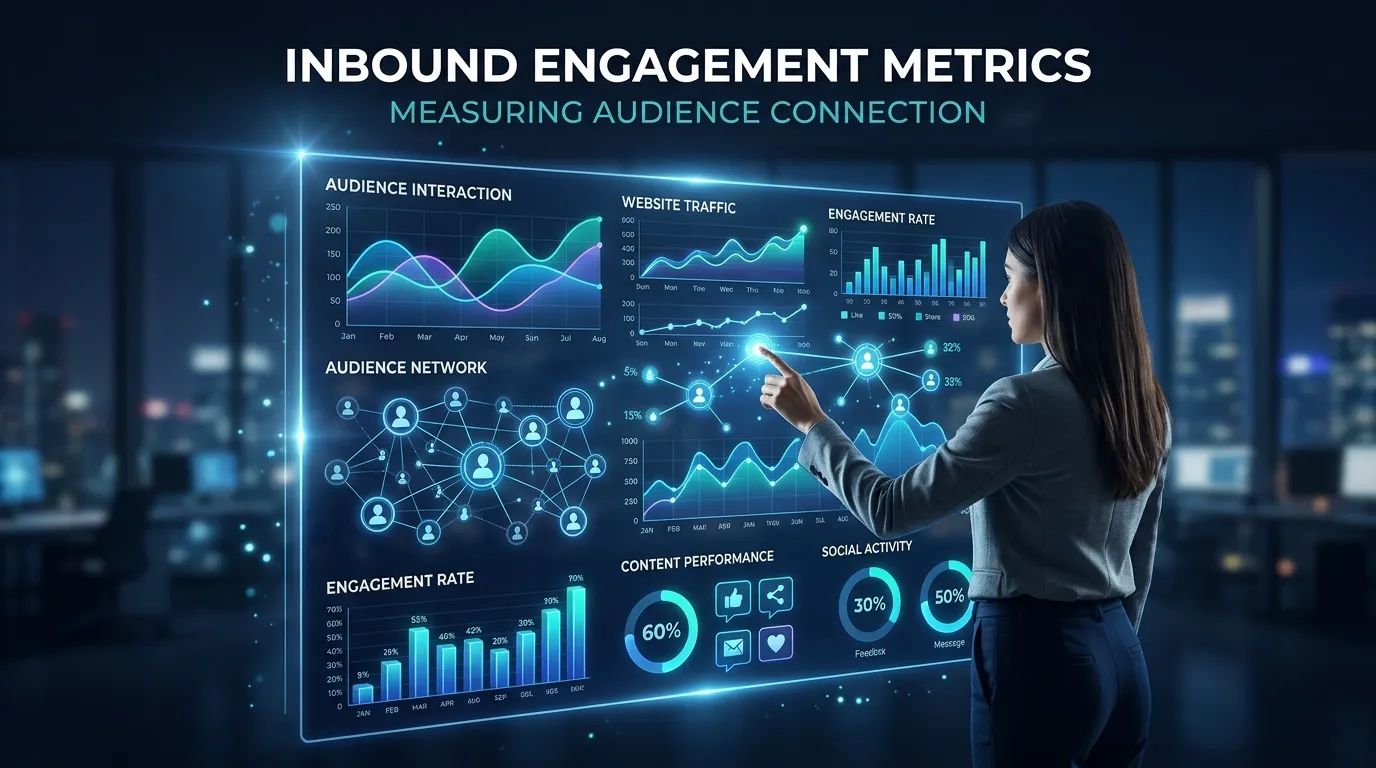
Inbound Engagement Metrics help businesses evaluate how visitors interact with website content, marketing campaigns, and customer communication channels. By analyzing website activity, content engagement, lead behavior, and conversion patterns, companies can understand audience interests and improve marketing performance. Combining these insights with customer journey analysis allows businesses to create more relevant experiences, attract qualified leads, and strengthen long-term customer relationships.
Attracting visitors to a website is an important part of inbound marketing, but traffic alone does not explain whether a marketing strategy is actually working. A website may receive thousands of visitors every month while generating very few meaningful interactions, qualified leads, or customer relationships. Understanding what visitors do after arriving on a website is therefore just as important as attracting them in the first place.
This is where Inbound Engagement Metrics become valuable. These measurements help businesses understand how audiences interact with their content, website pages, marketing campaigns, and communication channels. They provide insights into whether visitors find information useful, explore additional resources, respond to calls to action, or move closer to becoming customers.
For marketing teams, engagement data offers a clearer picture of audience interest and content effectiveness. Instead of relying entirely on page views or visitor numbers, businesses can examine the quality of interactions throughout the customer journey.
However, measuring engagement is not simply about collecting numbers. Different audiences behave differently, and not every interaction has the same business value. A visitor downloading a detailed product guide may demonstrate stronger purchase interest than someone briefly viewing a blog post.
A meaningful measurement approach connects visitor activity with marketing objectives. By understanding these interactions, businesses can improve content experiences, identify promising leads, and make more informed marketing decisions.
Why Engagement Matters More Than Traffic Alone
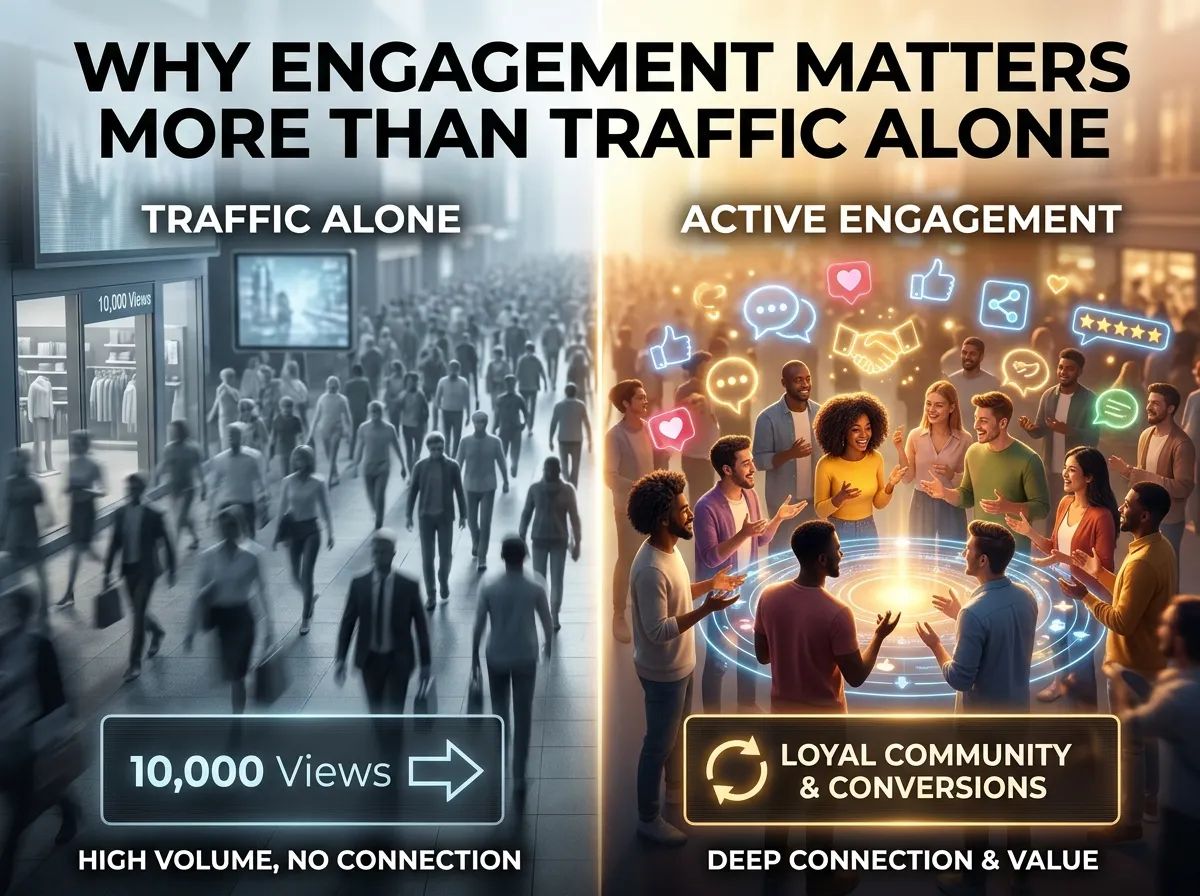
Website traffic is often one of the first indicators marketers examine when evaluating campaign performance. While attracting visitors is essential, traffic does not automatically translate into meaningful business results.
Imagine a company publishing educational articles about marketing automation. One article attracts 5,000 visitors, but most leave without exploring another page. Another article receives only 1,500 visitors but generates newsletter subscriptions, resource downloads, and consultation requests.
Although the first article has more traffic, the second may contribute more directly to business growth.
This difference highlights the importance of engagement.
Engagement reveals how visitors respond to the information and experiences a business provides. It helps marketers understand whether content matches audience expectations and whether website experiences encourage further interaction.
For inbound marketing teams, this information is particularly useful because the strategy depends on building relationships through valuable content rather than relying entirely on direct promotional messages.
When engagement is measured properly, businesses can distinguish between visitors who simply discover their content and those who actively explore what the brand offers.
Understanding the Different Types of Inbound Engagement Metrics
Inbound engagement includes several types of interactions, and each provides a different perspective on audience behavior.
Some metrics focus on how visitors interact with website content. Others measure the effectiveness of lead generation activities, email communication, or customer relationships.
For example, page engagement can reveal whether visitors find a particular article useful. Content downloads may indicate deeper interest in a subject, while email click-through rates can demonstrate whether subscribers are responding to specific messages.
Lead engagement indicators provide another layer of understanding. These measurements help sales and marketing teams identify prospects who repeatedly interact with business resources or demonstrate interest in specific products and services.
Customer interaction metrics extend beyond the initial conversion. They help businesses evaluate how existing customers engage with educational materials, product updates, support resources, and other communications.
Looking at these measurements together creates a more complete understanding of the audience.
Rather than treating every interaction as an independent event, businesses can examine how different activities contribute to the overall relationship between a visitor and a brand.
Website Engagement Analytics: Discovering What Visitors Actually Do
A website is often the central destination for inbound marketing activities. Blog articles, search campaigns, social media posts, email newsletters, and other channels frequently direct audiences toward website content.
However, understanding website performance requires more than counting visits.
Website engagement analytics helps marketers examine how visitors interact with individual pages and navigate through the website.
Page engagement time, scroll depth, internal link clicks, navigation activity, and conversion events can reveal useful information about visitor interests.
For instance, if visitors regularly read the introduction of an article but rarely reach its main sections, the content may not be meeting their expectations. Similarly, if users frequently visit a service page but do not submit an inquiry, the page may need clearer messaging or a more effective conversion experience.
Another important consideration is landing page performance. Different campaigns may attract audiences with different intentions, meaning that a landing page should be evaluated according to its specific purpose.
A page designed to generate newsletter subscriptions should not necessarily be judged using the same measurements as a product comparison page.
Understanding these differences helps businesses avoid misleading conclusions and make improvements based on actual visitor behavior.
Measuring Content Engagement Beyond Page Views
Content is one of the strongest foundations of inbound marketing. Articles, guides, videos, case studies, and downloadable resources help businesses attract audiences and establish credibility.
However, publishing content does not automatically mean that audiences find it useful.
Content engagement measurement examines how people respond to different types of information.
A blog article may attract organic traffic, but additional measurements can reveal whether readers explore related resources, click internal links, share the content, or complete a relevant call to action.
Video engagement may involve viewing duration, completion rates, and interactions with supporting links. Downloadable resources can be evaluated through download activity, subsequent website visits, and lead generation outcomes.
The important point is that content performance should reflect its intended purpose.
An educational article may primarily aim to introduce a topic and build awareness. A comparison guide may help visitors evaluate different solutions. A case study may support prospects who are already considering a purchase.
Each content type contributes differently to the customer journey.
Businesses can improve their measurement approach by connecting individual content assets with broader marketing objectives. This makes it easier to understand which resources attract attention, develop interest, and encourage meaningful action.
Visitor Interaction Tracking and the Value of Behavioral Insights
Visitors rarely follow identical paths when exploring a website. Some arrive through search engines, read one article, and leave. Others explore multiple pages, visit service sections, and return several times before submitting an inquiry.
Visitor interaction tracking helps businesses understand these different patterns.
By examining interactions across website pages and marketing channels, companies can identify the activities that frequently occur before important conversions.
For example, a visitor might discover a blog post through organic search, read a related article, download an industry report, and later visit a service page.
Each interaction provides additional information about the visitor’s interests.
When these activities are connected through appropriate analytics and consent-based tracking, marketers can develop a clearer picture of audience behavior.
This information also helps identify potential friction points.
If many visitors begin a form but do not complete it, the submission process may be too complicated. If users repeatedly search for information that is difficult to locate, website navigation may need improvement.
Behavioral insights are most useful when they lead to practical changes. Tracking should not become an exercise in collecting excessive information without a clear purpose.
Lead Engagement Indicators and the Transition From Interest to Sales Readiness
Not every website visitor is ready to become a customer immediately.
Some people are researching a problem, while others are comparing possible solutions. A smaller group may already understand its requirements and be actively evaluating providers.
Lead engagement indicators help marketing teams distinguish between these different levels of interest.
Repeated visits to pricing pages, consultation requests, product demonstrations, resource downloads, and responses to relevant email campaigns may indicate stronger buying intent.
However, individual actions should not be interpreted without context.
A visitor downloading a general industry report may simply be conducting research. Someone repeatedly visiting pricing information and requesting a product demonstration may demonstrate a stronger commercial interest.
This is why lead engagement is often evaluated through a combination of behavioral and qualification information.
Marketing automation and CRM platforms can help organize these activities, allowing teams to examine how leads interact with different resources over time.
The quality of this information becomes particularly important when deciding when a lead should be shared with the sales department.
A well-defined process ensures that sales representatives receive prospects who have demonstrated relevant interest and meet agreed qualification requirements.
Businesses looking to improve this transition can explore Inbound Marketing Sales Handoff Criteria, which explains how lead quality, sales readiness, and conversion opportunities can be aligned between marketing and sales teams.
Customer Interaction Metrics Across the Entire Relationship
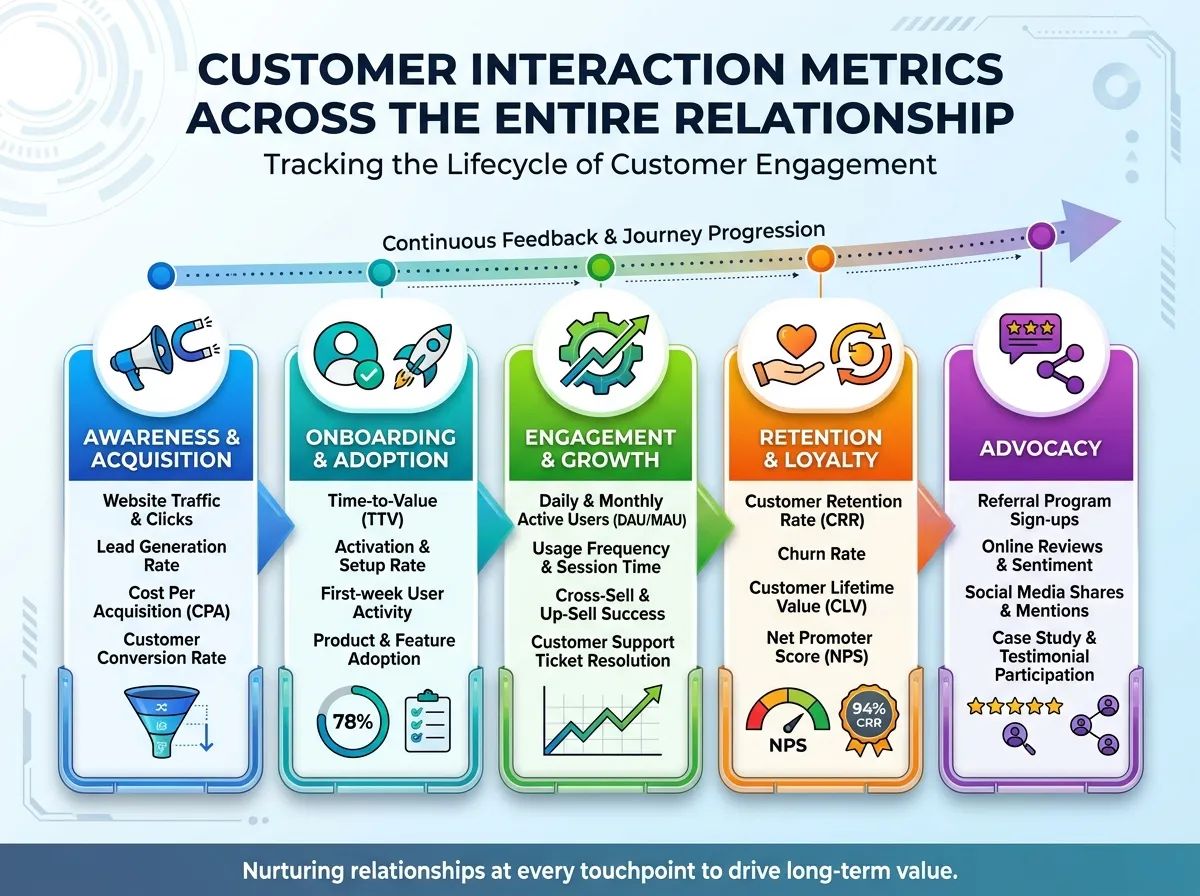
Engagement does not stop when someone becomes a customer.
Existing customers continue interacting with a business through product updates, educational content, customer support, newsletters, and service-related communication.
Customer interaction metrics help organizations understand the quality of these ongoing relationships.
For example, a software company may monitor how frequently customers use important product features, attend educational webinars, or access support documentation.
An increase in meaningful product activity may indicate that customers are becoming more familiar with the solution. On the other hand, declining activity could suggest that users are experiencing difficulties or no longer finding sufficient value.
Email engagement can also provide useful insights. Customers who regularly interact with product updates or educational newsletters may be more interested in available features and additional resources.
However, engagement should not be confused with customer satisfaction. A customer may interact frequently because they are experiencing problems.
Businesses should therefore combine behavioral information with feedback, support records, renewal activity, and customer satisfaction measurements.
This creates a more balanced understanding of customer relationships and helps organizations identify opportunities to improve retention.
Inbound Traffic Analysis: Understanding Where Meaningful Visitors Come From
Not all traffic sources contribute equally to business growth.
Search engines, social media, referral websites, email campaigns, and paid advertising can attract visitors with different interests and intentions.
Inbound traffic analysis helps businesses understand which channels generate valuable interactions rather than focusing exclusively on visitor volume.
For example, organic search may attract visitors looking for educational information, while referral traffic from an industry publication may bring users who already understand the business category.
Email campaigns may generate fewer visits but encourage stronger interactions among existing subscribers.
By examining engagement across traffic sources, marketers can identify which channels deserve additional attention.
Landing page behavior, conversion activity, returning visitors, and lead quality can all contribute to this evaluation.
Another useful consideration is search intent. Visitors searching for general information may interact differently from those searching for specific products or service providers.
A business should not automatically consider a traffic source unsuccessful because it generates fewer immediate conversions. Some channels contribute to early awareness and influence later purchasing decisions.
A broader view of traffic performance helps marketing teams understand how different channels support the overall inbound strategy.
Marketing Engagement KPIs That Connect Activity With Business Results
Marketing engagement KPIs provide a structured way to evaluate whether audience interactions are contributing to business objectives.
The most useful indicators depend on the purpose of a campaign, but several measurements are commonly valuable.
Engagement rate examines the proportion of visitors or users who complete meaningful interactions compared with the relevant audience or exposure.
Average engagement time helps businesses understand how long visitors actively interact with website content.
Scroll depth measures how far visitors move through a page, providing additional context about content consumption.
Click-through rate (CTR) measures the percentage of users who click a particular link or call to action after seeing it.
Lead conversion rate examines how effectively website interactions turn visitors into leads.
Return visitor rate provides insight into how frequently people come back to explore additional content or services.
Email click rate measures how often recipients click links within marketing emails.
Content-assisted conversions help identify content interactions that contribute to conversions elsewhere in the customer journey.
These indicators should not be treated as isolated success measures.
A campaign may generate a high engagement rate but very few qualified leads. Another may produce fewer interactions but attract visitors who are much closer to making purchasing decisions.
The purpose of KPI measurement is to understand the relationship between engagement and meaningful business outcomes.
User Behavior Analytics and the Importance of the Customer Journey
A single interaction rarely explains the complete relationship between a visitor and a business.
People often move through multiple stages before becoming customers. They discover information, explore available options, compare solutions, and eventually decide whether to take action.
User behavior analytics helps marketers understand these movements.
By examining navigation patterns, content consumption, repeated visits, and conversion events, businesses can identify common paths through their digital experiences.
For example, visitors may frequently move from educational blog posts to comparison pages before visiting a service page. This pattern could indicate that educational content is helping prospects progress toward a purchasing decision.
Understanding these relationships can also reveal content gaps.
If visitors repeatedly move from an article to a service page but then leave without taking action, they may need additional information about pricing, features, implementation, or business benefits.
This is where a structured customer journey becomes important.
Businesses can organize their content around awareness, consideration, decision-making, and post-purchase engagement. Each stage should provide information that matches the audience’s changing requirements.
The Inbound Marketing Customer Journey Framework offers a useful perspective on how visitors progress toward becoming customers and how businesses can support those interactions throughout the relationship.
When engagement measurement is connected to the customer journey, marketing teams can identify not only what visitors do but also why certain interactions matter.
Improving Engagement Through More Relevant Inbound Marketing Techniques
Measurement becomes valuable when businesses use the information to improve their marketing activities.
For instance, if visitors frequently engage with practical educational articles, a company may develop additional resources around related topics.
If certain landing pages generate strong traffic but weak conversions, marketers can review the messaging, page structure, and calls to action.
If email subscribers regularly interact with specific subjects, future campaigns can provide more relevant information.
These improvements should be based on observed audience needs rather than assumptions.
A strong inbound approach also requires consistency across channels. Website articles, social media communication, email campaigns, and downloadable resources should provide a connected experience.
Businesses can explore different Inbound Marketing Techniques to understand how content, search visibility, and audience-focused communication work together to attract and convert potential customers.
There is also value in connecting traditional and digital interactions. Events, print materials, offline promotions, and digital campaigns may influence the same customer journey.
For companies managing multiple communication channels, Integrating Traditional and Digital Marketing provides relevant insights into creating a more coordinated marketing experience.
The objective is to ensure that each interaction contributes to a consistent and useful relationship with the audience.
Engagement Performance Tracking: Turning Data Into Better Decisions
One of the biggest challenges in marketing analytics is the gap between collecting information and using it effectively.
Businesses may have access to website reports, email analytics, CRM records, and campaign dashboards but still struggle to understand what the numbers mean.
Engagement performance tracking becomes more useful when data is organized around clear business questions.
Instead of simply asking how many people visited a page, marketers can investigate whether visitors explored related resources or completed the intended action.
Rather than looking only at email opens, teams can examine whether subscribers clicked through to relevant content or generated qualified inquiries.
A practical measurement system should also consider the reliability of its data. Duplicate events, inconsistent tracking configurations, bot activity, and missing attribution information can distort reporting.
Privacy should remain part of the process. Businesses need to follow applicable data protection requirements, obtain consent where necessary, and avoid collecting unnecessary personal information.
Regular reporting can help marketing teams recognize changes in engagement patterns and evaluate whether previous improvements have produced better results.
The most valuable dashboards are not necessarily the ones containing the largest number of metrics. They are the ones that make important patterns easy to understand and support better decisions.
Common Mistakes Businesses Make When Measuring Engagement
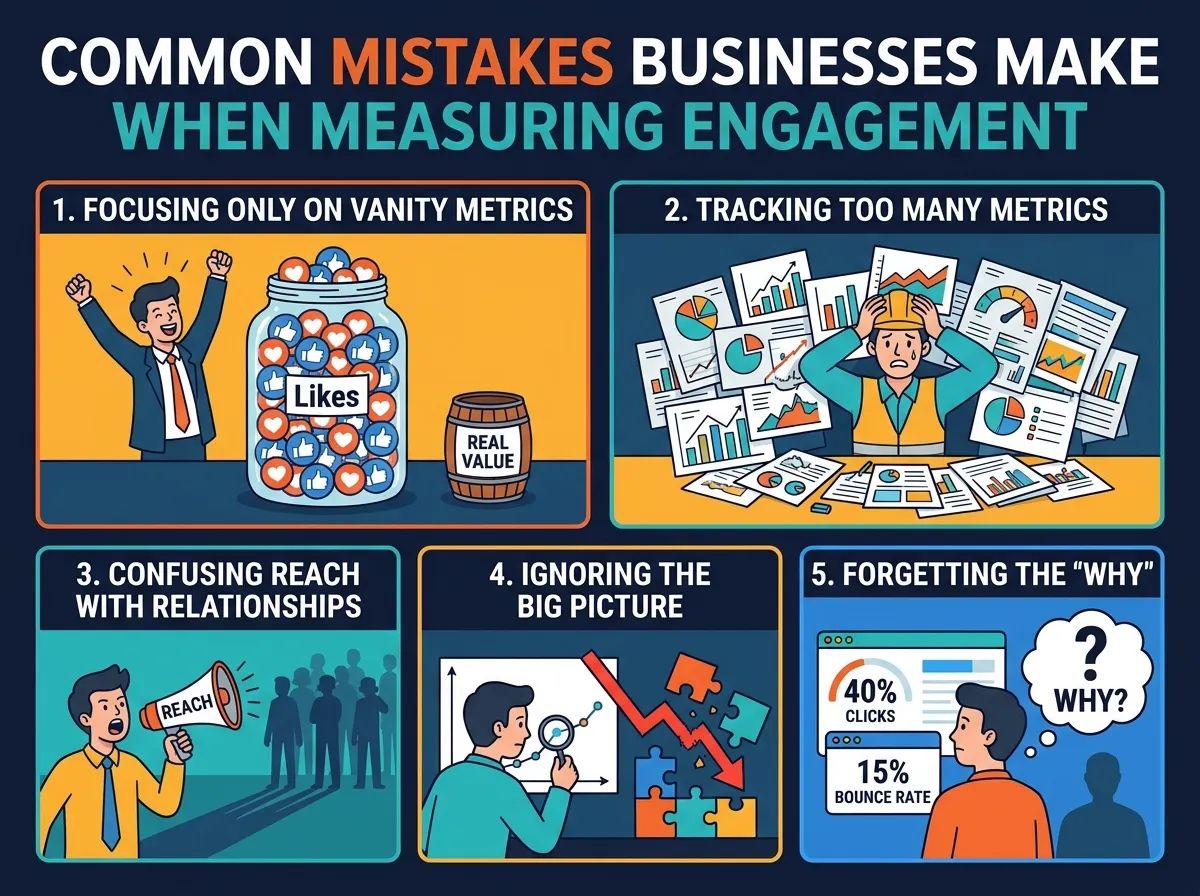
Even experienced marketing teams can misinterpret engagement data when they focus on individual numbers without considering their context.
One common mistake is treating every interaction as equally valuable. A page view, product inquiry, and consultation request represent very different levels of customer interest.
Another problem is relying too heavily on vanity metrics. Large traffic numbers and social media likes may look impressive, but they do not necessarily demonstrate meaningful engagement or business progress.
Businesses also sometimes compare unrelated campaigns using identical performance expectations. An awareness campaign should not automatically be evaluated using the same conversion targets as a product-focused landing page.
Poor tracking configuration can create additional difficulties. If analytics events are missing or incorrectly recorded, reports may not accurately represent actual visitor behavior.
Finally, many organizations collect data without connecting it to marketing decisions. Reports become routine documents instead of tools for identifying opportunities and solving problems.
A better approach combines relevant measurements, clear objectives, reliable tracking, and regular performance reviews.
Conclusion
Inbound Engagement Metrics help businesses understand how audiences interact with their websites, content, campaigns, and customer communication channels. Rather than relying only on traffic numbers, these measurements reveal whether marketing activities generate meaningful interest and support progress throughout the customer journey.
From website engagement analytics and visitor interaction tracking to lead engagement indicators and customer interaction metrics, each measurement contributes a different perspective on audience behavior.
However, successful engagement measurement depends on choosing the right indicators and interpreting them in relation to business objectives. When companies connect engagement data with lead quality, customer experience, and conversion performance, they can make more informed marketing decisions.
Ultimately, the purpose of measuring inbound engagement is not to collect more numbers. It is to understand audiences better, create more relevant experiences, and build stronger relationships that contribute to sustainable business growth.
Frequently Asked Questions (FAQs)
1. What are Inbound Engagement Metrics?
Inbound Engagement Metrics are measurements used to evaluate how visitors interact with a business’s website, content, marketing campaigns, and communication channels.
2. Why are inbound engagement metrics important?
They help businesses understand audience interests, evaluate content effectiveness, identify qualified leads, and improve marketing strategies based on actual user behavior.
3. What are the most important inbound marketing performance metrics?
Important metrics include engagement rate, average engagement time, click-through rate, lead conversion rate, returning visitor rate, content interactions, and email click rate.
4. How can businesses measure website engagement?
Businesses can measure website engagement through analytics tools that track page interactions, scroll depth, navigation activity, engagement time, internal clicks, and conversion events.
5. What is the difference between website traffic and engagement?
Website traffic measures how many visitors arrive at a website, while engagement measures how those visitors interact with its content and features.
6. How does visitor interaction tracking improve marketing?
It reveals how visitors navigate websites, interact with resources, and respond to calls to action, helping marketers identify opportunities to improve the user experience.
7. What are lead engagement indicators?
Lead engagement indicators are activities such as repeated website visits, content downloads, email clicks, pricing page visits, and product inquiries that help demonstrate prospect interest.
8. Which tools can help monitor inbound engagement?
Google Analytics 4, Google Search Console, CRM platforms, email marketing software, and marketing automation tools can help businesses monitor different aspects of engagement.
9. How often should businesses review engagement performance?
Businesses should monitor important indicators regularly and conduct more detailed performance reviews monthly or quarterly, depending on campaign activity and reporting requirements.
10. How can businesses improve inbound engagement metrics?
They can improve engagement by publishing relevant content, optimizing website experiences, strengthening calls to action, personalizing communication, and analyzing visitor behavior to identify areas for improvement.