E-commerce inbound marketing shifts the focus from selling to serving. By educating, inspiring, and building trust, brands attract qualified customers naturally, and over time, this approach turns one-time buyers into loyal, repeat advocates.
As online competition intensifies, many store owners are realizing that product listings and paid ads alone are no longer enough to sustain growth. E-commerce inbound marketing offers a long-term, relationship-driven alternative—but it also raises important questions. How does it differ from traditional digital marketing? How long does it take to see results? What content works best? And how can smaller stores compete with major brands?
The following frequently asked questions address the most common concerns e-commerce businesses have when implementing inbound strategies. Whether you’re just getting started or refining an existing approach, these answers will help clarify how to attract qualified traffic, build trust, and convert visitors into loyal customers.
Why Traditional E-commerce Marketing Falls Short
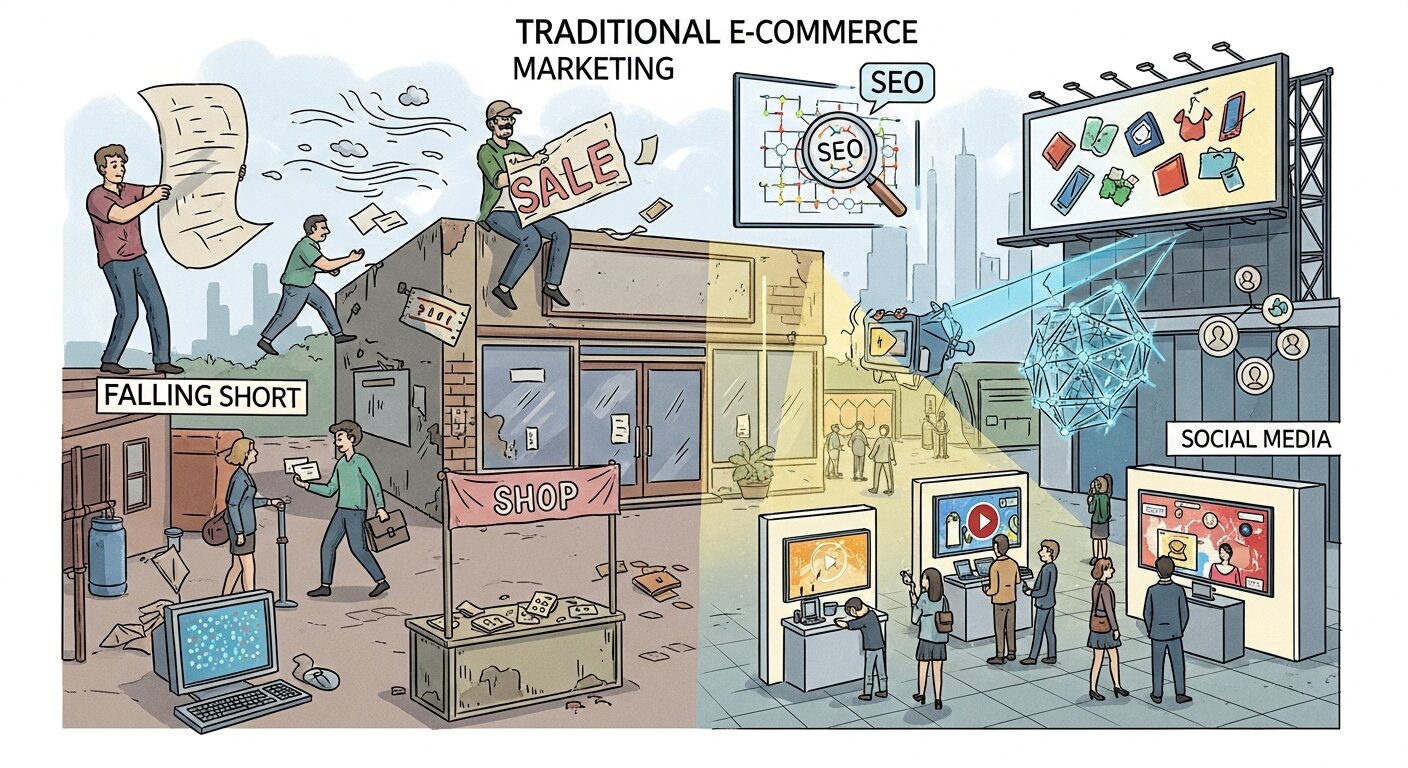
Many e-commerce businesses focus exclusively on product pages and paid ads, hoping customers will somehow discover them in an increasingly crowded digital marketplace. While product listings and reviews are important, relying on them alone limits growth potential.
This approach leaves too much to chance.
When your strategy revolves solely around optimized product descriptions and discount campaigns, you miss valuable opportunities to connect with potential buyers earlier in their journey. E-commerce inbound marketing addresses this gap by focusing on attraction before conversion.
People don’t suddenly appear ready to buy. They move through a process of discovery, research, comparison, and consideration. E-commerce inbound marketing ensures your brand shows up at each of these stages with helpful, relevant content that builds trust over time.
The Inbound Marketing Advantage for E-commerce
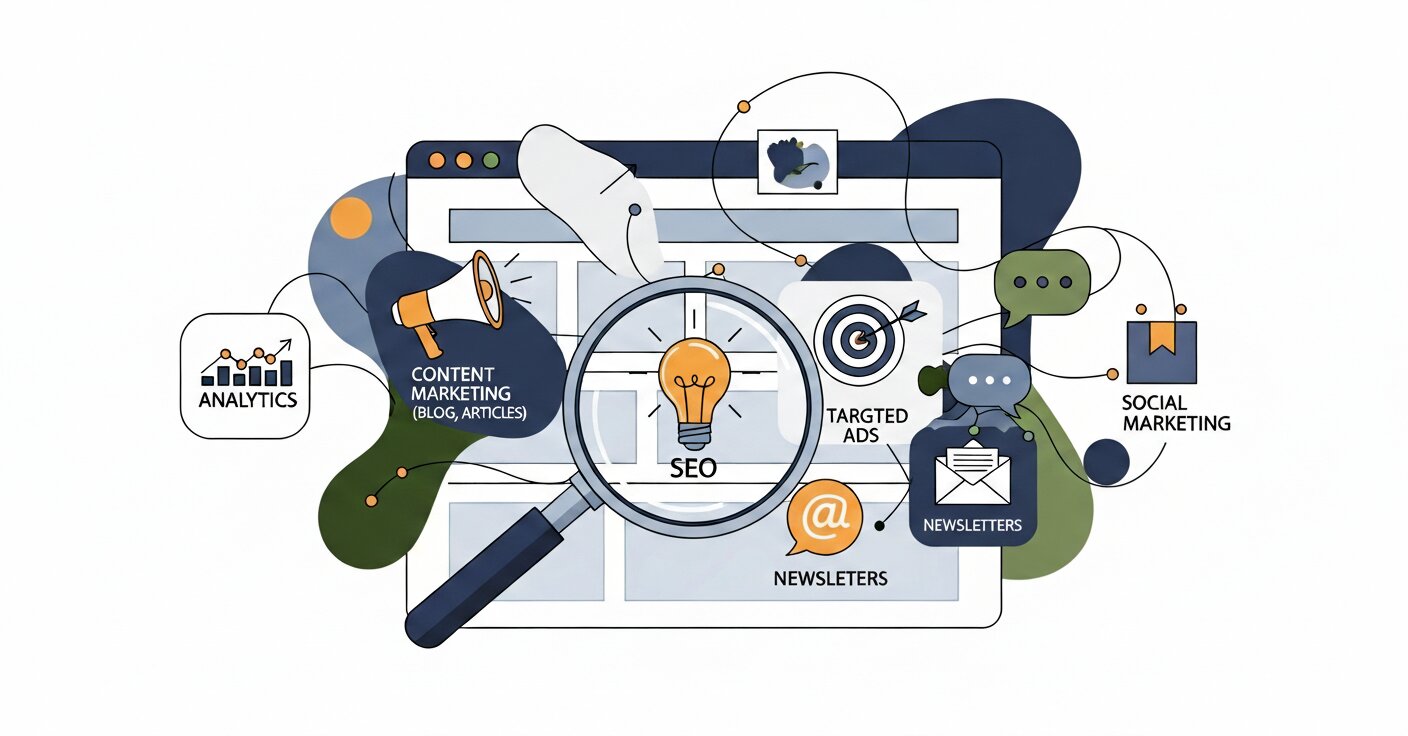
E-commerce inbound marketing flips the traditional model. Instead of interrupting shoppers with ads, it attracts them organically through valuable content, search visibility, and personalized experiences.
For online stores, this means creating meaningful engagement well before the purchase decision. Rather than competing solely on price, you position your brand as a trusted authority within your niche. When customers consistently find helpful information from your brand, they are more likely to return when they’re ready to buy.
It’s about becoming a resource, not just a retailer.
Research from Shopify’s Future of Commerce report suggests that brands investing in content-driven relationship building see significantly higher conversion rates compared to those relying only on product listings. This reinforces why E-commerce inbound marketing is not just a traffic strategy—it’s a long-term revenue strategy.
Building Your E-commerce Content Ecosystem
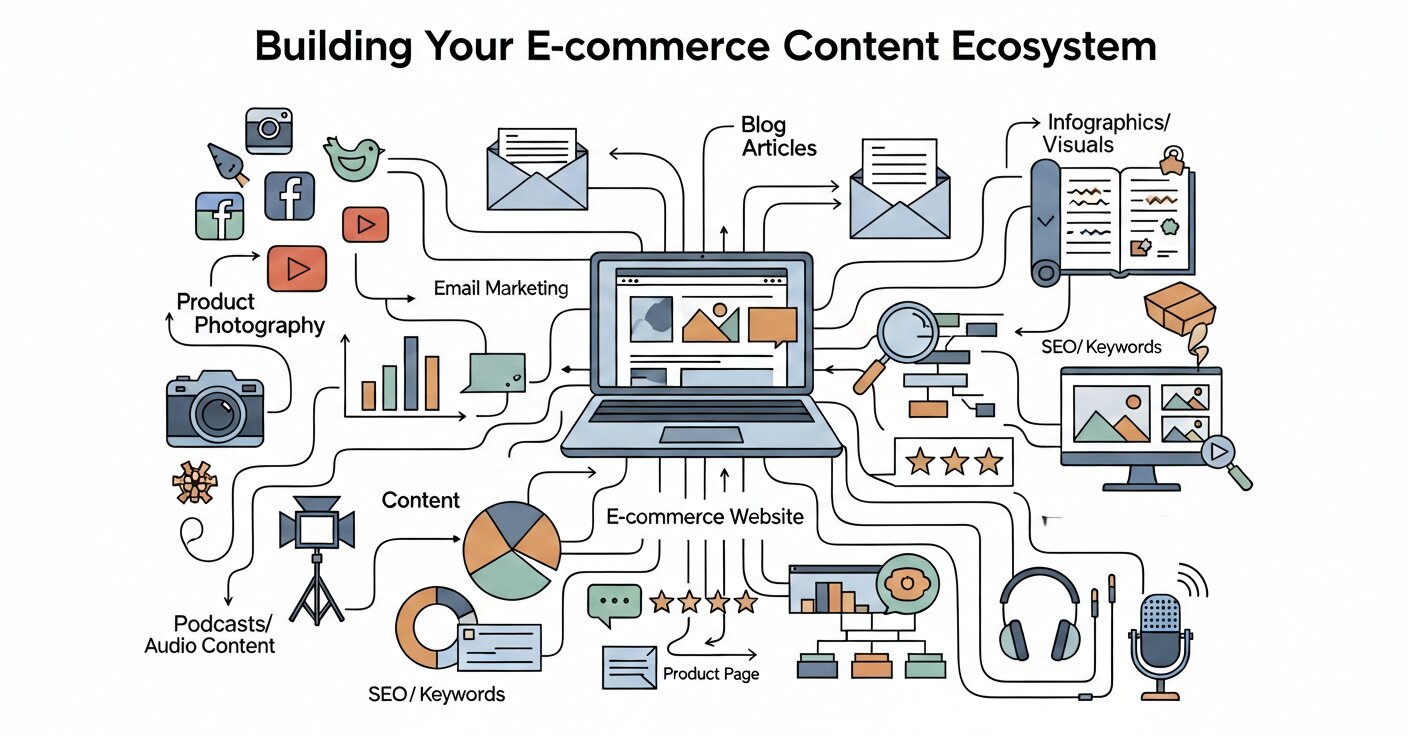
Successful E-commerce inbound marketing extends far beyond product pages. It requires a structured content ecosystem designed to educate, inspire, and guide customers toward confident purchase decisions.
Educational Blog Content
Publishing helpful, search-optimized articles allows your store to capture informational searches. For example, a kitchen supply store might create guides on cooking techniques, ingredient substitutions, knife care, or small kitchen organization hacks.
This type of content attracts visitors who may not be ready to purchase yet but are actively researching related topics. Over time, E-commerce inbound marketing nurtures these early-stage visitors through internal links, email capture offers, and retargeting strategies.
Buying Guides and Comparison Content
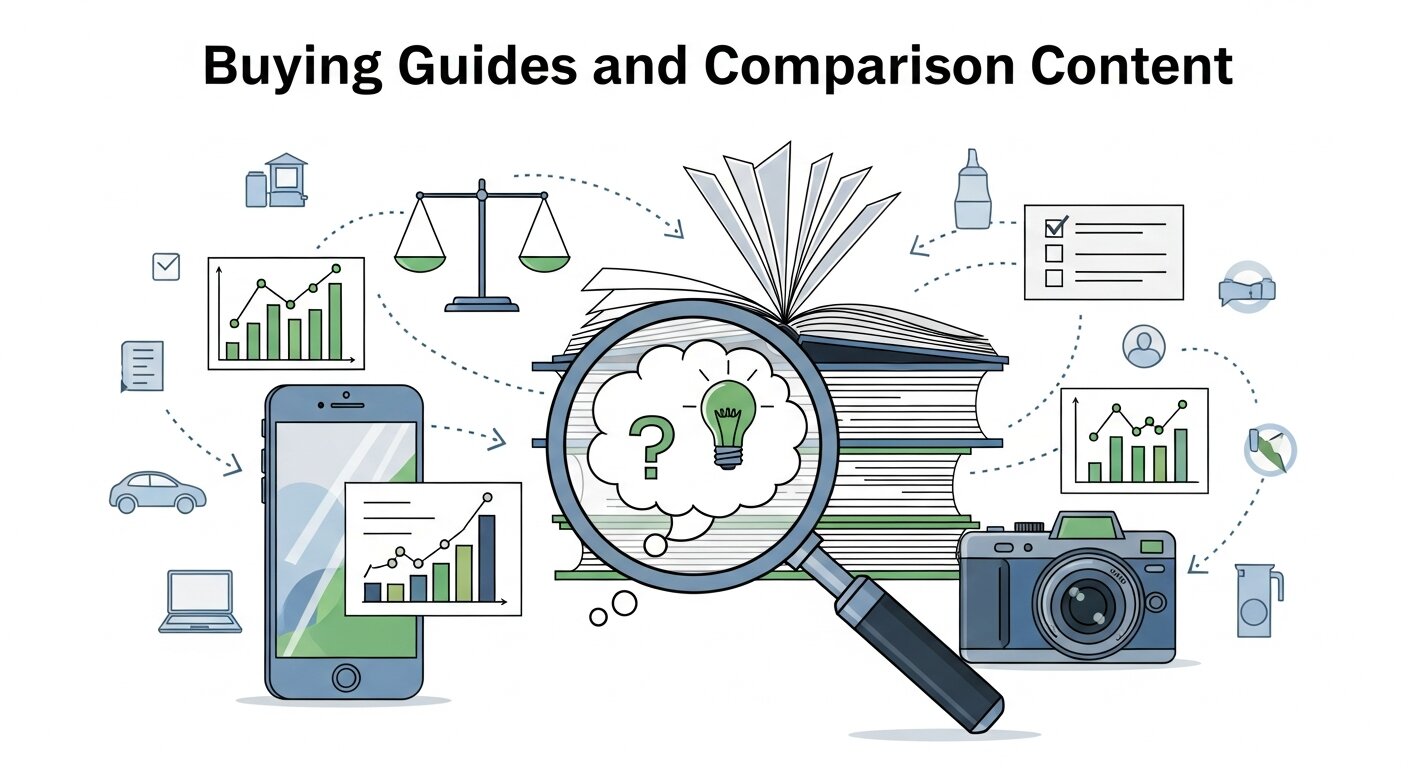
Customers often search for comparisons before purchasing. Creating detailed buying guides, “best of” lists, and product comparison articles positions your brand as transparent and helpful. This approach strengthens E-commerce inbound marketing by addressing objections before they arise.
Video Tutorials and Demonstrations
Video content plays a powerful role in E-commerce inbound marketing. Demonstrations, unboxings, and how-to tutorials reduce uncertainty and build buyer confidence. Even simple, authentic videos can significantly increase time on site and improve conversion rates. For inspiration, see Wistia’s guide to video marketing for e-commerce.
Email Content That Educates, Not Just Sells
Email is another pillar of E-commerce inbound marketing. Instead of sending only promotional offers, nurture subscribers with tips, product usage ideas, and curated recommendations based on browsing behavior. This keeps your brand top-of-mind without overwhelming subscribers with constant sales messaging. Learn more about how email marketing can fuel your overall inbound strategy here.
By developing a complete content ecosystem, E-commerce inbound marketing transforms your store from a transactional website into a trusted digital destination. When customers consistently learn from you, engage with your brand, and find value in your content, conversions become a natural next step rather than a forced outcome.
Buying Guides and Comparisons
Help customers make informed decisions with comprehensive buying guides that go far beyond short product blurbs. Detailed comparisons, feature breakdowns, FAQs, and “who this product is best for” sections reduce confusion and build purchase confidence. This approach is a core component of E-commerce inbound marketing because it prioritizes clarity over hard selling. For examples of excellent guides, check out HubSpot’s guide examples.
When you openly explain pros, limitations, and ideal use cases, you demonstrate expertise and authenticity. Customers recognize when a brand genuinely wants to help them choose the right product—even if it’s not the most expensive option. Over time, this transparency strengthens trust, which is a foundational goal of E-commerce inbound marketing.
Lifestyle Content
Another powerful dimension of E-commerce inbound marketing is lifestyle-driven storytelling. Instead of presenting products in isolation, show how they fit into real-world aspirations and everyday routines. For ideas, you can explore Shopify’s lifestyle content strategies.
For example, a furniture retailer might create content about home office productivity, small-space living solutions, or sustainable interior design trends. These topics connect products to the broader goals and identities of customers. Rather than selling a desk, you’re supporting someone’s vision of a focused, organized workspace. That emotional alignment is what makes E-commerce inbound marketing so effective.
Lifestyle content also expands your organic reach. People may search for “minimalist home office setup” long before they search for a specific desk. By appearing early in that journey, E-commerce inbound marketing positions your brand as a trusted advisor.
Expanding Your Content Formats
While written blog content forms the backbone of many strategies, E-commerce inbound marketing becomes more powerful when you diversify formats to match different consumption preferences.
Visual Storytelling
High-quality imagery can elevate your brand beyond standard catalog photos. Show products in use, in multiple environments, and across different customer scenarios. Highlight versatility, craftsmanship, and practical benefits through storytelling visuals. Learn best practices in visual content marketing.
Visual content plays a critical role in E-commerce inbound marketing because online shoppers cannot physically interact with products. Compelling imagery reduces uncertainty and increases perceived value.
Tutorial Videos
How-to videos demonstrate product features, setup instructions, styling ideas, and maintenance tips. These videos support both pre-purchase research and post-purchase satisfaction. Check out Vidyard’s tutorial video tips for inspiration.
From an E-commerce inbound marketing perspective, tutorial content serves multiple funnel stages. It attracts search traffic, answers objections, and improves the customer experience after checkout—reducing returns and increasing loyalty.
User-Generated Content Campaigns
Encouraging customers to share photos, reviews, and experiences creates authentic social proof. Featuring this content on product pages or social media channels strengthens credibility in ways polished marketing materials cannot. See Yotpo’s guide to UGC campaigns.
and social media strengthens credibility in ways polished marketing materials cannot.
User-generated campaigns enhance E-commerce Inbound Marketing by turning customers into brand advocates. When prospects see real people enjoying your products, hesitation decreases and trust grows organically.
Personalization: The E-commerce Inbound Differentiator
Personalization significantly amplifies the effectiveness of E-commerce Inbound Marketing. Research from Boston Consulting Group indicates that brands delivering personalized experiences can see revenue increases of 6–10%.
For online stores, personalization can include:
- Recommending products based on browsing behavior and past purchases
- Displaying dynamic homepage content tailored to user interests
- Sending personalized email sequences that evolve as customers engage
- Offering targeted educational content based on product category preferences
- Customizing promotions for repeat buyers versus first-time visitors
Personalization strengthens E-commerce Inbound Marketing because it ensures content feels relevant rather than generic. When customers feel understood, engagement increases—and so does conversion potential.
By combining buying guides, lifestyle storytelling, diverse content formats, user-generated campaigns, and personalization, E-commerce Inbound Marketing transforms your store into a customer-centric ecosystem. Instead of chasing transactions, you build relationships that drive sustainable growth and repeat revenue.
SEO for E-commerce: Beyond Product Keywords
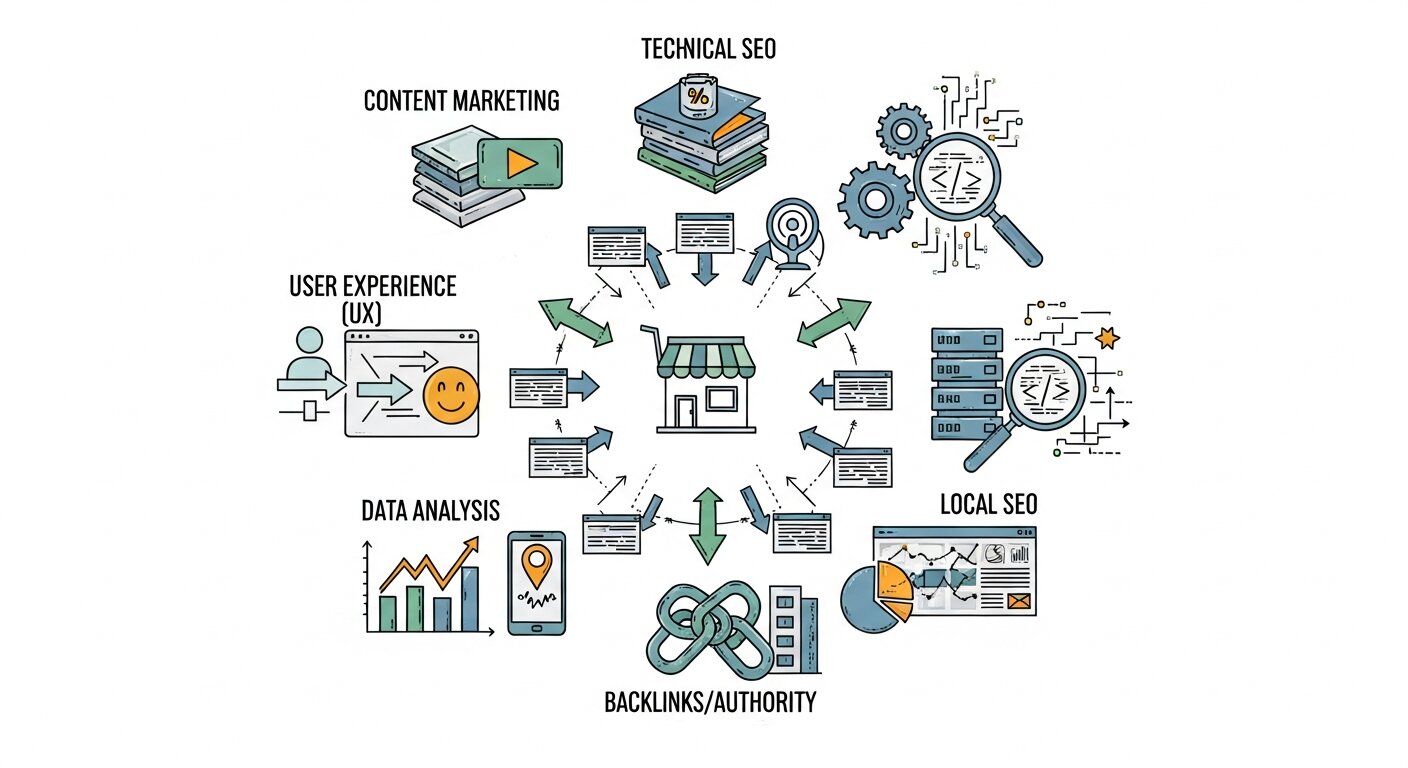 Many e-commerce sites concentrate almost entirely on product and category keywords. While these terms capture high-intent buyers, they overlook a massive share of top-of-funnel traffic—people who are researching, comparing, and problem-solving long before they’re ready to purchase.
To unlock sustainable growth, expand your keyword strategy beyond transactional phrases.
Consider incorporating:
- Problem-based keywords that address challenges your products solve, such as “how to reduce back pain while working from home” instead of just “ergonomic office chair.”
- Informational queries related to your product category, like guides, tutorials, and educational resources.
- Comparison keywords such as “Product A vs Product B” or “best option for small apartments.”
- Question-based keywords that reveal concerns and objections, including “Is this safe for kids?” or “How long does this last?”
By targeting these search types, you position your brand earlier in the buying journey. Instead of competing only when customers are ready to purchase, you become part of their research process. Over time, this builds authority, trust, and recurring organic traffic.
Email Marketing That Transcends Transactions
Too many e-commerce email strategies revolve around promotions, flash sales, and discount codes. While these tactics can drive short-term spikes, they rarely build long-term loyalty.
Inbound-focused email marketing delivers value beyond sales announcements. Learn more about how email marketing can fuel your overall inbound strategy.
A strong strategy may include:
- Welcome sequences that introduce new subscribers to your brand story, mission, and unique value proposition.
- Educational follow-ups that help customers maximize the value of products they’ve purchased.
- Behind-the-scenes stories that humanize your business and foster emotional connection.
- Usage tips and care instructions that reduce confusion, increase satisfaction, and minimize returns.
When your emails consistently educate and inspire, subscribers remain engaged—even when you’re not running a promotion. This shifts your brand perception from “discount-driven retailer” to a trusted expert.
Social Media as a Community Hub, Not a Sales Channel
Many brands treat social media as a digital billboard: post product, add price, repeat.
A more sustainable approach is to treat social platforms as community spaces built around shared interests and values. For examples of successful community-building on social media, see Sprout Social’s guide.
Rather than focusing only on product promotion, use social media to:
- Spark conversations about topics relevant to your audience’s lifestyle.
- Highlight customer stories and user-generated content.
- Share practical tips, quick tutorials, and micro-education.
- Respond thoughtfully to comments, questions, and concerns.
When customers feel heard and included, engagement deepens. This sense of belonging increases brand affinity and makes future purchases more natural.
Measuring Inbound Success for E-commerce
Revenue remains essential—but it’s a lagging indicator. To evaluate inbound performance accurately, track leading indicators that signal long-term growth.
Key metrics include:
- Growth in organic traffic and quality of visitors.
- Time on page and content engagement metrics that reveal interest.
- Email list growth and click-through rates.
- Social engagement levels and community expansion.
- Improvements in customer lifetime value.
- Gradual reductions in customer acquisition cost as organic channels strengthen.
These measurements provide a more holistic understanding of how your content ecosystem supports sustainable revenue.
Implementing Your E-commerce Inbound Strategy
Execution begins with clarity. Map your customer journey from awareness to repeat purchase. Identify what questions arise at each stage and create content specifically designed to answer them.
Start by:
- Defining 3–5 core content pillars aligned with your product categories.
- Prioritizing customer pain points before product features.
- Establishing a realistic, consistent publishing schedule.
- Integrating strong internal linking between blog posts, guides, and product pages.
- Creating lead capture opportunities within informational content.
Consistency compounds. Even one high-quality piece of content per week can build meaningful momentum over time.
The Future of E-commerce Inbound Marketing
As competition intensifies and advertising costs rise, brands that provide genuine value will outperform those relying solely on paid visibility.
The future belongs to e-commerce businesses that teach, inspire, and build relationships—not just sell products.
By expanding beyond product descriptions and reviews, you create multiple entry points for discovery. You meet customers at the research stage, guide them through evaluation, and continue supporting them after purchase.
This approach transforms transactional buyers into loyal advocates. When your content consistently solves problems, answers questions, and reflects customer aspirations, sales become a natural outcome of trust.
Every piece of content is an opportunity—to educate, to connect, to reduce friction, and to build authority. Brands that embrace this mindset will not only generate more traffic, but also cultivate deeper loyalty and long-term growth.
Frequently Asked Questions
What is E-commerce Inbound Marketing?
E-commerce inbound marketing is a strategy focused on attracting customers through valuable content, SEO, email nurturing, and personalized experiences rather than relying solely on paid advertising. It builds trust before asking for the sale.
How is inbound marketing different from traditional e-commerce marketing?
Traditional e-commerce marketing often relies on ads, discounts, and product promotions. Inbound marketing prioritizes education, storytelling, and relationship-building to guide customers through the buying journey naturally.
How long does it take to see results from E-commerce Inbound Marketing?
Inbound strategies typically take 3–6 months to gain momentum, especially with SEO and content marketing. However, once organic traffic builds, results compound and become more sustainable than paid-only strategies.
What type of content works best for e-commerce stores?
High-performing content includes buying guides, comparison articles, tutorials, how-to videos, lifestyle content, FAQs, and user-generated content. The key is addressing customer questions and pain points.
Is inbound marketing effective for small e-commerce businesses?
Yes. In fact, smaller stores often benefit the most because inbound marketing allows them to compete on expertise and authenticity rather than advertising budgets.
How important is SEO in E-commerce Inbound Marketing?
SEO is critical. Beyond product keywords, targeting informational, problem-based, and comparison keywords helps capture customers earlier in their research phase and drives consistent organic traffic.
Should e-commerce brands still use paid ads?
Yes—but strategically. Paid ads can amplify inbound content, retarget engaged visitors, and accelerate growth. However, ads should complement inbound marketing, not replace it.
How does personalization improve inbound results?
Personalization increases relevance. Product recommendations, tailored emails, and dynamic content improve engagement rates, conversion rates, and customer lifetime value. Additionally, understanding how email marketing can fuel your overall inbound strategy ensures your messages nurture relationships while driving conversions at multiple touchpoints.
What metrics should I track for inbound success?
Beyond revenue, track organic traffic growth, email engagement rates, time on page, customer lifetime value, repeat purchase rates, and customer acquisition cost.
How can I start implementing E-commerce Inbound Marketing?
Begin by mapping your customer journey, identifying common questions, creating content pillars, and publishing consistently. Focus on solving problems before promoting products.