
Inbound marketing metrics are the backbone of a data-driven strategy, revealing which campaigns, content, and channels drive real business growth. Prioritizing actionable metrics over vanity numbers ensures better resource allocation and stronger ROI. When leveraged correctly, these metrics guide sustainable growth and foster lasting customer relationships
Inbound marketing metrics are more than just numbers—they’re the compass that guides your marketing strategy toward measurable growth and revenue. With the overwhelming number of analytics available today, it’s easy for marketers to get lost in vanity metrics that don’t truly reflect performance. Understanding which Inbound Marketing Metrics matter helps businesses make informed decisions, optimize campaigns, and improve both customer acquisition and retention.
These frequently asked questions address common concerns and provide clarity on how to leverage data effectively to drive meaningful results. Whether you’re a seasoned marketer looking to refine your measurement framework or a business leader aiming to understand ROI, these insights will help you prioritize the metrics that truly matter.
Why Traditional Metrics Often Mislead
 Many marketers fall into the trap of vanity metrics—numbers that look impressive in reports but don’t translate into meaningful business outcomes. Page views, social media followers, and even raw traffic numbers can be misleading when viewed in isolation. Understanding the difference between vanity data and actionable marketing KPIs is critical for any data-driven marketing strategy. This is where Inbound Marketing Metrics become invaluable, helping teams focus on measures that truly impact customer acquisition, engagement, and revenue.
True data-driven marketing requires a more sophisticated approach. At InboundMarketo, we’ve discovered that successful growth strategies depend on connecting metrics directly to business outcomes rather than getting distracted by surface-level numbers. By leveraging Inbound Marketing Metrics effectively, businesses can prioritize initiatives that move prospects through the funnel and generate measurable ROI. For deeper insight, explore ROI measurement strategies in digital marketing
Customer Acquisition Metrics That Drive Growth
 The path from stranger to customer contains critical measurement points that indicate marketing effectiveness. These metrics reveal not just who’s visiting your site, but who is becoming a valuable, paying customer. Tracking the right Inbound Marketing Metrics ensures that marketing efforts are aligned with growth objectives and long-term profitability. You can strengthen this approach by reviewing customer acquisition strategy frameworks.
Conversion rate is a fundamental metric in this process. By tracking the percentage of visitors who take desired actions—like filling out a form, downloading a guide, or requesting a demo—you gain insight into how persuasive and relevant your content is. A rising conversion rate often signals improved market fit and stronger messaging effectiveness. For optimization techniques, consider linking to conversion rate optimization best practices . This metric, when paired with other Inbound Marketing Metrics, gives a comprehensive view of how well your campaigns are moving prospects toward purchase.
Customer acquisition cost (CAC) tells an equally important story. This figure represents your total marketing and sales spend divided by new customers gained. When tracked alongside customer lifetime value (CLV), it provides a clear picture of the sustainability and efficiency of your growth strategy. You may want to reference how to calculate customer acquisition cost or understanding customer lifetime value models. Using CAC and CLV together as part of your Inbound Marketing Metrics framework allows teams to make data-driven decisions about resource allocation and campaign prioritization.
Engagement Metrics Worth Your Attention
Not all engagement metrics deserve equal consideration. Instead of obsessing over likes, shares, or surface-level interactions, focus on metrics that indicate genuine interest and connection with your brand. Properly selected Inbound Marketing Metrics show how effectively your content engages and nurtures prospects over time. For further clarity, you could link to engagement metrics that matter in content marketing.
Time on page is one such metric that provides valuable context when analyzed alongside other behaviors. Visitors who spend several minutes consuming content demonstrate genuine engagement, which can be guided toward conversion through follow-up content or personalized nurturing. Tracking time on page as part of your Inbound Marketing Metrics enables marketers to identify which content resonates and where improvements are needed. Consider linking to content performance analytics guide.
Returning visitor rate is another crucial metric, offering insight into your content’s lasting value. Prospects who repeatedly return to your site or resources signal trust and interest—key indicators of relationship building and brand loyalty. Incorporating this into your set of Inbound Marketing Metrics helps you understand long-term engagement patterns and optimize content strategies for retention. A helpful external reference could be building brand loyalty through content marketing
Additionally, tracking interactions such as form submissions, webinar registrations, and resource downloads can reveal not only interest but readiness to move further down the funnel. These behaviors, when combined with other Inbound Marketing Metrics, create a comprehensive view of engagement quality, ensuring that marketing efforts are measured by meaningful actions rather than vanity numbers. You might naturally reference lead nurturing best practices to support this section.
Revenue-Focused Analytics
The ultimate test of marketing effectiveness lies in revenue generation. Metrics that connect marketing activities directly to business growth are no longer optional—they are essential for any data-driven marketing strategy. By focusing on meaningful Inbound Marketing Metrics, marketers can move beyond surface-level reporting and measure true impact on the bottom line. These metrics allow teams to understand which campaigns, channels, and content are actually contributing to customer acquisition and revenue growth.
Attribution modeling has evolved significantly beyond simplistic first-touch or last-touch frameworks. Multi-touch attribution provides a more nuanced view of how different marketing touchpoints collectively drive conversions. By integrating multi-touch analysis into your Inbound Marketing Metrics, you can identify which sequences, channels, or campaigns deliver the highest return on investment and optimize your spend accordingly. This approach ensures that each marketing effort is measured not just for engagement, but for its real contribution to revenue.
Marketing qualified leads (MQLs) that convert to sales qualified leads (SQLs) represent the critical handoff between marketing and sales teams. Tracking this conversion rate highlights the quality of leads generated by your inbound efforts. Incorporating MQL-to-SQL conversion into your core Inbound Marketing Metrics allows teams to detect inefficiencies in lead nurturing and ensure that marketing resources are focused on prospects most likely to convert. Over time, this leads to stronger alignment between marketing and sales, better lead quality, and more predictable revenue outcomes.
Implementing a Data-Driven Approach
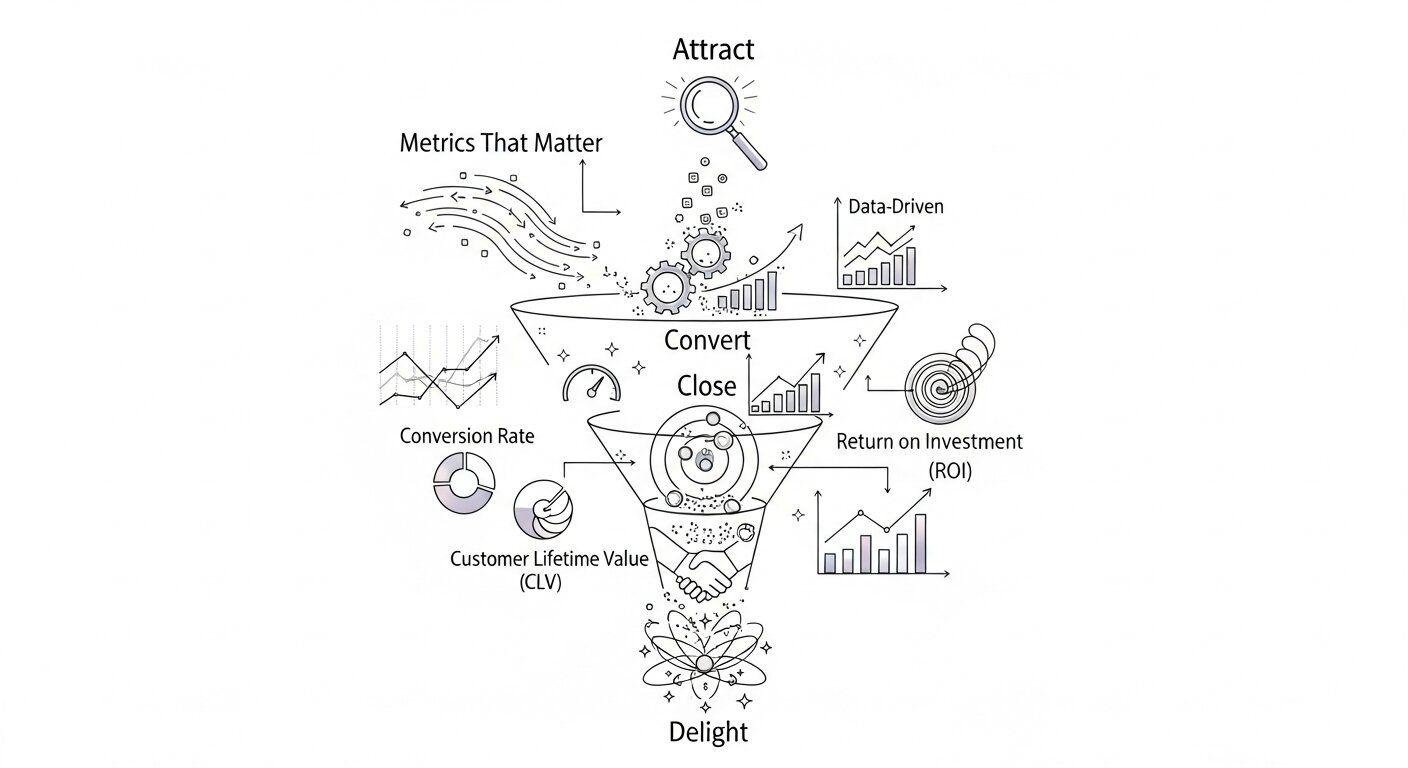 Creating a truly data-driven marketing strategy requires more than passive metric tracking. It demands an active approach to measurement, analysis, and optimization. Inbound Marketing Metrics should form the foundation of every decision, guiding strategy adjustments and prioritization. To strengthen your framework, consider referencing data-driven marketing strategy frameworks that outline structured approaches to performance measurement.
Start by establishing clear baselines for your key performance indicators. Without understanding your starting point, improvement becomes impossible to measure accurately. Documenting historical trends and performance benchmarks as part of your Inbound Marketing Metrics ensures that future optimizations are grounded in context, rather than assumptions. You may want to link to how to set marketing KPIs effectively for additional guidance.
Next, implement regular review cycles where marketing decisions directly respond to data insights. When metrics shift—whether indicating stronger engagement, declining conversions, or new audience behavior—your strategy should adapt accordingly. Continuous monitoring of Inbound Marketing Metrics allows for rapid adjustments, helping your team respond proactively to changes in prospect behavior, industry trends, or campaign performance. A helpful supporting resource could be marketing performance analytics best practices.
Finally, ensure cross-departmental alignment on which metrics matter most. When marketing, sales, and executive teams focus on the same growth indicators, organizational momentum builds naturally. Using shared Inbound Marketing Metrics to drive discussions ensures that all stakeholders are working toward the same objectives and that marketing efforts are measurable, accountable, and actionable. Consider referencing sales and marketing alignment strategies to reinforce this concept.
Beyond the Numbers: The Human Element
Data-driven marketing doesn’t mean ignoring the human aspect of customer relationships. Instead, it means using metrics to better understand and serve your audience’s needs. Integrating customer-centric Inbound Marketing Metrics like satisfaction scores and net promoter ratings provides insight into the quality of relationships your marketing is building. You might naturally link to how to measure customer satisfaction (CSAT) or net promoter score (NPS) methodology explained for deeper context.
By combining revenue-focused Inbound Marketing Metrics with human-centered measurements, organizations can create a balanced strategy. This approach ensures campaigns are both effective in driving conversions and meaningful in fostering trust and loyalty. Supporting this section with customer retention strategies in digital marketing would strengthen authority.
Tracking the right Inbound Marketing Metrics consistently allows marketers to understand which initiatives truly resonate with prospects, which campaigns need refinement, and which strategies deliver sustainable growth. Over time, a focus on actionable metrics ensures that every marketing decision contributes to measurable business outcomes while maintaining the human touch that keeps prospects engaged and loyal.
Moving Forward With Intention
As marketing technology continues evolving, the temptation to track every click, impression, or interaction grows stronger. While access to abundant data can feel empowering, it also risks overwhelming teams with noise. The key is to resist this urge and maintain focus on metrics that meaningfully connect to revenue, customer acquisition, and overall business growth. Prioritizing the right Inbound Marketing Metrics ensures that your efforts are aligned with strategic goals rather than chasing vanity numbers. For additional perspective, consider linking to avoiding vanity metrics in digital marketing.
The most successful inbound marketers do more than simply collect data—they translate Inbound Marketing Metrics into actionable insights that guide decision-making across campaigns, channels, and content strategies. By analyzing these metrics in context, marketers can identify which initiatives truly drive engagement, conversion, and long-term value, rather than relying on surface-level measures like page views or social media likes.
Focusing on meaningful Inbound Marketing Metrics also allows teams to allocate resources more effectively. When you know which campaigns generate high-quality leads, which content nurtures prospects toward purchase, and which channels deliver the highest ROI, your marketing strategy becomes more precise and efficient. This strategic focus reduces wasted spend and maximizes the impact of every marketing dollar.
Additionally, tracking key Inbound Marketing Metrics helps organizations uncover growth opportunities that might otherwise remain hidden. For example, understanding how specific content performs at different stages of the buyer’s journey can inform both creative and tactical decisions, ensuring that marketing efforts are tailored to real audience needs. Over time, these insights compound, creating a continuous cycle of optimization and improvement.
When measuring performance, it’s important to maintain balance. Too much focus on raw numbers can obscure meaningful trends, while ignoring metrics entirely risks leaving critical opportunities untapped. By consistently monitoring the most relevant Inbound Marketing Metrics, marketing teams gain a clear view of campaign effectiveness, lead quality, and revenue impact, all while keeping strategic objectives front and center.
Finally, remember that measurement is only the starting point. The true value of Inbound Marketing Metrics emerges when insights are acted upon. Teams that respond proactively—adjusting messaging, content distribution, targeting, or workflow strategies based on data—turn numbers into growth, rather than letting metrics sit idle. By embedding a culture of responsiveness into your marketing operations, Inbound Marketing Metrics become a powerful driver of sustainable business growth, competitive advantage, and stronger customer relationships.
When you are ready to transform raw data into meaningful outcomes, let Inbound Marketing Metrics guide your decision-making, inform your strategy, and ultimately position your organization for long-term success in a rapidly evolving marketing landscape.
Frequently Asked Questions
What are inbound marketing metrics?
Inbound marketing metrics are measurable indicators that show how effectively your inbound campaigns are attracting, engaging, and converting prospects. They help marketers understand which actions lead to business growth.
Why are some metrics considered “vanity metrics”?
Vanity metrics, such as social media likes or page views, may look impressive but often don’t correlate with meaningful business outcomes like lead quality, conversion rate, or revenue. Focusing on actionable Inbound Marketing Metrics is more effective.
Which inbound marketing metrics should I prioritize first?
Key metrics include conversion rate, customer acquisition cost (CAC), customer lifetime value (CLV), MQL-to-SQL conversion, time on page, returning visitor rate, and engagement with content. Prioritizing these ensures measurement of real business impact.
How do inbound marketing metrics help with lead nurturing?
By tracking behaviors such as downloads, webinar attendance, or repeat visits, marketers can tailor nurturing workflows to move prospects efficiently through the sales funnel while minimizing irrelevant communication.
Can inbound marketing metrics measure long-term success?
Yes. Metrics like customer retention rate, brand loyalty indicators, and net promoter scores (NPS) help assess long-term engagement and the lasting impact of your campaigns.
How often should I review inbound marketing metrics?
Regular reviews are essential. Weekly or monthly monitoring of key metrics allows for timely adjustments, while quarterly reviews provide strategic insights for long-term planning.
What role does attribution modeling play in inbound marketing metrics?
Attribution modeling, especially multi-touch attribution, identifies which marketing touchpoints contribute most to conversions. This ensures that your resources are focused on high-impact channels and campaigns.
How do I align inbound marketing metrics across teams?
Ensure marketing, sales, and executive teams agree on core metrics, such as MQL-to-SQL conversion or revenue impact. Shared goals and reporting frameworks create organizational alignment and transparency.
Should I track all available data points?
No. Over-tracking can cause distraction and decision paralysis. Focus on metrics that directly influence revenue, lead quality, engagement, and retention to avoid getting lost in data noise.
How do inbound marketing metrics impact business strategy?
These metrics provide insights into which campaigns, content, and channels drive results, guiding resource allocation, campaign optimization, and long-term strategic planning. Properly analyzed metrics turn data into actionable business decisions.