
This comprehensive guide explores essential strategies for modern digital success. You will discover actionable insights on audience research, semantic SEO optimization, effective distribution, and performance tracking to elevate your brand authority and maximize your return on investment. By embracing Content Marketing Best Practices at every stage, you ensure your message reaches and resonates with your target audience again and again.
Looking to dominate search results and engage your audience? Mastering Content Marketing Best Practices is your proven pathway to lasting digital growth and higher conversion rates.
Establish a Solid Strategy and Planning Framework
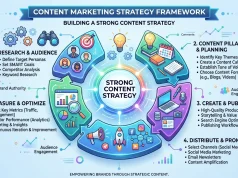
Creating a strategy gives your marketing efforts a clear direction. Without a well-defined roadmap, teams often waste resources on disconnected tasks. You must build a foundation that aligns with your overarching business goals and uses Content Marketing Best Practices for ongoing, sustainable success.
Begin by setting specific, measurable objectives. Decide whether your main goal is lead generation, brand awareness, or customer retention. Align every piece you publish with these core objectives to maintain a cohesive brand message. Document your goals and measurement criteria, refining as your scope evolves.
Next, develop a detailed editorial calendar. A calendar keeps your publishing schedule consistent and helps you plan around industry events. Consistency builds trust with your audience and signals to search engines that your website is active and relevant. Make sure to integrate SEO content strategy principles into your calendar planning so you never miss the chance to rank for new trends or address customer questions.
Understand Your Target Audience Deeply

Your audience is the cornerstone of your digital success. If you do not understand their needs, your messaging will fail to resonate. Content Marketing Best Practices demand you research your audience to uncover their specific pain points, motivations, and search behaviors.
Create detailed buyer personas that outline demographics, job roles, and challenges. Use surveys, interviews, and social media listening to gather real data. When you know exactly who you are writing for, you can tailor your tone and format to match their preferences, delivering value directly to the people who need it most.
Map out the buyer’s journey for each persona. Identify what information they need at the awareness, consideration, and decision stages. Providing the right information at the right time significantly improves your landing page conversion rates and moves prospects further down your funnel.
Conduct Regular Content Audits
A regular audit is a cornerstone of Content Marketing Best Practices. Audits evaluate the performance of your existing library and help you identify which pieces drive traffic and which ones need improvement. By keeping your content fresh and relevant, you demonstrate expertise both to your audience and to search engines.
Start by cataloging all your published pieces. Review metrics like organic traffic, bounce rate, and time on page. Identify high-performing posts that you can update with new data to maintain their rankings and maximize their lifetime value.
Find underperforming pages and decide whether to improve, consolidate, or delete them. Removing thin or irrelevant pages can boost your site’s overall quality score. Consolidating similar articles helps you avoid keyword cannibalization and strengthens your topical authority. Through these consistent audits—one of the core Content Marketing Best Practices—you future-proof your content’s effectiveness and SEO value.
Create Compelling and Unique Content
Quality is the most critical factor in your success and a pillar of Content Marketing Best Practices. Search engines and readers alike prioritize originality, depth, and clarity. To stand out, you must provide unique insights that competitors lack.
Focus on demonstrating your expertise and experience. Share original research, case studies, and unique data points related to your industry. When you offer fresh perspectives, other websites are more likely to link to your site as an authoritative source, boosting your rankings and reach.
Format your writing for readability. Break up large blocks of text with descriptive headings, bullet points, and numbered lists. Short paragraphs keep readers engaged and improve comprehension. A seamless user experience keeps visitors on your page longer, which sends positive signals to search engines and is an essential component of Content Marketing Best Practices.
Optimize for Semantic SEO and User Intent

Content Marketing Best Practices have evolved with search algorithms. Search engines now understand context and semantic relationships, demanding you optimize for the actual intent behind a search query, rather than just matching exact phrases.
Identify the primary search intent for your target topics. Determine if the user wants to learn something, buy a product, solve a problem, or navigate to a specific website. Align your format and angle to perfectly satisfy this intent. If users want a tutorial, provide a clear, step-by-step guide. If they’re seeking inspiration, create examples and templates.
Incorporate related entities and natural variations of your primary terms. Use tools to find semantic keywords that provide deeper context to your main topic. This comprehensive approach builds topical authority and helps you rank for a wider variety of long-tail queries. Read more about understanding intent through the Google Search Quality Evaluator Guidelines. Applying semantic SEO is non-negotiable in today’s Content Marketing Best Practices landscape.
Diversify Your Content Formats
People consume information in different ways. Relying solely on written articles limits your reach. Diversifying your formats allows you to engage a broader audience across multiple platforms.
Consider adding video marketing to your strategy, which is one of the fastest-rising Content Marketing Best Practices this year. Videos are highly engaging and can help explain complex topics simply. You can embed videos within your articles to increase dwell time and provide a richer user experience.
Podcasts, infographics, and interactive tools are also highly effective. Infographics condense data into visual, shareable formats that attract backlinks and social shares. Interactive calculators or quizzes provide immediate, personalized value. Mixing formats keeps your strategy fresh and appealing, helping meet every audience segment where they are—which is a key best practice.
Repurpose and Update Existing Assets
Creating new material from scratch requires significant time and effort. Repurposing allows you to maximize the value of your best-performing assets with minimal extra work. Repurposing content is an efficiency play in the world of Content Marketing Best Practices.
Turn a successful blog post into a series of social media updates. Extract key statistics and quotes to create engaging graphics or infographics. You can also combine several related posts into a comprehensive downloadable eBook to generate leads, extending the life and reach of your content.
Regularly update your most important evergreen posts. Refresh outdated statistics, add new insights, and optimize for emerging search trends. A simple update can significantly boost an older post’s search engine rankings and drive a new wave of traffic. The goal is to ensure every piece of content remains valuable, which is at the heart of Content Marketing Best Practices.
Maximize Content Distribution and Promotion
Publishing is only half the battle; promotion is equally important. If you do not actively distribute your work, your target audience may never see it. A guiding principle among all Content Marketing Best Practices is: your job doesn’t end at “publish.”
Leverage your email list to promote new articles. Email provides a direct line of communication to an engaged audience. Write compelling subject lines and provide summaries that encourage readers to click through to your website. If you want to expand your reach, learning how to increase organic leads through email integration is essential for a high-performing content strategy.
Share your articles across relevant social media platforms and syndicate your content on high-authority sites. Tailor your message for each network, using appropriate hashtags and formatting. Participate in industry communities, answer questions, and offer value in forums and on platforms like Reddit and Quora. Providing helpful answers alongside a link to your comprehensive guide drives highly targeted traffic. Make sure to track which channels yield the best results for your efforts—another best practice for content marketers.
Build Authoritative Backlinks

Backlinks remain a crucial ranking factor for search engines. They act as votes of confidence from other websites, signaling that your material is valuable and trustworthy—making them a core element of Content Marketing Best Practices.
To attract quality backlinks, create link-worthy assets like original research, comprehensive guides, and data-driven infographics. When you publish highly valuable resources, other creators naturally link to them to support their own writing.
Engage in targeted outreach to build relationships with industry publishers and peers. Offer to write guest posts for authoritative websites in your niche. Guest posting introduces your brand to a new audience and provides a natural, contextual link back to your site. You can explore outreach strategies via HubSpot’s Marketing Blog.
Consider leveraging internal linking by connecting your new and existing articles through relevant anchor text, such as integrating topic clusters or linking to your posts on how to optimize content for conversions, which strengthens site structure and boosts SEO authority.
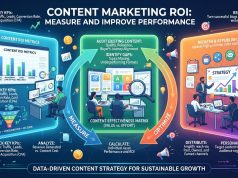
Track Analytics and Key Performance Indicators
You cannot improve what you do not measure. Tracking performance data helps you understand which strategies work and where you need to adjust your approach. That’s why every list of Content Marketing Best Practices features analytics as a pillar.
Set up tracking for key performance indicators like organic traffic, conversion rates, time on page, scroll depth, social shares, and bounce rates. Track your content’s ROI using tools like Google Analytics, HubSpot, or SEMrush. Monitor how users interact with your pages to identify areas for improvement. If an article has high traffic but low conversions, you may need to optimize your call-to-action.
Use these insights to refine your ongoing strategy. Double down on the formats and topics that resonate most with your audience. Continuous testing and optimization ensure your marketing efforts remain effective and yield a high return on investment—not just in one-offs, but over time.
Evergreen Content vs. Topical Content
Balancing your strategy requires a mix of evergreen and topical pieces. Here is a quick comparison of how they function within your broader strategy:
|
Feature |
Evergreen Content |
Topical Content |
|---|---|---|
|
Lifespan |
Long-term relevance |
Short-term impact |
|
Traffic Value |
Consistent, compounding traffic |
Immediate, temporary spikes |
|
Update Needs |
Occasional minor refreshes |
Quickly becomes outdated |
|
Best Formats |
How-to guides, FAQs, tutorials |
News updates, trend reports |
|
Core Benefit |
Builds lasting domain authority |
Shows industry relevance |
Evergreen content supports your brand’s long-term growth, while topical content shows you’re up to date. Always track how both support your business goals, which is key among Content Marketing Best Practices.
Common Mistakes to Avoid
Even experienced marketers occasionally stumble. Recognizing these common pitfalls helps you streamline your workflow and maintain high quality. Avoiding traps is crucial in upholding Content Marketing Best Practices.
- Writing for Search Engines Instead of Humans: Keyword stuffing ruins readability and actively harms your rankings. Write naturally and prioritize user experience above all else.
- Neglecting Search Intent: If you target a transactional keyword with an informational post, you will not rank. Always match your angle to what the user actually wants.
- Failing to Include Clear CTAs: Do not leave your readers wondering what to do next. Guide them to subscribe, read another post, or try your product.
- Ignoring Mobile Users: The majority of web traffic comes from mobile devices. If your site is not mobile-friendly, users will bounce immediately.
- Not Refreshing Outdated Content: Stale pages hurt your relevance. Regularly review and update your material to remain an authority.
- Ineffective Internal Linking: Missing or poor internal links can mean users and search engines never discover your deepest resources.
- Not Measuring Results: If you fail to monitor outcomes, you cannot optimize them. Always track and act on your KPIs.
Pro Tips and Expert Insights
To elevate your digital marketing efforts, keep these expert-level insights in mind—born from proven Content Marketing Best Practices:
- Invest in Original Data: Conducting your own surveys and publishing original data makes your site a primary source, leading to massive passive link building.
- Implement Topic Clusters: Group related articles together and link them to a central pillar page. This structure helps search engines understand your site’s hierarchy and topical depth.
- Prioritize Page Speed: Fast-loading pages are essential for user retention. Compress images, minimize scripts, and leverage browser caching.
- Listen to Sales and Support: Your customer-facing teams know exactly what questions buyers ask. Use these questions to generate highly relevant, bottom-of-funnel topics.
- Leverage User-Generated Content: Collect testimonials, case studies, or review snippets to incorporate authentic voices and social proof.
- Automate Routine Promotion: Schedule regular social shares and email reminders for your evergreen content to extend its reach effortlessly.
- Cross-Reference with Industry Leaders: Examine how leading brands are using Content Marketing Best Practices to adapt your approach to shifting industry standards.
- Stay Educated: Marketing trends change rapidly. Regularly read authoritative sources like Content Marketing Institute and Search Engine Journal to keep your strategy sharp.
Understanding the Core of Content Marketing Best Practices

When you implement Content Marketing Best Practices successfully, you transform your website into a valuable resource center. You must consistently deliver solutions that matter to your target demographic. This requires dedication to quality, continuous audience research, and agile adaptation to search engine updates.
A strong strategy requires patience. Organic growth compounds over time, meaning the work you put in today will yield results for years. Maintain your focus on creating comprehensive, user-centric resources that outperform the competition while rigorously applying Content Marketing Best Practices at every stage.
For additional insights on improving user experience, reviewing the Nielsen Norman Group’s UX Research provides excellent foundational knowledge on digital readability. Learning from leaders and adopting recognized Content Marketing Best Practices will keep your brand top-of-mind and top-of-search.
Conclusion
Implementing Content Marketing Best Practices is not a one-time effort but an ongoing, evolving process. Understanding your audience, crafting valuable and unique content, optimizing for both search engines and readers, and consistently measuring performance are all necessary steps for digital marketing success.
As you integrate Content Marketing Best Practices, you’ll build authority, drive organic traffic, and grow your business with confidence. Whether you are optimizing evergreen assets or jumping on the latest trends, remember: consistent quality and strategic promotion set you apart. Start applying these best practices today and join the brands thriving at the top of their industries.
Ready to take your results to the next level? Subscribe for more insights and make Content Marketing Best Practices your personal blueprint for lasting growth.
FAQs
What is the most important element of a digital content strategy?
The most important element is deeply understanding your target audience. If you know their pain points, search habits, and goals, you can create highly relevant material that directly answers their questions and builds brand trust using robust Content Marketing Best Practices.
How often should I publish new articles?
Consistency matters more than high frequency. It is better to publish one highly researched, comprehensive article per week than several low-quality posts. Establish a realistic schedule that your team can maintain without sacrificing quality—keep Content Marketing Best Practices as your north star.
How long does it take to see SEO results?
Organic search growth is a long-term investment. Most websites take three to six months to start seeing significant movement in search rankings, depending on domain authority, competition, and the quality of the published work. Following Content Marketing Best Practices can shorten this path to sustained results.
Why is semantic SEO important?
Semantic SEO helps search engines understand the context and relationships between words on your page. By using natural variations and related entities, you satisfy user intent more effectively and rank for a wider variety of queries, which is a crucial aspect of Content Marketing Best Practices.
Should I prioritize evergreen or topical articles?
A balanced strategy requires both. Evergreen articles provide steady, compounding traffic over time. Topical pieces help you capitalize on current trends and demonstrate that your brand is active and engaged in the industry. This mix is recommended by all recognized Content Marketing Best Practices.
How can I improve my page readability?
Use short paragraphs, descriptive subheadings, bulleted lists, and clear fonts. Avoid complex jargon and write in an active voice. Breaking text into scannable chunks helps users find information quickly and reduces bounce rates. Enhanced readability is a core tenant of Content Marketing Best Practices.
What is the best way to repurpose my old posts?
Identify posts with high traffic and extract key points to create social media graphics, short videos, or podcast episodes. You can also combine several related posts into a comprehensive eBook to use as a lead magnet—this practice is at the core of efficient Content Marketing Best Practices.
How do topic clusters help my website?
Topic clusters organize your site architecture by linking related subtopics to a broad pillar page. This structure makes it easier for search engines to crawl your site and establishes your brand as an authority on specific subjects, supporting your Content Marketing Best Practices.
Why do I need to update old articles?
Information becomes outdated, and competitors may publish better resources over time. Updating old articles with fresh data, new insights, and better formatting helps you reclaim lost rankings and drive new traffic, keeping you in line with Content Marketing Best Practices.
What metrics should I track to measure success?
Focus on metrics that align with your business goals. Track organic traffic, time on page, bounce rate, and conversion rates. Analyzing these indicators helps you understand what resonates with your audience and how to optimize future campaigns—a critical step in all Content Marketing Best Practices pipelines.