
B2B buyers rarely convert after a single impression. They compare options, read reviews, ask peers, and look for proof before they ever speak with sales. That is why B2B Brands Use Inbound Marketing as a long-term growth system rather than a quick promotion tactic. It helps companies attract the right audience, answer real questions, and guide prospects through a buying journey that feels helpful instead of pushy. B2B Brands Use Inbound Marketing because trust matters more than interruption. B2B Brands Use Inbound Marketing because modern buyers want education before commitment. B2B Brands Use Inbound Marketing because conversion quality improves when people already understand the value. B2B Brands Use Inbound Marketing because every useful piece of content can reduce friction later in the funnel.
For that reason, B2B Brands Use Inbound Marketing keeps working long after the first visit.
A strong inbound approach does more than bring traffic. It builds familiarity, authority, and confidence. When a company teaches before it sells, the audience starts to see it as a reliable guide. That is one reason this approach helps create stronger relationships across longer sales cycles. It turns attention into interest, interest into engagement, and engagement into qualified opportunities.
Why Trust Matters in B2B Buying
B2B purchases are often expensive, collaborative, and risky. More people are involved in the decision, which means more objections, more comparisons, and more chances for hesitation. B2B Brands Use Inbound Marketing to reduce that uncertainty by showing expertise early and consistently. When prospects can find clear answers, useful frameworks, and relevant proof, they are less likely to feel exposed to risk.
Trust is not built through one article or one webinar. It grows through repeated helpful interactions. B2B Brands Use Inbound Marketing to create those interactions in a way that matches how buyers research today. Instead of forcing a sale too early, the brand earns attention by solving smaller problems first. That helps the audience feel understood. It also makes the final buying decision easier because the brand has already demonstrated competence.
How Inbound Marketing Builds Trust is simple: it gives buyers value before asking for commitment. Educational content, case studies, comparison guides, and customer stories all lower skepticism. These assets help make the buying process feel informed, transparent, and safer. B2B Brands Use Inbound Marketing to make the buying process feel informed, transparent, and safer.
Core Principles Behind an Effective Strategy
A successful program starts with audience clarity. B2B Brands Use Inbound Marketing best when the company knows who it serves, what pain points matter, and which questions appear at each stage of the journey. Without that clarity, content becomes generic and loses impact. With it, every message feels timely and specific.
A second principle is consistency. One piece of content can attract attention, but repeated value creates momentum. B2B Brands Use Inbound Marketing through blog posts, lead magnets, emails, webinars, and optimized landing pages that all support the same promise. The goal is not to publish more for the sake of volume. The goal is to publish with purpose so each asset supports the next step.
A third principle is usefulness over self-promotion. Buyers do not usually want a sales pitch first. They want context, education, and evidence. B2B Brands Use Inbound Marketing to provide that evidence in formats that are easy to consume and easy to trust.
Inbound Marketing for B2B Companies
Inbound Marketing for B2B Companies works because it respects buyer intent. Instead of interrupting people who are not ready, it attracts those already looking for answers. That means the company can align content with search intent, pain points, and commercial curiosity. B2B Brands Use Inbound Marketing to create an ecosystem where educational content and conversion paths work together.
For example, a software company may publish articles that explain workflow problems, offer templates, and compare approaches. A consulting firm may share insights, frameworks, and diagnostic tools. In both cases, B2B Brands Use Inbound Marketing by meeting the buyer where they are. The right content builds awareness, while the right next step turns that awareness into a measurable pipeline.
Building a B2B Inbound Marketing Strategy

A solid B2B Inbound Marketing Strategy begins with the customer journey. Awareness content should help prospects understand their problem. Consideration content should help them compare solutions. Decision content should help them choose with confidence. B2B Brands Use Inbound Marketing more effectively when each stage has a clear job.
The strategy should also define the lead capture path. A useful article can attract traffic, but conversion depends on what happens next. B2B Brands Use Inbound Marketing by offering landing pages, gated resources, demos, and email sequences that continue the conversation. This is where the funnel becomes practical. The visitor is not just reading; they are progressing.
Another important element is sales alignment. Marketing should know which leads are likely to convert, and sales should know which content supports each conversation. B2B Brands Use Inbound Marketing better when both teams share a common definition of quality and use the same language around pain points and outcomes.
B2B Content Marketing Strategy That Supports Buyers
A strong B2B Content Marketing Strategy is built around buyer needs, not internal assumptions. It uses articles, guides, videos, podcasts, and downloadable resources to educate and qualify prospects. B2B Brands Use Inbound Marketing most effectively when content answers the exact questions people search for during research.
This includes educational explainers, industry comparisons, and problem-solving posts. It also includes assets that show how to choose, how to implement, and how to measure results. B2B Brands Use Inbound Marketing through content that builds confidence step by step. Over time, the audience learns that the brand is not merely selling a service. It is offering a perspective that helps them make better decisions.
Inbound Marketing for Lead Generation
Inbound Marketing for Lead Generation works best when every asset has a purpose. Some content should bring in traffic. Some should capture emails. Some should qualify interest. B2B Brands Use Inbound Marketing to turn broad visibility into predictable lead flow by combining helpful content with clear conversion opportunities.
Lead generation improves when the offer matches the intent. A top-of-funnel guide may work well for early-stage readers, while a template, checklist, or case study may be better for more serious prospects. B2B Brands Use Inbound Marketing by matching the offer to the moment. That match makes the next action feel natural.
Inbound Marketing Conversion Strategies
Inbound Marketing Conversion Strategies focus on removing hesitation. Landing pages should be clear. Calls to action should be direct. Forms should ask only for what is needed. B2B Brands Use Inbound Marketing to make conversion feel like progress, not pressure. That is especially important in complex B2B buying environments.
Conversion also improves when the message stays consistent from content to offer. If an article promises insight, the next page should continue that promise. B2B Brands Use Inbound Marketing by creating a logical path from first click to final action. The smoother that path feels, the more likely prospects are to take the next step.
Trust Signals That Turn Interest Into Confidence
Prospects often decide whether to continue based on subtle proof. Clear author bios, client logos, measurable case studies, transparent pricing ranges, and detailed process pages all help reduce doubt. Those signals do not need to be flashy. They need to be believable. When buyers see evidence that a business understands their world, the brand becomes easier to trust and easier to remember.
Another powerful signal is consistency between promise and experience. If the content is practical, the sales conversation should be practical. If the brand sounds precise in its articles, the website and follow-up emails should sound equally precise. Small mismatches create hesitation. Small consistencies create comfort. That comfort matters because many B2B decisions are delayed not by lack of interest, but by lack of certainty.
Metrics That Matter for Growth
Measuring the right metrics keeps the strategy honest. Traffic alone does not prove value. Email signups, conversion rate, demo requests, marketing-qualified leads, sales-qualified leads, and pipeline contribution all tell a fuller story. A useful content program should improve both volume and quality. It should bring more relevant visitors and help them move forward.
Tracking behavior by page type is especially helpful. Educational posts may drive first-touch visits, while comparison pages may influence later-stage decisions. Email engagement can reveal which topics build momentum. Form completion can show where friction exists. B2B Brands Use Inbound Marketing best when performance data shapes the next round of content and the next round of offers.
B2B Lead Nurturing Techniques
B2B Lead Nurturing Techniques keep interest alive after the first conversion. Email sequences, remarketing, personalized content recommendations, and sales follow-up all play a role. B2B Brands Use Inbound Marketing to nurture leads with education instead of constant selling, which helps maintain trust over longer cycles.
Nurturing should answer new questions as they appear. Early emails can explain common challenges. Later emails can share comparisons, proof, and implementation advice. B2B Brands Use Inbound Marketing to guide prospects through uncertainty until they are ready to talk seriously about a solution.
How B2B Brands Use Inbound Marketing Across the Funnel

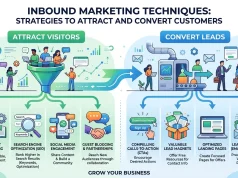
At the top of the funnel, B2B Brands Use Inbound Marketing to attract attention through search, social channels, and helpful content. At the middle of the funnel, B2B Brands Use Inbound Marketing to educate and qualify with more detailed resources. At the bottom of the funnel, B2B Brands Use Inbound Marketing to reassure buyers with proof, clarity, and next-step offers.
This funnel approach matters because different buyers need different levels of detail. Some want a broad understanding. Others need implementation guidance. Some are still defining the problem. Others are already comparing vendors. B2B Brands Use Inbound Marketing by speaking to each level with content that matches intent.
Common Mistakes to Avoid
One common mistake is producing content without strategy. Another is focusing only on traffic while ignoring conversion. A third is creating assets that sound polished but say very little. B2B Brands Use Inbound Marketing fails when the content is too generic, too promotional, or disconnected from buyer questions.
Another mistake is treating inbound as a one-channel tactic. True inbound works across content, email, SEO, and sales enablement. B2B Brands Use Inbound Marketing more successfully when these pieces support each other rather than operate in isolation.
Conclusion
Buyers trust brands that educate them before they sell to them. That is the real advantage of inbound in B2B. In practice, B2B Brands Use Inbound Marketing supports buying decisions without creating pressure. B2B Brands Use Inbound Marketing to reduce uncertainty, answer questions early, and move prospects forward with confidence. When the message is useful, the timing is right, and the conversion path is simple, trust grows naturally. Over time, that trust becomes one of the most valuable assets in the entire pipeline. B2B Brands Use Inbound Marketing because it aligns with how modern buyers want to learn, compare, and decide. B2B Brands Use Inbound Marketing because helpful experiences create stronger relationships. B2B Brands Use Inbound Marketing because those relationships drive better conversions.
FAQ
What makes inbound marketing effective for B2B?
B2B Brands Use Inbound Marketing effectively when it answers buyer questions, builds authority, and creates a smooth path from awareness to action.
How does inbound support lead quality?
B2B Brands Use Inbound Marketing improves lead quality by attracting people who already have intent and by nurturing them with content that matches their stage.
Why is trust so important in B2B?
It works because trust lowers friction, reduces perceived risk, and makes it easier for teams to choose a solution confidently.