Inbound methodology helps businesses attract the right audience, engage prospects with valuable content, and delight customers through exceptional experiences—building trust, loyalty, and sustainable long-term growth.
Whether you’re growing a startup or managing a well-established company, the inbound methodology offers an effective, people-centered approach to building meaningful connections with your audience. The days of intrusive ads and pushy sales tactics are long gone. Modern consumers seek value, trust, and personalized experiences from the brands they engage with, making inbound marketing an essential framework for success.
What sets the inbound methodology apart is its focus on attracting, engaging, and delighting customers throughout their entire buyer’s journey. By adopting this methodology, businesses can transform strangers into loyal promoters of their products or services.
What Is the Inbound Methodology?
Inbound methodology is a strategic approach designed to create lasting relationships with your customers by addressing their needs, preferences, and challenges. Rather than interrupting potential customers with ads or cold calls, inbound draws them in by offering valuable, tailored content that aligns with their interests.
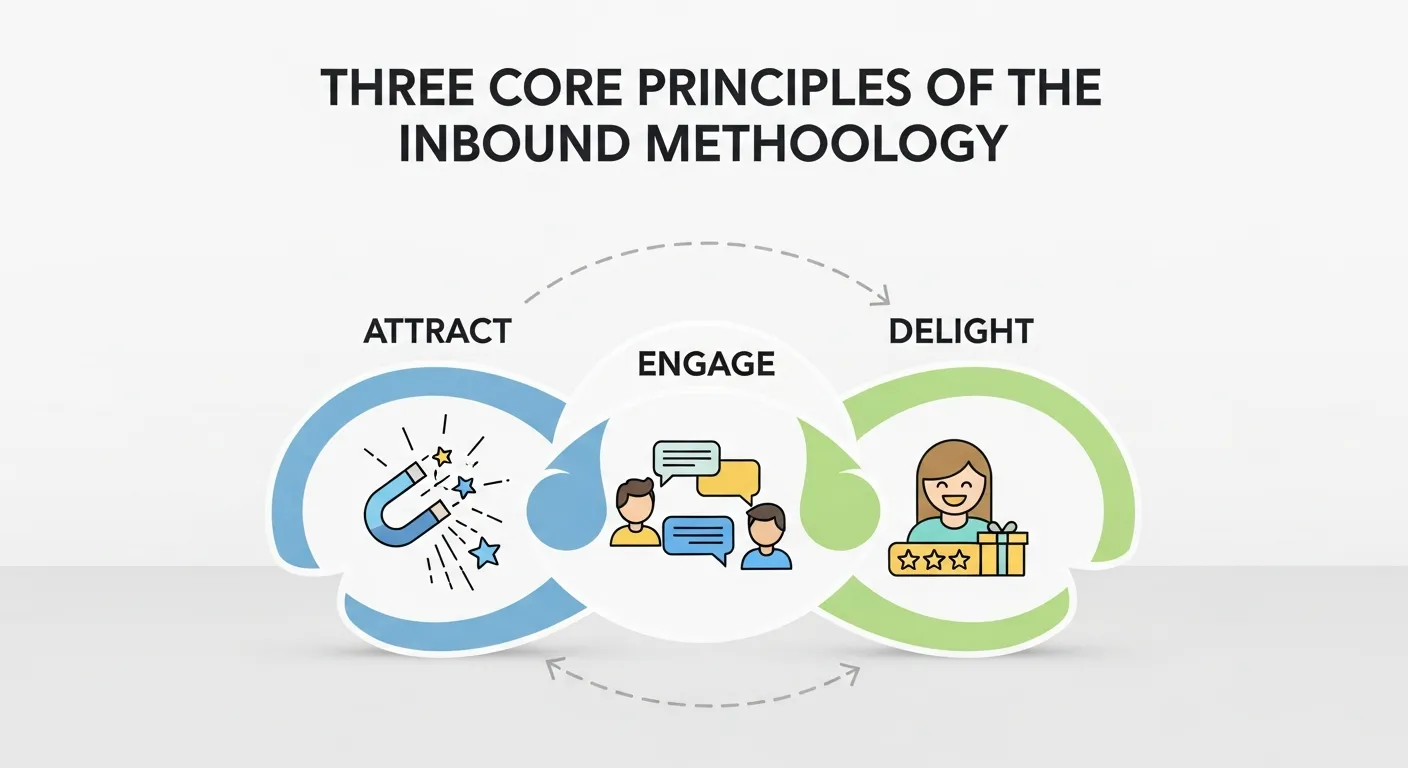
The methodology revolves around three key principles that serve as its foundation:
- Attract the attention of the right audience.
- Engage with that audience in a meaningful and personalized way.
- Delight your customers by ensuring they have an exceptional experience with your brand.
By aligning these principles with your business goals, you can build trust and foster sustainable growth.
Why Is the Inbound Methodology Important for Modern Marketing?
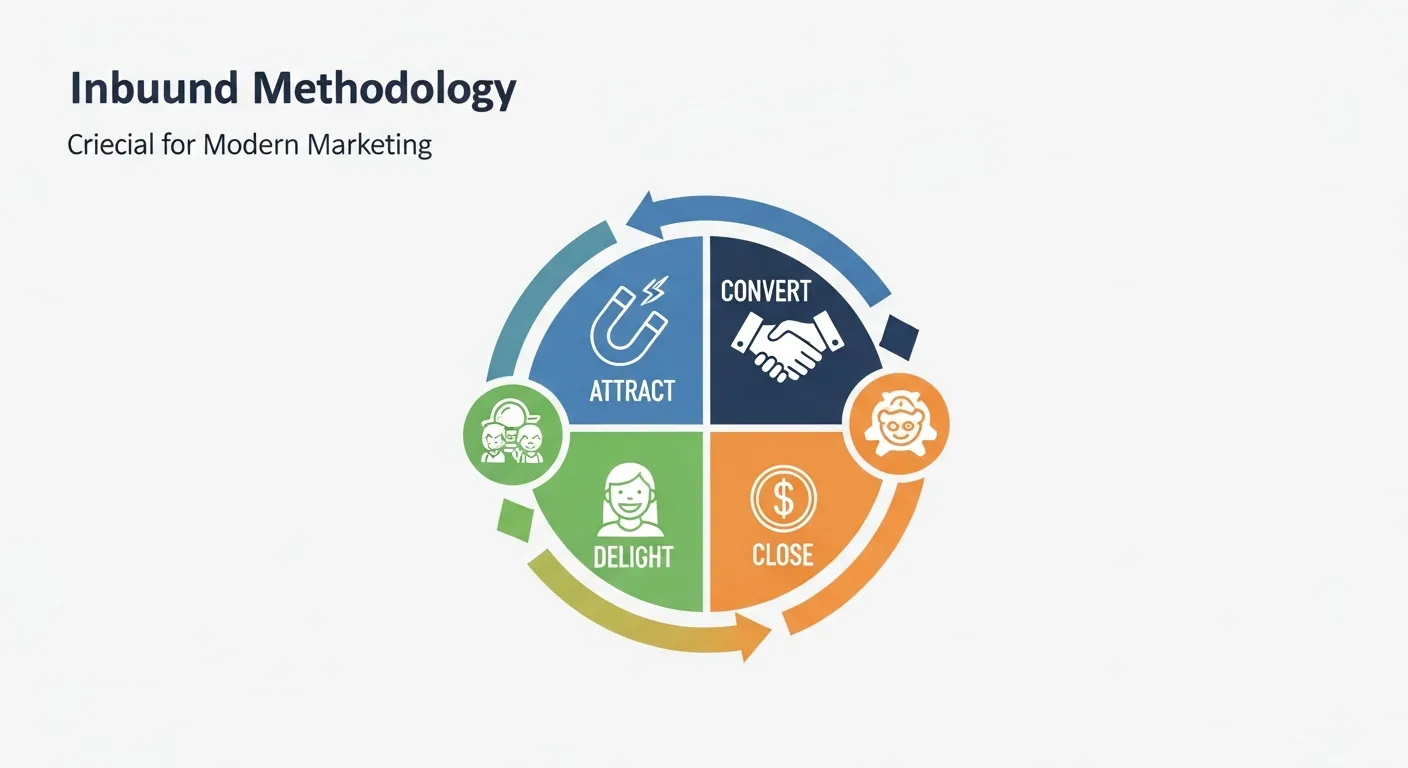 Modern consumers are empowered. With the wealth of information at their fingertips, they no longer rely solely on businesses to make purchasing decisions. Instead, they research, read reviews, and compare options independently. The inbound methodology acknowledges this shift in consumer behavior and provides a roadmap for businesses to engage with customers in a way that feels natural and valuable.
Now, let’s take a closer look at each of the three principles.
Principle 1: Attract
The first step in the inbound methodology is to attract the right audience to your brand. But attracting doesn’t mean casting a wide net and hoping for the best. Instead, it’s about drawing in individuals who are most likely to benefit from your product or service.
How to Attract the Right Audience
To attract your ideal customers, you need to create high-quality content that resonates with their interests and addresses their pain points. Here are some key strategies:
- Content Marketing: Publish blogs, ebooks, videos, or infographics that solve problems your target audience frequently encounters. For example, if you offer fitness coaching, publish a blog titled “10 Tips for Staying Fit with a Busy Schedule.”
- Search Engine Optimization (SEO): Optimize your website and content for relevant keywords. This helps your audience find your business easily when they search for solutions.
- Social Media: Share valuable insights on the platforms where your audience spends time. Respond to comments and questions to encourage engagement.
Real-Life Example
Consider the skincare brand Glossier, which focuses heavily on creating educational content and leveraging Instagram. By sharing beauty tips and encouraging user-generated content, they successfully attract a dedicated audience of skincare enthusiasts.
Metrics to Track
- Website traffic (organic and paid)
- Social media engagement
- Search engine rankings
- Conversion rates for blog CTAs (calls to action)
Principle 2: Engage
Once you’ve attracted the right audience, the next step is to engage with them meaningfully. This principle is all about forming relationships and building trust throughout the customer’s buying process. Engaging your prospects ensures they see your brand not just as a business, but as a helpful solution to their challenges.
How to Engage With Your Audience
 Engaging your audience involves not just talking at them, but opening channels of meaningful dialogue. Here’s how to do it:
- Personalized Email Campaigns: Use CRM tools to create targeted email campaigns based on where your prospects are in the sales funnel.
- Conversational Marketing: Leverage chatbots or direct messaging to provide real-time answers.
- Educational Webinars or Events: Host live or recorded sessions that share actionable advice and position your business as an industry leader.
- Lead Nurturing: Use automated workflows to provide constant value over time, easing prospects down the funnel with helpful insights.
Real-Life Example
HubSpot excels in engagement by creating personalized experiences for their prospects. Through CRM data, their email campaigns deliver tailored content based on a prospect’s industry, challenges, or previously downloaded resources.
Metrics to Track
- Email open and click-through rates
- Sales-qualified leads
- Lead response time
- Webinar or event attendance
Principle 3: Delight
The final principle revolves around turning customers into promoters by exceeding their expectations and providing exceptional experiences every step of the way.
How to Delight Your Customers
Continued engagement and support after the sale are crucial in fostering loyalty. Here’s how you can delight your customers:
- Customer Support: Offer responsive and helpful support channels, from chatbots to live agents.
- Feedback Loops: Actively seek customer feedback and continuously improve based on their suggestions.
- Exclusive Perks: Provide rewards or offers exclusive to your loyal customers, such as discounts, VIP events, or personalized recommendations.
- Social Proof: Highlight glowing reviews and testimonials to show that you value customer opinions.
Real-Life Example
Zappos, an online shoe retailer, is the gold standard for delighting customers. They offer free returns, 24/7 customer support, and personalized service that has earned them lifetime customers who willingly promote their brand.
Metrics to Track
- Customer satisfaction scores (CSAT)
- Net Promoter Scores (NPS)
- Customer retention rates
- Positive customer reviews and testimonials
Bringing It All Together
By focusing on attract, engage, and delight, the inbound methodology positions your business to create long-lasting relationships, not just transactions. This people-centered approach not only ensures customer satisfaction but also elevates your business’s reputation as a trusted and valuable resource.
Importance of Trust and Transparency
Trust is the backbone of inbound marketing. Transparent messaging, clear pricing, and honest communication build credibility with modern consumers. Overpromising may attract short-term attention but damages long-term relationships. Brands that prioritize authenticity earn customer confidence, loyalty, and advocacy. Trust-driven marketing leads to stronger emotional connections and higher lifetime value.
Customer Education After Purchase
Inbound methodology extends beyond the sale. Onboarding resources, tutorials, FAQs, and support content empower customers to succeed with your product or service. Educated customers experience better outcomes, require less support, and are more likely to remain loyal. Post-purchase education turns customers into confident users and long-term brand advocates.
Analytics and Continuous Improvement
Inbound marketing is data-driven by nature. Metrics such as traffic sources, engagement rates, conversion rates, and customer retention reveal what is working and what needs improvement. Regular analysis allows businesses to optimize content, campaigns, and workflows. Continuous improvement ensures your inbound strategy evolves alongside customer expectations and market changes.
Aligning Sales and Marketing Teams
Inbound success depends on strong sales and marketing alignment. Shared goals, unified messaging, and a common CRM system create a seamless customer experience. When both teams collaborate, lead handoffs improve, follow-ups are timely, and conversions increase. Alignment eliminates friction and accelerates revenue growth.
Your Next Steps to Succeed in Inbound Marketing
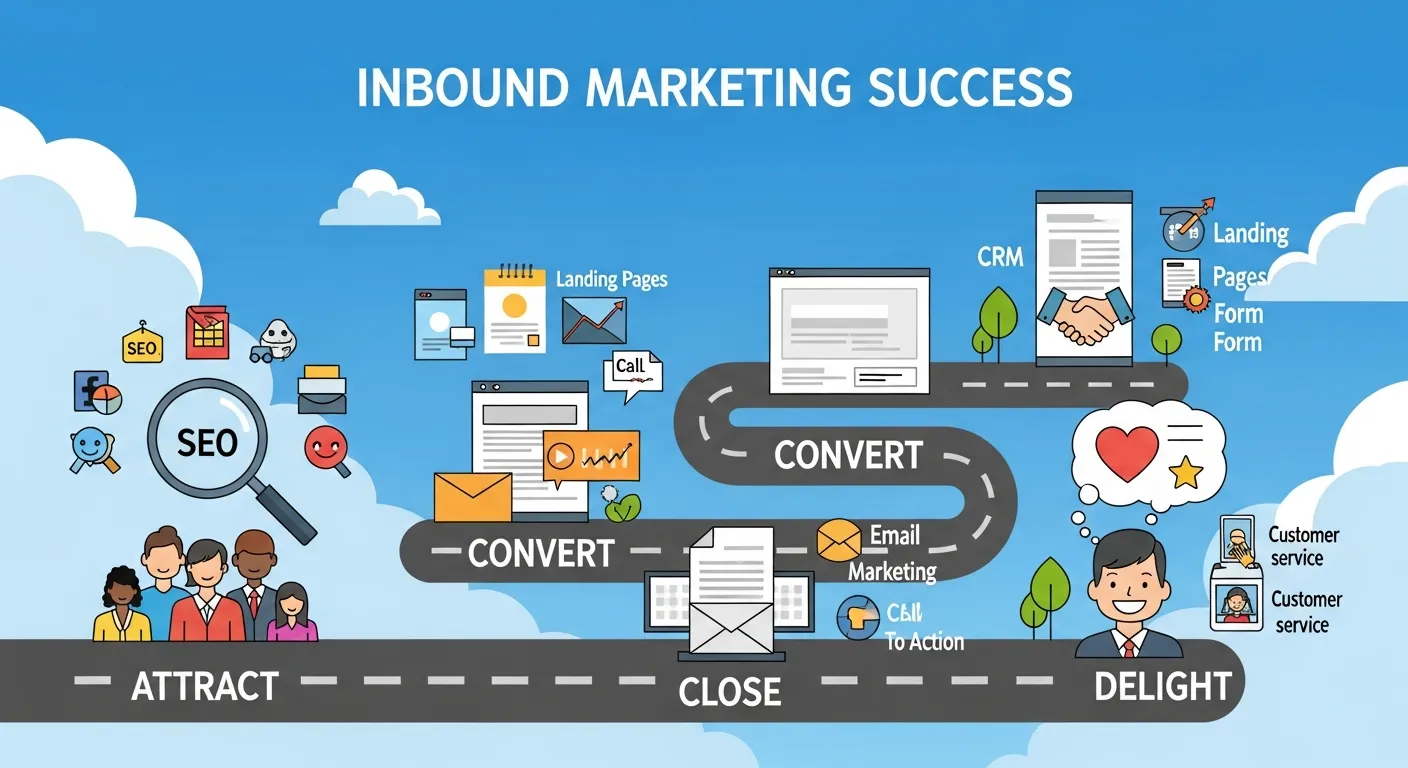 Implementing inbound may seem overwhelming at first, but you don’t have to do it alone! Take the first step by analyzing your current strategies to see where improvements can be made.
Looking for tools to help execute an inbound marketing strategy? Platforms like HubSpot provide all-in-one solutions for CRM, content marketing, lead nurturing, and analytics.
Remember, building trust isn’t an overnight task. Investing in inbound marketing today is an investment in the sustained growth and future of your business.
Conclusion
The inbound methodology offers a sustainable, customer-centric approach to modern marketing. By focusing on attracting the right audience, engaging them with value-driven content, and delighting customers through exceptional experiences, businesses can build trust, loyalty, and long-term growth. Inbound marketing transforms transactions into relationships and customers into brand advocates.
Frequently Asked Questions (FAQs)
1. What is the inbound methodology?
The inbound methodology is a customer-centric marketing framework focused on attracting, engaging, and delighting people throughout their buying journey. Instead of interrupting audiences with ads or cold outreach, inbound marketing draws potential customers in through valuable content, personalized experiences, and meaningful interactions. The goal is to build trust, solve real problems, and create long-term relationships rather than short-term sales. By aligning content and communication with customer needs, businesses can turn strangers into loyal advocates.
2. Is inbound marketing suitable for small businesses?
Yes, inbound marketing is highly suitable for small businesses. Unlike traditional advertising, inbound does not require a large budget to be effective. Small businesses can start with blogs, social media, SEO, and email marketing to attract targeted audiences organically. Because inbound focuses on quality leads rather than volume, it allows smaller teams to compete with larger brands by building credibility, trust, and authority within a niche market.
3. How long does inbound marketing take to show results?
Inbound marketing is a long-term strategy, and results typically begin to appear within three to six months. Early gains often include increased website traffic and engagement, while leads and conversions take more time to build. Because inbound focuses on sustainable growth rather than quick wins, the results tend to compound over time. Businesses that remain consistent often see stronger ROI after six to twelve months.
4. Can inbound and outbound marketing work together?
Yes, inbound and outbound marketing can complement each other effectively. While inbound focuses on attracting and nurturing leads organically, outbound tactics such as paid ads or promotions can increase reach and speed up awareness. When combined strategically, outbound can amplify inbound content, while inbound nurtures and converts the traffic generated by outbound campaigns. The key is to ensure both approaches align around customer value.
5. What tools are commonly used in inbound marketing?
Inbound marketing relies on tools that support content creation, automation, analytics, and customer relationship management. Popular tools include CRM platforms like HubSpot, marketing automation software, email marketing tools, SEO platforms, social media management tools, and analytics dashboards. These tools help businesses track user behavior, personalize communication, and measure campaign performance efficiently.
6. Is content essential for inbound success?
Yes, content is the foundation of inbound marketing. Blogs, videos, guides, emails, and social posts provide the value that attracts and engages audiences. Without high-quality content, inbound strategies cannot effectively educate, build trust, or guide prospects through the buyer’s journey. Consistent, relevant content helps position a brand as a trusted authority and drives organic traffic and conversions.
7. How important is SEO in inbound marketing?
SEO is extremely important in inbound marketing because it helps your content get discovered by the right audience. Optimizing content for search engines ensures visibility when potential customers actively search for solutions. Strong SEO practices drive organic traffic, improve credibility, and attract high-intent leads. Without SEO, inbound content may fail to reach its full potential.
8. Does inbound marketing work for B2B companies?
Inbound marketing is highly effective for B2B companies. B2B buyers often conduct extensive research before making purchasing decisions, and inbound content supports this process. Educational blogs, whitepapers, webinars, and case studies help build authority and trust. Inbound also supports longer sales cycles by nurturing leads with relevant information at every stage.
9. What is lead nurturing in inbound marketing?
Lead nurturing is the process of building relationships with prospects over time by delivering relevant and personalized content. Not all leads are ready to buy immediately, so nurturing helps guide them through the buyer’s journey. Automated email campaigns, targeted resources, and personalized follow-ups ensure leads stay engaged until they are sales-ready, increasing conversion rates.
10. Is inbound marketing cost-effective?
Inbound marketing is one of the most cost-effective marketing strategies available. While it requires time and effort, it typically costs less than traditional advertising in the long run. Organic traffic, reusable content, and automation reduce ongoing expenses. Additionally, inbound generates higher-quality leads, resulting in better conversion rates and long-term ROI.
11. How does social media support inbound strategies?
Social media supports inbound marketing by distributing content, increasing visibility, and encouraging engagement. Platforms like LinkedIn, Instagram, Facebook, and X allow brands to share educational content, interact with audiences, and build relationships. Social media also provides insights into audience preferences, helping refine inbound messaging and content strategies.
12. How does inbound marketing improve customer retention?
Inbound marketing improves customer retention by continuing to provide value after the sale. Through onboarding content, educational resources, personalized communication, and proactive support, customers feel supported and understood. This ongoing engagement builds loyalty, increases satisfaction, and encourages repeat purchases and referrals, turning customers into long-term brand advocates.