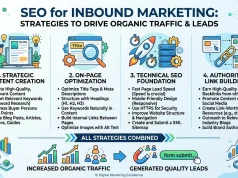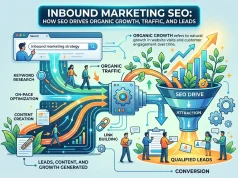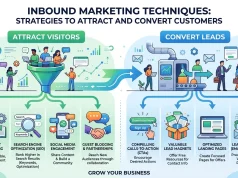

An effective inbound approach does more than attract clicks. It guides the right people from awareness to action by aligning content, trust, timing, and user experience. When every stage of the journey removes friction and strengthens confidence, leads convert more smoothly and sustainable business growth becomes easier to repeat.
Inbound Marketing Conversion Strategy is not just about getting more traffic. It is about turning attention into action with a clear system that helps visitors trust your brand, engage with your content, and move toward a buying decision. Businesses that treat conversion as a journey rather than a single event usually see stronger results because the message, offer, and experience all work together. In a crowded market, clarity wins. People rarely convert because of pressure; they convert because the next step feels useful, safe, and simple. Inbound Marketing Conversion Strategy gives that effort a clear direction.
A smart plan starts with understanding why people arrive, what they hope to solve, and what doubts stop them from moving forward. Once you understand those signals, you can build content, landing pages, follow-up emails, and calls to action that feel natural instead of forced. That is the heart of Inbound Marketing Conversion Strategy: making the buying process feel like a helpful conversation.
The good news is that you do not need complicated tactics to improve results. You need a structured approach, consistent testing, and a deep respect for the customer journey. When each touchpoint answers a real question, reduces uncertainty, or offers a useful next step, conversion rates begin to rise in a more stable way.
What Conversion Means in Inbound Marketing

In inbound marketing, conversion means a visitor takes the next meaningful step. That step may be subscribing to a newsletter, downloading a guide, requesting a demo, booking a call, or making a purchase. A conversion is not always a sale. It is any action that moves the relationship forward.
This is why Inbound Marketing Conversion Strategy should be built around micro-conversions and macro-conversions. Micro-conversions include actions like reading a case study, watching a product video, or joining a webinar. Macro-conversions are the outcomes that directly support revenue. When you track both, you can see where people lose interest and where they become ready to buy.
Why Psychology Drives Better Conversions
People buy when they feel understood. They also buy when they believe the risk is low and the value is high. This is where trust signals matter. Testimonials, results, transparent pricing, strong design, and clear promises all reduce hesitation. A visitor does not need a perfect page. A visitor needs confidence.
An effective Inbound Marketing Conversion Strategy uses psychology without manipulation. It respects attention, avoids confusion, and gives the user enough proof to move forward. If your content speaks to the pain point, shows the outcome, and explains the path, you make the decision easier. That simplicity creates momentum.
The Role of Attention and Relevance
Attention is limited. If your message is too broad, people leave. If it is too vague, they ignore it. Relevance is what keeps them reading. The strongest inbound pages do one thing very well: they match the intent behind the search or click.
That is why Inbound Marketing Conversion Strategy works best when each page serves one purpose. A blog post should educate. A landing page should persuade. An email should continue the conversation. When every asset plays a clear role, the journey becomes easier to follow and easier to trust.
How to Build the Foundation
A good roadmap for how to build an inbound marketing conversion strategy starts with audience insight. You need to know the customer’s goals, objections, buying triggers, and preferred content formats. Without that foundation, every tactic becomes guesswork.
Start with three questions. What problem is the buyer trying to solve? What outcome do they want? What is preventing them from acting now? Once you answer those questions, your content strategy becomes more focused. Your offers become more relevant. Your landing pages become more persuasive. This is the practical core of Inbound Marketing Conversion Strategy.
Map the Journey Before You Write
A customer journey map helps you understand each stage from awareness to consideration to decision. At the awareness stage, people want education. At the consideration stage, they want comparison and proof. At the decision stage, they want reassurance and easy action.
When you map the journey first, your content stops being random. It becomes directional. Every article, CTA, and form can be placed with intention. That is the difference between publishing content and building a conversion system.
Create Content That Supports Action
Content should do more than attract traffic. It should guide the reader toward a next step that makes sense. Educational content works best when it solves a problem and then points to a deeper resource. Comparison content works best when it helps the buyer evaluate options. Decision content works best when it lowers fear and shows value clearly.
A balanced Inbound Marketing Conversion Strategy uses blogs, guides, videos, case studies, emails, and landing pages together. Each piece answers a different layer of intent. The more your content aligns with real questions, the less resistance you will face during conversion. It should always connect education with the next action. This principle keeps the journey moving naturally.
One practical method is to create a topic cluster around a core pain point. The main article attracts search interest, while supporting pages address subtopics, objections, and use cases. This structure strengthens internal linking and helps visitors move naturally from awareness content to conversion content.
Use the Right Offer at the Right Time
Not every visitor is ready to buy. Some need a checklist. Some need a demo. Some need social proof. The offer should match the level of intent. A mismatched offer can cause friction, while a relevant offer can move a reader forward quickly.
That is why Inbound Marketing Conversion Strategy depends on timing as much as messaging. A low-friction offer often performs better at the top of the funnel, while a high-intent offer works best when trust is already established. When the offer fits the stage, the path feels easier.
Optimize Landing Pages for Clarity
A landing page should not try to do everything. It should do one job: move the visitor toward a specific action. The headline should communicate value. The subheadline should clarify the benefit. The body should remove doubt. The call to action should be visible and direct.
One of the best practices for inbound marketing conversion optimization is to remove every unnecessary distraction. Too many links, too much text, or too many choices can weaken performance. Simplicity helps users decide. A focused page supports Inbound Marketing Conversion Strategy by making action feel obvious.
Reduce Friction Everywhere
Friction can appear in many forms. Slow loading speed, long forms, unclear offers, weak mobile design, and confusing navigation can all hurt conversion. Every extra step increases the chance that a visitor will leave.
Reducing friction does not mean removing detail. It means placing detail where it helps and removing it where it distracts. When the next step is easy to understand and easy to complete, conversion improves naturally.
Nurture Leads Until They Are Ready
Not every lead will convert immediately. Many need follow-up. Nurturing builds familiarity over time, and familiarity increases trust. Email sequences, retargeting, educational downloads, and personalized content help keep the conversation alive.
This is where ways to convert inbound leads into paying customers become practical. You can segment by behavior, send relevant messages, and present the next offer based on interest. The more personalized the follow-up, the more likely the lead will move from curiosity to commitment.
Lead Scoring and Segmentation
Lead scoring helps you identify which contacts are most likely to buy. Segmentation helps you tailor the message. Together, they make your outreach smarter. Instead of sending the same message to everyone, you deliver a message based on readiness and need.
Inbound Marketing Conversion Strategy becomes far stronger when the sales team and marketing team agree on what qualified interest looks like. That alignment prevents wasted effort and helps teams respond at the right moment.
Measure What Actually Matters
Metrics should reflect business goals. Traffic is useful, but traffic alone does not pay the bills. You need to track conversion rate, lead quality, cost per acquisition, click-through rate, form completion, and revenue influenced by content.
A strong Inbound Marketing Conversion Strategy is one that improves both quantity and quality. More leads are not always better if they never buy. Better leads create stronger long-term results. That is why measurement matters. It shows what is working and where the path is breaking down.
Test One Variable at a Time
Testing helps you improve with confidence. Change one headline, one CTA, one form length, or one piece of social proof at a time. If you change too many elements, you will not know what caused the improvement.
Small improvements can create large gains over time. A better headline may lift engagement. A simpler form may lift submissions. A stronger proof point may lift trust. In conversion work, consistency and discipline often outperform dramatic redesigns.
Align Marketing and Sales
Inbound marketing does not end when a lead fills out a form. The handoff to sales is critical. If marketing attracts the right people but sales follow up slowly or inconsistently, conversions suffer. Shared definitions, shared data, and shared goals improve results.
This alignment is a major reason it helps sustainable business growth. It creates a repeatable system that keeps working over time instead of depending on one-off campaigns. When marketing and sales work together, the customer experience feels smoother and more reliable.
Build Trust Through Proof
Proof reduces fear. Case studies, reviews, before-and-after examples, industry credentials, and transparent results all make your offer more believable. People want to know that others have trusted you and benefited from the experience.
The strongest Inbound Marketing Conversion Strategy uses proof at every stage, not just near the final CTA. Proof can appear in headlines, content blocks, emails, and thank-you pages. When visitors see evidence repeatedly, confidence grows.
Make the Next Step Feel Safe
Safety in marketing means emotional comfort, not only technical security. Clear guarantees, honest messaging, and easy cancellation policies can all lower resistance. Even simple language can make a brand feel more trustworthy.
When people feel safe, they act faster. They do not need to overthink the decision. They can move forward with less hesitation and greater confidence.
Build for Long-Term Value
A short-term campaign can create spikes. A long-term inbound system creates momentum. That is why content, SEO, lead nurturing, and optimization should work together. The goal is not only to generate leads. The goal is to generate a dependable path from interest to revenue.
This is how inbound marketing helps sustainable business growth. The answer is simple. It compounds. Useful content continues to attract attention. Optimized pages continue to convert. Strong nurture flows continue to educate. Over time, the system becomes more efficient and more predictable.
A Simple Conversion Framework
A step-by-step inbound marketing conversion plan keeps the work organized.
First, attract the right audience with relevant content. Second, match each page to a clear intent. Third, offer one valuable next step. Fourth, nurture the lead with helpful follow-up. Fifth, measure results and improve the weakest stage. This framework keeps the process manageable and focused.
The best results usually come from making several modest improvements across the funnel rather than relying on one dramatic tactic. That is the reason Inbound Marketing Conversion Strategy remains so effective when it is maintained over time.
Common Mistakes to Avoid
Many teams create content without a conversion purpose. Others chase volume and forget relevance. Some overcomplicate forms, use generic calls to action, or hide proof until the end of the page. These choices make it harder for visitors to move forward.
Another mistake is ignoring the customer’s emotional state. People want help, but they also want reassurance. If your funnel feels pushy, it will lose trust. If it feels helpful, it will win attention. A good conversion strategy always respects the buyer.
Practical Improvements You Can Make Today

Start by reviewing your most visited pages. Check whether the headline matches the search intent. Look at the CTA and decide whether it is clear. Review the form and remove unnecessary fields. Add proof where hesitation is likely. Improve internal links so readers can continue the journey.
These small adjustments often create noticeable gains. They also make the overall experience more coherent, which supports Inbound Marketing Conversion Strategy at every level. In many cases, Inbound Marketing Conversion Strategy improves fastest when teams focus on one bottleneck at a time.
Final Perspective on Conversion Growth
The most successful brands treat conversion as a service to the customer. They answer questions before asking for a commitment. They reduce uncertainty before requesting action. They earn trust before expecting loyalty.
That mindset is what makes the Inbound Marketing Conversion Strategy sustainable. It does not force decisions. It guides them. It respects the buyer’s pace while still moving them forward. Over time, that balance builds stronger relationships and better business results.
Conclusion
A strong conversion system is built on relevance, clarity, trust, and timing. Inbound Marketing Conversion Strategy works best when the message, offer, and follow-up all support the same goal. When you reduce friction, answer objections early, and show proof at the right moment, visitors feel more confident taking the next step. That confidence turns casual readers into leads and leads into customers. Over time, a thoughtful system creates consistency, stronger revenue quality, and brand loyalty. Sustainable growth comes from improving the journey, not forcing the decision, so keep testing, refining, and serving the buyer with precision every single day consistently.
FAQ
1. What is the main goal of Inbound Marketing Conversion Strategy?
The main goal is to turn interested visitors into leads and customers by guiding them through a helpful and low-friction journey.
2. How often should I review my conversion pages?
Review them regularly, especially after traffic spikes, campaign launches, or any major drop in performance.
3. What content converts best in inbound marketing?
Content that matches intent and reduces doubt, such as case studies, comparison guides, checklists, and demo pages, often converts well.
4. Do long pages always convert better?
Not always. Pages should be as long as needed to answer questions and build confidence, but not longer than necessary.
5. Why is trust important in conversion?
Trust reduces fear. When visitors believe your offer is credible and safe, they are more likely to act.
6. How can I improve lead quality?
Use better targeting, clearer offers, stronger segmentation, and forms that attract the right audience.
7. What is the role of email in conversion?
Email helps nurture leads, maintain interest, and move prospects toward a buying decision over time.
8. Can inbound marketing work for small businesses?
Yes. Small businesses often benefit because inbound strategies can build visibility and trust without relying only on ads.
9. How do I know if my strategy is working?
Track conversion rate, lead quality, sales impact, and engagement across the funnel.
10. What should I improve first?
Start with your highest-traffic page, then fix clarity, proof, CTA strength, and form friction before testing bigger changes.