
Neuromarketing Inbound Content uses brain-based insights to create engaging, persuasive, and memorable marketing. By combining storytelling, visuals, cognitive ease, and social proof, it connects with both conscious and subconscious decision-making. Applied ethically, it drives engagement, trust, and long-term conversions.
Neuromarketing Inbound Content combines insights from neuroscience with inbound marketing strategies to craft messages that resonate deeply with audiences. By understanding how the brain processes information, responds to emotions, and reacts to rewards, marketers can create content that is not only engaging but also persuasive and memorable. From storytelling and visual design to cognitive ease and social proof, neuromarketing principles guide marketers in designing experiences that capture attention, foster trust, and drive conversions. These FAQs address common questions about applying neuromarketing strategies to inbound marketing, helping both beginners and experienced professionals implement science-backed approaches effectively.
The Brain Behind the Buy
Every purchasing decision involves complex neural processes that occur largely beneath conscious awareness. In fact, neuroscientists estimate that up to 95% of purchasing decisions happen in the subconscious mind. This insight highlights why traditional marketing approaches, which focus mostly on logical benefits and product features, often fall short. To truly influence behavior, modern marketers must understand how to craft Neuromarketing Inbound Content that appeals to both the conscious and subconscious mind. The most effective inbound content not only addresses rational needs but also triggers deep emotional responses that drive action.
The Triune Brain and Content Creation
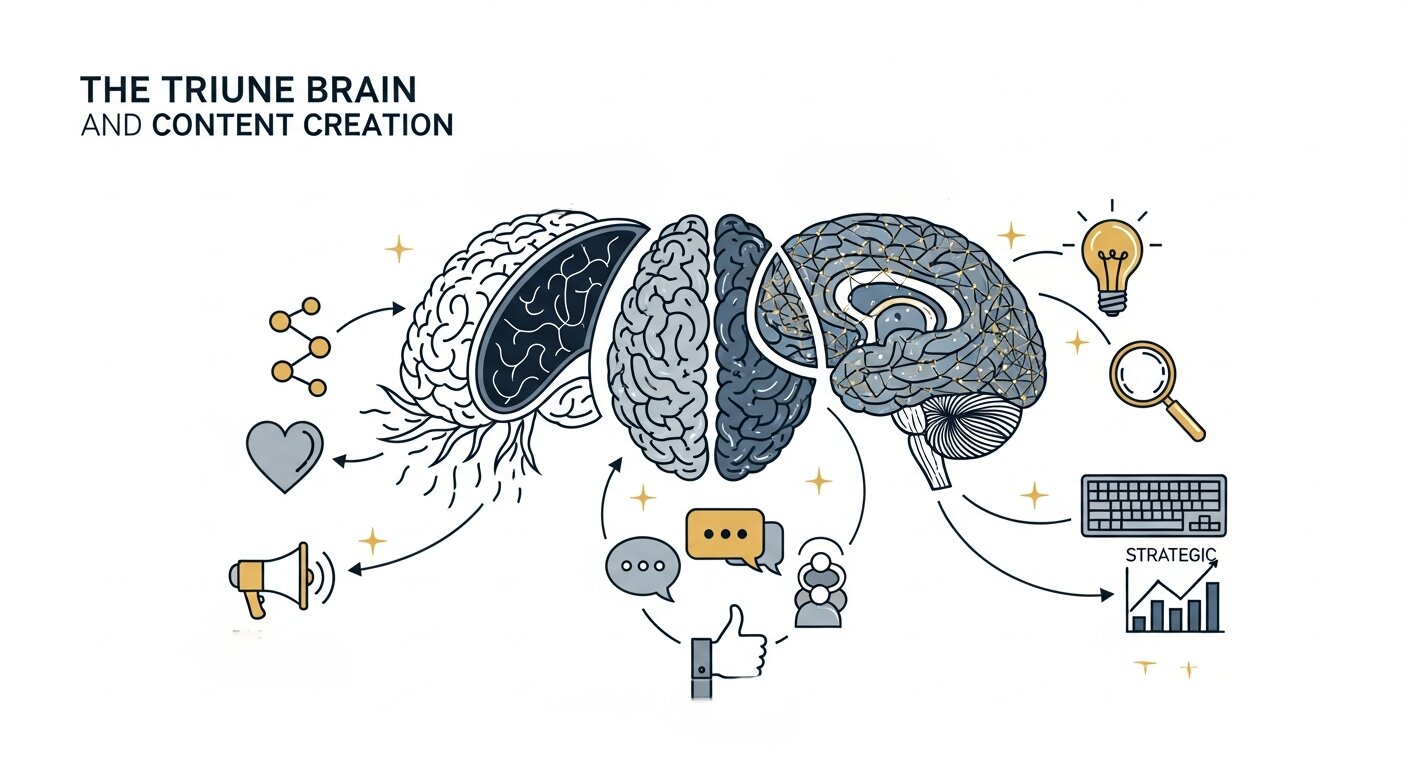
Neuroscientists describe the human brain as having three distinct parts, each influencing decision-making in unique ways. The reptilian brain, or brain stem, focuses on survival, safety, and basic needs. The limbic system governs emotions, motivation, and memory formation, while the neocortex handles rational thinking, language, and logical reasoning. Effective Neuromarketing Inbound Content takes this structure into account, ensuring messages appeal to all three levels of the brain. By crafting content that resonates with emotional, logical, and primal triggers, marketers can create a more compelling experience that encourages engagement and conversion.
Pain Before Pleasure
Our brains are hardwired to avoid pain more intensely than they seek pleasure, a concept psychologists call loss aversion. Research from Psychology Today shows that the pain of losing something is psychologically twice as powerful as the pleasure of gaining something of equivalent value. When creating Neuromarketing Inbound Content, it is crucial to first identify and articulate the audience’s pain points clearly and specifically. Only after establishing this connection should the content guide them toward solutions that promise relief, gain, or pleasure.
For example, a blog post that begins by highlighting the frustration of declining website conversions will capture attention far more effectively than one that jumps straight into tips for optimization. By framing content around relatable challenges, Neuromarketing Inbound Content establishes empathy and trust, which are essential for nurturing leads and encouraging engagement. For more insights, you can explore Psychology Today’s research on loss aversion to understand how decision-making works.
Moreover, this principle can be applied across multiple content formats, including email campaigns, social media posts, webinars, and case studies. Each piece of Neuromarketing Inbound Content should first connect with the audience’s pain, then guide them through the emotional journey toward the benefits your product or service provides. Over time, this approach strengthens brand authority, increases engagement, and drives measurable results. Learn more about effective email marketing strategies that align with behavioral principles.
By understanding the subconscious drivers of decision-making and incorporating them into your content strategy, marketers can elevate Neuromarketing Inbound Content from mere information delivery to a persuasive, emotionally resonant experience that converts readers into loyal customers. For foundational guidance, check out a complete inbound marketing guide that complements these neuromarketing insights.
The Power of Storytelling
Stories activate multiple regions of the brain simultaneously, forming stronger neural connections and creating experiences that are more memorable and emotionally resonant. When we hear a story, our brains release oxytocin, a chemical associated with trust, empathy, and bonding. This explains why case studies, customer success stories, and narrative-driven content consistently outperform abstract discussions that focus solely on product features or technical specifications. You can read more about theneuroscience of storytelling to see why stories impact engagement.
Integrating storytelling into Neuromarketing Inbound Content allows marketers to create a deeper emotional connection with their audience. By embedding relatable experiences, challenges, and successes into content, Neuromarketing Inbound Content can evoke empathy and trust, increasing the likelihood that readers will engage, share, and convert. Stories also help simplify complex ideas, allowing audiences to absorb information without feeling overwhelmed, which is especially important for educational or technical topics. For practical examples, check out successful case studies in content marketing.
Visual Processing Priority
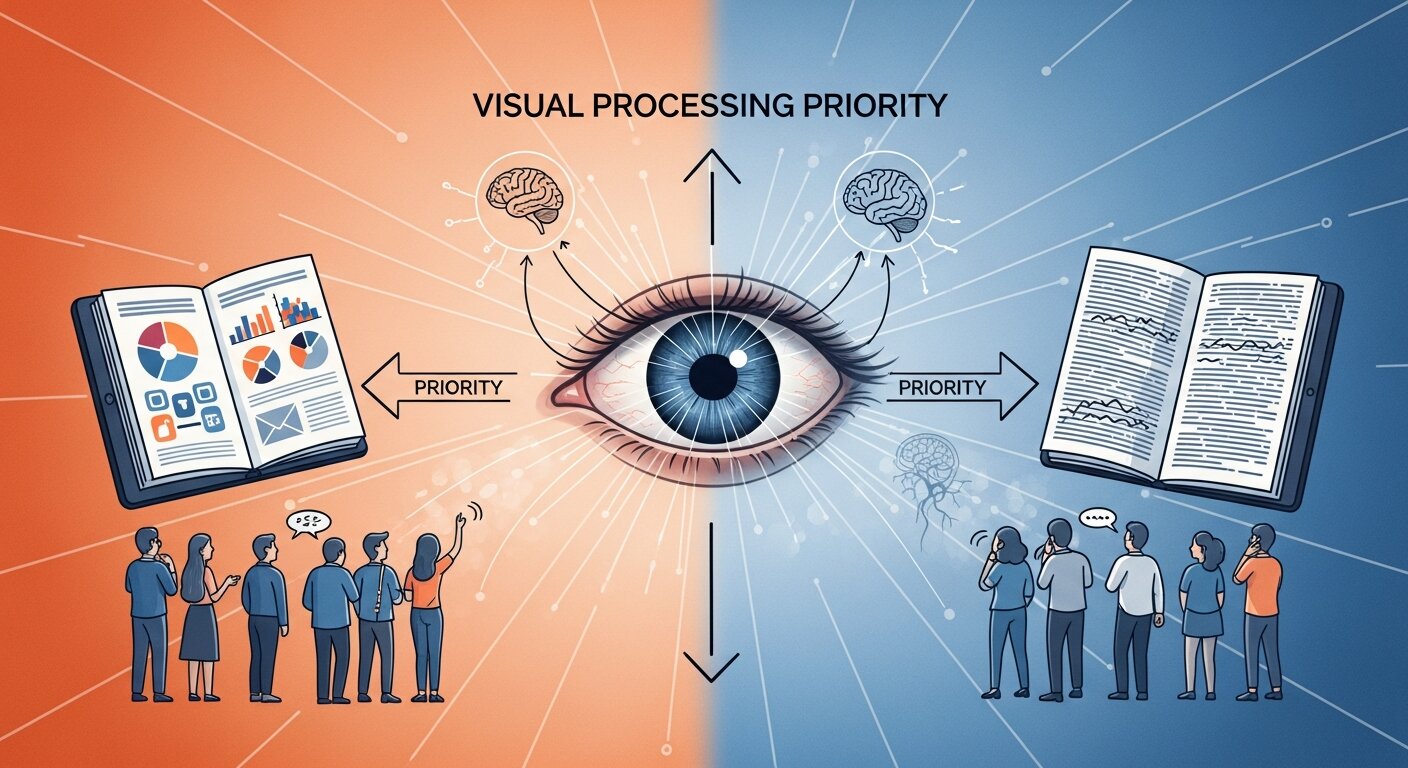
The human brain processes visual information roughly 60,000 times faster than text, and nearly half of our brain is devoted to visual processing. This neurological fact emphasizes the importance of incorporating compelling imagery, videos, infographics, and thoughtful visual design into your Neuromarketing Inbound Content. Even the most complex ideas can be made accessible when paired with clear, illustrative visuals. You can explore visual content marketing tips to enhance your strategy.
Marketers can enhance the effectiveness of Neuromarketing Inbound Content by using visual storytelling techniques that complement textual content. For instance, process diagrams, charts, and product demos can turn abstract concepts into memorable visual experiences. By prioritizing visuals, Neuromarketing Inbound Content not only improves comprehension but also boosts engagement, shareability, and overall retention.
The Cognitive Ease Factor
Humans are naturally drawn to experiences that feel effortless to process. This preference for cognitive ease explains why clear, simple content generally outperforms dense, jargon-heavy alternatives. Neuromarketing Inbound Content that minimizes mental friction can significantly enhance user engagement, comprehension, and recall.
To achieve cognitive ease, break complex ideas into smaller, digestible chunks. Use descriptive subheadings to structure content, allowing readers to scan and find relevant information quickly. Incorporate white space in layouts to provide visual breathing room, and choose familiar language over obscure or overly technical terms. Even subtle design choices, such as font size, color contrast, and layout simplicity, contribute to making Neuromarketing Inbound Content easier to process. For more design insights, check out UX design best practices.
By combining storytelling, visual prioritization, and cognitive ease, Neuromarketing Inbound Content becomes a multi-sensory experience that engages both the emotional and rational aspects of the brain. This approach ensures that content is not only informative but also memorable, persuasive, and more likely to drive conversions, loyalty, and long-term engagement.
The Dopamine-Driven Reward System
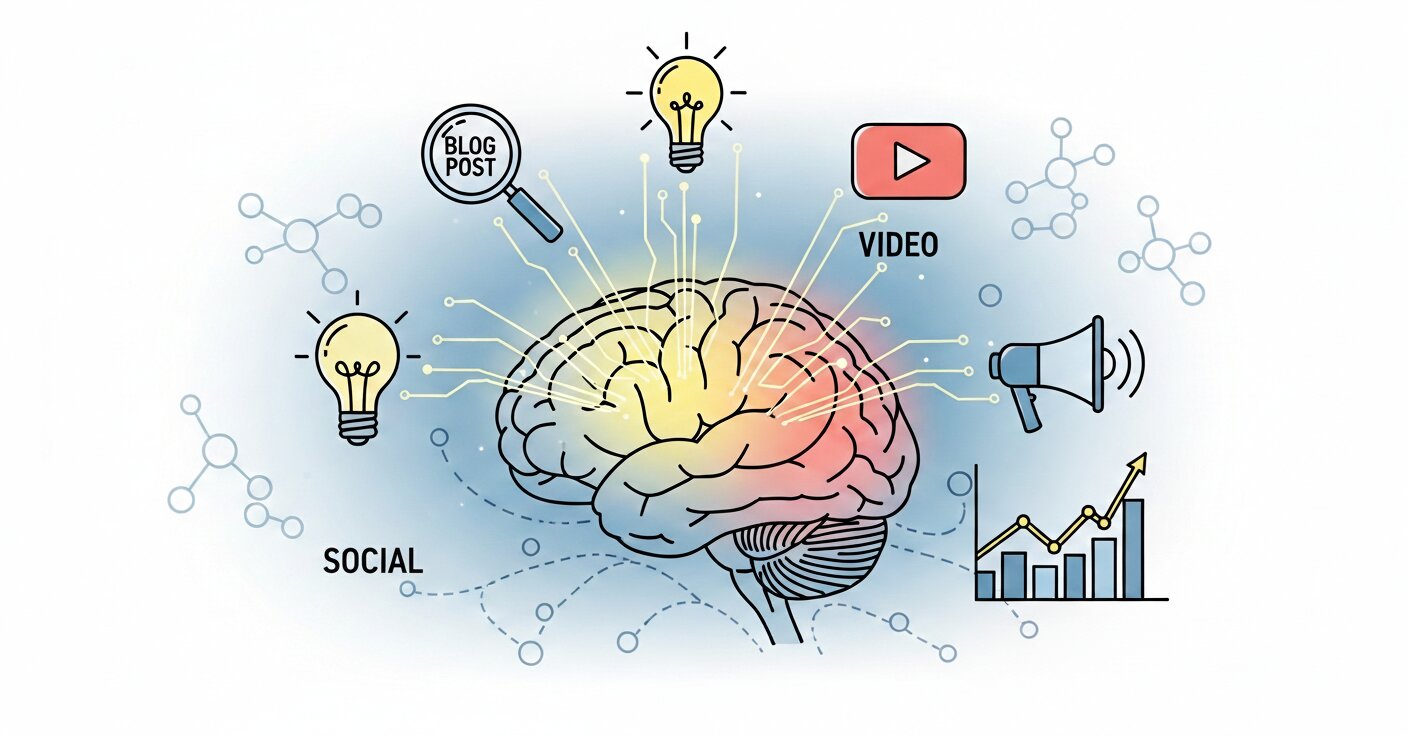 The anticipation of a reward triggers a release of dopamine in the brain, creating a strong motivational pull that encourages continued engagement. Interestingly, research published in the Journal of Marketing Research shows that the anticipation of a reward can produce more pleasure than the reward itself. Marketers who understand this neural mechanism can harness it in their content strategy to maintain attention and increase conversions.
Neuromarketing Inbound Content leverages this principle by creating strategic information gaps—teasing valuable insights, tips, or solutions that lie just ahead in the content. By signaling that key answers or actionable strategies are coming, Neuromarketing Inbound Content keeps readers motivated to progress through blog posts, videos, or email sequences. This dopamine-driven curiosity transforms passive readers into active participants, increasing engagement, time on page, and the likelihood of conversion.
Mirror Neurons and Social Proof
Our brains contain specialized mirror neurons that activate not only when we perform an action but also when we observe someone else performing the same action. This neurological phenomenon explains why social proof—such as testimonials, user reviews, and case studies—is so compelling. When audiences see real people benefiting from a product or service, their brains simulate that experience, creating a sense of empathy, trust, and motivation.
Incorporating testimonials into Neuromarketing Inbound Content allows marketers to harness the power of mirror neurons. Authentic stories of success can make potential customers imagine themselves achieving similar outcomes, enhancing credibility and persuasion. Beyond testimonials, user-generated content, influencer endorsements, and community feedback all serve as potent tools in Neuromarketing Inbound Content to reinforce behavioral cues and drive engagement.
The Cocktail Party Effect
Even in environments saturated with information, the human brain excels at selectively focusing on messages that are personally relevant—a phenomenon known as the cocktail party effect. This explains why personalized content consistently outperforms generic messaging in capturing attention. Neuromarketing Inbound Content that addresses readers directly, uses “you” language, and references challenges specific to their industry or role can break through the noise effectively.
Segmentation is key to applying this principle. By tailoring Neuromarketing Inbound Content to different buyer personas, marketers can ensure the right message reaches the right audience at the right time. Personalized headlines, content flows, and examples that reflect readers’ unique experiences maximize attention, comprehension, and engagement. Even subtle adjustments, like mentioning industry-specific pain points or goals, enhance the cocktail party effect by signaling relevance to the brain.
When combined, these principles—dopamine-driven anticipation, mirror neurons, and selective attention—form the backbone of highly effective Neuromarketing Inbound Content. By addressing both emotional and cognitive triggers, this content strategy not only captures attention but also builds trust, fosters engagement, and drives measurable results across multiple channels.
Applying Neuromarketing to Different Content Formats
Blog Posts
- Open with emotionally resonant scenarios that trigger the limbic system.
- Front-load the most valuable information to satisfy the reptilian brain’s need for immediate value.
- Follow with detailed explanations that appeal to the logical neocortex.
Email Campaigns
- Craft subject lines that create curiosity gaps to trigger dopamine release.
- Personalize opening lines to activate the cocktail party effect.
- Include social proof elements to engage mirror neurons.
Landing Pages
- Place critical calls-to-action in the areas where the eye naturally travels first.
- Use directional cues to guide attention to key elements.
- Minimize competing visual elements that create cognitive strain.
Ethical Considerations in Neuromarketing
- With great power comes great responsibility. Neuromarketing techniques should enhance user experience, not manipulate.
- Use these principles to help your audience find truly valuable solutions to their problems.
- Avoid creating artificial scarcity or triggering fear responses inappropriately.
- Remember that the most effective long-term strategy is creating genuine value while making that value more accessible through neuromarketing principles.
Measuring Neurological Impact
Traditional marketing metrics don’t always capture the neurological impact of your content.
Look beyond page views and time-on-page to metrics that indicate emotional engagement:
- Social sharing rates often indicate strong emotional resonance.
- Comments and conversation suggest deeper cognitive processing.
- Return visits indicate that your content created memorable neural connections.
Implementing Neuromarketing in Your Inbound Strategy
Start by auditing your existing content through a neuromarketing lens.
- Does it address pain points before presenting solutions?
- Does it incorporate storytelling elements that trigger oxytocin release?
- Is the visual presentation optimized for rapid brain processing?
- Does it create appropriate information gaps that trigger curiosity?
Gradually incorporate these principles into new content creation, testing their impact on engagement metrics.
The Future of Neuromarketing and Inbound Content
As neuroscience advances, our understanding of how content affects the brain will continue to evolve.
Forward-thinking marketers will increasingly collaborate with neuroscientists to create content strategies based on brain research rather than assumptions.
The most successful inbound marketers will be those who master both the art of content creation and the science of how that content affects the brain.
By understanding and applying these neuromarketing principles, you can create inbound content that doesn’t just inform or persuade—but resonates at a deeper neurological level, creating stronger connections and more meaningful engagement with your audience.
Frequently Asked Questions
What is Neuromarketing Inbound Content?
Neuromarketing Inbound Content is marketing material created using insights from neuroscience to influence decision-making and engagement. It blends emotional triggers, cognitive principles, and persuasive storytelling to guide users through the buyer’s journey effectively.
How does the brain influence buying decisions?
Most decisions happen in the subconscious mind, with up to 95% of choices driven by emotions, instincts, and memory. Neuromarketing Inbound Content leverages these subconscious drivers to make content more compelling and persuasive.
Why is storytelling important in Neuromarketing Inbound Content?
Stories trigger the release of oxytocin, which builds trust and empathy. Using case studies, narratives, and customer success stories in content makes it more memorable and emotionally engaging.
How do visuals improve Neuromarketing Inbound Content?
The brain processes visual information 60,000 times faster than text. Integrating images, videos, infographics, and diagrams helps convey complex ideas quickly and boosts comprehension and retention.
What is cognitive ease, and why does it matter?
Cognitive ease is the brain’s preference for simple, easily digestible information. Neuromarketing Inbound Content that is clear, well-structured, and easy to read reduces mental friction and keeps readers engaged.
How can social proof enhance content effectiveness?
Mirror neurons simulate observed actions in the brain. Including authentic testimonials, user reviews, or influencer endorsements in content leverages this effect, increasing trust and persuasive power.
What role does dopamine play in content engagement?
Anticipation of rewards triggers dopamine release, motivating continued interaction. Neuromarketing Inbound Content can create curiosity gaps or tease valuable insights to maintain engagement and interest.
How does personalization help in Neuromarketing Inbound Content?
The cocktail party effect shows the brain focuses on relevant information. Personalized content tailored to industry, role, or persona captures attention more effectively than generic messaging.
Can Neuromarketing Inbound Content be applied to all content formats?
Yes. Principles can be applied to blog posts, emails, landing pages, social media, webinars, and more. The key is adapting storytelling, visuals, cognitive ease, and social proof to each format.
Is it ethical to use Neuromarketing Inbound Content?
Yes, when used responsibly. The goal is to enhance user experience and deliver real value, not manipulate. Avoid fear tactics or artificial scarcity, and focus on helping audiences solve meaningful problems.