
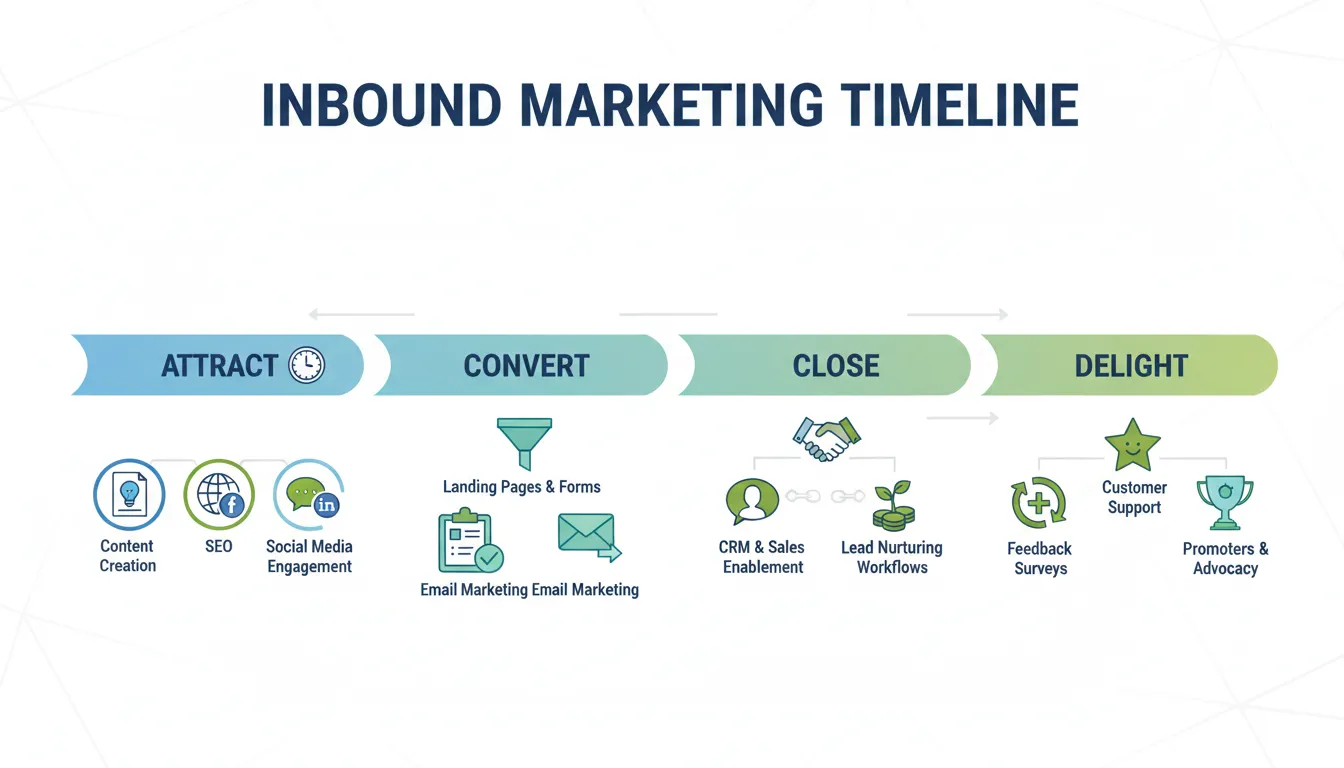
This article explores the origins and evolution of this transformative marketing methodology. We cover early business strategies, the rise of search engines, and modern digital applications. You will discover actionable insights, common pitfalls to avoid, and expert strategies to refine your current marketing efforts.
Understanding the history of inbound marketing reveals how businesses shifted from interruptive advertising to creating genuine customer value. This evolution transformed how brands connect with audiences permanently.
The Dawn of a New Era: History of Inbound Marketing
Tracing the history of inbound marketing takes us back much further than the Internet age. Long before search engines existed, visionary business leaders recognized the value of attracting customers through education and utility rather than interrupting them with cold pitches.
Early Concepts and the Shift from Outbound
During the mid-19th century, inventors like Cyrus Hall McCormick used basic market research to generate consumer interest in mechanical harvesters. Instead of aggressive sales tactics, he focused on educating farmers about how the machinery would solve their specific problems. Decades later, Richard W. Sears and Alvah Roebuck revolutionized retail by publishing comprehensive catalogs. These catalogs served as an early form of valuable content, allowing consumers to browse and make informed decisions on their own terms.
Management consultant Peter Drucker later formalized many of these concepts. He argued that the primary goal of marketing is to know and understand the customer so well that the product or service fits them and sells itself. This customer-centric philosophy laid the groundwork for modern methodologies. Brands realized that providing value upfront creates a foundation of trust. By focusing on customer needs, companies started building long-term relationships rather than chasing short-term transactions. Developing a strong content marketing strategy became essential for businesses looking to emulate this success.
The Internet Boom and Changing Consumer Behavior
The late 1990s and early 2000s fundamentally changed how humans consume information. The launch of early search engines meant consumers could actively seek out answers to their problems. Instead of waiting for a commercial or a cold call, buyers took control of their purchasing journeys.
When social media platforms like LinkedIn, Facebook, and Twitter emerged, the shift accelerated. Consumers wanted to engage in two-way conversations with brands. They expected personalized experiences and relevant content. Outbound tactics like cold calling and mass email blasts began losing their effectiveness. People used spam filters, caller ID, and ad blockers to tune out unwanted noise. Businesses had to adapt quickly. They needed to create content that pulled people in naturally. Optimizing digital assets through strict SEO best practices became the most reliable way to capture this new, self-directed online traffic.
How HubSpot Popularized the Methodology
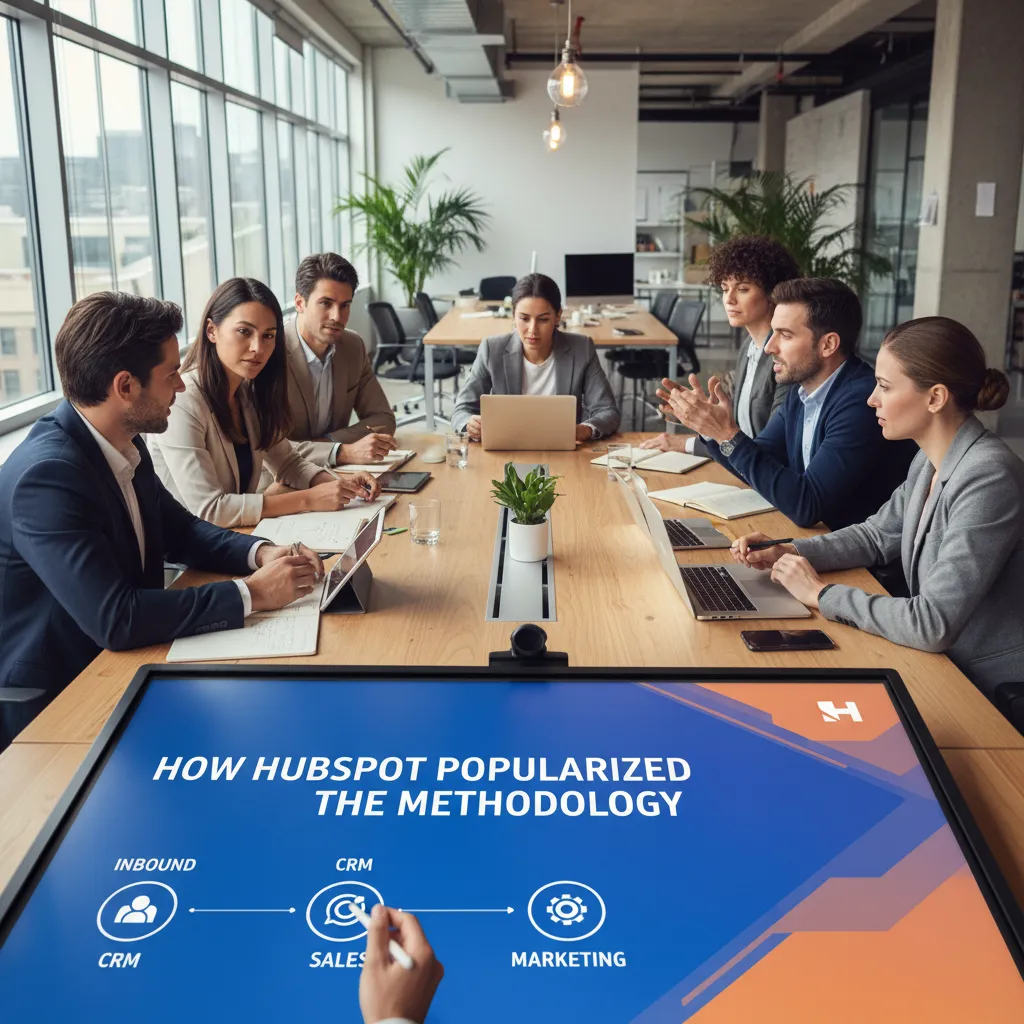
While the underlying concepts existed for over a century, the specific terminology and structured methodology we use today emerged in the mid-2000s. Two MIT graduate students observed the massive shift in consumer behavior and decided to build a framework around it.
The Birth of Attract, Engage, Delight
Brian Halligan and Dharmesh Shah noticed that traditional interruptive marketing was failing. Buyers were highly skilled at ignoring unsolicited advertisements. In response, they coined the term “inbound marketing” and founded HubSpot in 2006 to help companies execute this new philosophy.
They introduced a clear, actionable framework: Attract, Engage, and Delight.
First, businesses attract strangers by creating helpful, optimized content that answers specific search queries. Next, they engage these visitors by offering deeper value, often capturing their contact information in exchange for comprehensive guides or tools. Finally, companies delight their customers by providing exceptional ongoing support and personalized content. This turns buyers into vocal promoters of the brand. Implementing effective lead generation techniques ensures that the transition from attraction to engagement happens smoothly.
Transitioning from the Funnel to the Flywheel
For years, marketers visualized the customer journey as a funnel. You pour leads into the top, and customers drop out of the bottom. However, this model views customers as an afterthought once the sale is complete.
To better represent the history of inbound marketing and its ongoing evolution, industry leaders introduced the flywheel model. The flywheel stores and releases energy based on how fast it spins and how much friction it encounters. In a business context, happy customers provide the energy that fuels growth. By continuously delighting customers, you create momentum. Your existing customers write reviews, share your content, and refer new buyers. This reduces the friction in your sales process and accelerates your overall growth rate.
Core Components That Drive Success
Executing this strategy requires a synchronized approach across multiple digital channels. You cannot rely on a single tactic to pull customers into your ecosystem. Instead, you must build a comprehensive web of valuable resources.
Content Creation and Search Engine Optimization
High-quality content sits at the center of this methodology. Without valuable articles, videos, and podcasts, you have nothing to attract your audience. You must understand your target buyers deeply. What questions do they type into search engines? What pain points keep them up at night?
Once you identify these questions, you create content that provides clear, actionable answers. However, great content is useless if nobody can find it. Search engine optimization ensures your resources appear when potential customers need them most. You must optimize your page structures, improve site speed, and build authority through external references. For example, understanding the intricacies of search algorithms helps you structure your articles to capture featured snippets and high-ranking positions.
Social Media and Community Building
Social media serves as the distribution engine for your content. It allows you to share your expertise with a broader audience and participate in industry conversations. Rather than using social platforms merely to broadcast promotional messages, you should use them to foster genuine communities.
Respond to comments, answer industry questions, and share insights from other thought leaders. Building a community humanizes your brand. It shows buyers that you care about their success, not just their wallets. Engaging consistently on platforms where your audience spends their time builds familiarity and trust over time. Improving your social media engagement directly impacts how much traffic you can drive back to your core website.
Comparison: Inbound vs. Outbound Marketing
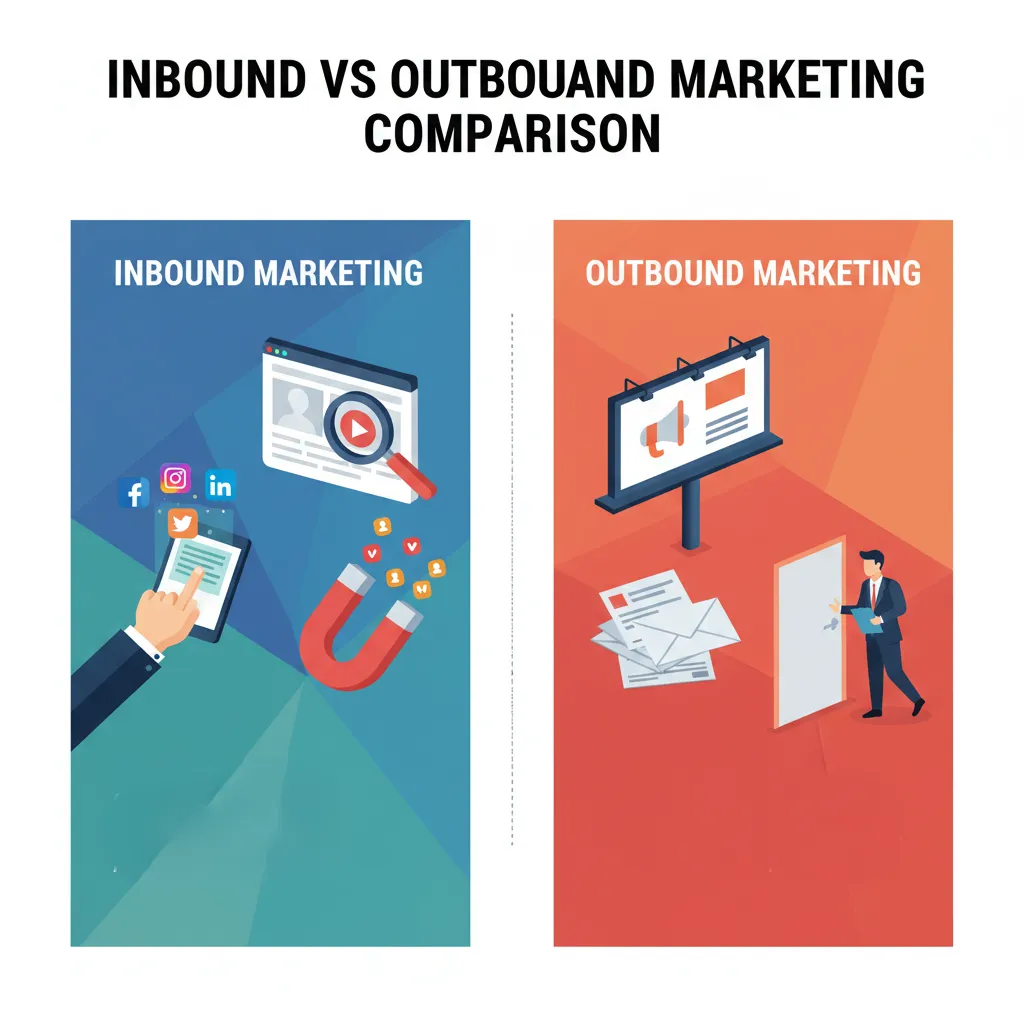
Understanding the historical shift requires a clear look at how the new methodology compares to traditional tactics.
|
Feature |
Inbound Methodology |
Outbound Methodology |
|---|---|---|
|
Primary Goal |
Attract and educate |
Interrupt and push |
|
Communication |
Two-way, interactive |
One-way, broadcasting |
|
Audience |
Highly targeted, intent-driven |
Broad, general public |
|
Mediums |
Blogs, SEO, Social Media, Opt-in Email |
Billboards, TV Ads, Cold Calling, Spam |
|
Cost over time |
Decreases as content compounds |
Remains high (pay to play) |
|
Customer Journey |
Pulls customers in naturally |
Forces messages on consumers |
Common Mistakes to Avoid
Many businesses struggle when first adopting this methodology because they carry over outdated mindsets. Avoiding these common pitfalls will save you time and resources.
First, do not expect overnight results. Creating valuable content and building search engine authority takes time. It is a long-term investment, not a quick fix. If you abandon your strategy after two months because you have not doubled your revenue, you will fail.
Second, avoid creating entirely product-centric content. Your early-stage content should focus on the buyer’s problems, not your specific features. If a reader feels like they are reading a sales pitch instead of an educational resource, they will leave your site immediately. Focus on providing immense value first.
Finally, never neglect the “Delight” phase. Many companies spend all their energy acquiring new leads and forget about their existing customers. Poor customer service and a lack of post-purchase engagement will destroy your momentum and bring your growth flywheel to a halt. Upgrading your customer retention strategies is just as crucial as optimizing your top-of-funnel content.
Expert Insights and Pro Tips
To maximize your impact, you need to look beyond the basic frameworks and implement advanced strategies used by top-performing marketing teams.
A major pro tip is to repurpose your content vigorously. If you spend 20 hours researching and writing a comprehensive industry report, do not just publish it as a PDF and move on. Break that report down into a dozen blog posts. Turn the key statistics into visual graphics for social media. Record a podcast episode discussing the findings. This maximizes the return on your initial time investment.
Another expert insight is to leverage data obsessively. Use analytics tools to track exactly which pieces of content drive the most qualified leads. If you notice that a specific cluster of topics converts visitors into buyers at a high rate, double down on that subject. Let user behavior dictate your editorial calendar rather than guessing what your audience wants to read. You can reference authoritative data from sources like Statista to validate your market research and ensure your content remains highly accurate.
The Modern Impact on Digital Marketing
The history of inbound marketing perfectly maps to the evolution of the digital landscape. As technology advances, the core principles of attracting and educating buyers remain the same, but the execution tools become much more sophisticated.
AI and Predictive Analytics
Artificial intelligence is currently reshaping how we create and distribute content. Predictive analytics allow marketers to anticipate what a consumer wants before they even search for it. Machine learning algorithms analyze massive datasets to identify purchasing patterns.
This technology enables hyper-personalization at scale. Instead of sending the same email newsletter to a million subscribers, dynamic systems can tailor the content of each email based on the recipient’s past browsing behavior. AI-driven chatbots provide immediate answers to website visitors, improving the user experience and capturing lead data 24/7. Studying comprehensive resources from organizations like Gartner helps marketing leaders stay ahead of these rapid technological advancements.
Interactive and Video Content
Text-based articles will always remain crucial for search engines, but human preferences are shifting heavily toward visual and interactive media. Video content creates a deeper emotional connection with the viewer. It allows you to explain complex topics quickly and showcase your brand’s personality.
Interactive content, such as calculators, assessments, and quizzes, provides personalized value to the user while simultaneously gathering crucial data for your sales team. This creates a mutually beneficial exchange. The user gets a customized answer to their specific scenario, and the business gains a highly qualified lead with rich contextual data. Platforms like Think with Google frequently highlight how interactive media drastically increases user dwell time and conversion rates.
Adapting to the Future
The methodology will continue to evolve as new platforms emerge and consumer preferences shift. However, the fundamental philosophy will not change. Businesses that prioritize helping over selling will consistently outperform those that rely on interruption.
You must remain agile. Test new content formats, experiment with emerging social channels, and continuously listen to your customers. By maintaining a relentless focus on the buyer’s experience, you ensure that your digital marketing efforts remain highly effective, regardless of what the next decade of technological advancement brings.
Conclusion
The history of inbound marketing proves that providing genuine value is the most sustainable way to grow a business. By understanding this evolution, you can build strategies that attract, engage, and delight your target audience. Evaluate your current campaigns today, identify areas where you can offer more education, and start creating content that pulls your ideal customers directly to you.
FAQs
What is the core philosophy behind this marketing methodology?
The core philosophy is based on pulling potential customers toward your brand by providing valuable, educational, and highly relevant content. Instead of interrupting people with uninvited advertisements, you align your content with their specific interests and problems, building trust and authority over time.
How did the internet change traditional marketing?
The internet transferred power from the seller to the buyer. Consumers gained the ability to research products, read reviews, and find solutions independently using search engines. This made interruptive outbound tactics less effective and necessitated a strategy focused on digital discoverability and value creation.
Who coined the popular terms associated with this methodology?
Brian Halligan and Dharmesh Shah, the co-founders of HubSpot, are widely credited with coining the modern terminology in 2006. They developed the software and the educational frameworks that helped popularize the strategy on a global scale.
What is the difference between a funnel and a flywheel?
A traditional funnel represents a linear process where customers drop out at the bottom once a sale is made. A flywheel represents a continuous loop where the momentum of happy, delighted customers fuels further business growth through referrals, repeat purchases, and positive reviews.
How long does it take to see results?
Unlike paid advertising, which can generate immediate traffic, this approach requires patience. It typically takes six to nine months of consistent, high-quality content creation and search engine optimization before a business sees a significant, compounding increase in organic traffic and lead generation.
Why is search engine optimization so important here?
If you create exceptional content but no one can find it, your strategy will fail. Search engine optimization ensures that your website ranks highly when potential customers search for answers related to your industry. It is the bridge that connects your valuable resources to the people who need them.
Can this strategy work for B2B companies?
Absolutely. In fact, B2B companies often see massive success with this approach because their sales cycles are longer and require more education. Providing whitepapers, case studies, and detailed webinars helps B2B buyers build consensus among their purchasing committees.
What role does social media play?
Social media acts as a vital distribution and engagement channel. It allows you to share your content with a broader audience, interact directly with prospects, and build a recognizable brand personality. It transforms static content into active, community-driven conversations.
Is outbound marketing completely dead?
No, outbound marketing is not completely dead. Many highly successful companies use a hybrid approach. They use educational content to build awareness and capture leads warmly, and then use targeted outbound tactics (like account-based marketing) to reach specific, high-value decision-makers.
How do I measure the success of these campaigns?
You should track metrics that align with the buyer’s journey. Top-of-funnel metrics include organic website traffic and social reach. Middle-of-funnel metrics include conversion rates and email open rates. Bottom-of-funnel metrics focus on customer acquisition costs, lifetime value, and the number of inbound-sourced deals closed.