This comprehensive guide walks you through every essential phase of building a high-converting digital blueprint. You will learn exactly how to create a content strategy, from defining your core objectives and understanding your target audience to conducting thorough keyword research and executing a seamless editorial calendar. By the end of this guide, you will possess the actionable insights needed to avoid common pitfalls, leverage pro tips, and generate content that ranks on Google’s first page while driving meaningful business results.
Are you struggling to turn your website visitors into loyal customers? Knowing exactly how to create a content strategy is the ultimate key to unlocking sustainable organic traffic and skyrocketing your conversions. Let’s dive into the ultimate blueprint for digital success.
Why You Need to Know How to Create a Content Strategy
Before diving into the exact steps, we must understand the foundational importance of this process. A blog without a plan is just a collection of random thoughts. Learning how to create a content strategy ensures that every piece of text, video, or infographic you publish serves a distinct purpose. It aligns your marketing efforts with your business goals, ensuring that you do not waste time on topics your audience does not care about.
When you figure out how to create a content strategy, you establish authority in your niche. You build trust with your readers. Most importantly, you signal to search engines like Google that your website is a hub of valuable, structured, and relevant information.
Step-by-Step Guide: How to Create a Content Strategy
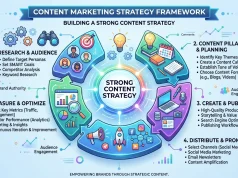
If you want to master how to create a content strategy, you must follow a methodical, data-driven approach. Here is your step-by-step roadmap to building a plan that actually works.
Step 1: Define Your Goals and Key Performance Indicators (KPIs)
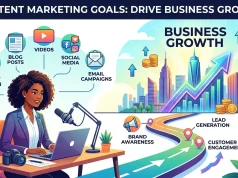
The first step in understanding how to create a content strategy is defining what you want to achieve. Are you looking to increase brand awareness, generate more leads, boost your email subscriber list, or directly drive sales? Your goals will dictate the type of content you produce.
Once you have your goals, tie them to specific KPIs. If your goal is brand awareness, your KPIs might be organic traffic, social shares, and time on page. If your goal is lead generation, you should track conversion rates, form submissions, and cost per lead. Setting these metrics early ensures you can measure the success of your efforts down the line.
Step 2: Identify and Understand Your Target Audience
You cannot possibly know how to create a content strategy without knowing exactly who you are writing for. You need to go beyond basic demographics like age and location. Dive deep into their psychographics. What are their biggest pain points? What questions are they typing into search engines late at night?
Create detailed buyer personas. These personas should outline your ideal customer’s background, challenges, goals, and preferred content consumption habits. When you write directly to a well-defined persona, your content resonates on a much deeper level, significantly increasing the likelihood of conversion. Consider utilizing audience segmentation techniques to further refine your messaging.
Step 3: Conduct a Comprehensive Content Audit
If you already have a website, learning how to create a content strategy means looking at what you have already done. A content audit involves evaluating your existing pages to see what is performing well and what is falling flat.
Log in to your analytics platform and pull data on your top-performing posts. Look for patterns. Do your readers prefer long-form how-to guides, or do they engage more with quick listicles? Identify gaps where you have not covered essential industry topics. You might find that some older posts simply need an update to regain their search engine rankings.
Step 4: Keyword Research and Topic Generation
A crucial element of how to create a content strategy is keyword research. You must find the intersection between what your audience cares about and what they are actively searching for. Use tools like Ahrefs or Semrush to identify high-volume, low-competition keywords.
When you learn how to create a content strategy, you realize that mapping keywords to the buyer’s journey is critical. Create informational content for the awareness stage, comparison guides for the consideration stage, and highly targeted product pages for the decision stage. Group these topics into topic clusters to build immense topical authority in the eyes of search engines.
Step 5: Choose Your Content Formats and Channels
Understanding how to create a content strategy also means knowing where to distribute your content. Not every piece of content should be a blog post. Depending on your audience, you might need to invest in video content, podcasts, infographics, or downloadable whitepapers.
Determine which channels will distribute this content. Will you rely primarily on organic search? Are you going to promote your pieces heavily on LinkedIn or Twitter? Your distribution plan is just as important as the creation process itself. A brilliant article hidden on page ten of Google with no social promotion will yield zero results.
Step 6: Build a Robust Content Calendar
Consistency is the secret weapon of anyone who knows how to create a content strategy. A content calendar keeps your team accountable and ensures a steady stream of fresh material.
Your calendar should include the publication date, the assigned writer, the target keyword, the content format, and the promotion channels. Whether you use a simple spreadsheet or a project management tool, keeping everything organized is non-negotiable for long-term success.
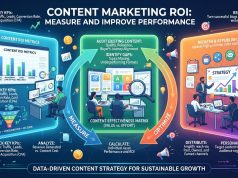
Step 7: Measure, Analyze, and Optimize
The final step in creating a content strategy is an ongoing one. You must regularly review your KPIs to see what is working. If a particular topic cluster is driving massive traffic, double down on it. If a specific format is underperforming, pivot your approach. Continuous optimization based on hard data is what separates amateur bloggers from industry-leading authorities.
Structured Comparison: Content Strategy vs. Content Marketing
A common hurdle when learning how to create a content strategy is confusing it with content marketing. The table below breaks down the fundamental differences to clarify your focus.
|
Feature |
Content Strategy |
Content Marketing |
|---|---|---|
|
Definition |
The internal blueprint and foundational plan guide all content creation. |
The external execution and promotion of the content to the audience. |
|
Primary Focus |
Planning, guidelines, audits, goals, and workflow management. |
Creation, distribution, lead generation, and customer engagement. |
|
Key Question |
Why are we creating this, and how will it be managed? |
What are we creating, and where will we share it? |
|
Metrics |
Workflow efficiency, topic coverage, and alignment with business goals. |
Page views, social shares, click-through rates, conversions. |
|
Timeline |
Long-term and foundational. |
Ongoing, daily/weekly execution. |
Common Mistakes to Avoid
When figuring out how to create a content strategy, many marketers fall into the same predictable traps. Here are the most common mistakes to avoid:
- Writing for Search Engines, Not Humans: While optimizing for Google is important, stuffing keywords unnaturally will alienate your readers and ultimately harm your rankings. Always prioritize user experience and readability.
- Ignoring Search Intent: If someone searches for “best running shoes,” they want a list or a comparison, not a 3000-word history of running footwear. Failing to match the search intent will result in high bounce rates.
- Failing to Update Old Content: Search engines love fresh content. A massive mistake in learning how to create a content strategy is publishing a post and forgetting about it. Regularly refresh your top posts with new data and insights.
- Lack of Internal Linking: Your content should not exist in isolation. You must use internal link building to guide users through your website and spread link equity across your domain.
- Inconsistent Publishing: Publishing five posts in one week and then nothing for a month confuses both your audience and search engine crawlers. Stick to a realistic, consistent schedule.
Pro Tips for Maximum Impact
If you truly want to master how to create a content strategy that outperforms your competitors, implement these expert-level tactics:
- Leverage Subject Matter Experts (SMEs): Don’t just regurgitate what is already on page one of Google. Interview industry experts to inject unique, original insights into your articles. This significantly boosts your E-E-A-T (Experience, Expertise, Authoritativeness, Trustworthiness).
- Implement Schema Markup: Help search engines understand your content better by using schema markup, especially for FAQs, reviews, and how-to guides. This increases your chances of securing rich snippets.
- Repurpose Your Content: A single long-form blog post can be transformed into a YouTube video, a Twitter thread, a LinkedIn carousel, and an email newsletter. Work smarter, not harder.
- Focus on the First 100 Words: Hook your reader immediately. If your introduction is boring or too broad, they will click away. State the problem clearly and promise a tangible solution.
- Monitor Competitor Content Gaps: Regularly analyze your competitors’ websites using SEO tools. Find out what topics they are missing and create comprehensive content to fill those exact gaps.
Advanced Tactics: Scaling Your Efforts
Once you have mastered the basics of how to create a content strategy, the next phase is scaling your operations. Scaling requires a deep understanding of delegation, automation, and advanced analytics.
First, consider building an in-house editorial team or partnering with specialized freelance writers. Provide them with detailed style guides to maintain a consistent brand voice. A style guide is a critical component of how to create a content strategy that remains cohesive even when multiple people are writing for your blog.
Second, automate your distribution. Use social media scheduling tools to ensure your content reaches your audience across different time zones without manual intervention. Automation frees up your time so you can focus on high-level strategy and data analysis rather than the tedious mechanics of posting.
Finally, dive deeper into user behavior analytics. Tools like heatmaps and session recordings can show you exactly how users interact with your content. Are they dropping off halfway through the page? Are they ignoring your primary call-to-action? Adjusting your layout and formatting based on this behavioral data is the ultimate refinement in understanding how to create a content strategy that actually converts.
Aligning Content with the Buyer’s Journey

To successfully execute how to create a content strategy, every asset must map to a specific stage of the buyer’s journey: Awareness, Consideration, and Decision.
Awareness Stage: The user has a problem but doesn’t know the solution. Your strategy here should focus on educational blog posts, industry reports, and explainer videos. The goal is to capture traffic and introduce your brand as a helpful resource.
Consideration Stage: The user understands their problem and is researching potential solutions. Here, your strategy must pivot to comparison guides, case studies, and webinars. You need to prove why your approach or product is superior to alternatives. Implement strong lead generation tactics here to capture their contact information.
Decision Stage: The user is ready to buy but needs a final push. Your content should consist of product demos, customer testimonials, and detailed pricing pages. Make the transition from reader to customer as frictionless as possible.
When you learn how to create a content strategy that seamlessly guides a user through these three stages, you transform your website into an automated sales machine.
The Role of Visuals in Your Strategy
Text alone is rarely enough to keep a modern reader engaged. Integrating high-quality visuals is a vital part of learning how to create a content strategy. Images, infographics, and charts break up long walls of text, making the content much more digestible.
Furthermore, original graphics can serve as powerful linkable assets. If you create a highly informative infographic based on industry data, other blogs will likely embed it and link back to your site as the source. This natural link acquisition is a cornerstone of advanced SEO and a massive benefit of knowing how to create a content strategy that leverages multimedia.
Always ensure your images are optimized. Compress the file sizes to maintain fast page loading speeds, and always include descriptive alt text. Alt text not only improves accessibility for visually impaired users but also gives search engines more context about the image, helping you rank in image search results.
Conclusion
Mastering how to create a content strategy is not a one-time task; it is an ongoing process of researching, creating, measuring, and refining. By setting clear goals, understanding your audience, optimizing for search engines, and avoiding common mistakes, you can build a powerful digital asset that consistently drives high-quality traffic and generates revenue. Start building your strategy today, stay consistent, and watch your conversions soar. Ready to transform your digital presence? Begin auditing your existing pages right now and take the first step toward industry dominance.
FAQs
1. What is the very first step in creating a content strategy?
The very first step is defining your goals and KPIs. Without clear objectives, you cannot measure success or determine the direction of your content efforts. Your goals dictate your audience, formats, and distribution channels.
2. How often should I publish new posts?
Consistency is more important than sheer volume. It is better to publish one high-quality, well-researched article per week than five thin, low-value posts. Find a sustainable schedule that your team can maintain long-term.
3. How do I find the right keywords for my niche?
Use SEO tools like Semrush, Ahrefs, or Google Keyword Planner. Look for keywords that have a healthy search volume but manageable keyword difficulty. Focus heavily on long-tail keywords that indicate a specific user intent.
4. Why is user search intent so important?
Search intent is the primary goal a user has when typing a query into Google. If your content does not satisfy that specific goal (e.g., informational vs. transactional), users will leave your site immediately, which negatively impacts your rankings.
5. How long does it take to see results from my strategy?
SEO and content marketing are long-term plays. It typically takes between three to six months to start seeing significant movement in organic traffic, depending on the competitiveness of your niche and the authority of your domain.
6. Should I focus more on content creation or distribution?
Both are equally critical. Creating incredible content is useless if no one sees it. Aim to spend about 40% of your time creating the content and 60% of your time promoting and distributing it across various channels.
7. How do I know if my strategy is actually working?
Track the KPIs you set in step one. Monitor your organic traffic growth, the average time users spend on your pages, your bounce rate, and ultimately, your conversion rate. Positive trends in these metrics indicate a successful strategy.
8. What is a content gap analysis?
A content gap analysis involves comparing your website’s content to your top competitors. It helps you identify high-value keywords and topics that your competitors are ranking for, but that you have not yet covered.
9. Can I update old blog posts instead of writing new ones?
Absolutely. Updating old blog posts is one of the most effective SEO tactics. Refresh outdated statistics, add new sections, improve the formatting, and update the publish date to signal to Google that the content is fresh and relevant.
10. How important are internal links?
Internal links are vital. They help search engines crawl your site more efficiently, establish a clear site architecture, and distribute page authority from your high-performing pages to newer or lower-ranking pages.