
Inbound marketing techniques attract, engage, and convert leads by delivering value at every stage of the buyer’s journey—through content, SEO, social media, email, and more. Businesses that implement a structured inbound marketing strategy consistently generate higher-quality leads at a lower cost than traditional outbound methods.
Generating leads has never been more competitive. Buyers do their research long before they speak to a salesperson—reading blog posts, watching videos, comparing options, and forming opinions based on what they find. By the time they reach out, their decision is often already half-made.
That’s why inbound marketing techniques have become the backbone of modern business growth. Rather than chasing customers with cold calls and paid interruptions, inbound marketing pulls them toward you by offering genuine value—content that answers their questions, tools that solve their problems, and experiences that build trust over time.
This post breaks down the most effective inbound marketing techniques available today. You’ll learn how each one works, how to apply it to your business, and how to connect them into a cohesive inbound marketing strategy that drives real, measurable growth. Whether you’re starting from scratch or looking to sharpen an existing approach, this guide covers everything you need.
What Is Inbound Marketing and Why Does It Matter for Business Growth?
Inbound marketing is a methodology that attracts customers by creating valuable content and experiences tailored to their needs. The contrast with outbound marketing is stark—outbound pushes messages out (think cold emails, TV ads, and telemarketing), while inbound draws people in through relevance and trust.
HubSpot, which coined the term “inbound marketing,” describes the approach as a cycle: attract strangers, engage prospects, and delight customers. Each stage reinforces the next. A satisfied customer becomes an advocate. An advocate brings in new leads. The flywheel keeps spinning.
From a business perspective, the case for inbound is compelling. According to HubSpot’s 2023 State of Marketing Report, inbound leads cost 61% less than outbound leads on average. They also tend to convert at higher rates because they arrive with existing interest and context. For businesses focused on sustainable growth—not just short-term spikes—building a strong inbound marketing funnel is one of the highest-leverage investments available.
The Core Stages of an Inbound Marketing Funnel

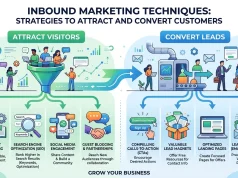
Before diving into specific techniques, it helps to understand the framework they operate within. The inbound marketing funnel maps the customer journey from first contact to loyal advocacy.
|
Funnel Stage |
Goal |
Key Tactics |
|---|---|---|
|
Attract |
Drive relevant traffic |
SEO, content marketing, social media |
|
Engage |
Convert visitors into leads |
Lead magnets, landing pages, email capture |
|
Nurture |
Build trust and move leads toward purchase |
Email sequences, retargeting, personalization |
|
Convert |
Turn prospects into customers |
CRO, sales enablement, demos |
|
Delight |
Retain and turn customers into advocates |
Onboarding, loyalty programs, community |
Each stage requires its own mix of inbound marketing techniques. The most successful businesses treat this as a system, not a series of disconnected tactics.
The Most Effective Inbound Marketing Techniques
1. Search Engine Optimization (SEO)
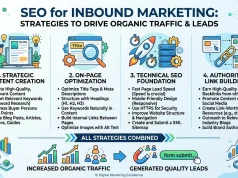
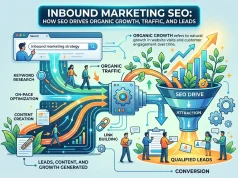
SEO is the foundation of nearly every successful inbound marketing strategy. When potential customers search for answers to their problems, appearing at the top of those results puts your brand directly in their path—without paying for every click.
Modern SEO goes well beyond stuffing keywords into a webpage. It encompasses:
- Technical SEO: Ensuring your site loads fast, is mobile-friendly, and is crawlable by search engines
- On-page optimization: Structuring content with clear headings, meta data, internal links, and relevant keywords
- Content depth: Creating comprehensive resources that answer questions more thoroughly than competitors
- Authority building: Earning backlinks from credible websites that signal trustworthiness to search engines
For long-term business growth, ranking for high-intent keywords—terms people search when they’re close to making a decision—delivers consistent, compounding returns. A single well-optimized blog post can generate leads for years with minimal ongoing maintenance.
How to prioritize your SEO efforts
Start with keyword research. Tools like Ahrefs, SEMrush, and Google Search Console reveal what your target audience is actively searching for. Focus on keywords with a combination of meaningful search volume, manageable competition, and clear relevance to your product or service.
From there, build a content calendar that systematically targets these terms, clusters related topics together, and establishes topical authority across your niche.
2. Content Marketing
Content marketing and inbound marketing techniques are inseparable. Content is the vehicle through which you deliver value, answer questions, demonstrate expertise, and guide prospects through the inbound marketing funnel.
Effective content marketing spans multiple formats:
- Blog posts and articles: Great for capturing organic search traffic and establishing authority
- Videos and webinars: High-engagement formats suited for explaining complex topics or demonstrating products
- Infographics and data visualizations: Shareable content that simplifies complex information
- Case studies and white papers: Powerful for B2B audiences who need evidence before making decisions
- Podcasts: Build deep audience relationships and position brand spokespeople as thought leaders
The key is aligning content with each stage of the buyer’s journey. Top-of-funnel content educates and attracts. Middle-of-funnel content nurtures consideration. Bottom-of-funnel content removes barriers to purchase.
Building a content strategy that supports lead generation strategies
Content without strategy is just noise. A strong content plan identifies the questions your ideal customers ask at each stage of their journey, assigns content types to each stage, and sets clear goals—whether that’s traffic, email sign-ups, demo requests, or something else.
Consistency matters as much as quality. Publishing regularly signals to search engines and audiences alike that your brand is active, credible, and worth paying attention to.
3. Social Media Marketing
Social media isn’t just for brand awareness—it’s a direct channel for engaging potential customers, sharing content, and building the kind of community that feeds long-term business growth.
The most effective inbound marketing strategy treats social media as a distribution and conversation layer, not a broadcasting tool. Rather than simply posting promotional content, successful brands on social media:
- Share educational content that adds value without asking for anything in return
- Engage in comments and conversations to build authentic relationships
- Leverage user-generated content and customer stories to build social proof
- Use short-form video (Reels, TikTok, YouTube Shorts) to reach new audiences organically
Platform selection matters. LinkedIn dominates for B2B lead generation. Instagram and TikTok tend to excel for consumer brands with visual products. YouTube remains the gold standard for long-form, evergreen video content.
Social media as a lead generation strategy
To move social media engagement into your inbound marketing funnel, you need a clear path from attention to action. That typically means directing followers to valuable resources—a free guide, a webinar registration, a product trial—that require an email address to access.
4. Email Marketing and Nurture Sequences
Once someone enters your inbound marketing funnel, email marketing becomes your most powerful tool for nurturing them toward conversion. Email delivers an average ROI of $36 for every $1 spent, according to Litmus’s 2023 State of Email Report—higher than virtually any other marketing channel.
But raw email volume doesn’t drive those results. Targeted, personalized, behavior-triggered email sequences do.
A high-performing email nurture sequence typically includes:
- A welcome series that introduces new subscribers to your brand, sets expectations, and delivers immediate value
- Educational sequences that deepen understanding of the problem your product solves
- Conversion sequences that surface social proof, address objections, and present clear calls to action
- Re-engagement campaigns for subscribers who have gone cold
Segmentation is critical. Sending every subscriber the same emails ignores where they are in their journey and what they care most about. Modern email platforms like Klaviyo, ActiveCampaign, and HubSpot make behavioral segmentation and automation accessible even for small teams.
5. Lead Magnets and Conversion Optimization
Attracting traffic is only half the challenge. Converting that traffic into identifiable leads—people whose contact information you can use to continue the relationship—requires deliberate conversion rate optimization (CRO).
Lead magnets are the most reliable tool for this. A lead magnet is something valuable enough that a visitor will exchange their email address to receive it. Common formats include:
- Ebooks and downloadable guides
- Checklists and templates
- Free tools, calculators, or assessments
- Webinar registrations
- Free trials or product demos
The most effective lead magnets solve a specific, immediate problem. Vague, generic offers convert poorly. A lead magnet titled “The Complete Guide to Marketing” will underperform one titled “5-Step Checklist for Auditing Your Google Ads Account.”
Optimizing your landing pages for more leads
Landing page performance has an outsized impact on lead generation strategies. Small improvements—sharper headlines, clearer value propositions, reduced form fields—can double or triple conversion rates without increasing traffic.
Run A/B tests consistently. Test one element at a time: headline, call-to-action copy, form length, page layout. Document what you learn and apply it across your site.
6. Search Intent Optimization and Topic Clustering
One of the most powerful shifts in modern inbound marketing strategy is the move from targeting individual keywords to building comprehensive topic clusters. Search engines increasingly reward content that demonstrates deep, holistic expertise on a subject rather than isolated pages optimized for single terms.
A topic cluster consists of:
- A pillar page: A long-form, comprehensive resource covering a broad topic at a high level
- Cluster content: Supporting blog posts and pages that explore specific subtopics in depth
- Internal links: Connecting cluster content back to the pillar page to signal topical authority
This structure benefits business growth marketing by improving rankings across a broad set of related search terms simultaneously—creating multiple entry points into your inbound marketing funnel from a single strategic effort.
7. Influencer and Partnership Marketing
Collaborating with trusted voices in your industry extends your inbound reach to audiences you haven’t yet built. This isn’t about paying celebrities for endorsements—it’s about genuine partnerships with people or organizations whose audiences overlap with your ideal customers.
Effective inbound partnership tactics include:
- Co-authored content: Joint blog posts, research reports, or guides that both parties promote
- Guest posting: Contributing articles to established publications that your target audience reads
- Podcast appearances: Sharing expertise on shows where your prospects already spend time
- Webinar co-hosting: Running educational events with complementary brands
The common thread is value exchange. Your brand brings expertise; the partner brings audience access. Both sides win, and—critically—so does the audience.
8. Analytics, Measurement, and Continuous Improvement
Inbound marketing techniques only compound in value when you measure what works and double down on it. Too many businesses invest in content, SEO, and email without tracking the metrics that reveal which efforts are actually driving growth.
The most important metrics to track across your inbound marketing funnel include:
|
Metric |
What It Tells You |
|---|---|
|
Organic traffic |
How well your SEO and content efforts are performing |
|
Lead conversion rate |
How effectively your site converts visitors into contacts |
|
Email open and click rates |
Whether your messaging resonates with your audience |
|
Cost per lead |
How efficiently you’re acquiring new leads |
|
Lead-to-customer conversion rate |
How well your nurture sequences close deals |
|
Customer acquisition cost (CAC) |
The total cost to acquire a new customer |
|
Customer lifetime value (CLV) |
The long-term revenue value of a retained customer |
Set a regular cadence—monthly or quarterly—for reviewing these metrics as a team. Use the data to identify what’s working, what isn’t, and where the biggest growth opportunities lie.
How to Build a Complete Inbound Marketing Strategy from Scratch
Pulling individual inbound marketing techniques together into a coherent strategy requires a clear process. Here’s a proven framework:
Step 1: Define your ideal customer profile (ICP)
Identify exactly who your best customers are—their demographics, job roles, pain points, goals, and buying behaviors. Everything in your inbound marketing strategy flows from this.
Step 2: Map the buyer’s journey
Document the questions and concerns your ideal customers have at each stage: awareness, consideration, and decision. This map becomes your content brief.
Step 3: Audit your existing assets
Review your current website, content library, social media presence, and email list. Identify gaps between what you have and what your buyer’s journey requires.
Step 4: Set measurable goals
Define what success looks like—specific targets for traffic, leads, conversion rates, and revenue—tied to a timeline.
Step 5: Build and execute a content calendar
Plan your content production around the topics and formats that will serve your ICP at each funnel stage. Prioritize quality and consistency over volume.
Step 6: Optimize for conversion at every touchpoint
Review your landing pages, CTAs, forms, and email sequences with conversion rate optimization in mind. Remove friction at every step.
Step 7: Measure, learn, and iterate
Review your performance data regularly. Double down on what drives results. Cut what doesn’t. Inbound marketing is a long game—the businesses that win are the ones that stay consistent and keep improving.
Common Mistakes That Undermine Inbound Marketing Results

Even well-intentioned inbound efforts can fall flat. The most common reasons businesses struggle with lead generation strategies through inbound include:
- Creating content without an SEO strategy: Traffic won’t come if no one can find your content
- Ignoring the middle and bottom of the funnel: Attracting traffic without nurturing it means leads evaporate before converting
- Inconsistency: Publishing a few posts and then going quiet signals abandonment—both to audiences and to search engines
- Misaligned content: Writing about topics your audience doesn’t care about, rather than the questions they actually search
- No clear conversion path: Content that informs but never invites action leaves revenue on the table
Recognizing these pitfalls early saves significant time, budget, and frustration.
What the Future of Inbound Marketing Looks Like
Inbound marketing strategy is evolving rapidly alongside changes in search, AI, and consumer behavior. Several trends are reshaping how businesses approach business growth marketing:
AI-generated content saturation: As AI tools make content creation faster and cheaper, standing out requires greater depth, originality, and genuine expertise. Surface-level content will struggle to rank or engage.
Answer Engine Optimization (AEO): Search engines and AI tools increasingly surface direct answers to questions, bypassing traditional links. Structuring content to provide clear, quotable answers becomes increasingly important.
Video-first consumption: Short and long-form video consumption continues to grow. Brands that invest in video content—particularly educational formats—are reaching audiences that text-based content increasingly misses.
Personalization at scale: Email and website personalization tools have made it practical for even small teams to deliver tailored experiences. Generic, one-size-fits-all messaging will progressively underperform.
The underlying principle of inbound—earn attention by delivering value—remains constant even as the tactics evolve.
Here’s a quick recap of the key inbound marketing techniques covered in this post:
|
Technique |
Primary Benefit |
Funnel Stage |
|---|---|---|
|
SEO |
Drives long-term organic traffic |
Attract |
|
Content Marketing |
Builds authority and addresses buyer questions |
Attract / Engage |
|
Social Media Marketing |
Expands reach and builds community |
Attract / Engage |
|
Email Marketing |
Nurtures leads toward conversion |
Nurture / Convert |
|
Lead Magnets and CRO |
Converts traffic into identifiable leads |
Engage / Convert |
|
Topic Clustering |
Builds topical authority across keyword sets |
Attract |
|
Partnership Marketing |
Reaches new, pre-qualified audiences |
Attract |
|
Analytics and Measurement |
Identifies what’s working and guides improvement |
All stages |
An effective inbound marketing strategy ties these techniques together around a deep understanding of your ideal customer—delivering the right content, through the right channel, at the right stage of their journey.
Taking the Next Step Toward Sustainable Business Growth
Inbound marketing isn’t a quick fix. It’s a compounding investment—the kind that gets stronger over time as your content library grows, your domain authority builds, and your audience expands. Businesses that commit to it tend to see results accelerate significantly after the first six to twelve months of consistent execution.
Start with the fundamentals: understand your audience, create content that genuinely serves them, optimize your site for search, and build a system for capturing and nurturing leads. From there, layer in more sophisticated techniques as your capacity and data allow.
The businesses winning today with inbound marketing aren’t the ones with the biggest budgets—they’re the ones with the clearest strategy, the most consistent execution, and the genuine commitment to delivering value at every touchpoint.
Frequently Asked Questions
What are inbound marketing techniques?
Inbound marketing techniques are methods used to attract potential customers by creating and sharing valuable content that addresses their needs and questions. Common techniques include SEO, content marketing, social media engagement, email nurture sequences, and lead magnets. These work together to guide prospects through the inbound marketing funnel from awareness to purchase.
How long does it take for inbound marketing to generate leads?
The timeline varies based on your starting point, competitive landscape, and how consistently you execute. SEO and content marketing typically take three to six months to generate meaningful organic traffic. Email marketing and paid amplification can accelerate early results. Most businesses see significant lead volume from inbound marketing strategy within six to twelve months of consistent effort.
What is the difference between inbound and outbound marketing?
Outbound marketing pushes messages to audiences who may not have asked for them—think cold calls, display ads, and direct mail. Inbound marketing pulls customers toward your brand by offering content and experiences they actively seek out. Inbound tends to produce higher-quality leads at lower cost, while outbound can generate faster initial awareness.
Which inbound marketing technique delivers the best ROI?
SEO combined with content marketing consistently delivers the highest long-term ROI, since well-ranked content generates traffic and leads without recurring cost-per-click. Email marketing typically delivers the highest short-term ROI, with Litmus reporting an average return of $36 per $1 spent. The most effective inbound marketing strategy combines both.
How does the inbound marketing funnel work?
The inbound marketing funnel maps the customer journey through four main stages: Attract (driving relevant traffic), Engage (converting visitors into leads), Nurture (building trust and guiding prospects toward a decision), and Convert (turning prospects into paying customers). A fifth stage—Delight—focuses on retaining customers and turning them into brand advocates.
Do small businesses benefit from inbound marketing?
Inbound marketing is particularly well-suited to small businesses because it prioritizes quality and relevance over budget size. A small business with a clear niche, deep audience understanding, and consistent content production can outrank and outperform larger competitors in organic search. The main investment required is time and expertise, not advertising spend.
What tools are used for inbound marketing?
Popular tools include HubSpot (all-in-one inbound platform), Ahrefs and SEMrush (SEO and keyword research), Mailchimp and ActiveCampaign (email marketing), Buffer and Hootsuite (social media scheduling), and Google Analytics and Search Console (performance measurement). The right stack depends on your team size, budget, and the specific lead generation strategies you’re prioritizing.