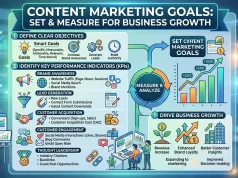

Inbound marketing analytics refers to the practice of tracking, measuring, and interpreting data from your inbound marketing efforts—content, SEO, email, and lead generation—to make smarter business decisions. When used correctly, inbound marketing analytics helps organizations reduce wasted spend, improve conversion rates, and build sustainable growth.
Most marketing teams are drowning in data. Dashboards everywhere. Reports that nobody reads. Numbers that look impressive in a slide deck but don’t actually tell you what to do next.
That’s the core problem with how many businesses approach their marketing data. They collect it. They store it. They occasionally glance at it. But they rarely use it to make meaningful decisions.
Inbound marketing analytics changes that. Rather than tracking everything for the sake of tracking, it focuses your attention on the metrics that actually connect to revenue—how people find you, what compels them to engage, where they drop off, and what finally convinces them to buy.
This guide breaks down exactly how to measure inbound marketing performance across every stage of the funnel. You’ll learn which KPIs matter, how to structure your reporting, how to calculate ROI, and how to turn raw data into decisions that grow your business.
Whether you’re just getting started or looking to sharpen an existing strategy, this is the inbound marketing analytics resource you’ll want to bookmark.
What Is Inbound Marketing Analytics and Why Does It Matter?
Inbound marketing is the practice of attracting customers through valuable content, search visibility, and meaningful engagement—rather than interrupting them with ads. Inbound marketing analytics is the discipline of measuring how well that attraction strategy is actually working.
The reason it matters comes down to accountability. Traditional advertising has always struggled with attribution. Inbound channels—organic search, content marketing, email, social—generate trackable signals at every touchpoint. That means you can see, with reasonable precision, which blog posts are generating leads, which email sequences are converting subscribers into customers, and which landing pages are quietly killing your conversion rate.
Without a structured approach to inbound marketing analytics, you’re making budget decisions based on intuition. With it, you’re making them based on evidence.
How to Measure Inbound Marketing Performance Across the Funnel

Inbound marketing operates across three broad stages: attracting visitors, converting them into leads, and nurturing those leads into customers. Each stage requires a different set of metrics.
Attracting Traffic: Top-of-Funnel Metrics
At the top of the funnel, your goal is visibility. The question you’re trying to answer is: are the right people finding you?
Key metrics at this stage include:
|
Metric |
What It Tells You |
|---|---|
|
Organic sessions |
How much traffic your SEO and content efforts are generating |
|
Keyword rankings |
Which search terms are driving visibility |
|
Click-through rate (CTR) |
Whether your titles and meta descriptions are compelling enough |
|
New vs. returning visitors |
Whether you’re reaching new audiences or retaining existing ones |
|
Traffic by channel |
Which sources (organic, social, referral, email) are most effective |
Organic search is the backbone of most inbound strategies. If organic sessions are flat while you’re publishing consistently, that’s a signal worth investigating—it could point to keyword targeting issues, technical SEO problems, or content quality gaps.
Converting Visitors: Mid-Funnel Metrics
Traffic without conversion is just noise. Mid-funnel analytics focuses on how well your website turns visitors into leads.
The most important metric here is your lead generation rate: the percentage of visitors who complete a desired action, such as filling out a form, downloading a resource, or signing up for a trial.
Other mid-funnel metrics worth tracking:
- Landing page conversion rate — Are your dedicated campaign pages doing their job?
- Form completion rate — Where do users abandon the form, and why?
- Time on page — Are visitors engaging with your content or bouncing immediately?
- Scroll depth — How far down a page does the average reader get?
- Bounce rate by source — Is traffic from a specific channel consistently low-quality?
Lead generation analytics becomes particularly useful when you segment by source. A landing page converting at 4% for organic traffic but only 1.2% for paid traffic tells you something meaningful about audience intent and message alignment.
Nurturing Leads: Bottom-of-Funnel Metrics
Once someone becomes a lead, the goal shifts from attraction to conversion. Here, inbound marketing analytics overlaps significantly with CRM data and email performance.
Key metrics at this stage include:
- Lead-to-customer conversion rate — The percentage of leads that ultimately become paying customers
- Email open rate and click rate — Indicators of how well your nurture sequences are performing
- Sales cycle length — How long it takes a lead to move from first contact to closed deal
- MQL to SQL conversion rate — How effectively marketing-qualified leads are transitioning to sales-qualified status
- Revenue by lead source — Which acquisition channels are generating the most valuable customers
The Inbound Marketing KPI Guide: Which Metrics Actually Matter?
Not all metrics deserve equal attention. Some are genuinely predictive of business outcomes. Others—often called vanity metrics—look good in reports but don’t correlate with revenue.
Here’s a practical inbound marketing KPI guide to help you distinguish between the two:
High-Value KPIs to Prioritize
Customer Acquisition Cost (CAC) measures how much you spend to acquire a single customer through inbound channels. To calculate it, divide your total inbound marketing spend by the number of customers acquired through those channels during the same period.
Lifetime Value (LTV) estimates the total revenue a customer will generate over their relationship with your business. When combined with CAC, it tells you whether your inbound investment is financially sustainable. A healthy LTV:CAC ratio is generally 3:1 or higher.
Marketing-Originated Revenue tracks how much of your total closed revenue can be attributed to marketing-generated leads. This is the single most compelling number you can bring to a board meeting.
Content Engagement Rate measures the quality of interaction with your content—comments, shares, time on page, and return visits. This metric is particularly useful for content marketing analytics because it distinguishes content that genuinely resonates from content that simply drives clicks.
Metrics to Monitor, Not Obsess Over
- Social media followers — A growing audience is useful context, but follower count alone doesn’t predict revenue.
- Page views — Volume matters less than what visitors do once they land on a page.
- Email list size — List quality (engagement rate, lead score) almost always matters more than raw size.
Website Analytics for Inbound Marketing: Setting Up Your Tracking Foundation
Good inbound marketing data analysis starts with reliable data collection. Before you can draw meaningful conclusions, you need to make sure your tracking infrastructure is sound.
Setting Up Google Analytics 4 (GA4) Correctly
GA4, Google’s current analytics platform, uses an event-based data model that gives marketers more flexibility than its predecessor. To get the most from website analytics for inbound marketing, ensure the following are configured:
- Goal tracking — Define conversions (form fills, downloads, sign-ups) as GA4 conversion events
- Traffic source attribution — Use UTM parameters on all campaigns to accurately attribute sessions
- Funnel exploration — Use GA4’s funnel reports to visualize where users drop off between key steps
- Audience segments — Create segments based on behavior (e.g., users who visited three or more blog posts) to identify high-intent visitors
Connecting Analytics to Your CRM
Website analytics tells you what’s happening on your site. Your CRM tells you what happens after someone becomes a lead. Connecting the two—through integrations with platforms like HubSpot, Salesforce, or Pipedrive—gives you a complete picture of the customer journey.
This connection is essential for accurate inbound marketing ROI measurement. Without it, you can see that a blog post drove 500 form submissions, but you can’t see how many of those eventually became customers, or how much revenue they generated.
Inbound Marketing Data Analysis: How to Turn Numbers into Decisions
Collecting data is the easy part. Interpreting it correctly—and knowing which signals to act on—is where most marketing teams struggle.
A Practical Framework for Inbound Marketing Reporting
Effective inbound marketing reporting best practices center on three habits: reporting at the right cadence, comparing the right benchmarks, and framing data around business questions rather than marketing metrics.
Weekly reporting should focus on leading indicators: traffic trends, email performance, and any anomalies worth investigating. These are operational check-ins, not strategic reviews.
Monthly reporting is where you examine conversion rates, lead quality, and channel performance. This is where you identify patterns—a content topic that’s consistently driving high-quality leads, or a traffic source that’s generating volume but not conversions.
Quarterly reporting is the strategic layer. Here you calculate ROI, assess progress against annual goals, and make resource allocation decisions. This is the layer where inbound marketing data analysis should directly inform budget conversations.
Diagnosing Performance Problems
When numbers aren’t where they should be, the instinct is often to produce more content or spend more on promotion. More useful is a structured diagnostic approach:
- Traffic is low, but conversion rate is high → You have a strong offer but limited reach. Invest in distribution and SEO.
- Traffic is high, but conversion rate is low → Your audience isn’t converting. Audit your landing pages, CTAs, and offer alignment.
- Leads are high, but revenue is low → You’re attracting the wrong audience. Review your targeting, keyword strategy, and content topics.
- Revenue is strong, but CAC is rising → Your most efficient channels may be saturating. Explore new acquisition channels.
How to Measure Inbound Marketing ROI
Inbound marketing ROI measurement is often cited as one of the most challenging aspects of the discipline—primarily because inbound efforts take time to compound and don’t always produce clean, direct attribution paths.
That said, a workable ROI formula for inbound marketing is:
ROI = (Revenue Attributed to Inbound – Inbound Marketing Costs) / Inbound Marketing Costs × 100
To apply this accurately, you need three things:
- Clear cost accounting — Include all relevant costs: tools, content production, agency fees, and staff time.
- Attribution modeling — Decide how you’ll credit revenue to marketing touchpoints. First-touch, last-touch, and linear attribution each tell a different story.
- A defined time horizon — Inbound marketing ROI typically improves over time as content compounds. Measuring it over too short a period will undervalue the channel.
According to HubSpot’s State of Marketing Report, businesses that prioritize inbound marketing are three times more likely to see higher ROI than those focused primarily on outbound. Content assets—particularly SEO-optimized blog posts—continue generating traffic and leads for months or years after publication, making the long-term ROI of inbound marketing significantly stronger than most short-term channels.
Content Marketing Analytics: Measuring What Your Content Is Actually Doing
Content is the engine of most inbound strategies, and content marketing analytics is how you figure out which parts of that engine are performing and which are stalling.
Metrics to Track for Blog Content
|
Metric |
Why It Matters |
|---|---|
|
Organic sessions per post |
Measures SEO reach |
|
Average time on page |
Indicates content quality and relevance |
|
Scroll depth |
Shows whether readers are consuming the full piece |
|
Conversions attributed to post |
Connects content to business outcomes |
|
Backlinks earned |
Signals content authority and SEO value |
Identifying High-Performing Content Patterns
Once you have six months or more of content performance data, look for patterns rather than individual outliers. Do posts over 2,000 words consistently outperform shorter ones? Does content on a particular topic category generate more leads? Are listicles or guides driving more organic traffic than opinion pieces?
These patterns should directly inform your editorial strategy. Inbound marketing analytics is most powerful not when it evaluates a single piece of content, but when it shapes the entire content program going forward.
Inbound Marketing Reporting Best Practices: Communicating Results Effectively
Even the most rigorous data analysis loses its value if it can’t be communicated clearly to decision-makers. Here are a few inbound marketing reporting best practices worth adopting:
Lead with business outcomes, not marketing metrics. Instead of opening a report with “we published 12 blog posts this month,” lead with “inbound marketing generated 214 qualified leads this month, up 18% from the previous period.”
Use benchmarks. Raw numbers mean little without context. Compare performance to previous periods, industry benchmarks, and your own targets.
Keep dashboards focused. A dashboard with 40 metrics is a dashboard nobody uses. Pick 8–12 KPIs that directly connect to your business goals and make those the centerpiece of every report.
Separate signal from noise. Not every fluctuation warrants a response. Teach stakeholders the difference between a meaningful trend and normal statistical variance.
Final Thoughts: Making Inbound Marketing Analytics a Competitive Advantage

Businesses that treat analytics as an afterthought will always be playing catch-up. Those that build inbound marketing analytics into the foundation of their strategy—tracking the right metrics, connecting data across tools, and using insights to make faster, better decisions—are the ones that compound their results over time.
Start with clarity. Define what success looks like for your inbound program, then build your measurement framework around those outcomes. Don’t chase every metric available to you; focus on the ones that connect to revenue.
From there, it’s an iterative process. Measure, analyze, adjust, repeat. Inbound marketing analytics isn’t a project you complete—it’s a capability you develop. And the earlier you invest in developing it, the more durable your competitive advantage becomes.
Frequently Asked Questions
What is inbound marketing analytics?
Inbound marketing analytics is the process of collecting, measuring, and interpreting data from inbound marketing channels—including SEO, content, email, and social media—to evaluate performance and guide strategic decisions. It connects marketing activity to business outcomes like leads generated, customers acquired, and revenue earned.
What are the most important inbound marketing KPIs?
The most important inbound marketing KPIs depend on your business stage, but generally include organic traffic, lead conversion rate, customer acquisition cost (CAC), lifetime value (LTV), marketing-originated revenue, and email engagement rates. These metrics connect directly to revenue rather than vanity indicators like follower count or page views.
How do I calculate inbound marketing ROI?
To calculate inbound marketing ROI, subtract your total inbound marketing costs from the revenue attributed to inbound, divide by total costs, and multiply by 100. Accurate ROI measurement requires clear cost accounting, a defined attribution model, and a long enough time horizon to capture compounding content performance.
What tools are best for inbound marketing data analysis?
Google Analytics 4 (GA4) is the foundation for website analytics. Pair it with a CRM like HubSpot or Salesforce for lead attribution, and a platform like SEMrush or Ahrefs for SEO performance tracking. Marketing automation tools like Mailchimp or ActiveCampaign provide email analytics. The key is ensuring these tools are connected so data flows across the customer journey.
How often should I report on inbound marketing performance?
Weekly reporting should cover operational metrics like traffic and email performance. Monthly reporting should examine conversion rates, channel performance, and lead quality. Quarterly reporting should focus on ROI, strategic trends, and budget decisions. Each reporting cadence serves a different purpose and audience.
Why is my inbound traffic high but conversion rate low?
A high-traffic, low-conversion scenario typically indicates a mismatch between your audience and your offer. The content may be attracting visitors who aren’t your target customer, or the landing page experience may not be compelling enough to prompt action. Audit your CTAs, landing page copy, and offer relevance relative to the content driving the traffic.
How long does it take to see results from inbound marketing?
Most businesses begin to see measurable inbound marketing results within 3–6 months, with compounding growth becoming more pronounced after 12 months. SEO-driven content, in particular, tends to build momentum over time as pages accumulate authority, backlinks, and ranking positions. Inbound marketing analytics helps you track this progression and identify which efforts are gaining traction earliest.