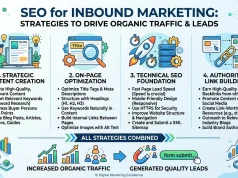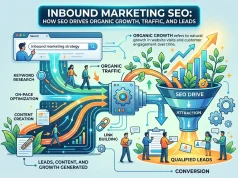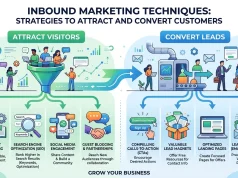

Smart inbound systems help Attract Customers by answering real questions, improving search visibility, and nurturing interest with useful content that feels helpful, timely, and trustworthy.
To Attract Customers in a crowded market, a brand has to earn attention instead of demanding it. That is the heart of inbound marketing. People do not want every brand to interrupt them. They want answers, clarity, and confidence before they take action. When your marketing helps them solve problems, learn faster, and feel understood, you create a path that naturally helps Attract Customers without pressure.
A strong inbound system works because it matches human behavior. Buyers search before they buy, compare before they commit, and trust helpful brands more than noisy ones. If your business wants to Attract Customers consistently, you need a process that combines content, SEO, and lead generation into one clear journey. That journey should feel useful from the first visit to the final conversion.
Inbound marketing is not a single tactic. It is a connected approach that helps Attract Customers by meeting them at each stage of decision-making. A blog post can introduce your brand. A search result can capture intent. A lead magnet can deepen interest. A follow-up email can build trust. When these pieces work together, they create momentum that keeps growing over time.
What Inbound Marketing Really Means
Inbound marketing is the practice of creating value so people come to you. Instead of chasing buyers with broad promotion, you build content and systems that help Attract Customers through relevance. This could include articles, guides, videos, landing pages, email sequences, or SEO-driven resources. Each piece should answer a question, reduce uncertainty, or show the next step.
The reason this model works so well is simple: it respects the audience. People like discovering helpful brands on their own terms. When your content is educational and your website is easy to navigate, you make it easier to Attract Customers who are already interested in the topic. That means better quality traffic and stronger conversion potential.
An effective Inbound marketing strategy should be built around the customer’s problems, not your company’s preferences. That shift matters because people do not wake up looking for your product. They wake up looking for relief, clarity, speed, savings, or confidence. If your message can help Attract Customers by speaking to those needs, the marketing starts to feel like assistance rather than advertising.
Start with the Buyer Journey
To Attract Customers consistently, you must understand how people move from awareness to decision. The buyer journey usually includes three stages: problem recognition, evaluation, and action. A smart Inbound marketing funnel supports all three stages instead of trying to force a sale too early.
At the awareness stage, people are asking broad questions. They may not know your brand yet, but they know they have a problem. This is where educational content works best. If your content can Attract Customers by giving them a clear explanation or a useful framework, you build early trust.
At the evaluation stage, people compare options. They want proof, examples, benefits, and differences. This is where SEO for inbound marketing becomes especially important because search intent gets more specific. If your pages can Attract Customers by answering comparison questions or addressing objections, you move them closer to action.
At the decision stage, people need confidence. They want to know what happens next, whether the offer is worth it, and how risky the choice is. That is where lead generation with inbound marketing matters most. A strong offer, a clear call to action, and a smooth follow-up system help Attract Customers who are ready to convert.
Build Content That Solves Real Problems

Content is one of the most powerful ways to Attract Customers because it gives value before asking for anything in return. A helpful blog post can bring in search traffic, educate the audience, and position your brand as a trusted resource. That is why an inbound marketing content strategy should begin with customer questions, not keyword lists alone.
You want to create content that answers the exact problems your audience is already trying to solve. The better your content solves those problems, the easier it becomes to Attract Customers who are already motivated. This includes how-to articles, beginner guides, checklists, case studies, FAQs, templates, and resource pages.
The tone matters too. People are more likely to engage when the content feels practical and human. To Attract Customers, your writing should be clear, focused, and easy to act on. Avoid jargon when simple language does the job better. Your goal is not to impress readers with complexity. Your goal is to Attract Customers by making the next step obvious.
Content Types That Support Growth
A strong inbound system may use several types of content:
- Educational blogs
- SEO landing pages
- Product comparison pages
- Case studies
- Lead magnets
- Email nurturing sequences
- Video explainers
- Interactive checklists
Each format can help Attract Customers in a different way. Blogs are great for awareness. Case studies are great for trust. Lead magnets are great for capture. Emails are great for nurturing. When the formats work together, the brand experience feels complete.
Use SEO to Capture Existing Demand
SEO is one of the most reliable ways to Attract Customers because it connects your content to active search behavior. Instead of hoping people will notice your brand, you appear when they are already looking for an answer. That makes the traffic more valuable because intent is already present.
Good SEO for inbound marketing starts with understanding what people search for and why they search for it. You do not just want volume. You want intent. A page should Attract Customers by matching the language, urgency, and specificity of the query. If someone searches for a beginner guide, the page should teach. If someone searches for a solution, the page should help them take the next step.
Keyword research, internal linking, page structure, meta descriptions, and headings all support the goal to Attract Customers through organic discovery. But SEO is not only about rankings. It is also about clarity. Search engines reward pages that help users find what they need quickly. That means your content should be structured, readable, and useful enough to Attract Customers and keep them engaged.
Combine SEO with Helpful Offers
To Attract Customers effectively, SEO should not stop at traffic. A visitor who reads one article and leaves is only a partial win. The next step is to offer something helpful enough to continue the relationship. That might be a downloadable checklist, a mini course, a consultation, a free template, or a useful email series.
This is where content marketing for lead generation becomes important. The content itself creates interest, and the offer captures that interest before it disappears. When a visitor finds value in your article and then receives an equally useful next step, your brand becomes easier to trust. That is how you Attract Customers while building a qualified email list at the same time.
The key is alignment. Your lead magnet should match the content topic and the customer’s current stage. If a person reads about a specific problem, the offer should help solve that problem more deeply. This continuity makes it easier to Attract Customers because the experience feels seamless rather than pushy.
Create a Lead Generation System
Lead generation with inbound marketing is the bridge between traffic and revenue. It turns anonymous readers into known contacts and known contacts into interested buyers. Without this bridge, your effort to Attract Customers may generate attention but not business results.
A lead generation system should include a landing page, a clear offer, a simple form, and a follow-up sequence. The landing page should explain the value quickly. The form should ask only for what you need. The follow-up sequence should continue to Attract Customers by giving more value, answering objections, and guiding the next step.
Good lead generation is not about collecting as many names as possible. It is about attracting people who are likely to care. If your offer is relevant, the leads will be more qualified. That makes the rest of the funnel easier because you are not trying to Attract Customers from scratch after the form submission.
Make the Funnel Easy to Follow
An Inbound marketing funnel should feel natural. People should move from discovery to interest to action without confusion. If your journey feels too complicated, you may lose the very people you worked hard to Attract Customers in the first place.
Keep the funnel simple. A blog post can introduce the topic. A content upgrade can deepen interest. A landing page can capture the lead. An email sequence can nurture the contact. A sales page or consultation can drive conversion. Each step should feel like the next logical move.
The easiest way to Attract Customers through a funnel is to reduce friction. Make the call to action visible. Keep the language clear. Remove unnecessary steps. Every extra barrier makes it harder to retain the attention you worked hard to Attract Customers with earlier in the process.
Build Trust Before the Ask
People rarely buy the first time they hear about a brand. They often need reassurance. That is why trust-building should sit at the center of any plan to Attract Customers. Trust is created through consistency, honesty, usefulness, and proof.
You can build trust with educational content, testimonials, detailed FAQs, transparent explanations, and helpful comparisons. These assets show that your brand understands the customer’s concerns. When the audience feels understood, it becomes easier to Attract Customers because the brand no longer feels distant or risky.
Trust also comes from tone. If your content sounds aggressive or overly promotional, people may hesitate. If it sounds steady, knowledgeable, and genuinely helpful, they are more likely to keep reading. That consistency helps Attract Customers over time, especially in competitive industries.
Use Calls to Action Wisely
A call to action should not feel like a command. It should feel like a helpful next step. If you want to Attract Customers successfully, your CTA should match the value of the content and the readiness of the reader.
For example, a top-of-funnel article might invite readers to download a guide. A mid-funnel article might invite readers to compare options. A bottom-funnel page might invite readers to book a call or start a trial. Each CTA should fit the moment. That makes it easier to Attract Customers without pushing too hard.
The best CTAs are specific and clear. They show what happens when someone clicks and why it matters. A vague prompt creates hesitation. A focused one makes the next step feel easy. That simplicity helps Attract Customers move forward with confidence.
Use Email to Continue the Relationship
Email is one of the strongest channels to Attract Customers after the first interaction because it keeps the conversation going. A reader may not be ready to buy today, but they may be ready next week. Email gives you a way to stay present without being intrusive.
A well-designed email sequence can Attract Customers by adding more value after the initial opt-in. You can share tips, answer objections, offer examples, and guide readers toward a decision. This is where your inbound marketing campaign strategy becomes especially important because the follow-up matters just as much as the first click.
The most effective emails are short, useful, and specific. They should feel like a continuation of the content experience, not a separate sales pitch. If your emails help Attract Customers by solving problems and building confidence, they become a powerful part of your funnel.
Measure What Actually Moves the Business
To Attract Customers effectively, you need to know which activities create real results. That means tracking more than traffic. You should monitor organic clicks, time on page, scroll depth, form submissions, email open rates, click-through rates, and conversions.
If a page gets traffic but no leads, the issue may be the offer, the CTA, or the page structure. If an email gets opens but no clicks, the issue may be the message or the timing. Data helps you refine your approach so you can Attract Customers more efficiently.
The point of measurement is not just reporting. It is improvement. When you know what works, you can do more of it. When you know what fails, you can fix it. That learning cycle is what makes inbound marketing sustainable and scalable.
Make the Content Search-Friendly and Human-Friendly
A page can only Attract Customers if people can find it and understand it. That means writing for both search engines and humans. Search engines need structure, relevance, and clarity. Readers need usefulness, readability, and flow.
Use headings, short paragraphs, examples, and supporting details. Include terms people actually search for, but keep the writing natural. If the content sounds forced, readers will leave. If it sounds human but lacks SEO structure, they may never find it. The balance is essential if you want to Attract Customers through organic channels.
A good page should answer the main question quickly, then expand into useful detail. That approach supports both user experience and search visibility. It also helps Attract Customers because the reader feels respected from the first few lines.
Apply the Right Best Practices
Inbound marketing best practices are mostly about consistency and usefulness. Publish content regularly. Keep your website clear. Make your offers relevant. Update old pages. Improve internal linking. Review analytics. These habits make it easier to Attract Customers over time.
You do not need to do everything at once. Start with the pages and offers most likely to Attract Customers in the near term. Then expand from there. A focused strategy usually performs better than a scattered one because it puts energy behind the highest-value opportunities.
Another best practice is to align every asset with the same customer journey. Your blog, SEO pages, lead magnets, and emails should all support the same overall message. That consistency helps Attract Customers because the brand feels organized and dependable.
Think About Customer Psychology

The most effective inbound systems understand emotion as much as logic. People want to avoid risk, save time, gain confidence, and make good decisions. If your content speaks to those motivations, it becomes easier to Attract Customers in a meaningful way.
Psychology matters in headlines, offers, CTAs, and email follow-ups. Readers respond to clarity, proof, urgency, and belonging. They also respond when a brand sounds like it understands their struggle. That empathy can help Attract Customers even before the product is fully discussed.
A good inbound strategy does not manipulate people. It guides them. It removes uncertainty and makes the journey feel safe. That emotional safety can be one of the strongest reasons people choose to Attract Customers through your brand rather than a competitor.
Build a Repeatable System
To Attract Customers consistently, your marketing cannot depend on random inspiration. It needs a repeatable system. That system should define how you research topics, create content, optimize pages, capture leads, and follow up.
A repeatable process keeps quality stable even when the team grows. It also helps you improve faster because you can see which parts of the system are working. The more repeatable your approach, the easier it becomes to Attract Customers month after month.
This is the real power of inbound marketing. It compounds. One article can attract traffic for months. One email sequence can nurture leads repeatedly. One SEO page can keep generating demand long after publication. That compounding effect is what makes inbound such a strong way to Attract Customers.
Practical Execution Checklist
If you want to put this into action, start with a simple checklist:
- Define the audience
- Identify the main problem
- Research search intent
- Publish helpful content
- Add a relevant lead magnet
- Build a landing page
- Set up an email sequence
- Track performance
- Improve based on results
Each step supports your ability to Attract Customers without relying only on paid promotion. The process works best when every part supports the next one. That continuity gives the customer a smoother experience and gives your brand a better chance to convert interest into action.
Conclusion
Inbound marketing is one of the most reliable ways to Attract Customers because it earns attention instead of demanding it. When your content solves real problems, your SEO connects with search intent, and your lead generation system continues the conversation, you create a pathway that feels useful and trustworthy. That combination builds stronger relationships and better business results. The brands that succeed with inbound marketing are usually the ones that understand the customer’s journey, respect the reader’s time, and keep improving the system over time. If you focus on clarity, relevance, and consistency, you will find it much easier to Attract Customers in a way that lasts.
FAQs
1. What is inbound marketing?
Inbound marketing is a strategy that uses helpful content, SEO, and lead nurturing to draw people toward your brand naturally.
2. How does inbound marketing help Attract Customers?
It helps Attract Customers by answering questions, building trust, and guiding people through a useful buying journey.
3. What content works best for inbound marketing?
Blog posts, guides, case studies, videos, landing pages, and lead magnets usually work well.
4. Why is SEO important in inbound marketing?
SEO helps your content appear in search results when people are already looking for solutions.
5. What is lead generation in inbound marketing?
It is the process of turning visitors into known contacts through forms, offers, and landing pages.
6. How do I build an inbound marketing funnel?
Start with awareness content, then add an offer, a landing page, email nurturing, and a conversion step.
7. How often should I publish content?
Consistency matters more than volume. Publish on a schedule you can maintain well.
8. What metrics should I track?
Track traffic, engagement, conversions, email performance, and lead quality.
9. Is inbound marketing good for small businesses?
Yes. It can be especially effective for small businesses because it builds trust and organic visibility over time.
10. How long does inbound marketing take to work?
It often takes time to build momentum, but the results can compound and become more sustainable than short-term tactics.