
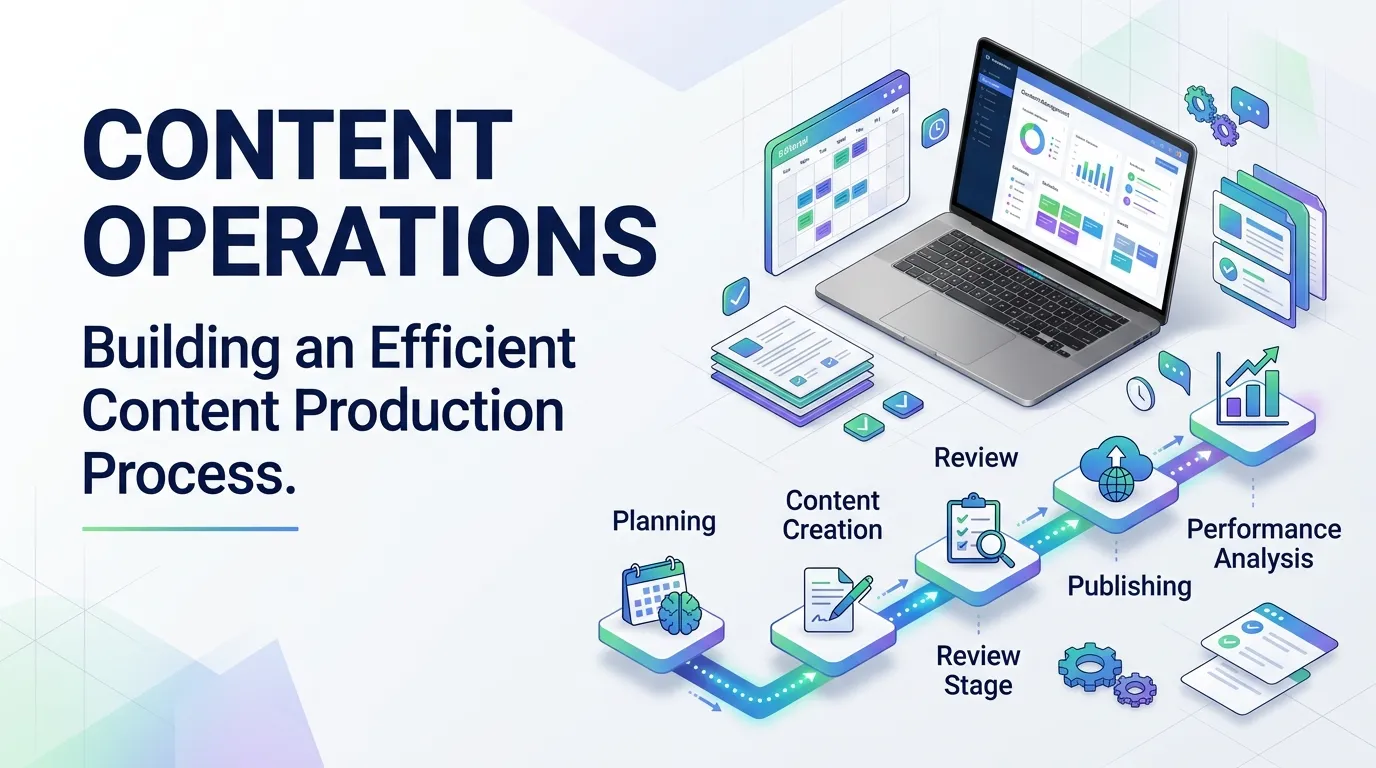
Content operations help businesses manage the complete content lifecycle, from planning and production to editing, publishing, and performance monitoring. A well-organized content operations process improves collaboration, maintains content quality, reduces production delays, and ensures that every piece of content supports broader marketing objectives. By connecting content planning, workflow automation, resource management, and performance analysis, businesses can build a consistent and scalable content production system.
Content has become an essential part of how businesses communicate with audiences, build credibility, and attract potential customers. From blog articles and website pages to email campaigns and social media posts, organizations produce content across multiple channels to support their marketing objectives. However, creating valuable content consistently requires more than good writing and creative ideas. Businesses also need organized processes that connect planning, production, editing, publishing, and performance evaluation.
This is where content operations becomes important. It refers to the systems, workflows, people, technologies, and processes that support content creation and management throughout its lifecycle. When these elements work together, businesses can coordinate their content activities more efficiently while maintaining consistent messaging and quality.
Without an effective content operations structure, teams may experience missed deadlines, duplicated work, unclear responsibilities, and inconsistent publishing schedules. Content creators might spend too much time searching for resources or waiting for approvals, while marketing managers struggle to understand which activities are producing meaningful results.
A structured approach helps eliminate these challenges by establishing clear responsibilities and reliable workflows. It also connects content production with broader marketing objectives, ensuring that every asset serves a meaningful purpose. By improving content operations management, businesses can develop a more organized production environment, strengthen collaboration, and create content that delivers lasting value.
Understanding the Role of Content Operations
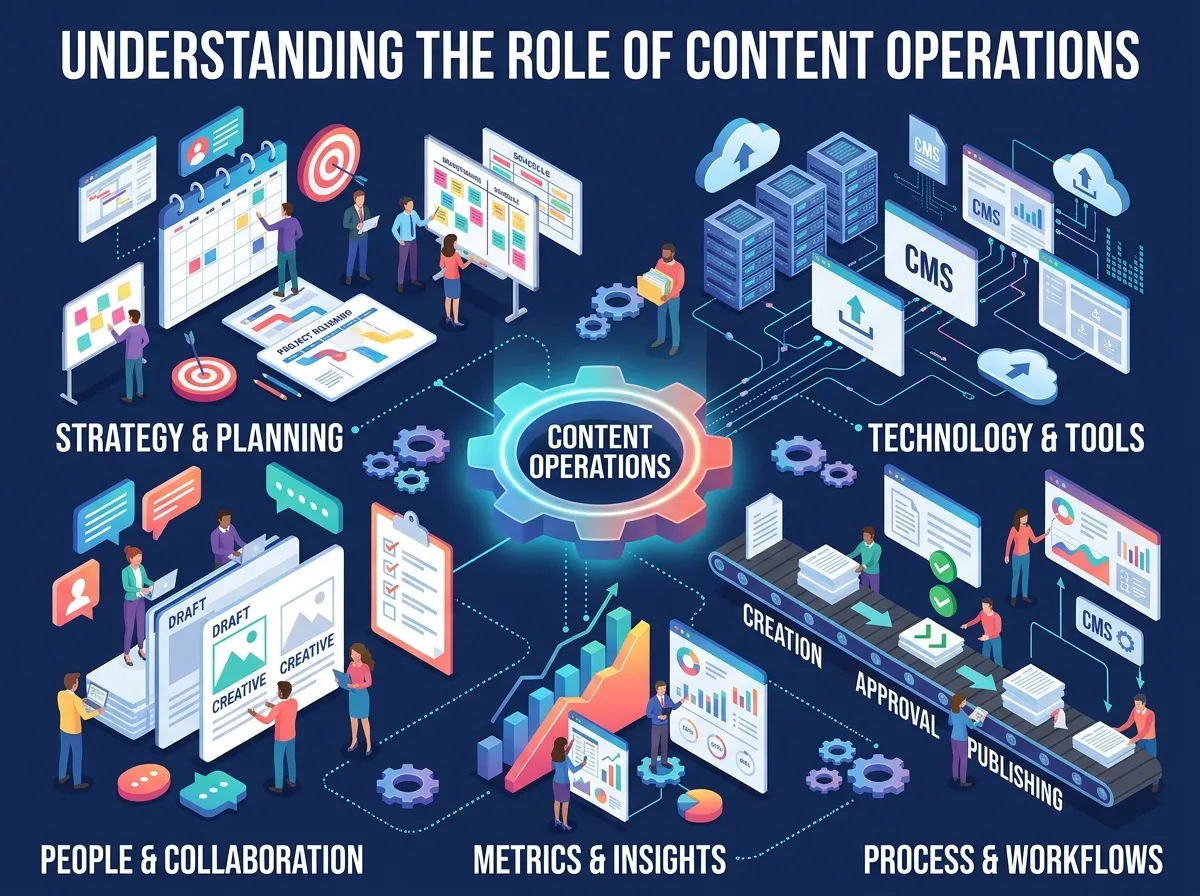
Content operations provides the foundation for producing, managing, distributing, and improving content across an organization. It connects the creative work of writers, designers, editors, marketers, and other specialists with the operational processes required to deliver consistent results.
An effective system covers the entire content lifecycle. It begins with identifying audience needs and developing content ideas, continues through research and production, and extends to publishing, distribution, maintenance, and performance evaluation. Each stage depends on reliable communication and clearly defined responsibilities.
For example, a content team developing educational blog articles needs a shared understanding of its target audience, keyword priorities, editorial standards, deadlines, and approval requirements. When these elements are managed through a coordinated process, writers can focus on producing useful information instead of repeatedly clarifying project details.
Content operations also supports consistency across marketing channels. Businesses often publish different content formats for websites, email campaigns, social media, and other platforms. A coordinated operational structure helps maintain a recognizable brand voice while allowing each asset to suit its intended audience and channel.
The value of content operations extends beyond production speed. It improves visibility into how work progresses, how resources are allocated, and where delays occur. This makes it easier for marketing teams to identify inefficiencies and improve their processes over time.
Content Operations Management and Team Coordination
Content operations management establishes the organizational structure needed to keep content activities moving smoothly. It defines how projects are assigned, how decisions are made, how responsibilities are distributed, and how different team members collaborate.
When these responsibilities remain unclear, content production can become unnecessarily complicated. Multiple people may work on similar tasks, approvals may be delayed, and important details may be overlooked. A clear management structure reduces these problems by establishing ownership at every stage.
Content managers often coordinate editorial planning, resource allocation, production schedules, and communication between departments. Writers focus on research and drafting, editors review accuracy and readability, and publishing specialists prepare approved content for distribution. Although responsibilities may overlap in smaller organizations, every participant should understand their role.
Effective management also requires realistic expectations. Assigning too many projects to a limited team can reduce quality and create persistent delays. Understanding workloads and available resources helps managers establish achievable deadlines and prioritize important content.
A coordinated management process becomes particularly valuable as a business expands its content marketing activities. More contributors, additional channels, and increasing publishing demands create operational complexity. A consistent system allows the organization to scale production without losing control over quality, messaging, or deadlines.
Content Workflow Optimization for Consistent Production
Content workflow optimization focuses on improving how content moves from an initial idea to a finished, published asset. Instead of treating content creation as a collection of disconnected tasks, an optimized workflow establishes a logical sequence that everyone can follow.
A typical workflow includes topic selection, research, briefing, drafting, editing, approval, publishing, and performance review. Each stage should have a clear purpose and an identifiable completion point. This prevents projects from moving forward before essential work has been completed.
Unnecessary handoffs are a common source of delays. A writer may submit a draft without the required research, forcing an editor to request revisions before meaningful editing can begin. Similarly, unclear feedback may result in several rounds of corrections that could have been avoided through better communication.
An organized workflow addresses these problems by defining the information required at each stage. Content briefs can establish the target audience, primary keyword, supporting keywords, search intent, article structure, and internal linking opportunities before writing begins. Editors can then evaluate the draft against agreed-upon expectations.
Workflow optimization also depends on regular evaluation. If projects repeatedly become delayed during approval, the team can examine whether approval responsibilities are too complicated or deadlines are unrealistic. Improving the underlying process is often more effective than simply asking contributors to work faster.
When content workflows are well organized, teams can maintain a more predictable publishing schedule while giving every asset the attention it deserves.
Content Production Process and Editorial Planning
A reliable content production process transforms marketing priorities into finished content that serves a specific audience. It connects strategic planning with the practical work required to create useful, accurate, and engaging material.
The process begins with understanding what audiences want to learn and which topics align with business objectives. Keyword research, customer questions, website analytics, and sales feedback can help identify relevant subjects. These insights support an editorial calendar that organizes topics according to importance, publication dates, and available resources.
Content planning and coordination ensure that these decisions are communicated effectively. A shared editorial calendar gives team members visibility into upcoming projects, assigned responsibilities, and expected deadlines. It also helps prevent overlapping topics and creates opportunities to develop related articles that strengthen overall subject coverage.
Production becomes more efficient when every assignment begins with clear expectations. Writers should understand the purpose of the content, the intended audience, the required format, and the information that must be covered. Editors can provide more focused feedback when the original brief establishes consistent evaluation criteria.
Businesses can strengthen their wider content strategy by connecting individual articles with relevant topic clusters. This approach organizes related content around broader subjects and creates natural opportunities for internal linking. For instance, an article about content operations can connect readers with resources explaining the role of content marketing topic clusters in building connected website content.
A structured production process ultimately helps businesses publish material that is relevant, consistent, and aligned with their long-term marketing priorities.
Content Workflow Automation and Technology
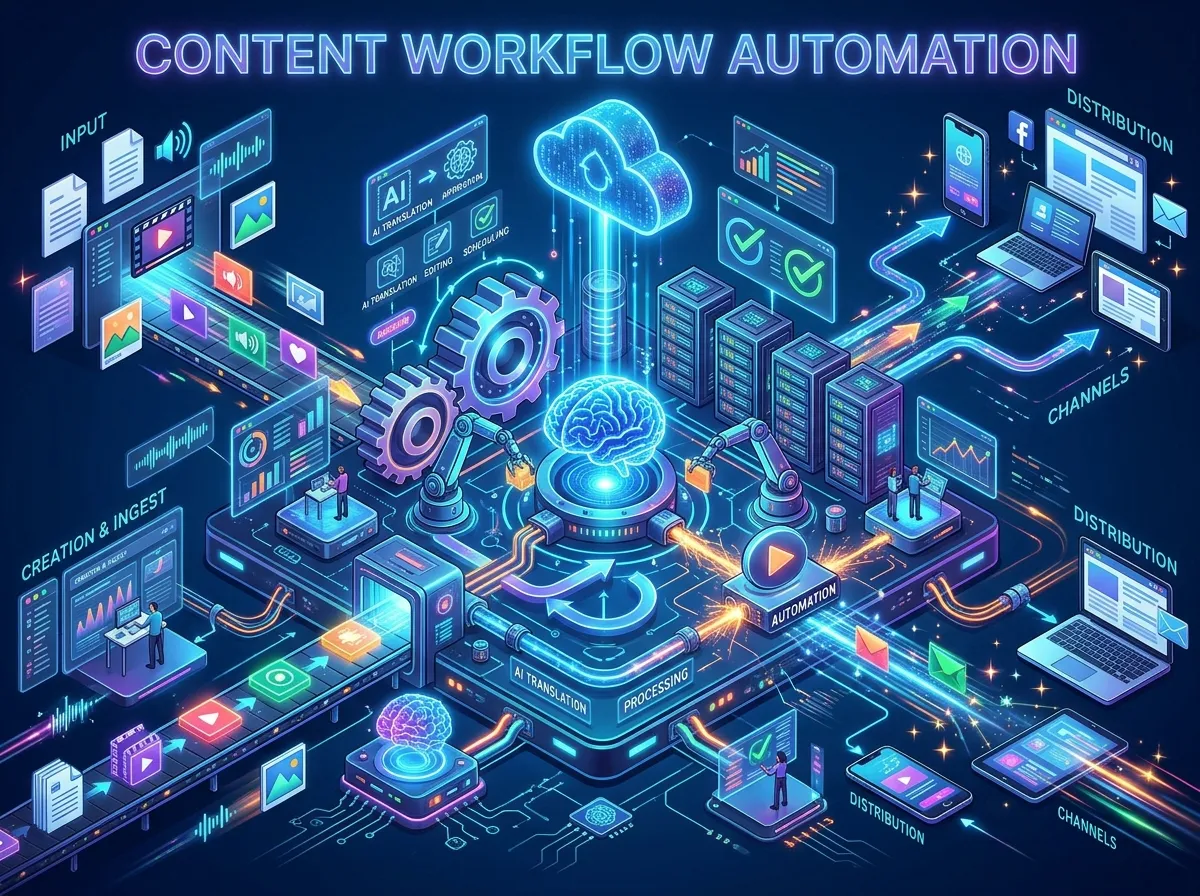
Technology can make content operations more efficient by reducing repetitive administrative tasks and improving communication. Content workflow automation uses software and predefined rules to handle routine activities that would otherwise require manual coordination.
Content management systems, editorial calendars, project management platforms, and automated notifications can support different stages of production. A task management platform, for example, may automatically notify an editor when a draft is ready for review. Once the editor approves the content, the project can move to the publishing stage and notify the responsible team member.
Automation can also support deadline reminders, approval tracking, content distribution, and reporting. These functions reduce the need for repeated follow-ups and give managers better visibility into ongoing work.
However, automation should complement human judgment rather than replace it. Content still requires thoughtful research, editorial review, fact-checking, and an understanding of audience needs. Automated systems may move a task forward, but they cannot independently guarantee that the finished content is accurate, helpful, or appropriate for its intended purpose.
Choosing the right technology also depends on the team’s size and operational complexity. A small content team may only need a shared calendar and a straightforward task management system. Larger organizations may benefit from integrated platforms that connect content management, analytics, approvals, and distribution.
The most effective technology setup is one that solves genuine operational problems without introducing unnecessary complexity. When tools support existing workflows instead of creating additional administrative work, content teams can devote more time to meaningful creative and strategic activities.
Content Quality Control and Editorial Standards
Content quality control ensures that published material meets the organization’s standards for accuracy, clarity, usefulness, and consistency. Even an efficient production system can produce disappointing results if quality is treated as an afterthought.
A strong editorial process evaluates content for factual accuracy, logical structure, readability, grammar, originality, and alignment with the intended audience. SEO requirements should also be reviewed, including natural keyword placement, descriptive headings, relevant internal links, and appropriate metadata.
Quality control is most effective when expectations are established before production begins. Editorial standards should explain how the brand communicates, what sources are acceptable, how claims are verified, and what constitutes a publication-ready draft. These standards give writers and editors a shared reference point.
Review processes should remain proportional to the content’s complexity and risk. A short social media update may require a straightforward review, while an article containing technical claims or sensitive business information may need additional verification. Applying the same complicated approval process to every asset can slow production without improving quality.
Content quality also depends on accessibility and audience experience. Clear language, useful formatting, descriptive links, and logical organization help readers understand information without unnecessary effort.
Businesses should consider the complete reader experience rather than focusing exclusively on search engine requirements. Content that satisfies a keyword target but provides little practical value is unlikely to support lasting audience trust.
Consistent quality control helps protect brand credibility while ensuring that faster production does not come at the expense of accuracy or usefulness.
Content Publishing Process and Distribution
The content publishing process connects approved material with the audiences it is intended to reach. It includes preparing content for the appropriate platform, checking technical details, confirming publication schedules, and ensuring that the final asset appears as expected.
Publishing involves more than uploading a document to a website. Blog articles may require formatted headings, optimized images, descriptive URLs, meta titles, meta descriptions, and relevant internal links. Email content may need audience segmentation and rendering checks, while social media posts require platform-appropriate formatting.
A standardized publishing process reduces the likelihood of preventable mistakes. Pre-publication checks can confirm that links work correctly, images display properly, formatting remains consistent, and the content reflects the approved version.
Distribution is another important part of the process. Publishing an article does not automatically guarantee that the intended audience will discover it. Businesses may need to distribute content through newsletters, social platforms, relevant website sections, and other suitable marketing channels.
This distribution process should remain connected to the wider marketing ecosystem. An effective inbound marketing ecosystem helps businesses coordinate different channels so that content supports a consistent customer experience.
Repurposing content can also improve operational efficiency. A detailed article may provide material for email updates, social media posts, or shorter educational resources. Each adaptation should be tailored to its platform rather than copied without considering audience expectations.
By coordinating publishing and distribution, businesses can improve consistency, extend the value of existing content, and make better use of their production resources.
Content Performance Monitoring and Continuous Improvement
Content performance monitoring helps businesses understand whether their content activities are achieving meaningful objectives. Without reliable measurement, teams may continue producing assets that receive little engagement or overlook opportunities to improve successful material.
The most useful performance indicators depend on the purpose of the content. Organic search traffic, keyword visibility, and search impressions can help evaluate SEO content. Engagement metrics may reveal whether readers interact with an article, while conversions and qualified leads can indicate whether content supports broader marketing goals.
A balanced evaluation considers both individual assets and the overall content portfolio. One article may attract substantial traffic but generate limited engagement, while another may attract fewer visitors who are more likely to take meaningful action. Understanding these differences helps businesses make better editorial decisions.
Content marketing analytics provides the evidence needed to evaluate these outcomes. Resources explaining content marketing analytics can help marketers understand how measurement connects content activity with performance objectives.
Monitoring should also inform practical improvements. Underperforming pages may need clearer explanations, better search intent alignment, stronger internal links, or updated information. Successful content may reveal topics that deserve further development or related articles that could improve audience understanding.
Businesses should avoid measuring success through a single metric. Publishing volume alone does not demonstrate content quality, and page views alone do not establish commercial value. Performance becomes more meaningful when metrics are interpreted alongside the original purpose of each asset.
Regular evaluation creates a feedback loop between production and strategy. Insights from published content can inform future planning, improve resource allocation, and help teams focus on activities that offer the greatest long-term value.
Content Resource Management and Scalable Growth

Content resource management involves allocating people, time, budgets, tools, and information across content activities. Its purpose is to ensure that teams have the resources they need to produce valuable material without creating unnecessary costs or unsustainable workloads.
Resource planning begins with understanding the demands of the editorial calendar. A business producing technical articles may need additional research and subject-matter review, while a team publishing frequent social media content may require more design and distribution support. Matching resources to actual production requirements helps maintain both quality and efficiency.
Reusable assets can also improve resource utilization. Editorial templates, brand guidelines, research libraries, approved terminology, and shared content briefs reduce the time spent repeating routine tasks. Centralized documentation makes it easier for contributors to locate reliable information and maintain consistency across projects.
As organizations expand their marketing activities, collaboration with external writers, designers, and creators may become necessary. Clear briefs, documented approval processes, and consistent communication help external contributors meet internal expectations. Businesses developing content creator marketing strategies can apply similar coordination principles when managing external content production and brand communication.
Resource management should also account for changing priorities. Unexpected campaigns, new audience needs, and emerging business opportunities may require adjustments to the publishing schedule. A flexible system allows managers to respond to these changes without disrupting every active project.
Sustainable growth depends on balancing production capacity with business priorities. Instead of increasing output indefinitely, organizations should evaluate which content activities create the most value and allocate resources accordingly.
Conclusion
Content operations provides the structure businesses need to manage content production efficiently and consistently. By connecting planning, workflow optimization, team coordination, quality control, publishing, and performance monitoring, organizations can reduce operational friction while maintaining high editorial standards.
Effective content operations management also helps businesses use technology and resources more strategically. Clear responsibilities, reliable documentation, appropriate automation, and meaningful performance measurement create a stronger foundation for collaboration and continuous improvement.
As content demands grow, an organized operational system becomes increasingly valuable. Businesses that treat content as a coordinated process rather than a series of isolated publishing tasks can build more sustainable workflows, deliver a better audience experience, and align their content activities with long-term marketing objectives.
Frequently Asked Questions About Content Operations
1. What is content operations?
Content operations refers to the processes, people, tools, and systems used to plan, create, manage, publish, distribute, and evaluate content throughout its lifecycle. It helps businesses maintain quality, improve collaboration, and manage content production efficiently.
2. Why is content operations important for businesses?
Content operations helps businesses reduce production delays, clarify responsibilities, maintain editorial consistency, and use resources effectively. It also makes content performance easier to evaluate and supports sustainable growth as marketing requirements increase.
3. What is content operations management?
Content operations management involves coordinating content teams, workflows, resources, deadlines, and quality standards. It ensures that content projects progress smoothly from initial planning to final publication.
4. How does content workflow optimization improve productivity?
Content workflow optimization removes unnecessary steps, clarifies responsibilities, and establishes predictable processes. This reduces repeated revisions, communication gaps, and approval delays, allowing teams to produce useful content more efficiently.
5. What tools support content operations?
Common tools include content management systems, project management platforms, editorial calendars, collaboration software, automation tools, and analytics platforms. The best combination depends on the team’s size, workflow complexity, and publishing requirements.
6. How does content workflow automation help content teams?
Content workflow automation handles repetitive tasks such as notifications, deadline reminders, approval updates, and routine reporting. It reduces manual coordination and allows team members to focus on research, creativity, editing, and strategic decisions.
7. How can businesses maintain content quality?
Businesses can maintain quality through documented editorial standards, clear content briefs, fact-checking, proofreading, appropriate approval processes, and regular content reviews. Quality control should address accuracy, readability, relevance, and audience needs.
8. Which metrics are useful for content performance monitoring?
Useful metrics include organic traffic, search impressions, keyword visibility, engagement, conversions, and qualified leads. The appropriate indicators depend on whether the content is intended to increase awareness, educate readers, attract prospects, or support conversions.
9. How does content resource management improve efficiency?
Content resource management helps teams allocate their time, budget, tools, and expertise according to production requirements. It reduces workload imbalances, encourages the reuse of suitable resources, and supports more realistic publishing schedules.
10. How can a business improve its content operations over time?
A business can improve content operations by reviewing existing workflows, clarifying team responsibilities, standardizing editorial processes, adopting appropriate automation, monitoring performance, and addressing recurring bottlenecks. Regular evaluation helps the system evolve alongside changing business goals and audience needs.