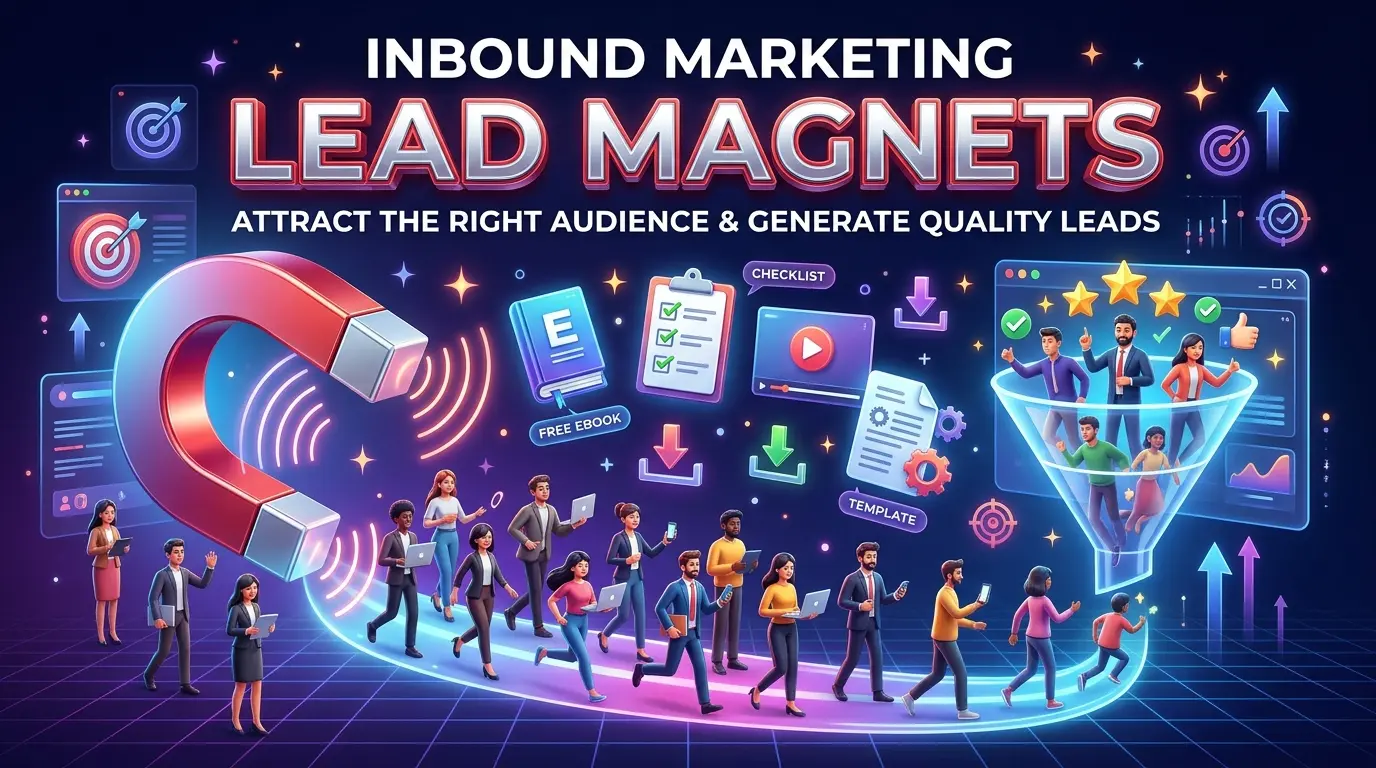
Inbound Marketing Lead Magnets help businesses turn useful content into opportunities for meaningful audience engagement. Educational guides, templates, reports, checklists, and other downloadable resources can attract relevant prospects while supporting lead nurturing and email communication. Their effectiveness depends on audience relevance, resource quality, clear value propositions, reliable delivery, and accurate performance measurement. By connecting lead magnets with the buyer journey and broader inbound marketing activities, businesses can generate better-quality leads and build relationships based on trust and useful information.
Inbound Marketing Lead Magnets help businesses attract potential customers by offering useful resources in exchange for contact information. From downloadable guides and industry reports to templates, checklists, and exclusive research, effective lead magnets give visitors a meaningful reason to connect with a brand. When these resources address real audience needs, they can strengthen content-based lead generation, support lead nurturing, and create more opportunities for long-term customer relationships.
Understanding the Role of Inbound Marketing Lead Magnets
Not every website visitor is ready to purchase a product or request a service. Some are researching a problem, comparing possible solutions, or simply trying to understand a topic. Inbound marketing recognizes these different stages of buyer interest and provides helpful content that encourages people to engage with a business at their own pace.
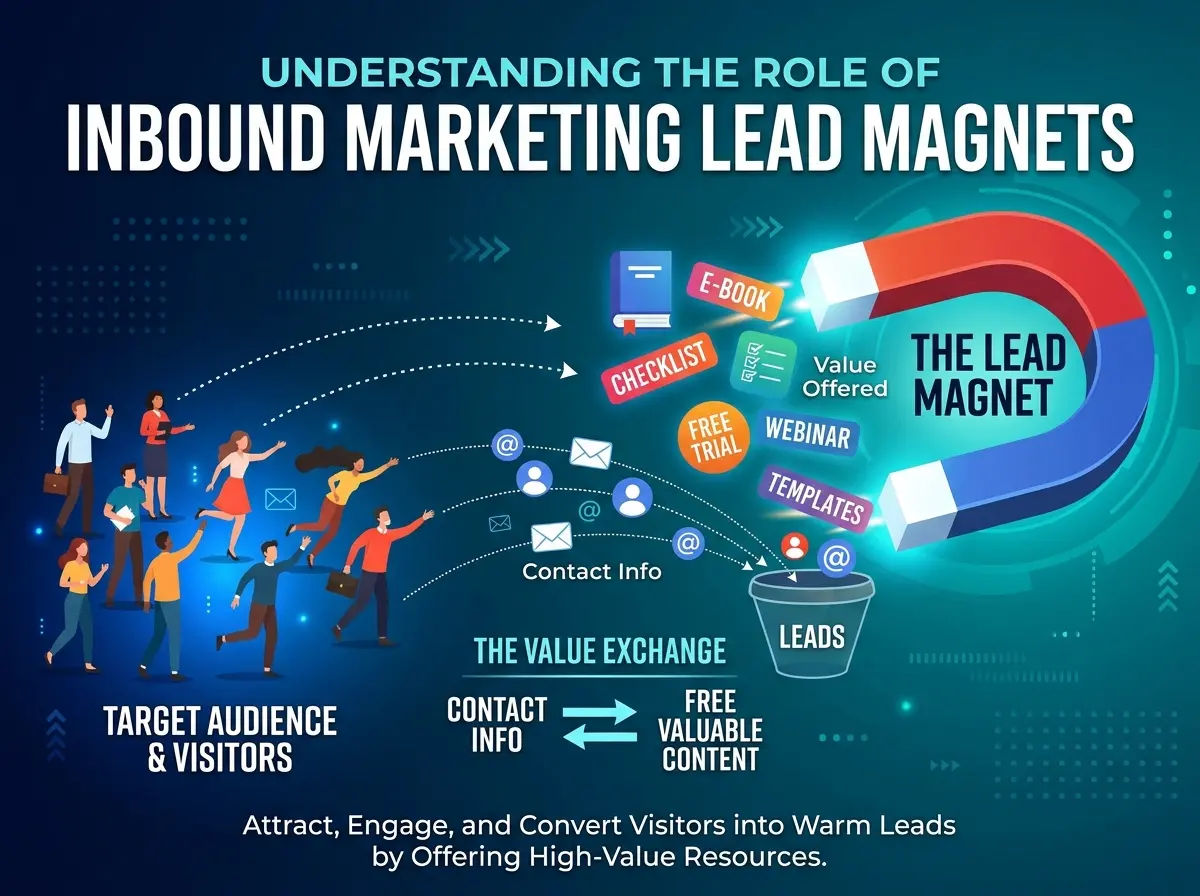
Inbound Marketing Lead Magnets play an important role in this process. They are valuable resources offered to visitors in exchange for permission to continue the conversation, commonly through an email address or another relevant contact detail. Instead of interrupting potential customers with aggressive promotional messages, businesses provide something useful that naturally encourages people to share their information.
A lead magnet might be a downloadable industry report, an educational ebook, a practical template, or an exclusive webinar recording. The format is less important than the value it provides. A resource that answers a specific question or helps someone overcome a genuine challenge is more likely to attract meaningful interest than a generic download created simply to collect email addresses.
The strongest lead magnets also reflect the business’s expertise. They introduce visitors to the company’s knowledge while giving them a practical reason to explore its products, services, or additional content.
Why Useful Resources Attract Better Prospects
A large number of website visitors does not automatically translate into business growth. A company may receive thousands of visits without generating enough qualified inquiries. The challenge is not simply attracting attention; it is creating opportunities to build relationships with people who have a genuine interest in what the business offers.
Lead magnets help address this challenge by connecting content consumption with audience engagement. When someone downloads a resource about a specific business problem, that action provides an indication of their interests. A visitor who downloads a guide about improving customer retention may have different needs from someone researching marketing automation or sales productivity.
This information can support more relevant communication. Rather than sending identical messages to every subscriber, marketers can organize contacts according to the resources they access and the subjects they explore. Over time, these interactions can reveal patterns that help businesses understand their audiences more accurately.
The quality of the information collected also matters. A useful resource may attract many downloads, but businesses still need reliable contact information to continue communicating effectively. This is where Inbound Marketing Contact Verification becomes relevant. Accurate contact details help reduce invalid records, improve email communication, and maintain a healthier marketing database.
Lead Magnet Ideas That Match Different Audience Needs
The most effective Lead Magnet Ideas begin with an understanding of what potential customers are trying to accomplish. A resource should address a recognizable need rather than simply repeat information that visitors can find everywhere.
Educational downloads are a common choice because they help audiences understand unfamiliar subjects. An ebook explaining an industry concept, a detailed research report, or an expert-written whitepaper can attract people who want to explore a topic in greater depth. These resources work particularly well when a business has specialist knowledge that its audience finds difficult to access elsewhere.
Practical templates and worksheets offer a different kind of value. Instead of focusing entirely on explanation, they help readers organize information or complete a task. A marketing calendar, content planning worksheet, campaign budget template, or customer feedback form can provide immediate usefulness. Visitors are often willing to exchange their contact information for resources that save time and simplify their work.
Checklists can also be effective because they make complicated activities easier to understand. A website optimization checklist, campaign review sheet, or business planning resource gives readers a structured way to evaluate their current situation. These resources are usually easier to consume than long-form educational material, making them suitable for visitors who prefer concise information.
Industry-specific research provides another opportunity. Original surveys, market observations, benchmark reports, and data-based insights can attract professionals looking for information that supports business decisions. Because original research requires more effort to produce, it can also help a company establish greater credibility.
The right choice depends on the audience, the business objective, and the subject being addressed. A useful lead magnet does not need to be complicated. It needs to solve a relevant problem clearly and deliver enough value to make the exchange worthwhile.
Connecting Content-Based Lead Generation With the Buyer Journey
Content-based lead generation works best when resources are connected to the questions people ask as they move toward a purchasing decision. Someone discovering a problem for the first time will usually need different information from someone comparing service providers or evaluating specific solutions.
At the awareness stage, visitors may respond to introductory guides, educational reports, industry explanations, and research summaries. These resources help them understand their challenges without requiring an immediate commitment. Their purpose is to create an initial connection and demonstrate that the business understands the subject.
As prospects become more familiar with the problem, their information needs often become more specific. They may want comparison worksheets, practical templates, evaluation checklists, or detailed explanations of possible approaches. These lead capture offers can help visitors explore available solutions while giving businesses a clearer understanding of their interests.
Further along the journey, prospects may benefit from case studies, implementation resources, product demonstrations, or consultation opportunities. These materials provide more direct insight into how a solution works and whether it is suitable for a particular situation.
This connection between content and buyer intent reflects the broader Inbound Marketing Process. Each interaction should help prospects move forward naturally, rather than pushing them toward a decision before they are ready.
A well-planned content experience therefore uses different resources for different levels of interest. This creates a more useful relationship between educational content, lead generation, and eventual sales conversations.
Creating Lead Capture Offers That Feel Valuable
A lead capture offer is more than a form placed beside a download button. It represents an exchange between a business and a potential customer. Visitors provide information because they expect to receive something useful in return. If the benefit is unclear, the resource is poorly presented, or the form requests unnecessary details, people may decide not to continue.
The value proposition should be immediately understandable. A visitor should know what the resource contains, who it is intended for, and how it can help. A title such as “Complete Marketing Resource” may sound broad, but it does not explain the actual benefit. A more specific description that identifies the subject and intended outcome gives people a clearer reason to download it.
The landing page also influences the decision. Its headline, supporting description, visual presentation, and call to action should communicate one consistent message. If the resource promises practical advice, the page should explain what kind of advice the visitor will receive. If it offers original research, the description should make the research topic and its relevance clear.
Form design deserves similar attention. Asking for an email address may be sufficient for an introductory resource, while a more specialized business offer might justify requesting a name or company name. Every additional field creates another decision for the visitor, so businesses should collect only the information they genuinely need.
Transparency is essential throughout the exchange. Visitors should understand how their information will be used and what type of communication they can expect. Clear privacy information and appropriate consent practices help establish trust before the first follow-up message is sent.
Lead Magnet Examples Across Different Industries
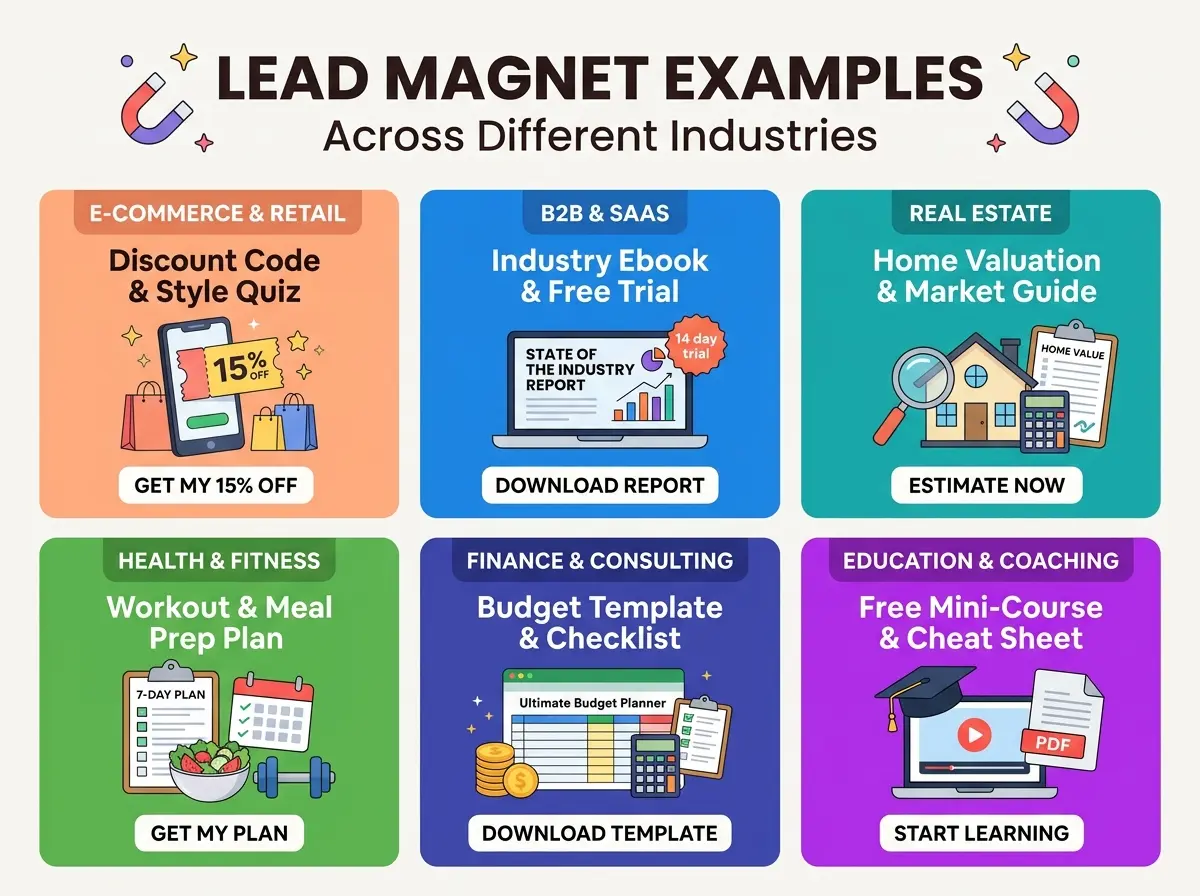
Lead Magnet Examples become easier to evaluate when considered in the context of real business needs. A resource that works well for a software company may not have the same value for a professional service provider or an online retailer.
For a marketing agency, a website performance assessment or content planning template can attract businesses looking to improve their marketing activities. These resources demonstrate expertise while helping potential clients identify areas that may need attention.
A software company might offer a product comparison worksheet, implementation checklist, or technical guide. Such resources can attract people who are researching solutions and need reliable information before making a decision. A well-designed product demonstration can also serve as a lead magnet when it provides a meaningful explanation rather than a purely promotional presentation.
For an ecommerce business, downloadable buying guides, product care instructions, size guides, or personalized recommendation resources may encourage visitors to engage. These offers can help customers make more informed purchasing decisions while giving the company opportunities to build relationships beyond a single website visit.
Professional service firms can benefit from industry reports, consultation preparation worksheets, assessment resources, and educational webinars. These formats allow businesses to demonstrate their understanding of complex subjects and attract prospects who need specialist support.
The important distinction is that examples should inspire resource development rather than become templates that every company copies. An effective lead magnet reflects the audience’s actual questions, the company’s expertise, and the value it can realistically deliver.
Gated Content Marketing and the Importance of Balance
Gated Content Marketing refers to placing selected content behind a form or another access requirement. Visitors provide information before receiving the resource, allowing businesses to generate leads from content that offers substantial value.
However, not every piece of content should be gated. Requiring contact information before someone can read a basic article or access a simple explanation may create unnecessary friction. Visitors often expect general educational information to be available without restrictions.
A balanced approach keeps introductory content accessible while reserving gates for resources that offer additional depth or practical value. For example, a company might publish an article explaining an industry challenge and offer a detailed research report as a downloadable resource. The article helps attract organic traffic, while the report gives interested readers a reason to become subscribers.
This approach also supports search visibility. Publicly accessible articles can help search engines understand the website’s subject coverage, while gated assets provide additional value to visitors who want more detailed information.
The decision to gate a resource should depend on its usefulness and exclusivity. If the information is readily available elsewhere, visitors may not see a strong reason to complete a form. Original research, specialized templates, detailed reports, and comprehensive educational materials are often better candidates because they offer a more distinct benefit.
Free Resource Downloads and Their Effect on Audience Engagement
Free Resource Downloads can create an effective entry point into a company’s marketing ecosystem. They allow visitors to experience the quality of a business’s content before considering a product or service. When the resource is genuinely helpful, the download can become the beginning of a longer relationship.
The delivery experience should be simple and reliable. After completing a form, visitors should receive clear confirmation and access to the promised resource. If the download link does not work or the confirmation email is delayed, the initial positive experience can quickly become frustrating.
The resource itself must also meet the expectations created by its landing page. A report advertised as comprehensive should contain meaningful analysis, while a template should be practical and easy to use. Poorly organized documents, outdated information, and overly promotional material can weaken trust.
Businesses should also consider how their resources are presented across devices. Many visitors discover content on mobile devices, so landing pages and download experiences should remain easy to navigate on smaller screens. Readable formatting, accessible files, and straightforward instructions help reduce unnecessary barriers.
The goal is not simply to increase download numbers. It is to create an experience that makes visitors more interested in the business and confident in the quality of its information.
Email Lead Magnets and the Development of Long-Term Relationships
Email Lead Magnets connect resource downloads with permission-based email communication. Once a visitor requests a resource and agrees to receive relevant messages, a business can continue providing useful information through carefully planned email sequences.
The first email should deliver the promised resource without unnecessary promotional distractions. A short introduction, a working download link, and a clear explanation of what the subscriber can expect create a professional starting point.
Later messages can expand on the subject of the original download. Someone who accesses a guide about content planning may appreciate an email discussing content performance, while a subscriber interested in customer data may benefit from additional material about database accuracy and segmentation.
This is where Lead Nurturing Offers become valuable. A business can introduce related articles, webinars, expert insights, case studies, or more advanced resources as the subscriber’s interests develop. Each message should provide a logical continuation of the previous interaction rather than feeling like an unrelated sales pitch.
Email communication should remain relevant and respectful. Sending too many messages, using misleading subject lines, or ignoring subscriber preferences can reduce engagement. Businesses should also provide a clear unsubscribe option and follow applicable email marketing and privacy requirements.
When managed carefully, email lead magnets create a connection between the initial resource and a broader educational experience. They give businesses a way to remain useful even when a prospect is not yet ready to purchase.
Improving Lead Quality Through Better Prospect Insights
A successful lead magnet should attract people who are relevant to the business, not simply anyone willing to download a free resource. This makes audience understanding an important part of the strategy.
The subject of a download can provide an initial indication of visitor interests. However, a single download should not be treated as complete evidence of purchasing intent. Someone may access a report for professional research, personal learning, or general curiosity. Businesses need additional interactions to understand the prospect’s needs more accurately.
Resource downloads become more useful when considered alongside website behavior, email engagement, content preferences, and other relevant interactions. These signals can help marketers identify which subjects attract attention and which prospects demonstrate continued interest.
Developing stronger Inbound Marketing Prospect Insights helps businesses understand these patterns and create more relevant communication. Rather than relying on assumptions, marketing teams can use engagement information to improve audience segmentation and content decisions.
Lead magnet performance should also be reviewed beyond the number of completed forms. Download-to-email engagement, repeat website visits, resource usage, qualified inquiries, and eventual conversions can reveal whether an offer is attracting the right audience.
Businesses may discover that a highly downloaded resource produces limited sales interest, while a smaller and more specialized offer attracts prospects who are more likely to become customers. These findings can guide future content investment.
Measuring Performance Without Losing Sight of Value

Lead magnet measurement should connect marketing activity with meaningful business outcomes. Form submissions are useful, but they represent only one part of the overall experience.
Conversion rate can indicate how effectively a landing page encourages visitors to request a resource. Download completion can reveal whether the delivery process works as expected. Email engagement can show whether subscribers find the follow-up content relevant, while qualified lead rates help determine whether the resource attracts the intended audience.
Businesses should also examine the relationship between acquisition cost and lead quality. A campaign that generates inexpensive downloads may appear successful, but its actual value depends on whether those contacts remain engaged and contribute to business opportunities.
Qualitative feedback can provide additional insight. Comments from subscribers, questions received by sales teams, and recurring topics in customer conversations can reveal what audiences find useful or missing from existing resources.
Regular review makes it possible to improve titles, descriptions, landing pages, formats, and follow-up messages. It also prevents companies from continuing to invest in offers that generate activity without meaningful engagement.
For businesses looking to strengthen their wider inbound strategy, How to Improve Inbound Marketing provides a related perspective on improving the overall marketing experience. Lead magnets become more effective when they are part of a coordinated system that connects content quality, audience understanding, and ongoing communication.
Building a Sustainable Library of Inbound Marketing Assets
Inbound Marketing Lead Magnets should not be treated as isolated campaigns that are created once and forgotten. Over time, businesses can develop a library of resources that supports different audiences, topics, and stages of the customer journey.
A strong resource library may include introductory educational downloads, detailed research, practical templates, industry-specific checklists, webinar recordings, and advanced evaluation materials. Each asset should have a clear purpose and a connection to the company’s wider content strategy.
Existing resources can also be improved instead of constantly producing new ones. An outdated report may need updated research, a popular checklist may benefit from a more accessible format, and a useful webinar recording may be transformed into a downloadable summary. Repurposing valuable material can extend its usefulness while reducing unnecessary content production.
Consistency is important. Resources should reflect the company’s expertise, use accurate information, and maintain a recognizable standard of quality. Businesses should review older assets to remove outdated claims, broken links, and information that no longer reflects current practices.
A sustainable library also makes it easier to connect related content. Blog articles can introduce relevant downloads, email campaigns can recommend additional resources, and landing pages can guide visitors toward materials that match their interests.
Ultimately, the purpose of inbound marketing assets is to make the relationship between a business and its audience more useful. When resources provide genuine value, they can attract relevant visitors, encourage meaningful engagement, and support the development of stronger customer relationships.
Frequently Asked Questions
1. What are Inbound Marketing Lead Magnets?
Inbound Marketing Lead Magnets are valuable resources offered to website visitors in exchange for contact information. Common examples include ebooks, templates, checklists, research reports, webinars, and downloadable guides. They help businesses attract interested prospects and begin building relationships through useful content.
2. What makes a lead magnet effective?
An effective lead magnet addresses a specific audience need, offers practical or educational value, and clearly communicates its benefits. It should be relevant to the business’s expertise and provide information that visitors cannot easily replace with generic content.
3. What are some popular Lead Magnet Ideas?
Popular Lead Magnet Ideas include downloadable guides, industry reports, worksheets, checklists, templates, webinars, comparison resources, and original research. The best format depends on the audience’s interests and the problem the business wants to help solve.
4. How do lead magnets support inbound lead generation?
Lead magnets encourage visitors to exchange contact information for useful resources. Businesses can then use permission-based communication and relevant content to develop relationships, understand prospect interests, and identify potential sales opportunities.
5. What is the difference between a lead magnet and gated content?
A lead magnet is the valuable resource offered to an audience, while gated content is the access method that requires visitors to complete an action, commonly submitting a form, before receiving the material. A lead magnet can be delivered through a gated landing page.
6. Should every piece of content be gated?
No. General educational articles and introductory information are often more effective when freely accessible. Gating is more appropriate for specialized resources, original research, detailed reports, and practical materials that provide enough additional value to justify requesting contact information.
7. How do Email Lead Magnets help businesses?
Email Lead Magnets encourage visitors to subscribe or provide an email address in exchange for a useful resource. Businesses can then send related educational content, recommendations, and relevant offers to develop ongoing relationships with interested subscribers.
8. How can businesses improve lead magnet conversion rates?
Businesses can improve conversion rates by choosing relevant topics, explaining the resource’s benefits clearly, creating focused landing pages, simplifying forms, and ensuring that downloads work properly. Testing different headlines and calls to action can also reveal what encourages more visitors to engage.
9. How should businesses measure lead magnet performance?
Performance can be evaluated through landing-page conversion rates, completed downloads, email engagement, qualified lead rates, repeat visits, and eventual conversions. These measurements help businesses understand whether a resource attracts relevant prospects rather than simply generating large numbers of submissions.
10. How often should businesses update their lead magnets?
Businesses should review lead magnets regularly and update them whenever information becomes outdated, industry conditions change, or audience needs evolve. Reviewing performance and subscriber feedback can also help identify resources that need improvement or a different format.