
Inbound marketing works best when your business becomes helpful before it becomes promotional. You publish useful content, optimize for search, capture leads with strong offers, and nurture interest until people are ready to buy. This creates a system that supports brand awareness marketing, conversion rate optimization, customer retention strategies, and long-term online business growth.
Every business wants steady growth, but the brands that grow faster usually do one thing better than the rest: they attract the right people instead of chasing everyone. That is the core idea behind inbound marketing strategies for business growth. Instead of interrupting people with constant sales messages, inbound marketing helps you earn attention, trust, and action through useful content, search visibility, email follow-up, and a better customer journey.
For modern companies, inbound marketing is no longer optional. Buyers research online before they buy, compare options before they speak to sales, and expect brands to solve problems before asking for a commitment. That is why inbound marketing techniques matter so much. They help you create demand, capture interest, and turn attention into qualified lead generation over time.
This guide is built for business owners, marketers, founders, and small teams that want sustainable online business growth. It explains what inbound marketing is, how it works, why it matters, and how to use it to create better results with less wasted effort. It also covers lead generation strategies, content-driven marketing, SEO and inbound marketing, buyer journey mapping, marketing automation tools, and practical ways to improve customer engagement online.
If your goal is to attract customers through value, build trust faster, and grow measurably, this is the framework to follow.
The most effective teams do not rely on one channel. They combine content marketing strategy, SEO, email marketing campaigns, social proof, and marketing automation tools to move people through the funnel. They also use buyer journey mapping to match the right message to the right stage of the decision process. When done well, inbound marketing lowers acquisition cost, improves trust, and generates higher-quality leads than many traditional tactics.
What Is Inbound Marketing?
What is inbound marketing? It is a business approach focused on attracting potential customers through useful, relevant, and timely experiences. Instead of pushing a message at people, inbound marketing pulls them in by solving problems, answering questions, and building confidence.
At its core, inbound marketing is about earning attention. You create content that people actually search for, share, and trust. That content may appear as blog posts, videos, guides, landing pages, newsletters, case studies, webinars, or interactive resources. The goal is not just traffic. The goal is to create interest that leads to action.
Inbound marketing works because it matches how people buy today. A buyer might begin with a problem, search for a solution, compare options, and then look for proof. Inbound content supports each stage. That is why businesses use content-driven marketing to educate first and sell second.
A strong inbound marketing strategy also builds authority. When your website consistently helps people, your brand becomes easier to remember. That supports brand awareness marketing, trust, and repeat visits. Over time, the same content continues to attract visitors, which makes inbound one of the most durable customer acquisition methods available.
How Inbound Marketing Works
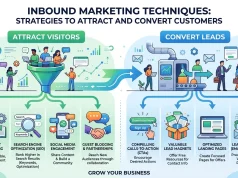
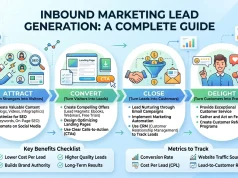
How inbound marketing works can be understood as a flow with four stages: attract, convert, close, and delight.
In the attract stage, your business uses SEO, blog content, social posts, and educational resources to bring the right audience to your website. This is where organic traffic growth begins. People discover you because they searched for information you already published.
In the convert stage, you turn visitors into leads. This may happen through forms, lead magnets, newsletter signups, free tools, consultations, or downloadable resources. The key is to offer something valuable enough that the visitor is willing to exchange contact information.
In the close stage, you use email, automation, retargeting, and sales alignment to turn leads into customers. This is where the lead nurturing process becomes important. Many people are not ready to buy on the first visit, so your job is to stay relevant until they are ready.
In the delight stage, you continue supporting the customer after the sale. This helps with customer retention strategies, referrals, reviews, and upsells. A happy customer often becomes your best marketing channel.
This model works because it supports the full digital marketing strategy, not just a single campaign. When your content, SEO, email, and sales systems work together, inbound marketing becomes a growth engine rather than a one-time promotion.
Why Inbound Marketing Matters for Business Growth

Benefits of inbound marketing for businesses are easy to see once the system is running. First, it creates a steady flow of qualified traffic instead of temporary spikes. Second, it improves trust because buyers feel informed rather than pressured. Third, it creates long-term assets. A great guide can continue generating leads for months or even years.
Another benefit is efficiency. Many traditional customer acquisition methods depend on repeated spending. Inbound content can keep working after it is published, especially when supported by SEO and inbound marketing practices. That means one piece of content can influence multiple stages of the buyer journey.
Inbound also supports better decision-making. Because everything is measurable, you can track traffic, conversions, engagement, and lead quality. That makes marketing funnel optimization much easier. You can identify which pages attract the best visitors, which emails drive the most clicks, and which offers create the highest conversion rate optimization.
For small and growing brands, inbound also levels the playing field. A company with a modest budget can still compete by publishing useful content, targeting the right keywords, and building stronger customer engagement tactics than larger competitors. That is why inbound marketing strategies for business growth are so popular among startups and small businesses.
The Search Intent Behind This Topic
The search intent for this topic is informational. Readers are looking for education, strategy, and practical examples. They want to understand the concept, compare approaches, and learn how to apply it in their own business.
The most likely intent signals include questions like:
What is inbound marketing?
How inbound marketing works
Benefits of inbound marketing for businesses
How to generate leads with inbound marketing
Best inbound marketing strategies for small businesses
Inbound marketing vs outbound marketing
How to create an inbound marketing strategy
Content marketing for lead generation
How to attract customers through inbound marketing
Inbound marketing examples and case studies
How to increase organic traffic with inbound marketing
Lead nurturing best practices
How marketing automation improves lead generation
Ways to improve customer engagement online
Inbound marketing trends for business growth
These searches show a buyer who wants useful knowledge before making decisions. That means the best content should be educational, specific, and easy to apply. It should answer questions directly while also showing the bigger strategy behind the tactics.
Inbound Marketing vs Outbound Marketing
Inbound marketing vs outbound marketing is one of the most important comparisons in modern marketing. Outbound marketing pushes messages out to a broad audience through ads, cold calls, direct mail, or interruptive promotions. Inbound marketing attracts people who are already looking for answers.
Here is a simple comparison:
| Topic | Inbound Marketing | Outbound Marketing |
|---|---|---|
| Approach | Pulls people in with value | Pushes messages out to audiences |
| Audience intent | High, because people search for it | Lower, because attention is interrupted |
| Cost efficiency | Often improves over time | Often requires continuous spending |
| Trust building | Strong, because it educates | Weaker, because it interrupts |
| Longevity | Content can keep working | Campaigns stop when spend stops |
| Lead quality | Usually higher | Often more mixed |
Outbound can still be useful, especially for fast exposure or remarketing. But inbound tends to create stronger long-term value. It fits businesses that want durable growth, better-qualified leads, and a more scalable content marketing strategy.
A smart digital marketing strategy often includes both. Yet if you want predictable qualified lead generation and a stronger brand over time, inbound should be the foundation.
Core Inbound Marketing Techniques That Drive Results
Strong inbound marketing techniques do not happen by accident. They are built on a system that connects search, content, conversion, and follow-up.
One of the most important techniques is audience research. You need to know what your customers care about, what they fear, what they search for, and what keeps them from buying. Without this, even good content may miss the mark.
Another technique is value-first content creation. This includes educational blog posts, explainers, case studies, checklists, comparison pages, tutorials, and buyer guides. Every piece should help the reader move one step closer to a decision.
A third technique is offer alignment. The content should match the next logical action. For example, a blog post may lead to a checklist, which then leads to a consultation, demo, or email course. This is where marketing funnel optimization becomes important.
A fourth technique is follow-up. Leads rarely convert immediately. The lead nurturing process keeps your brand present with relevant messages until the audience is ready. This may happen through segmented email sequences, retargeting, or automated workflows.
When these techniques are combined, inbound marketing becomes a repeatable engine rather than a random collection of posts.
How to Create an Inbound Marketing Strategy
How to create an inbound marketing strategy starts with clarity. You need to know who your audience is, what problem you solve, and what success looks like.
First, define the target customer. Create a clear profile with details such as industry, pain points, buying triggers, objections, and decision criteria. This is where buyer journey mapping begins.
Second, choose your content pillars. These are the main topics your brand will own. For example, a software company may focus on productivity, team management, automation, and reporting. A service business may focus on process, cost savings, and risk reduction.
Third, build content for every stage of the funnel. Early-stage content should educate. Mid-stage content should compare options or explain methods. Late-stage content should prove value through testimonials, demos, and case studies.
Fourth, connect your content to conversion points. Every major page should guide the reader toward a next step. That could be a lead magnet, newsletter signup, product demo, quote request, or consultation.
Fifth, measure everything. Track traffic, conversion rates, lead quality, and engagement. Then improve based on data, not guesswork. That is how you build a real inbound marketing system rather than a random content calendar.
Content Marketing Strategy for Lead Generation
A strong content marketing strategy is the backbone of inbound. Without content, there is nothing to attract, educate, or convert.
The best content marketing strategy starts with search demand. You want to know which questions your audience is already asking. Then you create content that answers those questions better than the competition.
Your content should do more than inform. It should move people toward action. That means every article, guide, or video should have a purpose. Some pieces are made to attract traffic. Some are made to collect leads. Others are made to support sales.
For content marketing for lead generation, the best assets often include:
Long-form guides
Case studies
Comparison pages
Webinars
Email courses
Templates
Checklists
Industry reports
Free calculators
Decision-making worksheets
Each of these assets supports a different part of the funnel. The key is to make the content useful enough that people trust you and relevant enough that they keep moving forward. That is content-driven marketing in practice.
When content is paired with SEO and a clear offer, it becomes one of the most powerful lead generation strategies available to any business.
SEO and Inbound Marketing: Why They Work So Well Together
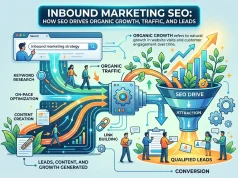
SEO and inbound marketing are closely connected because search is often the first place people begin their journey. When someone types a problem into Google, they are already showing intent. That makes SEO one of the strongest channels for attracting qualified traffic.
SEO helps your inbound content get discovered. It improves visibility for blog posts, service pages, resource centers, and landing pages. It also supports organic traffic growth over time.
To use SEO well in an inbound system, focus on keyword intent, topical depth, internal linking, and page experience. You do not need to target every keyword. You need to cover the right topics in a way that feels useful and complete.
SEO also strengthens brand trust. A business that appears consistently in search results often feels more credible than one that is invisible. That credibility improves customer acquisition methods because more people enter the funnel already confident in the brand.
The best inbound programs treat SEO as a discovery layer, not the whole strategy. Search brings people in, but content, conversion, and nurture turn them into real opportunities.
Buyer Journey Mapping and Funnel Alignment
Buyer journey mapping is the process of understanding how a person moves from awareness to consideration to decision. This matters because different people need different messages at different times.
In the awareness stage, the buyer has a problem but may not know the solution. They need education. Content at this stage should explain the issue and help them recognize what is happening.
In the consideration stage, they know the problem and are comparing solutions. This is the right time for comparisons, guides, and framework-based content.
In the decision stage, they are ready to choose. They need proof, pricing clarity, testimonials, and strong conversion support.
When your inbound content matches these stages, your marketing funnel optimization improves. Visitors are more likely to stay engaged because the content feels relevant.
This alignment also supports inbound sales strategy. Sales teams do better when marketing has already educated the lead. That means fewer wasted conversations and better close rates.
Buyer journey mapping is not just a planning tool. It is a way to make your entire digital marketing strategy more human and more effective.
Lead Generation Strategies That Fit Inbound
Lead generation strategies are most effective when they are tied to useful content and a clear next step. In inbound, leads are not forced. They are earned.
One effective approach is the lead magnet. This is a free resource offered in exchange for contact information. It might be a guide, checklist, template, or mini-course.
Another approach is gated content. Some of your strongest assets can sit behind a form, especially when the value is clear and the audience is serious.
Webinars and live sessions also work well because they provide real-time education and trust-building. These are especially useful for services, SaaS, and B2B businesses.
Lead generation also improves when forms are short and focused. Do not ask for too much too early. Keep the request proportional to the value of the offer.
The most effective lead generation strategies combine helpful content, strong positioning, and low-friction conversion points. That is how you build a consistent system for qualified lead generation without damaging trust.
How to Generate Leads with Inbound Marketing
How to generate leads with inbound marketing begins with one simple rule: make the content valuable enough that people want to continue the conversation.
A visitor becomes a lead when they exchange attention or data for a useful next step. That might be a newsletter signup, a downloadable resource, a product demo request, or a free consultation.
To do this well, start with high-intent content. Focus on the problems your ideal customers are already trying to solve. Then place relevant calls to action in strategic spots.
For example, someone reading an article about reducing churn may appreciate a retention checklist. Someone reading about onboarding may respond better to a free workflow template. Relevance is what drives conversion.
You should also segment by stage. A first-time visitor may need an educational resource, while a returning visitor may be ready for a deeper offer. Segmentation helps you match the offer to the moment.
When lead capture, follow-up, and value creation all work together, inbound marketing strategies for business growth become a repeatable lead engine rather than a series of disconnected campaigns.
How to Attract Customers Through Inbound Marketing
How to attract customers through inbound marketing is really about solving the right problem in the right way.
Start by creating content that answers the questions your ideal customer is already asking. Then publish that content where they are likely to find it: search engines, social platforms, email, and partner websites.
Trust grows when the content feels consistent and practical. People are more likely to engage with brands that teach them something useful. That is why customer engagement tactics should always begin with value.
You also need strong positioning. Your content should make it clear who the solution is for and why it matters. Specificity attracts the right customers and filters out the wrong ones.
Finally, create a smooth path from content to action. If people enjoy your article but cannot figure out what to do next, you lose momentum. A well-placed next step turns interest into a relationship.
This is one of the biggest strengths of inbound. It allows you to attract customers without pressure and guide them forward naturally.
Best Inbound Marketing Strategies for Small Businesses
Best inbound marketing strategies for small businesses usually focus on efficiency, consistency, and clarity rather than scale.
Small businesses should prioritize one or two channels first. Trying to do everything at once usually leads to weak execution. A focused content marketing strategy is often better than a broad one.
Local SEO can be extremely powerful for small brands. If the business serves a specific area or niche, location-based content can attract ready-to-buy traffic.
Email marketing campaigns also give small businesses a direct line to their audience. Even a simple newsletter can keep leads warm and encourage repeat visits.
Another strong tactic is customer education. Small businesses often win by explaining things more clearly than larger competitors. That improves trust and increases conversion rate optimization.
The key for smaller teams is to build a system that can be maintained. A modest but consistent inbound approach can outperform larger campaigns that are poorly executed. This is why inbound marketing strategies for business growth are especially valuable for small businesses trying to compete online.
Marketing Automation Tools and Why They Matter
Marketing automation tools help businesses scale inbound without losing consistency. They reduce manual work and make the customer journey smoother.
With automation, you can send welcome emails, nurture sequences, reminders, and follow-up messages based on behavior. That means every lead gets a more relevant experience.
Automation also improves speed. A new subscriber can receive the next right message immediately, rather than waiting for someone to follow up manually. That timeliness matters because interest fades fast.
Another benefit is segmentation. You can group contacts by behavior, interest, source, or stage in the funnel. That makes your email marketing campaigns more useful and more effective.
Used well, automation supports the lead nurturing process without making communication feel robotic. The best automated systems still sound human. They simply make it easier to deliver the right message at the right time.
For businesses that want scale, marketing automation tools are not a luxury. They are a core part of a modern inbound system.
Lead Nurturing Best Practices
Lead nurturing best practices are all about helping people move forward without feeling rushed.
The first rule is relevance. Send content that matches the lead’s interests or stage in the journey. A person who downloaded an awareness guide should not immediately get a hard sales pitch.
The second rule is consistency. Leads need enough contact to stay warm, but not so much that they feel overwhelmed. A thoughtful rhythm builds trust.
The third rule is value. Every message should teach, clarify, or help the lead make a better decision. That could mean tips, examples, case studies, or answers to common objections.
The fourth rule is personalization. Even simple segmentation makes a big difference. When a message reflects the recipient’s needs, it feels more helpful and less generic.
The fifth rule is timing. The lead nurturing process works best when it follows user behavior. If someone clicks a pricing page, downloads a resource, or revisits a case study, that behavior should influence the next message.
When nurture is done well, it improves conversion rates, shortens sales cycles, and supports customer retention strategies.
How Marketing Automation Improves Lead Generation
How marketing automation improves lead generation is easy to understand once you look at the customer journey.
Automation keeps leads engaged after the first interaction. Instead of letting people disappear after one visit, it creates a sequence of helpful touchpoints.
It also improves follow-up speed. The faster someone receives relevant information, the more likely they are to continue engaging. This matters especially in competitive markets.
Automation makes segmentation easier too. Once contacts are grouped by interest, source, or behavior, your campaigns can feel more personal. That increases response rates and makes your lead generation strategies more effective.
Another advantage is measurement. Automation platforms often show which emails, offers, and behaviors contribute most to conversions. That helps with marketing funnel optimization and better decision-making.
Used properly, automation does not replace human marketing. It enhances it. It helps businesses turn interest into qualified conversations with far less manual effort.
Conversion Rate Optimization for Inbound Growth
Conversion rate optimization is the process of improving the percentage of visitors who take action. In inbound, this is critical because traffic alone is not enough.
You can improve conversion rate optimization by making pages clearer, reducing friction, strengthening calls to action, and using more relevant offers.
Simple improvements often make a major difference. Better headlines, shorter forms, stronger proof, and clearer benefits can all increase conversions.
Landing pages should focus on one goal. Too many choices can reduce action. The best pages guide the visitor toward a single next step with minimal distraction.
Testing matters too. Different audiences respond to different messages, offers, and designs. A/B testing helps you discover what actually works rather than what feels right.
When inbound traffic is paired with strong conversion rate optimization, the entire system becomes more profitable. That means the same traffic can produce more leads and better results without increasing spend.
Ways to Improve Customer Engagement Online
Ways to improve customer engagement online start with relevance and consistency.
The first method is to create interactive content. Quizzes, calculators, polls, and assessments can make the experience more memorable.
The second method is to reply quickly. Whether through email, chat, or social media, timely responses make a brand feel active and reliable.
The third method is to personalize content. People pay more attention when a message reflects their situation or interest.
The fourth method is to publish educational content regularly. Fresh content keeps the brand visible and gives people reasons to return.
The fifth method is to create community. Comments, discussion spaces, webinars, and live sessions can help people feel more connected to the brand.
Customer engagement tactics matter because engaged audiences are more likely to buy, refer others, and remain loyal. That supports brand awareness marketing and customer retention strategies at the same time.
Customer Acquisition Methods That Support Long-Term Growth
Customer acquisition methods in inbound are usually more durable than quick-win tactics because they focus on trust and value.
Search-driven acquisition is one of the best examples. A user finds you because they need help, not because they were interrupted. That creates better intent.
Content-led acquisition is another strong method. When a blog post, video, or guide solves a real problem, it creates positive first impressions and encourages next steps.
Referral and social proof also matter. When customers share positive experiences, the acquisition cycle becomes easier and cheaper.
Email remains powerful as well. Once a lead is captured, thoughtful communication can turn interest into action.
The best acquisition systems often combine several methods. That is why a strong digital marketing strategy does not depend on a single channel. It blends visibility, trust, and follow-through.
Inbound Sales Strategy and Marketing Alignment
An inbound sales strategy works best when sales and marketing are aligned around the same customer journey.
Marketing attracts and educates. Sales clarifies, advises, and closes. When both teams work from the same understanding of the buyer, the process becomes smoother and more effective.
Marketing should deliver leads that are informed, qualified, and relevant. Sales should continue the conversation with context and value. This reduces friction and improves close rates.
Inbound sales also benefits from content. Sales teams can share case studies, FAQs, comparison pages, and guides that help prospects move forward.
This alignment strengthens marketing funnel optimization because fewer leads get lost between stages. It also improves customer experience because the transition from marketing to sales feels natural.
When the handoff is clear, the business creates a more unified and trustworthy brand experience.
Brand Awareness Marketing Through Inbound
Brand awareness marketing is often misunderstood as just reach. In reality, awareness becomes useful when people remember your brand for the right reasons.
Inbound content creates awareness through repeated value. The more often someone sees your useful articles, guides, or videos, the more likely they are to remember you later.
This kind of awareness is stronger than a single impression because it is linked to usefulness. People do not just recognize the brand. They associate it with help, clarity, and expertise.
Brand awareness also supports SEO. As your content earns attention and backlinks, visibility grows. That makes future content easier to discover.
The best awareness campaigns do not feel like noise. They feel like helpful presence. That is one of the quiet strengths of inbound marketing strategies for business growth.
Customer Retention Strategies That Extend Inbound Value
Customer retention strategies are essential because growth is easier when customers stay longer.
Inbound should not stop at the sale. Post-purchase content, onboarding emails, education resources, and product tips can all improve retention.
Customers stay longer when they understand how to get value from what they bought. That is why helpful follow-up matters so much.
Retention also improves when customers feel seen. Personalized communication, helpful updates, and proactive support can deepen trust.
Existing customers can also become promoters. Reviews, testimonials, referrals, and case studies are all natural extensions of a strong retention system.
When retention is strong, inbound becomes more profitable because you are not only attracting new leads. You are also increasing lifetime value.
Inbound Marketing Examples and Case Studies
Inbound marketing examples and case studies show how the strategy works in real situations.
A software company may publish educational articles about workflow problems, offer a free template, collect leads, and then nurture them with product education. Over time, some readers become trial users and then paying customers.
A service business may create comparison guides, local SEO pages, and case studies that explain outcomes. A visitor researching solutions may read the guide, download a checklist, and later book a consultation.
A small e-commerce brand may use blog content, buyer guides, and email sequences to answer pre-purchase questions. That content reduces friction and increases trust before the sale.
The pattern is the same across industries. The business helps first, captures interest, and then nurtures the relationship until conversion.
These examples prove that inbound marketing is not just theory. It is a practical way to create a stronger pipeline while improving the customer experience.
How to Increase Organic Traffic with Inbound Marketing
How to increase organic traffic with inbound marketing starts with topic authority.
You want to create content clusters around the most important problems and questions in your niche. This helps search engines understand your expertise.
Internal linking matters too. Related content should point to each other in a logical way so users can explore more deeply. That also helps search visibility.
Consistency is another major factor. One article rarely changes much. A pattern of useful content creates cumulative growth.
You should also refresh old content. Updating examples, improving clarity, and adding new sections can revive traffic and improve relevance.
When content is built around user intent rather than just keywords, organic traffic tends to be more meaningful. That leads to more time on page, better engagement, and stronger qualified lead generation.
Inbound Marketing Trends for Business Growth

Inbound marketing trends for business growth are evolving as buyers expect more personalization, speed, and trust.
One major trend is smarter content. Businesses are moving away from generic articles and toward specific, experience-based content that solves precise problems.
Another trend is greater use of marketing automation tools. Companies want to scale personalization without adding unnecessary workload.
Interactive experiences are also growing. Users engage more deeply when they can calculate, compare, or assess something on their own.
Search is becoming more competitive, so topic depth matters more than ever. Brands that build comprehensive resource hubs often outperform those with scattered content.
Trust signals are also important. People want proof, transparency, and clear explanations before they commit.
These trends all point in the same direction: inbound marketing strategies for business growth must be more useful, more human, and more structured than ever before.
Practical Framework for Online Business Growth
Online business growth becomes more predictable when inbound is built as a system rather than a series of isolated tactics.
A simple framework looks like this:
First, identify the target audience and their key problems.
Second, create content that answers those problems in a clear and useful way.
Third, optimize that content for search and engagement.
Fourth, add a lead capture step that feels valuable.
Fifth, nurture the lead through email and automation.
Sixth, support the sale with proof and alignment.
Seventh, improve retention with ongoing value.
This framework works because it mirrors how people actually buy. It does not force the customer into a funnel too quickly. It respects the process while still moving it forward.
That is the power of inbound. It creates growth through trust, relevance, and consistency.
Common Mistakes to Avoid
Even strong teams make mistakes with inbound marketing.
One common mistake is creating content without a clear audience. If the content is too broad, it usually attracts the wrong visitors.
Another mistake is focusing only on traffic. Traffic without conversion is not growth. The content must connect to a business goal.
A third mistake is publishing without nurture. If leads are captured but never followed up with, the opportunity is wasted.
A fourth mistake is ignoring analytics. Without measurement, it is impossible to know what is working.
A fifth mistake is trying to do too much at once. A scattered digital marketing strategy can become noisy and ineffective.
Avoiding these mistakes helps your inbound marketing strategies for business growth stay focused, measurable, and scalable.
Summary of the Most Effective Strategy Stack
If you want the shortest path to strong results, focus on this stack:
Use SEO and inbound marketing to attract the right visitors.
Use content marketing strategy to educate and build trust.
Use lead generation strategies to capture interest.
Use marketing automation tools to nurture leads efficiently.
Use conversion rate optimization to improve performance.
Use customer retention strategies to increase lifetime value.
This stack supports the full journey from discovery to conversion to repeat business. It is simple in concept but powerful in practice.
Conclusion
Inbound marketing is one of the most reliable ways to build sustainable growth in the digital era. It works because it aligns with how people research, compare, and decide. Instead of forcing attention, it earns attention. Instead of relying on constant promotion, it creates long-term value.
The best inbound marketing strategies for business growth combine content, SEO, lead capture, nurture, automation, and conversion optimization into one connected system. When these pieces work together, your business can attract more qualified leads, improve trust, and create stronger customer relationships.
Whether you are a small business owner, a startup founder, or a marketing team leader, inbound gives you a smarter way to grow. It helps you build authority, improve customer engagement, and generate better outcomes without depending entirely on outbound pressure.
If you stay consistent, track results, and keep improving the experience for your audience, inbound marketing can become one of your strongest growth assets.
FAQ
1. What is inbound marketing?
Inbound marketing is a strategy that attracts customers through useful content, search visibility, and helpful experiences rather than interruptive advertising.
2. How inbound marketing works?
It works by attracting visitors, converting them into leads, nurturing those leads, and turning customers into repeat buyers or promoters.
3. What are the benefits of inbound marketing for businesses?
The main benefits include better trust, lower acquisition cost over time, stronger lead quality, improved brand awareness, and long-term organic traffic growth.
4. How to generate leads with inbound marketing?
You can generate leads by creating valuable content, adding relevant offers, using landing pages, and following up with email nurturing.
5. What are the best inbound marketing strategies for small businesses?
Small businesses should focus on SEO, content creation, email campaigns, local visibility, and strong conversion pages.
6. What is the difference between inbound marketing vs outbound marketing?
Inbound attracts people who are already searching for answers, while outbound pushes messages to a wider audience through interruption-based methods.
7. How to create an inbound marketing strategy?
Start by defining your audience, mapping the buyer journey, creating content for each stage, and building a process for lead capture and nurture.
8. What is content marketing for lead generation?
It is the use of useful content to attract visitors and move them toward a lead action such as a form fill, download, or consultation request.
9. How to increase organic traffic with inbound marketing?
Focus on SEO, topic clusters, internal linking, updated content, and deep answers to search intent.
10. How marketing automation improves lead generation?
It improves lead generation by sending timely follow-ups, segmenting audiences, and keeping leads engaged without manual effort.