
Inbound growth works best when a brand earns attention before it asks for action. This guide shows how to build trust, attract qualified visitors, nurture interest, and turn intent into revenue with a practical, human-first framework that supports long-term business growth.
Inbound marketing strategies help businesses attract the right audience with useful content, strong search visibility, and timely offers that match intent. Instead of pushing messages to people who are not ready, they focus on becoming helpful at the exact moment a buyer is looking for answers. That is why this approach has become one of the most reliable ways to create sustainable demand, build trust, and support scalable growth. In practice, inbound marketing strategies work best when they are treated as a system rather than a one-off campaign.
Today’s buyers compare brands, read reviews, and educate themselves long before speaking to sales. A digital inbound marketing strategy works with this behaviour instead of fighting it. When a company combines content, SEO, social proof, email, and conversion paths, it creates an experience that feels natural rather than forced. This is where a value-led model outperforms many short-term tactics, because it matches how people actually make decisions.
Why It Drives Business Growth

A strong inbound marketing for a business growth plan does more than increase traffic. It improves the quality of attention. The goal is not to reach everyone. The goal is to reach the right people with the right message at the right moment. That is how trust forms and why demand becomes more predictable.
At the core of this method is a simple psychological principle: people respond better to value than pressure. When someone finds a useful blog post, a clear guide, or a helpful tool, they begin to associate the brand with expertise and trust. Inbound marketing strategies amplify that effect because they let the buyer move at a comfortable pace. Over time, that trust shortens the buying cycle and improves lead quality.
Another reason the approach works is that it compounds. A paid ad stops producing the moment you stop paying, but a strong article, video, or landing page can keep bringing traffic for months or even years. For businesses that want consistency, this creates a long-term asset library that keeps supporting revenue.
The Growth Framework
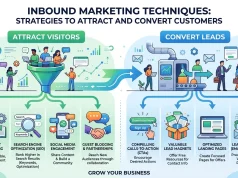
To connect content with revenue, businesses need more than random posting. They need inbound marketing strategies that follow a logical journey from awareness to conversion. That journey usually starts with a problem, continues with education, and ends with a decision. The clearer the path, the easier it becomes to guide prospects through it.
A strong content marketing and inbound strategy begins by understanding what customers fear, want, and compare before purchasing. Once you know those motivations, every blog, video, case study, and email can address a specific stage in the buyer journey. This alignment is the difference between traffic that visits and traffic that converts.
Stage 1 — Attract the Right Audience
The first stage of inbound marketing strategies is visibility. If the right people never find your brand, no amount of persuasion will help later. Search intent, social distribution, and topic relevance all play a role here. Companies that invest in educational content, comparison pages, and problem-solving resources usually attract higher-intent visitors than brands that only advertise offers.
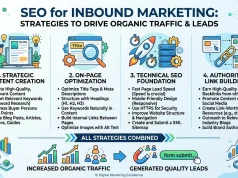
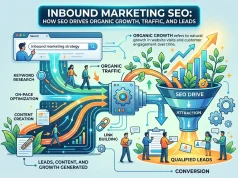
SEO and inbound marketing work especially well together because search brings in people who are actively looking for solutions. When your content answers those questions clearly and naturally, your brand becomes a trusted source rather than a random result. At this stage, the focus should be on discoverability, clarity, and helpfulness.
Stage 2 — Build Interest and Trust
After attention comes consideration. People need reasons to believe your brand understands their problem and can solve it. This is where educational assets, case studies, webinars, and email nurturing become powerful. The goal is to reduce uncertainty by showing expertise in a calm, non-aggressive way.
Think about how buyers feel when they land on a page. They are asking, “Can this brand solve my problem?” and “Can I trust them?” Inbound marketing strategies answer those questions before the buyer has to ask them out loud. That lowers resistance and makes the next step easier.
Stage 3 — Convert Intent Into Action
Once trust is established, the next step is conversion. Here, inbound marketing strategies should make the next action obvious. That could mean booking a call, downloading a guide, starting a trial, or requesting a quote. Clear calls to action, strong landing page structure, and proof elements all help move a prospect forward.
This is also where message matching matters. If the content promised a solution to a specific problem, the offer should continue that same idea. The transition should feel seamless, not abrupt. When the experience feels relevant, people are far more likely to act.
Practical Methods That Drive Results
Below is a simple view of high-impact tactics and how they support business goals:
| Tactic | Purpose | Best Use |
|---|---|---|
| Educational blogs | Attract search traffic | Early awareness |
| Lead magnets | Capture contact data | Mid-funnel nurturing |
| Case studies | Build credibility | Decision stage |
| Email sequences | Continue education | Ongoing nurture |
| Landing pages | Increase conversions | Campaign support |
These tactics become more effective when they are connected through inbound marketing strategies rather than used as isolated pieces. A blog should point to a lead magnet, a lead magnet should connect to an email sequence, and the email sequence should guide readers toward a relevant offer. That connected system is what makes the model so efficient. In many teams, inbound marketing strategies become the bridge between content creation and measurable revenue.
One of the strongest inbound lead generation techniques is creating content around specific pain points instead of broad topics. A useful article about a narrow challenge can attract a smaller audience that is far more likely to convert. That means less waste, better lead quality, and a stronger return on effort.
For businesses that want faster traction, inbound marketing campaign ideas can include seasonal guides, expert roundups, comparison articles, and resource hubs. These campaigns perform best when they are built for search intent, user questions, and repeat engagement.
How to Design a Funnel
An inbound marketing funnel strategy should map the customer journey simply. At the top, content should educate. In the middle, assets should help the audience compare options. At the bottom, proof and offers should remove hesitation. When each stage is aligned, prospects move with less friction and more confidence.
How to Drive Acquisition
Inbound customer acquisition is not about volume alone. It is about attracting the right people and guiding them toward meaningful action. Strong messaging, consistent publishing, and relevant offers make it easier to turn strangers into subscribers and subscribers into customers. In many industries, this lowers acquisition costs over time because the content keeps working after publication.
How to Improve Conversion
Even great traffic can underperform if the page experience is weak. Inbound marketing conversion strategies should focus on reducing friction. Simplify forms, improve headline clarity, add proof, and make the value of the next step obvious. Small improvements here can produce large gains because they affect every visitor who is already interested.
The Psychology Behind Conversion
People do not buy only because they understand a product. They buy because they feel safe, seen, and confident. That is why inbound marketing strategies should speak to emotional drivers such as relief, certainty, progress, and belonging. When the message feels human, inbound marketing strategies earn attention without creating pressure. Strong messaging helps a buyer imagine a better future and trust the brand enough to move forward.
Consistency also matters. When a business publishes steadily, it signals reliability. When its content sounds helpful instead of self-promotional, it creates a positive pattern in the reader’s mind. Over time, the brand feels familiar, and familiarity often reduces resistance.
Common Mistakes to Avoid

Some businesses expect immediate results and abandon the process too early. Others publish content without a clear goal or fail to connect it to a next step. Inbound marketing strategies work best when they are measured, refined, and supported by a clear funnel.
Another common mistake is ignoring search intent. A page may get traffic but still fail if it answers the wrong question. That is why keyword mapping, content planning, and conversion alignment must work together. Inbound marketing strategies break down when the content does not match the buyer’s stage. Inbound marketing strategies become much stronger when every asset has a specific job.
A Simple 90-Day Plan
In the first month, define audience needs, map content themes, and create foundational pages. In the second month, publish core resources, build internal links, and launch capture points. In the third month, review performance, improve weak pages, and expand the topics that already show promise. This kind of rhythm helps the system become repeatable rather than random. Inbound marketing strategies are easier to scale when every month has a clear objective.
When businesses use the same framework across blog posts, landing pages, and email, they build momentum. That is the real power of inbound marketing strategies: they create a system that gets stronger as it matures.
Measuring What Matters
The smartest teams do not guess. They measure traffic quality, assisted conversions, form completion rate, email engagement, and pipeline influence. When those numbers are reviewed together, it becomes easier to see which topics, formats, and offers deserve more investment. This approach is strongest when it is tied to business outcomes instead of vanity metrics.
A useful reporting rhythm is simple: monitor what attracts attention, what builds trust, and what produces action. If a post brings visits but no leads, improve the call to action or the offer. If a page converts well but receives little traffic, improve the SEO and distribution. Inbound marketing strategies improve fastest when the data guides the next move instead of being ignored.
Long-Term Advantage
Over time, the real advantage is not just traffic. It is brand memory. When prospects repeatedly find useful articles, thoughtful guides, and clear answers, they begin to remember the company as a dependable source. That familiarity lowers resistance later in the buying journey and makes referrals easier too. This approach creates the advantage because it keeps serving value long after publication.
Conclusion
Inbound growth succeeds when value leads the conversation. Brands that educate clearly, earn attention honestly, and guide readers with relevant next steps build trust faster than brands that chase attention without substance. The method helps companies attract qualified visitors, improve lead quality, and convert interest into revenue. When the content is useful, the SEO is intentional, and the funnel is clear, growth becomes more predictable and far more durable. That is why businesses that commit to this approach usually see better brand authority, stronger customer relationships, and a healthier long-term pipeline.
FAQs
1. What are inbound marketing strategies?
Inbound marketing strategies are methods that attract customers through useful content, search visibility, and trust-building experiences rather than interruptive promotion.
2. Why are inbound marketing strategies important for growth?
They support growth because they bring in qualified visitors, improve lead quality, and build assets that keep working over time.
3. How does a digital inbound marketing strategy work?
A digital inbound marketing strategy uses online channels such as SEO, content, email, and social platforms to guide people from discovery to conversion.
4. What is the role of content marketing and inbound strategy?
Content marketing and inbound strategy work together by educating prospects, answering questions, and creating a path toward action.
5. Which inbound lead generation techniques work best?
Lead magnets, SEO content, webinars, case studies, and targeted landing pages are some of the most effective techniques.
6. What is an inbound marketing funnel strategy?
It is a structured path that moves a prospect from awareness to consideration and then to decision using the right content at each stage.
7. How can businesses improve inbound customer acquisition?
They can improve it by targeting clear buyer needs, publishing consistently, and using helpful offers that match intent.
8. Why does SEO and inbound marketing matter together?
SEO and inbound marketing matter together because search helps the right audience discover content when they already want solutions.
9. What are good inbound marketing campaign ideas?
Good ideas include comparison posts, seasonal guides, expert interviews, downloadable templates, and topic clusters.
10. How do inbound marketing conversion strategies increase sales?
They increase sales by reducing friction, building proof, and making the next step clear and easy to take.