
Inbound marketing generates stronger leads because it starts with relevance and ends with trust. It attracts people who are already looking for answers, guides them with useful content, and nurtures them until they are ready to move forward. The process works best when the message is clear, the audience is well defined, and every step of the funnel supports the next.
The real advantage is not just more leads. It is better leads. Better leads are easier to qualify, more likely to convert, and more likely to become long-term customers. That is why inbound systems outperform random traffic tactics when the goal is sustainable growth.
Inbound marketing works because it aligns with how people actually buy. Instead of interrupting strangers with cold messages, it attracts the right audience, builds trust over time, and guides prospects toward a decision with useful content, relevant offers, and clear next steps. When done well, it does more than bring traffic. It brings attention from people who are already looking for a solution, already comparing options, and already open to learning more.
That is why businesses that want sustainable growth often focus on Generate High-Quality Leads rather than chasing large volumes of weak contacts. A smaller list of interested prospects is usually more valuable than a huge list of random visitors who will never convert. Quality matters because qualified leads shorten sales cycles, improve conversion rates, and make marketing efforts more efficient. This is especially true in crowded markets where people are exposed to endless messages and have learned to ignore anything that feels generic or pushy.
To understand what is inbound marketing lead generation, it helps to think of the process as attraction, education, trust, and conversion. You create content that answers real questions, use search engines and social channels to reach people, offer value through landing pages and lead magnets, and continue the relationship with nurturing content. Over time, this creates a system that works even when your sales team is not actively chasing each prospect one by one.
In practical terms, that means learning how to generate high-quality leads online through content that matches user intent, pages that convert, and follow-up systems that keep interest alive. It also means understanding how inbound marketing helps get more leads without sacrificing lead quality. The best systems are not built on guesswork. They are built on a step-by-step inbound marketing strategy, careful segmentation, and a clear understanding of the customer journey.
Why Inbound Marketing Produces Better Leads

People rarely become customers the moment they discover a brand. They move through awareness, consideration, and decision stages at their own pace. Inbound methods respect that rhythm. Instead of pushing a product before someone is ready, they give people the information they need when they need it. That timing matters because trust grows faster when the message matches the moment.
This is also why why inbound marketing generates better leads is not just a theory. It is a practical outcome of relevance. Someone who finds your article through search, downloads a guide, and subscribes to a newsletter has already shown intent. They are not a random contact. They have signaled interest. That signal helps teams qualify prospects more accurately and tailor future communication.
The psychological advantage is simple. People respond better to helpfulness than pressure. They are more willing to share their contact details when they believe they are receiving something useful in return. They are more likely to stay engaged when the brand keeps solving problems instead of repeating product claims. This creates a healthier relationship from the beginning and reduces the friction that often appears in outbound-heavy campaigns.
When a company builds trust before asking for the sale, the lead tends to arrive with more context, more confidence, and more readiness. That is why inbound approaches often improve conversion efficiency across the entire funnel, not just at the first touchpoint.
Understanding the Quality of a Lead
A high-quality lead is not simply someone who filled out a form. It is a person or business with a real problem, a fit for your solution, and enough interest to continue the conversation. Quality is shaped by intent, fit, timing, and engagement. The more aligned these factors are, the more likely the lead is to move forward.
One common mistake is to celebrate volume without examining intent. Many campaigns generate a long list of names, but those names may be disconnected from the ideal customer profile. They might be students, researchers, competitors, or people browsing casually. Those contacts can inflate reporting but do little for revenue.
A better approach starts with a clear ideal customer profile and buyer persona. This makes it easier to design offers that attract the right people. It also helps teams filter out low-fit traffic early, before it consumes sales resources. When the message, offer, and audience all align, lead quality improves naturally.
This is where buyer persona targeting for inbound leads becomes essential. A persona is more than a demographic sketch. It is a working model of motivations, frustrations, goals, and objections. When content speaks to those realities, it feels relevant. Relevance increases engagement, and engagement improves lead quality.
Build the Foundation Before You Push Traffic
Many campaigns fail because they try to force traffic into a weak system. Before spending energy on promotion, the foundation must be ready. The website should load quickly, the copy should speak clearly, and each page should have one purpose. If the experience is confusing, visitors leave before they become leads.
A strong foundation starts with positioning. Visitors should understand who the business serves, what problem it solves, and why it is different. Then comes the content structure. Blog posts, pillar pages, case studies, comparison pages, and lead magnets should work together. Each asset should move the visitor one step closer to trust.
The next layer is conversion design. Forms, buttons, offers, and landing pages need to be obvious without being aggressive. A good page guides attention naturally. It reduces friction, answers objections, and offers a simple next step. That is how conversion rate optimization helps inbound campaigns become more efficient over time.
The Role of Content in Lead Generation
Content is the engine of inbound marketing. It is how you attract attention, answer questions, and prove expertise. But content only drives leads when it is planned strategically. Random publishing rarely produces consistent results. Content must be tied to search intent, audience problems, and business goals.
The strongest content is often educational first and promotional second. It helps the reader make progress before it asks for anything in return. That can be a guide, a checklist, a template, a webinar, a tool, or a free assessment. The key is to create something genuinely useful enough that people would trade their contact details for it.
If the goal is content-driven lead generation, then every piece should have a role. Some articles introduce the problem. Some explain the solution. Some compare options. Some capture bottom-of-funnel traffic from people who are ready to act. This layered structure makes the content ecosystem stronger than relying on a single landing page or one viral post.
A practical content plan usually includes educational blog posts, landing pages, case studies, and email content. Educational posts build discovery. Landing pages collect interest. Case studies reduce risk. Email nurtures trust. Together, they create a path from awareness to action.
Search Intent and Organic Discovery
Search is one of the most reliable sources of qualified traffic because it reflects active intent. People type questions into search engines when they want answers now. That means content optimized for search can bring in visitors who are already thinking about a solution.
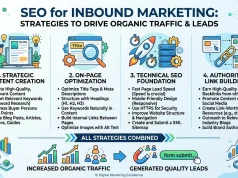
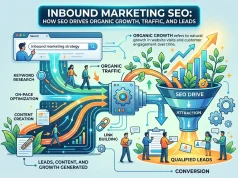
This is why SEO-based lead generation strategies remain central to inbound growth. Search engine optimization helps your content appear when people are looking for the topics your business covers. The better the alignment between query and content, the stronger the lead potential.
To make this work, start with keyword mapping. Group topics by intent: informational, comparative, and transactional. Then create pages that match each stage. A beginner guide can attract early-stage readers. A comparison article can help those weighing options. A landing page can capture visitors ready to request a demo or consultation.
A well-built search strategy also supports long-term authority. When content earns visibility and trust, it continues to attract traffic without constant paid spend. That compounding effect is one of the main advantages of inbound marketing, especially for businesses with longer sales cycles.
How to Structure the Funnel

A funnel is only useful when it reflects real behavior. People do not move from stranger to buyer in one clean jump. They move through stages, often revisiting content several times before they act. The best funnels are designed to support that movement.
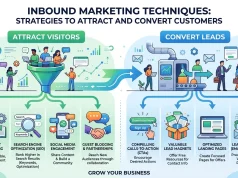
At the top of the funnel, educational content attracts attention. In the middle, deeper resources help prospects compare solutions and understand their problem more clearly. At the bottom, offers and conversion pages make the next step simple. This structure is the backbone of inbound marketing funnel optimization.
A strong funnel usually includes:
| Funnel Stage | Goal | Example Content |
|---|---|---|
| Awareness | Attract visitors | Blog posts, guides, videos |
| Consideration | Build trust | Case studies, comparison pages, webinars |
| Decision | Convert leads | Landing pages, demos, consultation offers |
| Retention | Continue value | Email sequences, customer education, community |
The more consistent the messaging is across each stage, the easier it becomes for people to move forward. That consistency lowers confusion and creates a smoother decision-making process.
Landing Pages That Convert
A landing page should do one thing well. It should help the visitor understand the offer quickly and feel safe enough to respond. That is where landing page optimization for conversions makes a major difference.
An effective landing page usually has a clear headline, short supporting copy, proof elements, a focused form, and a single call to action. It does not overload the visitor with too much information at once. Instead, it answers the most important questions: What is this? Who is it for? Why does it matter? Why now?
Trust is especially important on landing pages. Visitors are cautious because they know their contact details are valuable. The page should reduce that hesitation by showing authority, relevance, and clarity. Testimonials, statistics, recognizable clients, or sample outcomes can all help. The goal is not to impress through complexity. The goal is to remove doubt.
Another useful principle is specificity. Generic offers attract generic leads. Specific offers attract more aligned prospects. A downloadable template for a particular audience will usually outperform a broad guide for everyone. Narrow relevance often creates better lead quality.
Lead Magnets That Match Intent
A lead magnet is the bridge between interest and contact information. It gives people a reason to exchange their details for value. But not every lead magnet is equally effective. The best ones match the visitor’s stage in the journey and the urgency of the problem.
For early-stage audiences, educational resources work well. For mid-stage audiences, assessments, checklists, and comparison guides are often more persuasive. For late-stage audiences, demos, consultations, and samples can be stronger. Matching the offer to the stage improves conversion and lead quality.
The best lead magnets often solve one specific problem instead of trying to cover everything. The more precise the promise, the more credible the offer feels. People are tired of vague marketing promises. They respond better to clear outcomes and realistic value.
That is why lead magnets should be designed around actual pain points, not just marketing convenience. When the offer mirrors the audience’s immediate concern, response rates usually improve.
Nurturing Leads With Psychology in Mind
Not every lead is ready to buy immediately. Many need reassurance, education, and time. That is where email nurturing campaigns for leads become important. Instead of leaving new contacts unattended, nurturing keeps the conversation alive and moves people closer to trust.
Good nurturing respects psychology. People prefer gradual commitment over sudden pressure. They also respond to familiarity. When they receive useful messages consistently, they begin to feel that the brand understands them. That feeling reduces resistance.
A nurturing sequence should not be a sales blast. It should build confidence. The first email might reinforce the value offer. The next might share a helpful insight. Another might address a common mistake. Later messages can introduce case studies, solutions, or deeper resources. Each step should feel like a continuation of the same helpful conversation.
The best sequences also segment by behavior. Someone who opened several emails may be more engaged than someone who ignored everything. Someone who clicked a pricing page has different intent from someone who only downloaded an introductory guide. Behavior-based follow-up makes communication more relevant.
Automation Without Losing the Human Touch
Automation is powerful, but only when it supports authenticity. It should save time, improve consistency, and help teams respond faster. It should not make the experience feel robotic. That balance is why lead nurturing automation workflows must be designed carefully.
The most effective automated systems feel personal because they respond to real actions. A visitor who downloads a guide can receive a tailored sequence. A lead who attends a webinar can receive related resources. A prospect who revisits a pricing page may receive a different follow-up than someone still in research mode.
This is where marketing automation for inbound leads becomes more than a convenience. It becomes a practical way to deliver the right message at the right moment. The technology should support personalization, not replace it. When automation is used well, it makes the process more human because people receive messages that better fit their needs.
The same logic applies to CRM integration for lead management. A connected CRM helps marketing and sales teams see the same lead history, engagement patterns, and status updates. That visibility improves response timing and reduces the chance that promising leads get ignored.
Traffic Channels That Support Quality
Quality lead generation is not only about content. It is also about distribution. Even the best article will not perform well if the right people never see it. That is why organic traffic lead generation methods should be paired with smart promotion.
Search is often the foundation, but social media, email, partnerships, and communities all add reach. The important thing is to choose channels where your audience already spends time. A strong content piece can be repurposed into short posts, email summaries, carousel graphics, short videos, or discussion prompts.
Social channels are especially useful when the topic encourages conversation or reflection. They may not always generate the same intent as search, but they can accelerate awareness and help content spread faster. The right mix of channels depends on audience behavior, content type, and business stage.
This is also where social media inbound lead generation can support the bigger system. Social platforms can introduce the brand, drive traffic to content, and bring new people into the funnel. The goal is not simply to post often. The goal is to create a pathway from attention to action.
A Practical Strategy for Getting Better Leads
A good system usually combines clarity, patience, and consistency. It starts with a strong message and a focused audience. It continues with educational content, useful offers, and conversion-oriented pages. Then it uses nurturing and automation to keep interest warm.
If your goal is to attract qualified leads to a website, the first step is relevance. Your headline, article topic, and call to action must match the searcher’s intent or the visitor’s expectation. If they do not match, the visitor leaves quickly.
The next step is usefulness. Every page should help the reader move forward in some way. Even if they are not ready to convert, they should leave with more clarity than they had before. That increases the chance that they return later.
The final step is continuity. A single visit rarely creates a customer. A connected journey across content, email, and offers creates momentum. That momentum is what turns visitors into leads and leads into customers.
Common Mistakes That Reduce Lead Quality
Many businesses try to optimize too early for volume. They chase clicks, signups, and impressions without checking whether those contacts are a fit. This creates the illusion of success while the pipeline remains weak.
Another mistake is vague messaging. When the audience cannot quickly understand what the business does or who it serves, conversion rates suffer. Clarity should never be sacrificed for cleverness.
A third mistake is a weak follow-up. Leads often need multiple touches before they take action. If the business stops communicating too soon, interest fades. This is why structure matters after the opt-in, not only before it.
There is also the issue of poor segmentation. When all leads receive the same message, relevance drops. Some people need beginner education. Others need proof. Others need pricing clarity. Treating every lead the same ignores where they are in the buying process.
How Content and Sales Should Work Together
Inbound lead generation works best when marketing and sales share a common view of quality. Marketing should know which topics attract the right people. Sales should know which behaviors indicate readiness. That feedback loop makes the system smarter over time.
When a sales team notices that certain content leads convert better, marketing can produce more of that content. When marketing sees that certain lead magnets attract low-fit contacts, they can adjust the offer or targeting. This coordination is what turns inbound into a growth engine rather than a set of disconnected campaigns.
A strong handoff also matters. Leads should not feel like they are starting over when they move from marketing to sales. Their behavior, downloaded resources, and previous interactions should be visible. That continuity improves trust and reduces repetition.
Deepening Trust Through Proof
Trust is built through consistency, evidence, and relevance. People want to know that your solution works and that others like them have used it successfully. Social proof, testimonials, case studies, and data all help reduce uncertainty.
The strongest proof is often specific. A vague claim is easy to ignore. A clear result tied to a real scenario is harder to dismiss. That is why well-crafted case studies can be so effective in inbound campaigns. They show the problem, the process, and the outcome in a way that feels believable.
Proof also helps overcome objections before they become barriers. If a lead is worried about implementation, a case study showing easy onboarding may help. If they worry about speed, a short example of fast results can ease concern. Good proof answers the questions people may not ask out loud.
Measurement and Continuous Improvement
Inbound marketing improves when it is measured honestly. Traffic alone does not tell the full story. You need to know which pages attract the right visitors, which offers convert best, and which leads actually move through the pipeline.
Useful metrics include organic traffic, landing page conversion rate, form completion rate, email open and click rates, MQL-to-SQL conversion, and closed-won revenue. These numbers help reveal where the funnel is strong and where it leaks.
But numbers only help when paired with interpretation. A high traffic page that converts poorly may need a stronger offer. A landing page with low completion rates may need shorter forms or better proof. A nurture sequence with low clicks may need stronger relevance or clearer timing.
The point is not to track everything. The point is to track what improves lead quality and business outcomes.
When to Use Social Proof, Offers, and Timing
People are more likely to act when the offer is clear, the timing feels right, and the message reduces risk. That means presentation matters as much as value. Even a great offer can underperform if it appears too early or is framed too broadly.
Good timing depends on stage. Early-stage visitors may not want a sales conversation. They may prefer a guide or checklist. Mid-stage visitors may be ready for a webinar or case study. Late-stage visitors may want a demo, pricing, or consultation. The offer should match readiness.
This is where psychology and strategy meet. People prefer to move forward without feeling rushed. They also prefer offers that help them make a better decision. When you position content as assistance rather than pressure, response rates often improve.
Building Authority Over Time
Authority is not built by one campaign. It grows through repeated helpfulness. Each article, guide, email, and resource adds another layer of credibility. Over time, people begin to associate the brand with competence and clarity.
That matters because authority lowers perceived risk. When a business is seen as knowledgeable, visitors feel more comfortable exchanging information and considering a deeper relationship. Inbound marketing benefits from this compounding effect.
A useful way to build authority is to cover topics deeply and consistently. Publish content that answers beginner questions, advanced questions, and comparison questions. Show examples. Explain outcomes. Keep the language practical. This signals that the brand understands the audience beyond surface-level promotion.
A Human-Centered Inbound Framework
At the heart of inbound marketing is respect for the buyer. People do not want to be manipulated. They want to feel understood. They want solutions that fit their situation and a process that gives them room to decide.
A human-centered approach does not weaken marketing. It strengthens it. When the audience feels understood, they are more willing to engage. When they receive clear value, they are more likely to trust. When they trust, they are more likely to convert.
This is why the best inbound systems are never just technical. They are emotional, educational, and strategic at the same time. They combine content, design, timing, and empathy. That combination is what turns ordinary traffic into high-quality pipeline.
Conclusion
If the objective is to generate better opportunities, then inbound marketing should be built around quality, not noise. Strong content, useful offers, focused landing pages, careful segmentation, and smart nurturing create a system that attracts people with real intent. When these parts work together, the result is not just visibility. It is meaningful demand.
The businesses that win with inbound are usually the ones that think beyond immediate clicks. They focus on understanding the buyer, answering the right questions, and reducing friction at every stage. Over time, that approach builds trust, improves conversion, and creates a more predictable growth engine.
The path is simple in concept, even if it takes discipline in execution: attract the right people, give them value, guide them clearly, and keep the relationship relevant. That is how inbound becomes a dependable way to create qualified demand.
FAQ
What is inbound marketing lead generation?
Inbound marketing lead generation is the process of attracting prospects through helpful content, search visibility, social engagement, and conversion-focused offers rather than interruptive advertising.
How does inbound marketing help get more leads?
It helps by bringing in people who are already interested in a topic or solution, which makes them more likely to engage, subscribe, and convert.
How do I know if a lead is high quality?
A high-quality lead usually fits your ideal customer profile, shows real interest, and has enough need, timing, and budget to move forward.
What content works best for inbound lead generation?
Educational blog posts, guides, webinars, case studies, templates, and comparison pages often work well because they match different stages of the buyer journey.
How can I improve lead quality in marketing?
Focus on audience targeting, stronger offers, better landing pages, smarter segmentation, and follow-up that matches the lead’s intent and stage.
Why inbound marketing generates better leads than broad outreach?
Because it attracts people based on interest and intent, which usually creates more relevant conversations and stronger conversion potential.
How to build an inbound marketing funnel?
Start with awareness content, move prospects to a lead magnet or offer, nurture them with email and remarketing, and then present a clear next step.
What is the best way to convert visitors into leads?
Use a clear offer, strong value proposition, simple form, relevant proof, and a landing page that reduces hesitation.
Can social media support inbound lead generation?
Yes. Social media can expand reach, increase content visibility, and send engaged visitors into your funnel.
Is automation necessary for inbound marketing?
It is not required, but it makes lead follow-up more efficient, consistent, and scalable when used with personalization.
Final Thought
Inbound marketing is not about speaking louder. It is about speaking more clearly to the people who are already searching for help. When the message matches the need, leads become easier to attract, easier to trust, and easier to convert.