
Real-time personalization for inbound leverages live data to instantly adapt content to user behavior. This comprehensive guide explores actionable strategies, dynamic content mechanics, and AI implementation tips to help you create highly relevant, engaging inbound marketing campaigns that maximize ROI.
Captivate audiences instantly. Real-time personalization for inbound transforms static pages into dynamic, engaging experiences that drive conversions and build lasting customer loyalty through tailored messaging.
Understanding Real-Time Personalization for Inbound
When a visitor lands on your website, you have mere milliseconds to capture their attention. Real-time personalization for inbound is the process of instantly tailoring the digital experience to match a user’s immediate context, behavior, and preferences. Unlike traditional marketing, which relies on historical data to predict future actions, real-time personalization for inbound reacts in the moment.
If a user clicks on a blog post about running shoes, the website instantly updates to show related footwear accessories or targeted discounts. This dynamic content approach ensures that every interaction feels incredibly relevant. By using customer data platforms and advanced algorithms, businesses can deliver hyper-personalized inbound experiences that guide prospects smoothly down the sales funnel.
Real-time personalization for inbound ensures your messaging always aligns with what the user wants right now. It removes friction, accelerates decision-making, and significantly boosts overall engagement.
The Shift from Static to Dynamic Content

Static content serves the same experience to every visitor. Dynamic content, however, changes based on who is viewing it. Implementing real-time personalization for inbound requires a fundamental shift from static pages to dynamic, flexible frameworks.
You must break your content into modular blocks. Headlines, images, calls-to-action (CTAs), and product recommendations must all be adaptable. When a user matching a specific profile visits your site, the system instantly assembles these blocks to create a custom page layout.
Dynamic content personalization is the engine driving real-time personalization for inbound. It allows you to tailor experiences based on geolocation, referral source, and on-site behavior—crucial factors when establishing digital identity verification in digital finance to ensure that sensitive user interactions remain both personalized and secure.
Key Benefits of Real-Time Personalization for Inbound
Adopting real-time personalization for inbound offers numerous advantages for modern marketers. By making the user experience highly relevant, you can achieve remarkable results across your entire inbound funnel.
1. Increased Conversion Rates
When visitors see content that directly addresses their specific pain points, they are far more likely to take action. Real-time personalization for inbound removes irrelevant distractions. By presenting the right offer at the precise moment of intent, you significantly increase the likelihood of form submissions, purchases, and subscriptions.
2. Enhanced User Engagement
Generic websites often suffer from high bounce rates. Real-time personalization for inbound keeps users engaged by continuously serving them interesting, relevant information. If a user reads three articles about social media marketing, a dynamic CTA offering a social media template will yield much higher engagement than a generic newsletter signup form.
3. Deeper Customer Loyalty
Customers appreciate brands that understand them. Real-time personalization for inbound makes users feel valued. By consistently delivering tailored experiences, you build a strong foundation of trust and brand loyalty.
4. Optimized Marketing Spend
By targeting users with highly relevant messages, you maximize the efficiency of your inbound campaigns. Real-time personalization aligns with the core principles of inbound marketing psychology, ensuring you do not waste impressions or clicks on the wrong audience while driving a much higher return on your marketing investment.
Core Strategies for Real-Time Personalization for Inbound
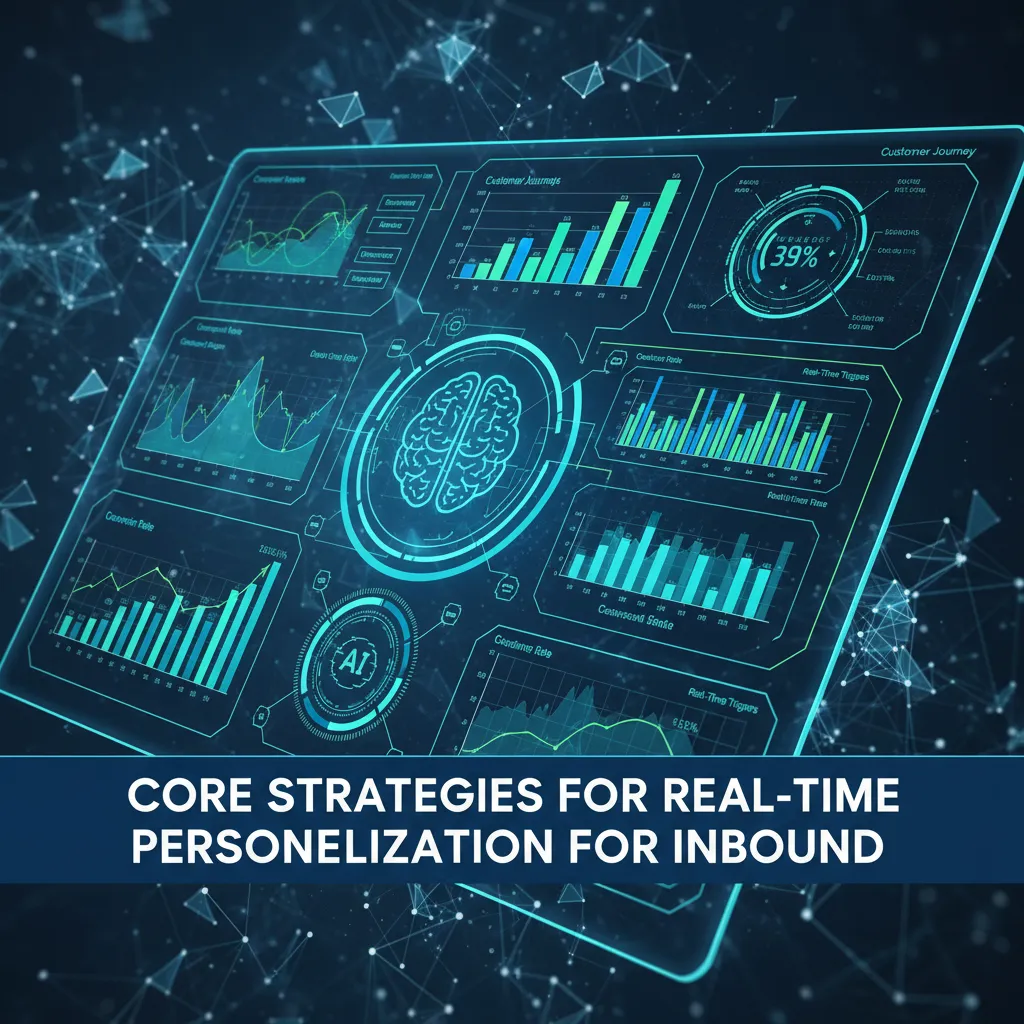
To succeed with real-time personalization for inbound, you must implement sophisticated strategies that go beyond basic name insertion in emails. You need to leverage deep data insights and automated delivery systems.
Behavior-Based Personalization
Track what users do on your site. Real-time personalization for inbound relies heavily on behavioral triggers.
- Page Views: Recommend related articles based on the current page topic.
- Time on Page: Trigger a special offer if a user spends more than two minutes on a pricing page.
- Scroll Depth: Show a newsletter signup form only when a user reads 75% of a blog post.
- Click Patterns: Adjust the navigation menu based on the categories a user clicks most frequently.
Contextual Personalization
Contextual data provides immediate clues about a user’s current situation. Real-time personalization for inbound uses this data to adjust the experience instantly.
- Geolocation: Display pricing in local currency or show shipping times based on the user’s city.
- Device Type: Simplify forms and enlarge buttons for mobile users while offering richer media to desktop users.
- Referral Source: Welcome users from a specific social media campaign with messaging that matches the original ad.
Account-Based Marketing (ABM) Personalization
For B2B companies, real-time personalization for inbound is highly effective for ABM. Identify the company an anonymous visitor works for using IP lookup tools; once identified, you can dynamically change your homepage to highlight features that solve their business challenges or display case studies organized within a content cluster SEO strategy to demonstrate deep industry expertise. This ensures every visitor finds a cohesive path of information tailored to their specific needs.
Implementing Real-Time Personalization for Inbound: Step-by-Step
Building a robust system for real-time personalization for inbound requires careful planning, the right technology, and a structured approach. Follow these steps to set up your dynamic content engine.
Step 1: Define Your Goals and Metrics
Determine what you want to achieve with real-time personalization for inbound. Are you trying to lower bounce rates, increase lead generation, or drive ecommerce sales? Establish clear Key Performance Indicators (KPIs) such as conversion rate, average time on page, and click-through rate to measure your success.
Step 2: Unify Your Customer Data
Real-time personalization for inbound cannot function with siloed data. You must bring all your customer information into a single source of truth. Use a robust system, such as a Salesforce CRM or an Adobe Customer Data Platform (CDP), to consolidate browsing history, purchase data, and demographic information.
Step 3: Segment Your Audience
Group your users based on shared characteristics. While real-time personalization for inbound aims for 1:1 experiences, starting with distinct segments helps structure your initial campaigns. Create segments based on industry, past purchase behavior, engagement level, or referral source.
Step 4: Map Content to User Journeys
Identify the key stages of your buyer’s journey. Determine which content pieces are most relevant for users in the awareness, consideration, and decision stages. Real-time personalization for inbound requires a vast library of modular content to pull from, so ensure you have enough variations of headlines, images, and CTAs.
Step 5: Deploy the Right Technology Stack
You need advanced tools to execute real-time personalization for inbound. Headless content management systems, like Contentful, allow you to seamlessly push dynamic content across various channels. Digital asset management tools, such as Aprimo, help you organize and deploy these assets efficiently.
Step 6: Test, Analyze, and Optimize
Real-time personalization for inbound is an iterative process. Launch your dynamic content campaigns and closely monitor the results. Use A/B testing to compare personalized variations against generic baselines. By analyzing which triggers and content combinations perform best, you can continuously refine your approach to improve behavioral marketing conversions and overall campaign efficiency.
The Role of AI in Real-Time Personalization for Inbound
Artificial intelligence and machine learning are the backbone of modern real-time personalization for inbound. While rule-based personalization (e.g., “If user is from New York, show X”) is effective, AI scales personalization to unprecedented levels.
Predictive Analytics
AI analyzes vast amounts of historical and real-time data to predict what a user is most likely to do next. Real-time personalization for inbound uses these predictions to surface the most relevant products or articles before the user even asks for them.
Automated Optimization
Machine learning algorithms continuously test different content combinations. In real-time personalization for inbound, AI can automatically adjust the weight of certain variables, learning that users from a specific referral source prefer video content over text, and instantly adapting the page layout accordingly.
Natural Language Processing (NLP)
AI uses NLP to understand the context and sentiment of user search queries. Real-time personalization for inbound leverages this to deliver highly accurate search results and dynamically generate landing pages that directly answer the user’s specific questions.
Overcoming Challenges in Real-Time Personalization for Inbound
While highly rewarding, implementing real-time personalization for inbound comes with specific challenges. Understanding these hurdles is crucial for a successful rollout.
Data Privacy and Compliance
Collecting the data required for real-time personalization for inbound must be done ethically and legally. You must comply with regulations like GDPR and CCPA. Always obtain explicit consent before tracking user behavior and clearly communicate how their data will be used. Focus on gathering first-party data directly from user interactions.
Content Bottlenecks
Real-time personalization for inbound requires a massive volume of content. If you have ten audience segments and five stages in the buyer’s journey, you need fifty different content variations. To avoid bottlenecks, build modular content that can be easily mixed and matched, and utilize generative AI tools to assist in creating multiple variations of your messaging.
System Latency
Speed is critical. If your real-time personalization for inbound systems takes too long to process data and serve dynamic content, users will experience page flickering or slow load times. This is especially true for scaling referral marketing for e-commerce, where you ensure your tech stack relies on fast, edge-based processing to deliver personalized experiences in milliseconds to keep new and returning customers engaged.
Real-Time Personalization vs. Traditional Personalization
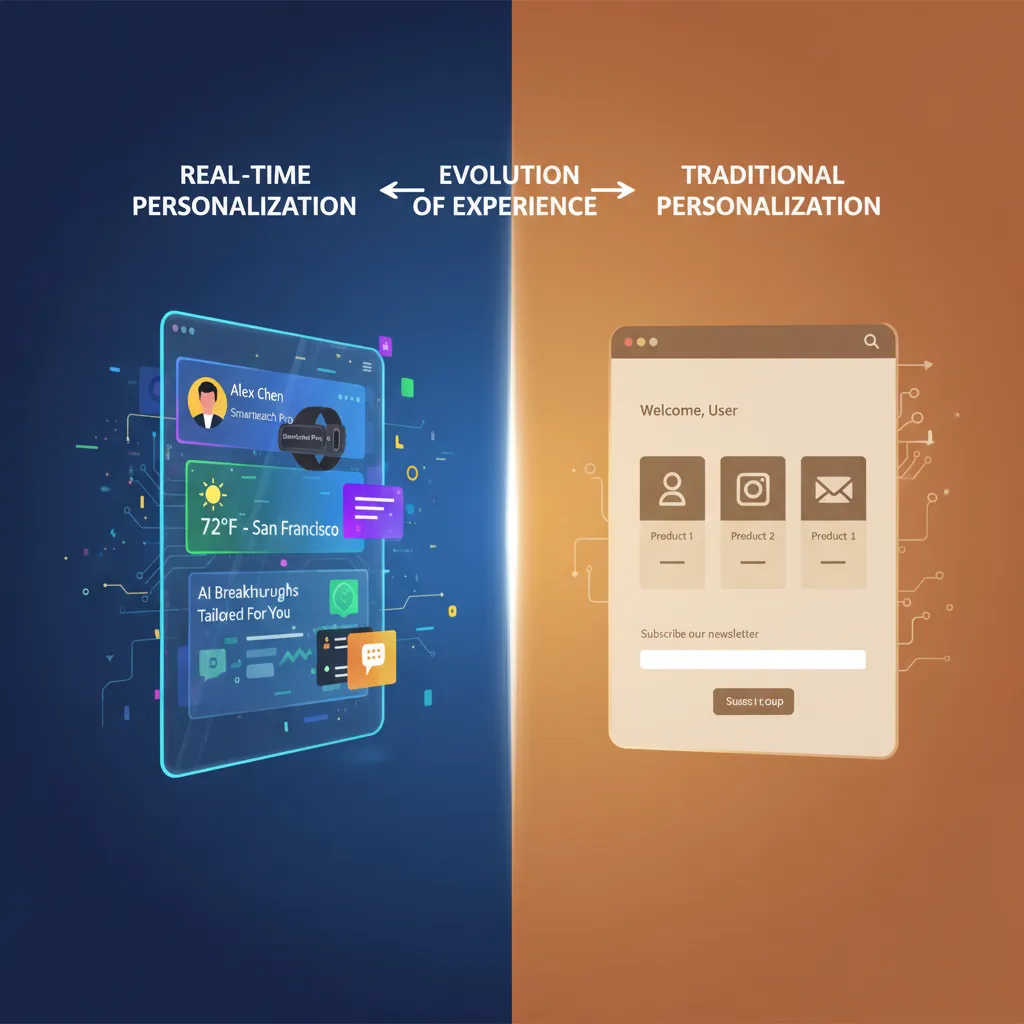
Understanding the difference between traditional approaches and real-time personalization for inbound clarifies why the latter is so essential for modern marketing.
|
Feature |
Traditional Personalization |
Real-Time Personalization for Inbound |
|---|---|---|
|
Data Source |
Historical data, past purchases |
Live streaming data, current session behavior |
|
Speed |
Batch processing (hours or days) |
Milliseconds (instantaneous) |
|
Triggers |
Pre-set rules, demographic segments |
Immediate actions, contextual cues |
|
Content Delivery |
Static campaigns, scheduled emails |
Dynamic web pages, adaptive CTAs |
|
Accuracy |
Broad, segment-based |
Highly granular, 1:1 individual level |
Future Trends: Real-Time Personalization for Inbound
The landscape of inbound marketing is constantly evolving. Real-time personalization for inbound will continue to grow more sophisticated in the coming years.
We will see a rise in hyper-personalization, where AI creates unique web experiences for every single visitor. Voice-based search and smart assistants will also integrate deeply with real-time personalization for inbound, allowing brands to deliver conversational, context-aware responses instantly. Furthermore, the integration of augmented reality (AR) will allow for real-time personalization of digital overlays in physical spaces.
Conclusion
Real-time personalization for inbound is essential for modern marketers seeking to cut through the noise. By leveraging live data, AI, and dynamic content, you can deliver highly relevant experiences that instantly engage visitors. Commit to refining your customer data and modular content strategies to drive meaningful conversions and foster long-term loyalty.
Frequently Asked Questions (FAQs)
1. What exactly is real-time personalization for inbound?
Real-time personalization for inbound is the practice of dynamically altering website content, messaging, and offers in milliseconds based on a user’s live behavior, context, and demographic data to create a highly relevant experience.
2. How does dynamic content differ from static content?
Static content remains identical for every visitor who lands on a page. Dynamic content changes automatically based on user data, allowing real-time personalization for inbound to serve unique text, images, and CTAs to different individuals.
3. Why is first-party data important for real-time personalization for inbound?
First-party data is collected directly from your audience. It is highly accurate, privacy-compliant, and forms the most reliable foundation for driving effective real-time personalization for inbound marketing campaigns.
4. Can small businesses implement real-time personalization for inbound?
Yes. While enterprise tools are powerful, small businesses can start with basic real-time personalization for inbound using email marketing automation, simple website pop-ups triggered by exit intent, and location-based dynamic text replacement.
5. How does AI improve real-time personalization for inbound?
AI processes massive datasets instantly, identifying complex patterns in user behavior. This allows real-time personalization for inbound to move beyond basic rules and accurately predict what content will drive the highest engagement for each individual.
6. Does real-time personalization for inbound slow down website load times?
It can if implemented poorly. However, using modern edge-computing infrastructure, headless CMS platforms, and optimized code ensures that real-time personalization for inbound happens in milliseconds without noticeable latency or page flickering.
7. How do I measure the ROI of real-time personalization for inbound?
Track metrics such as conversion rate lift, average order value, bounce rate reduction, and time on site. Conduct A/B tests comparing your dynamic content experiences against a static control group to measure the exact financial impact.
8. What role does a Customer Data Platform (CDP) play?
A CDP unifies data from multiple sources (CRM, website, email) into a single, comprehensive customer profile. This unified profile is essential for executing accurate and seamless real-time personalization for inbound across all channels.
9. How do I handle privacy concerns with real-time personalization for inbound?
Always prioritize transparency. Implement clear cookie consent banners, allow users to easily opt out of tracking, and comply strictly with GDPR and CCPA regulations. Focusing on delivering value in exchange for data is an essential part of any modern brand refresh, as it ensures that your updated identity is built on a foundation of user trust and ethical standards.
10. What is the biggest mistake marketers make with real-time personalization for inbound?
The biggest mistake is relying on dirty or siloed data. If your data is inaccurate, your real-time personalization for inbound will serve the wrong content to the wrong people, which frustrates users and damages your brand reputation.