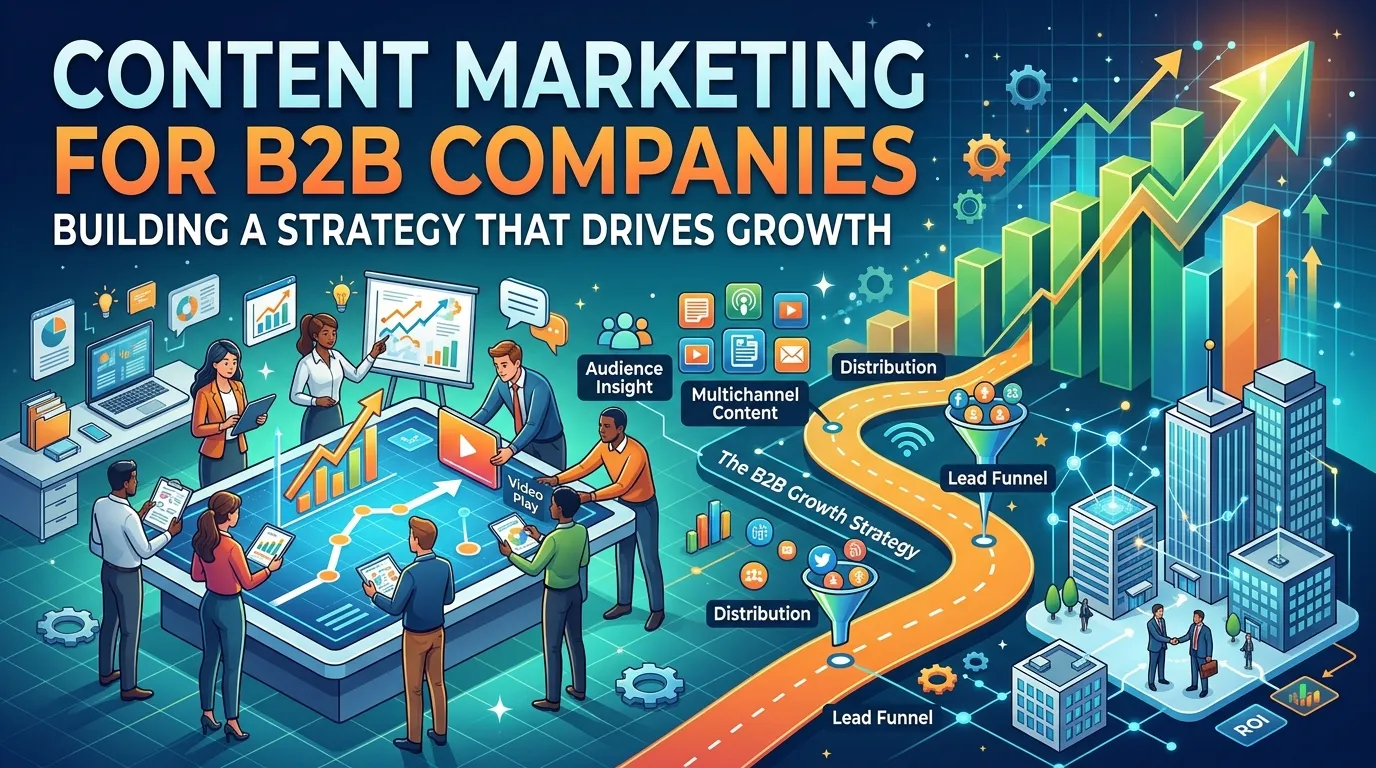
Content marketing for B2B companies helps businesses attract qualified prospects, build authority, generate leads, and strengthen customer relationships through valuable and relevant content. A well-planned strategy combines SEO, content creation, distribution, audience engagement, and inbound marketing to support sustainable business growth.
Content marketing has become an important part of how B2B companies attract prospects, build trust, and create long-term customer relationships. Unlike traditional marketing, which often focuses on direct promotion, content marketing helps businesses provide useful information that answers questions and supports buyers throughout their decision-making process.
Content marketing for B2B companies is especially valuable because B2B purchasing decisions are often more complex than consumer purchases. Buyers may research a company for weeks or months before making a decision. They compare solutions, evaluate expertise, review case studies, and look for evidence that a provider understands their challenges.
A strong content strategy allows a B2B company to be present during this research process. By creating useful, relevant, and search-friendly content, businesses can attract qualified visitors, strengthen their reputation, and support sales conversations.
What Is Content Marketing for B2B Companies?
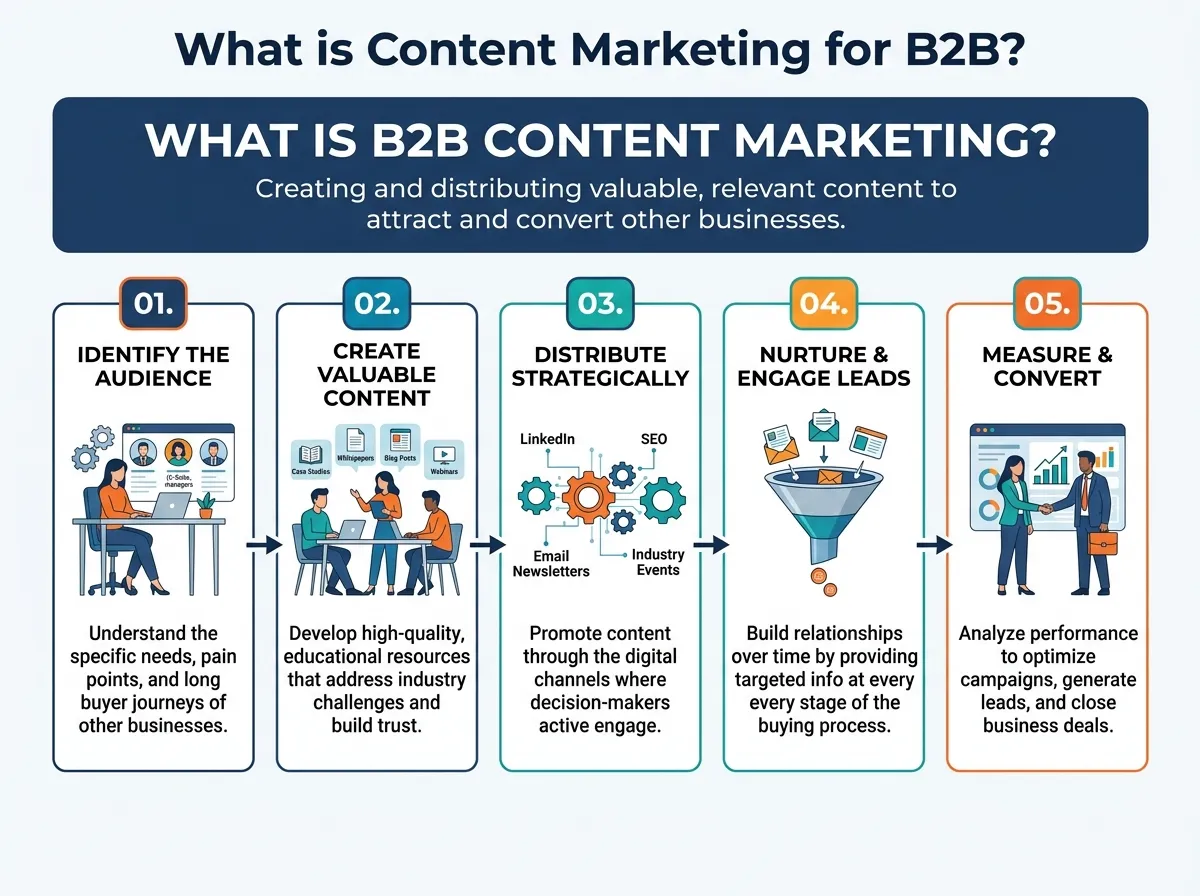
Content marketing for B2B companies is the process of creating and distributing valuable content to attract a specific business audience and encourage meaningful customer relationships. The content may include blog posts, case studies, reports, white papers, videos, webinars, email content, research articles, and other educational resources.
The main goal is not simply to publish as much content as possible. Instead, businesses should create content that addresses the needs, questions, problems, and interests of their target audience.
For example, a software company selling CRM solutions might publish content about lead management, customer retention, sales automation, and CRM implementation. These topics are directly connected to the challenges faced by its potential customers.
A successful B2B content marketing strategy connects these topics with business objectives. Content should help attract the right audience, build authority, generate leads, support conversions, and maintain relationships with existing customers.
Why B2B Companies Need Content Marketing
B2B buyers often conduct considerable research before contacting a sales representative. They may use search engines, company websites, industry publications, social media, and professional communities to understand their options.
This creates a major opportunity for businesses that consistently provide helpful information.
Effective content can introduce a company to potential customers before they are ready to buy. A person searching for a solution to a specific problem may discover a helpful article, explore related resources, and eventually become familiar with the brand.
Content can also demonstrate expertise. When a business regularly publishes useful information about its industry, it can establish credibility and give potential customers more reasons to trust its knowledge.
This approach works particularly well when content supports an overall inbound strategy. For example, businesses can combine educational content with campaigns designed to attract qualified prospects, such as the approaches discussed in Effective Inbound Marketing Campaigns.
Developing a B2B Content Marketing Strategy
A successful strategy starts with a clear understanding of the audience. Before creating content, a company should know who it wants to reach, what problems those people face, what questions they ask, and what information influences their purchasing decisions.
Audience research can reveal opportunities for valuable topics. Sales teams can provide insights from customer conversations, while customer support teams can identify common questions and recurring problems.
Once the audience is understood, businesses can create content around different stages of the buyer journey.
Early-stage content should help people understand a problem or opportunity. Middle-stage content can compare solutions and explain possible approaches. Later-stage content can provide case studies, product information, implementation guidance, and other resources that help buyers make confident decisions.
This creates a connected B2B content creation strategy instead of a collection of unrelated articles.
Choosing the Right B2B Content
Different content formats serve different purposes. Blog articles are useful for answering search queries and educating potential customers. Case studies can demonstrate real-world results. White papers and research reports can establish authority around complex subjects.
Videos can explain difficult concepts quickly, while webinars can create opportunities for deeper engagement. Email newsletters can keep prospects and customers connected with the brand.
The most effective B2B content marketing approach usually combines several formats instead of relying on one type of content.
For example, a detailed research article could become a downloadable report, a webinar topic, several social media posts, an email newsletter, and a short video. This allows a company to get more value from a strong original piece while reaching people through different channels.
Creating Content Around Buyer Intent

Not every searcher has the same level of buying intent. Someone searching for “what is CRM automation” may simply be learning about the subject. Another person searching for “best CRM automation software for small businesses” may be much closer to making a purchase.
Understanding this difference helps businesses create more relevant content.
Informational content can attract new visitors, while commercial and decision-focused content can help move qualified prospects toward conversion. A strong strategy connects these content types so readers can naturally move from learning to evaluating and eventually taking action.
This is one reason keyword research should be connected to audience needs rather than treated as a separate SEO activity.
B2B Content Marketing Tactics That Work
Effective B2B content marketing tactics focus on usefulness, consistency, and relevance. One valuable approach is to create topic clusters around important subjects. Instead of publishing one article about a topic and moving on, a business can develop several related resources that cover different questions.
Another useful tactic is original research. Statistics, surveys, industry observations, and expert insights can make content more distinctive and provide information that other websites may reference.
Case studies are also powerful because they connect a company’s solution with real business outcomes. Instead of simply explaining what a product does, a case study can demonstrate how it helped solve a specific problem.
Expert interviews, thought leadership articles, comparison content, and practical educational resources can also strengthen a B2B content program.
The key is to select tactics that match the audience and business objectives rather than following every content trend.
Generating Leads Through Valuable Content
One of the biggest benefits of content marketing is its ability to support lead generation. B2B lead generation through content works when businesses offer useful information that attracts people who have a genuine interest in their products or services.
For example, a company could publish a detailed article explaining an industry problem and then offer a downloadable checklist or report for readers who want additional information.
Calls to action should feel connected to the content. Someone reading about CRM lead management may be interested in a CRM assessment, while someone reading a guide about cybersecurity may be interested in a security consultation.
Content should therefore support the next logical step instead of forcing an aggressive sales message.
Building a Strong B2B Content Distribution Strategy
Creating great content is only one part of the process. Businesses also need a reliable B2B content distribution strategy to make sure their content reaches the right audience.
Search engines can provide long-term organic visibility, while email marketing can bring content directly to subscribers. LinkedIn and other professional platforms can help businesses reach industry audiences and share thought leadership.
Webinars and digital events can also provide opportunities to distribute educational content while creating direct engagement. A business can turn one major content asset into an event presentation, webinar discussion, or downloadable resource.
For companies that use digital events as part of their marketing mix, resources such as Digital Event Marketing can complement a broader content strategy.
Distribution should also consider timing and audience behavior. Publishing content once and expecting immediate results is rarely enough. Strong content can be promoted repeatedly through appropriate channels while remaining useful and relevant.
Improving B2B Audience Engagement
Content should encourage people to interact with a business rather than simply consume information. B2B audience engagement can come from comments, email responses, webinar participation, downloads, social discussions, and direct conversations with sales teams.
Interactive content can be particularly useful. Quizzes, assessments, calculators, surveys, and tools can provide value while encouraging visitors to spend more time with a brand.
Businesses should also pay attention to the questions people ask after reading content. These questions can reveal opportunities for future articles and help improve existing resources.
Building relationships through content is closely connected to customer-focused marketing. A company that understands its audience and consistently responds to their needs can create stronger relationships over time.
Optimizing B2B Content for Search
B2B content optimization helps businesses improve the visibility and usefulness of their content. SEO should be considered from the beginning of the content creation process rather than added after an article has been written.
The primary keyword should appear naturally in important areas such as the title, introduction, headings, and relevant sections. Related keywords should also be included where they make sense.
However, keyword usage should never make an article difficult to read. Search-friendly content still needs to sound natural and provide genuine value.
A good B2B article should also have a clear structure, descriptive headings, short paragraphs, relevant internal links, useful examples, and a logical flow.
Internal linking can strengthen both user navigation and topical relevance. For example, businesses developing a consistent content publishing process may benefit from resources such as Free Content Calendar Templates, which can help organize content topics and publishing activities.
Connecting Content With Inbound Marketing
Content marketing and inbound marketing work particularly well together. Content attracts people through search and other channels, while inbound marketing provides a broader framework for converting visitors into leads and customers.
A strong B2B inbound marketing strategy may include SEO, educational content, email marketing, landing pages, lead nurturing, social media, and conversion optimization.
Content provides the information that attracts and educates prospects, while other inbound activities help move those prospects through the customer journey.
Relationship building is also important. B2B customers often value trust and consistent communication, especially when products or services involve significant investment. A customer-focused framework can help businesses connect content with longer-term relationships, as explored in Inbound Marketing Relationship Marketing Framework.
Measuring Content Marketing Performance
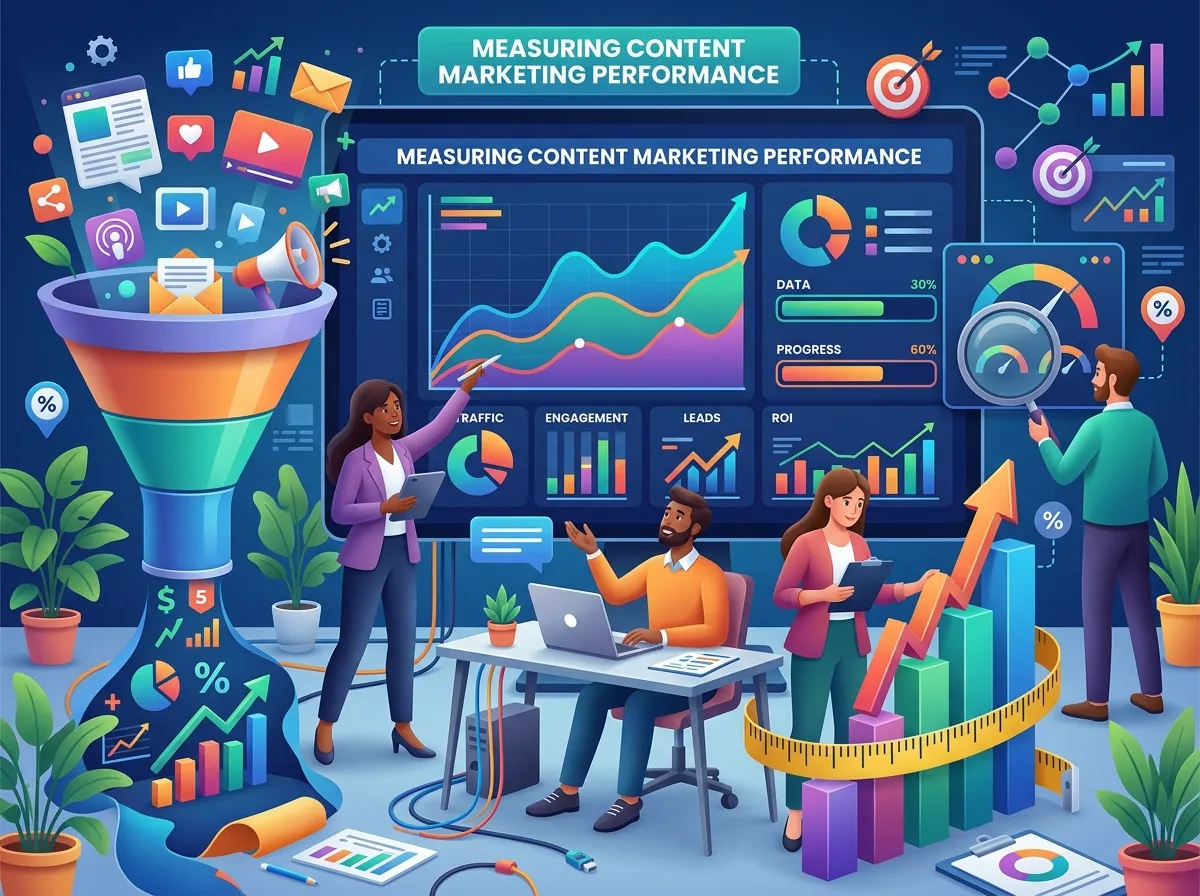
B2B companies should measure content based on meaningful business outcomes rather than publishing volume alone.
Important metrics may include organic traffic, engagement, conversions, qualified leads, email sign-ups, content downloads, assisted conversions, and revenue influenced by content.
Different content pieces may perform differently. An educational blog post might generate thousands of visitors but few immediate leads, while a case study may attract fewer visitors but influence several sales conversations.
This means content should be evaluated according to its role in the customer journey.
Businesses should regularly review performance data and identify which topics, formats, and channels generate the strongest results. Underperforming content can often be improved by updating information, strengthening search optimization, adding internal links, improving the introduction, or providing clearer calls to action.
Common Mistakes B2B Companies Should Avoid
One common mistake is creating content without a defined audience. Even well-written content can struggle when it does not address a specific customer problem.
Another mistake is focusing entirely on promotional material. B2B audiences usually need useful information before they are ready to respond to a sales message.
Inconsistent publishing can also weaken momentum. Companies do not necessarily need to publish every day, but they should maintain a realistic schedule they can sustain.
Ignoring distribution is another problem. Publishing an article does not guarantee that the intended audience will find it. Content needs appropriate promotion, optimization, and distribution.
Finally, businesses should avoid creating content solely for search engines. SEO is important, but content should ultimately serve real people. Readability, usefulness, accuracy, and relevance should remain priorities.
The Future of B2B Content Marketing
B2B content marketing will continue to evolve as search behavior, technology, and buyer expectations change. Artificial intelligence can help businesses research topics, analyze content performance, identify patterns, and improve production workflows.
However, technology does not replace the need for expertise and original thinking. B2B audiences still want reliable information, practical insights, credible evidence, and content that understands their specific challenges.
Companies that combine technology with genuine industry knowledge can create more useful and distinctive content.
The strongest approach is not simply to produce more content. It is to produce better content that answers important questions, reaches the right people, and supports measurable business objectives.
Conclusion
Content marketing for B2B companies is an effective way to attract qualified audiences, demonstrate expertise, build trust, and support long-term business growth. A strong strategy combines audience research, valuable content, search optimization, effective distribution, and continuous performance measurement.
From developing a B2B content marketing strategy to improving B2B content optimization and using B2B lead generation through content, every part of the process should work toward a clear business objective.
When content is useful, relevant, easy to understand, and connected to the buyer journey, it can become more than a traffic-generation tool. It can become an important part of how a B2B company builds relationships and turns interested prospects into loyal customers.
Frequently Asked Questions
1. What is content marketing for B2B companies?
Content marketing for B2B companies involves creating and distributing useful information for a business audience. The goal is to attract potential customers, answer their questions, demonstrate expertise, build trust, and support the buying process.
2. Why is content marketing important for B2B businesses?
B2B buyers often research solutions before contacting a sales team. Useful content allows businesses to reach prospects during this research process, establish credibility, generate qualified traffic, and maintain relationships with potential customers.
3. What are the best types of B2B content?
Popular B2B content formats include blog posts, case studies, white papers, research reports, webinars, videos, email newsletters, industry reports, comparison articles, and educational resources. The best format depends on the audience and marketing objective.
4. How does B2B content marketing generate leads?
B2B content marketing generates leads by attracting people who are searching for information related to a business problem or solution. Relevant calls to action, downloadable resources, newsletters, webinars, and consultation offers can then encourage interested visitors to become leads.
5. What is a B2B content marketing strategy?
A B2B content marketing strategy is a planned approach to researching an audience, selecting topics, creating content, distributing it through appropriate channels, and measuring its performance. It connects content activities with specific business and marketing goals.
6. How can B2B companies improve content optimization?
Companies can improve content optimization by targeting relevant search terms, creating clear headings, improving readability, using internal links, answering search intent, writing useful titles and descriptions, and regularly updating valuable content.
7. How often should a B2B company publish content?
There is no universal publishing frequency. A company should choose a schedule that it can maintain consistently while protecting content quality. Publishing fewer high-value articles consistently is often more useful than producing large amounts of low-quality content.
8. Which channels are useful for B2B content distribution?
Search engines, email newsletters, LinkedIn, industry websites, webinars, digital events, professional communities, and company websites can all support B2B content distribution. The best channels depend on where the target audience spends time and searches for information.
9. How do you measure B2B content marketing success?
Success can be measured through organic traffic, engagement, downloads, email sign-ups, qualified leads, conversions, assisted conversions, sales opportunities, and revenue influenced by content. Businesses should select metrics that connect content performance with their broader objectives.
10. How does content marketing support B2B inbound marketing?
Content is a core part of inbound marketing because it attracts and educates potential customers. When combined with SEO, email marketing, lead nurturing, landing pages, and conversion strategies, content can help move prospects from initial awareness toward consideration, conversion, and long-term customer relationships.