SEO for inbound marketing combines search engine optimization with valuable, audience-focused content to attract potential customers organically. By using an effective inbound marketing SEO strategy, businesses can improve search visibility, generate qualified traffic, build trust, and create more opportunities for long-term lead generation without relying entirely on paid advertising.
Inbound marketing is built around the idea of attracting customers by providing useful, relevant, and trustworthy information. Instead of interrupting people with constant promotional messages, businesses create content that answers questions, solves problems, and helps potential customers make better decisions.
Search engine optimization plays an important role in this approach. When people search for information, products, or solutions online, businesses need their content to appear where those searches happen. This is where SEO for inbound marketing becomes valuable.
Combining SEO with inbound marketing allows businesses to create content that serves both search engines and real people. A well-optimized article can attract organic visitors, educate them about a problem, introduce a solution, and eventually guide them toward becoming leads or customers.
However, effective SEO is not simply about adding keywords to articles. It requires understanding search intent, creating useful content, improving website structure, earning authority, and continuously measuring performance. When these elements work together, SEO can become one of the strongest foundations of an inbound marketing program.
What Is SEO for Inbound Marketing?
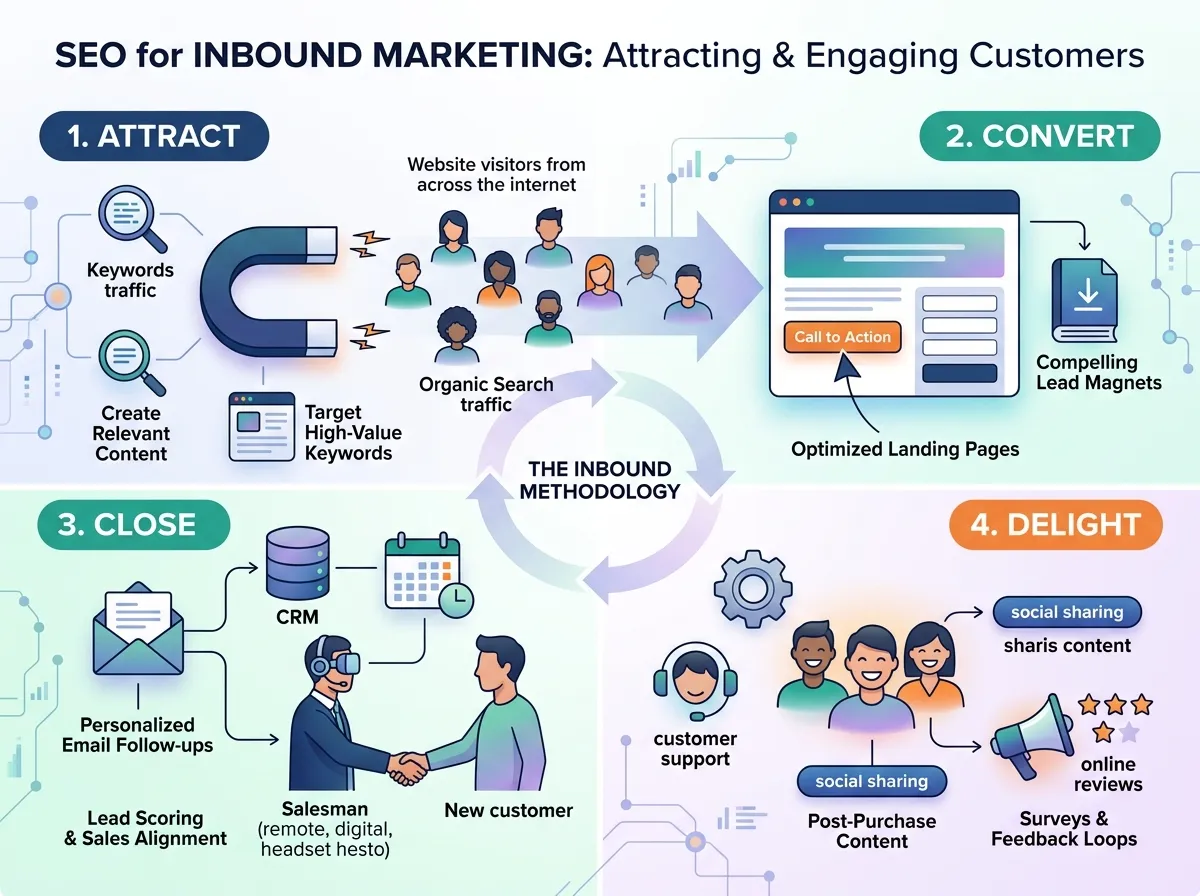
SEO for inbound marketing is the process of using search engine optimization to attract potential customers through organic search. It connects SEO practices with the broader inbound marketing journey, helping businesses attract visitors, provide valuable information, build trust, and encourage conversions.
Traditional SEO often focuses heavily on rankings and traffic. While these remain important, inbound marketing adds another layer by considering what happens after someone arrives on a website.
For example, a person might search for information about improving their email campaigns. They discover an informative article through Google, read the content, explore related resources, subscribe to an email list, and eventually become interested in a service. SEO helped attract the visitor, while inbound marketing helped move that visitor through the customer journey.
This makes SEO particularly powerful for businesses that want sustainable traffic and qualified leads. Instead of paying for every visitor, a business can continue receiving organic traffic from content that remains useful and discoverable over time.
Building an Inbound Marketing SEO Strategy
An effective inbound marketing SEO strategy starts with understanding the audience. Before creating content, marketers need to know what their target customers are searching for, what problems they are trying to solve, and what information they need at different stages of the buying journey.
Keyword research is an important part of this process. Businesses can identify relevant search terms and group them according to topics and intent. Informational keywords may be useful for attracting people who are researching a problem, while commercial and transactional keywords can help reach people who are closer to making a decision.
Content planning should then connect these keywords with meaningful topics. Instead of creating separate articles for every similar keyword, businesses can develop comprehensive topic clusters that answer related questions and establish authority around a subject.
A content calendar can make this process easier. Using resources such as Free Content Calendar Templates can help marketers organize topics, publishing schedules, target keywords, and content priorities more effectively.
The strategy should also include technical SEO, internal linking, content optimization, conversion opportunities, and performance measurement. This creates a complete system rather than treating SEO as an isolated activity.
Understanding SEO Inbound Marketing Techniques
There are many SEO inbound marketing techniques that businesses can use to attract and nurture potential customers. One of the most important is creating content based on search intent.
Search intent refers to the reason behind a person’s search. Someone searching for “what is inbound marketing” may be looking for basic information, while someone searching for “best inbound marketing software” may be comparing solutions.
Understanding these differences allows marketers to create content that matches what searchers actually want.
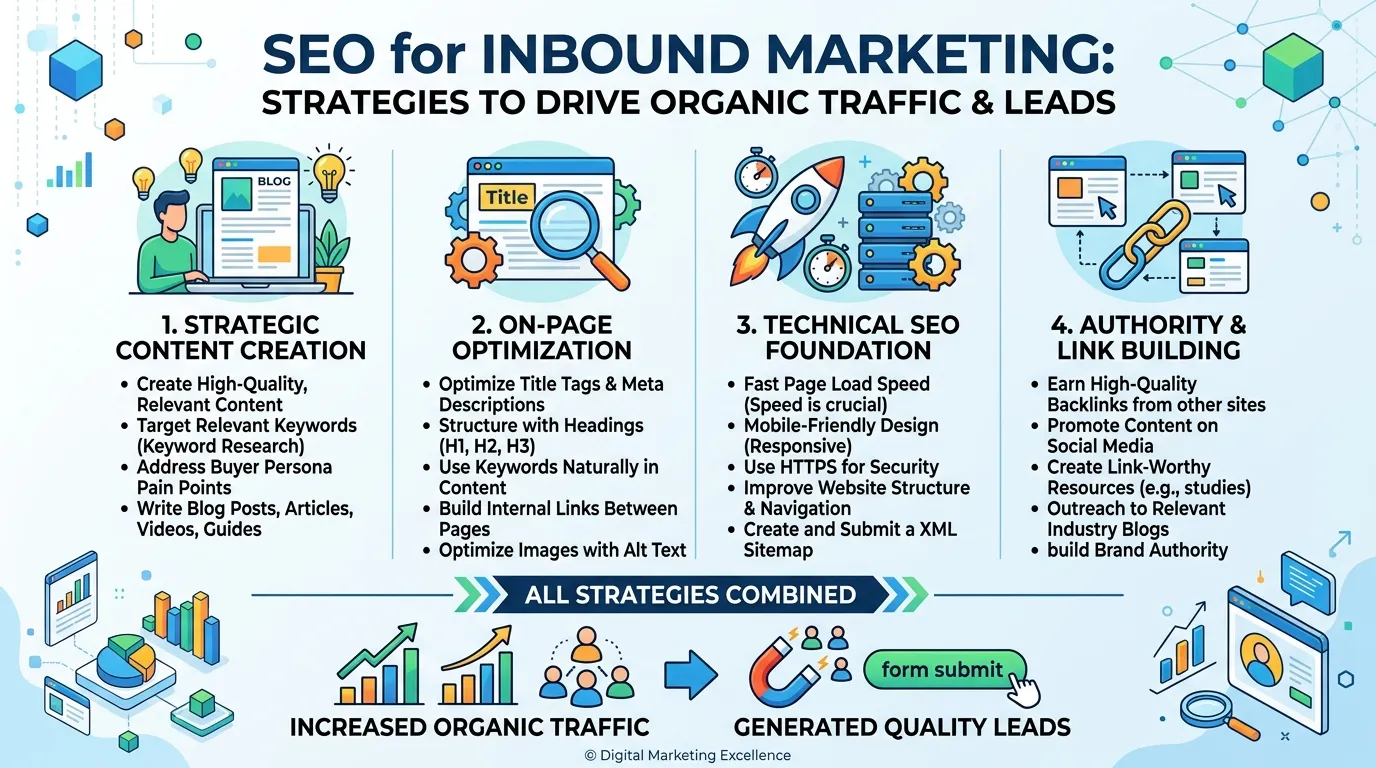
On-page optimization is another important technique. This includes using relevant keywords naturally in titles, headings, introductions, URLs, and body content while maintaining readability. Meta titles and descriptions should also accurately communicate what users can expect from the page.
Internal linking can connect related content and help visitors discover additional resources. Strong internal linking also helps search engines understand the relationship between pages.
Businesses can also improve their SEO through technical optimization, mobile-friendly design, fast page performance, structured content, image optimization, and a clear website architecture.
The key is to combine these techniques with useful content rather than optimizing pages solely for search engines.
Creating an Effective SEO for Inbound Marketing Strategy
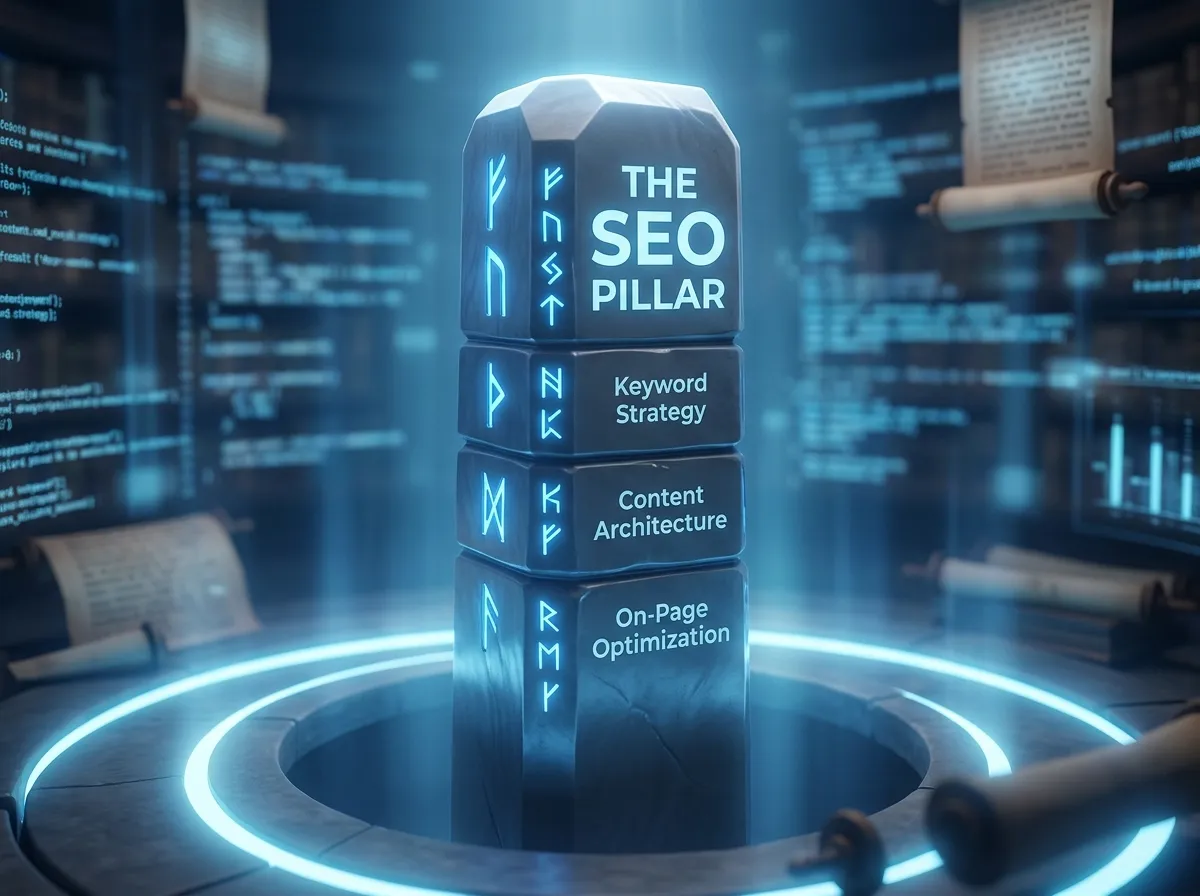
An SEO for inbound marketing strategy should focus on the complete customer journey. This means creating content for people who are discovering a problem as well as those who are researching solutions and comparing providers.
Top-of-funnel content can introduce audiences to important topics. Blog posts, educational articles, definitions, research-based content, and informational resources are useful at this stage.
Middle-of-funnel content can help people evaluate different solutions. Comparisons, case studies, detailed explanations, webinars, and product-focused educational content can support this stage.
Bottom-of-funnel content should help potential customers take action. Service pages, product pages, pricing information, demonstrations, testimonials, and conversion-focused resources can be optimized around relevant commercial searches.
This approach prevents a common SEO problem: generating large amounts of traffic without creating meaningful business opportunities. Traffic is valuable, but the ultimate goal is to attract the right people and provide the information they need to move forward.
Developing an Inbound SEO Strategy
An inbound SEO strategy should bring together keyword research, content creation, technical optimization, authority building, and conversion planning.
The first stage is identifying the topics that matter to the target audience. Marketers can research customer questions, search trends, competitor content, sales conversations, support requests, and industry discussions to discover useful topics.
Next, content should be organized into logical topic groups. A central pillar page can provide a broad overview of a subject, while supporting articles can address specific questions related to that topic.
Internal links can then connect these pages. This creates a stronger content structure and gives visitors a natural path to explore more information.
Content quality is equally important. Search engines increasingly prioritize content that demonstrates usefulness, relevance, experience, and credibility. Businesses should therefore focus on answering questions clearly rather than producing articles simply to increase publishing volume.
An inbound SEO strategy should also be flexible. Search behavior, competitors, industry trends, and business goals change over time. Regular content reviews can help businesses update outdated information and identify new opportunities.
Using SEO Content Marketing to Attract the Right Audience
SEO content marketing combines content creation with search optimization to attract people who are actively looking for relevant information.
Blog articles are one of the most common formats, but SEO content can include landing pages, case studies, research reports, videos, FAQs, comparison pages, guides, webinars, and other resources.
The most effective content begins with the audience rather than the keyword. Marketers should first understand the question or problem they are trying to solve and then use relevant search terms naturally throughout the content.
Content should also provide enough depth to satisfy the reader. If a page answers only part of a question and forces users to search elsewhere, it may struggle to create strong engagement.
At the same time, content should remain easy to read. Clear headings, moderate paragraph lengths, simple language, descriptive subheadings, and logical transitions can make longer SEO articles much more accessible.
SEO content marketing becomes especially powerful when content connects naturally to other inbound assets, such as newsletters, downloadable resources, webinars, case studies, and product pages.
Increasing Organic Traffic Generation
Organic traffic generation is one of the primary benefits of combining SEO with inbound marketing. Organic visitors come to a website through unpaid search results, making this traffic different from visitors generated through paid advertising.
Generating organic traffic takes time. A new website or recently published article may not immediately receive significant search visibility. However, high-quality content can continue attracting visitors as it gains rankings and authority.
Businesses can improve organic traffic by targeting relevant topics, satisfying search intent, strengthening internal links, improving existing content, building reputable backlinks, and maintaining technical website health.
Content updates can be particularly valuable. Older articles may lose visibility when information becomes outdated or competitors publish stronger resources. Reviewing existing pages and improving their accuracy, depth, structure, and optimization can help protect and increase organic performance.
The goal should not simply be to increase visitor numbers. Businesses should focus on attracting people who have a genuine interest in their products, services, or expertise.
Building a Strong Search Engine Optimization Strategy
A complete search engine optimization strategy should address both search visibility and user experience.
Technical SEO provides the foundation. Search engines need to be able to crawl, understand, and index website content efficiently. Clean site architecture, appropriate internal linking, mobile usability, page speed, secure connections, and properly configured metadata can all contribute to a stronger foundation.
On-page SEO focuses on individual pages. Titles, headings, keyword usage, content structure, images, links, and descriptions should all support the page’s purpose.
Off-page SEO focuses on signals beyond the website, including quality backlinks, brand mentions, digital PR, partnerships, and other forms of online authority.
For inbound marketing, these elements should work together. A technically strong website may not attract much traffic without useful content, while excellent content may struggle to perform if the website has serious technical problems.
A balanced strategy therefore considers the entire website rather than optimizing individual pages in isolation.
Using Content-Driven SEO for Long-Term Growth
Content-driven SEO places useful content at the center of organic search growth. Instead of creating pages only because keywords have search volume, businesses create resources that genuinely help their target audience.
This approach can build authority over time. When a business consistently publishes useful information around a particular subject, audiences may begin to recognize it as a reliable source.
Content-driven SEO can also create opportunities for internal linking. Related articles can support one another, helping users discover additional information while creating a stronger topical structure for the website.
Personalization can make this approach even more effective. For example, Real-Time Personalization for Inbound explores how dynamic content can make inbound experiences more relevant to individual visitors.
Personalized experiences can help businesses deliver more appropriate content based on visitor behavior, interests, location, or stage in the customer journey.
The long-term value of content-driven SEO comes from its ability to create an expanding library of useful resources. Each strong page can contribute to broader topical authority while creating additional opportunities to attract and convert visitors.
Generating Leads Through SEO
Lead generation through SEO happens when organic search visibility brings relevant visitors to a website and the website gives those visitors opportunities to become leads.
Simply ranking for keywords does not guarantee lead generation. A page needs to connect informational value with a clear next step.
For example, an educational article might invite readers to download a related resource, subscribe to a newsletter, request a consultation, explore a service, or register for a webinar.
Calls to action should be relevant to the content. A visitor reading an introductory article may not be ready to make a purchase, but they may be interested in receiving additional information.
Landing pages are particularly important for converting search traffic. They should clearly explain the value of the offer, address audience needs, reduce friction, and provide an easy conversion path.
Businesses can also connect SEO with conversational experiences. Chat Commerce in Inbound Marketing shows how conversations can become part of the inbound experience by helping businesses engage visitors and guide them toward relevant actions.
Creating an Organic Lead Generation Strategy

An organic lead generation strategy should connect search visibility, valuable content, conversion opportunities, and lead nurturing.
The process often begins with attracting people through informational searches. Once visitors arrive, businesses can provide relevant resources that encourage them to continue engaging with the brand.
Lead magnets can support this process. Depending on the audience, useful resources might include templates, reports, checklists, research, webinars, calculators, or educational downloads.
Once someone becomes a lead, email marketing and marketing automation can help continue the relationship. The goal is to provide useful information based on the lead’s interests rather than immediately pushing for a sale.
This is where SEO and broader marketing automation can work together. A resource such as Complete Guide to B2B Marketing Automation Strategy can help businesses understand how automation can support lead management and nurture activities.
The strongest organic lead generation systems therefore do more than attract visitors. They create a connected journey from search discovery to education, engagement, qualification, and conversion.
Measuring SEO and Inbound Marketing Performance
Measuring results is essential for improving SEO performance. Businesses should track both search metrics and business outcomes.
Organic traffic can show whether search visibility is increasing, while keyword rankings can provide insight into how pages are performing for important queries. Search impressions and click-through rates can also reveal how often pages appear in search results and how effectively they attract clicks.
Engagement metrics can provide additional context. Time spent on pages, returning visitors, content interactions, and navigation patterns can help marketers understand whether visitors are finding the content useful.
Lead-related metrics are even more important for inbound marketing. Businesses can monitor organic leads, conversion rates, qualified leads, customer acquisition costs, and revenue generated from organic channels.
This allows marketers to move beyond the question of “How much traffic did SEO generate?” and ask a more valuable question: “How much business value did organic search create?”
Common Mistakes to Avoid
One common mistake is focusing too heavily on keyword placement. Keywords are important, but excessive or unnatural usage can make content difficult to read and reduce its usefulness.
Another problem is creating content without understanding search intent. A page may target a valuable keyword but fail to satisfy the reason behind the search.
Publishing too much low-quality content can also weaken an inbound strategy. More articles do not automatically mean better SEO. Quality, relevance, originality, and usefulness matter more than publishing volume alone.
Businesses should also avoid ignoring existing content. Updating successful pages can often be more effective than constantly creating new ones.
Finally, SEO should not operate separately from other marketing activities. Search, content, email, social media, automation, and conversion optimization can reinforce each other when they are connected through a unified inbound strategy.
Conclusion
SEO for inbound marketing provides a powerful way for businesses to attract relevant audiences through organic search while building trust through useful content. When SEO is connected to the inbound customer journey, search traffic can become much more than a source of website visitors.
A successful approach combines an effective inbound marketing SEO strategy, strong keyword research, technical optimization, SEO content marketing, content-driven SEO, and relevant conversion opportunities. Businesses can then use organic traffic to attract potential customers and support lead generation through SEO.
The most effective strategy is not built around rankings alone. It focuses on understanding the audience, answering their questions, creating valuable experiences, and providing logical next steps. With consistent optimization and measurement, SEO can become a long-term source of organic traffic, qualified leads, and sustainable business growth.
Frequently Asked Questions
1. What is SEO for inbound marketing?
SEO for inbound marketing is the use of search engine optimization to attract potential customers through organic search. It combines keyword research, optimized content, technical SEO, internal linking, and conversion strategies with the broader inbound marketing journey.
2. Why is SEO important for inbound marketing?
SEO helps inbound marketers reach people who are actively searching for information, solutions, products, or services. It can generate sustainable organic traffic and introduce potential customers to valuable content at different stages of the buying journey.
3. What is an inbound marketing SEO strategy?
An inbound marketing SEO strategy combines search optimization with content and conversion planning. It focuses on attracting the right audience, matching content with search intent, building topical authority, and guiding organic visitors toward meaningful actions.
4. How does SEO generate inbound leads?
SEO generates inbound leads by attracting relevant visitors through search results and directing them toward useful resources, forms, newsletters, consultations, product pages, or other conversion opportunities. The quality and relevance of the visitor are important for successful lead generation.
5. What is content-driven SEO?
Content-driven SEO uses valuable, audience-focused content as the foundation of organic search growth. It focuses on answering customer questions, building topical authority, connecting related content, and providing useful information rather than simply targeting keywords.
6. How can businesses increase organic traffic?
Businesses can increase organic traffic by targeting relevant search topics, creating high-quality content, improving existing pages, strengthening internal links, optimizing technical SEO, earning reputable backlinks, and consistently satisfying search intent.
7. What SEO techniques work well for inbound marketing?
Effective techniques include keyword research, search intent analysis, on-page optimization, technical SEO, internal linking, content optimization, topic clustering, quality backlink development, content updates, and conversion optimization.
8. How long does SEO for inbound marketing take to produce results?
SEO results vary depending on factors such as website authority, competition, content quality, technical health, and search demand. Some pages may gain visibility relatively quickly, while competitive topics can require several months of consistent optimization and content development.
9. What is the difference between SEO and inbound marketing?
SEO focuses primarily on improving visibility in search engines and attracting organic traffic. Inbound marketing is broader and includes content, SEO, email, social media, lead nurturing, automation, and conversion strategies designed to attract and develop customer relationships.
10. How can SEO performance be measured for inbound marketing?
Businesses can measure organic traffic, impressions, rankings, click-through rates, engagement, organic leads, conversion rates, qualified leads, customer acquisition costs, and revenue from organic channels. These metrics provide a clearer picture of both SEO performance and business impact.