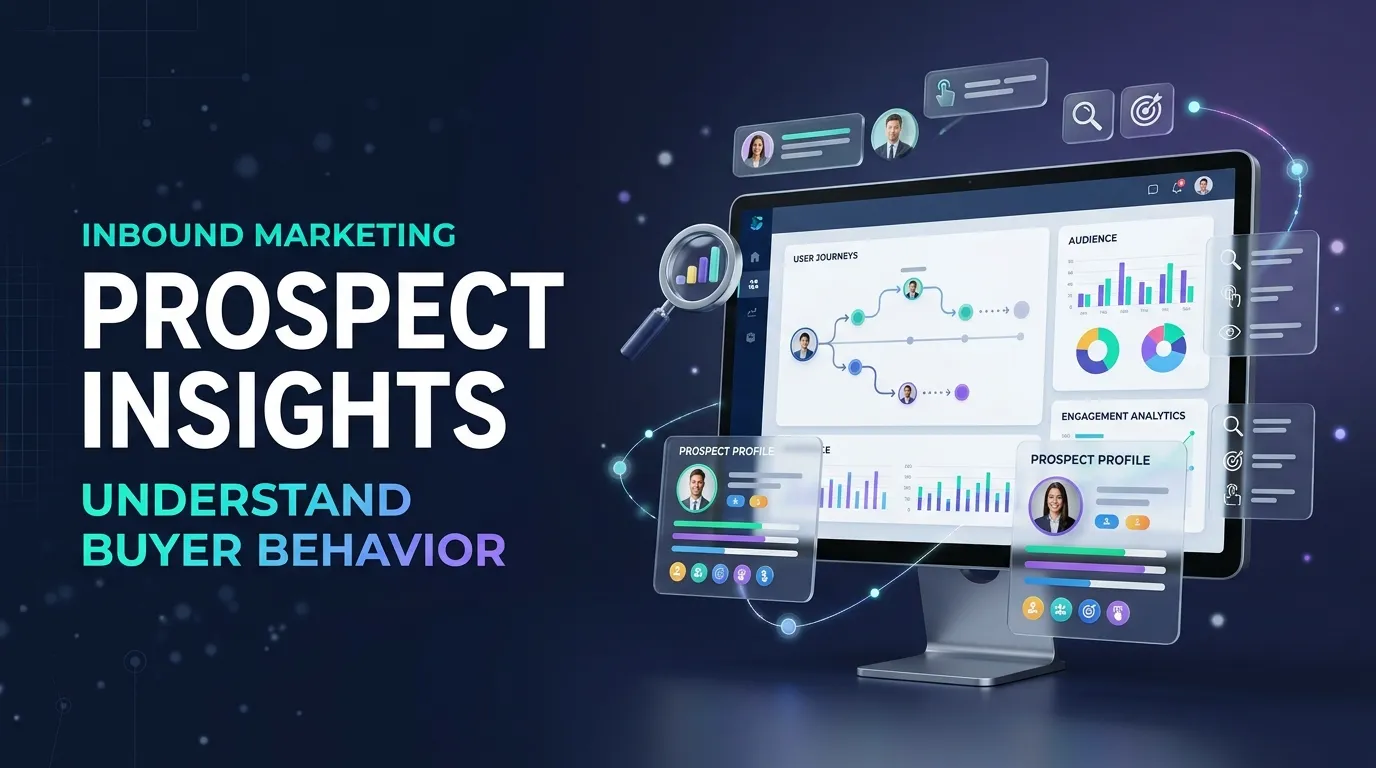
Inbound marketing prospect insights help businesses understand how potential customers behave, what they need, and what influences their purchasing decisions. By analyzing prospect behavior, customer intent, engagement patterns, and buyer journey data, marketing teams can create more relevant content and identify promising leads. These insights also improve lead qualification, strengthen marketing and sales alignment, and support more informed decisions. When businesses use accurate data to understand their audiences, they can develop stronger relationships with prospects and improve the effectiveness of their inbound marketing efforts.
Inbound marketing focuses on attracting potential customers through valuable content, useful information, and meaningful digital experiences. Instead of relying entirely on direct promotional messages, businesses provide resources that help people understand their problems, explore possible solutions, and make informed decisions. However, attracting website visitors is only the beginning. Businesses also need to understand who those visitors are, what interests them, and whether their needs align with the products or services being offered.
This is where inbound marketing prospect insights become important. These insights help organizations interpret the information generated through website visits, content engagement, email interactions, form submissions, and other customer touchpoints. By understanding these patterns, marketers can identify the subjects prospects care about, recognize potential buying signals, and develop more relevant communication.
Prospect insights are not simply about collecting large amounts of information. Their real value comes from interpreting data accurately and using it to improve marketing decisions. A visitor who reads an educational article may still be researching a general topic, while someone who repeatedly explores product details may be considering a purchase. Understanding these differences helps businesses communicate appropriately at each stage of the customer journey.
A thoughtful approach to prospect insights enables marketing teams to move beyond assumptions and build strategies around actual audience needs. It also creates a stronger foundation for lead qualification, personalized communication, and long-term customer relationships.
Prospect Behavior Analysis: Understanding What Potential Customers Do
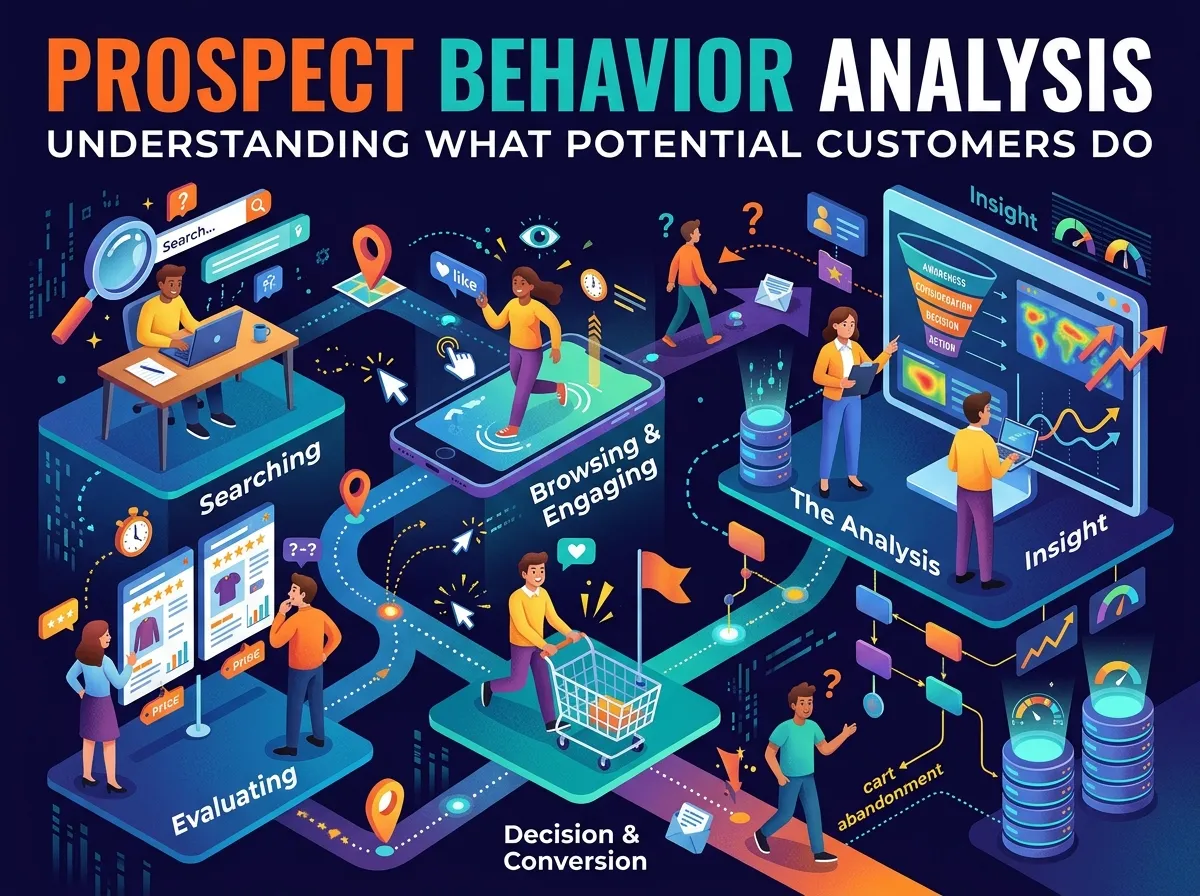
Prospect Behavior Analysis examines the actions potential customers take while interacting with a business. These actions may include visiting specific website pages, downloading resources, watching videos, subscribing to newsletters, clicking email links, or returning to previously viewed content.
Analyzing these activities helps marketers understand which subjects attract attention and what information prospects may be seeking. For example, repeated visits to educational content may indicate an interest in learning about a particular problem. Visits to service descriptions, pricing information, or comparison pages may suggest that a prospect is evaluating possible solutions.
However, individual actions should not be interpreted in isolation. A single page visit does not necessarily indicate strong purchase intent, and repeated visits may occur for several reasons. Businesses need to consider the context of each interaction, the prospect’s previous activity, and the overall pattern of engagement before drawing conclusions.
Effective behavior analysis combines quantitative data with qualitative feedback. Website analytics can show which pages receive attention, while surveys and conversations can explain why certain topics matter to customers. Together, these sources help marketers understand both what prospects do and what motivates those actions.
When businesses regularly review prospect behavior, they can identify content gaps, improve website navigation, and make it easier for visitors to find relevant information. This leads to a more useful inbound experience and gives marketing teams a clearer understanding of audience preferences.
Inbound Marketing Audience Insights and Content Relevance
Inbound Marketing Audience Insights reveal the interests, preferences, challenges, and information needs of the people a business wants to reach. These insights help marketers understand which topics matter to different audience segments and how content can address their concerns.
A business may serve several types of prospects, each with different priorities. Some visitors may be looking for introductory information, while others may need detailed comparisons, implementation advice, or evidence that a solution can deliver value. Publishing the same type of content for every audience can make marketing less relevant and reduce engagement.
Audience insights help businesses organize content around real customer questions. Website search behavior, customer interviews, frequently asked questions, email responses, and feedback from sales teams can reveal which subjects deserve more attention. These findings can guide the development of articles, case studies, educational resources, newsletters, and other inbound marketing materials.
Understanding audience interests also helps businesses communicate in an appropriate tone. Some audiences may prefer concise explanations, while others need detailed technical information before making a decision. Content should reflect these preferences without making unsupported assumptions about individual prospects.
A useful starting point is to understand the fundamentals of what inbound marketing is and how it works. This broader perspective helps businesses connect audience research with the process of attracting, engaging, and nurturing potential customers.
When audience insights guide content development, marketing becomes less focused on publishing for the sake of visibility and more focused on providing information that helps prospects make progress.
Customer Intent Analysis and Buying Signals
Customer Intent Analysis focuses on understanding what a prospect is trying to accomplish through their interactions with a business. Intent can range from general information gathering to active evaluation of a product or service. Recognizing these differences helps marketers determine what type of communication may be most useful.
A prospect reading an introductory article may simply be exploring a topic. Someone comparing different solutions may be further along in the decision-making process. A visitor reviewing service details or requesting a consultation may be demonstrating a more direct interest in purchasing.
These actions can provide useful signals, but they should not be treated as definitive proof of intent. Customers may revisit pages for research, compare providers without an immediate purchase plan, or download a resource for professional learning. Reliable analysis considers several signals together rather than relying on one action.
Businesses can improve intent analysis by examining the content prospects consume, the questions they ask, and the progression of their interactions. Combining this information with voluntary form submissions or direct conversations can provide a clearer picture of what prospects need.
Intent insights should guide relevance rather than create unnecessary pressure. A prospect who appears interested in a solution may benefit from a comparison guide or detailed explanation instead of an immediate sales message. Matching the response to the prospect’s likely needs helps build trust and supports a more natural buying experience.
Prospect Data Analysis for Better Marketing Decisions
Prospect Data Analysis involves reviewing and interpreting information about potential customers to identify useful patterns. Data may come from website analytics, customer relationship management systems, email engagement records, content downloads, lead forms, and sales conversations.
When these sources are organized properly, businesses can identify which content attracts relevant visitors, which channels generate qualified inquiries, and which prospect characteristics are associated with stronger engagement. These findings help teams decide where to focus their time and resources.
Data quality is essential to this process. Incomplete records, duplicate contacts, inconsistent naming conventions, and outdated information can distort results. Before drawing conclusions, organizations should review their data collection practices and establish consistent methods for maintaining records.
Businesses should also distinguish between correlation and causation. If prospects who read a particular article frequently become customers, that relationship may be worth investigating, but it does not automatically prove that the article caused the purchase. Other factors, including brand awareness, referrals, product suitability, and sales interactions, may influence the outcome.
Responsible prospect data analysis also requires appropriate consent, access controls, and respect for privacy requirements. Organizations should collect only the information needed for legitimate business purposes and explain how customer information is used.
With reliable data and careful interpretation, marketers can identify opportunities for improvement, prioritize relevant content, and make more confident decisions about their inbound marketing activities.
Buyer Journey Insights and the Customer Decision Process
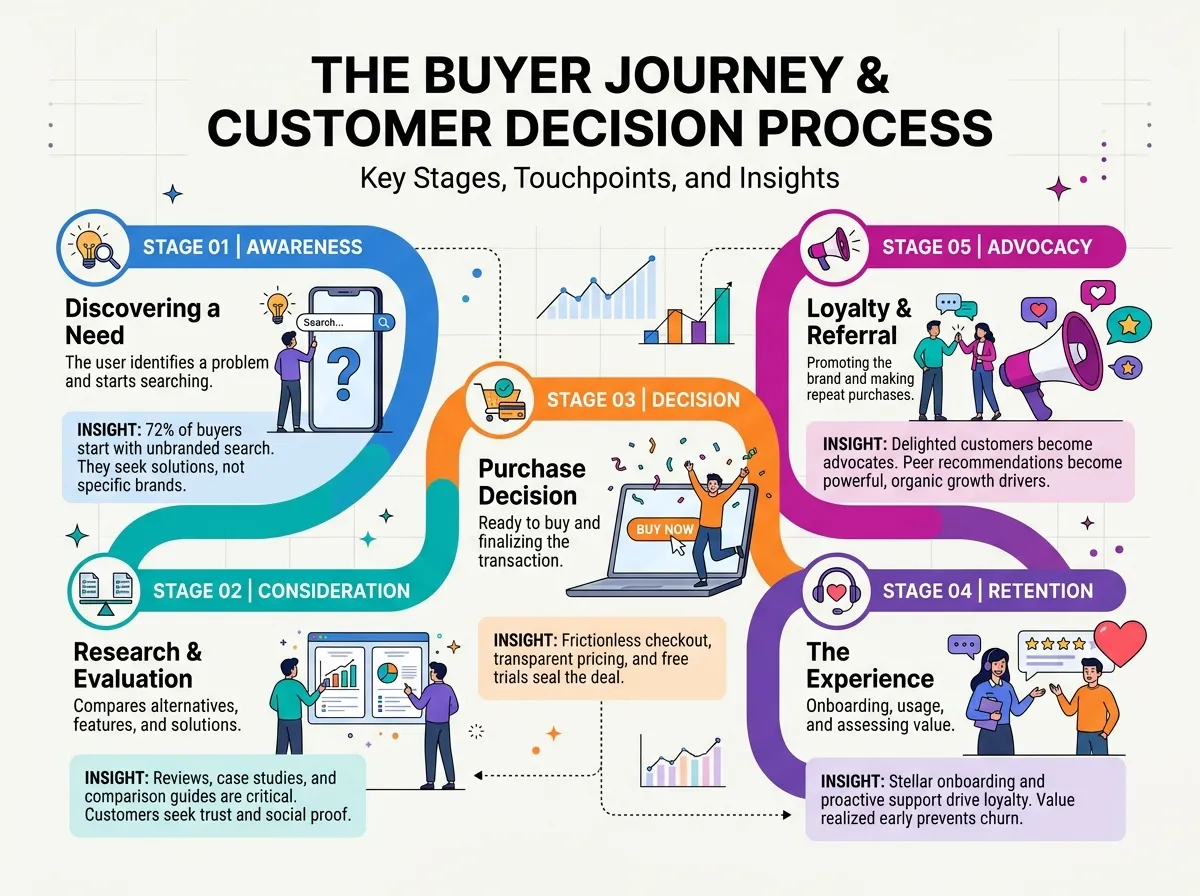
Buyer Journey Insights help businesses understand how prospects move from recognizing a problem to evaluating solutions and making a purchasing decision. Each stage involves different questions, concerns, and information needs, so marketing communication should evolve as prospects gain knowledge.
During the awareness stage, prospects may be trying to understand a challenge or discover why it occurs. Educational articles, explanatory resources, and informative videos can help them develop a clearer understanding. At the consideration stage, prospects often compare possible approaches and evaluate the advantages and limitations of different solutions. Detailed guides, comparison content, and expert insights can support this research.
During the decision stage, prospects may want information about pricing, implementation, service quality, support, or expected outcomes. Clear product information, transparent policies, relevant case studies, and direct answers to questions can help them assess whether a business is the right fit.
Buyer journeys are not always linear. Prospects may return to earlier stages, explore several options simultaneously, or pause their research before resuming it later. Marketing teams should therefore avoid assuming that every prospect follows the same sequence.
Understanding the journey helps businesses identify missing information and unnecessary friction. If prospects frequently leave after reviewing a service page, the business may need to clarify its value proposition, explain pricing more clearly, or answer common objections.
These insights also help teams develop more coordinated campaigns. Educational content can attract attention, follow-up resources can support evaluation, and relevant decision-stage information can help qualified prospects move forward with greater confidence.
Lead Qualification Insights and Sales Readiness
Lead Qualification Insights help businesses assess whether a potential customer is a suitable match for their products or services and whether the prospect is ready for a sales conversation. These insights connect marketing activity with the practical requirements of the sales process.
A useful qualification approach considers several factors. These may include the prospect’s business needs, industry, role in the purchasing process, budget considerations, timing, and interest in a relevant solution. The importance of each factor depends on the company’s business model and the type of customers it serves.
Engagement data can add useful context. A prospect who repeatedly reviews relevant service information and requests a consultation may warrant more immediate attention than someone who has only visited a general educational page. Still, engagement should be evaluated alongside suitability and direct information rather than treated as the only measure of lead quality.
Marketing and sales teams should agree on what qualifies a lead for follow-up. Shared definitions help prevent marketing from prioritizing contacts that sales considers unsuitable, while sales feedback can help marketing identify which prospect characteristics are associated with successful outcomes.
For businesses looking to strengthen the transition between departments, an effective inbound marketing sales handoff can help establish clearer expectations, improve lead context, and reduce delays when qualified prospects are transferred to sales.
Lead qualification should remain flexible enough to account for individual circumstances. A prospect who is not ready to buy today may still be valuable in the future. Appropriate nurturing can maintain the relationship until their needs, timing, or priorities change.
Audience Behavior Tracking Across Digital Channels
Audience Behavior Tracking helps businesses understand how prospects interact with different digital channels over time. These channels may include websites, search engines, email newsletters, social media, landing pages, and other digital resources.
Tracking provides a broader view of how prospects discover a business and what they do after their first interaction. It can reveal which content attracts visitors, whether they return to the website, and which communication channels support meaningful engagement.
Cross-channel analysis is especially useful because prospects often move between platforms before making a decision. Someone may discover a brand through a search result, read an article, subscribe to an email newsletter, and later visit a service page. Reviewing these interactions together can provide more context than examining each channel separately.
However, cross-channel tracking has limitations. Privacy settings, consent restrictions, different devices, and gaps between platforms can prevent businesses from connecting every interaction to a single person. Marketing teams should acknowledge these limitations instead of presenting incomplete attribution data as a complete picture of customer behavior.
The most useful tracking systems focus on relevant business questions. Teams may want to understand which channels attract qualified prospects, which content encourages return visits, or where customers experience difficulties. These questions help determine what data should be collected and how it should be interpreted.
Audience tracking should always respect applicable privacy laws and customer preferences. Clear disclosures, appropriate consent practices, and responsible data handling help businesses understand engagement while protecting the trust that inbound marketing depends on.
Prospect Engagement Analysis and Relationship Building
Prospect Engagement Analysis examines how potential customers interact with a business’s content and communication. Engagement may include reading articles, clicking email links, attending webinars, submitting questions, downloading resources, or returning to important website pages.
The purpose is not simply to count interactions. Businesses need to understand whether engagement indicates genuine interest and whether the content is helping prospects move toward a useful next step. A large number of clicks may be less valuable than a smaller number of interactions from prospects who closely match the target audience.
Different engagement signals should be interpreted according to their context. Email opens, for example, may not accurately reflect actual reading because of privacy features and automated activity. Clicks, form submissions, meaningful replies, and subsequent actions may provide additional evidence, but no single measure tells the whole story.
Engagement analysis can reveal where communication is working and where it needs improvement. If prospects frequently interact with educational content but rarely explore related resources, the business may need clearer internal links or more relevant next steps. If email engagement declines over time, the team may need to review message frequency, audience segmentation, or content relevance.
Businesses should use engagement insights to provide better support rather than increase communication indiscriminately. A prospect who regularly reads educational material may appreciate additional resources, while another may prefer fewer messages and more direct information.
Consistent, relevant communication helps develop relationships over time. By understanding how prospects engage, businesses can create experiences that respect customer preferences and encourage meaningful progress through the buyer journey.
Customer Needs Assessment and More Relevant Solutions
Customer Needs Assessment helps businesses identify the challenges prospects are trying to solve, the outcomes they value, and the factors that influence their choices. This understanding is essential because the solution a business wants to promote may not always match the problem a prospect is trying to address.
Businesses can assess customer needs through interviews, surveys, support conversations, feedback forms, search behavior, and questions submitted to sales teams. Each source provides a different perspective. Direct conversations may explain customer motivations, while behavioral data can reveal which topics people explore most often.
The goal is to identify recurring needs without assuming that all customers share the same priorities. Some prospects may focus on cost, while others care more about reliability, convenience, technical support, or implementation time. Segmenting audiences according to relevant needs helps businesses deliver more useful information.
Customer needs assessment also supports product and service improvement. When several prospects raise similar concerns, the business may need to clarify its messaging, improve an existing feature, or provide additional guidance. Sharing these insights across marketing, sales, and product teams helps ensure that customer feedback influences broader business decisions.
It is important to reassess customer needs regularly. Market conditions, customer expectations, and available alternatives can change, making older assumptions less reliable. Continuous listening helps businesses stay relevant and adapt their communication as circumstances evolve.
When marketing is based on a clear understanding of customer needs, prospects receive information that addresses their real concerns. This improves the quality of engagement and helps businesses build relationships based on usefulness and trust.
Inbound Marketing Data Insights and Performance Measurement
Inbound Marketing Data Insights connect information about prospect behavior, engagement, lead quality, and campaign performance with practical marketing decisions. They help businesses understand not only how many people interact with their content but also whether those interactions contribute to meaningful business outcomes.
Useful performance indicators may include qualified lead volume, conversion rates, content-assisted conversions, email engagement, return visits, and the time it takes for a prospect to move through the sales process. The right measurements depend on the company’s objectives and the type of customer journey it supports.
Marketing teams should avoid focusing exclusively on high-level activity metrics. Website traffic and social media engagement can indicate visibility, but they do not necessarily show whether a business is attracting relevant prospects. Combining these indicators with lead quality and conversion data provides a more balanced view of performance.
Regular reporting can help teams identify changes and investigate their causes. If a campaign attracts more visitors but fewer qualified leads, the audience targeting or content may need adjustment. If qualified leads increase but sales conversion remains low, the business may need to review qualification criteria, follow-up practices, or the fit between its offer and customer expectations.
A useful reporting process also connects daily performance measures with wider marketing goals. Reviewing relevant daily KPIs to boost ROI can help managers monitor progress, spot issues earlier, and make better-informed adjustments to campaigns and resource allocation.
Data insights become valuable when they lead to action. Businesses should establish a regular process for reviewing results, prioritizing opportunities, testing improvements, and measuring the impact of those changes.
Using Prospect Insights to Improve Inbound Marketing Campaigns

Prospect insights are most effective when they influence how campaigns are planned, delivered, and evaluated. Rather than creating campaigns based solely on internal assumptions, businesses can use audience research and behavioral evidence to develop messages that reflect customer concerns and decision-making processes.
Campaign planning can begin with a clear understanding of the audience, its challenges, and the questions prospects are likely to ask. Content can then be organized around these needs, with relevant resources supporting different stages of the buyer journey. This approach makes campaigns more useful and helps prospects find information that matches their level of interest.
Segmentation can further improve relevance. Prospects can be grouped using appropriate criteria such as stated interests, business needs, content preferences, or stage in the purchasing process. Businesses should avoid relying on sensitive or uncertain assumptions and should use customer information responsibly.
Performance data should guide ongoing refinement. If prospects respond well to one topic but show little interest in another, marketers can investigate the reasons and adjust future content. If certain channels consistently attract better-qualified inquiries, the business may decide to invest more resources in those activities.
A structured approach to effective inbound marketing campaigns can help organizations connect audience insights with campaign execution, lead nurturing, and performance evaluation.
The goal is not to predict every customer action perfectly. It is to use reliable evidence to make better decisions, reduce unnecessary friction, and deliver more relevant experiences as prospects learn about a business and evaluate its solutions.
Conclusion
Inbound marketing prospect insights help businesses understand the people behind their website visits, content interactions, and sales inquiries. Through prospect behavior analysis, customer intent assessment, audience tracking, and lead qualification, marketing teams can identify what prospects need and how their decisions develop.
The most effective approach combines reliable data with direct customer feedback and careful interpretation. Businesses must recognize that individual actions do not always reveal intent, customer journeys are rarely identical, and incomplete data can lead to misleading conclusions. Responsible data practices and collaboration between marketing and sales are therefore essential.
When prospect insights guide content development, campaign planning, and performance measurement, businesses can create more relevant experiences and improve the quality of their leads. By continuously learning from customer behavior and adapting to changing needs, organizations can build stronger relationships and support sustainable inbound marketing growth.
Frequently Asked Questions
1. What are inbound marketing prospect insights?
Inbound marketing prospect insights are findings about potential customers’ interests, behaviors, needs, and purchasing intentions. They help businesses understand how prospects interact with content and what information may support their decisions.
2. Why are prospect insights important for inbound marketing?
Prospect insights help businesses create relevant content, improve audience targeting, qualify leads, and make better marketing decisions. They also help organizations identify friction in the customer journey and improve communication.
3. What is prospect behavior analysis?
Prospect behavior analysis examines actions such as website visits, content downloads, email clicks, and return visits. These activities can reveal areas of interest and help marketers understand how potential customers interact with a brand.
4. How does customer intent analysis improve lead generation?
Customer intent analysis helps marketers distinguish between general research and stronger indications of interest in a solution. This can improve the relevance of follow-up communication and help teams prioritize prospects who may benefit from additional assistance.
5. What data is useful for understanding inbound marketing prospects?
Useful data includes website engagement, content interactions, form submissions, customer feedback, email responses, CRM records, and sales conversations. The most relevant sources depend on the business’s objectives and customer journey.
6. How can businesses improve lead qualification with prospect insights?
Businesses can combine information about customer needs, business suitability, engagement, and purchasing requirements to evaluate lead quality. Clear agreements between marketing and sales help ensure that qualified leads receive appropriate follow-up.
7. What is the difference between prospect engagement and prospect intent?
Prospect engagement describes how someone interacts with a business’s content or communication. Prospect intent concerns what the person may be trying to accomplish or whether they are considering a purchase. Engagement can provide clues about intent, but it does not prove buying readiness by itself.
8. How do buyer journey insights support content marketing?
Buyer journey insights reveal the questions and concerns prospects have at different stages of their decision-making process. Businesses can use these findings to create educational content, comparison resources, and decision-stage information that meets customer needs.
9. Which metrics help measure inbound marketing prospect insights?
Useful metrics include qualified lead volume, conversion rates, content engagement, return visits, email clicks, lead-to-customer conversion, and time to conversion. Businesses should select measures that align with their goals rather than relying on activity metrics alone.
10. How often should businesses review prospect insights?
Businesses should monitor important performance indicators regularly and conduct deeper reviews according to their campaign cycles and data volume. Frequent monitoring helps identify emerging issues, while periodic analysis provides time to understand patterns and evaluate longer-term changes.