
Audience segmentation improves inbound marketing by delivering personalized content to the right people at the right time. Using demographic, behavioral, and psychographic data helps increase engagement, lead quality, and conversions. A strategic segmentation approach creates better customer experiences and drives long-term business growth.
Generic marketing messages fall flat. Customers scroll past content that doesn’t speak to their specific needs, challenges, or interests. Meanwhile, businesses wonder why their carefully crafted inbound marketing campaigns aren’t generating the leads and conversions they expected.
The solution lies in audience segmentation—the practice of dividing your broader audience into distinct groups based on shared characteristics, behaviors, or preferences. When you understand who your audience is and what motivates them, you can create targeted content that resonates deeply and drives meaningful engagement.
Effective audience segmentation doesn’t just improve your marketing metrics. It transforms how you connect with potential customers, turning generic outreach into personalized experiences that guide prospects naturally through your sales funnel.
What Is Audience Segmentation?

Audience segmentation involves categorizing your target market into smaller, more defined groups based on specific criteria. Rather than treating all prospects the same way, segmentation allows you to tailor your messaging, content, and marketing approach to address the unique needs of each group.
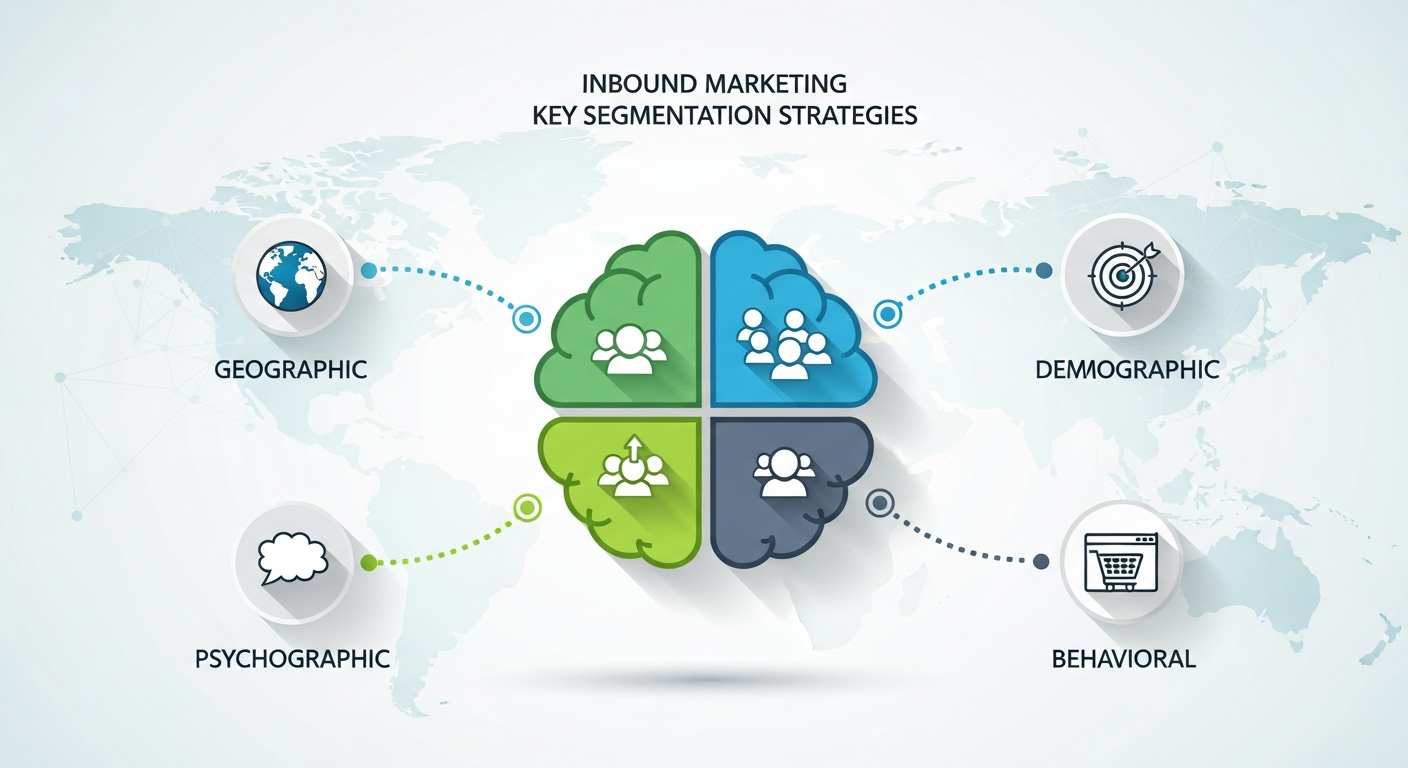
Common segmentation criteria include demographics (age, gender, income), geographic location, psychographics (values, interests, lifestyle), and behavioral patterns (purchase history, website interactions, content preferences). The key is identifying which factors most significantly influence how different groups respond to your marketing efforts.
For inbound marketing specifically, segmentation becomes particularly powerful because it allows you to create content that attracts the right people at the right time with the right message. Learn more about The Complete Guide to Inbound Marketing Tools.
Why Audience Segmentation Matters for Inbound Marketing
Increases Content Relevance
When you understand your audience segments, you can create content that directly addresses their pain points and interests. A software company might develop different blog posts for IT managers focused on security concerns versus small business owners interested in cost savings. Each piece of content serves the same product but speaks to distinct motivations.
Improves Lead Quality
Segmented campaigns attract more qualified prospects because your messaging resonates with people who are genuinely interested in what you offer. Instead of casting a wide net and hoping for the best, you’re strategically targeting individuals who are more likely to convert.
Enhances Customer Experience
creates better user experiences. When visitors find information that feels specifically relevant to their situation, they’re more likely to engage with your brand and continue through your marketing funnel.
Optimizes Resource Allocation
Understanding which segments respond best to different types of content helps you allocate your marketing budget and time more effectively. You can double down on strategies that work for high-value segments while adjusting approaches that underperform.
Key Segmentation Strategies for Inbound Marketing
Demographic Segmentation
Age, gender, income level, education, and job title provide fundamental insights into how different groups prefer to consume content. B2B companies often segment by job role because a CEO’s information needs differ significantly from those of a marketing coordinator.
Consider creating buyer personas for each major demographic segment. These detailed profiles help you visualize your ideal customers and guide content creation decisions.
Behavioral Segmentation
How prospects interact with your website, email campaigns, and content reveals valuable information about their interests and purchase intent. Behavioral segmentation might include:
- Website visitors who downloaded specific resources
- Email subscribers who consistently open emails about certain topics
- Social media followers who engage with particular types of posts
- Previous customers who made repeat purchases
This data helps you understand where each segment sits in your sales funnel and what type of content will move them forward.
Psychographic Segmentation
Values, attitudes, interests, and lifestyle choices influence how people make decisions. A fitness brand might segment health-conscious consumers into groups like competitive athletes, casual fitness enthusiasts, and wellness beginners. Each group would respond to different messaging and content approaches.
Geographic Segmentation
Location affects everything from cultural preferences to seasonal buying patterns. Local businesses benefit from geographic segmentation, but even national companies can use location data to customize content for regional preferences or time zones.
Implementing Audience Segmentation in Your Inbound Strategy

Step 1: Analyze Your Current Audience
Start by examining your existing customer data. Look at website analytics, email engagement metrics, social media insights, and sales records to identify patterns. What characteristics do your best customers share? Where do they spend time online? What content generates the most engagement?
Step 2: Create Detailed Buyer Personas
Develop comprehensive profiles for each major segment. Include demographic information, but go deeper to understand motivations, challenges, and goals. Interview existing customers when possible to validate your assumptions and uncover insights you might have missed.
Step 3: Develop Segment-Specific Content
Creates better user experiences content that speaks directly to each segment’s needs and preferences. This might mean developing separate blog series, email campaigns, or social media strategies for different groups. Remember that the same core message can be adapted to resonate with various segments.
Step 4: Choose the Right Channels
Different segments prefer different communication channels. Younger audiences might engage more on social media, while professionals might prefer email newsletters or LinkedIn content. Identify where each segment spends time and focus your efforts accordingly.
Step 5: Test and Refine
Monitor how each segment responds to your content and adjust your approach based on the data. A/B testing can help you optimize messaging for specific groups, while analytics tools provide insights into which content performs best for each segment.
Common Segmentation Mistakes to Avoid
Over-Segmentation
Creating too many narrow segments can dilute your efforts and make campaign management unwieldy. Focus on segments that are large enough to justify dedicated resources and different enough to require distinct approaches.
Static Segmentation
Customer preferences and behaviors evolve over time. Regularly review and update your segments to ensure they remain accurate and relevant.
Ignoring Data Privacy
Always comply with data protection regulations and respect customer privacy preferences. Be transparent about how you collect and use customer information for segmentation purposes.
Measuring the Impact of Your Segmentation Efforts
Track key metrics to evaluate how segmentation improves your inbound marketing performance:
Engagement Metrics: Monitor click-through rates, time on page, and social shares for segment-specific content. Higher engagement typically indicates better content relevance.
Conversion Rates: Compare conversion rates between segmented and non-segmented campaigns. Well-executed segmentation should lead to measurably better conversion performance.
Lead Quality: Assess whether segmented campaigns generate leads that are more likely to become customers. Quality often matters more than quantity.
Customer Lifetime Value: Track whether customers acquired through segmented campaigns have higher lifetime value than those from generic campaigns.
Transform Your Marketing with Strategic Segmentation

Audience segmentation elevates inbound marketing from a broad-brush approach to a precision strategy that delivers the right message to the right person at the right time. When implemented thoughtfully, segmentation creates more meaningful connections with prospects, improves campaign performance, and ultimately drives better business results.
Start by analyzing your current audience data to identify natural segments within your customer base. Then gradually implement targeted content and messaging for each group, measuring results and refining your approach over time. The investment in understanding your audience will pay dividends through improved engagement, higher-quality leads, and stronger customer relationships.
Conclusion
Audience segmentation transforms inbound marketing from generic messaging into personalized customer experiences. By understanding who your audience is, how they behave, and what they need, businesses can create more relevant content, generate higher-quality leads, and build long-term relationships. A data-driven, well-maintained segmentation strategy ensures sustained growth and better marketing performance.
Frequently Asked Questions (FAQs)
What is audience segmentation?
Audience segmentation is the process of dividing a broad target audience into smaller, well-defined groups based on shared characteristics, behaviors, or preferences. These segments may be created using data such as demographics, online behavior, interests, purchase history, or engagement patterns. In inbound marketing, audience segmentation allows businesses to deliver more relevant and personalized content, ensuring messages align closely with what each group actually needs and expects.
Why is audience segmentation important for inbound marketing?
Audience segmentation is important for inbound marketing because inbound strategies rely on relevance and value rather than interruption. When content matches a prospect’s specific needs or stage in the buyer’s journey, engagement naturally increases. Segmentation helps marketers attract qualified leads, nurture them with personalized content, and guide them toward conversion more effectively. Without segmentation, inbound campaigns risk becoming generic and less impactful.
How many audience segments should a business create?
There is no fixed number of audience segments that fits every business. The ideal number depends on business goals, audience size, available data, and marketing resources. Most businesses benefit from starting with three to five core segments and expanding gradually as they gather more insights. The key is ensuring each segment is meaningful, actionable, and large enough to justify personalized marketing efforts.
Is audience segmentation suitable for small businesses?
Yes, audience segmentation is highly suitable for small businesses. In fact, it can be even more valuable for smaller teams with limited budgets. By focusing on specific, high-intent audience segments, small businesses can avoid wasting resources on broad campaigns and instead create targeted inbound strategies that deliver better engagement, higher-quality leads, and stronger customer relationships.
What is the difference between demographic and behavioral segmentation?
Demographic segmentation groups audiences based on measurable attributes such as age, gender, income, education, or job role. Behavioral segmentation, on the other hand, focuses on how users interact with a brand, including website visits, content downloads, email engagement, and purchase history. While demographics explain who the audience is, behavioral segmentation reveals how they act and what motivates their decisions, making it especially powerful for inbound marketing.
Does audience segmentation improve SEO performance?
Audience segmentation can indirectly improve SEO performance by increasing user engagement and content relevance. When content is tailored to specific audience needs, visitors are more likely to stay longer on pages, explore additional content, and interact with your site. These positive engagement signals help search engines understand content quality, which can contribute to improved search visibility and organic traffic over time.
Can segmentation work without a CRM?
Yes, segmentation can work without a CRM, especially in the early stages. Tools such as Google Analytics, email marketing platforms, and social media insights can provide enough data to create basic audience segments. However, as a business grows, a CRM becomes increasingly valuable. It centralizes customer data and enables more advanced, automated, and scalable segmentation strategies.
How often should audience segments be updated?
Audience segments should be reviewed and updated regularly to reflect changing customer behavior, preferences, and market conditions. For most businesses, a quarterly or biannual review is effective. However, fast-moving industries or high-volume inbound campaigns may require more frequent updates. Keeping segments current ensures your messaging remains relevant and aligned with real audience needs.
What is over-segmentation?
Over-segmentation occurs when audiences are divided into too many small or overly specific groups. While personalization is important, excessive segmentation can make campaigns difficult to manage and dilute marketing impact. Over-segmentation often leads to increased complexity without meaningful performance gains. Effective segmentation focuses on clarity, scalability, and actionable insights rather than excessive detail.
Does segmentation increase conversion rates?
Yes, segmentation typically increases conversion rates by ensuring that messaging and content align with audience intent. When users receive information that directly addresses their challenges or goals, they are more likely to take action. Segmented inbound campaigns often see higher engagement, stronger trust, and improved lead-to-customer conversion compared to non-segmented approaches.
How does data privacy affect audience segmentation?
Data privacy plays a critical role in audience segmentation. Businesses must comply with data protection regulations and respect user consent when collecting and using personal information. Ethical segmentation focuses on transparency and trust, ensuring customers understand how their data is used. Respecting privacy not only avoids legal risks but also strengthens brand credibility and long-term customer relationships.
Can AI improve audience segmentation accuracy?
Yes, AI can significantly improve audience segmentation accuracy. AI-powered tools analyze large volumes of data to identify patterns, predict behavior, and dynamically update segments in real time. This allows marketers to create more precise and adaptive inbound campaigns. AI-driven segmentation reduces manual effort while increasing personalization and marketing effectiveness.