
A PR inbound strategy combines credibility-building public relations with audience-attraction inbound tactics, creating sustainable visibility and engagement through content, media relationships, and strategic distribution.
A PR inbound strategy combines the credibility of traditional public relations with the audience-attraction power of inbound marketing. By leveraging thought leadership, strategic media relationships, and multi-channel content distribution, organizations can build trust, increase visibility, and engage audiences in meaningful ways. This integrated approach turns PR from a one-way broadcast into a sustainable system that drives long-term business results.
Integrating PR with Modern Inbound Tactics

Public relations has undergone a significant transformation. No longer confined to press releases and media pitches, PR now intersects with digital marketing, content strategy, and audience engagement in ways that were unimaginable a decade ago. A PR inbound strategy combines the credibility-building power of traditional public relations with the audience-attraction capabilities of inbound marketing, creating a comprehensive approach that drives visibility, trust, and measurable results.
Organizations that successfully integrate PR with modern inbound tactics don’t just broadcast messages—they create meaningful connections. They leverage storytelling, data-driven insights, and multi-channel distribution to reach audiences where they already spend their time. This integration requires understanding how earned media, owned content, and strategic partnerships can work together to build authority and generate leads.
The shift toward inbound-focused PR reflects broader changes in consumer behavior. Audiences actively seek information rather than passively receiving it. They research solutions, compare options, and make decisions based on trusted sources and authentic experiences. A well-executed PR inbound strategy acknowledges this shift and positions your organization as a valuable resource rather than just another voice competing for attention.
Understanding the PR Inbound Strategy Framework
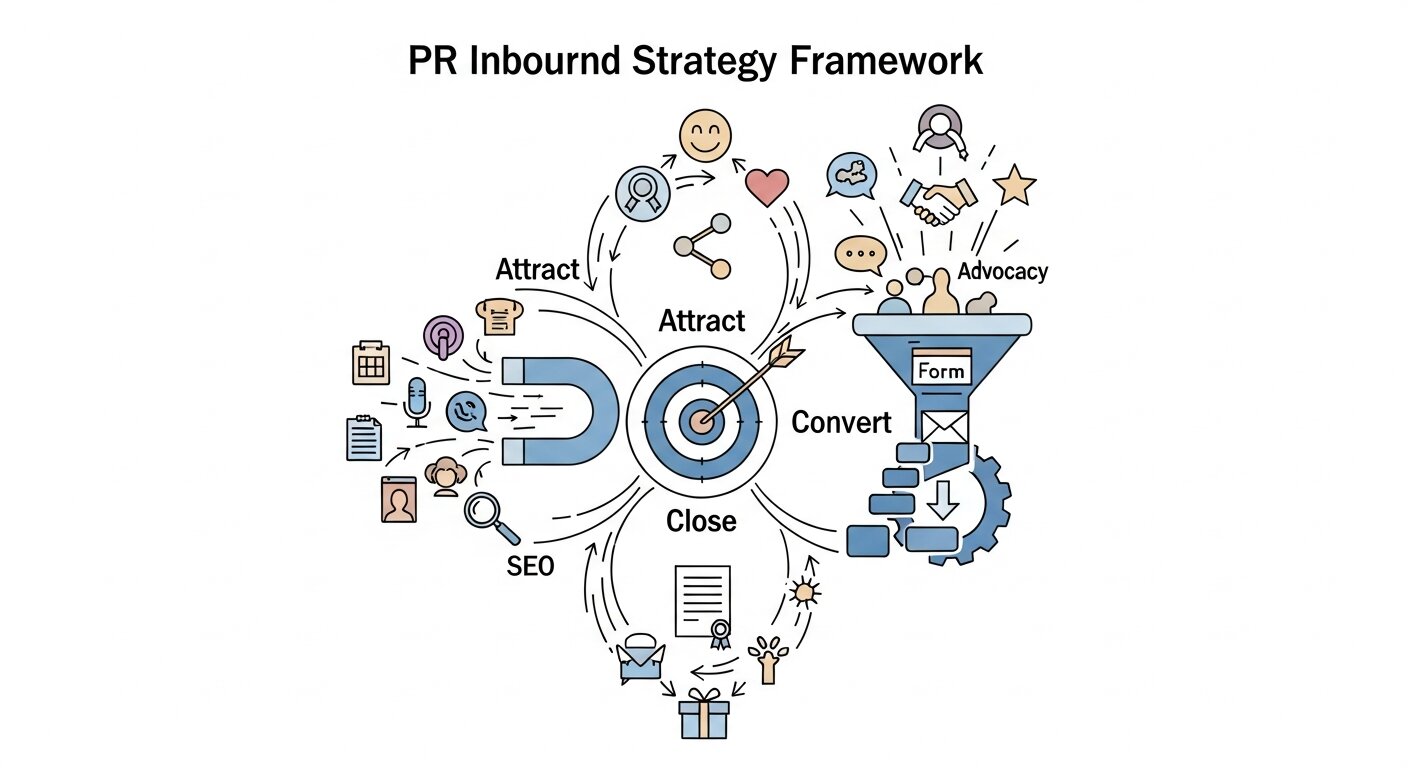
A PR inbound strategy operates at the intersection of three core principles: visibility, credibility, and engagement. Visibility ensures your brand appears in the right places at the right times. Credibility establishes your organization as a trusted authority in your field. Engagement transforms passive audiences into active participants who interact with your content, share your message, and ultimately become customers or advocates.
Traditional PR focused heavily on media placements and brand mentions in major publications. While these tactics remain valuable, modern PR inbound strategy expands the playing field. It incorporates content marketing, search engine optimization, social media engagement, and community building. The goal is creating a sustainable system where your content attracts audiences organically, your thought leadership builds trust, and your strategic partnerships amplify reach.
Successful integration requires breaking down silos between PR and marketing teams. When these departments collaborate effectively, they create cohesive campaigns that leverage each team’s strengths. PR professionals bring media relationships, storytelling expertise, and crisis management skills. Marketing teams contribute data analysis, conversion optimization, and audience segmentation capabilities. Together, they build campaigns that attract attention and drive business outcomes.
Building Thought Leadership Through Content
Thought leadership sits at the heart of any effective PR inbound strategy. Organizations that consistently produce valuable, insightful content position themselves as industry authorities. This authority translates into media opportunities, speaking engagements, partnership proposals, and customer trust.
Creating thought leadership content requires identifying topics where your organization offers unique perspectives or expertise. Rather than producing generic advice, focus on specific challenges your audience faces and provide actionable solutions backed by experience or research. This approach differentiates your content from competitors and gives journalists, podcast hosts, and conference organizers compelling reasons to feature your executives.
Long-form vs. micro-content represents a critical consideration when developing your thought leadership strategy. Long-form content—in-depth articles, comprehensive guides, research reports—establishes deep expertise and performs well in search engines. These pieces serve as cornerstone content that demonstrates your organization’s knowledge and provides lasting value. Micro-content—social media posts, brief videos, infographics—increases visibility and engagement by meeting audiences where they consume information quickly.
The most effective strategies leverage both formats strategically. Start with substantial long-form pieces that thoroughly explore important topics. Then, extract key insights, statistics, or quotes to create micro-content that drives traffic back to the comprehensive resource. This approach maximizes the value of your content investment while addressing different audience preferences and consumption patterns.
Leveraging Media Relationships in an Inbound Context

Media relationships remain a cornerstone of public relations, but the nature of these relationships has evolved. Journalists and editors face increasing pressure to produce more content with fewer resources. They appreciate sources who understand their needs, provide genuine value, and respect their time.
A PR inbound strategy transforms traditional media pitching into a mutually beneficial relationship. Rather than simply seeking coverage, position your organization as a reliable resource. Share relevant data, offer expert commentary on industry trends, and provide unique perspectives that enhance journalists’ stories. When you consistently deliver value without demanding immediate reciprocity, you build relationships that generate long-term media opportunities.
Consider creating resources specifically designed to support journalists covering your industry. Media kits, fact sheets, executive backgrounders, and high-resolution images make it easier for reporters to feature your organization. When breaking news occurs in your sector, proactively reach out with expert analysis or commentary. This responsiveness demonstrates your organization’s expertise while helping journalists meet tight deadlines.
Digital media monitoring tools enable you to identify relevant conversations and opportunities in real-time. Track industry keywords, competitor mentions, and journalist profiles to understand what stories are gaining traction. When you spot opportunities where your expertise adds genuine value, reach out with specific, relevant insights rather than generic pitches.
Strategic Content Distribution Channels

Creating excellent content represents only half the equation. Effective distribution ensures your target audience actually encounters and engages with that content. A comprehensive PR inbound strategy leverages multiple channels, each serving specific purposes within your overall approach.
Your owned media channels—website, blog, email list—form the foundation of your distribution strategy. These platforms give you complete control over messaging, timing, and presentation. Optimize them for search engines so prospects discover your content when researching solutions. Develop an email strategy that nurtures relationships by delivering valuable content consistently rather than just promotional messages.
Earned media—coverage in publications, podcast appearances, speaking opportunities—provides third-party validation that owned content cannot replicate. When respected outlets feature your organization, their credibility transfers to your brand. Actively pursue these opportunities by monitoring relevant publications, building relationships with editors and podcast hosts, and pitching story ideas that align with their audiences’ interests.
Social media serves as both an owned and earned channel, depending on how you use it. Your organization’s profiles represent owned media where you control the message. However, when audiences share your content, engage in conversations, or create user-generated content featuring your brand, social media becomes an earned channel that extends your reach organically.
Podcast Marketing as a PR Multiplier
Podcast marketing has emerged as one of the most effective tactics for integrating PR with inbound marketing. Podcasts offer extended conversation formats that allow deeper exploration of topics compared to traditional media interviews. They reach engaged audiences who actively choose to listen, often during commutes, workouts, or other activities where they have time to absorb information.
Appearing as a guest on relevant podcasts positions your executives as thought leaders while exposing your organization to new audiences. Research shows podcast listeners tend to be highly educated, affluent, and engaged—characteristics that align with many organizations’ target demographics. Additionally, podcast episodes remain accessible indefinitely, providing lasting value unlike traditional radio interviews that reach audiences once and disappear.
When pursuing podcast opportunities, focus on shows where your expertise genuinely serves the audience rather than simply seeking maximum listener numbers. A smaller, highly targeted podcast often delivers better results than a large show where your message gets lost among diverse topics. Prepare talking points that provide value to listeners while naturally incorporating your organization’s perspective and experience.
Consider launching your own podcast as a long-term thought leadership investment. Hosting a podcast positions your organization at the center of industry conversations. You can feature customers, partners, and other industry leaders, building relationships while creating valuable content. Your podcast serves as a content hub that generates material for blog posts, social media, email newsletters, and more.
Measuring Impact and Optimizing Performance

A data-driven approach distinguishes modern PR inbound strategy from traditional public relations. While metrics like media mentions and advertising value equivalency once dominated PR measurement, contemporary strategies demand more sophisticated analysis that connects PR activities to business outcomes.
Website traffic sources reveal how different PR tactics drive discovery. Track referral traffic from media placements, backlinks from guest articles, and direct traffic spikes following major coverage. Analyze which channels deliver the most engaged visitors by examining metrics like time on site, pages per session, and bounce rate. This data informs where to focus future efforts.
Lead generation metrics connect PR activities to pipeline development. Implement tracking parameters on links included in guest articles, media mentions, and podcast show notes. Monitor how many leads these sources generate compared to other marketing channels. Calculate conversion rates at each funnel stage to understand which PR tactics attract the highest-quality prospects.
Share of voice analysis measures your organization’s presence in industry conversations compared to competitors. Track mentions, sentiment, and message penetration across media outlets, social platforms, and industry forums. Increasing share of voice indicates growing authority and visibility within your sector.
Brand sentiment assessment reveals how audiences perceive your organization. Monitor online conversations, media coverage tone, and social media engagement to gauge whether your PR inbound strategy builds positive associations. Address negative sentiment quickly while amplifying positive feedback through social proof and testimonials.
Integration With Sales and Customer Success
The most effective PR inbound strategies extend beyond marketing to support sales and customer success teams. PR-generated content and credibility provide valuable assets throughout the customer journey, from initial awareness through long-term retention.
Sales teams benefit from thought leadership content that addresses common objections, explains complex concepts, and demonstrates expertise. Equip your sales professionals with articles, case studies, and media coverage they can share with prospects. When potential customers see your organization featured in respected publications or hear your executives on industry podcasts, it validates their decision to engage with your company.
Customer success teams can leverage PR content to demonstrate your organization’s ongoing innovation and industry leadership. Share new product announcements, award recognitions, and thought leadership pieces with existing customers. This reinforces their decision to partner with your organization and provides talking points they can use when advocating for your solutions internally.
Partner and investor relations also benefit from a strong PR inbound strategy. Media coverage and thought leadership content signal market position and growth trajectory to potential partners. Investors appreciate organizations that build brand awareness efficiently, as strong brands typically command premium valuations and face less customer acquisition friction.
Crisis Preparedness in Integrated Strategies
Crisis situations test the strength of your PR inbound strategy. Organizations that have built credibility, established media relationships, and developed loyal audiences weather crises more effectively than those operating from a position of obscurity.
Proactive reputation management forms the foundation of crisis preparedness. Consistently publish transparent, honest content that reflects your organization’s values. Build goodwill by contributing to industry conversations, supporting relevant causes, and acknowledging mistakes when they occur. This foundation of trust provides crucial buffer when challenges arise.
Develop crisis communication protocols before problems emerge. Identify potential risk scenarios specific to your industry and organization. Create response frameworks that outline decision-making processes, communication channels, and approval workflows. Designate spokespeople and ensure they receive media training before crisis situations occur.
Monitor conversations across digital channels to identify potential issues before they escalate. Social listening tools can detect unusual spikes in mentions, shifts in sentiment, or emerging complaints. Early detection enables proactive response that often prevents minor issues from becoming major crises.
When crises do occur, your established media relationships and communication channels enable rapid response. Rather than scrambling to reach journalists who don’t know your organization, you can quickly connect with reporters who understand your business and trust your information. Your owned channels—website, email list, social media—allow direct communication with stakeholders without relying solely on media intermediaries.
Traditional PR vs PR Inbound Strategy
|
Aspect |
Traditional PR |
PR Inbound Strategy |
|---|---|---|
|
Primary Focus |
Media placements |
Audience attraction and engagement |
|
Measurement |
Advertising value equivalency |
Website traffic, leads, conversions |
|
Content Approach |
Press releases, media pitches |
Multi-format content (articles, videos, podcasts) |
|
Distribution |
Media outlets |
Owned, earned, and shared channels |
|
Audience Relationship |
One-way broadcasting |
Two-way conversation and community building |
|
Timeline |
Campaign-based |
Continuous, always-on strategy |
|
Team Structure |
PR department operates independently |
Integrated PR and marketing collaboration |
|
Technology Use |
Media databases |
Marketing automation, analytics, SEO tools |
Building a Sustainable Content Ecosystem
Long-term success with a PR inbound strategy requires building a sustainable content ecosystem rather than relying on sporadic campaigns. This ecosystem continuously generates valuable content that attracts audiences, builds authority, and supports business objectives.
Establish a content calendar that balances timely reactive content with planned strategic pieces. Reactive content responds to industry news, trending topics, or seasonal events, demonstrating your organization’s relevance and agility. Strategic content explores evergreen topics central to your expertise, providing lasting value that continues attracting audiences months or years after publication.
Repurpose high-performing content across multiple formats and channels. Transform webinar recordings into blog posts, podcast episodes, and social media clips. Convert research reports into infographics, slide decks, and executive summaries. This approach maximizes content investment while addressing diverse audience preferences.
Develop content partnerships with complementary organizations, industry associations, and educational institutions. Co-created content expands your reach to new audiences while sharing production costs and effort. Partnerships also enhance credibility through association with respected organizations.
Future-Proofing Your Approach
The intersection of PR and inbound marketing continues evolving as new technologies, platforms, and audience behaviors emerge. Organizations that remain adaptable while maintaining core strategic principles will thrive regardless of specific tactical changes.
Artificial intelligence and machine learning increasingly influence both PR and inbound marketing. These technologies enable more sophisticated audience segmentation, content personalization, and performance prediction. Stay informed about emerging tools while maintaining the human elements—authenticity, empathy, storytelling—that technology cannot replicate.
Video content consumption continues growing across all demographics and platforms. Incorporate video into your PR inbound strategy through executive interviews, behind-the-scenes content, product demonstrations, and educational series. Video enhances engagement while providing repurposing opportunities for audio podcasts and written transcripts.
Community building represents the next frontier for PR inbound strategy. Organizations that facilitate peer-to-peer connections and create spaces for customers to share experiences develop loyal communities that advocate for their brand. Consider launching forums, user groups, or exclusive networks that add value beyond your core product or service.
Integrating PR and Inbound for Lasting Impact
Organizations that successfully integrate PR with modern inbound tactics gain competitive advantages that compound over time. They attract audiences organically through valuable content, build authority through consistent thought leadership, and leverage strategic relationships to amplify their reach. This integrated approach doesn’t just generate short-term wins—it creates sustainable systems that continue delivering results.
The shift from traditional broadcast PR to audience-focused inbound strategies reflects broader changes in how people discover, evaluate, and engage with organizations. Audiences control their information consumption, choosing which brands to follow and which messages to ignore. Organizations that respect this dynamic by providing genuine value earn attention and trust.
Begin your integration journey by assessing current PR and marketing activities. Identify opportunities for collaboration, content repurposing, and channel optimization. Start small with pilot projects that demonstrate value, then expand successful initiatives across your organization. Remember that building a comprehensive PR inbound strategy takes time—focus on consistent progress rather than overnight transformation.
Conclusion
A PR inbound strategy represents the evolution of public relations in the digital era, blending credibility-building PR with audience-focused inbound marketing. By integrating thought leadership content, strategic media relationships, and multi-channel distribution, organizations can attract, engage, and convert audiences more effectively than traditional PR alone. This approach not only amplifies visibility and trust but also creates a sustainable system that drives long-term business results.
Success requires collaboration between PR and marketing teams, consistent content creation, and a data-driven approach to measure impact and optimize performance. As technology, audience behavior, and media landscapes continue to evolve, organizations that embrace an integrated PR inbound strategy—anchored in authenticity, value, and engagement—will be best positioned to build lasting authority, meaningful connections, and competitive advantage.
Frequently Asked Questions
What is a PR inbound strategy?
A PR inbound strategy combines public relations tactics with inbound marketing principles to attract, engage, and convert audiences through valuable content and earned media.
How does inbound PR differ from traditional PR?
Inbound PR focuses on attracting audiences through valuable content and SEO, while traditional PR emphasizes media placements and brand announcements.
What metrics measure PR inbound strategy success?
Key metrics include website traffic, lead generation, media mentions, backlinks, social engagement, and conversion rates from PR-generated content.
How long does building an effective PR inbound strategy take?
Most organizations see initial results within three to six months, with substantial momentum building after twelve to eighteen months of consistent effort.
Should small businesses invest in PR inbound strategy?
Yes, small businesses benefit significantly from PR inbound strategy as it builds credibility and generates leads more cost-effectively than paid advertising alone.
What role does SEO play in PR inbound strategy?
SEO ensures PR content ranks in search results, making it discoverable to audiences actively researching relevant topics and solutions.
How often should we publish content for PR inbound strategy?
Consistency matters more than frequency. Most successful strategies publish at least weekly, with some organizations producing daily content across multiple formats.
Can PR inbound strategy work for B2B companies?
Absolutely. B2B organizations benefit greatly from thought leadership content and media coverage that builds trust with decision-makers researching complex solutions.
What budget should we allocate to PR inbound strategy?
Budgets vary widely based on company size and goals, but most organizations allocate 10-20% of overall marketing budget to integrated PR and content initiatives.
How do we measure ROI on PR inbound activities?
Track costs against outcomes like leads generated, pipeline influenced, and customers acquired from PR-generated traffic using attribution modeling and analytics platforms.
Should we build in-house PR inbound capabilities or hire agencies?
The ideal approach depends on resources and expertise. Many organizations start with agency support while building internal capabilities, eventually transitioning to hybrid models.
What tools support PR inbound strategy execution?
Essential tools include media monitoring platforms, SEO software, content management systems, marketing automation, and analytics tools that track cross-channel performance.
Meta data
Meta title
PR Inbound Strategy: Integrating PR with Inbound Marketing
Meta description
Learn how to build an effective PR inbound strategy that combines public relations with modern inbound tactics for sustainable growth and engagement.