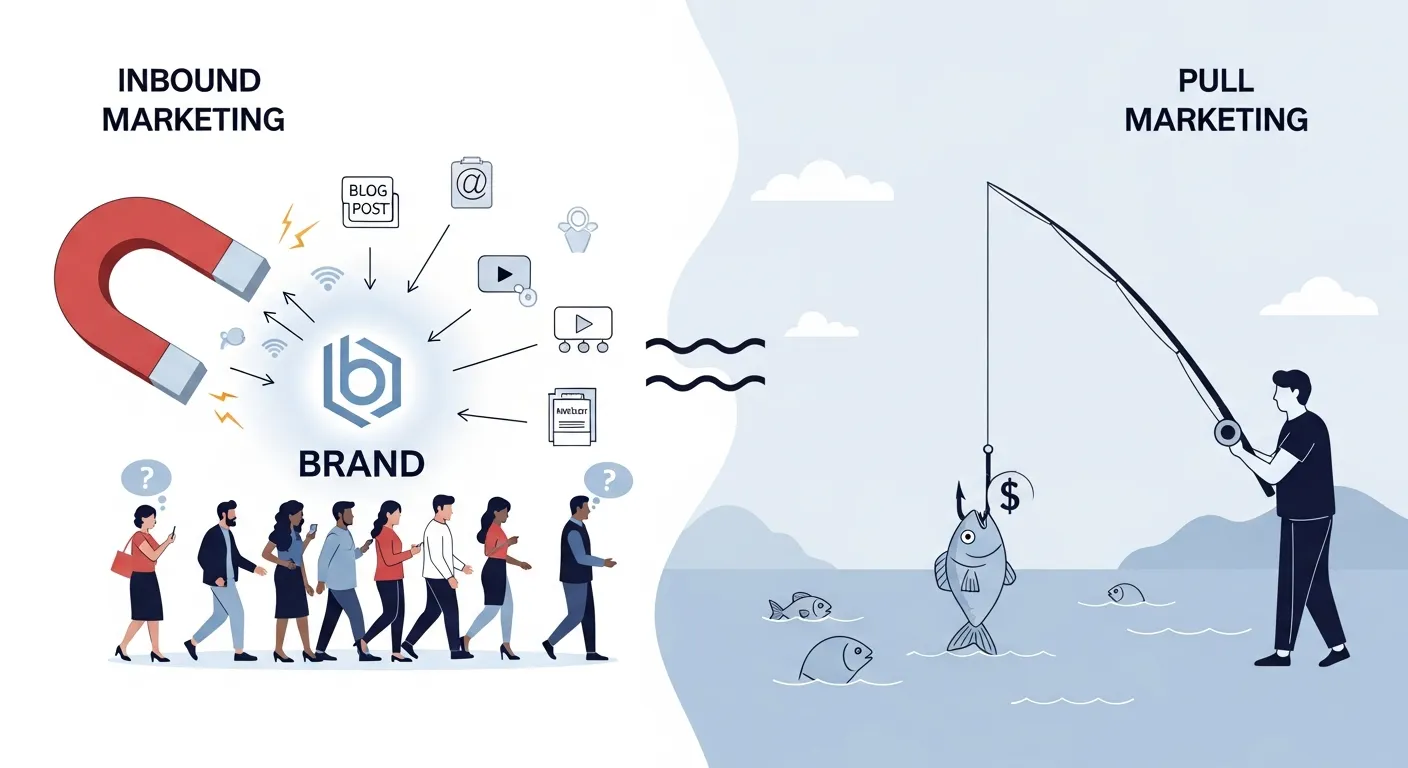
Inbound marketing focuses on value-driven content and long-term trust building, while pull marketing emphasizes demand creation and brand visibility. Combining both strategies helps businesses attract, nurture, and convert customers effectively for sustainable growth and stronger market positioning.
Marketing is an essential part of any business strategy, but as the digital landscape evolves, so does the terminology. Among the many buzzwords tossed around in the marketing world, inbound marketing and pull marketing often get confused or used interchangeably. While they share a common thread of attracting customers rather than chasing them, they are not the same thing.
If you’ve ever wondered what sets inbound marketing apart from pull marketing, this blog is for you. We’ll break down the key differences, explore where they overlap, and help you decide which approach (or combination) is ideal for your business goals.
What is inbound marketing?
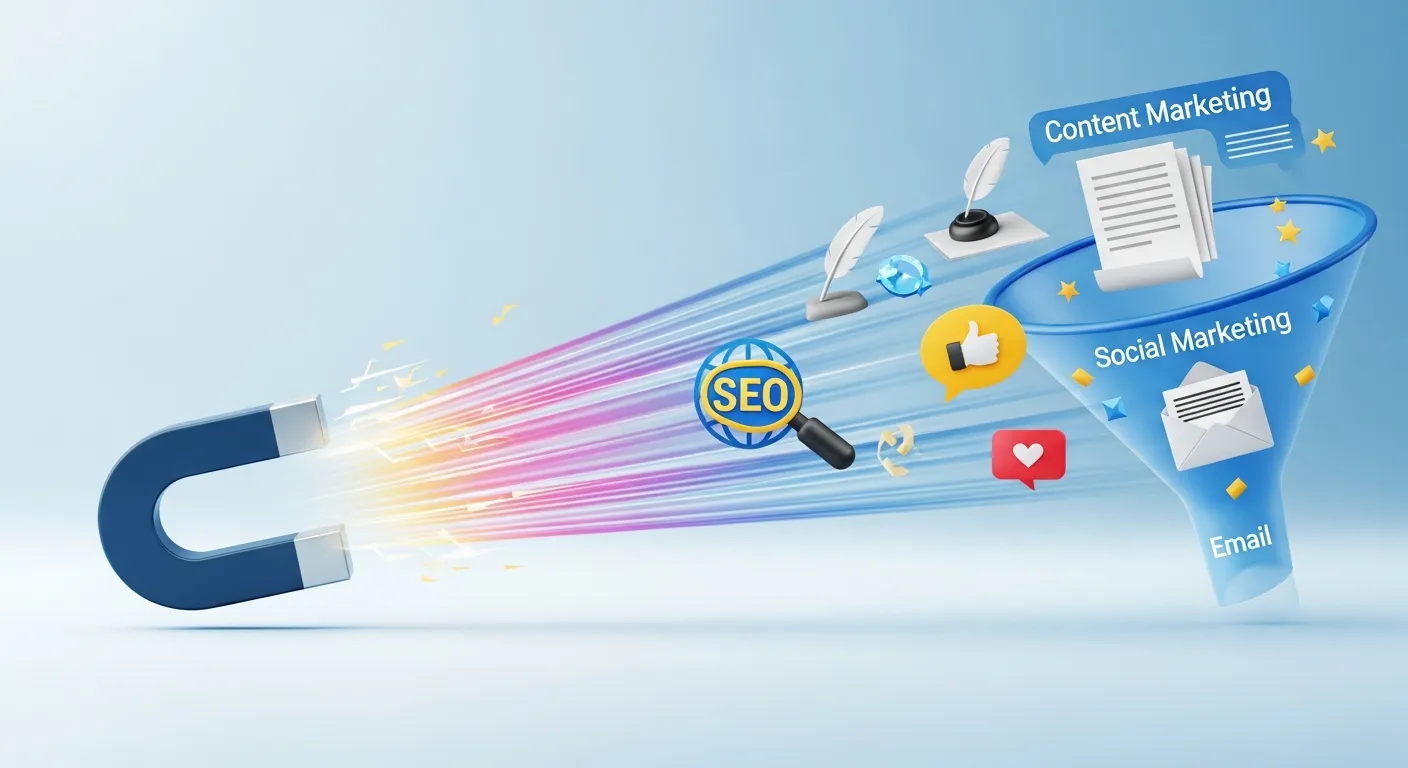 At its core, inbound marketing is about creating value for your audience before asking for anything in return. The emphasis is on building trust and relationships with your potential customers by offering them helpful, relevant, and engaging content tailored to their needs. Learn more about Inbound Marketing.
Key components of inbound marketing
Inbound marketing is a holistic, multi-channel strategy that includes tactics like:
- Content Marketing: Blog posts, videos, infographics, and whitepapers designed to educate or solve problems.
- Search Engine Optimization (SEO): Optimizing content to appear organically on search engines for targeted keywords.
- Email Marketing (permission-based): Sending newsletters or updates that customers have voluntarily subscribed to.
- Social Media Marketing (organic): Sharing valuable content to build a relationship with your followers.
How it works
Imagine someone searching for “how to choose a CRM for small businesses” on Google. If you’ve published a detailed blog on the topic, optimized for that keyword, and they land on your site, you’ve successfully “pulled” them into your ecosystem. From there, you can nurture that lead through their decision-making process via additional content, email communication, or demos.
Why businesses love inbound marketing
- It aligns with customer-centric values.
- It’s cost-effective compared to traditional outbound methods like TV commercials or cold calls.
- High-quality, evergreen content can generate leads for months or even years.
What is pull marketing?
Pull marketing, on the other hand, is a broader term. It refers to any strategy designed to “pull” customers toward your product, often by creating demand or desire. This could involve brand positioning, advertising, or simply meeting customer needs at the exact right moment.
Key tactics of pull marketing
While pull marketing may incorporate elements of inbound marketing, it’s a more general strategy that includes tactics like:
- Brand Awareness Campaigns: Creating memorable ads (think Nike or Coca-Cola) to make audiences aware of your brand.
- Search Engine Marketing (SEM) or Paid Ads: Using paid ads to appear instantly at the top of search engine results.
- Influencer Partnerships: Leveraging the audience of industry influencers to promote your product.
- Product Placement or Sponsorships.
How it works
Pull marketing isn’t just about content. It’s about creating a need or highlighting a gap in your audience’s lives. For example, Apple doesn’t need to educate its audience on “how to buy a laptop.” Instead, they position their new MacBook as a must-have accessory through sleek visuals, storytelling, and product benefits. This pulls customers in emotionally and positions the product as the natural choice.
Why businesses love pull marketing
- It creates instant demand.
- It can establish or reinforce brand loyalty.
- It more directly drives action, like purchases, signups, or inquiries.
The overlap between inbound and pull marketing
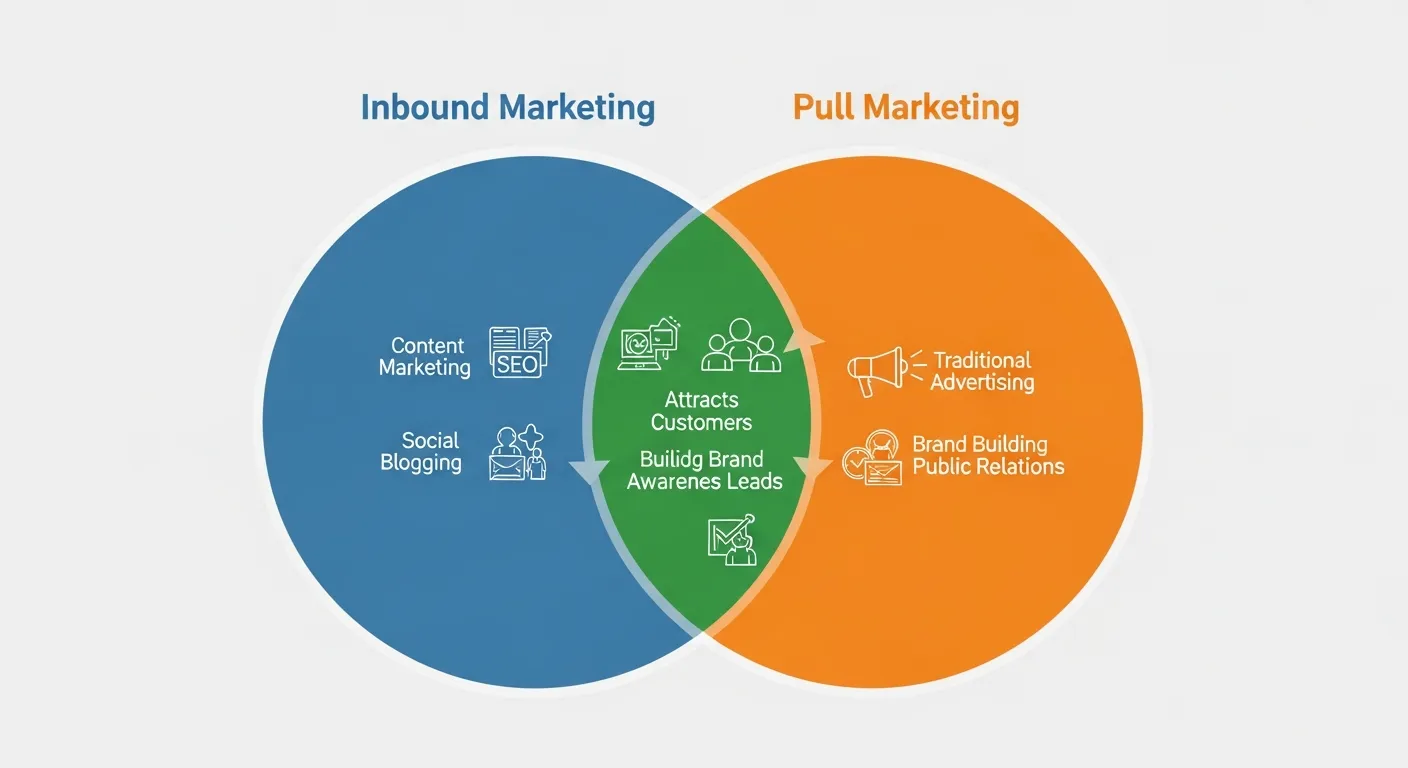 If you’re thinking, “Don’t both strategies focus on attracting customers?” you’re 100% correct. That’s where the overlap lies. Both inbound and pull marketing aim to bring customers to you rather than pushing unwanted messages to them. However, they go about it in slightly different ways.
Similarities
- Both rely on understanding your audience’s needs.
- Both prioritize value-first messaging to attract customers.
- Both try to reduce intrusive, disruptive tactics in favor of customer-centric experiences.
For instance, a well-written SEO-optimized blog post (inbound marketing) works in tandem with a paid Google ad (pull marketing). Both aim to “pull” users searching for specific content into your website.
Differences between inbound marketing and pull marketing
Although they share a similar goal, a few key distinctions make inbound marketing and pull marketing unique.
|
Aspect |
Inbound Marketing |
Pull Marketing |
|---|---|---|
|
Focus |
Education and relationship-building |
Demand creation or brand awareness |
|
Tactics |
Organic and long-term (e.g., blog posts, SEO) |
Paid and short-term (e.g., ads, sponsorships) |
|
Goal |
Nurture and convert leads over time |
Generate immediate attention or action |
|
Strategy |
Content-driven (value-focused) |
Brand or product-focused |
Which approach is right for your business?
The short answer? You need both. The longer answer depends on your audience, goals, and resources.
- If you’re a service-based business or sell high-ticket items requiring trust, inbound marketing is essential. Building long-term trust is critical to closing deals.
- If you’re a product-based business competing in a crowded market, pull marketing helps you stand out and reach people more quickly.
For most businesses, combining both strategies (along with outbound methods) is the sweet spot. Use pull marketing tactics like paid ads to drive traffic, then nurture those leads with high-quality inbound efforts like blogs, social media, and email campaigns.
Key takeaways for marketers
While inbound marketing and pull marketing are distinct approaches to attracting customers, they’re most effective when used together. Here’s how to begin:
- Start by creating value-driven content like blogs and videos to build trust (inbound).
- Amplify awareness of your content with targeted ads or partnerships (pull).
- Analyze performance data regularly to optimize both strategies.
Whether you’re looking to educate your audience, create demand for your products, or do both, a well-rounded marketing plan that integrates inbound and pull marketing will set your business up for success.
Content Strategy Integration
Content lies at the heart of inbound marketing, but it also enhances pull marketing efforts. Blog articles can support paid campaigns, while social media posts can amplify influencer collaborations. High-quality content improves ad performance by increasing relevance and engagement. Businesses should create a unified content calendar that aligns with product launches, seasonal promotions, and audience interests. Repurposing content across multiple channels ensures consistent messaging. When inbound and pull marketing share the same strategic content framework, campaigns feel cohesive rather than fragmented. This integration improves brand recall and strengthens overall marketing effectiveness.
Competitive Advantage in Saturated Markets
In competitive industries, standing out requires more than just visibility. Inbound marketing helps businesses differentiate through thought leadership and niche expertise. By addressing specific customer pain points, brands can attract highly qualified leads. Pull marketing, meanwhile, increases exposure through strong branding and paid placements. Together, they help companies compete effectively even in saturated markets. Instead of relying solely on price competition, businesses can win customers through value and brand appeal. A balanced strategy ensures long-term sustainability and stronger market positioning.
Customer Retention and Loyalty
Marketing doesn’t stop after a sale. Inbound marketing supports retention by providing ongoing value through newsletters, helpful updates, and educational content. Customers who feel supported are more likely to remain loyal. Pull marketing reinforces loyalty through brand campaigns that strengthen emotional connections. Loyalty programs, product announcements, and exclusive offers also encourage repeat purchases. By combining relationship-driven inbound efforts with brand-focused pull strategies, businesses can increase lifetime customer value. Retention-focused marketing reduces acquisition costs and strengthens overall profitability.
Future Trends in Attraction-Based Marketing
 As technology evolves, both inbound and pull marketing continue to adapt. AI-driven personalization, predictive analytics, and automation are reshaping content delivery and ad targeting. Consumers expect tailored experiences, making personalized inbound content even more important. At the same time, pull marketing benefits from smarter targeting and data-driven campaign optimization. Voice search, short-form video, and interactive content are also influencing strategy development. Businesses that stay ahead of these trends will maintain a competitive edge. The future of marketing lies in blending value-driven inbound strategies with innovative pull techniques.
Conclusion
Inbound marketing and pull marketing are not competing strategies but complementary ones. Inbound builds trust and long-term authority, while pull creates visibility and immediate demand. Businesses that integrate both approaches create a balanced marketing engine capable of attracting, nurturing, and converting customers efficiently. By aligning strategy with business goals and audience needs, brands can maximize growth and sustain competitive advantage.
FAQs
1. What is the main difference between inbound and pull marketing?
The main difference lies in their approach and focus. Inbound marketing centers on creating valuable, educational, and helpful content to attract potential customers organically over time. It emphasizes trust-building and long-term relationships. Pull marketing, on the other hand, focuses on generating demand and increasing brand visibility. It often uses advertising, influencer promotions, and strong brand positioning to draw customers toward a product or service. While both aim to attract customers rather than interrupt them, inbound is more content-driven and long-term, whereas pull marketing is often campaign-driven and action-oriented.
2. Is inbound marketing a type of pull marketing?
Yes, inbound marketing can be considered a subset of pull marketing because both strategies aim to attract customers rather than push messages aggressively. However, inbound marketing is more structured and methodology-based, focusing on content, SEO, lead nurturing, and automation. Pull marketing is a broader concept that includes inbound tactics as well as paid advertising, influencer collaborations, and brand awareness campaigns. In short, all inbound marketing is pull-based, but not all pull marketing is inbound.
3. Which strategy is more cost-effective?
Inbound marketing is generally more cost-effective in the long run because it builds sustainable assets such as blog content, SEO rankings, and email lists that continue generating traffic over time. Although it requires upfront investment in content creation and strategy, the long-term ROI can be significant. Pull marketing, especially paid advertising, can deliver quick results but requires continuous spending. Once the budget stops, results may decline. Businesses often achieve the best cost efficiency by combining both strategies strategically.
4. Does pull marketing require paid advertising?
Not necessarily, but paid advertising is a common component of pull marketing. Pull marketing focuses on attracting customers through brand positioning, emotional appeal, and visibility. This can include paid search ads, social media ads, influencer partnerships, sponsorships, or even viral campaigns. However, strong brand reputation and word-of-mouth can also serve as pull tactics without direct advertising costs. The key element is creating demand and encouraging customers to seek out your product.
5. Can small businesses use inbound marketing?
Yes, inbound marketing is especially beneficial for small businesses with limited budgets. Since it relies heavily on organic content, SEO, and relationship-building, small businesses can compete with larger brands by focusing on niche expertise and targeted audiences. Publishing helpful blogs, optimizing for search engines, and engaging on social media can generate steady traffic without massive advertising costs. Over time, this approach builds authority and credibility, making inbound marketing a powerful growth tool for startups and small enterprises.
6. Which works better for B2B businesses?
Inbound marketing tends to work exceptionally well for B2B businesses because B2B buyers typically conduct extensive research before making decisions. Educational content like whitepapers, case studies, webinars, and blog articles helps build trust and demonstrate expertise. Pull marketing can still play a role in B2B, especially for brand awareness campaigns or product launches, but inbound strategies are often more effective in nurturing long sales cycles and complex decision-making processes.
7. How long does inbound marketing take to show results?
Inbound marketing typically takes 3–6 months to show noticeable improvements in traffic and engagement, and sometimes longer depending on competition and industry. SEO rankings, content authority, and audience trust take time to develop. However, once momentum builds, inbound marketing can produce consistent and compounding returns. Unlike paid campaigns that stop generating results when funding ends, inbound efforts continue delivering value long after the initial investment.
8. Is SEO part of pull marketing?
SEO is primarily considered a core component of inbound marketing because it focuses on attracting users through organic search results. However, since SEO helps “pull” customers who are actively searching for information, it can conceptually fall under the broader pull marketing umbrella. The difference is that SEO emphasizes long-term organic visibility, whereas pull marketing may also include short-term paid search campaigns.
9. Can both strategies be used together?
Absolutely. In fact, combining inbound and pull marketing often produces the best results. Businesses can use pull tactics like paid ads or influencer partnerships to generate quick visibility and traffic. Once visitors arrive, inbound strategies such as valuable content, email nurturing, and educational resources help convert and retain them. This integrated approach ensures both immediate results and long-term sustainability.
10. What metrics measure inbound success?
Inbound marketing success is measured using metrics that reflect engagement and long-term growth. These include organic traffic, keyword rankings, time spent on page, bounce rate, lead generation, email subscriptions, and conversion rates. Businesses also track customer acquisition cost and lifetime value to evaluate ROI. These metrics provide insight into how effectively content attracts and nurtures potential customers.
11. What metrics measure pull marketing success?
Pull marketing performance is typically evaluated using campaign-focused metrics such as impressions, click-through rates (CTR), cost per click (CPC), cost per acquisition (CPA), and return on ad spend (ROAS). Social engagement, brand recall, and conversion rates are also important indicators. Because pull campaigns often aim for immediate impact, real-time analytics play a critical role in optimizing performance.
12. Which is better for product launches?
Pull marketing is generally more effective for product launches because it creates immediate visibility and excitement. Paid ads, influencer promotions, and strong branding campaigns can quickly attract attention and drive early sales. However, combining pull marketing with inbound strategies—such as pre-launch content, email nurturing, and educational blogs—can maximize impact. This hybrid approach ensures both short-term buzz and long-term customer engagement.